
How to Print Custom Subscription Boxes That Keep Subscribers Renewing


Jordan is our labels, packaging and sustainability voice, built from the knowledge of our production team, with over 20 years in printing.
Sizes, stocks, the layers of the unboxing, and the lead times that decide your ship date. Written from what we actually print, with the limits named.
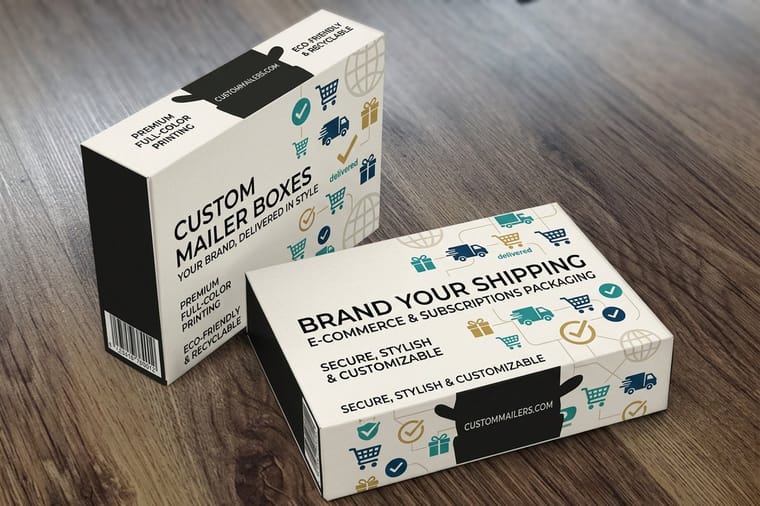
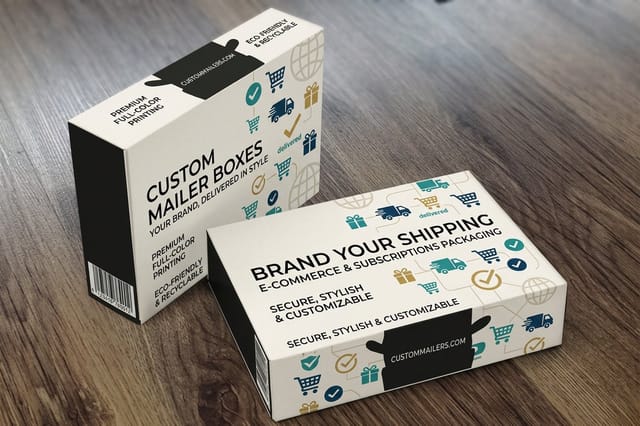
A subscription box is a printed mailer carton sized to your heaviest month, printed full color on the outside and left blank inside, so the unboxing is built from tissue paper, a card and a sticker or printed tape. Our mailer boxes come in 5" x 7" x 1.7" and 5.5" x 5.5" x 2.625", with a custom size to order up to 6" x 7", from $711.78 for 250. Plan five weeks of lead time if printed tape or tissue is part of the kit.
Quick answer
Size for the heaviest month, print the outside, build the inside from layers
The box carries the brand on the outside and nothing on the inside, so the unboxing is designed in layers. Printed tape seals it, tissue paper fills it, a thank-you card sits on top of the product. Our mailer boxes run 5" x 7" x 1.7" or 5.5" x 5.5" x 2.625" with a custom size to order up to 6" x 7", starting at $711.78 for 250 and falling toward $0.37 a box at 25,000. The schedule, not the design, is what usually breaks a launch: tape takes 20 business days and tissue 18, against 7 for boxes and 3 for cards. To split the budget between the pieces, compare mailer boxes vs thank you cards vs product labels for ecommerce unboxing.
The Box Is the Only Part of the Subscription They Touch
A subscription business sends one physical object a month and asks for the card to be charged twelve times. Everything else lives on a screen. The box is the one moment the brand exists in someone's hands, and it arrives at a doorstep with no salesperson attached to it.
That is the practical argument for printing it rather than shipping in a plain carton. A printed custom mailer box tells the subscriber which brand arrived before they read the label, it survives being photographed and posted without a logo hunt, and it makes the renewal decision feel like a purchase rather than a charge.
Two habits separate the subscriptions whose packaging works from the ones whose does not. The first is treating the interior as a designed surface instead of an afterthought, since the outside sells the delivery and the inside sells the next month. The second is admitting that the box is a fixed cost per shipment. At about $2.85 a box on a first run of 250, printed packaging is a real line in the unit economics, and it has to be planned alongside the product rather than bolted on the week before launch. If you are still deciding between a mailer and a plain shipper, our comparison of mailer boxes and shipping boxes covers where each one belongs, and printed shipping boxes start at the same $711.78 for 250. If the subscription is part of a new store, How to Launch an Online Business and Get Paid in the First Month covers the first month of sales.
Box Sizes and Styles, and Where Ours Stop
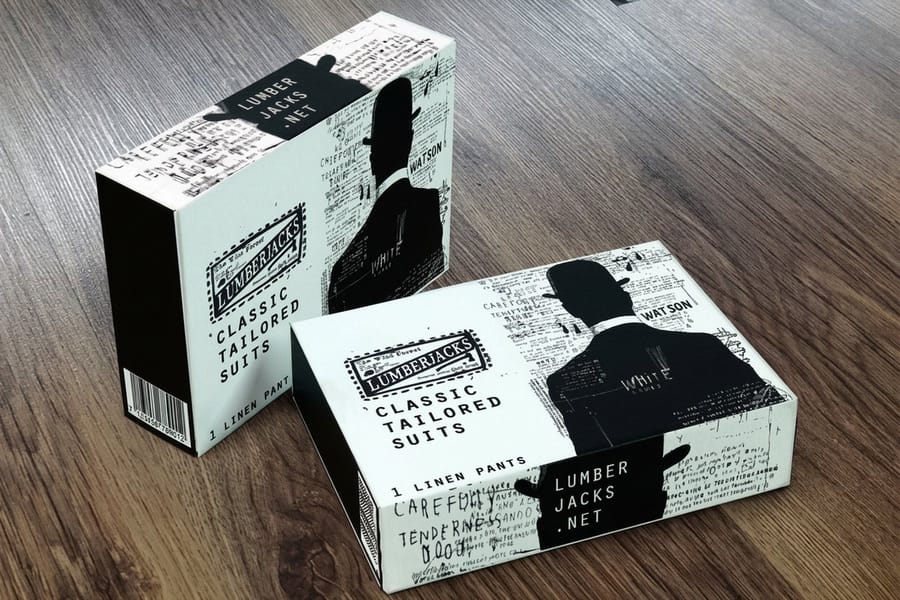
Measure the heaviest month first. Subscription boxes are sized for the worst case, because the month with the candle and the ceramic mug decides the carton, and every lighter month simply travels with more room.
We run two stock footprints. The 5" x 7" x 1.7" mailer suits flat contents such as cosmetics, sachets, printed cards and small accessories. The 5.5" x 5.5" x 2.625" square gives you an extra inch of depth for jars, tins, candles and a folded garment. A custom size is made to order up to 6" x 7", and that is a genuine ceiling rather than a soft guideline. If your product needs a 12 inch apparel box or a large gift crate, our packaging range is not the right fit and you should say so now instead of redesigning around it later.
| Style | Surface | How it opens | Best for |
|---|---|---|---|
| Custom mailer box | 14pt uncoated cover, or 18pt cover with gloss on the printed side. | Folds flat, snaps into shape, closes without tape. | The default subscription carton, printed full color across the front. |
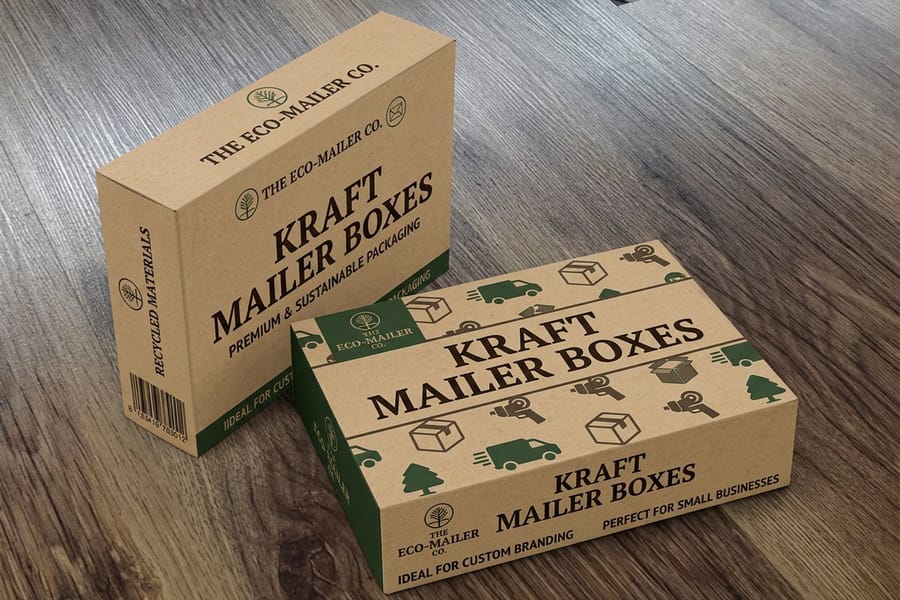
| Kraft mailer box | Natural brown kraft in the same two weights. | Same one-piece fold and tuck. | One or two color artwork, a natural look, and scuffs that do not show. |
| Roll end tuck top | Same 14pt and 18pt cover stocks. | Lid rolls over the front and locks with a tuck flap, reseals cleanly. | Boxes you want the subscriber to keep and reuse. |
| Eco friendly box | 14pt or 18pt cover, printed 4/0 front, blank back. | Flat pack, no glue, no tape needed to close. | Right-sized retail packaging that ships and stores flat. |
All four share the same two sizes and the same $711.78 starting point for 250, so the choice is about stock and closure rather than price. Depth is where people get caught: a box a quarter inch too shallow means buying void fill every single month, which costs more over a year than moving up a size once. The full printed kit for subscription box printing looks like this.
| Piece | Size | Smallest run | Ready in | |
|---|---|---|---|---|
| Mailer box | 5 x 7 x 1.7 or 5.5 x 5.5 x 2.625 in | Full color outside, 14pt or 18pt board | 250 for $711.78 | 7 business days |
| Tissue | 10 x 15, 15 x 20 or 20 x 30 in | One or two spot inks on white or black | 100 sheets for $126.32 | 18 business days |
| Thank you card | 4.25 x 5.5, 5 x 7 or 6 x 6 in | Full color, one or both sides | 25 for $19.77 | 3 business days |
| Packaging tape | 2 or 3 in wide, 55 or 110 yd rolls | One or two inks on white or clear film | One case for $347.11 | 20 business days |
Upload each piece as its own PDF: the box on its dieline with an eighth of an inch of bleed, the tissue as a repeating tile in spot colors, and the card at trim size plus bleed. See the whole range on custom box printing, and if you are weighing paperboard against corrugated for a fragile product, the cardstock versus corrugated comparison settles it.
Designing the Unboxing When the Inside Prints Blank
Here is the constraint nobody mentions until the proof arrives: our boxes print 4/0. Full color on the outside front, blank on the inside. So the interior message, the one that arrives at the exact second the subscriber is paying attention, has to be printed on something else.
Three layers do that job, and they reveal in a fixed order:
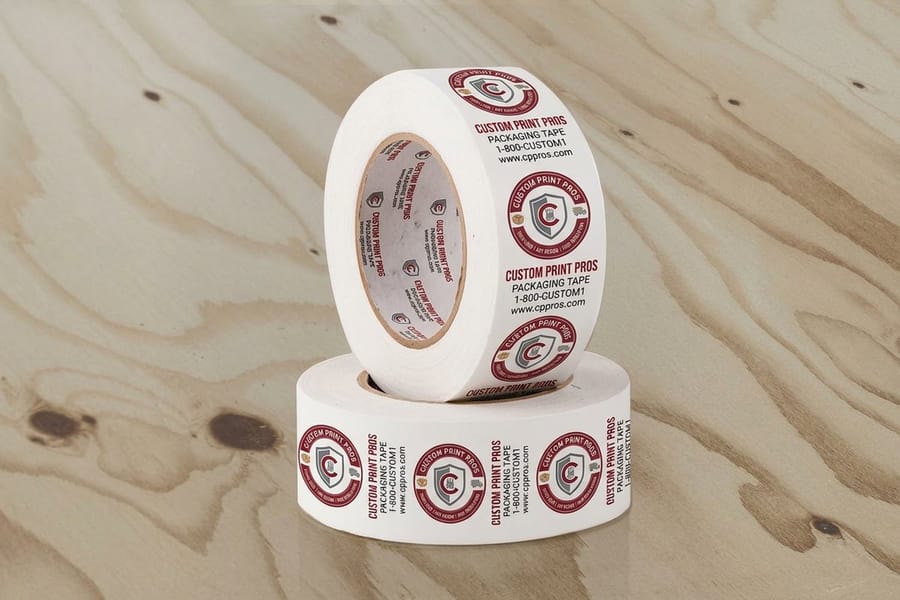
- The seal. Printed packaging tape in bright white or clear polypropylene, with your logo repeating down the roll in one of 75 plus ink colors. It is the first branded thing a pair of scissors goes through.
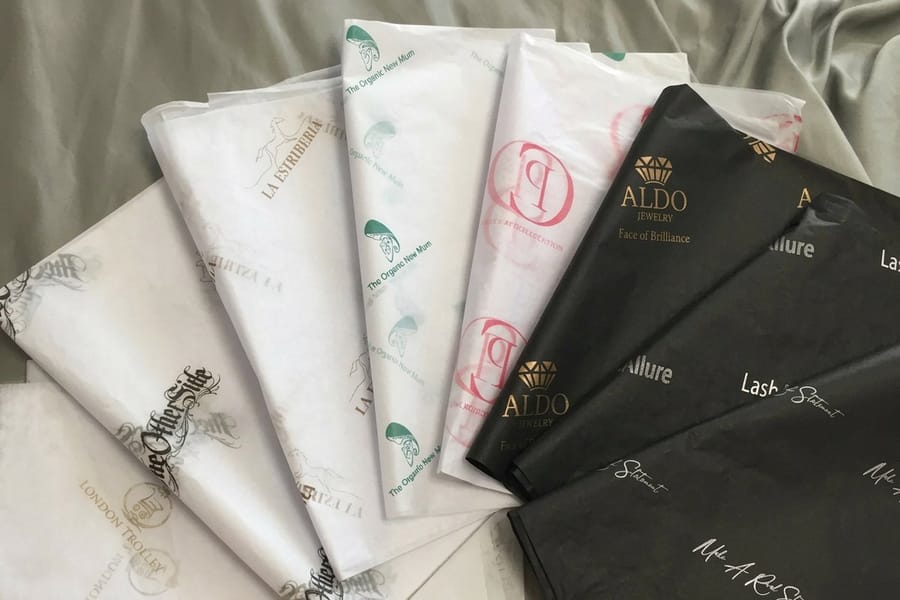
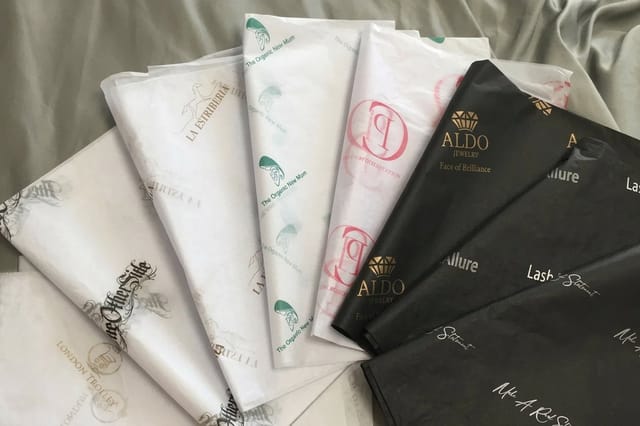
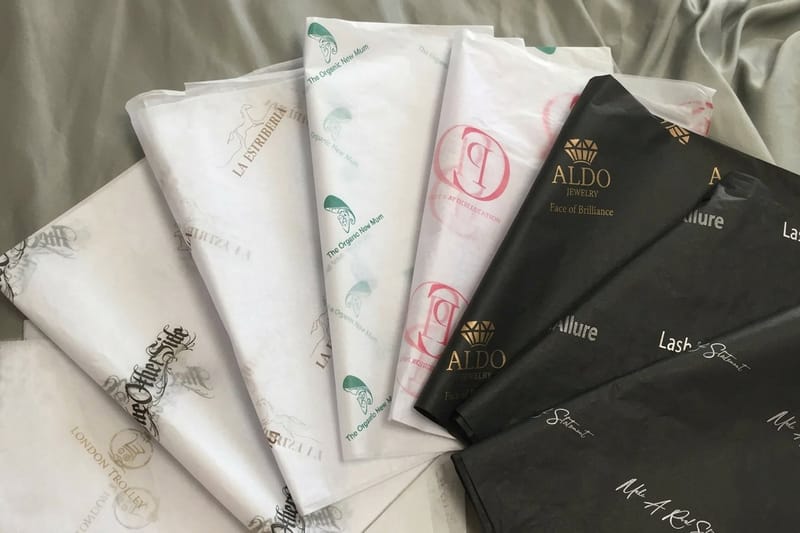
- The wrap. Custom tissue paper is the layer that fills the empty interior. It prints one or two spot ink colors on white or black tissue, in 10" x 15" up to 20" x 30", so a repeating logo or a short line of type works and a photograph does not.
- The note on top. A card resting on the tissue, face up, is the last thing designed and the first thing read.
Spot color is a real limitation on tissue and worth designing around rather than fighting. One or two flat inks means bold marks, line patterns and typography read beautifully, while gradients and photographic imagery do not survive the process. Pick the ink to contrast with the box exterior, so opening the lid delivers a visible change rather than more of the same brown.
The tissue is the cheapest reveal in the kit: at $1.26 a sheet on the first run it costs less than half the $2.85 box, and it sits under a $0.79 card. Fold it printed side up and close it with a single die-cut sticker instead of tape, so the subscriber breaks one seal and the tissue opens like a page before the product appears. As the box falls toward $0.80 at 1,000 and $0.37 at 25,000, the tissue and the card become the pieces worth changing each season. Build the artwork against a proper dieline, which our packaging file preparation guide walks through.
Inserts and Thank-You Cards That Do Real Work
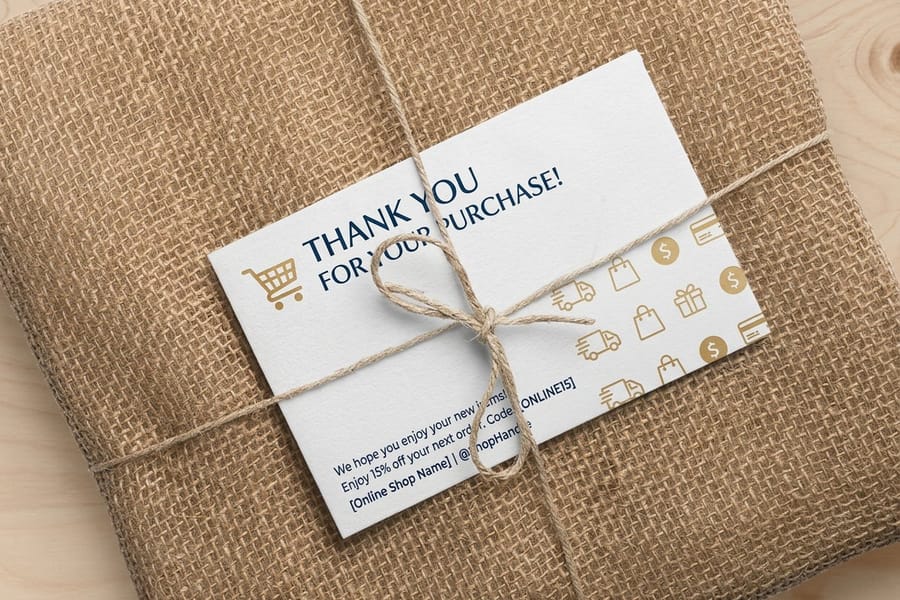
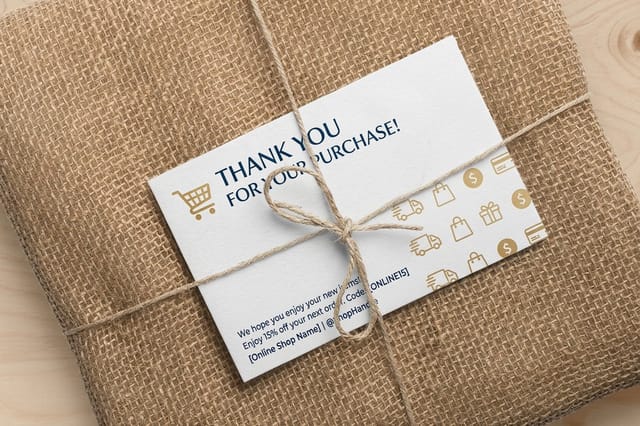
The card is the cheapest piece in the box and the only one you can change every month. Ecommerce thank you cards start at $19.77 for 25, print full color on one or both sides, and run on a 3 business day standard turnaround, which means the card can carry news the box was printed too early to know. The ecommerce thank you cards video shows the card in hand.
You get three sizes: a 4.25" x 5.5" note card that sits neatly on a small mailer, a 5" x 7" when the card is the hero, and a 6" x 6" square that matches the square box footprint. Twenty stocks are available from 10pt to 26pt, including kraft, cream, white linen and metallic pearl, plus optional rounded corners and a high-gloss UV coating. On the smaller size, a 16pt or heavier stock is worth the difference, because a thin card curls against tissue paper and arrives looking like a receipt.
What goes on it matters more than the stock. A card that says only "thank you for your order" is a wasted surface. Give it one job per drop: the story behind this month's item, a reorder or refer-a-friend code that is unique enough to be trackable, a short ask for a review with the exact link, or the shipping date of the next box so nobody emails support to ask. Print the back too, since a blank reverse is half a card you already paid for.
Beyond the card, small printed pieces punch above their cost. A hang tag on a garment, a die-cut sticker sheet subscribers will actually stick on a laptop, and a printed insert explaining how to use the product all extend the moment. Browse the wider range on packaging printing and thank-you card printing to see which sizes fit inside your carton before you design them.
Sustainable Options, Without the Greenwash
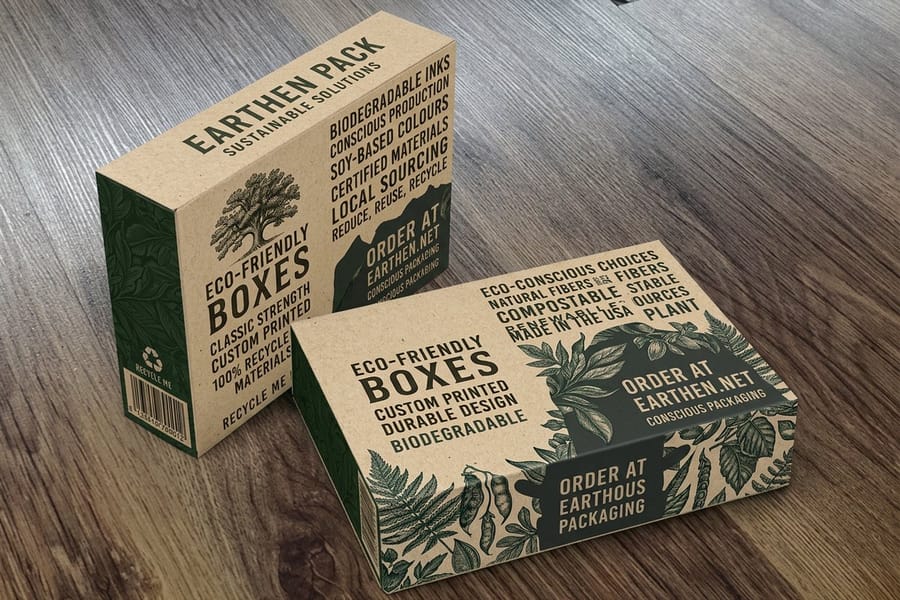
The biggest environmental decision in a subscription box is not the material. It is the size. A carton that fits the contents needs no plastic void fill, weighs less in transit, and takes less shelf space in a van, and it does that every month for as long as the subscription runs.
After right-sizing, the honest levers are straightforward. Eco friendly boxes and kraft mailer boxes are paperboard cartons that fold without glue and close without tape, so the whole package goes into a curbside recycling bin as one material. Choosing the 14pt uncoated cover over the 18pt gloss stock removes the coating and leaves a natural matte surface. Tissue paper in 10lb white or black replaces plastic wrap for anything that needs protection but not cushioning.
Two things worth saying plainly. Printed packaging tape is polypropylene film, not paper, so a box sealed with it is no longer a single-material package. And "eco friendly" on our product name describes the construction and the stock, not a third-party certification, so do not claim one on your own packaging that you have not obtained. Subscribers read those claims closely and the credibility cost of an overstated one is worse than saying nothing. For more on lowering the footprint of a print program, see our notes on eco-friendly packaging ideas and the eco-friendly printing collection.
Ordering: Lead Times and the Sequence to Place Them In
The most common packaging failure is not a bad design. It is a launch date set against the box turnaround while the tissue paper takes three times as long.
| Piece | Starts at | Minimum | Standard turnaround |
|---|---|---|---|
| Printed packaging tape | $347.11 per case | 1 case (36 rolls at 2", 24 at 3") | 20 business days |
| Custom tissue paper | $126.32 per 100 sheets | 100 sheets | 18 business days |
| Custom mailer boxes | $711.78 per 250 | 250 boxes | 7 business days |
| Ecommerce thank you cards | $19.77 per 25 | 25 cards | 3 business days |
Read that table bottom to top and the schedule writes itself. Tape and tissue go in about five weeks before you pack, boxes two weeks out, cards in the final week once the month's message is settled. Every item includes a free online proof, and production starts when you approve the proof rather than when you upload the file, so build a day of your own review time into the plan.
Order a small first run even if the forecast says otherwise. Pack a real month into the box, tape it, mail it to yourself, and open it the way a subscriber would. You will find the depth problem, the tissue that is an inch too small, or the card that curls, and fixing any of those after a 25,000 unit run is expensive in a way that fixing them after 250 is not. When the packaging settles, the price per box falls hard with volume, down to roughly $0.37 on the box and about $0.80 a tissue sheet at 2,000. Start on custom box printing or read the wider ecommerce branding guide to place packaging inside the rest of the brand.
Wally packs a subscription box
Outside printed, inside blank, so the layers do the talking
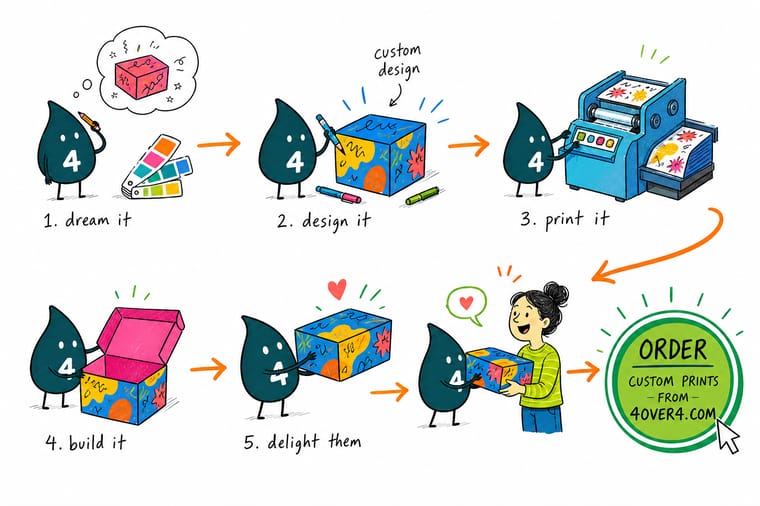
Wally seals the box with tape that carries your logo, fills it with spot-color tissue paper, and lays a thank-you card face up on the product. The carton prints full color on the front and blank on the inside, which is why those three layers exist. He sizes the box to the heaviest month, not the average one, and he orders the tissue five weeks ahead because it takes 18 business days while the boxes take 7.
Configure custom mailer boxes →
Specs and pricing
The three pieces of the kit, with live sizes and prices
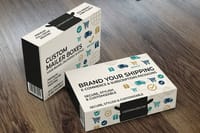
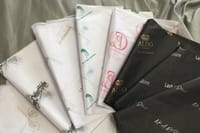
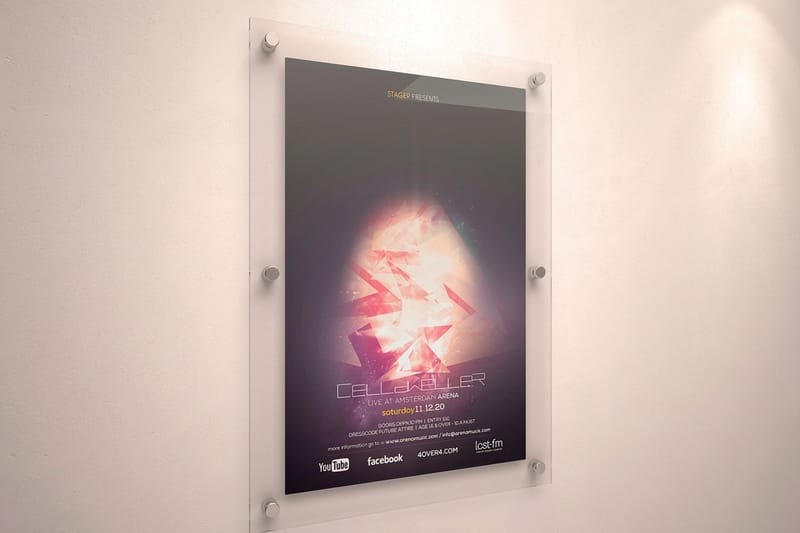
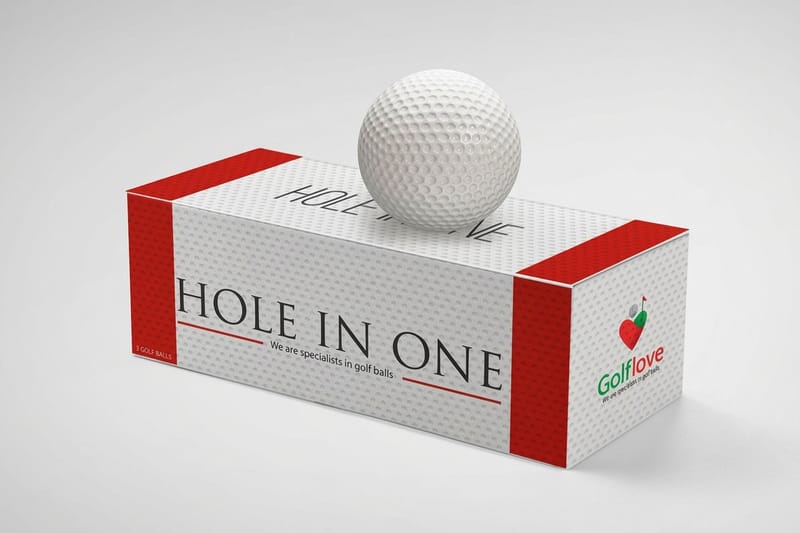
Box, wrap and card side by side, with the configuration choices and starting prices straight from the 4OVER4.COM configurator: the box from 250 for $711.78 in 7 business days, the tissue from 100 sheets for $126.32 in 18, and the card from 25 for $19.77 in 3.

Print it
Order the box, the wrap and the note together
At the smallest runs the three come to about $4.90 a box: $2.85 for the box, $1.26 for a tissue sheet and $0.79 for the card. Order the tissue first, since it takes 18 business days, and the card last, so it can carry this month's news.

Explore more
Where to go next
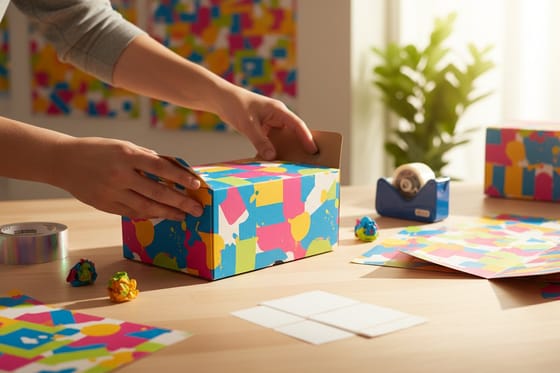
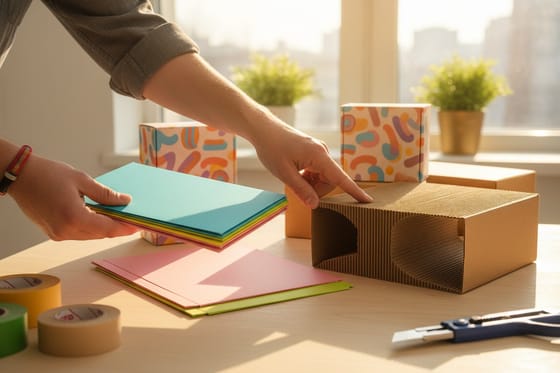
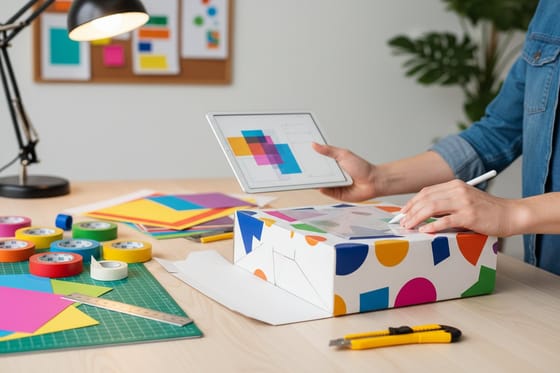
Choose between a mailer and a shipping box, check how much protection paperboard and corrugated give, set up packaging files that clear prepress, and see where the box sits in the rest of your brand.
By the numbers
Packaging printed by 4OVER4.COM
Common Questions
Your subscription box questions, answered
What size should a subscription box be?
Start from the bulkiest month you plan to ship, not the average one. Our mailer boxes come in two stock sizes, 5" x 7" x 1.7" for flat goods like cosmetics, cards and small accessories, and 5.5" x 5.5" x 2.625" when the contents have depth, such as jars, candles or a folded garment. A custom size is made to order up to 6" x 7", and that is the ceiling, so an apparel box or a large gift crate needs a different format. Pack a real month into a sample box before you commit to 250 units, because a box that is a quarter inch too shallow forces you to buy void fill every month afterward.
How much does it cost to print a subscription box?
At the smallest run the three printed pieces come to roughly $4.90 a box from list prices: $711.78 for 250 custom mailer boxes works out to about $2.85 each, $126.32 for 100 sheets of tissue paper is $1.26 a sheet, and $19.77 for 25 ecommerce thank you cards is about $0.79 a card. Volume changes the picture sharply. The box drops to roughly $0.37 each at 25,000 units and tissue to about $0.80 a sheet at 2,000, so the per-box packaging cost of a mature subscription looks nothing like the cost of the first pilot run.
Can you print the inside of the box?
Not on these boxes. Custom mailer boxes, kraft mailer boxes, eco friendly boxes and roll end tuck top boxes all print 4/0, meaning full color on the outside front and a blank interior. That is exactly why the inside layer matters: custom tissue paper, a printed card sitting on top of the product, a die-cut sticker sealing the wrap, or a printed sleeve are what fill the moment the lid comes up. Plan the interior as its own design job rather than assuming the box will carry it.
How far ahead do I need to order?
Work backward from your ship date using the slowest item. Printed packaging tape is 20 business days standard, custom tissue paper is 18, boxes are 7, and thank-you cards are 3. If tape and tissue are part of the kit, place those orders about five weeks before you pack, then boxes two weeks out, then cards in the final week once you know the month's message. Every one of those items includes a free online proof, and the clock on production starts when you approve it, not when you upload the file.
What are the minimum quantities?
Boxes start at 250 units, tissue paper at 100 sheets, thank-you cards at 25, and printed tape at one case, which is 36 rolls on the 2" width or 24 rolls on the 3". Those minimums are uneven on purpose, and you can use that. A pilot of 250 boxes with 100 tissue sheets covers a few months of a small list, while the card minimum is low enough that you can print a fresh one for every drop without carrying inventory.
Kraft or white for a subscription box?
Both run on the same construction and the same two sizes, so the decision is about ink, not strength. Kraft mailer boxes give you a natural brown surface that makes a one or two color design look considered and hides scuffs from the delivery network. White stock, printed on 18pt cover with gloss on the printed side, is the one to pick when the artwork is photographic or when a color has to match your site exactly, because kraft shifts every ink warm. If your brand palette contains a cool pastel, print it on white or it will arrive looking muddy.
Can I change the artwork every month?
You can, but it is usually the wrong lever. Each box artwork is a separate print run with its own 250 piece minimum and 7 business day turnaround, so twelve designs a year means twelve orders and a warehouse full of leftover boxes. The pattern that works is a fixed exterior, a tissue sheet that lasts a season, and a thank-you card reprinted per drop at 25 pieces and 3 business days. The subscriber still gets something new every month, and you only carry inventory on the cheap piece.
Get Started
Tissue paper runs 18 business days, so order it first
Pick a size, choose 14pt uncoated or 18pt gloss cover, upload the artwork, and approve a free online proof before anything prints.
Legal Disclaimer
Gold Standard guarantees apply to all standard orders placed through 4over4.com. Price match requires verifiable proof of a competitor's published price for an equivalent product with matching specifications and turnaround time. Satisfaction guarantee covers manufacturing defects and print quality issues. Contact support with order number and documentation.
