
17 Print Pieces That Find Motivated Sellers for Real Estate Investors
Real estate investing runs on one scarce resource: conversations with owners who are ready to sell. These seventeen print pieces are how investors start those conversations at scale, from the mailer that finds the motivated seller to the thank-you card that turns a closing into the next referral.
The real estate investment new-customer suite is seventeen print pieces that generate and close seller conversations: direct mail postcards run the motivated-seller campaigns, standard postcards carry the follow-up sequence, we-buy-houses yard signs, door hangers, car magnets, and project-site banners work the streets, business cards, notepads, calendars, and fridge magnets keep the deal-flow network warm, sales sheets and the banner stand recruit lenders at every meetup, offer letters ride on real letterhead inside a presentation folder, the how-it-works brochure turns stressed sellers into signed contracts, and the thank-you card turns every closing into referrals.
The picks
Seventeen pieces, from $16.48 follow-up cards to a year of calendars
Start here. These are the seventeen products in the suite, numbered in the order a deal actually happens: find the seller, follow up, be visible, be credible, close calmly, and say thank you. Each pick is priced live from the configurator, so order the suite together and every piece carries the same trustworthy brand.






Design and print help
One company name and number, mailer to offer letter
A seller under pressure chooses the buyer who looks accountable. Lock the company name, phone and promise in the online designer so the same block prints on a 4 by 6 in mailer, a 12 by 18 in yard sign and the 8.5 by 11 in offer letterhead, and check each piece before it prints. These 4OVER4.COM services keep your company name, number, and promise identical from the postcard to the offer letter.
How they work together
Find the seller, stay in the running, close
Five pieces find the seller, eight keep you in the running until circumstances change, and four close with credibility. Print the whole sequence and finding, following up, and closing stop being separate scrambles.
The direct mail campaign works your researched lists, absentee owners, inherited properties, pre-foreclosures where lawful, while we-buy-houses signs at chosen corners and project sites catch the sellers no list contains. Door hangers close the loop on every distressed property you drive past, the car magnets turn the drive itself into advertising, and the project-site banner tells each renovated street who buys here.
The follow-up postcard sequence keeps you politely present for months, cards work the courthouse steps and agent relationships, and flyers recruit contractors and private capital at every meetup. Fridge magnets hold your number in the seller's kitchen, notepads and calendars keep the brand on referral-source desks all year, the sales sheet pitches private lenders on one page, and the banner stand fronts the REIA booth.
The offer goes out on real letterhead so it reads as an offer, and the how-it-works brochure sits on the kitchen table answering the scary questions: process, timeline, what happens next, no surprises. The presentation folder hands the whole packet over as one credible object, and the thank-you card after closing turns the finished deal into the next referral.
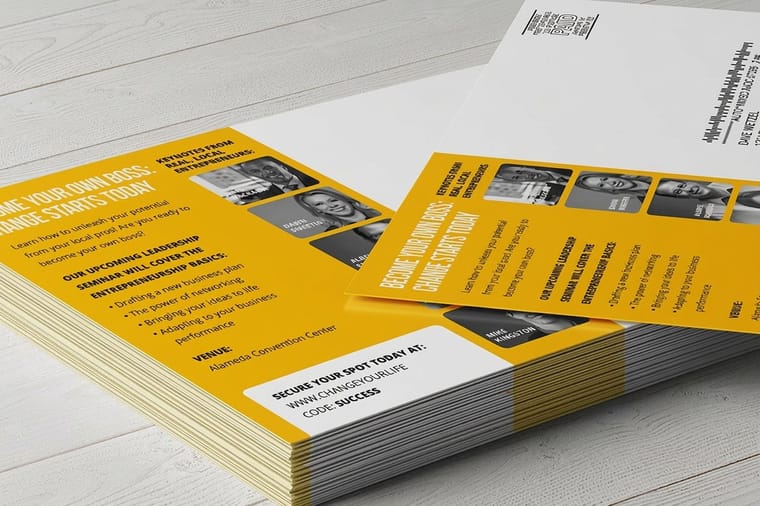
1. Direct mail postcards: the motivated-seller engine
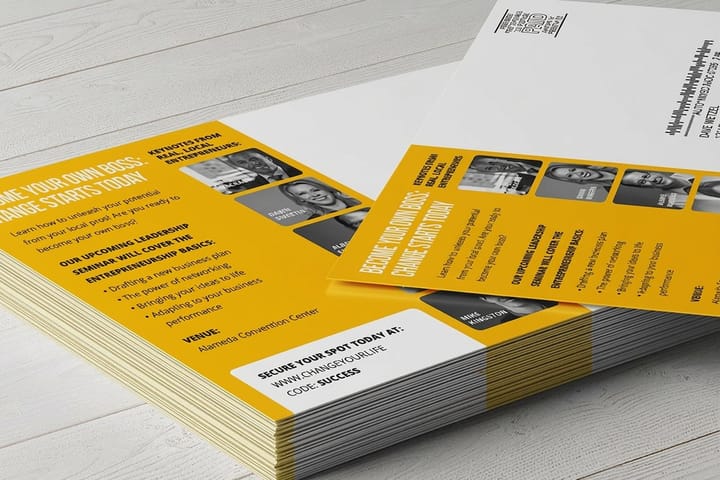
Every investor strategy, flip, rental, wholesale, eventually depends on the same input: an owner with a reason to sell, reached before the property hits the market. Direct mail remains the reliable way to reach them because it lands in every mailbox on your list, absentee owners, tired landlords, inherited homes, regardless of who answers cold calls or reads email.
The craft is list plus cadence: a defined list you can afford to mail repeatedly, a card that states plainly who you are, what you buy, and that you close fast for cash, and a real callback number answered by a human. The complete playbook, lists, messaging, cadence, and the math, is in the definitive real estate direct mail guide, with channel numbers in the response benchmarks.
Budget for six touches before you judge the list. The campaign that quits at two paid for everyone else's deals.
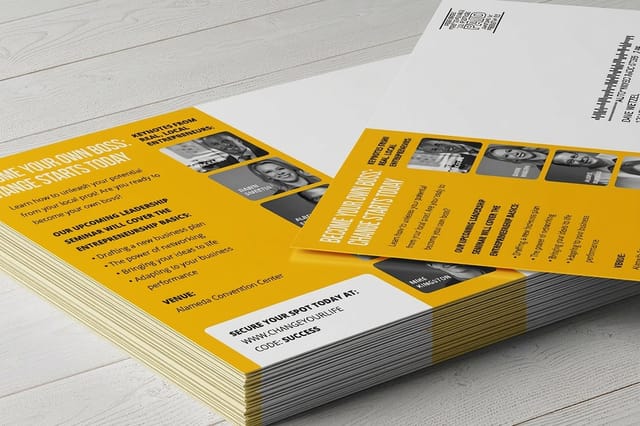
2. Standard postcards: touches two through 17
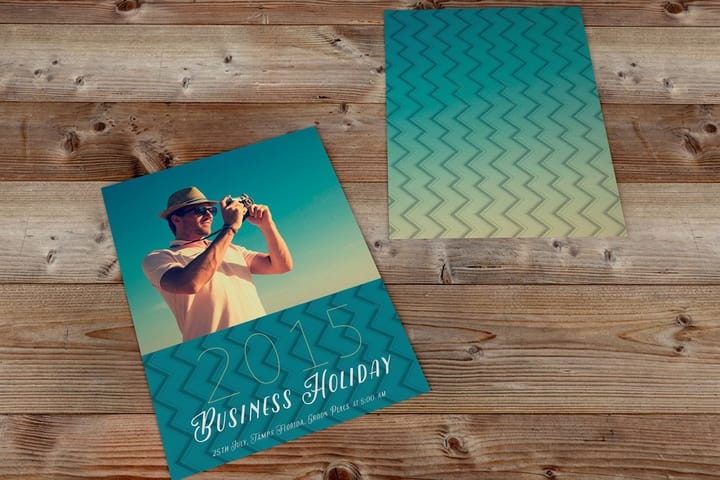
Owners almost never sell to the first card; they sell when something changes, the tenant leaves, the roof quote arrives, the estate settles, and at that moment they call whoever is still politely showing up. The follow-up sequence is where the actual contracts live, and it runs on the cheapest card in the suite.
Vary the message, not the identity: the same brand and number, but rotating angles, tired of being a landlord, inherited a property you do not need, no repairs, no showings, pick your closing date. Keep each card honest and specific. The format fundamentals in how to make postcards apply, and the postcards range covers the sizes that mail economically.
Print the whole sequence at once so touch four never waits on a reorder. Consistency is the strategy; the print run is just its fuel.
3. Yard signs: the corner that generates calls while you sleep

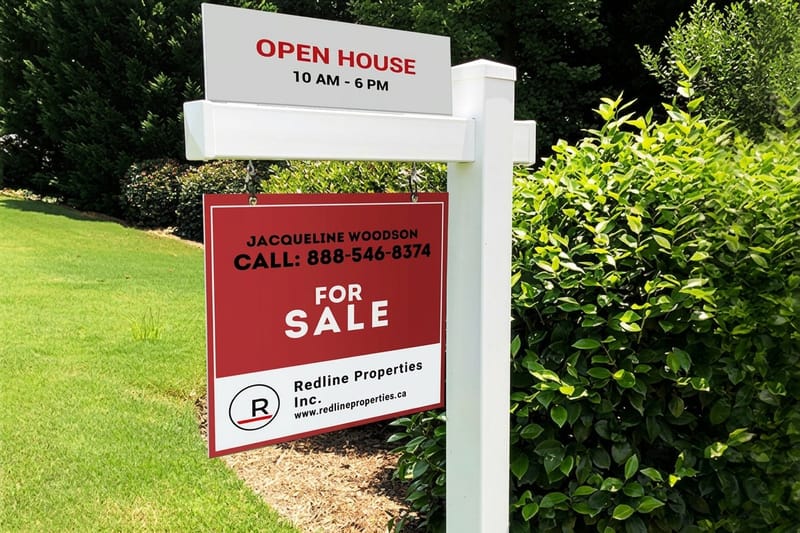
The we-buy-houses sign is the bluntest instrument in real estate marketing, and it keeps earning its place: a sign at a busy corner or on a project site works every hour of every day for the price of a lunch. Sellers who would never respond to mail sometimes dial the number they have driven past forty times.
The history and street-level tactics of the format are covered in bandit signs, the ultimate real estate advertising tool, with one hard caveat: placement on public rights-of-way is regulated and often prohibited, so know your local ordinances and favor private placements, your own project sites, and permissioned lots. Build fundamentals live in how to make yard signs.
Every renovation you run should wear a branded sign. The neighbors watching the dumpster arrive are your next off-market lead.
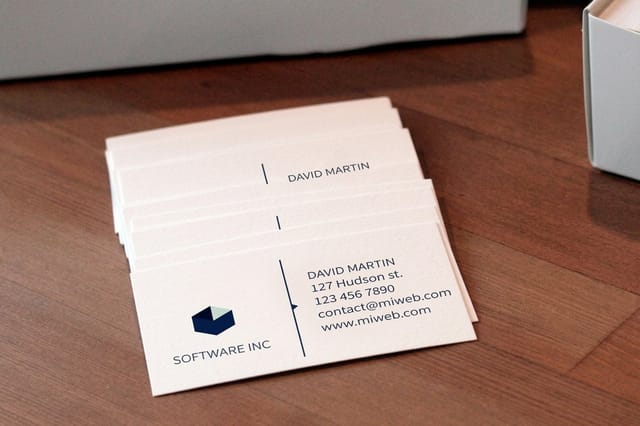
4. Business cards: deals still happen in person
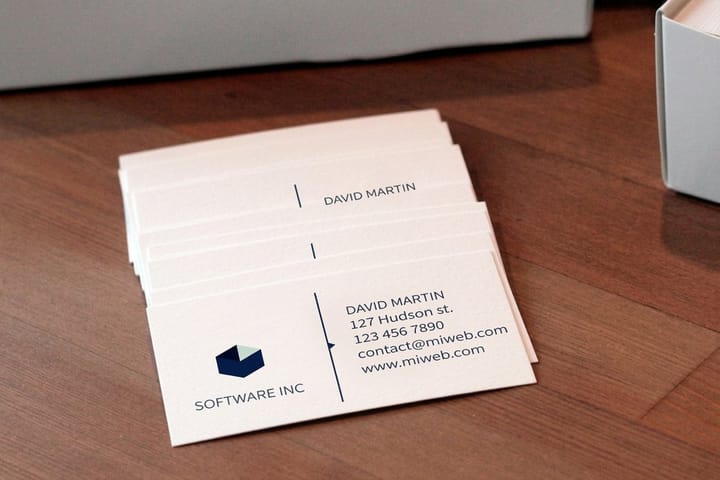
Off-market deal flow is a relationship business: agents with pocket listings, probate and divorce attorneys, wholesalers, property managers, courthouse regulars, contractors who see distress first. Every one of those relationships starts with a handshake and survives on a card that made you easy to remember and reach.
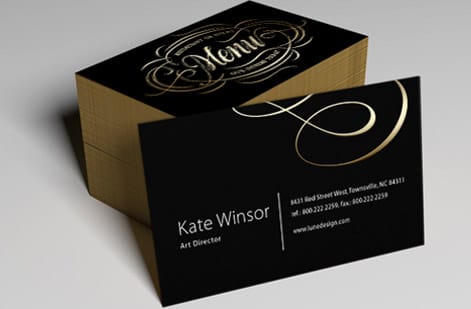
Say what you are in five words, buys houses, any condition, cash, and make the phone number the biggest text on the card. A card that states the business plainly outperforms a clever one, because your referrers repeat exactly what it says. The how to make business cards guide covers the layout basics, and a thicker stock from the range survives the toolbox and the courthouse pocket.
Hand them out like flyers, not like heirlooms. In this business the card is a lead-generation expense, and a cheap one.
5. Letterheads: the offer that reads as an offer
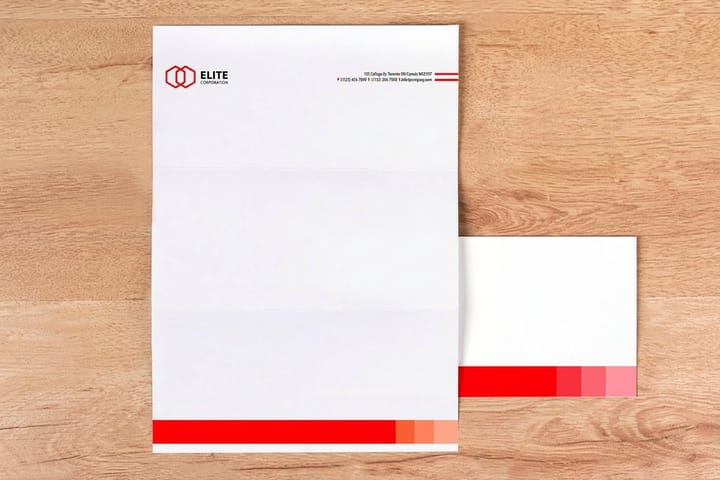
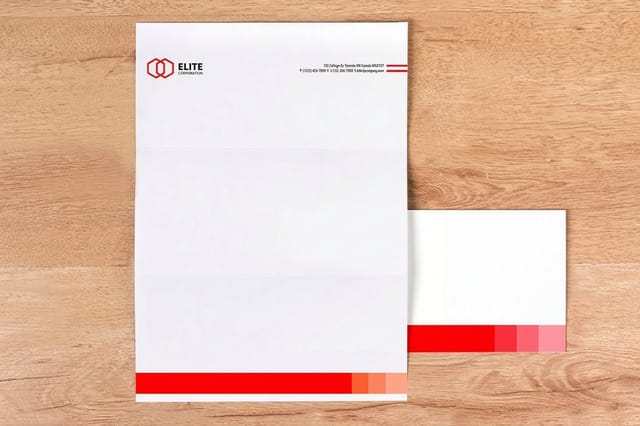
An offer scribbled on a printout is easy to dismiss; the same numbers on real letterhead, with a company name, address, and signature block, read as a decision that was made carefully by someone accountable. For sellers, especially older owners and heirs handling an estate, that credibility difference decides which envelope gets a callback. Standard letterheads start at 50 for $99.95 at 8.5 by 11 in, on 70# uncoated text or a 24# laid or 28# linen writing stock.
Letterhead carries the rest of the paper trail too: introduction letters to attorneys, follow-ups after the walkthrough, the thank-you after closing that seeds the next referral. It is the suite's quiet professionalism layer. Browse the letterheads range for a stock with weight; in a trust decision, the paper is testimony.
Pair it with envelopes in the same design so the letter and the envelope match in the seller's hands.
6. Flyers: recruit capital, contractors, and deal flow

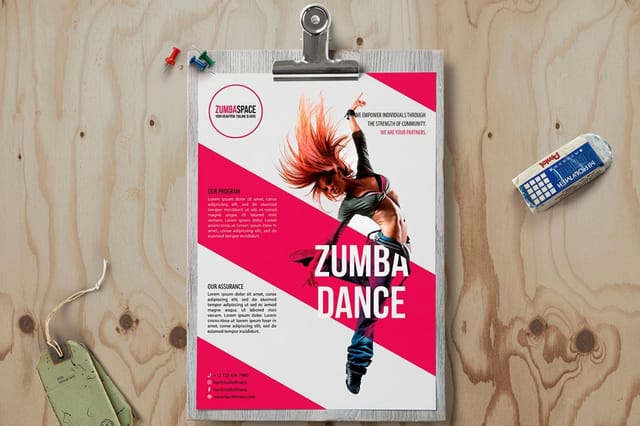
An investment operation needs more than sellers: it needs contractors who show up, agents who call first, and sometimes private capital. The flyer works those rooms. At the REIA meetup, the contractor supply house, and the chamber mixer, one page that says what you buy, how fast you close, and what you pay partners does the prospecting a website never will.
Make each audience its own flyer with one message each: we close in fourteen days for agent referrals; steady work, paid on schedule for crews. The one-message discipline in how to make flyers is the whole trick. Keep a stack in the truck; the supply-house corkboard is free advertising with perfect targeting.
The investor everyone in the room can describe in one sentence is the one who gets the first call. The flyer writes that sentence.
7. Brochures: calm the kitchen table, close the contract

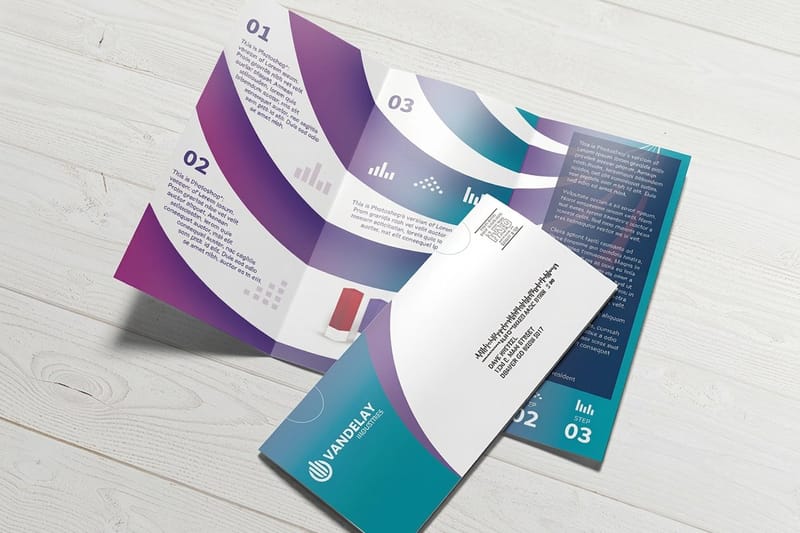
The last mile of every deal is a stressed person at a kitchen table deciding whether to trust you with their largest asset. The how-it-works brochure is your closer there: the process in three steps, the realistic timeline, what happens at each stage, answers to the questions they are embarrassed to ask, all in a calm voice they can reread after you leave.
It also protects the deal from the second-guessing week: the seller's son who lives out of state reads the brochure, not your conversation. Be transparent about how offers are calculated and what as-is really means; clarity converts better than pressure. The structure guidance in how to make brochures covers folds and layout for exactly this rack-fold explainer.
Leave it with the offer letter in every packet. The pieces sell together: one proves you are real, the other proves you are safe.
8. Door hangers: driving for dollars, closed the same afternoon
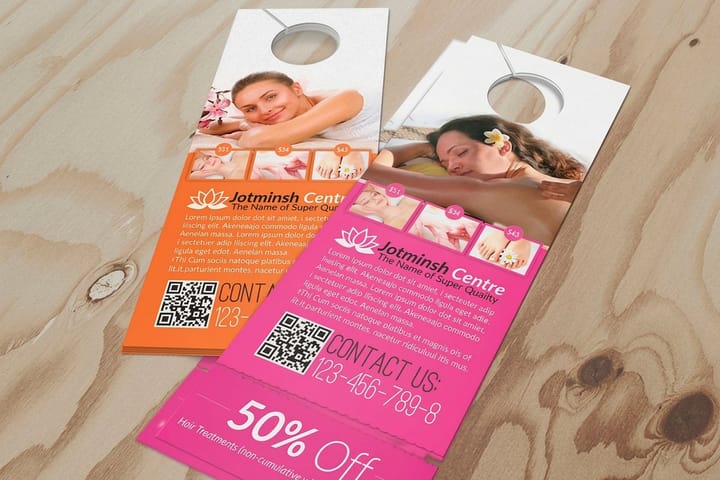
Driving for dollars finds the properties no list has caught yet: the overgrown yard, the tarped roof, the porch full of unclaimed mail. The door hanger is how that sighting becomes a conversation the same afternoon, a piece physically on the property that says I was here, I buy houses like this one, and here is my number, with none of the delay of adding an address to next month's mail run.
Keep the message plain and neighborly: what you do, that you buy as-is, and a real phone number in big type. The format's track record is covered in are door hangers effective, and the door hanger legal guide keeps the route inside solicitation rules, which vary by municipality and matter in this business.
Keep a stack in the glovebox permanently. The investor who hangs a card on the door while competitors wait for skip-tracing gets the first phone call.
9. Car magnets: the farm area learns your name by repetition

An investor's week is spent driving: the farm area, the project sites, the courthouse, the supply house. A pair of car magnets turns every one of those miles into advertising, we buy houses, any condition, and a phone number, read at stoplights and in driveways by exactly the neighborhoods you work. It is the only piece in the suite that markets while you do something else.
Design for a moving reader: five words, huge number, two colors. The design specifics live in what car magnets are and how to design them, and decals versus magnets versus bumper stickers explains why the removable magnet fits a vehicle that is sometimes personal and sometimes the company truck.
Magnets also make every showing and walkthrough look official. The seller peeking through the curtains sees a marked vehicle, not a stranger's car, and that first impression is part of the trust the deal runs on.
10. Vinyl banners: every project site advertises the next deal
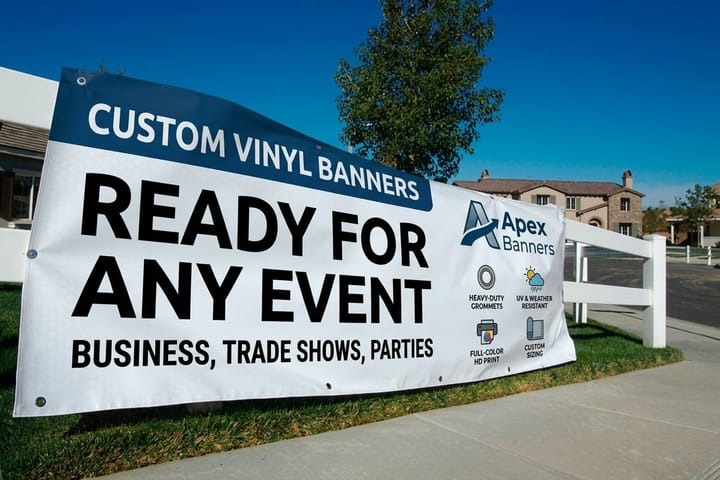
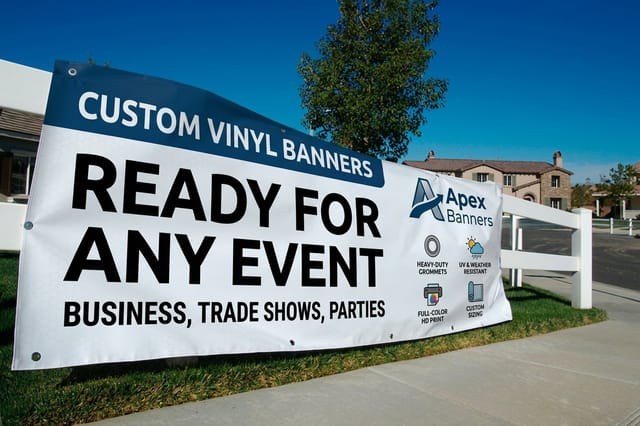
A renovation is the loudest thing on its block for months: dumpsters, crews, before-and-after drama the whole street watches. A vinyl banner on the fence, another quality renovation by, we buy houses in this neighborhood, puts your name on that show. The neighbors watching are the same people who know which house nearby is inherited, vacant, or tired.
Vinyl survives a full project cycle outdoors and moves to the next site when the sign comes down. The guide to making banners covers sizing and grommets, and banner material types settles vinyl versus mesh for a windy fence line.
Add a banner to every closing you celebrate and every community event you sponsor. In a trust business, being visibly the investor who improves houses is marketing no mailer can buy.
11. Sales sheets: the private-lender pitch on one page
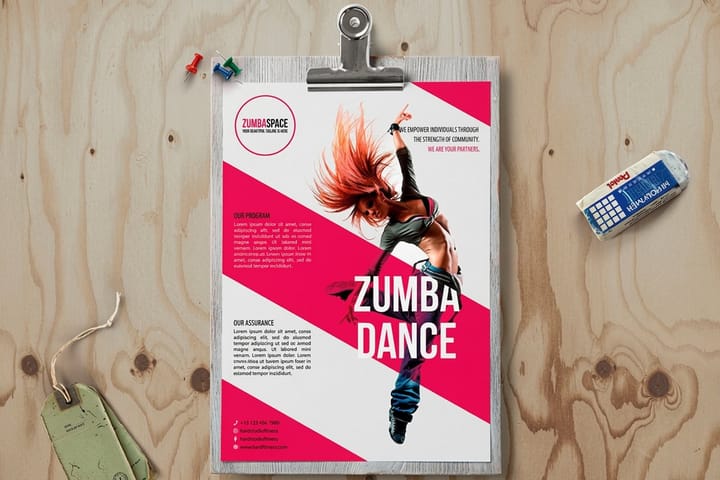
Deals die for lack of capital more often than lack of houses. The sales sheet is the capital-raising piece: one page with your track record, the numbers from recent projects, the terms you offer private lenders, and the buy box you hunt in. Handed across a lunch table or left after a REIA pitch, it turns I sometimes lend into a specific conversation about the next deal.
Lead with completed projects and real returns, keep the disclaimers honest, and let the paper quality echo the professionalism the money is being asked to trust. The distinction in brochures versus sales sheets explains why this audience gets the flat, dense, data-forward format rather than a folded story.
Print a version for wholesalers and agents too, with the buy box up top. The clearer your criteria on paper, the more the market brings you exactly what you buy.
12. Banner stands: the booth that makes you look institutional
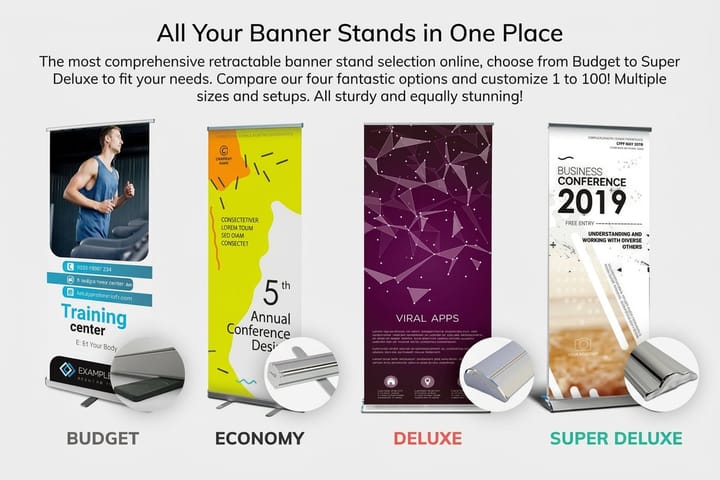
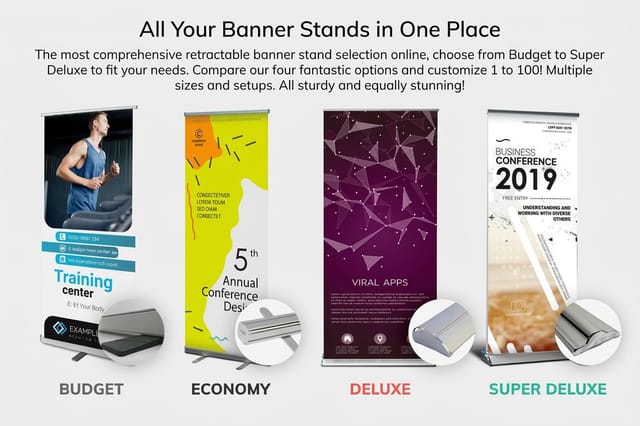
REIA meetings, home shows, landlord expos, community fairs: the rooms where an investor recruits lenders, contractors, and deal flow all involve a table, and a bare table looks like a hobby. A retractable banner stand behind it, your brand, what you buy, how fast you close, makes a one-person operation read as an institution before a word is spoken.
One stand, one message, reused for years: setup takes a minute, per how to set up a retractable banner stand, and the retractable banner size guide picks the footprint that fits a standard expo table.
Pair the stand with the sales sheets and business cards on the table in front of it. The backdrop earns the stop; the paper goes home with the lead.
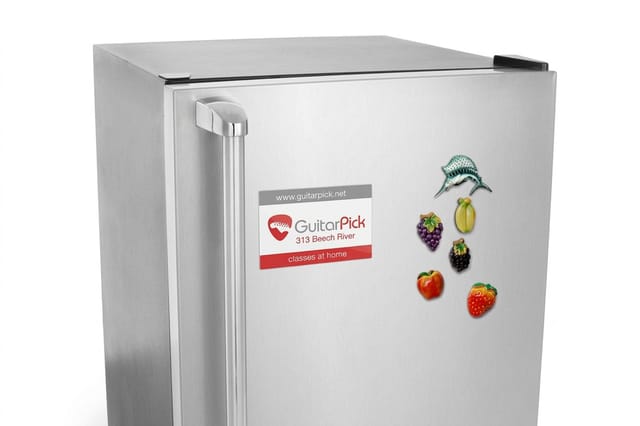
13. Standard magnets: the number on the fridge when circumstances change
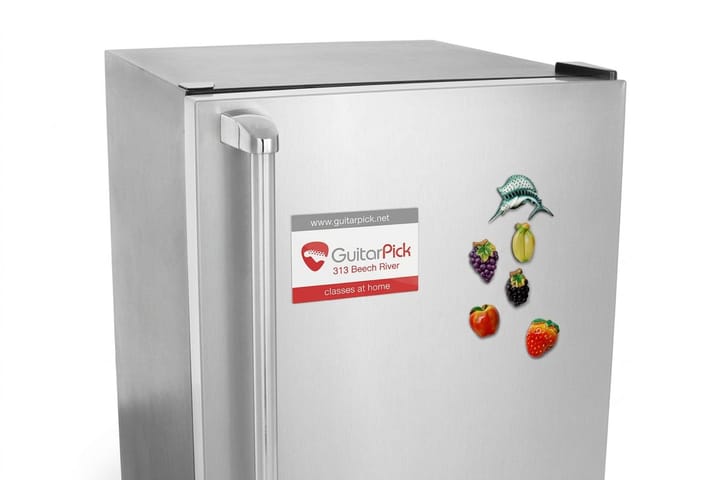
The whole motivated-seller game is being remembered at the moment life changes, and nothing is remembered like the thing on the fridge. A magnet left after a walkthrough that did not close, or included with a follow-up mailing, keeps your name and number in the seller's kitchen for the months it takes the tenant to leave or the estate to settle.
Make it useful enough to earn the spot: your number big, plus something the household keeps, a small calendar strip or emergency numbers line. The production side is in how to make custom magnets, and magnets versus stickers makes the case for the format that never gets thrown away.
At cents apiece, hand them out with every conversation that ends in not yet. Not yet is the seller most worth staying in front of.
14. Notepads: your brand on the desks where referrals start

Probate attorneys, property managers, agents with expired listings, contractors in distressed houses every day: these desks generate the best off-market referrals in the business, and a branded notepad sits on them for months. Every note jotted on it repeats your name and number to the exact professional you want thinking of you when a client says I just need this house gone.
Print your name, what you buy, and the phone number in the header of every sheet, so even the last page still refers you. Pads are the classic relationship leave-behind: useful, unpretentious, and impossible to file away in a drawer the way a card is.
Drop a fresh pad each quarter with the offices that matter. The refill visit is itself a touch, and the conversation it starts is usually about a property.
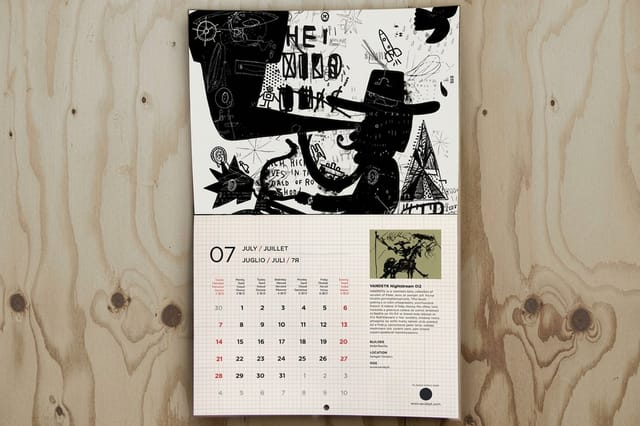
15. Calendars: twelve months of presence for one print run
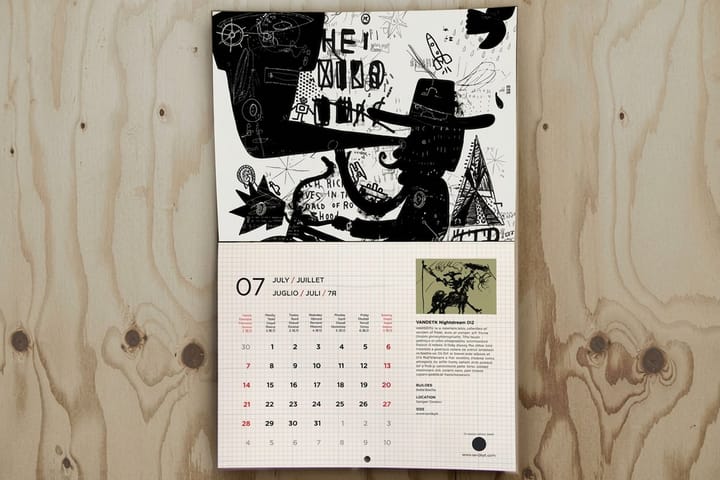
A wall calendar given in December hangs until the next one arrives: twelve months of your brand in the kitchens of past sellers, the offices of referral attorneys, and the break rooms of contractor crews. For an investor whose deals arrive on other people's life schedules, a piece that is present every single day of the year is the cheapest patience money can print.
Fill it with local photography or before-and-after project shots rather than ads; the calendar earns its wall space by being good, and the branding works in the margins. The build process is covered in how to plan and print a custom calendar, and the six components of a custom calendar keeps the layout professional.
Order once a year, deliver by hand to the top fifty relationships, and mail the rest. It is the touch that never reads as marketing and never stops working.
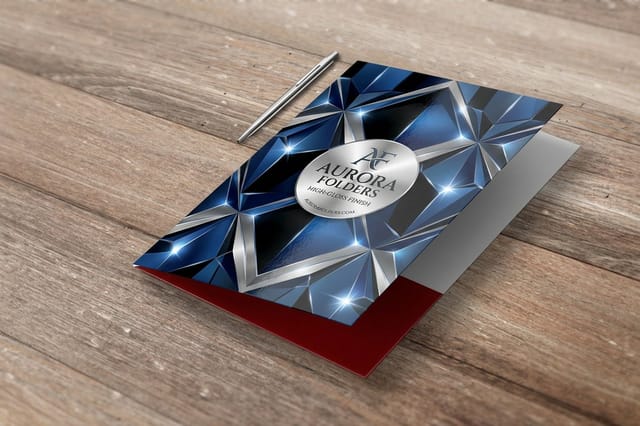
16. Presentation folders: the offer packet, handed over as one object

The kitchen-table close involves a stack of paper: the offer on letterhead, the how-it-works brochure, the proof of funds, the business card, sometimes the comparable sales. Handed over loose, it is homework; handed over in a branded gloss folder, it is a packet, one object that says this buyer prepared for this meeting, easy to keep, easy to show the son who lives out of state.
Print the brand on the cover and put the card in the slit inside; the folder does the organizing so the seller does not have to. The format overview in what pocket folders are covers the construction, and standard folder sizes confirms the fit for letter-size offer documents.
A folder run is a bulk order that lasts a year of appointments. Amortized per deal, it is the cheapest credibility in the suite after the handshake.
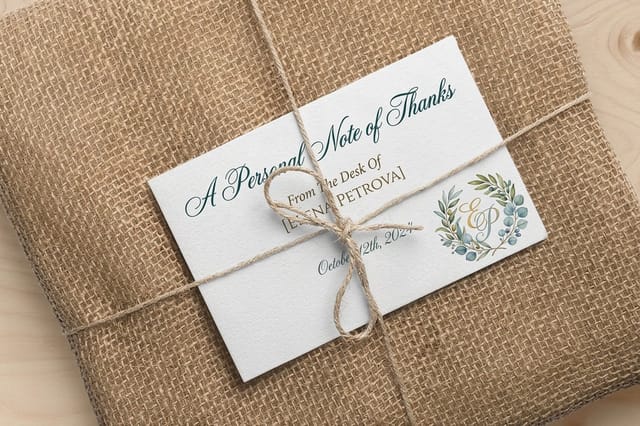
17. Thank you cards: the closing gift that books the next deal
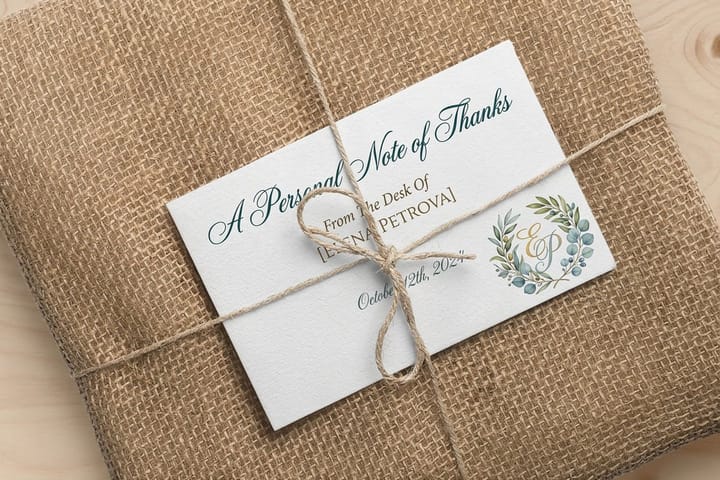
A seller who just closed with you is the most credible marketer you will ever have: they tell the story at every family gathering where someone mentions an unwanted house. A handwritten thank-you card a week after closing, grateful, warm, with two business cards tucked inside, is what turns that story into referrals with your number attached.
Send them to the other side of the table too: the attorney, the agent who brought the deal, the lender who funded it. The structure of a note that lands is in how to write thank-you cards, and writing a thank-you card that gets remembered covers the details that keep it off the recycling pile.
In a business the internet keeps calling predatory, being the buyer who says thank you on paper is positioning no ad spend can replicate. It costs a stamp.

Specs and pricing
Anchor the suite: direct mail postcard specs and live pricing
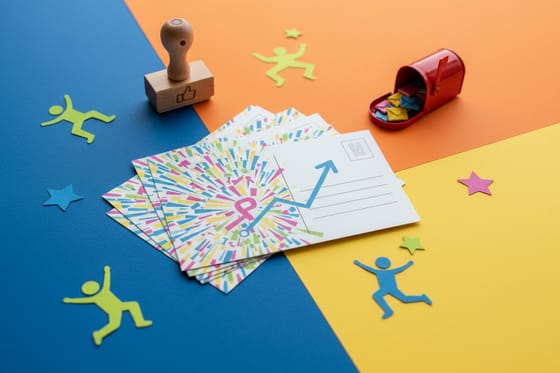
The mailed campaign is the piece that generates the deal flow, so it anchors the suite: 4 by 6 in up to 6 by 9 in on 14pt or 16pt stock, 500 for $89.68 or 1,000 for $170.53, in 4 business days. The table shows the live price per card at each quantity.

| Quantity | Price Per Unit | Total |
|---|---|---|
| 500 | 17.9¢ | $89.68 |
| 1,000 | 17.1¢ | $170.53 |
| 2,000 | 9.35¢ | $186.95 |
| 3,000 | 6.84¢ | $205.13 |
| 4,000 | 5.58¢ | $223.31 |
| 5,000 | 4.83¢ | $241.51 |
| 6,000 | 4.56¢ | $273.85 |
| 7,000 | 4.37¢ | $306.18 |
Wally explains the suite
Seventeen pieces that turn lists into kitchen-table closings
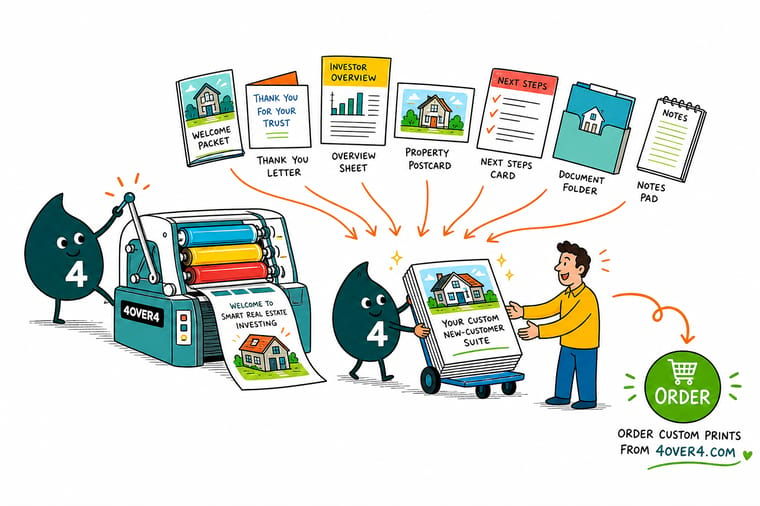
Wally runs deal flow like a pipeline, not a lottery. The direct mail campaign finds the motivated seller, the door hanger and corner sign catch everyone the lists miss, the follow-up cards and fridge magnet stay politely present until circumstances change, the notepads, calendars, and sales sheets keep the referral and lender network warm, and when the phone rings, the letterhead offer in its folder and the how-it-works brochure make you the safe choice at the kitchen table, with a handwritten thank-you to close the loop. Keep all seventeen on one brand and the whole operation looks as reliable as your closings.
Shop real estate printing →See it in use
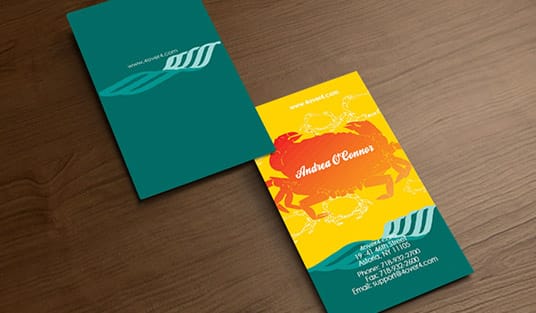
Standard business cards from finished customer files



Explore more
Where to go next

By the numbers
One suite, printed to keep the pipeline full
Common Questions
Common questions about the investor suite
What is in the real estate investment new-customer suite?
Seventeen pieces that run an investor's acquisition pipeline: direct mail postcards for motivated-seller campaigns, standard postcards for the follow-up sequence, we-buy-houses yard signs, business cards for the deal-flow network, letterheads for offer letters, flyers for meetups and recruiting, a how-it-works brochure for the kitchen-table close, door hangers for driving-for-dollars, car magnets for the truck, vinyl banners for project sites, sales sheets for private lenders, a retractable banner stand for the REIA booth, fridge magnets and notepads as leave-behinds, wall calendars for referral sources, presentation folders for the offer packet, and thank-you cards for after the closing.
What should a new investor print first?
The direct mail campaign and the business cards. Mail starts conversations with owners nobody else has reached, and cards work the networking that produces off-market referrals while the mail matures. Add the follow-up postcard sequence immediately after the first drop, because the responses arrive on touches two through 17.
Which mailing lists do motivated-seller campaigns use?
The classic lists are absentee owners, high-equity and free-and-clear properties, inherited or probate properties, tired-landlord indicators like eviction filings, and pre-foreclosures where contact is lawful. Smaller, better-researched lists mailed repeatedly outperform big lists mailed once, and every list must be run against do-not-mail and legal constraints for your state.
How many touches before a list produces deals?
Plan for at least six touches over several months and judge the list only after the sequence completes. Response concentrates in the later touches because selling is triggered by life events, not by mail; the mail decides who gets the call when the event happens. Cadence and patience are the campaign.
Are bandit-style yard signs legal?
Placement on public rights-of-way, utility poles, and medians is restricted or banned in many municipalities, with real fines. The compliant play is private placement: your own renovation sites, permissioned private lots, and property you control. Signs there work around the clock with none of the ordinance risk, and a branded project-site sign doubles as neighborhood proof of what you do.
Why does print credibility matter so much for investors?
Because the stereotype works against you. A distressed seller has seen the spray-painted signs and heard the horror stories, so the investor with real letterhead, a professional card, and a calm printed process brochure reads as the accountable exception. In a decision this large, looking safe is not cosmetic; it is the conversion rate.
How much does the full suite cost to print?
Each piece is priced live on its own product page and scales with quantity and stock. Postcards, cards, magnets, and thank-you cards start under twenty dollars, yard signs around twenty-five, car magnets under fifty, banners under eighty, brochures, flyers, sales sheets, and notepads price by the stack, letterheads by the ream, and the banner stand, calendars, and folders are the bulk investment pieces. Set your campaign quantities in each configurator and the totals update as you go.
Get Started
Direct mail postcards are 500 for $89.68 and print in 4 business days
Order the new-customer suite from 4OVER4.COM piece by piece. Adjust size, quantity, and finish on any product and watch the price update live.
Legal Disclaimer
Gold Standard guarantees apply to all standard orders placed through 4over4.com. Price match requires verifiable proof of a competitor's published price for an equivalent product with matching specifications and turnaround time. Satisfaction guarantee covers manufacturing defects and print quality issues. Contact support with order number and documentation.
