
The Best Poster Materials and How to Choose the Right Stock


The best poster material depends on where the poster hangs: gloss, matte, satin, canvas, rigid board, or recycled. Each does one thing best and fails at something else, which is what makes the choice quick.
Match the material to the room and the job: gloss for vivid photos, matte for text and glare-free walls, satin when lighting is unpredictable, canvas for permanent art, rigid foam board for standing displays, and recycled stock for an eco brand story indoors. Add lamination whenever the poster will be handled or faces moisture.
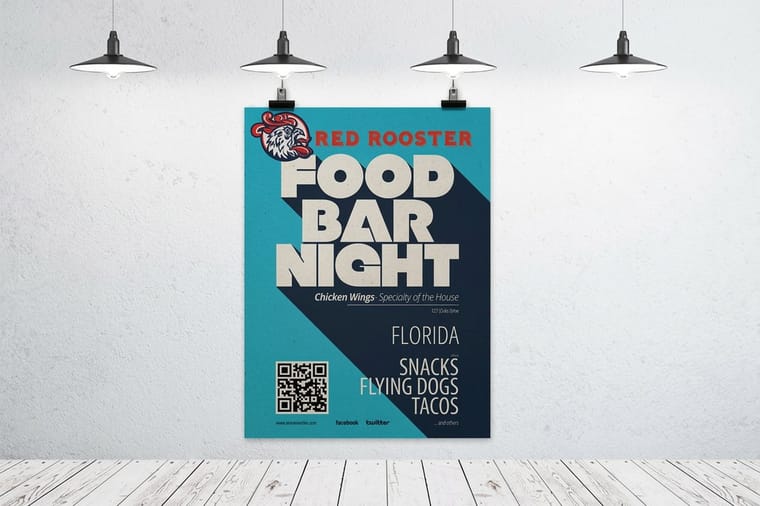
Quick tips
The fast way to choose a poster stock
Start with the wall, not the design. Bright light wants matte or satin, a photo wants gloss, an easel wants rigid board, and art wants canvas. Weight and lamination decide how long the poster survives. 4OVER4.COM prints your artwork across every one of these materials, so one file can become a matte wall poster, a mounted display, and a canvas. Three guides go deeper: matte posters vs laminated posters, which finish wins where, poster signs vs rigid signs for indoor and outdoor use, and posters vs canvas prints vs mounted posters for wall art.
Why the poster material matters more than the design

A brilliant poster on the wrong stock fails on the wall. On our forms the choice runs from 100# gloss text and 80# gloss cover paper to 3/16 inch foam core mounts and semi gloss or gloss canvas, and the material decides whether your color sings or dulls, whether the sheet lies flat or curls off the wall, and whether the poster survives a week or a season. Before you obsess over layout, decide what the poster has to physically do.
Three questions settle almost every material choice. Where will it hang, and how is that space lit? How long does it need to last, and will anyone touch it? Is it selling a photo, carrying words, or standing on its own? Answer those and the stock nearly picks itself. This breakdown walks each material against those questions, then points you at the exact poster product to order.
If you already know your dimensions, keep our poster sizes and dimensions guide open alongside this one, since material and size decisions feed each other. A giant format wants a heavier, stiffer stock, while a small counter poster can run on lighter paper.
Gloss, matte, and satin: the three paper finishes

Most posters start as coated paper, and the finish is your first real decision. It changes both the look and how the poster behaves under light.
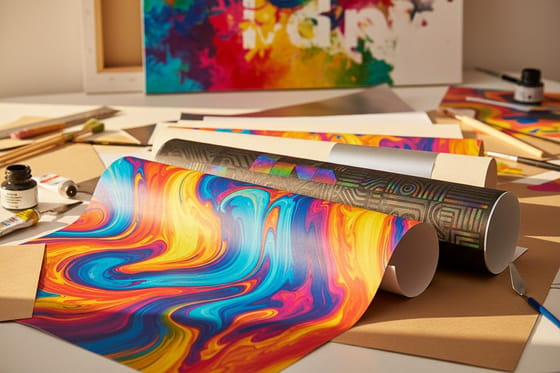
Gloss gives the richest color and the deepest contrast, so it is the natural pick for photography, product shots, and anything image-led. Its weakness is glare, so keep it away from bright downlights and windows. Matte has zero shine, which keeps text razor sharp from every angle and stops reflections cold, making it the standard for wayfinding, menus, and copy-heavy designs. Satin, sometimes called semi-gloss, sits in between: most of the color punch, far less glare, and a safe choice when you cannot control the lighting.
Because these all print from the same file, many teams design once and choose the finish per location. When you want the layout handled too, our online designer lets you build the poster and preview it, and our design services can take the whole thing off your plate. Order the finish that fits the room on our poster printing page.
Paper weight, coating, and how long a poster lasts
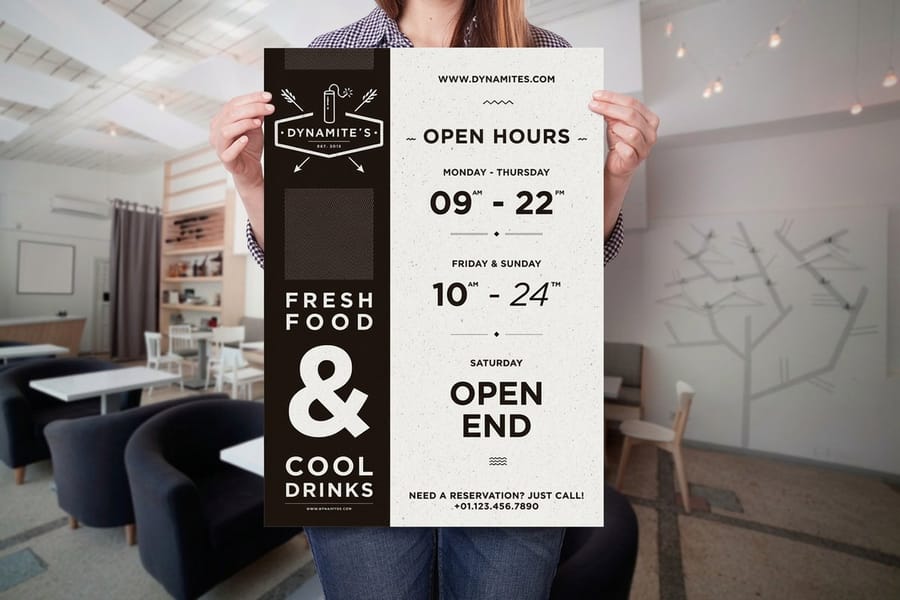
Two posters can share a finish and still feel worlds apart, because weight and coating decide the hand and the life span.
A heavier stock, around 100 lb, feels substantial, resists curling, and holds up on a wall without wrinkling. Lighter paper costs less and works for short-run promos you will replace quickly, but it benefits from mounting to look its best. Coating matters just as much as weight for durability: a coated surface shrugs off fingerprints and light moisture, while an uncoated sheet is more fragile. For anything handled often or facing humidity, add a laminate through our lamination service so the surface can take a beating.
Think in terms of exposure. A poster behind glass in a quiet office can run light and uncoated, while one taped in a busy hallway or a shop window wants weight, coating, and ideally lamination. Match the build to the abuse and the poster earns its keep.
Most durable poster materials
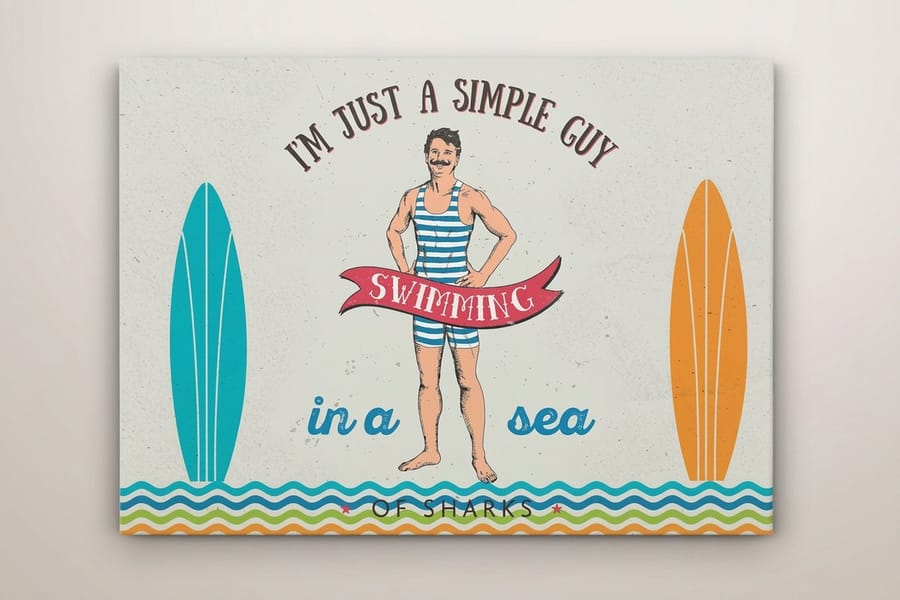
If the poster has to survive being handled, re-hung, wiped down, or sat under lights all year, four materials do the heavy lifting. Ranked by how long each one keeps looking right: canvas lasts longest on a wall it never leaves, synthetic and PET stock lasts longest for anything that moves or gets wet, laminated coated paper comes next and covers most classroom and retail work, and a foam mounted board holds its shape indefinitely indoors but gives up at the corners.
Educational and classroom posters are the clearest case for lamination. A wall chart gets pinned, unpinned, pointed at, and packed away between terms, and bare paper loses that fight in weeks. A laminated coated stock takes all of it and wipes clean, which is why school and training posters almost always ship laminated. Order that build as laminated posters, or step up to fabric posters when the piece has to fold into a bag and come back out without a crease.
| Material | Durability | Indoor or outdoor | Handling tolerance | Cost band | Best use |
|---|---|---|---|---|---|
| Laminated coated paper | High for a paper stock, the film takes the wear instead of the sheet | Indoor, or outdoor inside a sealed frame for short stints | Wipes clean, resists fingerprints and scuffs, corners still bend | Paper price plus the laminate | Classroom and educational posters, training charts, retail floors |
| Synthetic and PET stock | Highest of the flexible materials, it does not absorb water or tear the way paper does | Indoor and outdoor | Takes rolling, re-hanging and a wet wipe without softening | Above laminated paper | Posters that travel between rooms or sites, humid spaces, wash-down areas |
| Foam mounted board | Holds its shape indefinitely indoors, the corners are the weak point | Indoor | Rigid and curl-free, but it dents if a corner takes a knock | Above paper, below canvas | Easel and table displays, open houses, trade show booths, classroom display boards |
| Canvas | Longest life of the four on a wall it never leaves, out of direct sun | Indoor | Not built for handling, it is hung once and left | Highest | Permanent decor, photography, gallery walls |
None of these makes a paper poster weatherproof on its own. For a piece that lives outside, the answer is a sign stock, not a tougher poster.
Canvas: when a poster should feel like art
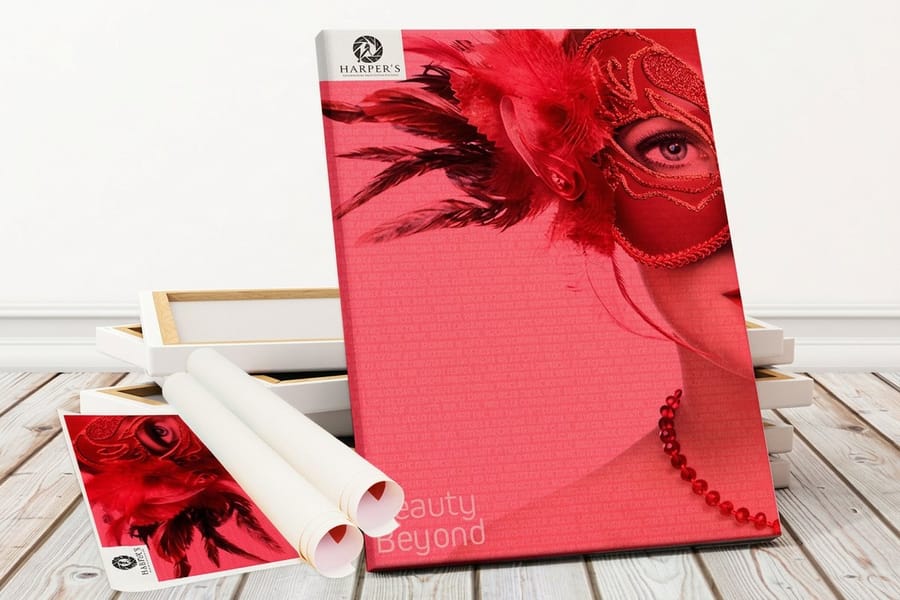
Canvas is not really a poster material, it is an art material, and that distinction is the whole point. A poly-cotton canvas carries a woven texture that flatters photography, illustration, and decor in a way flat paper never will.
Reach for canvas when the piece is permanent and decorative: office branding, a restaurant feature wall, family or client photography, or gallery-style promotion. It wants a frame or a stretcher to look finished, which is why it costs more than paper and takes a moment longer to hang. What you get back is depth and a weight that reads as considered rather than disposable.
What canvas is not good for is a fast, cheap, replaceable promo. If the message changes weekly, paper is the smarter buy. To weigh the two head to head, our canvas vs posters guide lays out the trade-offs, and you can order the material as canvas posters or as gallery rolled canvas when it is truly wall art.
Mounted and rigid poster boards for displays

Sometimes a poster needs to stand up by itself, and that is where rigid materials take over from paper.
A poster mounted on foam board, typically 3/16 inch thick, becomes a self-supporting display for an easel, a table, or a wall without a frame. It is the go-to for events, trade show booths, real estate open houses, and retail. For heavier duty or outdoor-adjacent use, sturdier rigid substrates carry more weight and resist knocks. The upside is presentation, the poster looks polished and professional the moment it goes up. The trade-off is that rigid boards do not roll or ship as compactly, so plan for flat shipping. Our guide to thick poster board printing, from 14pt card stock to half inch foam core covers every board weight.
If your poster is doing a display job at an event, mounted posters almost always beat loose paper. And if it is really acting as a sign, browse signs and banners for stocks built to stand and last.
Recycled and eco poster stocks
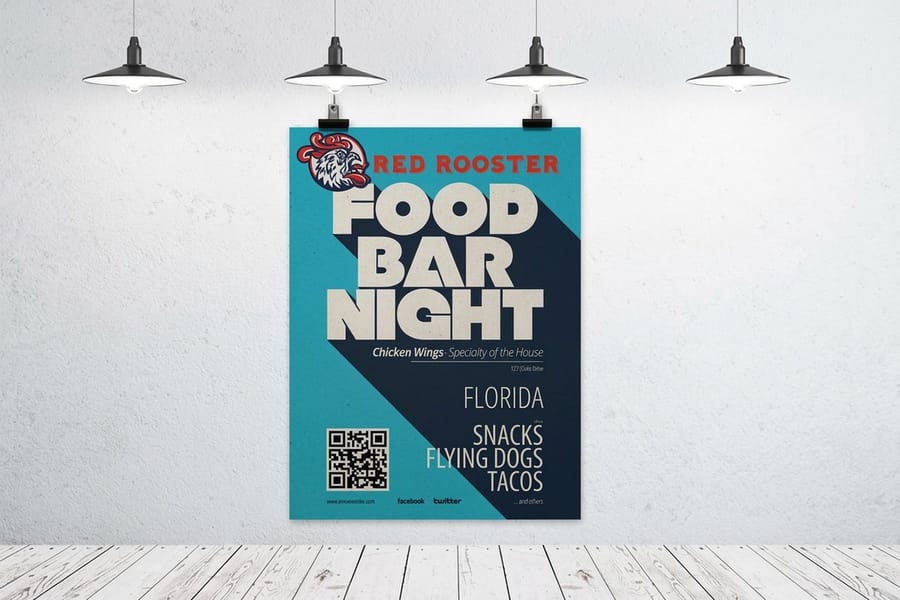
When sustainability is part of the message, the material becomes part of the message too. Recycled and uncoated stocks carry a natural, tactile look that signals an eco-first brand at a glance.
These stocks feel honest and matte, and they suit brands whose values are the point: farmers markets, sustainable retail, community events, and cause campaigns. The trade-off is performance. Uncoated recycled paper soaks up moisture, shows handling, and prints with slightly softer color than a coated sheet, so it is an indoor, shorter-life material. If you love the eco look but need more durability, a coated recycled option or a light laminate is the compromise.
The honest rule: choose recycled stock because it fits the brand story, not to save a poster from the weather. For that job you want coating and lamination, not bare recycled fiber. Compare the natural options across our full shop by material range.
How to choose the right poster material, fast

Put it all together and the decision takes about thirty seconds. Start with the location and work outward.
- Bright, sunny, or spotlit wall. Go matte or satin so glare never washes out the design.
- Selling a photo or product. Go gloss for maximum color, unless the lighting forces satin.
- Standing on an easel or table. Go rigid mounted board so it holds itself up.
- Permanent decor or art. Go canvas for texture and depth.
- Handled, wiped, or humid. Add lamination on a coated, heavier stock.
- Eco brand story. Go recycled or uncoated, and keep it indoors.
And the same list read for durability, one line per job:
- Classroom. Laminated coated paper, because the poster gets pinned, unpinned and wiped all year.
- Retail window. Heavy coated stock with a laminate, since sun and condensation are both working on it.
- Trade show. Foam mounted board, because it has to stand up on its own and travel flat.
- Gallery wall. Canvas, since nothing will touch it again once it is hung.
When you are ready to price the options side by side, the live specs and price table below let you switch stock, size, and quantity and watch the cost move. Order any of them on the poster printing category, and lean on our team if you want a second opinion before you commit to a run.
Wally explains poster materials
The wall picks the stock
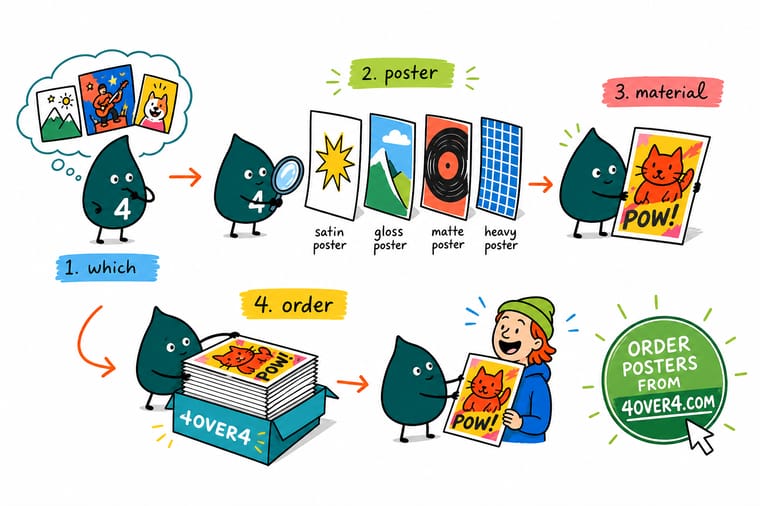
Wally sizes up the room before the design: bright light wants a matte or satin sheet, a bold photo wants gloss, an easel wants rigid board, and a feature wall wants canvas. Weight and lamination decide how long it lasts. Tell 4OVER4 where the poster hangs and we match it to the material that makes it look right for as long as you need.
Order your poster stock →
Specs and pricing
Poster specs and live pricing
Compare materials on budget as well as looks. Standard posters run 6 sizes from 11 x 17 to 22 x 28 inches on 9 stocks, from 50 in 5 business days. Here are the live specs and price-per-unit for standard posters, straight from the configurator, so you can watch cost move as you change stock, size, and quantity.

| Quantity | Price Per Unit | Total |
|---|---|---|
| 50 | $2.18 | $108.75 |
| 100 | $1.64 | $163.67 |
| 200 | $1.01 | $202.11 |
| 300 | 80.2¢ | $240.55 |
| 400 | 69.7¢ | $278.99 |
| 500 | 63.5¢ | $317.44 |
| 600 | 55.8¢ | $335.02 |
| 700 | 50.4¢ | $352.59 |
Print it
Posters on paper, canvas, and rigid board
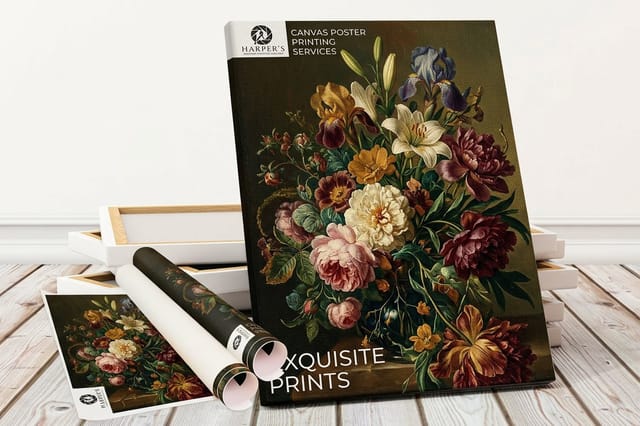
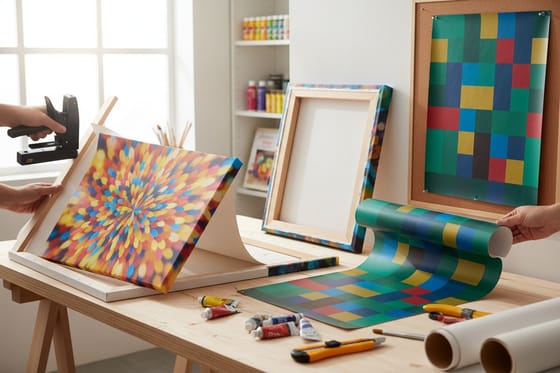
Paper posters start at 50, mounted posters print on 3/16 inch white or black foam core from a single piece up to 40 x 60 inches, and canvas posters come in semi gloss or gloss canvas with a 2 business day production time.



Explore more
Where to go next
The poster range, poster sizes, canvas against posters, printed poster work, how 3D posters are made and common printing questions each have their own page below.



By the numbers
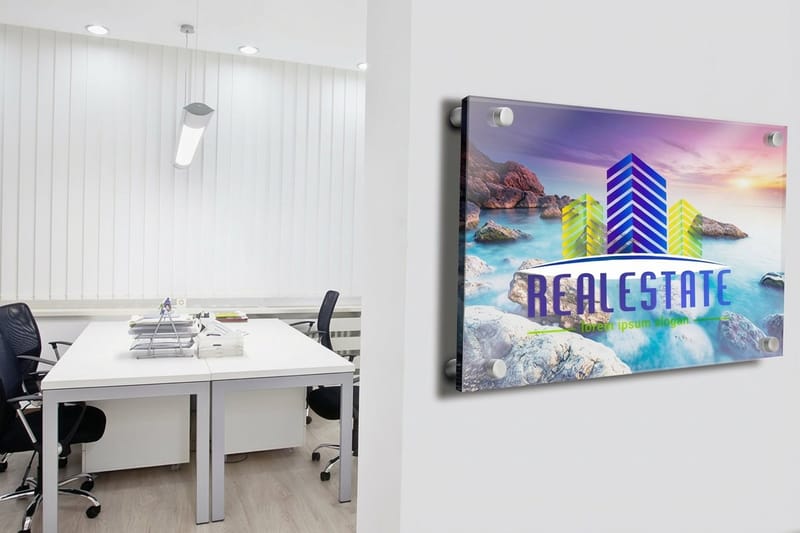
Paper, canvas, fabric, and rigid board
Common Questions
Common questions about poster materials
What are posters usually made of?
Most printed posters are made from coated paper stock, commonly around 100 lb text or cover weight, finished in gloss, matte, or satin. From there the material choices branch out: canvas for wall art, rigid foam board for standing displays, and uncoated or recycled sheets for an eco or natural look. The right material depends less on what posters are typically made of and more on where yours will hang and how long it needs to last.
Which poster material is best for vivid photos?
A gloss coated stock reproduces the widest color range and the deepest blacks, which makes photography and product imagery jump off the wall. The trade-off is glare: under downlights or window light, a glossy poster can wash out at certain angles. If the poster lives somewhere brightly lit, step down to satin or semi-gloss to keep most of the pop without the mirror effect.
What is the best paper for a poster that has a lot of text?
Matte is the reader-friendly choice. With no surface shine, type stays crisp from any angle and in any light, which is why wayfinding, menus, event schedules, and information posters almost always run matte. It also photographs cleanly for social sharing. Reserve gloss for image-led designs and keep dense copy on a matte or uncoated surface.
Laminated or non-laminated poster: which should I pick?
Laminate any poster that will be handled, wiped down, or exposed to moisture. A laminate film adds scuff resistance, blocks fingerprints, and lets a poster survive a busy retail floor or an outdoor frame. Skip lamination for a short-lived indoor promo or a decor piece where you want the natural paper feel, since the film adds cost and a slight sheen.
What poster material works for outdoor use?
Standard paper posters are indoor products. For anything facing weather, move to a weatherproof substrate: coated and laminated stock inside a sealed frame for short stints, or a rigid signage material like coroplast for true outdoor exposure. If your poster is really doing a sign job outside, a purpose-built sign stock will outlast any laminated paper.
How much do posters cost, and what sets the price?
Poster pricing is driven by size, material, finish, quantity, and any mounting or lamination. A standard paper poster starts low and scales with square footage, while canvas and mounted rigid boards cost more because of the substrate and the build. The fastest way to compare materials on budget is the live price table on the product page, which updates as you change stock, size, and quantity.
Which poster material is most durable?
For a poster that stays on one wall, canvas outlives everything else. For a poster that moves, gets handled, or meets moisture, a synthetic or PET stock is the toughest choice, because it does not absorb water and does not tear along a crease the way paper does. Laminated coated paper sits just behind both and is the practical pick for most jobs, since it costs a fraction of the alternatives and the film takes the wear instead of the sheet. A foam mounted board holds its shape indefinitely indoors but dents at the corners, so treat it as rigid rather than rugged.
What are educational posters made of?
Classroom and training posters are almost always a coated paper stock with a laminate film over the top. The coating gives the color and the crisp type, and the laminate is what lets the poster survive a school year of being pinned up, pulled down, pointed at, and rolled into a tube between terms. Uncoated paper looks right for a week and then shows every handling mark. If the poster has to fold into a bag and come out flat, a fabric stock is the better answer, since it will not hold a crease.
Is lamination worth it on a poster?
It is worth it whenever the poster will be touched, wiped, or exposed to moisture, and it is not worth it on a two-week promo behind glass. The film adds scuff and fingerprint resistance and lets you clean the surface, which is what turns a one-season poster into a multi-year one in a classroom, a clinic, or a retail floor. It also adds cost and a slight sheen, and it makes the sheet stiffer, so a decor piece where you want the natural paper feel is better left bare.
Can I get the same design on paper, canvas, and foam board?
Yes. One print-ready file can run across paper, canvas, and rigid board, so many businesses order a matte paper run for wall posting, a mounted board for the front-desk easel, and a canvas for the office wall from the same artwork. Just confirm the resolution holds up at each size, since a large canvas needs more pixels than a small paper poster.
Get Started
50 posters cost $108.75, canvas ships in 2 business days
Pick the finish that fits the wall, and we print it sharp across gloss, matte, satin, canvas, and rigid board so it looks right for as long as you need.
Legal Disclaimer
Gold Standard guarantees apply to all standard orders placed through 4over4.com. Price match requires verifiable proof of a competitor's published price for an equivalent product with matching specifications and turnaround time. Satisfaction guarantee covers manufacturing defects and print quality issues. Contact support with order number and documentation.
