
Posters vs Canvas Prints vs Mounted Posters for Wall Art


Three ways to put one image on a wall, priced differently and built differently. They separate at the edge, on the wall, and in the file you send us.
Pick a paper poster when the print is temporary and cheap to replace, a canvas print when you want frameless art with no glare, and a mounted poster when you need a flat rigid panel that survives being carried and rehung. Starting prices at 4OVER4.COM run rolled canvas $25, mounted posters $39.99, stretched canvas $59, and standard posters $108.75 for a printed run. The edge is what really separates them: a poster keeps the whole image on the front, a stretched canvas loses about an inch and a half per side to the wrap, and a mounted poster is bonded flush so it can never be rolled or reframed.

Quick answer
Paper replaces, canvas keeps, mounted travels
The three formats are not three qualities of the same print, they are three objects. A poster is a sheet you can pin, roll, frame or throw away. A canvas print is cloth over wood that hangs frameless and reflects nothing, at the cost of softening fine type. A mounted poster is a print bonded to rigid board, cut flush, and permanent. Choose by how the piece will be handled over the next two years, then match the file to the edge each one gives you.
What Each Format Actually Is
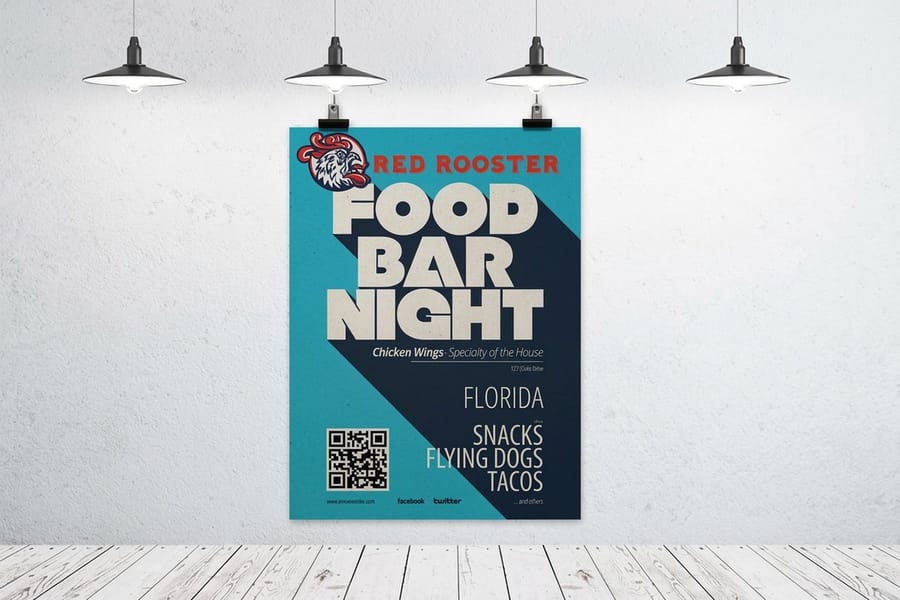
The three names describe three different objects, and half the confusion in a quote comes from treating them as three finishes of the same thing.
A poster is a single printed sheet. It ships rolled in a tube, it weighs almost nothing, and it hangs with tape, pins, magnets, a poster hanger or a frame you supply. Stock choice is the whole decision: gloss for punch and saturation, matte for a wall that faces a window. Standard posters run six sizes across nine stocks, so the same artwork can go out as a cheap promo sheet or as a heavy display print.
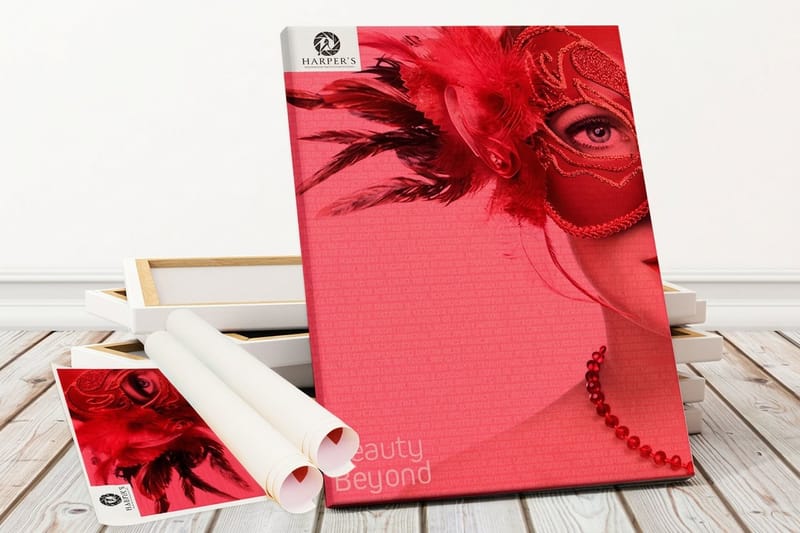
A canvas print is inkjet on woven poly-cotton. It comes three ways. Rolled canvas is the printed cloth on its own, shipped in a tube at $25 and up, ready for a framer. Stretched canvas is that cloth pulled over a wooden bar frame and stapled at the back, from $59, and it hangs straight out of the box. Framed canvas adds a floater frame around the stretched piece, from $50.33.
A mounted poster is a print bonded to a rigid board and trimmed flush to the edge. There is no frame, no glass and no give. Mounted posters start at $39.99, and the same bonding applied to a thicker sheet is what you are buying in foam core display board. The result is a panel: you can carry it, prop it on an easel, or hang it on a single hook.
The Four Options Side by Side
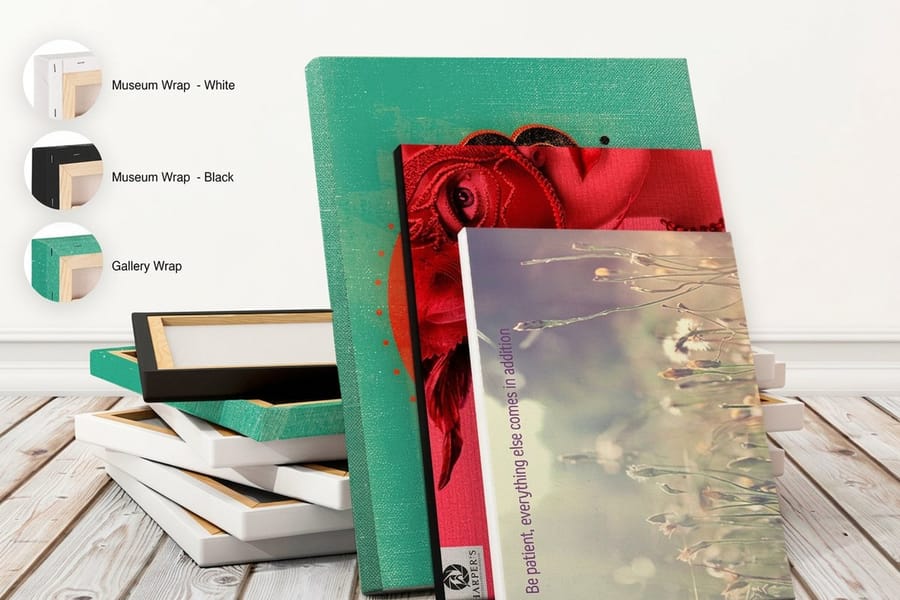
Read the hanging column first. It decides more of the outcome than the surface does, because it dictates whether you also have to buy a frame, drill a wall, or find somewhere to store a rigid panel between uses.
| Format | How it is built | How it hangs | Surface and glare | Starts at |
|---|---|---|---|---|
| Standard poster | One printed sheet, shipped rolled in a tube. | Tape, pins, a hanger rail, or a frame you buy separately. | Gloss is saturated and reflects downlights. Matte kills glare and loses a little contrast. | $108.75 per run |
| Rolled canvas | Printed poly-cotton canvas, no bars, shipped in a tube. | It does not, until a framer stretches or mounts it. | Woven and matte. No glare at any angle. | $25 |
| Stretched canvas | Canvas pulled over a wooden bar frame, stapled at the back. | Straight onto a hook. Stands off the wall and casts a shadow line. | Woven and matte, with visible texture up close. | $59 |
| Mounted poster | Print bonded flat to a rigid board and cut flush. | One hook, a rail, an easel, or leaning on a shelf. | Takes the finish of the poster stock. Flat with no ripple. | $39.99 |
The poster line starts higher than the others because it is priced as a printed run rather than as a single piece, and the per unit price falls hard as the quantity climbs. That is the format working as intended. If you want one print of one image, canvas or a mounted poster is the cheaper way to get it. If you want forty of the same image for a campaign, nothing touches paper.
Where Each One Lets You Down

Every one of the three has a failure that shows up after delivery rather than in the product photo, and knowing them makes the choice quick.
Posters curl and tear. A print that has been in a tube for two days arrives with memory in it, and it needs a night flat under weight before it will lie down on a wall. Pin holes widen, tape lifts in a humid room, and an unframed poster taped at four corners will ripple across the middle by the second summer. None of that matters for a promo sheet you plan to replace. All of it matters for something you want to keep.
Canvas softens fine detail and moves with the weather. The weave that flatters a photograph is the same weave that thickens a hairline rule and blurs six point legal type. Stretched canvas also responds to humidity, going slightly slack in a damp room and tightening again when it dries, which is why the corner keys exist. If the artwork is a schedule, a price board or a menu, it belongs on paper.
Mounted posters cannot be undone. The bond is permanent, so there is no reframing it in two years and no rolling it for storage. It ships flat in a large box, which costs more than a tube, and a corner that gets crushed in transit or in a stockroom is not repairable. Board choice is the other trap: thin foam board dents under a thumb, so anything that will be handled repeatedly wants the heavier stock. Our foam core versus mounted versus framed comparison goes through the backings in order of stiffness.
Set against those, the honest summary is that paper is disposable, canvas is permanent, and mounted sits in the middle, doing most of the work. For a longer look at just the first two, the canvas versus posters guide covers the same ground for people who have already ruled out a rigid panel.
Setting Up One Artwork for All Three
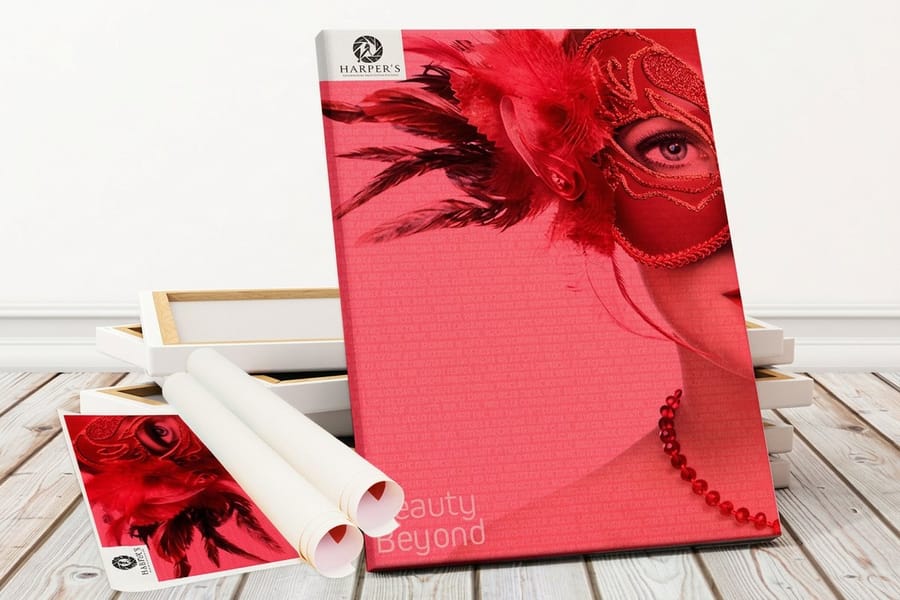
The same image cannot be sent to all three without an edit, and the reason is the edge.
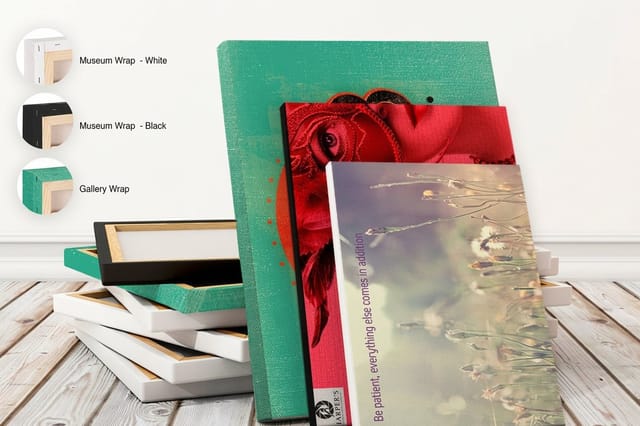
For a stretched canvas, build the file with roughly an inch and a half of extra image on every side. That margin bends around the bar and ends up on the sides of the piece where nobody sees it from the front. Anything you care about, a face, a horizon, a logo, has to sit well inside the front panel. A photograph with room to spare handles this easily. A tightly cropped design does not, and the usual fix is a mirrored or solid color edge instead of a gallery wrap.
For a mounted poster, the artwork is trimmed flush to the board, so treat the outer eighth of an inch as expendable and keep type at least a quarter inch inside the trim. There is no frame lip to hide a wandering cut.
For a paper poster, decide now whether it will be framed. A frame eats a quarter to a half inch on each side under the rebate, so a poster designed edge to edge loses its border the day someone frames it. Leaving a clean margin in the artwork makes the same file work pinned or framed.
Resolution follows viewing distance, not a rule. Wall art seen from six feet holds up at 100 to 150 dpi at final size, and canvas forgives more than gloss paper does. The poster printing resolution guide has the numbers by size, common poster sizes covers the standard dimensions, and every size we run has a correctly built starting file in the blank template library.
The Verdict, and What to Order
Order a paper poster when the message has an expiry date. Events, promotions, film listings, class schedules, anything with a price on it. Print it on matte if the wall faces a window and gloss if it does not, and buy the quantity rather than the single, because that is where poster printing gets cheap.
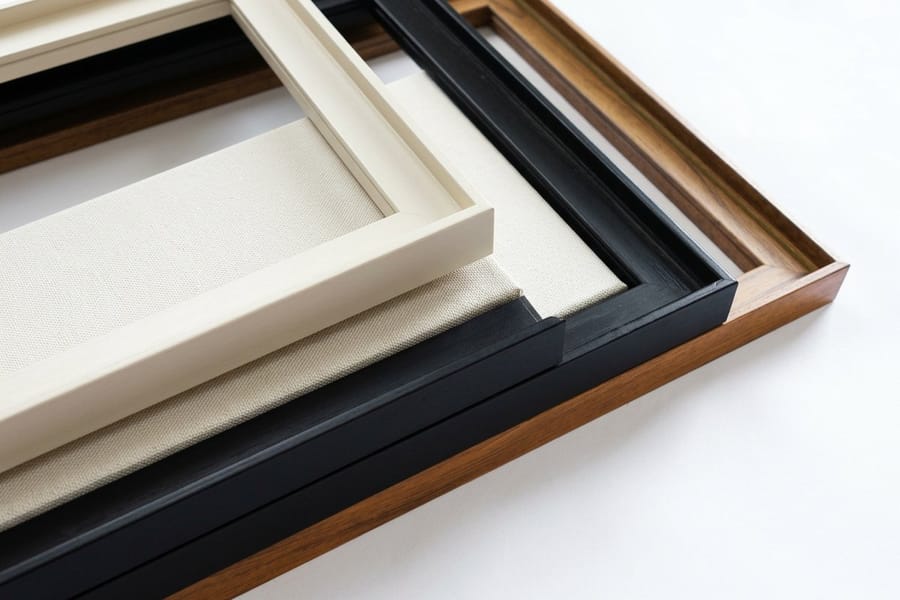
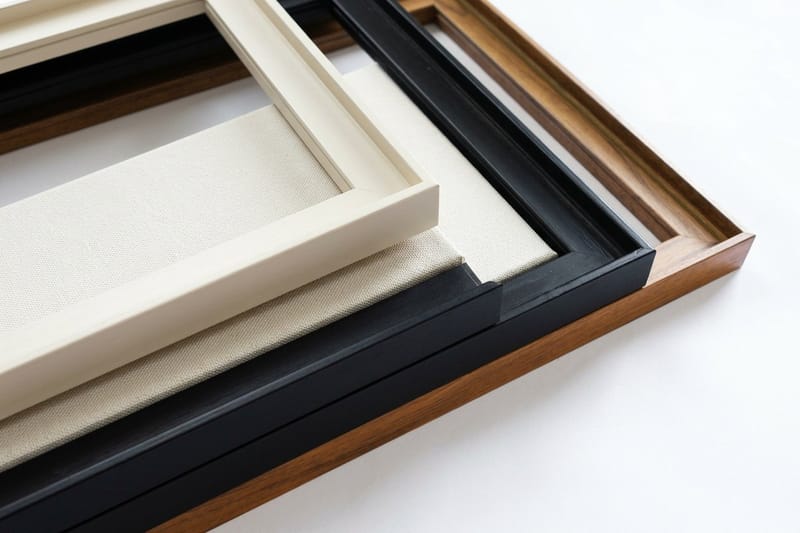
Order canvas when the image is photographic and it is staying up. A portrait, a landscape, a piece of brand artwork in a boardroom. Take stretched if you want it hanging the day it arrives, rolled if you already have a framer, framed canvas if the room has molding and needs the print to match it. The full range sits in the canvas printing collection, and framing a canvas print explains the floater frame gap if you plan to add one later.
Order a mounted poster when the print has to survive being handled. Lobby boards, clinic corridors, trade show panels, real estate displays, science fair work, anything that gets carried, propped and moved. It is the format that behaves like a sign without costing what a sign costs.
When a job genuinely needs two of them, the cheapest sequence is to print the paper run first and mount a handful from that same run. You get the display panels and the disposable copies from one file, one press setup and one delivery.
Wally explains the three edges
One image, three very different objects
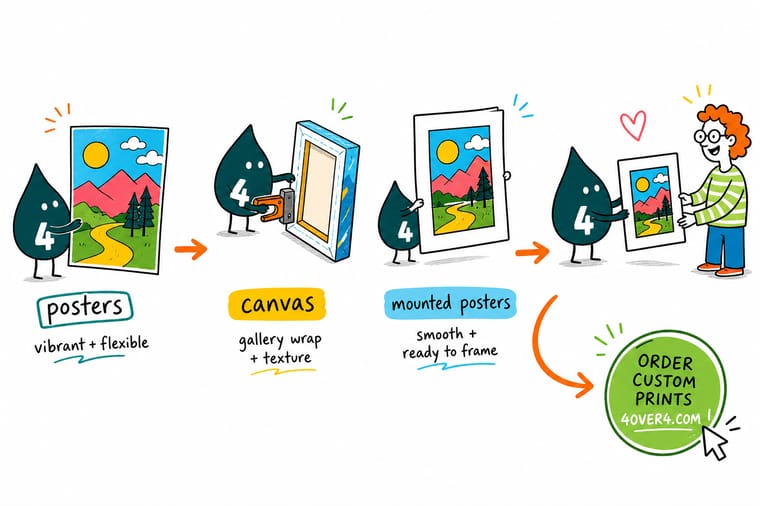
Wally prints the same photo three times. The paper poster keeps every part of the image on the front, rolls into a tube, and costs almost nothing to reprint when the date changes. The stretched canvas bends about an inch and a half of that image around the wooden bars, so he keeps faces and type well inside the front panel. The mounted poster gets bonded flat to a board and cut flush, which makes it tough enough to carry to a booth but impossible to roll or reframe later. Pick by how the piece gets handled, not by which one looks best on a screen.
Compare posters, canvas and mounted prints →Specs and pricing
Sizes, stocks and starting prices for all three
Configure each format live, with the size and stock choices and the starting price straight from the 4OVER4.COM configurator.


Print it
Order the format that suits the wall


Explore more
Where to go next

By the numbers
Paper, canvas and mounted prints for one image
Common Questions
Posters, canvas and mounted prints, answered
Which one looks the most expensive on a wall?
Stretched canvas, in most rooms, because it stands off the wall by the depth of the bar and throws a small shadow. That shadow is what reads as art rather than as a print. A mounted poster is flatter and reads as signage or a display panel, which is exactly what you want in a lobby, a clinic corridor or a trade show booth. A paper poster in a good frame can beat both, but you are then paying for the frame, and a frame is a separate purchase with its own lead time.
Can I frame a canvas print later?
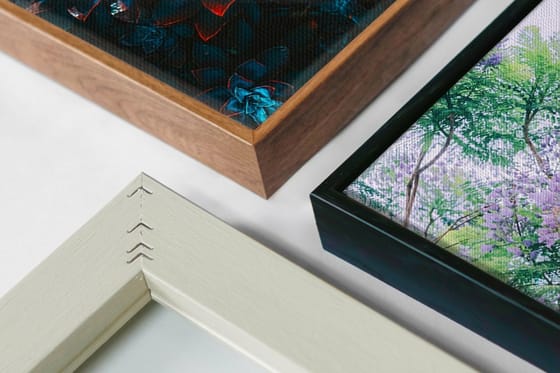
A stretched canvas fits a floater frame, which is a frame with a deliberate gap so the canvas appears to sit inside it. It will not fit an ordinary picture frame with a rebate and glass, because the stretcher bars are too deep. A rolled canvas can be stretched or framed by a local framer whenever you want, which is the reason rolled ships cheapest. A mounted poster cannot be framed conventionally at all once it is bonded, so decide before you order.
Which lasts longest indoors?
Canvas, by a wide margin, because there is no glass to break, no paper to yellow at the edges and nothing holding it to the wall except a hanger. A mounted poster comes second and its usual failure is mechanical rather than optical: a dented corner or a delaminated edge after a few moves. An unframed paper poster is the shortest lived. It curls at the corners, it tears at the pin holes, and taped edges lift in a humid room.
What resolution do I need for each one?
Work at the final print size and judge by viewing distance rather than by a single number. Wall art viewed from six feet or more holds up at 100 to 150 dpi at full size, and canvas is the most forgiving of the three because the weave breaks up any softness. Gloss poster stock is the least forgiving, so give a poster the most resolution you have. Our poster printing resolution guide walks through the arithmetic for the common sizes.
Do canvas prints show fine text and thin lines?
Not as cleanly as paper. The weave has a physical texture, so hairline rules, small serif type and tight logo detail soften slightly. It is rarely a problem for photographs and it is a real problem for a poster that carries a schedule, a price list or legal text. If the artwork is mostly type, print it on paper and mount it. If it is mostly image, canvas is the better surface.
Which should a business order for a lobby?
Mounted posters, in most cases, because they hang flat, they survive being taken down and put back up when the message changes, and the flat panel suits a wall that already has signage on it. Order canvas when the image is photographic and it is meant to stay for years, and order paper posters when the wall carries promotions that turn over every few weeks. Plenty of offices run all three, which is why the same artwork is worth setting up correctly for each.
Get Started
Pick paper, canvas or mounted in the wall art configurator
Pick the size, choose paper, canvas or a rigid mount, and we print it sharp enough to stand up close and flat enough to hang the day it lands.
Legal Disclaimer
Gold Standard guarantees apply to all standard orders placed through 4over4.com. Price match requires verifiable proof of a competitor's published price for an equivalent product with matching specifications and turnaround time. Satisfaction guarantee covers manufacturing defects and print quality issues. Contact support with order number and documentation. On-time delivery rate based on tracked orders 1999 to 2026. Individual results may vary based on shipping carrier performance.
