
What C1S Paper Is and Why One Side Stays Uncoated


The grade behind most postcards, hang tags and folders. What the coating does, how C1S differs from C2S, and the two ways it catches people out.
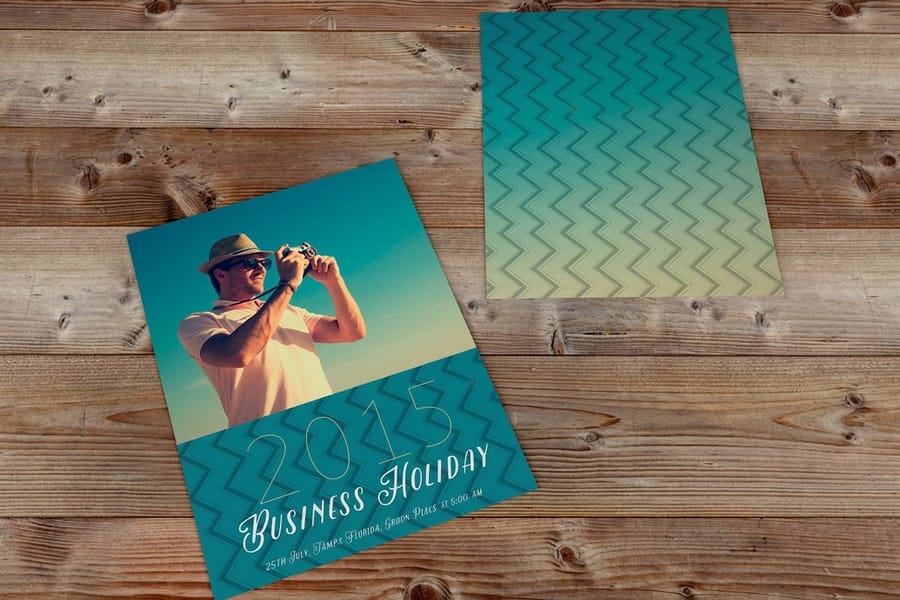
C1S paper is coated one side: a clay coating is applied to one face of the sheet and the other face is left as bare paper. The coated face holds ink on the surface, so colour stays sharp. The bare face absorbs ink, which is what lets you write on it with a pen, stamp it, glue it and run it through a mailing machine. C2S is the same sheet coated on both faces, sharper on the back but impossible to write on.
Quick answer
One face sealed for colour, one face open for work
C1S is coated one side, and the uncoated side is the reason to buy it. Ink sits on the coated face and holds a tight dot, so photography and solids look crisp there. On the bare face ink soaks in, which costs you a little punch and buys you a surface that takes a ballpoint, a rubber stamp, an adhesive tab and a machine applied address without smearing. C2S coats both faces and gives that up. The two things to plan around are a back that prints darker than the front, and a sheet that bows toward the coating in a humid room.
What C1S Means on a Paper Spec
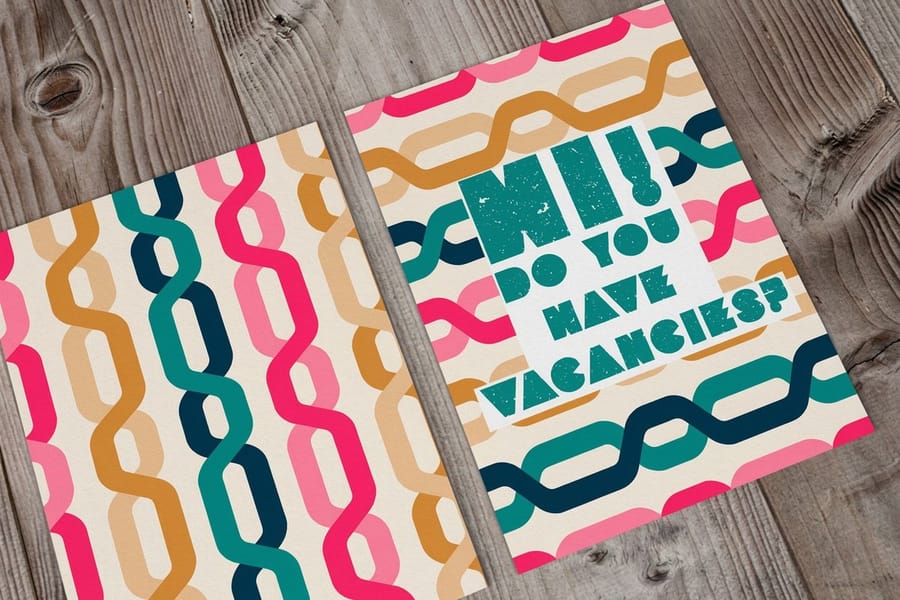
C1S is shorthand for coated one side. During manufacture a mineral coating, usually clay with a binder, is applied to one face of the sheet and then calendered between rollers until it is smooth. The opposite face never gets that treatment, so it stays bare paper.
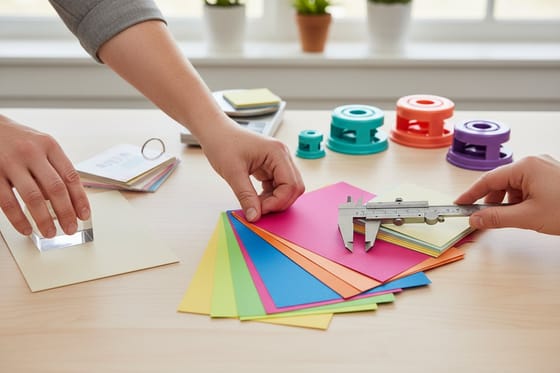
You will see it sold as a cover or board grade and quoted in points rather than pounds. 10pt, 12pt, 14pt and 16pt cover the vast majority of jobs, and a point is a thousandth of an inch of caliper, so 14pt C1S measures roughly 0.014 inches thick. If the points and pounds on a quote are not lining up in your head, our guide to cardstock weights and points untangles the two scales.
Two names cause most of the confusion at the counter. C1S is sometimes called coated one side cover, or simply one side coated. C2S, coated two sides, is the same base sheet with the coating on both faces, and it is also sold under trade names like enamel or litho gloss. Neither term tells you anything about a press varnish, an aqueous coat or a laminate. Those are added later, on press or in bindery, on top of whatever the mill already did.
Here is the practical test when a stack of cut sheets is sitting in front of you and nobody labelled it. Put a drop of water on a corner of each face. On the coated side it beads and sits there. On the uncoated side it sinks in within a second or two and darkens the fibre. The coated face also carries a slight sheen against the light and feels noticeably slicker.
C1S vs C2S: Pick By What the Back Has To Do
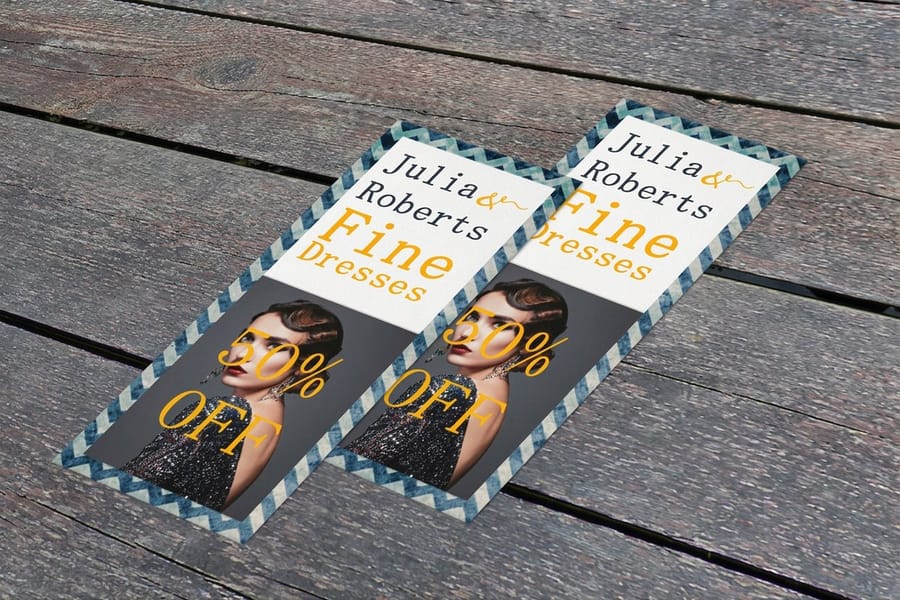
The number in the name is the number of coated faces, and that single difference decides everything downstream. Designers usually pick by which sounds more premium. Printers pick by asking what has to happen on the back of the piece.
| Question | C1S, coated one side | C2S, coated two sides |
|---|---|---|
| Colour on the front | Sharp, ink holds on the surface, solids stay saturated. | Identical to C1S on that face. |
| Colour on the back | Ink absorbs, so halftones gain and solids look flatter. | Just as sharp as the front. |
| Pen, stamp, handwriting | Works on the bare back with any ballpoint or gel pen. | Beads and smudges. Needs a permanent marker. |
| Machine addressing | Aqueous inkjet dries on contact. The mail house default. | Risk of smearing unless the address panel is left uncoated. |
| Glue and folding | Adhesive grips exposed fibre, so tabs and pockets hold. | Glue sits on coating and needs the area stripped first. |
| Where it belongs | Postcards, hang tags, door hangers, folders, book covers. | Rack cards, brochures, menus, anything photographic on both faces. |
Read the last two rows before the first two. A rack card lives in a display where a visitor sees front and back within seconds of each other, so coating both faces is money well spent. A postcard that a sales rep writes a line on, or that a mailing house addresses at speed, needs a face that drinks ink. Coating that face fights the job.
If neither grade is right because you want gloss on both faces plus real durability, laminate instead of coating. That decision, and how gloss and matte behave under a light, is covered in our matte versus gloss finish comparison.
The Uncoated Back Is the Feature, Not a Compromise

Every job that lands on C1S lands there for the same reason: something has to happen to the second face after the printing is finished.
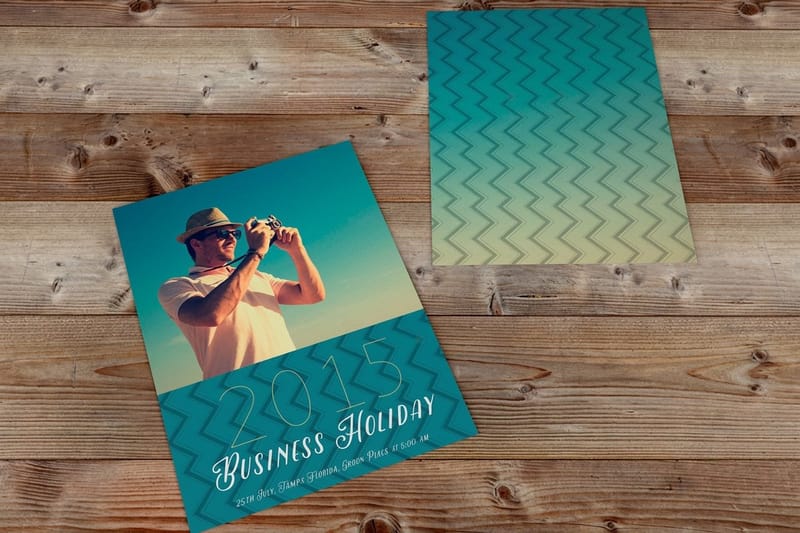
Postcards are the clearest case. The picture side wants coating so the photography reads across a room, and the message side has to take a pen, a stamp and a machine applied address without smearing. Standard postcards start at $16.48 at 4OVER4.COM, and the write-on back is worth more than any finish you could put over it if the card is going in the mail. The whole range sits on the postcard printing page.
Hang tags are the second. A retailer prints the brand mark and the colour on the show face, then writes a size, a price or a store code on the reverse, sometimes weeks later and usually with whatever pen is on the counter. Standard hang tags start at $25.27, and the same logic runs through the rest of the hang tag range. A tag coated on both faces looks identical in a proof and is useless the first time somebody tries to write on it.
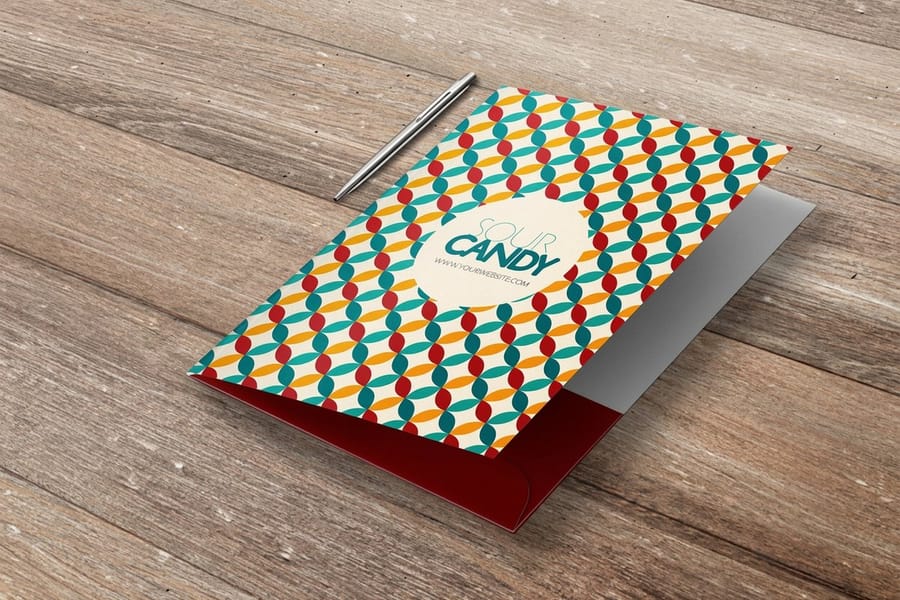
Then there is anything that gets glued or hung. Pocket folders need adhesive to grab the paper along the glue tabs, and adhesive grabs exposed fibre far better than it grabs a sealed clay surface, which is why pocket folders are so often specified as C1S with the coating outward. Door hangers follow the same reasoning where a field team writes a call-back time or a technician name on site. If you want to lay a job out at the right trim before you commit, start from a correctly sized file in the blank template library.
Where C1S Costs You, and What To Order Instead
Three things go wrong with C1S, and all three are predictable enough to design around.
The back prints darker and softer. Ink soaks into bare fibre instead of sitting on top of it, so a halftone dot spreads, a 40 percent tint reads heavier than it did on screen, and a solid looks flat next to the same colour on the coated face. Keep the back for type, rules, maps and line art. If the brief genuinely calls for a photograph on both faces, stop fighting the stock and move to a coated two sides sheet like the one behind our standard brochures.
The sheet curls. One face is sealed and one is open, so the open face takes on room humidity and grows while the coated face does not, and the card bows toward the coating. Light points show it worst. Leave cartons sealed until the job is used, store them flat rather than standing on edge, and give a cold delivery a few hours to reach room temperature before opening it, because condensation on a cold sheet is the fastest way to a wavy stack.
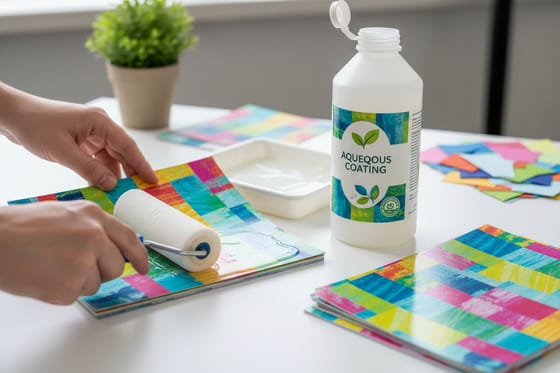
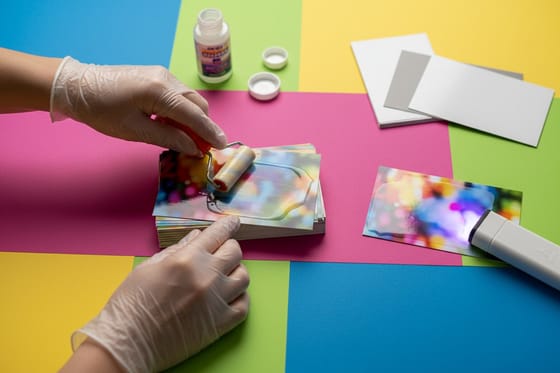
Coating is not the same thing as protection. The mill coating on C1S is there to hold ink on the surface, not to survive a thumb, a rain shower or a mail sorter. If the piece has to take handling, add an aqueous coat or a laminate on press, and read what aqueous coating does and where UV coating earns its place before you pick one. Whatever you add, keep it off the panel you intend to write on. A UV coat over an address block turns a writeable card into a card nobody can address.
One more thing worth knowing before you send the file: office laser printers and coated faces are an uneasy pair. Toner fuses into fibre readily and onto a slick coated surface less so, which is why an imprint added later belongs on the uncoated back. For the wider picture of how stock choice shapes a quote, our cardstock versus paper stock guide is the place to go next.
Wally explains C1S
Coated one side, bare on the other, and that is the point
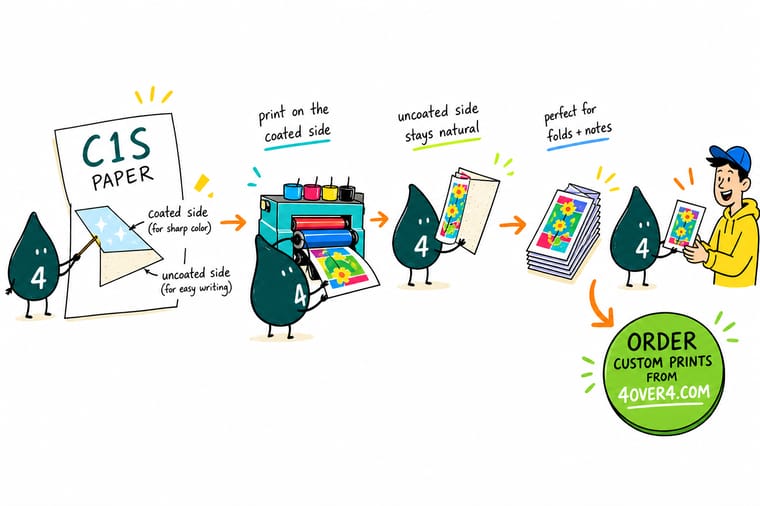
Wally flips the card over. The front is sealed with a clay coating, so the ink stays on top and the colour looks sharp. The back is plain paper, so his pen bites, the stamp takes, the glue grabs and the mailing machine can print an address on it without smearing. Coat both faces and you get a prettier back you can never write on. His only warning: keep the cartons closed, because the bare side drinks room humidity and the sheet starts to bow toward the coating.
Order postcards on a writeable back →Specs and pricing
Sizes, stock options and starting prices
The three products where a coated front and a working back matter most, with live configuration choices and starting prices straight from the 4OVER4.COM configurator.


Print it
Order a piece with a back you can actually use

Explore more
Where to go next


By the numbers
Paper choices you can count on at 4OVER4
Common Questions
Your C1S paper questions, answered
What does C1S paper mean?
C1S stands for coated one side. A mineral coating, usually clay based, is spread on one face of the sheet and pressed smooth between rollers, while the opposite face is left as bare paper. You buy it as a cover or board grade in points, most often 10pt, 12pt, 14pt and 16pt. Printers reach for it whenever one face has to carry sharp colour and the other has to accept a pen, a stamp, an address applied by a mailing house, or glue.
What is the difference between C1S and C2S paper?
The count in the name is the number of coated faces. C2S is coated two sides, so both faces hold ink on the surface and both look equally crisp, which is what you want on a rack card or a brochure that is photographic front and back. C1S leaves one face uncoated, so that face writes, stamps, glues and takes an inkjet address, but it prints darker and softer than the coated side. Choose by asking what the back of the piece has to do, not by which sounds more premium.
Which side of C1S paper do you print on?
Both, in practice. The coated side takes the design that has to look good, and the uncoated side takes type, a return address, terms, a price grid or anything a customer will write on. If a sheet is already cut and you cannot remember which face is coated, put a drop of water on a corner: it beads and sits on the coated side, and it soaks in and darkens the uncoated side. The coated face also has a faint sheen and feels slicker under a fingertip.
Can you write on C1S paper?
On the uncoated back, yes, with a ballpoint, a pencil, a gel pen or a rubber stamp, because the fibres are exposed and absorb. On the coated face, water based ink from a standard pen tends to bead and smudge rather than dry, so it needs a permanent marker. This is the reason C1S is the default for postcards that carry a handwritten note and for hang tags where staff write a size or a price on the reverse.
Is C1S good for mailing postcards?
It is the safest choice for anything addressed by machine. Mail houses and the USPS apply addresses and barcodes with aqueous inkjet heads, and that ink can sit wet on a glossy coated surface long enough to smear or to be rejected as unreadable. The uncoated back of a C1S card absorbs it immediately. If you order a card coated on both sides, ask for the address panel to be knocked out of the coating before the job runs.
Why does C1S stock curl?
Moisture. The coated face is effectively sealed and the uncoated face is not, so when the sheet sits in a humid room the bare side takes on water and expands while the coated side stays put, and the sheet bows toward the coating. Heavier points resist it better than light ones. Keep the cartons closed until you use them, store them flat rather than on edge, and let them come to room temperature before you open them.
Get Started
Ready to print on a stock that suits the job?
Pick your size, choose a coated face for the artwork and leave the back open for a pen, a stamp or a mailed address. We print it and ship it from Queens.
Legal Disclaimer
Gold Standard guarantees apply to all standard orders placed through 4over4.com. Price match requires verifiable proof of a competitor's published price for an equivalent product with matching specifications and turnaround time. Satisfaction guarantee covers manufacturing defects and print quality issues. Contact support with order number and documentation. On-time delivery rate based on tracked orders 1999 to 2026. Individual results may vary based on shipping carrier performance.
