
What Is Cardstock and Its Weights?


Emma is our prepress and print production voice, built from the knowledge of our production team, with over 20 years in printing.
Cardstock is the heavyweight paper behind every business card, postcard, and greeting card. Here is what it is, how printers measure it in points and pounds, and how the common weights (10pt, 14pt, and 16pt) actually compare in the hand.
Cardstock is heavyweight paper, thicker and stiffer than the text-weight paper used for letters or book pages. Printers rate it two ways: by thickness in points (pt), where one point equals a thousandth of an inch, and by weight in pounds (lb) or GSM. The common print weights run from 10pt to 16pt. 14pt is the everyday standard for business cards and postcards, 16pt feels distinctly more premium, and 10pt is a lighter, more economical card.
Start here
Cardstock in one paragraph
Cardstock is heavyweight paper, measured by thickness in points and by mass in pounds or GSM. For cards, points are the number that matters: 14pt is the sturdy everyday standard, 16pt reads as premium, and 10pt keeps costs down on lighter, high-volume pieces. The weights chart further down lines them all up at a glance, and the table in the rundown section spells out the caliper, weight, and best use for each.
Watch it printed
See classic business cards on the press, in 145 seconds
Classic business cards print at 2 by 3.5 inches on stocks from 13pt uncoated up to 80pt UltraWhite uncoated, including 14pt gloss cover, 16pt and 18pt uncoated and 24pt ultra thick gloss, the same weights the chart below lines up. Production takes 3 business days.
Points, pounds and GSM
Cardstock weight chart (lb, pt, gsm)
Three numbers describe the same sheet. Points measure thickness in thousandths of an inch, pounds measure the weight of a ream at its basic size, and GSM measures grams per square meter. Points and GSM climb together; pounds only mean something once you know they are cover weight, which is the family cardstock belongs to.
| Points | Caliper | Cover weight | GSM | Typical job |
|---|---|---|---|---|
| 10pt | 0.010 in | ~80 lb | ~215 gsm | Value postcards, flyers, inserts |
| 12pt | 0.012 in | ~90 lb | ~240 gsm | Larger postcards, budget cards |
| 14pt | 0.014 in | ~100 lb | ~260 gsm | Business cards, postcards, greeting cards |
| 16pt | 0.016 in | ~120 lb | ~350 gsm | High-end business cards and postcards |
| 18pt and up | 0.018 in+ | Extra heavy | Extra heavy | Edge-painted, triplex, specialty cards |
Read the chart in whichever direction you are shopping. If a printer quotes points, you already know the thickness. If a supplier quotes 80 lb or 215 gsm, look across to the points column to see which card it behaves like. Everything from 14pt up survives a wallet and a pocket, while 10pt and 12pt are where you save money on pieces you print by the thousand and hand out freely.
Is cardstock just thick paper?
Short answer: mostly, yes. Cardstock and everyday paper start from the same wood fibers and roll off similar machines. The difference is how much material goes into each sheet. Cardstock is built to be thicker and stiffer, rigid enough to stand on its own edge without buckling, so it holds a crease, resists tearing, and feels solid between two fingers.
The reason printers do not simply say "thick paper" is that thickness is a spectrum, and buyers need to compare exact weights. A slightly heavier flyer stock and a proper business card stock can both feel firm, yet one folds cleanly and the other cracks. Rating the sheet by a precise number takes the guesswork out. That is what the point and pound systems do, and it is why the same guide that covers cardstock versus paper stock spends most of its time on the numbers.
If you would rather feel the difference than read about it, order a set of free paper samples before you commit. Holding 10pt, 14pt, and 16pt side by side settles most decisions in about ten seconds, and it costs you nothing.
How cardstock is measured: points, pounds, and GSM

There are three numbers you will run into, and they measure two different things. Points measure thickness. Pounds and GSM measure weight. Getting them straight is most of the battle.
Points (pt) are the simplest and the most useful for cards. One point equals one thousandth of an inch of caliper, so 14pt cardstock is 0.014 inches thick. Bigger point number, thicker sheet, every time. Pounds (lb) describe the weight of a fixed count of sheets cut to a base size, which is why the same "80 lb" label can mean very different things on text stock versus cover stock. GSM (grams per square meter) is the metric weight of a single square meter and travels well internationally.
Thickness and weight usually rise together, but coatings, fiber, and how tightly the stock is pressed can pull them apart, so a heavier pound rating does not guarantee a thicker card. For business cards and postcards, points are the number to trust. For a deeper reference tuned to cards specifically, our business card thickness chart lines the weights up next to each other. You can also lean on our online design tool to lay out the card once you have settled on a stock.
Why 80 lb text and 80 lb cover are not the same sheet
The pound rating only means something once you know which paper family it belongs to, because each family weighs its sheets at a different base size. That is the whole reason a supplier can sell an 80 lb paper that flops and an 80 lb paper that stands up.
- Text weight. Rated on a 25 by 38 inch sheet. Letterhead, flyers and book pages live here, from 50 lb up to 100 lb text. Still paper, never cardstock.
- Cover weight. Rated on a smaller 20 by 26 inch sheet, so the same number describes a much heavier stock. This is the cardstock family. 80 lb cover is roughly 10pt, 100 lb cover is roughly 14pt, and 120 lb cover sits near 16pt.
- Index and bristol. Rated on their own base sizes and sold for tabs, index cards and file dividers. 110 lb index is the common craft store card and lands close to 10pt.
- Tag. Hang tags and labels, stiff but usually uncoated.
The fix is simple. When a quote says pounds, ask which family. When it says points or GSM, you already know, because those measure the sheet itself. For the cards on this site the family is cover weight, and the rundown table in the next section maps it to points.
A rundown of the different cardstock weights
Here is where the numbers earn their keep. The table below covers the weights you will actually choose between for cards, postcards, and covers, from the light and economical up to the thick and luxurious. Treat the pound and GSM figures as close approximations, since they shift a little with finish and mill.
| Weight | Caliper | Approx. cover weight | Feel | Best for |
|---|---|---|---|---|
| 10pt | 0.010 in | ~80 lb / 215 gsm | Light, flexible | Value postcards, flyers, inserts |
| 12pt | 0.012 in | ~90 lb / 240 gsm | Firm mid-weight | Larger postcards, budget cards |
| 14pt | 0.014 in | ~100 lb / 260 gsm | Sturdy, standard | Business cards, postcards, greeting cards |
| 16pt | 0.016 in | ~120 lb / 350 gsm | Thick, premium | High-end business cards and postcards |
| 18pt and up | 0.018 in+ | Extra heavy | Rigid, luxury | Edge-painted, triplex, specialty cards |
A few patterns fall out of the chart. Most professional printing lives in the 14pt to 16pt band, because that is where a card feels credible without becoming a plank. Below that, 10pt and 12pt keep costs down on pieces you print in bulk and hand out freely. Above 16pt, you are into specialty territory where the stock itself is part of the wow, like the layered custom business cards people reach for when the card has to make a statement.
10pt vs 14pt vs 16pt: which cardstock should you pick?
These three weights cover the vast majority of real decisions, so it helps to compare them head to head. Remember the numbers are thousandths of an inch, which makes the math easy: 14pt is 40 percent thicker than 10pt, and 16pt is another notch stiffer again.
10pt is the economy choice. It still reads as a card, but it bends more freely and is best when volume and price lead the brief. Think stacks of promotional postcards, event flyers, or inserts that get printed by the thousand and handed out without a second thought.
14pt is the safe default and the one most people mean when they picture a business card. It is stiff, professional, durable, and affordable all at once, which is why it is the everyday standard for business cards, postcards, and greeting cards alike. If you are unsure, 14pt is rarely the wrong answer.
16pt is the upgrade you feel before you read a word. That extra two thousandths of an inch makes the card noticeably more rigid, and rigidity is what the hand registers as quality. When your brand leans premium, or you want your card to stand out in a bowl of others, 16pt is worth the small step up in price. Our guide to the right cardstock for your business card walks through this exact trade-off with the finishes layered in.
Coatings and finishes change how a weight feels
Weight is only half the story. The coating on top of the stock changes how that weight reads in the hand and how your ink looks on the surface. Two cards can share the exact same 16pt core and still feel like different products.
Gloss coating makes colors pop and photos snap, and it adds a slick, protective sheen. Matte and silk finishes mute the shine for a softer, more modern look that is easy to write on. Uncoated stock keeps the natural paper texture, which pairs beautifully with minimal designs and premium feels. Specialty options like soft-touch laminate add a velvety hand that makes even a 14pt card feel like a heavier one.
Coating also affects readability and color, and because screens and presses render color differently, it pays to think in print terms early. If you are choosing between finishes for a specific piece, the samples you can order for free include coated and uncoated options, and our design templates show how each surface handles color and type before you print a full run.
Which cardstock weight for which project

The right weight depends less on the product name and more on what the piece has to do. Here is how the common jobs shake out.
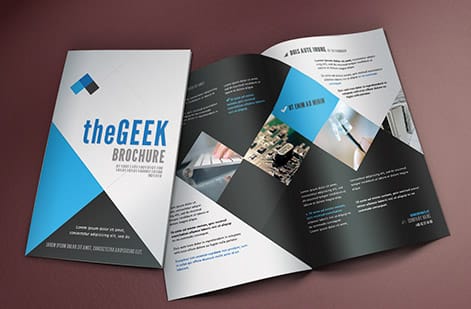
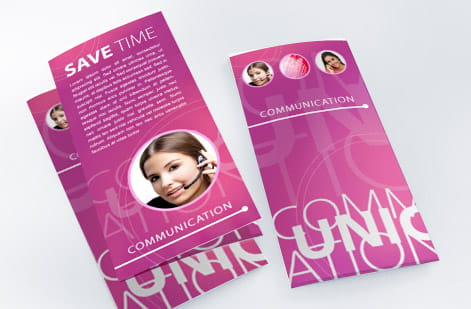
Business cards live at 14pt and 16pt. Go 14pt for a dependable, cost-effective card and 16pt when you want it to feel premium in the hand. Postcards follow the same logic: 14pt for everyday mailers and promotions, 16pt when the card doubles as a keepsake or a high-end invite. Greeting cards and invitations favor heavier stock so they stand up on a shelf. Flyers and inserts often drop to 10pt because they are printed in volume and read once. Brochures and booklet covers pair a heavier cover weight with lighter inside pages, which is why a folded piece like our brochures mixes stocks by design.
The same cardstock logic even scales up into rigid packaging: folding carton boxes are printed cardstock too, just cut and creased into a three-dimensional shape. Whatever the format, you can compare live options across the full business card range and see how each weight is priced.
How to choose the right cardstock (and test it first)

Choosing a weight comes down to three questions. What impression does the piece need to make, how long does it need to last, and what is the budget per unit? Premium and durable pushes you toward 16pt. Volume and value pulls you back to 10pt or 12pt. Most jobs land comfortably on 14pt, which is why it is the default.
The single best move is to feel the stock before you order the full run. Order free paper samples, hold the weights side by side, and flex each one. A choice that felt agonizing on a spec sheet usually makes itself the moment the cards are in your hand. It is the same reason we always suggest a sample before a large postcard or card order.
When you are ready, price is easy to reason about. Heavier stock costs a little more per sheet, but quantity moves the needle far more, and you can watch both change live in the configurator on any product. A run of classic business cards starts around $17.57, and the per-unit price drops as the quantity climbs, so you can dial in the exact weight and volume that fits the budget.
In summary
Cardstock is heavyweight paper, rated by thickness in points and by mass in pounds or GSM, with points being the number to trust for cards. The weights you will actually choose between run from 10pt through 16pt and beyond: 10pt for light, economical, high-volume pieces, 14pt as the sturdy everyday standard, and 16pt when you want the card to feel premium the instant someone picks it up. Coatings and finishes then fine-tune how any of those weights reads in the hand.
Pick the weight for the job, feel it first with a free sample, and let the live price guide the final call between stock and quantity. Do that and you will never overpay for thickness you do not need, or undersell a brand that deserves the heavier card. When you are ready to print, the whole business card range is priced by weight so you can compare in a click, and our printing terms glossary is there for any word on the spec sheet that trips you up.
Wally explains cardstock weights
The number is just thickness, in thousandths of an inch
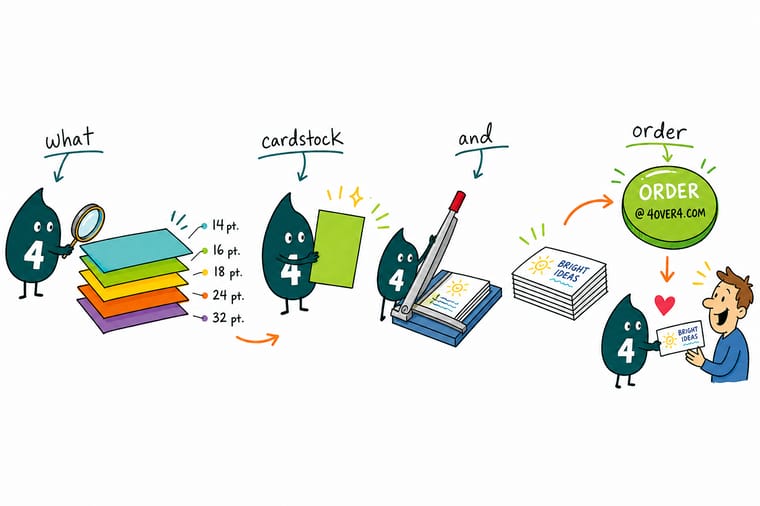
Wally keeps it simple: the point number is the thickness of the card in thousandths of an inch, so a bigger number means a stiffer card. 14pt is the trusty everyday weight, 16pt is the one people notice, and 10pt keeps the budget happy. His one rule before any big order is to feel the stock first, then let 4OVER4 print it on the exact weight and finish you choose.
Order free paper samples →
Weight chart
Cardstock weights at a glance
One frame, five weights. Each bar scales with the real thickness of the stock, so you can see how 10pt, 14pt, and 16pt stack up before you order.
Thickness and weight usually rise together, but coatings and fiber can nudge them apart. For cards and postcards, compare the point number first, then choose a finish.
Specs and pricing
Cardstock specs and live pricing
Once you have picked a weight, the rest is size, finish, and quantity. Here are the live specs and price-per-unit for classic business cards at 4OVER4.COM, straight from the configurator, so you can see how the cardstock options are priced.
| Quantity | Price Per Unit | Total |
|---|---|---|
| 100 | 17.6¢ | $17.57 |
| 200 | 11.5¢ | $23.07 |
| 300 | 9.15¢ | $27.46 |
| 400 | 7.96¢ | $31.86 |
| 500 | 7.25¢ | $36.26 |
| 600 | 6.77¢ | $40.64 |
| 700 | 6.43¢ | $45.04 |
| 800 | 6.18¢ | $49.43 |
Print it
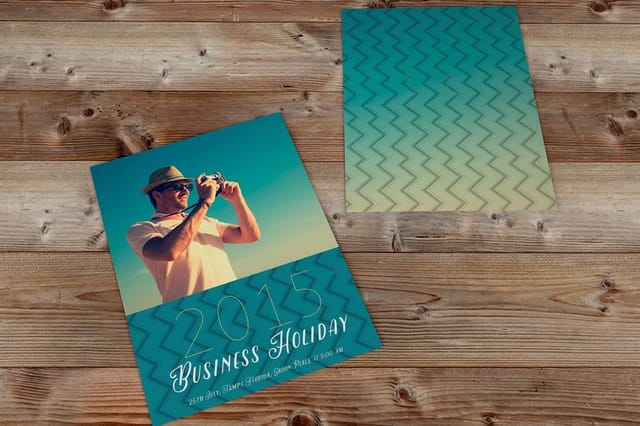
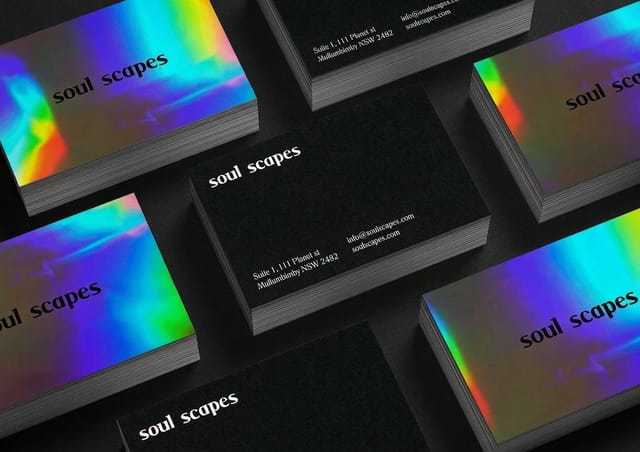
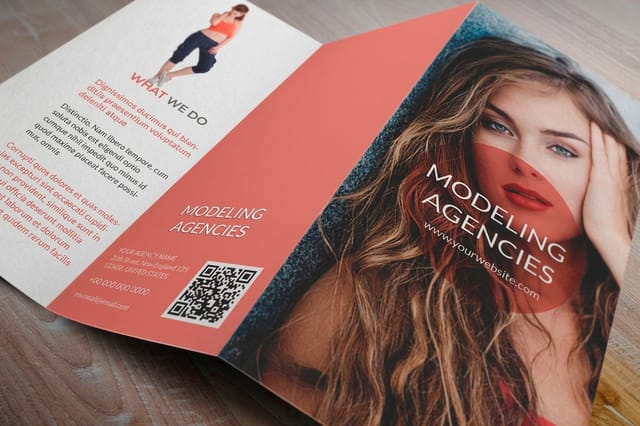
Popular cardstock products at 4OVER4
See it in use
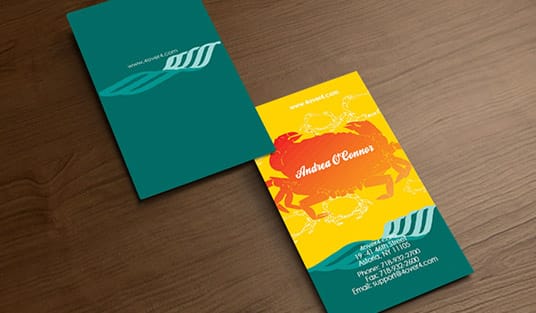
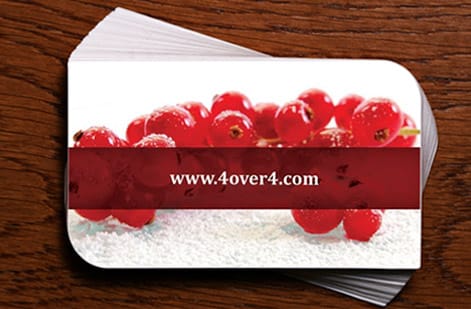
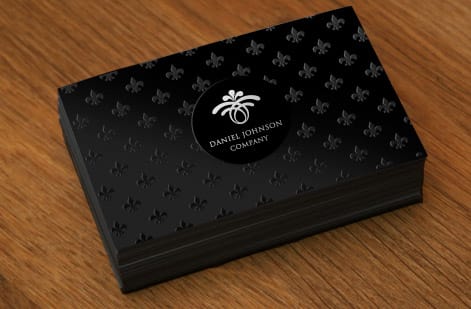
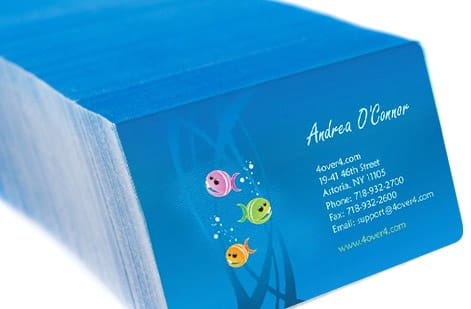
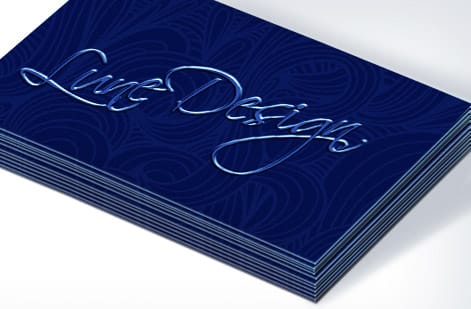
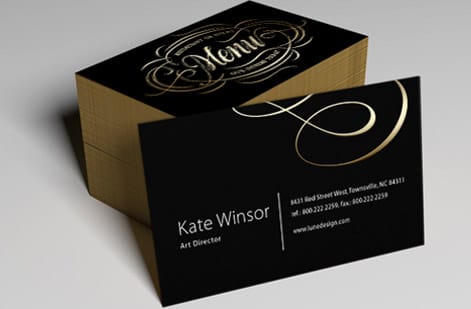
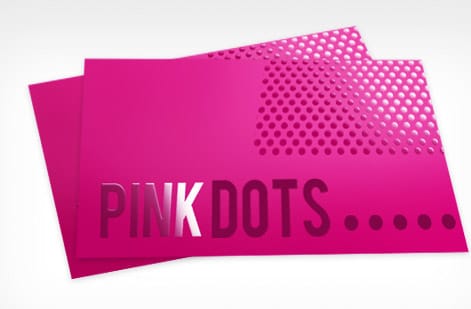
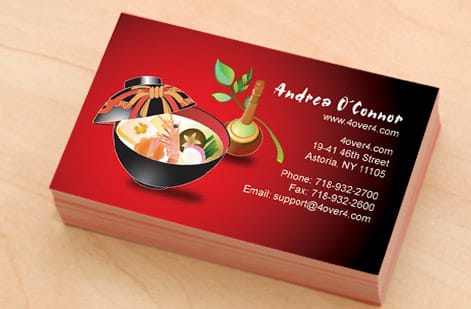
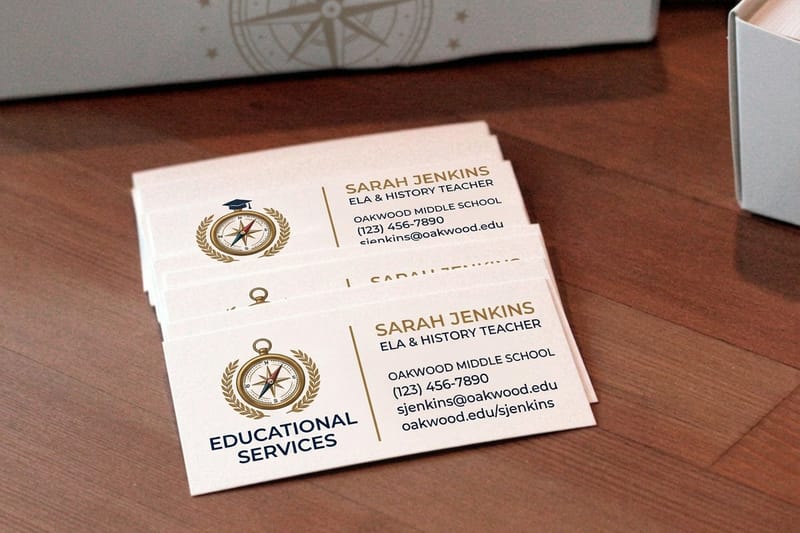
Cardstock at work, in classic business cards
%22%2F%3E%3Ccircle%20cx%3D%2242%22%20cy%3D%221%22%20r%3D%2217%22%20fill%3D%22%2314b8a6%22%20opacity%3D%220.15%22%2F%3E%3Ccircle%20cx%3D%2240%22%20cy%3D%2250%22%20r%3D%225%22%20fill%3D%22%2314b8a6%22%20opacity%3D%220.1%22%2F%3E%3Crect%20x%3D%2272%22%20y%3D%22-7%22%20width%3D%2227%22%20height%3D%2210%22%20rx%3D%224%22%20fill%3D%22%2314b8a6%22%20opacity%3D%220.08%22%20transform%3D%22rotate(7%2080%2030)%22%2F%3E%3C%2Fsvg%3E)
Related articles
Where to go next


By the numbers
Sixty plus papers to choose a weight from
Common Questions
Common questions about cardstock and its weights
Which is heavier, 65 lb or 110 lb cardstock?
110 lb, by a wide margin, as long as both are cover weight. 65 lb cover is a light card around 176 gsm, close to a sturdy postcard or a light flyer stock, while 110 lb cover is roughly 300 gsm and lands near 14pt to 16pt, the range business cards are printed on. One trap: 110 lb index is a different family rated on a different base sheet, and it is lighter than 110 lb cover, closer to a 10pt card. Compare points or GSM when the two labels come from different families.
Is 80 lb paper cardstock?
Only if it is 80 lb cover. 80 lb cover is roughly 216 gsm and about 10pt thick, the lightest weight most printers still call cardstock, good for flyers, inserts and value postcards. 80 lb text is a heavy letterhead or brochure paper at around 118 gsm, which folds and flops like paper because it is paper. The number is the same and the sheets are nothing alike, so check the family before you order.
Is cardstock 40 lb?
No. A 40 lb rating is a bond or text weight, the range of copier paper and thin flyers, and it is far too light to stand on its edge or survive a wallet. Cardstock starts at roughly 65 lb cover, and the everyday print weights run from 80 lb cover, which is about 10pt, up to 120 lb cover at about 16pt. If a listing says 40 lb and calls itself cardstock, it is quoting a different scale, so ask for the caliper in points or the GSM.
What is cardstock?
Cardstock is heavyweight paper that is thicker, stiffer, and more durable than the text-weight paper used for letterhead or the pages of a book. It holds its shape, takes a clean fold, and survives handling, which is why it is the standard material for business cards, postcards, greeting cards, and covers. At 4OVER4.COM it comes in a range of weights and finishes so you can match the feel of the stock to the job.
Is cardstock just thick paper?
In the simplest terms, yes: cardstock and regular paper are made the same way from the same fibers. The difference is thickness and stiffness. Cardstock is engineered to be rigid enough to stand on its own, so it does not flop or tear the way a sheet of copy paper does. The jump from paper to cardstock is a spectrum rather than a hard line, which is exactly why printers rate it by a precise weight instead of calling everything "thick paper."
What is 10pt cardstock?
The "pt" stands for point, and one point equals one thousandth of an inch of thickness. So 10pt cardstock measures 0.010 inches, roughly the caliper of a sturdy postcard. It is on the lighter end of the card range: firm enough to feel like a card, flexible enough to keep costs down on high-volume pieces like flyers, mailers, and inserts.
What is the difference between 10pt and 14pt cardstock?
The number is the thickness in thousandths of an inch, so 14pt (0.014 inches) is 40 percent thicker than 10pt (0.010 inches). In the hand, 10pt bends more easily and reads as economical, while 14pt is the stiffer, more professional weight most people expect from a business card. Choose 10pt when volume and budget lead, and 14pt when the piece needs to feel solid and last.
Is 14pt or 16pt cardstock better for business cards?
Both are excellent. It depends on the impression you want. 14pt is the trusted everyday standard: professional, durable, and cost-effective. 16pt (0.016 inches) is noticeably thicker and stiffer, and that extra rigidity is what people register as premium the instant they pick the card up. If your brand leans luxury or you want the card to stand out in a stack, 16pt earns its small price bump.
What is the difference between points, pounds, and GSM?
Points (pt) measure thickness, the physical caliper of the sheet. Pounds (lb) measure the weight of a set number of sheets at a base size, and GSM measures the weight of one square meter in grams. Thickness and weight usually track together, but coatings and fiber can nudge them apart, so a heavier lb rating does not always mean a thicker sheet. For cards and postcards, points are the most reliable number to compare.
Does cardstock cost more than regular paper?
Per sheet, heavier stock costs a little more because there is more material in it, so 16pt runs slightly above 14pt, which runs above 10pt. The gap is usually small relative to the whole order, and quantity matters far more: the more you print, the lower the unit price drops. On any 4OVER4.COM product you can watch the price update live as you change stock and quantity, so you see the trade-off before you commit.
Get Started
Ready to print on the right cardstock?
Pick your weight, choose a finish, and print it at 4OVER4.COM. Adjust the stock and quantity and watch your price update live, or order free samples to feel it first.
Legal Disclaimer
Gold Standard guarantees apply to all standard orders placed through 4over4.com. Price match requires verifiable proof of a competitor's published price for an equivalent product with matching specifications and turnaround time. Satisfaction guarantee covers manufacturing defects and print quality issues. Contact support with order number and documentation.
