
How to Print Wedding Favor Tags With Your Names and Date


Sizes that fit the favor, the hole placement that stops tags tearing, the stock that survives a warm reception, and what a custom shape actually costs.
Print wedding favor tags at 2 by 3.5 inches on 14pt or 16pt stock, punch the hole with its center a quarter inch in from the cut edge, and order about fifteen percent more than your guest count. Kraft board suits rustic and outdoor weddings, coated stock suits photographs and foil, and a custom silhouette needs a die line drawn on its own layer with no feature narrower than a quarter inch.
Quick answer
Fit the favor, protect the hole, print a few extra
A favor tag is a small object with one structural weakness, and that is the hole. Size the tag to the favor rather than to the artwork, keep the punch center a quarter inch inside whatever edge the die cuts, and pick 16pt over 14pt on anything larger than 2 by 3.5 inches. Kraft board hides fingerprints and takes a handwritten name. Coated stock holds color and foil. Then order roughly fifteen percent over your guest count, because assembly eats tags and a reprint costs more than the extras did.
How to Make Wedding Favor Tags, Step by Step
Six decisions, in this order. Taking them out of order is what produces a tag that reads well on screen and looks wrong tied to a jar.
- Measure the favor first. Put a ruler across the lid, the box top or the bag front. The tag should sit inside that width. A 2 by 3.5 inch tag on a four ounce honey jar hangs past the base and lies flat on the table instead of facing the guest.
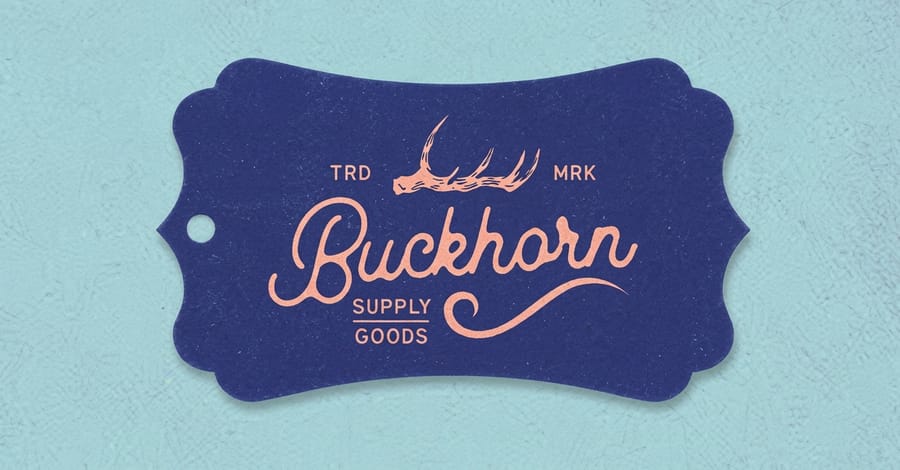
- Pick the shape after the size. A rectangle is the fastest and cheapest. A round, an arch, a heart or a luggage-tag notch all need a die, which is a real cost the first time and nothing on the reprint.
- Write the copy short. Two names, the date, and at most five words of thanks. Anything longer drops below about 8 point on a tag this size and stops being read at a table.
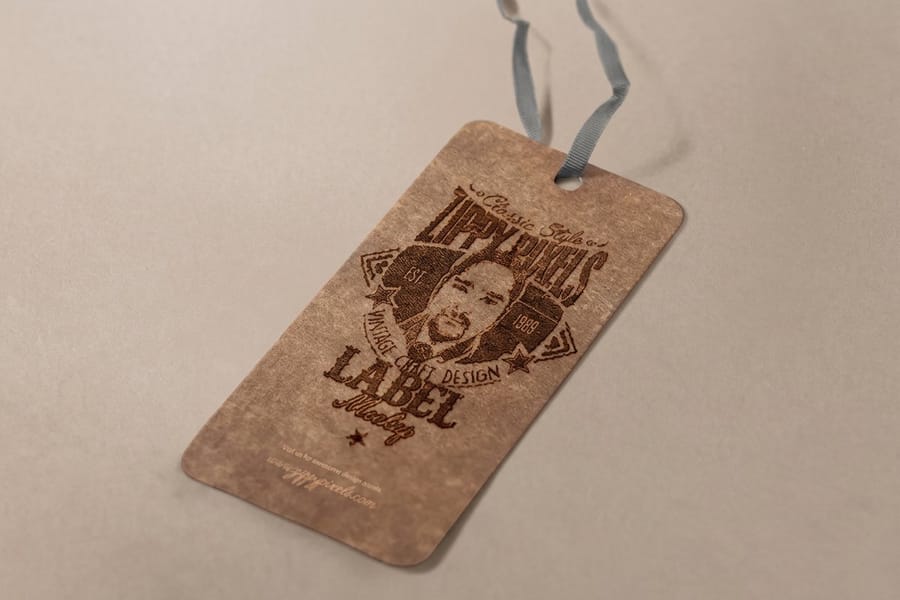
- Set the hole before you finish the design. Draw the punch as a circle in your file, a quarter inch in from the trim, and keep type clear of it. Designing first and adding the hole last is how a monogram ends up with a bite taken out of it.
- Choose the tie, then the hole size. Baker's twine slips through an eighth inch hole. Three eighths inch satin ribbon needs a quarter inch. A hole that is too small tears on the first pull, and a hole too large lets the tag spin.
- Proof one physical tag. Print at size, cut it out, punch it, tie it to the actual favor, and set it on a table at arm's length. Every problem shows in ten seconds.
Steps four and five are the two that survive the longest. The rest is taste. If you want the full size chart before you commit, the hang tag sizes guide lists every standard footprint we cut, and kraft hangtags start at $57.96 for the uncoated look most outdoor weddings want.
Sizes and Shapes That Fit the Favor You Chose
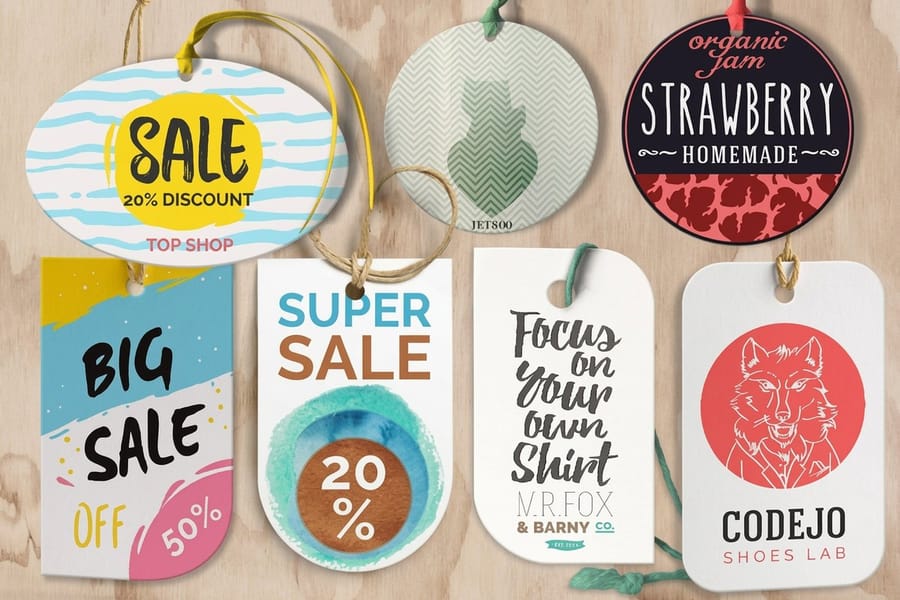
Favor tags fail on proportion far more often than on design. The tag has to match the object, and the object is usually smaller than the tag people imagine.
| Tag | Size | Fits | Trade-off |
|---|---|---|---|
| Classic rectangle | 2 x 3.5 in | Boxes, bags, wine bottles, larger jars. | Overhangs anything under about 3 inches tall. |
| Mini rectangle | 1.5 x 3 in | Slim bottles, seed packets, candle tins. | Two names and a date fill it. Nothing else fits. |
| Square | 2 x 2 in | Small jars, macaron boxes, soap bars. | A long monogram has to stack onto two lines. |
| Round | 2.5 in diameter | Lids, cork tops, anything circular. | Corners of the artwork get cut, so center everything. |
| Custom silhouette | Your outline | Themed favors, heart and leaf shapes, arches. | Needs a die, and thin points cut poorly under a quarter inch. |
The last row is where the guide earns its keep. A custom outline is drawn as a separate die line in your file, and the rule that catches most couples is minimum feature width: a shape narrower than a quarter inch, like the tip of a long leaf or the tail of a script letter, either flexes in the cutter or snaps off the finished tag. Round the point off or thicken it. Shaped Hangtags start at $107.64 and cut to your own outline, and die-cut hangtags at $36.26 give you our stock shapes without a custom die. The wider die cutting service page explains how the cutting rule is built if you want the mechanics, and every stock and shape we cut sits together on the hang tag printing category page.
Stock, Ink and Finish, and What Each One Costs You
Pick the stock for how the tag will be handled, not for how it looks on a monitor. A favor tag gets touched by every guest, sits in a warm room for six hours, and often ends the night in a pocket.
Kraft board is the honest rustic choice. It is uncoated, so it takes a pen if you want to write names by hand, it hides fingerprints, and it makes a plain black type treatment look considered. What it will not do is hold a deep color: navy prints closer to slate on kraft, and white ink is the only reliable way to get a light mark onto it.
Coated 16pt is the opposite. Color stays where you put it, photographs reproduce, and foil sits flat and bright. It also shows every thumbprint, which is why a matte or soft touch coating is worth the small extra on a summer reception where hands are warm.
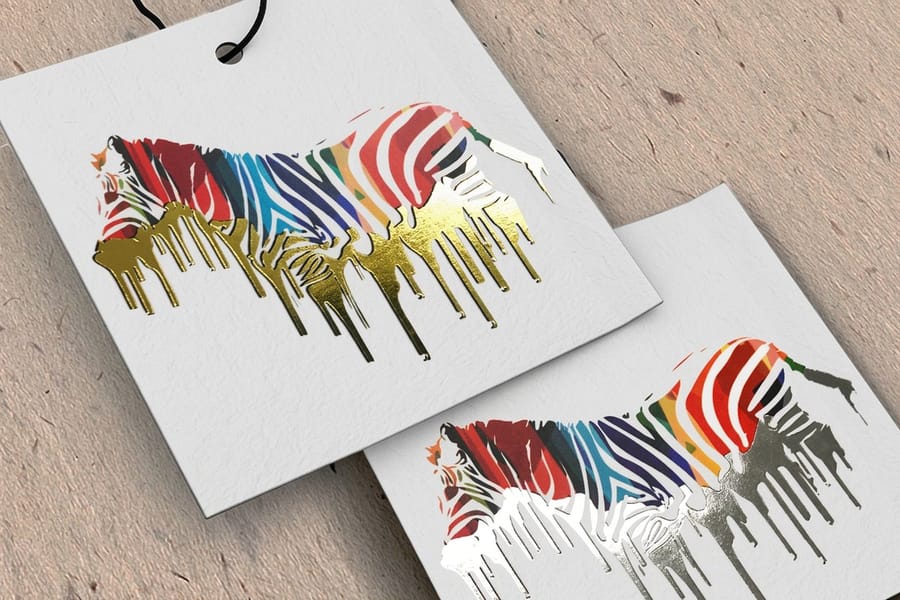
Real foil is the upgrade guests actually notice, because it moves in candlelight in a way that printed gold cannot. Metallic Foil Hangtags start at $257.38, so it is a decision made at the guest-count level rather than the tag level. Foil also wants weight behind it: on 14pt the stamp can telegraph faintly to the reverse, so on a tag printed both sides step up to 16pt.
Two finishing calls are worth making at order time rather than at the kitchen table. Rounded corners stop the sharp point that catches on fabric and curls in a pocket. Hole drilling puts the punch in the same place on every tag, which a hand punch never manages across two hundred pieces.
Quantity, Timing and the Files We Need
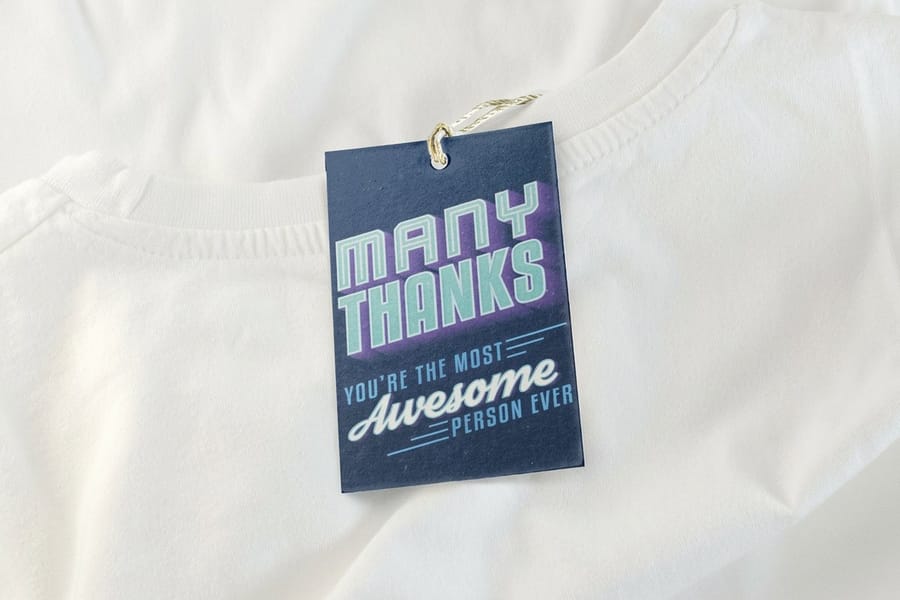
Order after RSVPs close and before assembly week. Four to five weeks out is the window most couples land in, and the reason is not printing time but the evening it takes to tie the tags on.
Count on roughly fifteen percent over the guest list. That covers the practice tags, the ones cut off with the twine, the pair the planner keeps, and the sample the venue asks for. It is a smaller number than a reprint, which costs a second setup and a second turnaround for a handful of pieces.
Supply the file at final size with an eighth inch bleed on every edge, keep type an eighth inch inside the trim, convert fonts to outlines, and draw the die line and the hole on their own layers so they are unmistakable. Send CMYK rather than RGB, and remember that a screen backlights a color while paper reflects it, so a bright coral on a monitor prints a shade quieter. Start from a correctly sized layout in the blank template library if you would rather not build the file from scratch.
One habit saves more weddings than any other: order the tags with the rest of the paper, not separately. Folded wedding invitations from $38.22 and flat thank you cards from $19.77 print on the same stocks, so the whole suite matches and ships together. Our wedding invitation design guide covers the suite end to end, and free wedding stationery samples let you feel the stock before you commit two hundred tags to it. The rest of the paper, from programs to table numbers, is gathered in the wedding printing collection.
Wally ties the tag on
The hole decides whether the tag survives the night

Wally prints the names and the date, cuts the tag to shape, then measures before he punches. A quarter inch from the hole center to the cut edge, an eighth inch hole for twine and a quarter inch for ribbon. He ties one to the real jar and looks at it from a seat at the table, because that is the only view that matters. Then he prints fifteen percent extra, because the first dozen knots are always practice.
Order shaped wedding favor tags →Specs and pricing
Tag sizes, stocks and starting prices
Configure the tag the way you would order it, with live sizes, stocks and starting prices from the 4OVER4.COM configurator.


Print it
Favor tags with your names on them

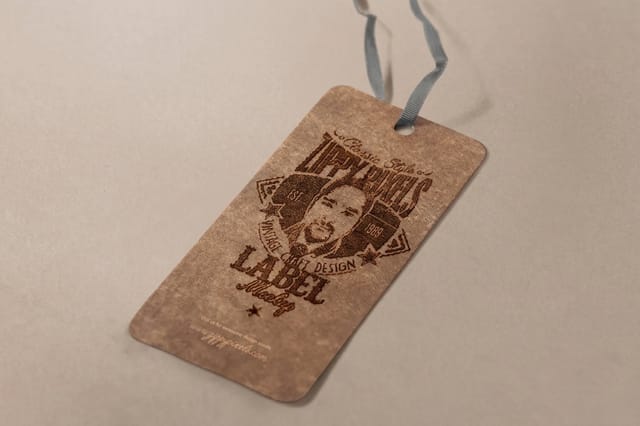

Explore more
Where to go next
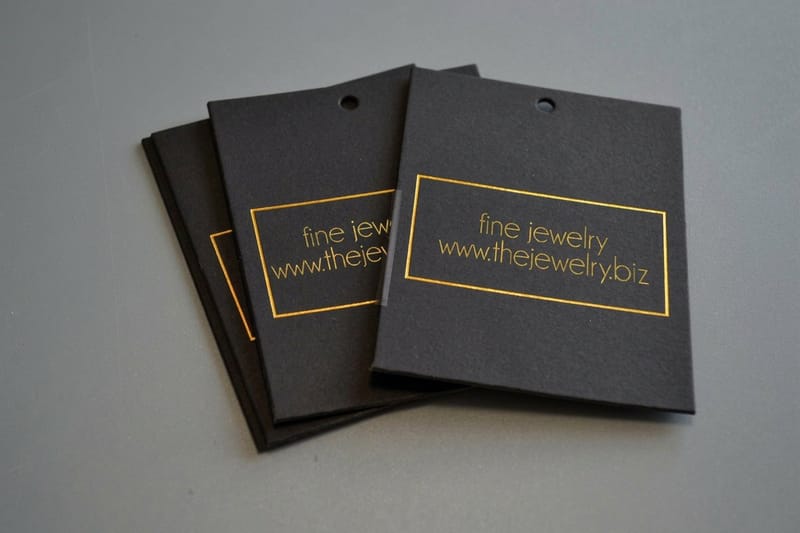
By the numbers
Wedding printing you can count on at 4OVER4
Common Questions
Your favor tag questions, answered
What size should wedding favor tags be?
Two by three and a half inches is the workhorse, the same footprint as a business card, and it carries two names, a date and a line of thanks without crowding. Go to 2 by 2 inches or a 2.5 inch round for small jars, tins and boxes where a long tag flops over the lid and hides the label. Go up to 2.5 by 4 inches only when the tag doubles as a place card or carries a recipe, a cocktail note or a seed-packet instruction. Measure the favor first, then pick the tag, because a tag that overhangs the object it is tied to looks like an afterthought in every photograph.
How many favor tags should I order for 100 guests?
Order about 115. The extras cover tags tied on crooked, tags trimmed off with the twine by mistake, one set handed to the planner and the venue as a sample, and a few kept for the album. Favor tags print in flat sheets, so moving from 100 to 150 pieces changes the price far less than a second run does, and a reprint carries its own turnaround. If two people are assembling the favors in one evening, add a little more than fifteen percent, because the first dozen are always practice.
What paper should wedding favor tags be printed on?
Fourteen point cardstock is the minimum that survives a knot. Sixteen point is noticeably more rigid and is worth the small step up on anything above 2 by 3.5 inches, because a larger tag levers against the hole every time it swings. Uncoated kraft board suits rustic and outdoor weddings, takes a handwritten name in pen, and hides fingerprints. Coated stock is the choice when the tag carries a photograph, a foil monogram or a deep color, since uncoated fiber soaks ink and shifts a dark navy toward gray.
Do favor tags come with the hole already punched?
Not automatically. Printing and drilling are separate steps, so ask for hole drilling when you order rather than after. Our hole drilling service punches the hole in register across the run, which matters more than it sounds: a hundred hand punched tags never line up, and the difference shows the moment they hang side by side on a table. For a quarter inch hole in a heavy stock, an eyelet reinforces the edge and stops the tear that ends most favor tags.
How far ahead of the wedding should favor tags be printed?
Have them in hand three to four weeks before the date. Assembly is the slow part, not printing: tying two hundred tags takes an evening with help, and it always lands in the same week as seating charts and welcome bags. Order the tags once the guest count is firm after RSVPs, which for most couples is four to five weeks out. If the date is closer than that, print a rectangle rather than a custom shape, because a die adds a step that a plain trim does not.
How much do custom wedding favor tags cost?
Standard Hang Tags start at $25.27, Die-Cut Hangtags at $36.26, and Kraft Hangtags at $57.96. A custom silhouette, cut to your own outline, runs from $107.64 for Shaped Hangtags, and real metallic foil starts at $257.38 for Metallic Foil Hangtags. The number to watch is cost per guest, not the ticket price: across 150 favors, the gap between a plain tag and a shaped one is small next to what the favor itself costs, and the tag is the part with your names on it.
Get Started
Ready to tie your names onto every favor?
Pick the size, choose kraft or coated stock, add hole drilling, and we cut the tags to shape so all two hundred hang the same way.
Legal Disclaimer
Gold Standard guarantees apply to all standard orders placed through 4over4.com. Price match requires verifiable proof of a competitor's published price for an equivalent product with matching specifications and turnaround time. Satisfaction guarantee covers manufacturing defects and print quality issues. Contact support with order number and documentation. On-time delivery rate based on tracked orders 1999 to 2026. Individual results may vary based on shipping carrier performance.
