
How to Make Thank You Tags That Ship With Every Order


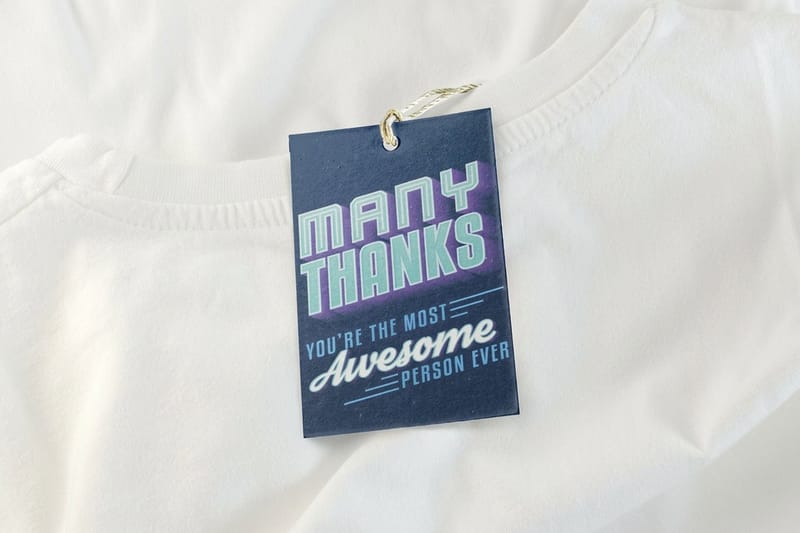
A thank-you tag is a small printed card, drilled and tied to the product. Here is the size to start from, the stock that lets you write on it, the hole spec that stops it tearing, and what each finish costs.
To make a thank-you tag, print a 2 by 3.5 inch card on uncoated or kraft stock, drill a 1/8 inch hole with its center a quarter inch in from the top edge, and thread baker twine or jute through it. The one decision that traps people is the finish: a gloss coating or a foil panel over the spot where you plan to handwrite a name turns a pen into a smear. Standard Hang Tags start at $25.27, kraft at $57.96, and metallic foil at $257.38.
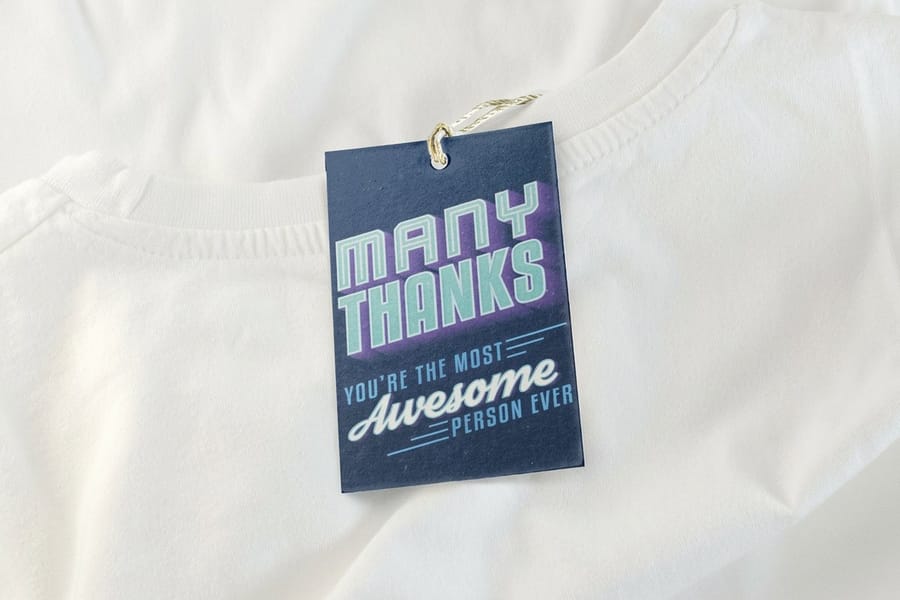
Quick answer
Size it to the item, pick the stock for the pen, then drill
A thank-you tag is four decisions in order: size, stock, hole, message. Two by 3.5 inches is the default because it matches a business card trim and fits every string, sleeve and card slot you already own. Kraft and uncoated matte take pen and stamp ink, gloss aqueous repels it, and foil holds nothing, so decide where the handwriting goes before you choose a finish. The hole is a 1/8 inch bore with its center a quarter inch in from the trimmed edge, drilled in a stack so it lands identically on every tag in the run.
The Four Decisions Behind Every Thank-You Tag
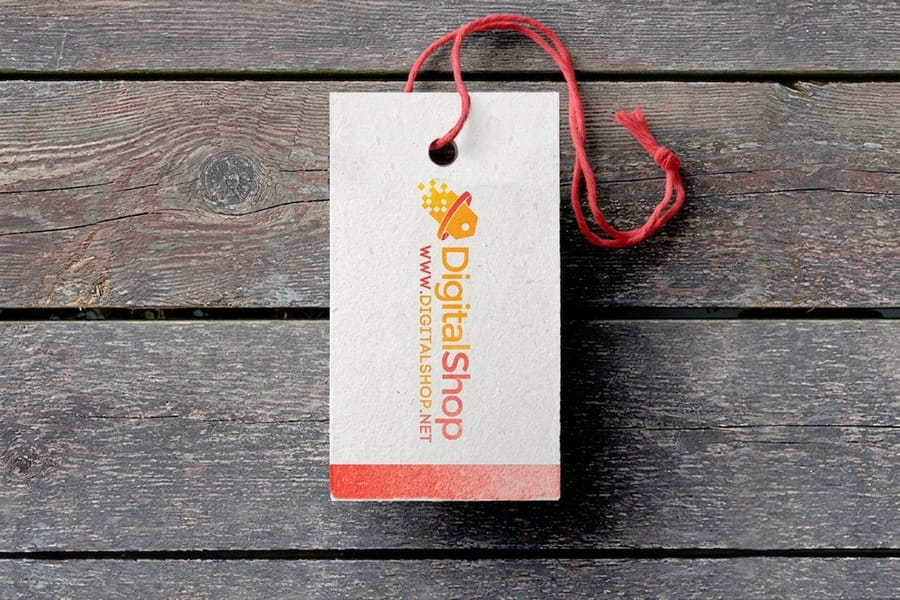
Making a tag is not a design problem first. It is four decisions in a fixed order, and getting them out of order is what produces a tag that looks right on screen and fails in the box.
One, the size. Pick it against the item, not against the message you want to write. A tag should read as a label on the product, not as a card leaning on it.
Two, the stock. This decides whether anyone can write on the tag later, so settle it before you fall in love with a coated finish.
Three, the hole and the string. The hole has a diameter and a distance from the edge, and the string has to fit through it. Choosing the twine after the tags arrive is how people end up folding ribbon through a hole meant for cord.
Four, the message. Last, because everything above constrains it. A five-word line printed on the front reads completely differently from a handwritten note on an uncoated back, and only one of those two survives a gloss coat.
Work in that order and the file almost writes itself. If you are still deciding what the tag is for, our explainer on hang tags covers the wider family, and Standard Hang Tags from $25.27 is where most thank-you tags land.
Sizes That Fit the Item Instead of Fighting It
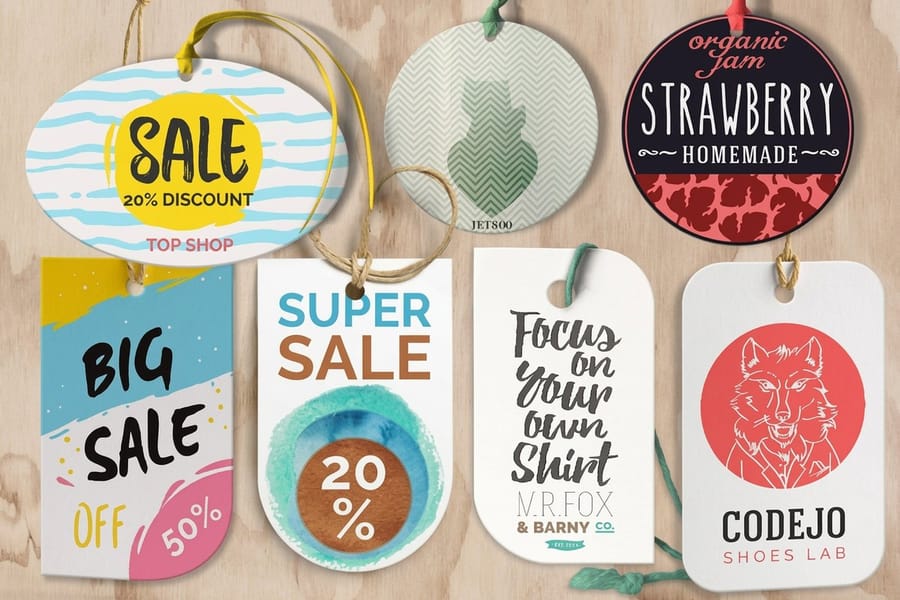
Four sizes cover almost every thank-you tag a small shop will ever tie on. The right one is the smallest that holds your logo, one line of message and the hole without crowding.
| Size | Best for | What fits on it | Watch for |
|---|---|---|---|
| 2 x 2 in | Jewelry, soap, candles, small accessories | Logo plus two or three words | The hole eats a real share of a small tag, so keep type well clear of it. |
| 2 x 3.5 in | The default for apparel, homeware, most parcels | Logo, a short thank-you line, a handle or site | Nothing. This is the size to start from unless the item argues otherwise. |
| 2.5 x 4 in | Care instructions, discount codes with terms | A short paragraph plus branding | Bigger tags swing harder in a shipping box and dog-ear at the corners. |
| Custom shape | Seasonal runs, brand marks that are not rectangles | Whatever the die allows | A shape needs a die, which is why Die-Cut Hangtags start at $36.26 rather than $25.27. |
Two habits save reprints. Round the corners on anything above 2 by 3.5 inches, because square corners on a tag that swings loose inside a box are the first thing to bend. And keep the tag under the item it hangs from: a tag that is wider than the product reads as packaging waste, not as a gift. The full hang tag size guide lists the rest of the standard trims if none of these fit.
Kraft, Matte, Gloss and Foil, and What Each One Costs
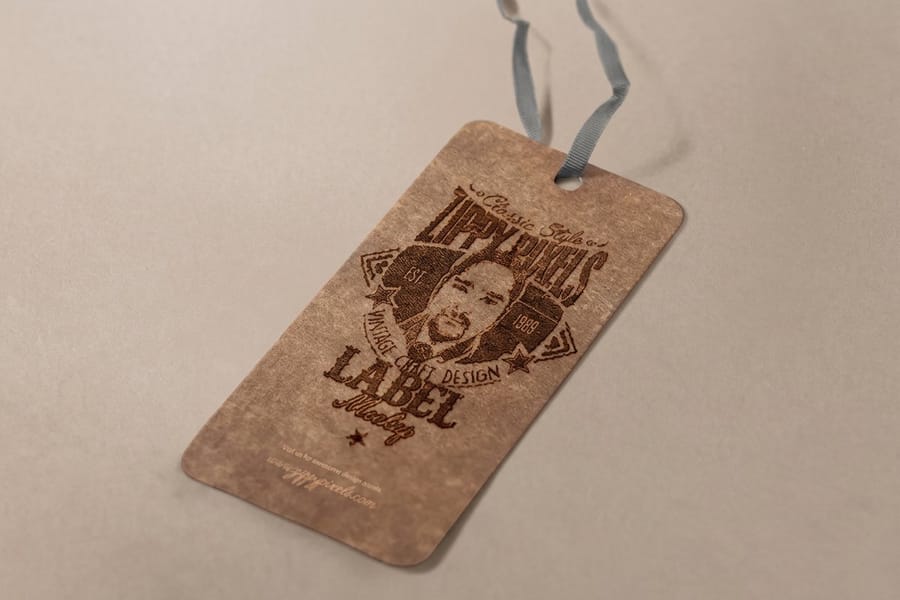
The stock choice is really a question about pen ink. Decide first whether anyone will handwrite on the tag, then pick the finish that allows it.
Kraft is uncoated brown board. Pen dries on it, rubber stamps bite into it, and its texture does most of the visual work for you, which is why it dominates small-batch packaging. The trade-off is color: kraft absorbs ink and shifts everything warm, so a bright blue prints muted and white can only exist as bare paper unless you pay for white ink. Kraft Hangtags start at $57.96.
Uncoated matte cardstock is the neutral option. It holds crisper type than kraft, keeps colors close to what you approved on the proof, and still takes a pen. A gloss aqueous coating goes the other way: colors pop, the tag resists finger marks, and a ballpoint skids straight off it. Gloss Laminated Hangtags at $87.15 are for tags that get handled hard, not for tags you write on.
| Stock or finish | Starts at | Takes pen ink | Use it when |
|---|---|---|---|
| Standard Hang Tags | $25.27 | On the uncoated option | You want the cheapest reliable tag and full color on both sides. |
| Die-Cut Hangtags | $36.26 | Depends on the finish | The shape is part of the brand. |
| Kraft Hangtags | $57.96 | Yes, and stamp ink too | The handmade look matters more than color accuracy. |
| Gloss Laminated Hangtags | $87.15 | No | Tags get handled, wet or shipped loose. |
| Metallic Foil Hangtags | $257.38 | No, not on the foil | The item is a gift and the tag is part of the unboxing. |
Read that price column as a finishing ladder rather than a quality ladder. Every step adds a handling stage after the press, and a die, a laminate or a foil pass each cost real time. Foil at roughly ten times the entry price of a standard tag earns it on jewelry, candles and anything with a gift-wrap moment, and wastes money on a small everyday order. If you do go metallic, our foil file setup guide covers the separate spot layer the foil needs, and the paper stocks guide explains how each surface behaves under ink.
The String Hole, Drilled Where You Marked It
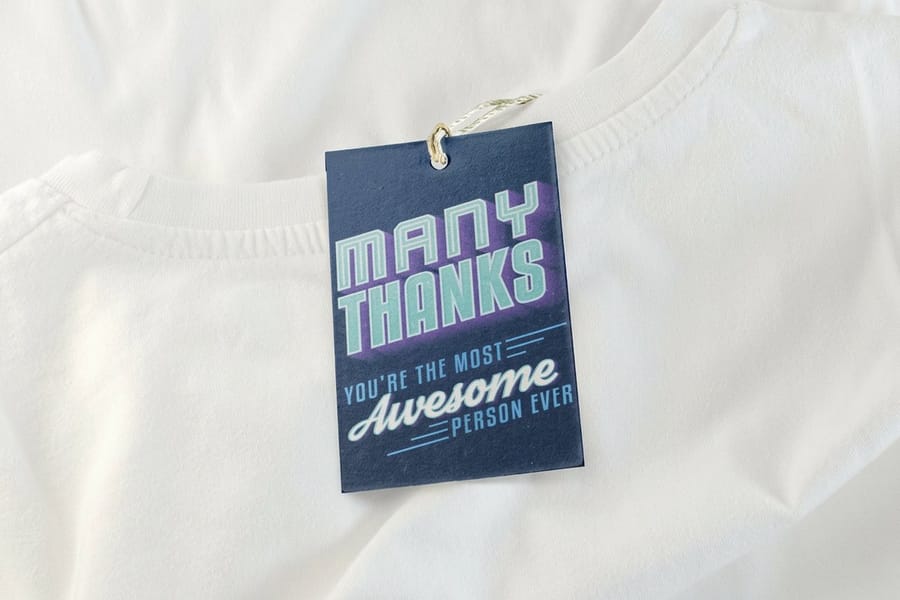
The hole is the part of a thank-you tag most people leave to chance, and it is the part that fails. A tag gets pulled, and everything about how it survives that pull is decided by two numbers.
Diameter. A 1/8 inch hole is the workhorse. Baker twine, jute, hemp cord and thin cotton string all pass through it and knot without bulk. A quarter inch and up is for wide ribbon, binder rings and elastic loops. Buy the string first and size the hole to it, because widening a hole after the run is not something you can do neatly by hand.
Distance from the edge. Keep the center of the hole about a quarter inch in from the trimmed edge. Any closer and the strip of stock between hole and edge is thin enough to tear the first time someone tugs the tag off a garment. Keep logos, type and barcodes out of a small halo around the hole as well, because a drill bit that lands half a millimeter off center should not clip a letter.
We drill on a press: the trimmed tags are stacked and bored together, so the hole is in the same place on every tag in the run. Mark the center point in your file, tell us the diameter, and the hole drilling service handles the rest. Punching them yourself works on fifty tags and stops being fun at two hundred, and a handheld punch crushes the fibers on 16pt stock rather than cutting them.
Budget for the threading. Printing is the fast part of this project. Cutting string to length and knotting each tag is the part that eats an evening, which is why most shops thread in batches as they pack rather than doing the whole run in one sitting. Start from a correctly sized layout in the blank template library, and our guide to how online printing works covers the file handoff end to end.
Writing a Message That Does Not Read Like a Receipt
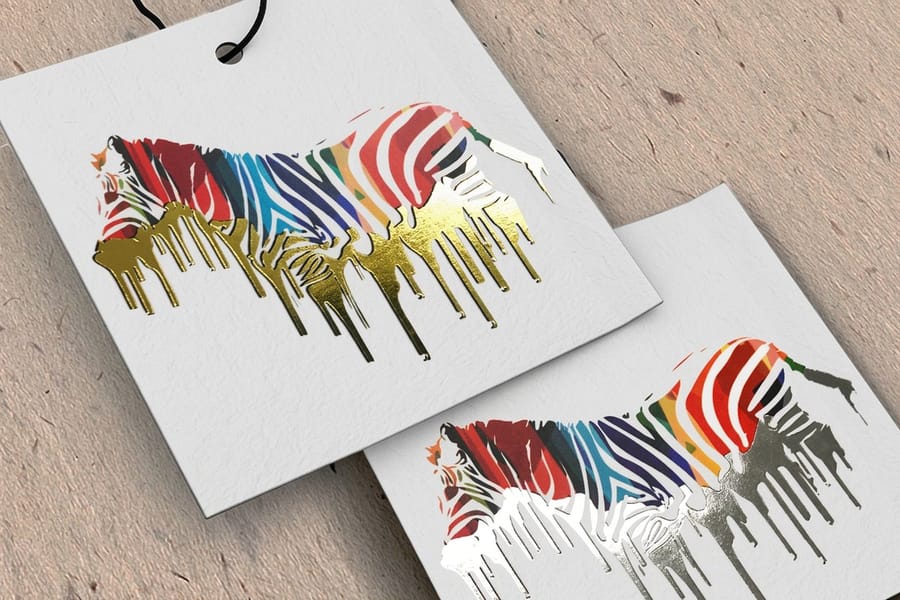
A thank-you tag has room for about eight words on the front and a couple of lines on the back. That constraint is the whole point, so use it. The tags that get photographed and posted say something a person would actually say.
What works: the customer's first name if you have it, one specific line about the item, and your handle so they can find you again. What does not work: the order number, a paragraph about your brand journey, and any sentence that begins by thanking the reader for choosing you, because every tag in every box says that already.
Split the printing from the writing. Print the logo, the handle and any fixed line on the front, then leave the back bare so you can add a handwritten name. That split is why the stock decision came third and not last: a bare back only works on an uncoated surface. On kraft the handwriting looks intended. On a gloss coat it smears on the way to the customer.
If you send the same run for months, print two or three message variants in the same order rather than one. It costs nothing extra to place different artwork across a run of the same size and stock, and it keeps the tag from feeling like a form letter to repeat customers. For the rest of what goes in the box alongside the tag, see our guide to packaging inserts, and browse every stock and shape in hang tags printing.
Wally makes a thank-you tag
Two by three and a half, kraft, a 1/8 inch hole, twine
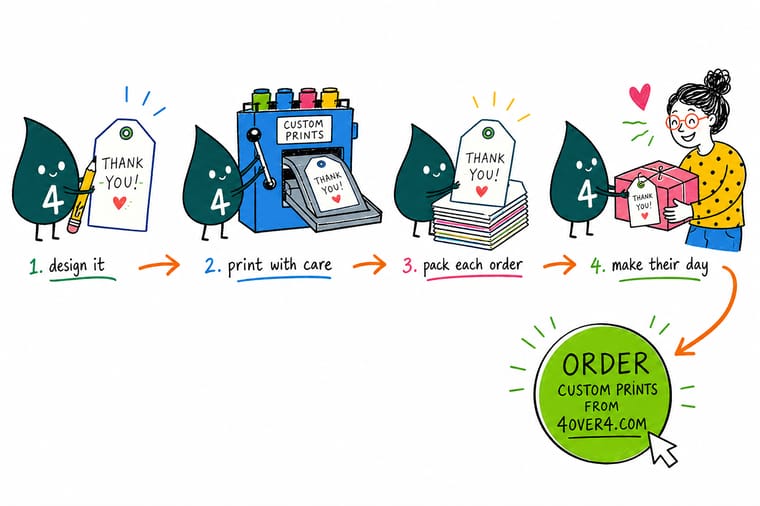
Wally sizes the tag to the item first, prints it on kraft so a pen still works on the back, then drills a 1/8 inch hole with its center a quarter inch in from the edge so nothing tears when the customer pulls it off. Twine goes through, a first name goes on the back, and the tag stays with the product long after the box is in the recycling. The one thing he will not do is put a gloss coat over the spot he has to write on.
Order kraft hangtags →Specs and pricing
Tag sizes, stocks and starting prices
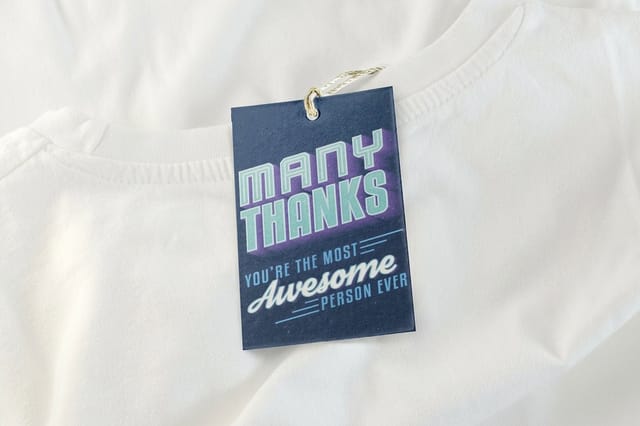
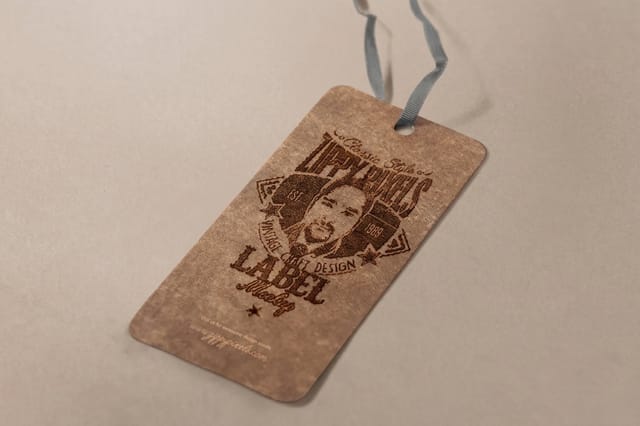
Compare the three tags most thank-you runs come down to, with live configuration choices and starting prices straight from the 4OVER4.COM configurator.


Print it
Order the tag that goes in the box

Explore more
Where to go next


By the numbers
Tag printing you can count on at 4OVER4
Common Questions
Your thank-you tag questions, answered
What size should a thank-you tag be?
Start at 2 by 3.5 inches, the same trim as a business card. It holds a logo, a short message and a handle without crowding, it lies flat against a folded garment or a box lid, and any sleeve or card slot already fits it. Drop to 2 by 2 inches for small items like earrings or soap bars, where a full card looks oversized against the product. Go up to 2.5 by 4 inches only when you actually need the room, for example a care instruction block or a discount code with terms under it.
Can I handwrite on a thank-you tag?
Only on an uncoated surface. Kraft and uncoated matte cardstock absorb pen and stamp ink and dry within seconds. A gloss aqueous coating is designed to repel liquid, so a ballpoint skips, a gel pen beads up, and anything you write smears when the tag rubs against tissue paper in transit. Foil is worse, because the metallic layer sits on top of the stock and holds nothing. If you want printed branding on the front and a handwritten line on the back, order an uncoated stock or ask for the coating on one side only.
Do you drill the string hole, or do I?
We drill it. Hole drilling is a finishing service: the trimmed tags are stacked and bored together on a drill press, so every hole lands in the same spot across the whole run rather than wandering the way a handheld punch does. Mark the center point of the hole in your file and tell us the diameter you want. Punching them yourself after the fact is possible on small runs, but it is slow, the placement drifts, and a punch crushes the fibers on 16pt stock instead of cutting them.
What string works with a 1/8 inch hole?
Baker twine, jute, hemp cord and thin cotton string all pass through a 1/8 inch hole easily and knot without bulk. Flat satin ribbon at a quarter inch or wider has to be folded to get through, which leaves a visible pinch at the hole. If ribbon is the look you want, ask for a larger diameter before the run rather than fighting the hole afterward. Elastic loops need a hole big enough to pass the doubled cord, so size the hole to the fastener you have already bought, not the other way around.
Is a thank-you tag better than a printed insert card?
They do different jobs. An insert card sits loose in the box and gets read once, which suits a longer message, a QR code or a discount offer. A tag is tied to the product, so it stays with the item after the packaging is thrown away, and it carries the brand into a drawer or a closet. Most small shops end up using both: a tag on the product for the visual moment, and a card for anything the customer needs to act on. If you are choosing one, tie the tag to the item.
How much do thank-you tags cost to print?
Standard Hang Tags start at $25.27 and Die-Cut Hangtags at $36.26 if you want a shape rather than a rectangle. Kraft Hangtags start at $57.96, Gloss Laminated Hangtags at $87.15, Shaped Hangtags at $107.64, and Metallic Foil Hangtags at $257.38. The spread is entirely about finishing: every step after the sheet comes off the press, whether that is a die, a laminate or a foil pass, adds a handling stage. Configure the size and quantity on the product page to see the exact price for your run.
Get Started
Ready to tie your name to every order?
Pick the size, choose kraft or uncoated so a pen still works, mark the hole, and we print and drill tags that arrive ready to thread.
Legal Disclaimer
Gold Standard guarantees apply to all standard orders placed through 4over4.com. Price match requires verifiable proof of a competitor's published price for an equivalent product with matching specifications and turnaround time. Satisfaction guarantee covers manufacturing defects and print quality issues. Contact support with order number and documentation. On-time delivery rate based on tracked orders 1999 to 2026. Individual results may vary based on shipping carrier performance.
