
How to Design a Visiting Card at the Perfect Size


A visiting card is simply a business card, and the standard is 3.5 by 2 inches. Designing one that reads clean and prints sharp is what decides the impression it makes the moment it changes hands.
A visiting card is the same thing as a business card, printed at a standard 3.5 by 2 inches (89 by 51 mm). Design it around one clear message, keep your name and logo inside a 0.125 in safe margin, set the color to CMYK, add bleed on all sides, and export a flattened press-ready PDF. Pick the stock and finish that match your brand and it works long after the handshake.
Start here
A visiting card is a business card
A visiting card is a business card, printed at the standard 3.5 by 2 inches. Design it around one clear message, keep text inside a safe margin, set the color to CMYK, add bleed past the trim, and export a flattened press-ready PDF. Pick a stock and finish that match your brand, and the card keeps working long after you hand it over. The blueprint below shows how the size and its three key lines fit together.
Why your visiting card is doing more work than you think
A visiting card is small, but the moment it changes hands it becomes the physical shorthand for you and your business. Long after a conversation ends, that little rectangle is what sits in a wallet or on a desk, reminding someone who you are and how to reach you. Get it right and it quietly keeps working for weeks.
The word itself can cause confusion, so let us settle it first. A visiting card and a business card are the same thing. Visiting card is the everyday term across India, the United Kingdom, and much of the world, while business card is more common in the United States. Both describe the standard 3.5 by 2 inch card you hand to a new contact, which means every rule in this guide, from size to stock to file setup, applies to your visiting cards.
This guide walks the whole path in the order you would actually take it: what the card is, the exact standard size, how to design it, which stock and finish to pick, the template and file setup, and finally what it costs to print. If you would rather skip the file work, our online design tool bakes the rules in, and you can price a run of standard business cards in a couple of minutes.
What is a visiting card, and what should it carry?
A visiting card is a compact printed card whose single job is to hand off your identity and one clear way to reach you. That job is easy to overload. The best cards resist the urge to list every phone number, address, and social handle, and instead lead with a name, a role, and the one contact detail you most want people to use.
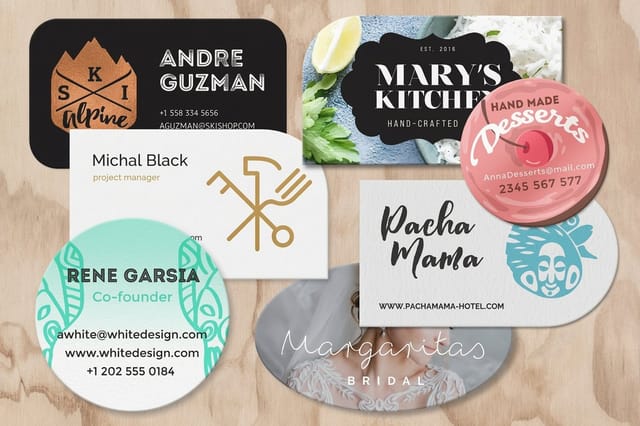
Because the canvas is only two inches tall, restraint is the whole game. Give your logo room, keep the type large enough to read at arm's length, and leave white space so the eye lands where you want it. If your brand leans premium, that clarity pairs beautifully with a heavier custom business card stock or a die-cut shape that makes the card memorable the second it appears.
Finishes are where a plain card becomes a talking point. A foil-stamped logo catches the light, an embossed mark adds texture you can feel, and a soft-touch coating turns a handshake into an experience. Weave one signature finish into an otherwise clean layout and the card punches far above its size. Our spot color printing keeps a precise brand color consistent across every card in the run.
The standard visiting card size, in inches and millimeters
The standard visiting card size is 3.5 by 2 inches, which is 89 by 51 millimeters. This is the size that slides into a wallet, a cardholder, and every card slot ever made, and it is the safe default unless you have a specific reason to change it. Build your file at this trim and your card will feel familiar and fit everywhere.
Around that trim sit two more lines that keep the card looking clean after it is cut. Add 0.125 in of bleed on every side so any background art runs past the edge, and keep your text and logo inside a 0.125 in safe margin so nothing important sits close enough to the blade to get clipped. Those three lines, trim, bleed, and safe margin, are the heart of a print-ready card. The blueprint below shows exactly how they nest.
You are not locked to the standard. Square cards at 2.5 by 2.5 inches, mini cards, and fully custom die-cut shapes all register precisely because they break the expected rectangle. Just remember that non-standard sizes trade some pocket-friendliness for personality, so pick the shape that matches how your card will be used. For a full breakdown of every option, pair this page with our business card size guide.
Designing a visiting card that reads clean and prints sharp
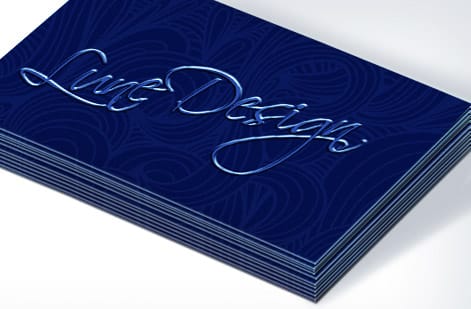
Good visiting card design is mostly subtraction. Start with a clear hierarchy: your name is the largest element, your role and company sit just under it, and the contact detail you want people to use comes next. Everything else is optional. If a line does not earn its place on two inches of card, leave it off.
Keep the logo as vector art so it stays crisp at any size, and set your brand colors in CMYK so what you design is what prints. Watch small text especially, since fine type set in a four-color black can look fuzzy at the edges. Build small black text as a true single-ink black instead, and it stays sharp. Leave a comfortable margin around every element so the layout breathes and nothing crowds the trim.
If you would rather not build from scratch, our online designer starts you at the correct size with bleed and safe margins already in place, and our free design templates give you a professional starting layout you can make your own. Both keep the print rules handled so you can focus on the message.
Choosing stock and finish for your visiting card
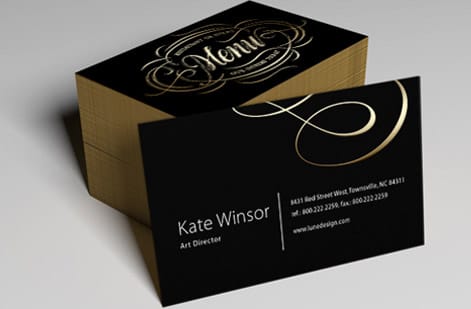
Two cards with the same design can feel completely different in the hand, and that difference is the stock. A standard 14 pt or 16 pt stock is a reliable, affordable choice for everyday cards. Step up to a thicker or specialty stock, like cotton, suede, or plastic, and the card gains a weight and texture that signals care before anyone reads a word.
Finish is the second lever. A matte coating reads calm and modern, gloss makes colors pop, and soft-touch adds a velvety feel people notice immediately. For a signature touch, add foil stamping to your logo, an embossed or debossed detail, or a spot UV coating that catches the light only where you want it. Our guide on matte, gloss, or soft-touch walks through which finish fits which brand.
Because stock and finish carry so much of the impression, it is worth feeling them before you commit to a full run. Order free paper samples, compare a couple of stocks side by side, and you will know instantly which one matches how you want the card to land. Our business card stock guide explains what each weight and material actually delivers.
Templates and print-ready file setup
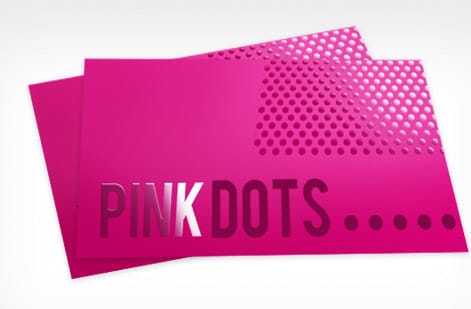
A template saves you from measuring anything twice. It arrives already set to the correct trim, with the bleed and safe-margin lines drawn in, so you can drop your logo and text into place and know they sit where they should. Our free design templates cover the standard visiting card size and the popular shapes, and the online designer gives you the same guardrails right in the browser.
Whether you use a template or build your own file, the export rules are the same. Set the color to CMYK, place images at 300 DPI at final size, run bleed on all four sides, keep text inside the safe margin, outline or embed every font, and export a flattened, press-ready PDF. That single self-contained file prints predictably because nothing has to be relinked or interpreted on our end.
When you order, your artwork also runs through a free file check, so a second set of eyes catches anything before the press does. Prefer the reassurance of a physical proof? Our free proofs let you confirm the card looks exactly right before the full run prints.
What visiting cards cost and how to order
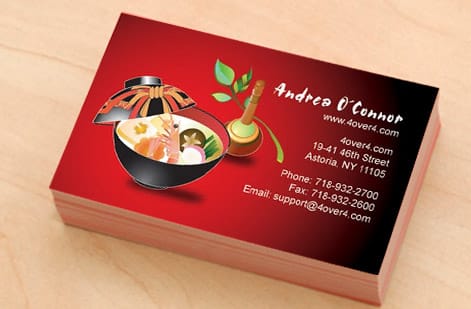
Visiting cards are one of the most affordable pieces of print you will ever order. Standard cards start around $18 for a run at 4OVER4.COM, and the price per card drops as the quantity climbs, so a larger order almost always lowers your cost each. Premium stocks and add-on finishes raise the price, but the configurator shows every trade-off live as you build the order.
Ordering is simple: pick the size, choose your stock and finish, set the quantity, and upload your press-ready PDF or design online. The total updates as you go, and options like bulk discounts, low minimums, and rush delivery let you shape the order around your budget and timeline.
Use the live specs and pricing panel below to see the exact sizes, stocks, and finishes for standard business cards, or order free paper samples first so you can feel the stock in hand before your file goes to press. When you are ready, price your run of standard business cards in the configurator.
Wally sizes your visiting card right the first time
Visiting card and business card are the same card
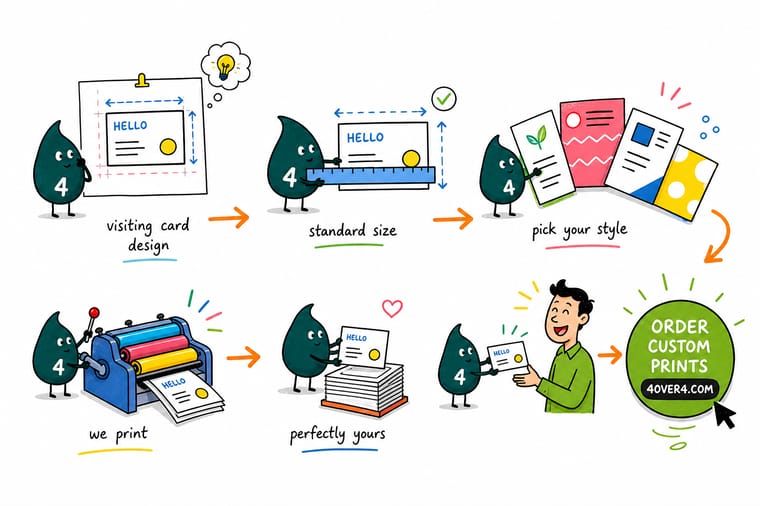
Wally starts every visiting card at the standard 3.5 by 2 inches, gives the name and logo room to breathe, keeps the type off the trim, and locks the color to CMYK. One clear message, the right stock, a flattened press-ready PDF, and the card lands exactly the way you want it to. Build it clean, upload it, and 4OVER4 prints it sharp.
Print your visiting cards →Quick reference
The visiting card file setup, at a glance
Every print-ready visiting card uses the same handful of settings. Match these and your artwork is ready for the press.
| Setting | Get it to | Why it matters |
|---|---|---|
| Trim size | 3.5 x 2 in (89 x 51 mm) | The wallet-friendly standard that fits every cardholder and card slot. |
| Bleed | 0.125 in past every edge | Any color or photo that reaches the edge keeps going, so no white slivers appear if the cut drifts. |
| Safe margin | 0.125 in inside the trim | Keeps your name, logo, and contact details clear of the blade. |
| Resolution | 300 DPI at final size | Small type and fine logos stay crisp instead of turning soft or blocky. |
| Color mode | CMYK | Presses print with process inks, so convert from RGB before you export. |
| Fonts | Outlined or embedded | Locks your typefaces into the file so nothing reflows or substitutes on press. |
| File format | Flattened PDF (PDF/X-1a) | One self-contained file is the most predictable way to send a card to press. |
Step by step
Build a print-ready visiting card in 7 steps
- Start the file at 3.5 by 2 inches Open a new document at the exact trim size, add 0.125 in of bleed on every side, and pull your margins in 0.125 in for the safe zone before placing anything.
- Set the color mode to CMYK Build in CMYK so your preview reflects how the ink will print. If your logo or photo came in as RGB, convert it now and recheck any bright colors.
- Lay out one clear message Lead with your name and role, add a single best way to reach you, and give the logo room to breathe. Resist the urge to crowd every detail onto two inches.
- Place the logo and photos at full resolution Keep the logo as vector art so it stays razor sharp, and make sure any photo is 300 DPI at the size it prints.
- Run backgrounds to the bleed Any color block or image that touches an edge should extend to the bleed line, never stop at the trim.
- Outline or embed every font Convert type to outlines or embed the fonts so your typefaces travel inside the file.
- Export a press-ready PDF Export a flattened PDF with bleed and crop marks, then upload it in the configurator or run it through our free file check.
Infographic
The visiting card at a glance
Four things to lock before you print: the size, the message, the stock, and the file.
Lock these four and your visiting card prints exactly as designed, from the first card to the last.
Specs and pricing
Standard business card specs and live pricing
Once your design is ready, the print decisions come down to size, stock, and finish. Here are the live specs and price-per-unit for standard business cards at 4OVER4.COM, straight from the configurator.
| Quantity | Price Per Unit | Total |
|---|---|---|
| 100 | 17.6¢ | $17.57 |
| 200 | 11.5¢ | $23.07 |
| 300 | 9.15¢ | $27.46 |
| 400 | 7.96¢ | $31.86 |
| 500 | 7.25¢ | $36.26 |
| 600 | 6.77¢ | $40.64 |
| 700 | 6.43¢ | $45.04 |
| 800 | 6.18¢ | $49.43 |
Print it
Bring your visiting card design to 4OVER4
See it in use
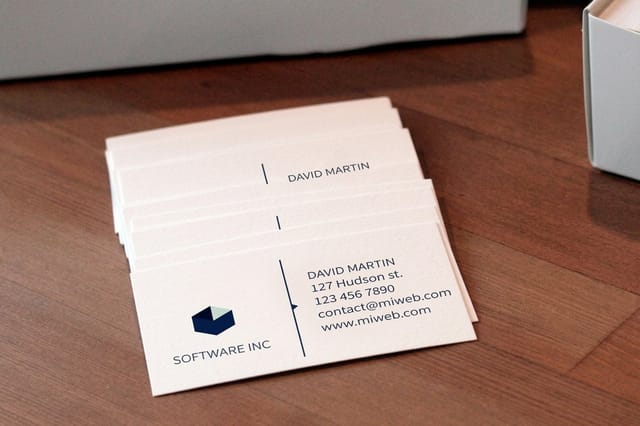
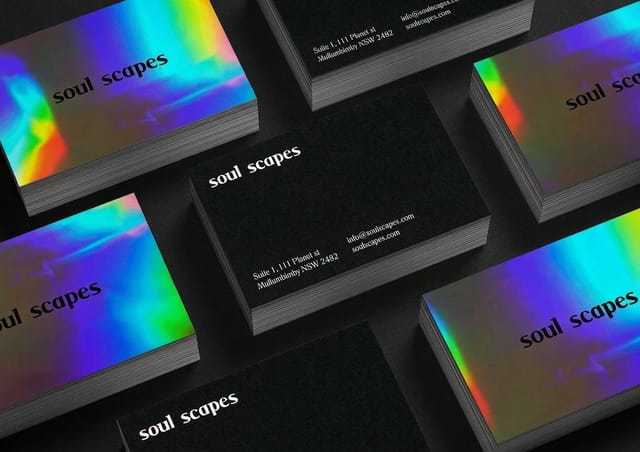
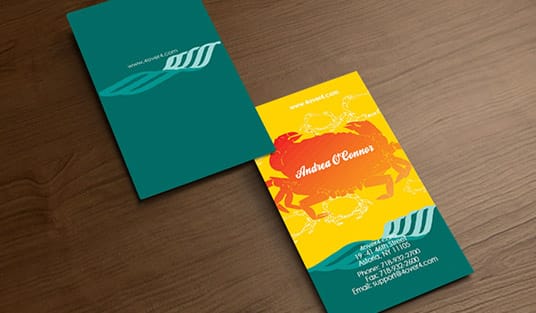
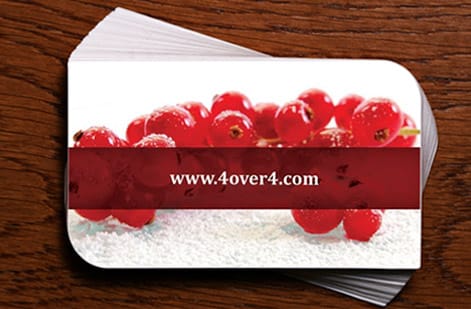
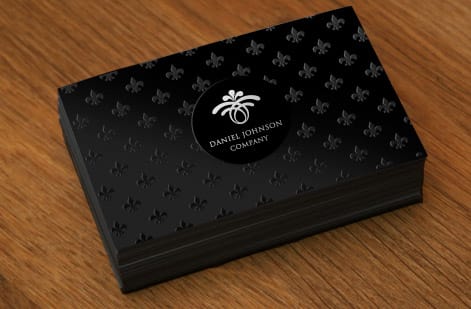
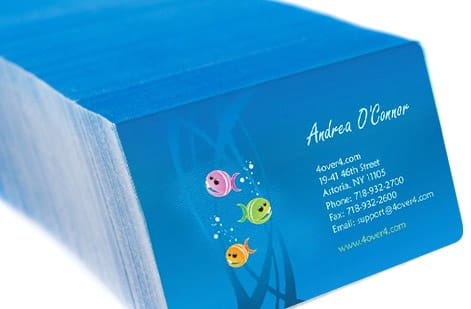
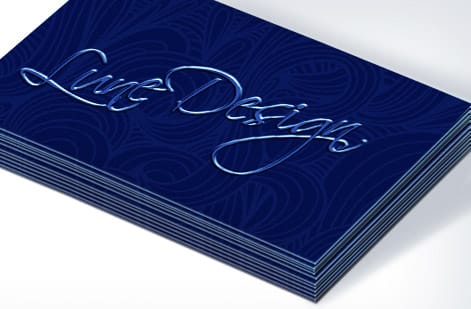
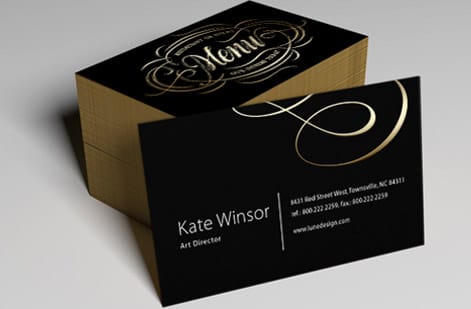
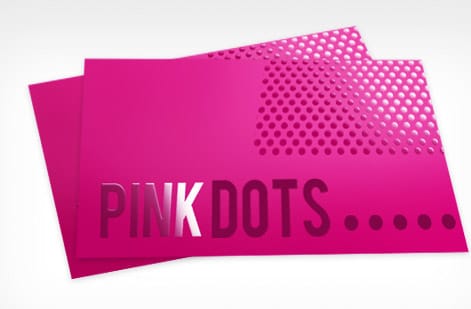
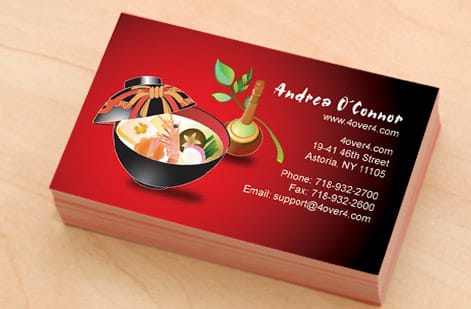
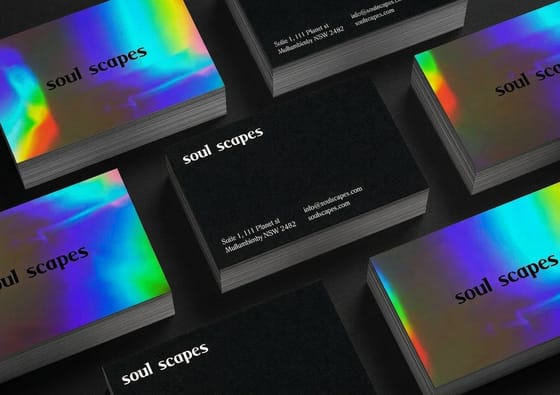
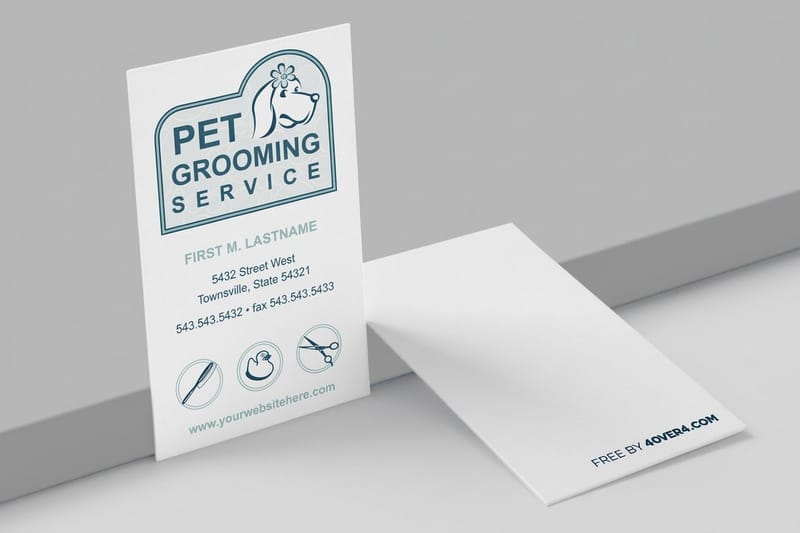
Visiting cards our customers had printed
Explore more
Where to go next

By the numbers
The standard 3.5 x 2 inch card and the stocks it prints on
Common Questions
Common questions about visiting cards
What is a visiting card?
A visiting card is a small printed card that carries your name, role, company, and the best way to reach you. It is the same thing as a business card. Visiting card is the common term in India, the United Kingdom, and much of the world, while business card is more common in the United States, but both describe the standard 3.5 by 2 inch card you hand to a new contact. Everything about designing, sizing, and printing a business card applies to a visiting card, so you can order one from the same product line.
Should my card be standard size or a die-cut shape?
Start with the job the card has to do. If you meet clients in person and want the card to feel premium, pick a heavier stock and a finish like soft-touch or spot gloss. If you hand out cards in volume at events, a standard matte or gloss stock at a higher quantity keeps the cost per card low. Match the design to your brand, keep one clear call to action, and choose a size that fits a wallet, which for almost everyone means the standard 3.5 by 2 inches. Order free paper samples first if you want to feel the stock before you commit.
What does a visiting card cost and how are prices set?
Standard visiting cards start around $18 for a run at 4OVER4.COM, and the price per card falls as the quantity climbs. Cost is set by a few levers you control in the configurator: quantity, paper stock, size, and any special finish such as foil, embossing, or rounded corners. A premium cotton or a specialty stock costs more than a standard matte, and add-on finishes raise the price further, but ordering in bulk brings the unit cost down fast. The total updates live as you adjust each option, so you can see the trade-offs before you order.
What sizes, stocks, and finishes are available for a visiting card?
The standard size is 3.5 by 2 inches, and you can also go with square, rounded-corner, mini, or fully custom die-cut shapes. Stocks run from standard matte and gloss up to heavy cotton, suede, plastic, and metallic options across 60+ choices. Finishes include soft-touch coating, spot UV, foil stamping, embossing, debossing, painted edges, and more. Each option changes the feel and the price, and every one is set right in the product configurator so you can build the exact card you want.
How long does a visiting card take to print and ship?
Turnaround depends on the stock, finish, and quantity you pick, and the configurator shows the production time for your exact order before you check out. Standard stocks move fastest, while specialty finishes like foil or edge painting add a little time because of the extra step. Rush options are available on many products when you need cards for an event, so choose your ship method at checkout and the estimated delivery date updates with your selection.
What is the standard visiting card size?
The standard visiting card size in the United States is 3.5 by 2 inches, which is 89 by 51 mm, or 1050 by 600 pixels at 300 DPI. Europe and the United Kingdom use the ISO size of 85 by 55 mm (3.35 by 2.17 in, 1004 by 650 px), Australia uses 90 by 55 mm, and India and Japan use 91 by 55 mm (3.58 by 2.17 in, 1075 by 650 px). Whichever trim you build at, add 0.125 in of bleed on every side and keep your name, logo and contact details 0.125 in inside the trim so nothing is clipped at the cut.
Is a visiting card the same as a business card?
Yes. Visiting card and business card describe the same printed contact card. Visiting card is the common term in India and the United Kingdom, business card is the common term in the United States, and both print at the same standard 3.5 by 2 inch trim, which is 89 by 51 mm, on the same 60+ paper stocks and the same finishes. Nothing about the file setup changes either: CMYK color, 300 DPI at final size, 0.125 in of bleed, a 0.125 in safe margin and a flattened PDF. Order it from the business card product line and you are ordering a visiting card.
Get Started
100 visiting cards cost $17.57, or 18 cents each
Bring your design to 4OVER4.COM and print it on the size, stock, and finish your brand calls for. Standard cards ship in 3 business days, die-cut shapes in the same 3.
Legal Disclaimer
Gold Standard guarantees apply to all standard orders placed through 4over4.com. Price match requires verifiable proof of a competitor's published price for an equivalent product with matching specifications and turnaround time. Satisfaction guarantee covers manufacturing defects and print quality issues. Contact support with order number and documentation. On-time delivery rate based on tracked orders 1999 to 2026. Individual results may vary based on shipping carrier performance.
