
Special Effect UV Coatings That Add Shine and Texture You Can Feel


Emma is our prepress and print production voice, built from the knowledge of our production team, with over 20 years in printing.
Spot gloss, raised gloss, glitter, and full flood coats. These finishes add shine, texture, and dimension over your ink, so a printed piece is noticed before it is read. Here is what each coating does, where it works, and what it costs.
Special-effect UV coatings are clear finishes cured over your ink with ultraviolet light to add gloss, texture, or raised dimension. The main types are spot UV (selective high gloss over a matte base), raised spot UV (a tactile, raised gloss), glitter spot UV (sparkle held in the coating), and flood UV (an all-over gloss seal). Set against a matte or soft-touch stock, they create contrast you can see and feel, which is why they show up on premium business cards, postcards, and folders.

Start here
Special-effect UV coatings in one paragraph
A special-effect UV coating is a clear finish cured over your ink to add shine, texture, or raised dimension. The four you will use most are spot UV, raised spot UV, glitter UV, and flood gloss: on our cards that means spot UV on 14pt or 16pt gloss or 16pt silk laminated cover, raised spot UV on 16pt velvet laminated, and glitter spot UV on 16pt silk laminated. Each pairs with a stock to create contrast you can see and feel, so a business card, postcard, or folder from 4OVER4.COM gets noticed the moment it is picked up. The sections below cover each coating, where it works, and what it costs.
Why a coating decides how your print gets handled
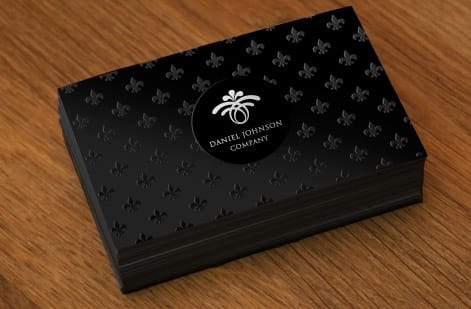
Pick up a 2 by 3.5 inch card and your fingers know something before you have read a word. A flat matte sheet says quiet and considered. A patch of hard gloss under a logo says look here. A ridge you can feel says someone spent real money on this. That reaction is the coating talking, and it happens in the half second before the ink even registers.
Special-effect UV coatings are the finishes that stage that moment on purpose. They cure a clear layer over your printed piece and, depending on the type, add shine, texture, or genuine raised height exactly where your design wants attention. Used well, a coating turns an ordinary business card into something a prospect keeps on the desk instead of filing in a drawer.
This page walks through the main special-effect coatings one at a time, shows where each one earns its keep, and ends with the live specs and pricing so you can see the numbers. If you already know the finish you want, our business card configurator and the finishes gallery are the quickest way in.
What special-effect UV coatings actually are

A UV coating is a clear finish laid over your ink and cured on the spot by ultraviolet light. Because it hardens the instant it meets the lamp rather than drying slowly, it sets hard, even, and sharp, which is what lets a gloss edge stay crisp and a raised area hold its shape. Everything in the special-effect family is a variation on that one idea.
The four you will reach for most are spot UV (selective high gloss over a matte base), raised spot UV (that gloss built up so you can feel it), glitter or textured UV (sparkle and tooth held in the coating), and flood UV (an all-over gloss seal). Each pairs differently with your stock, and the stock matters as much as the coating: a soft-touch or matte base is what makes a gloss spot leap forward.
These coatings live at the finishing stage, after the ink and before the piece ships. If you need the finished, coated run counted, packed, and mailed for you, our kitting and fulfillment service takes it from the press to your list, so the special-effect card you designed is the exact one that lands in a mailbox.
Spot UV: gloss exactly where you want it
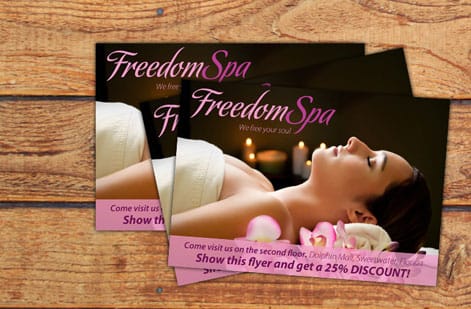
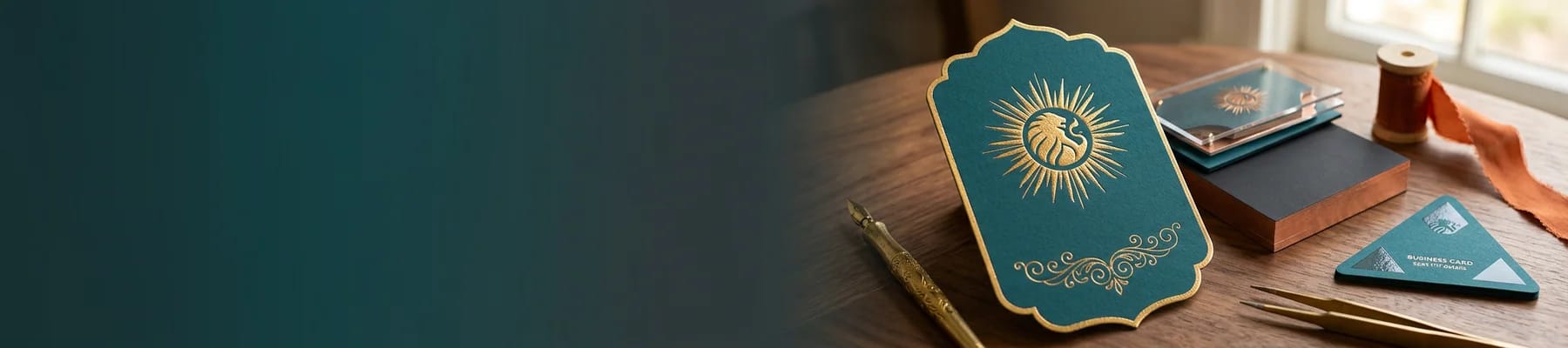
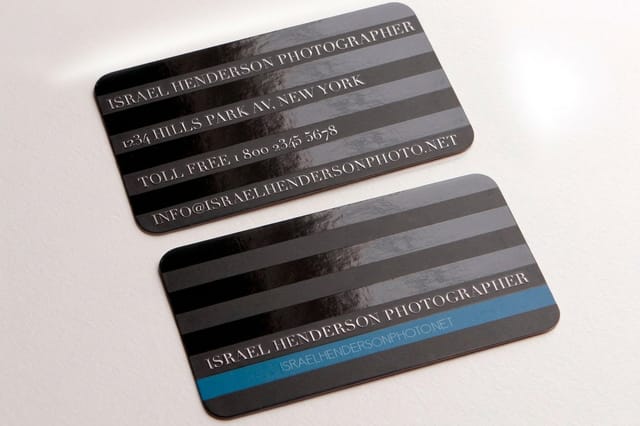
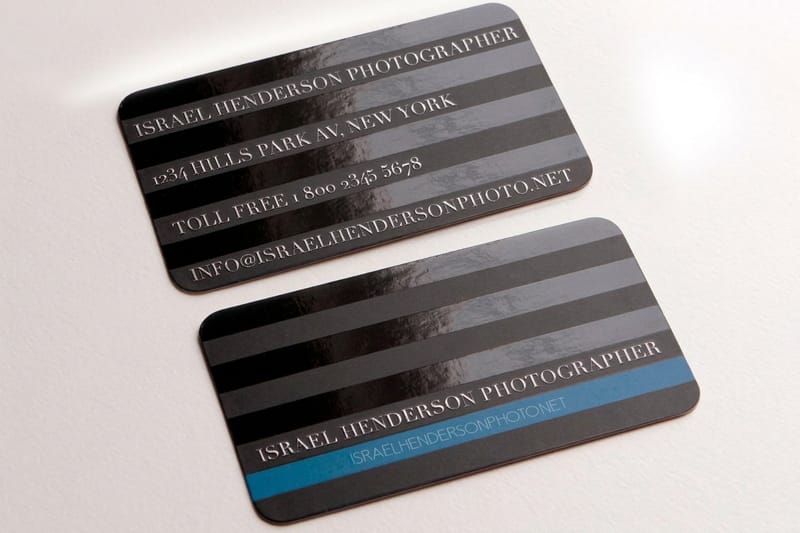
Spot UV is the most used of the family. A high-gloss coat is applied to a defined area, most often the logo, the headline, or a repeating pattern, while everything around it stays matte. The trick is not the shine itself, it is the contrast: gloss against matte reads instantly, even in a dim room, because light bounces off the coated shapes and dies on the flat ones. On spot UV business cards the order page offers five layouts: spot UV on the front or the back, each with or without full UV on the other side, or spot UV on both sides.
That makes spot UV a precision tool. Gloss a monogram and it becomes a mark people remember. Run a subtle glossed pattern edge to edge over a dark stock and the card shifts as it tilts, revealing texture that only appears at an angle. Restraint wins here, the same way it does in any strong layout: choose the one element that should catch the light and leave the rest calm.
On a card-sized canvas the effect is loudest, which is why spot UV business cards are the most common entry point. The finish scales up cleanly too, onto spot UV postcards and spot UV presentation folders, wherever a printed piece has one thing worth pointing at.
Raised spot UV: a finish you can feel
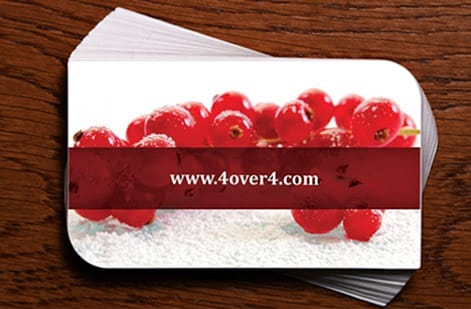
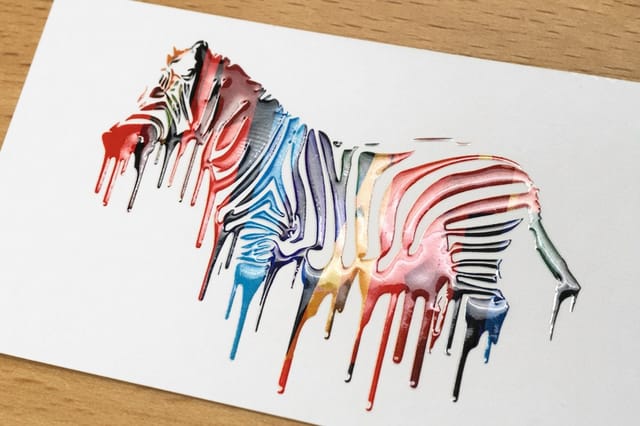
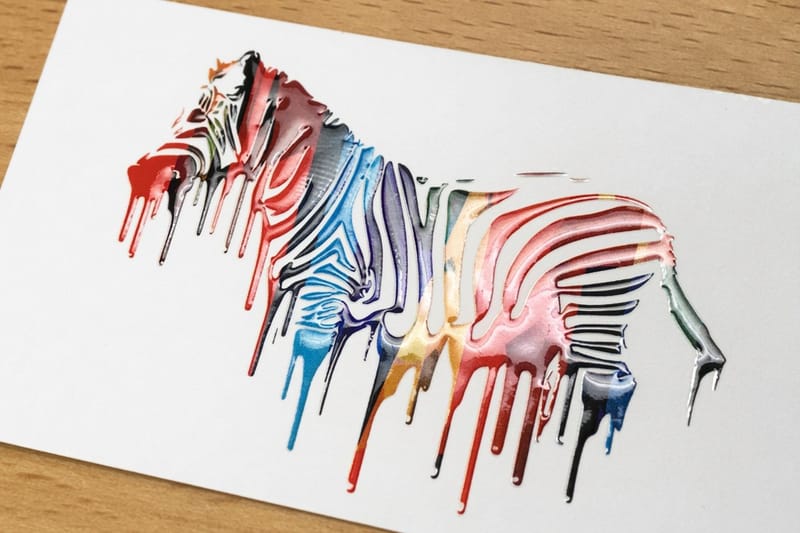
Raised spot UV takes the same selective gloss and builds it up until it stands proud of the paper. The difference is tactile: run a thumb across the card and you catch the ridge of the coated shapes, a raised gloss that a fingertip registers before the eye does. Raised spot UV business cards print on 16pt velvet laminated cover with the raise on the front or both sides, from 100 cards. It is a small physical signal that says this piece was made with care, and it is genuinely hard to imitate on an office printer.
Because the height reads as premium, raised spot UV is a favorite on raised spot UV business cards and heavier stocks where the surface has substance to work with. It pairs especially well with soft-touch and matte finishes, since a velvety base makes the glossy ridge feel like two different materials on one card. Our list of 20 creative business card ideas covers unusual business card materials and shapes. The raised version of our spot UV presentation folders builds the same ridge onto a folder cover.
The same dimensional gloss works on larger formats where handling matters. Raised spot UV postcards reward the moment someone slides a mailer out of the stack, and raised spot UV greeting cards turn a card into an object worth keeping on the mantel long after the occasion. Watch raised spot UV postcards on video, at 4 by 6 or 5 by 7 inches, or read the story of raised spot UV greeting cards, which fold to 5 by 7.
Glitter and textured UV: catch the light on purpose

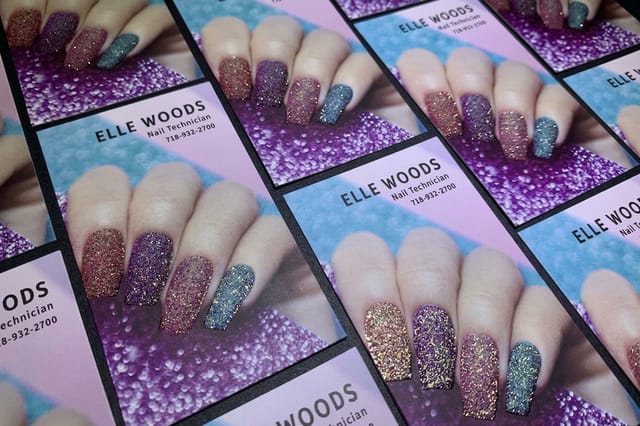
Some pieces are supposed to sparkle. Glitter spot UV suspends fine reflective flecks inside the clear coating, so a glossed area does not just shine, it shifts and glints as the card moves; on our glitter spot UV business cards it goes on the front, the back or both over 16 point silk laminated stock. Applied to a logo, a border, or a single word, it adds energy that flat ink cannot reach, which is why it shows up on invitations, beauty and events branding, and premium retail cards.
Textured UV works the opposite lever. Instead of adding sparkle, it adds tooth, a fine controlled roughness across the coated area that changes how the surface feels and how light scatters over it. Both effects are about the surface doing something your ink alone cannot, and both hold up best when the rest of the card stays understated so the effect is the star.
If a card needs to feel like an event rather than a hand-off, glitter spot UV business cards are the loudest option in the lineup. For a more restrained shimmer, a soft-touch stock under a plain gloss spot gives you contrast without the sparkle, a quieter route to the same feeling of quality.
The base under the effect: matte, soft-touch, or flood gloss
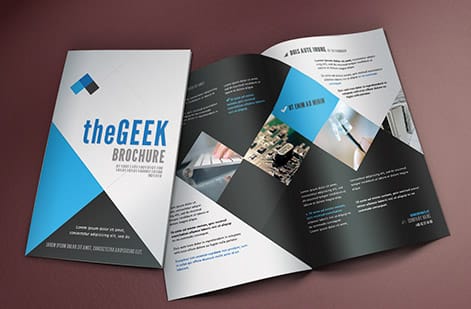
Every special-effect coating is a duet with the surface beneath it, and the surface decides how loud the effect lands. A gloss spot over a shiny stock, such as 14pt gloss cover, nearly disappears, because there is little contrast between the coated and uncoated zones. Put that same spot over a matte or soft-touch base and it jumps forward, sharp and obvious, because the eye reads the difference between dull and bright immediately.
Soft-touch is the crowd favorite for exactly this reason. The stock feels like suede or velvet in the hand, so a glossed logo becomes two sensations at once: smooth and cool where the coating sits, warm and grippy everywhere else. That split is what makes silk-laminated and suede cards such natural homes for a spot-UV accent.
Flood UV plays a different role. Rather than creating contrast, it seals the whole sheet in an even gloss for shine and durability, a good fit when the piece will be handled hard. You can even combine the two, a flood base with a raised spot on top, though most designs are sharpest when a single effect gets to lead. When in doubt, order free paper samples and feel the base before you decide, or compare special finishes on business cards in our guide to matte, glossy and soft-touch.
Where special-effect UV coatings work hardest

A coating earns the extra step when the piece is meant to be held, kept, or handed over in person. That points to a short list of formats where the effect pays for itself. Business cards at 2 by 3.5 inches top it, because the small canvas makes the contrast between matte and gloss impossible to miss and the moment of exchange is exactly when you want to leave an impression.
Postcards and mailers are next, since a raised or glossed area survives the shuffle of a mail stack and gives a thumb something to notice. Presentation folders and hang tags round it out, where a glossed logo signals that whatever is inside was worth the wrapping. Below this section you can compare live specs and pricing so the finish decision sits next to the real numbers.
Once the run is printed and coated, keeping that quality intact through delivery matters as much as the finish itself. Our kitting and fulfillment team counts, packs, and ships the finished pieces, and the 30-point pro review that every 4OVER4 order goes through checks your file before it reaches the press, so the special-effect card you approved is the one your customer holds.
Setting up a spot UV layer, and what it costs
Getting a special-effect coating onto paper takes one extra thing from your file: a spot layer that tells the press exactly where the gloss goes. You supply your normal print-ready artwork plus a separate mask, usually a solid 100% color on its own layer, drawn to match the shapes you want coated and registered precisely to the design underneath. Keep the glossed areas clean and not hair-thin, flag which layer is the coating when you upload, and the setup goes smoothly.
Cost is easy to reason about, because a coating is a distinct production pass. It adds to the base print price for its own tooling and setup, and raised or glitter effects add a little material on top. Spot UV business cards start around $77 and the per-unit price drops as the quantity climbs, with the live number shown in the configurator as you adjust each option.
The cleanest way to price a finish is to see it change in real time. Use the specs and pricing panel below, pick the product and the effect you want, and set your quantity to watch the number move. If your file needs a second look before it goes to press, our team checks the spot layer as part of every order.
Specs and pricing
Spot UV business card specs and live pricing
When the design and the coating are decided, the rest depends on stock, size, and quantity. Spot UV business cards are 2 by 3.5 inches on 14pt or 16pt gloss or 16pt silk laminated cover, in five spot UV layouts, from 500 to 50,000 cards with 5 business days of production. Here are their live specs and price-per-unit at 4OVER4.COM, straight from the configurator.
| Quantity | Price Per Unit | Total |
|---|---|---|
| 500 | 15.4¢ | $76.88 |
| 1,000 | 8.96¢ | $89.63 |
| 2,500 | 5.36¢ | $133.98 |
| 5,000 | 4.30¢ | $214.84 |
| 10,000 | 3.43¢ | $342.67 |
| 15,000 | 3.32¢ | $497.53 |
| 20,000 | 3.26¢ | $652.41 |
| 25,000 | 3.21¢ | $802.87 |
Print it
Put a special-effect finish on your next order
Spot UV business cards from 500, raised spot UV postcards at 4 by 6 or 5 by 7 inches on 16pt velvet laminated cover from 100, and glitter spot UV business cards in three sizes on 16 point silk laminated stock from 500.
Wally explains UV coatings
The shine is not the point, the contrast is
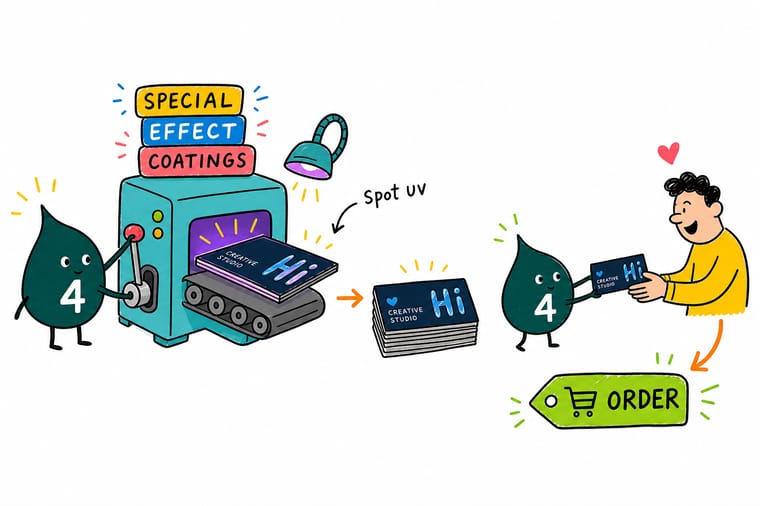
Wally treats a coating like a spotlight: gloss the one shape that matters and leave the rest matte, and the eye goes straight to it. Raised spot UV adds a ridge you can feel, glitter UV adds a wink of light, and a soft-touch base underneath makes any of them pop. Pick the finish, mark where it goes, and let 4OVER4 cure it sharp on the stock you choose.
Design a coated card →
Get Started
Ready to add a special-effect coating?
Bring your design to 4OVER4.COM, choose spot UV, raised gloss, or glitter, and print it on the stock that makes the finish shine. Adjust every option and watch your price update live.
Explore more
Where to go next
Six next steps: spot UV business cards, raised spot UV postcards, the business card finishes gallery, kitting and fulfillment, the business card range and the terms glossary.

By the numbers
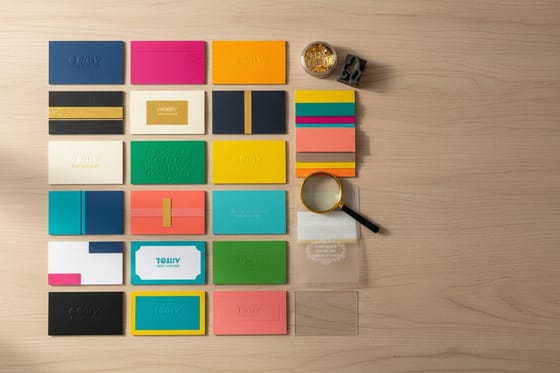
Stocks that take a special effect coating
Common Questions
Common questions about special-effect UV coatings
What is a UV coating?
A UV coating is a clear liquid finish applied over printed ink and then cured almost instantly under ultraviolet light. It seals the surface, deepens the color underneath, and adds a controlled level of shine or texture. Because it hardens on contact with the light rather than by drying over time, the coating cures hard and even, which is what makes crisp gloss and raised dimension possible in the first place.
What is the difference between spot UV and flood UV coating?
Flood UV, sometimes called full UV, covers the entire sheet in one even gloss layer for an overall shine and a tougher surface. Spot UV is selective: the gloss lands only where your design calls for it, usually a logo, a headline, or a pattern, while the rest of the piece stays matte. Flood UV protects and brightens the whole card. Spot UV creates contrast, and that contrast is the whole point of a special-effect finish.
What is raised spot UV?
Raised spot UV is spot gloss built up thick enough to feel. Instead of sitting flush with the paper, the coating stands slightly proud of the surface, so a fingertip catches the ridge of a logo or a line of type before the eye even reads it. It reads as premium because the tactile layer is genuinely hard to counterfeit on an office printer, and it pairs beautifully with matte and soft-touch stocks.
Can you write on a UV-coated card?
You can write on the matte areas of a spot-UV piece with most pens, since only the glossed sections are sealed under the coating. On a flood-UV or fully glossed surface, ballpoint and pencil tend to skate, so if the card needs a handwritten note, an appointment date, or a signature, keep those zones out of the gloss, or choose a soft-touch or uncoated stock for that panel.
What products can get a special-effect UV coating?
The finish shows up best on flat, premium-stock pieces where shine and texture have room to work: business cards, postcards, greeting cards, presentation folders, and hang tags are the usual candidates. Spot UV business cards and raised spot UV postcards are the most popular starting points because the small canvas makes the contrast between matte and gloss impossible to miss.
Does a special-effect UV coating cost more, and why?
Yes, a special-effect coating adds to the base print price because it is a separate production pass with its own tooling and setup. Spot UV needs a second layer to define where the gloss goes, and raised or glitter effects add material and handling on top of that. The cost is easy to reason about in the configurator: pick the product, add the finish, set your quantity, and the live price updates so you can weigh the effect against your run size before you commit.
How do I set up artwork for spot UV?
You supply two things: your normal print-ready artwork, and a separate spot-UV layer that marks exactly where the gloss should sit. That mask is usually built as a solid 100% color (often K) on its own layer, aligned precisely to the artwork underneath. Keep the glossed shapes clean and not too fine, register them to your design, and flag which layer is the coating when you upload. If you are unsure, our team will check the file before it goes to press.
Legal Disclaimer
Gold Standard guarantees apply to all standard orders placed through 4over4.com. Price match requires verifiable proof of a competitor's published price for an equivalent product with matching specifications and turnaround time. Satisfaction guarantee covers manufacturing defects and print quality issues. Contact support with order number and documentation.
