
Vinyl Banners vs Mesh Banners: Which Should You Print?


Tobias is our voice for cutting, binding and large format, built from the knowledge of our production team, with over 20 years in printing.
Both start under $80 and both go outside, so the real question is where yours will hang. Solid vinyl holds the richest color. Perforated mesh lets the wind pass through. Both start under $80, so the decision is wind, not budget.
Choose vinyl banners for color and sheltered spots. Choose mesh banners for wind and long outdoor runs. Solid vinyl is fully opaque with the deepest, most saturated print, ideal indoors and for short-term outdoor promotions. Mesh is a perforated weave that lets wind and rain pass straight through, ideal for fences, rooftops, scaffolds, and exposed building faces. When a spot sits between the two, perforated vinyl blends near-vinyl color with mesh-style airflow. You can price a mesh banner vs vinyl banner at your exact size in our banner range.
Start here
Sheltered or exposed
Print vinyl banners when color and close-up sharpness matter most, and print mesh banners when wind and long outdoor exposure are the real challenge. Vinyl is a solid, opaque sheet, 13 oz outdoor or 15 oz blackout, that holds the richest print but catches the wind. Mesh is a perforated weave that softens color slightly up close but lets gusts pass straight through, so it stays put on fences, rooftops, and building faces. Vinyl starts at $79 and mesh at $75, one banner at a time. Undecided? Perforated vinyl banners sit right in the middle. The table below lines the two up row by row.
Side by side
Vinyl banners vs mesh banners at a glance
Four dollars apart at the start, the same hems and grommet choices, and very different behavior on the wall: vinyl comes in 23 standard sizes on two stocks, mesh in three long formats on 8 oz perforated vinyl.
| Vinyl Banners | Mesh Banners | |
|---|---|---|
| Material | Solid 13 oz scrim PVC vinyl | Perforated PVC mesh, open weave |
| How it handles wind | Catches air like a sail, needs wind slits on larger sizes | Wind passes through the holes, so it stays put |
| Color and opacity | Fully opaque, richest saturation, no light bleed | Slightly softer up close, reads sharp from a distance |
| Best environment | Indoors and short-term outdoor promotions | Fences, rooftops, scaffolds, exposed building faces |
| Rain and airflow | Sheds water off a solid face, can pool if slack | Drains straight through, no pooling |
| Weight and handling | Heavier roll, firmer feel in hand | Lighter, easier to hang across a wide span |
| Ideal uses | Trade shows, storefronts, event backdrops | Construction wraps, fence lines, stadium signage |
| Starts at | From $79 | From $75 |
| Stock in the configurator | 13 oz outdoor vinyl or 15 oz blackout vinyl | 8 oz perforated vinyl |
| Standard sizes | 23 sizes from 2 x 4 ft to 8 x 20 ft, or any size | 24 x 72 in, 36 x 108 in or 48 x 144 in, or any size |
| Hems and grommets | Hems top and bottom or all 4 sides, grommets at the corners or every 2 feet | Hems top and bottom or all 4 sides, grommets at the corners or every 2 feet |
| Pole pockets | 2 or 4 in, top and bottom or left and right | 1.5 to 4 in, top and bottom or left and right |
| Smallest order | One banner | One banner |
A highlighted cell marks the winner for that row. Rows with no highlight are a tie, and your location decides them, for example a fence line in open wind against a covered storefront.
The contenders
Three banners to choose from
Vinyl from $79 and mesh from $75, plus perforated vinyl from $75 on 8 oz perforated stock in any size you set. Each card shows the live price for a single banner.
Solid vinyl, where color carries
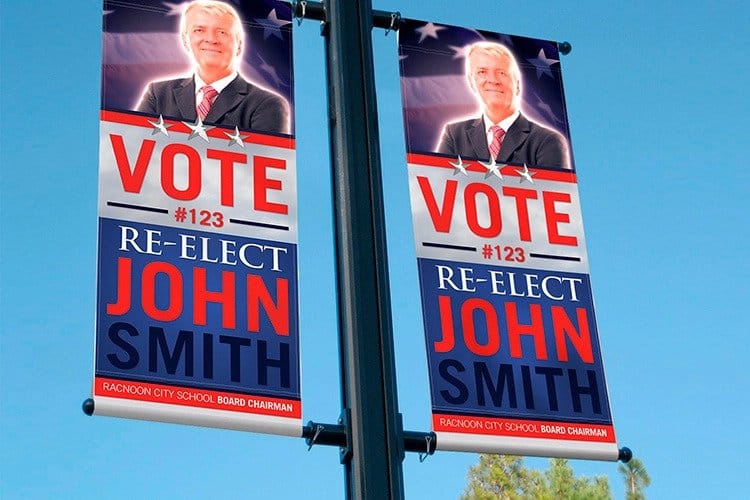
A vinyl banner is printed on one continuous sheet of scrim vinyl, a heavy PVC fabric with a woven backing that keeps it from stretching out of shape. Because the surface is solid, ink sits on an unbroken canvas: colors read at full strength, edges stay crisp, and there is no light bleeding through from behind. This is why solid vinyl is the default whenever the artwork itself has to carry the message.
That same solid face is also its one limitation outdoors. With nowhere for moving air to escape, a large vinyl banner behaves like a sail. In a sheltered storefront or an indoor hall that is a non-issue, but on an exposed wall it pulls hard on the hems and grommets, which is why bigger outdoor sizes get half-moon wind slits cut into them. Handle the color and it rewards you. Ignore the wind and it fights back.
Vinyl is at its best for trade-show backdrops, grand openings, retail windows, and any short-run promotion where the piece is seen up close and the palette does the selling. If your design leans on deep, brand-accurate color, pair it with our note on CMYK vs RGB for print so the screen and the press agree before you order.
Mesh banners: built to shrug off the wind
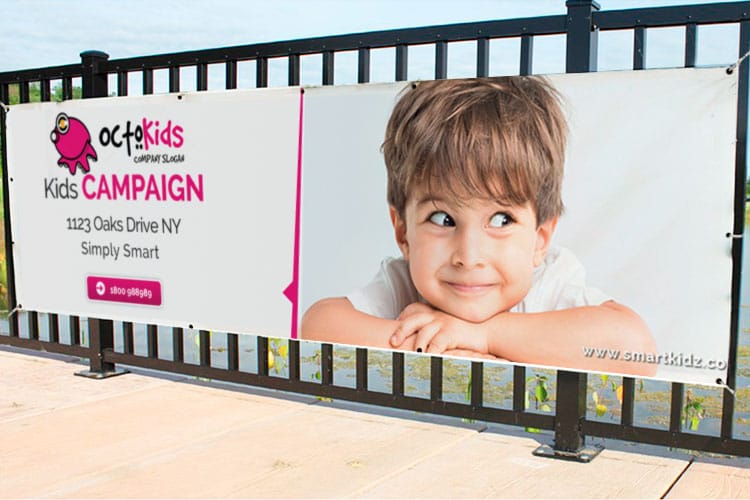
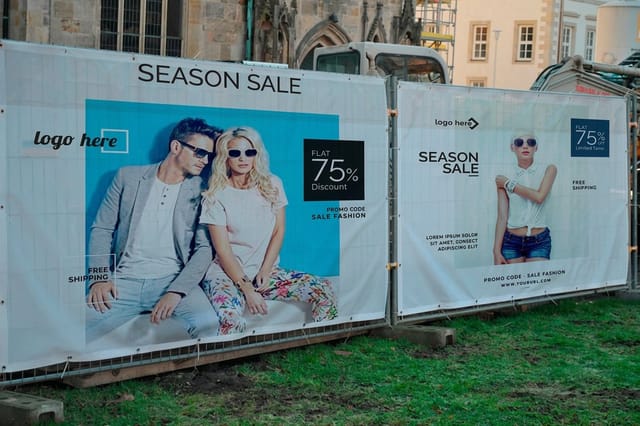
A mesh banner is printed on a perforated PVC weave rather than a solid sheet. Thousands of tiny holes are woven across the surface, leaving a meaningful share of it open. That open weave is the whole point: wind slips straight through instead of pressing against the face, so the banner stays put in gusts that would strain a solid one, and rain drains through rather than pooling in a sag.
The trade for all that airflow is a slight softening of color up close, because part of every square inch is hole rather than ink. It matters far less than people expect. Mesh is engineered to be read from a distance, across a parking lot or up the side of a building, and at that range your eye fills in the gaps and the image looks solid and sharp. Get within a foot and you will see the weave. Stand where your audience actually stands and you will not.
This makes mesh the right tool for the long, exposed job: construction-site wraps, scaffold covers, fence lines, stadium runs, and building facades. For the biggest of these, our guide to choosing a backdrop size and the roundup of banner types, styles, and costs help you scale the piece to the wall without guessing.
The wind test: the one factor that usually decides it
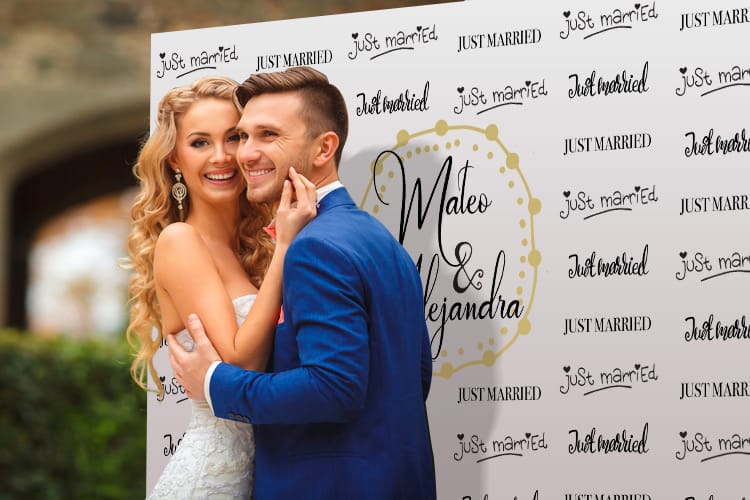
Strip away the specs and most vinyl-versus-mesh decisions come down to a single question: how much wind will hit this banner? A solid vinyl face has to absorb every gust, so the load transfers to the hems, the grommets, and whatever you tied it to. Mesh lets the air through, so the same gust barely registers. That is the difference between a banner that stays flat for a season and one that flogs itself loose in a week.
A quick rule of thumb: sheltered or indoor spots favor vinyl, open and elevated spots favor mesh. Rooftops, overpasses, fence perimeters, and anything above the first floor are mesh territory. Lobbies, booths, covered entrances, and window displays are vinyl territory. When a spot is somewhere in between, a perforated vinyl banner or a set of wind slits closes the gap.
Whichever way the wind points you, mounting matters as much as material. Reinforced hems and properly spaced grommets spread the load so no single point takes the strain. Our guides on hanging banners and vinyl banner placement cover the tension and spacing that keep either material from tearing at the corners.
Print quality, opacity, and how close people stand
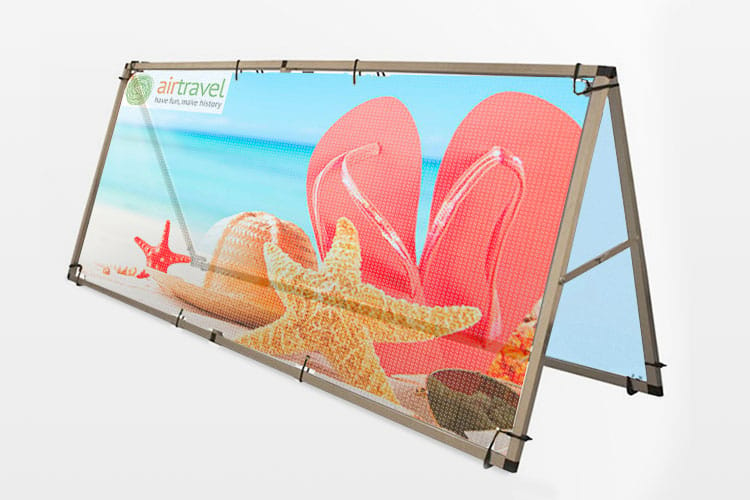
Opacity is where vinyl earns its keep. A solid surface returns the deepest blacks, the cleanest gradients, and brand colors that hold their exact value, with nothing showing through from behind. For a piece someone reads from a few feet away, that fidelity is worth protecting, so vinyl is the safe pick for indoor backdrops, step-and-repeats, and anything photographed at close range.
Mesh trades a sliver of that fidelity for airflow. The open weave means each color is spread across a surface that is part hole, which softens saturation the closer you get. Designed around, it is a non-issue: keep type bold, keep contrast high, and let the artwork be legible at distance rather than fussy up close. The right resolution and clean vinyl lettering matter more here than fine texture ever will.
Not sure how a file will land on either surface before you commit a full run? Order a free proof and lay eyes on the color first, or build the layout in our online designer, which keeps type and bleed inside the safe zone for both materials.
Durability, weather, and how long each one lasts
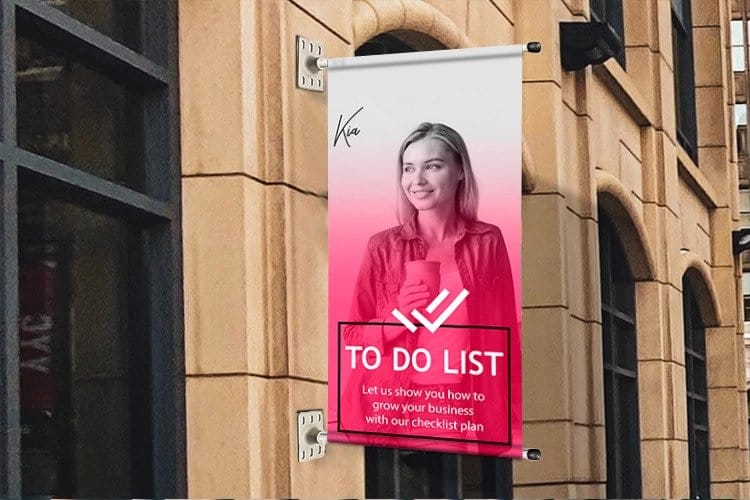
Both materials are made for the outdoors and both take UV-stable inks, so neither fades quickly in normal use. Outdoors the difference is mechanical: how much load the hems and grommets carry in each gust. For a run that stays up for months, order hems on all 4 sides and grommets every 2 feet on either material, so the pull spreads along the edge instead of landing on four corners. Solid vinyl usually holds its color a touch longer because none of the surface is open, but it depends on the wind staying gentle. In a gusty spot it will physically wear faster no matter how tough the ink is.
Mesh is the material that ages gracefully in punishing conditions. Because it never fights the wind and never traps standing water, it stays flat and intact through the kind of exposure that slowly beats a solid banner loose. For a multi-month fence wrap or a building cover that has to survive a full season of weather, mesh is the durable choice precisely because it does less work.
If your job is really about surviving the elements at ground level, it is worth reading how the same logic plays out for rigid signage in our guide to durable outdoor yard sign materials, then choosing the banner material that matches the exposure.
Cost, sizing, and finishing at 4OVER4.COM

Price is driven by size, quantity and finishing far more than by which material you choose, so the two land within a few dollars of each other. At 4OVER4.COM vinyl banners start around $79 and mesh banners around $75 for the same starting size, and the per-unit cost drops as you scale the run. The decision is genuinely about where it hangs, not what it costs.
Both materials share the same finishing menu: reinforced hems on all four sides, grommets spaced around the edge, pole pockets for rod mounting, and wind slits where a solid face needs to breathe. You set each option in the configurator and the price updates live, so you can see exactly what a hem or an extra row of grommets adds before you order. Larger or repeat runs also qualify for bulk discounts, and a rush option is there when the event will not wait.
Compare the live specs and quantity ladders for both materials in the panels below, or browse the full banner printing range and the dedicated mesh collection to see every size and finish side by side.
Wally settles the vinyl vs mesh debate
Pick the material for the wall, not the other way around
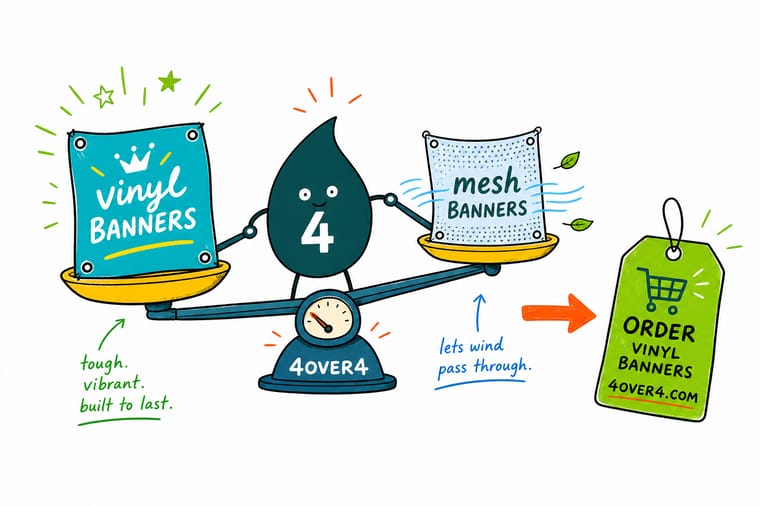
Wally keeps it simple: if the banner hangs somewhere calm and people get close, go solid vinyl for the richest color. If it hangs somewhere windy or up high, go mesh so the gusts pass right through and nothing tears at the grommets. Stuck in the middle? Perforated vinyl leans both ways. Tell 4OVER4 where it will live and print it on the size, stock, and finish that fits.
Print your banner →The trade-offs
Where each material wins and where it costs you
Vinyl banners
Where vinyl wins
- Fully opaque with the richest, most saturated color
- Sharp and clean when read up close
- Ideal for indoor backdrops, booths, and window displays
- Solid face sheds water off a taut banner
Where vinyl struggles
- Catches the wind like a sail on exposed walls
- Larger outdoor sizes need wind slits cut in
- Can pool water if it hangs slack
- Extra strain lands on the hems and grommets in gusts
Mesh banners
Where mesh wins
- Open weave lets wind pass straight through
- Stays flat on fences, rooftops, and building faces
- Drains rain instead of pooling it
- Lighter and easier to hang across a wide span
Where mesh struggles
- Color looks slightly softer at very close range
- Some light bleeds through the perforations
- Not the pick for indoor, up-close backdrops
- Fine detail reads better at distance than in hand
See the full range
Compare the banner lineup side by side
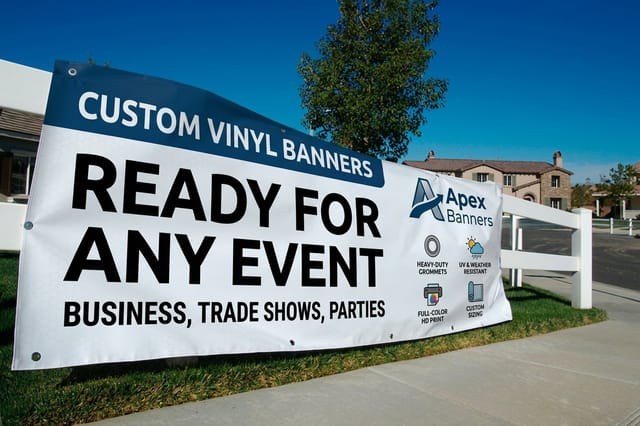
Vinyl at $79 and mesh at $75 are two of the banners in our vinyl banner range. The table sets four popular ones against each other on price, size, turnaround and rating.
 Vinyl Banners | 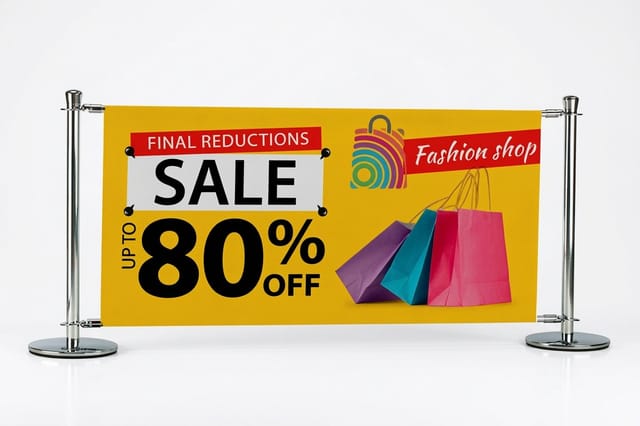 Indoor Banners |  Business Banners | 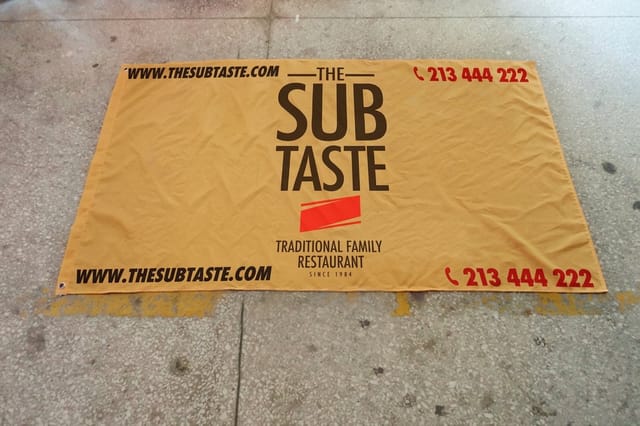 Polyester Banners | |
|---|---|---|---|---|
| Min price | $79.00 | $25.00 | $43.92 | $49.00 |
| Paper / stock | 13oz. Outdoor Vinyl | 13oz. Smooth Blockout Vinyl | 13oz. Scrim Vinyl | 5oz Economy Polyester |
| Size | 2' x 4' | 12" x 24" | 2' x 6' | Any Size |
| Default qty | 1 | 1 | 1 | 1 |
| Turnaround | 3 business days | 2 business days | 2 business days | 4 business days |
| Rating | ||||
| View & customize | View & customize | View & customize | View & customize |
Specs side by side
Vinyl and mesh specs, straight from the configurator
Vinyl comes in 23 standard sizes from 2 x 4 ft to 8 x 20 ft on 13 oz outdoor or 15 oz blackout vinyl. Mesh comes in 24 x 72 in, 36 x 108 in and 48 x 144 in on 8 oz perforated vinyl, and both take any custom size. Banners price by dimensions, so set your width and height in the configurator and the price updates live as you go.

The verdict
So which banner should you print?
4OVER4 recommendation
There is no single winner here, and that is the honest answer. Print vinyl for indoor and sheltered outdoor jobs where color carries the message. Print mesh for anything exposed, elevated, or long-running, where the wind is the real opponent. When the spot sits between the two, perforated vinyl gives you most of the color and most of the airflow in one material. Whichever you pick, 4OVER4 prints it on 13 oz stock with your choice of hems, grommets, and pole pockets.
See it in use
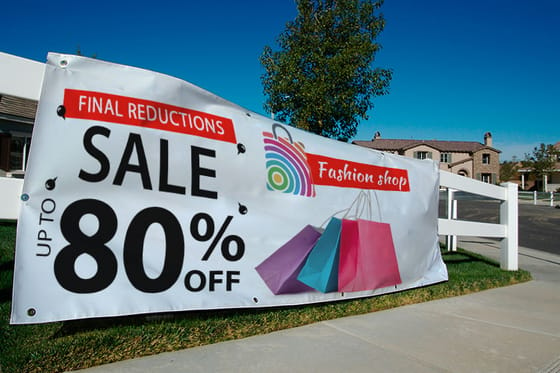
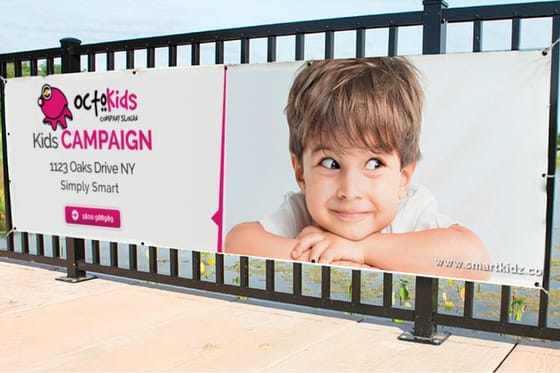
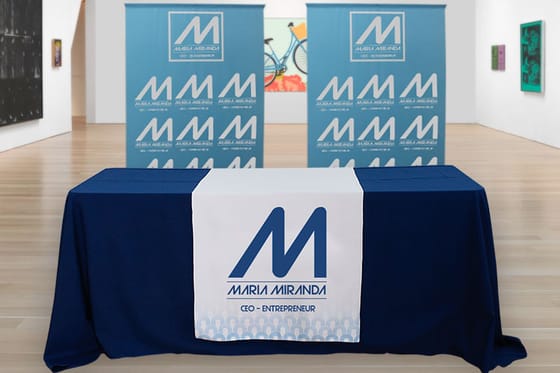
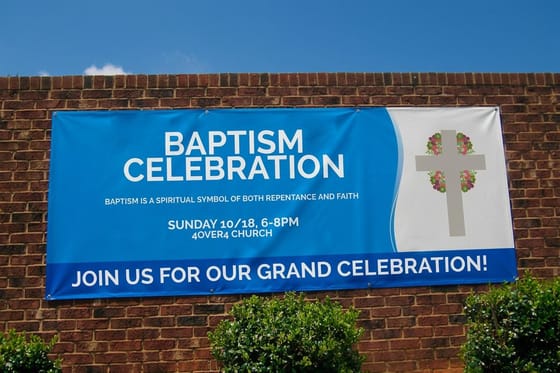
Banners we hung indoors and out

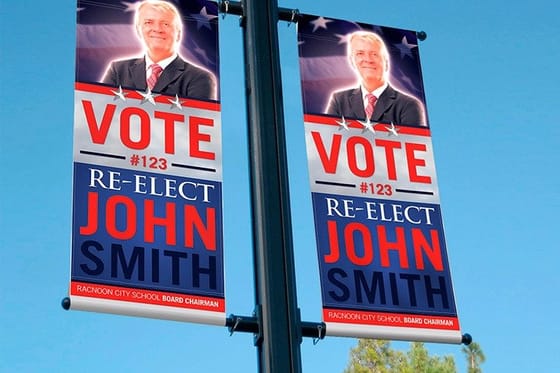
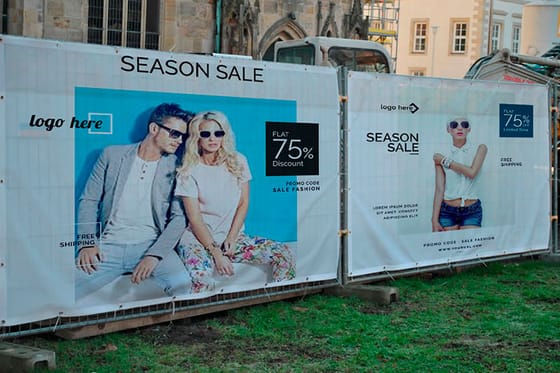
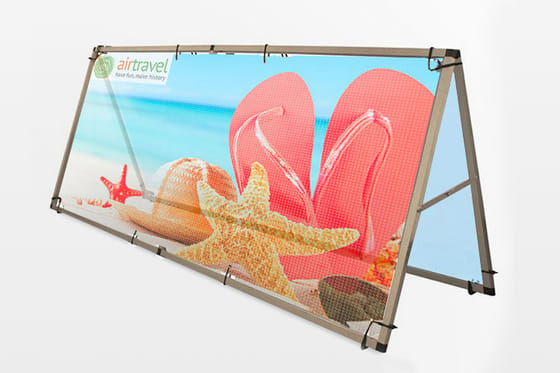
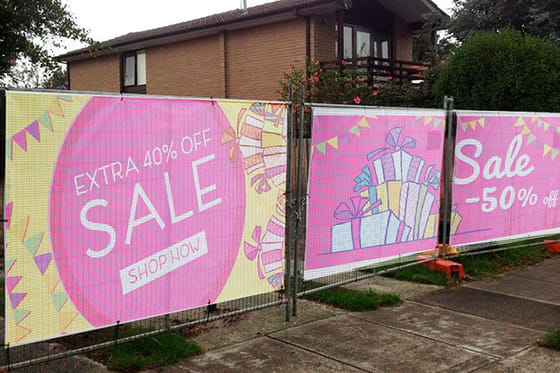
Explore more
Where to go next
What both share
The same heavy stock, hems, and delivery either way
Common Questions
Common questions about vinyl and mesh banners
What is the difference between a vinyl banner and a mesh banner?
A vinyl banner is printed on a solid, unbroken sheet of scrim PVC, so it is fully opaque and holds the most saturated color. A mesh banner is printed on a perforated PVC weave dotted with thousands of tiny holes, so wind passes straight through it. The vinyl blocks light and air. The mesh lets both pass. That single structural difference drives almost every other decision, from where you hang each one to how it behaves in a storm.
Which banner is better for outdoors, vinyl or mesh?
Both are built for outdoor use, but they favor different conditions. Solid vinyl is ideal for short-term outdoor promotions in sheltered or low-wind spots, where its full color does the most work. Mesh is the better call for exposed, high-wind locations such as fences, rooftops, scaffolding, and open building faces, because the wind slips through the weave instead of turning the banner into a sail that stresses the grommets.
Does a mesh banner look worse than a vinyl banner?
Only if you press your nose against it. Because roughly a third of a mesh surface is open weave, color looks a touch softer at arm's length. But mesh banners are made to be read from across a parking lot or up a building, and at that distance your eye fills in the holes and the image reads crisp and full. For a piece viewed up close, such as an indoor backdrop, solid vinyl is the safer choice.
Do vinyl banners need wind slits?
On larger outdoor sizes, yes. A solid vinyl banner has nowhere for the wind to go, so gusts push against the whole face and pull hard on the hems and grommets. Cutting wind slits, half-moon vents that let some air escape, relieves that pressure. Mesh banners rarely need them because the weave is one big vent. If you expect real wind and want to avoid slits, mesh or perforated vinyl is the cleaner answer.
What is a perforated vinyl banner and when should I use it?
A perforated vinyl banner is the middle ground between the two. It keeps more of the color and opacity of solid vinyl but adds enough perforation to let a meaningful share of wind through. Reach for it when you want vinyl-grade artwork in a spot with moderate wind, or when you simply cannot decide between the two and want a single material that leans both ways.
How are vinyl and mesh banners finished for hanging?
Both come with the same hanging options at 4OVER4.COM: reinforced hems on all four sides, grommets spaced around the edge, and pole pockets if you plan to slide them onto rods. You pick the finishing in the configurator alongside size and quantity. For a walkthrough of mounting once it arrives, see our guides on hanging banners and vinyl banner placement.
How much do vinyl and mesh banners cost?
Pricing scales with size, quantity, and finishing rather than material, so the two land close together. At 4OVER4.COM vinyl banners start around $79 and mesh banners around $75 for the same starting size, and the per-unit price drops as the quantity climbs. Use the live pricing table on this page to see the ladder for each, and watch the number update in the configurator as you adjust every option.
Get Started
Order a perforated vinyl banner, printed in 2 business days
Bring your artwork to 4OVER4.COM and print it on solid vinyl or perforated mesh, with the hems, grommets, and pole pockets your spot needs. Business banners start at $43.92 and ship in 2 business days.
Legal Disclaimer
Gold Standard guarantees apply to all standard orders placed through 4over4.com. Price match requires verifiable proof of a competitor's published price for an equivalent product with matching specifications and turnaround time. Satisfaction guarantee covers manufacturing defects and print quality issues. Contact support with order number and documentation.
