
Trade Show Checklist and Exhibitor Timeline From Booking Your Space to Following Up


Tobias is our voice for cutting, binding and large format, built from the knowledge of our production team, with over 20 years in printing.
Every stage of a trade show, from booking the space to the follow-up, with the exact print order sitting at each milestone and the lead time it needs.
Plan a trade show backward from the date your crate ships, not the date the doors open. Booth structure and tents get ordered at three to six months, fabric backdrops and table covers at two to three months, banner stands at one month, brochures and sales sheets at two weeks, and cards and badges in the final week. The follow-up piece is designed before you travel so it goes out within days of the show, while people still remember the booth. The pieces you reuse every season are in 8 durable trade-show booth prints that survive show after show.
Quick answer
Count backward from the crate, and order in this order
A trade show timeline is a print schedule with a show attached to the end of it. Structure and fabric take the longest and cannot be fixed late, so booth kits and tents go first at three to six months, then backdrops and table covers at two to three months. Banner stands land at one month, literature at two weeks, and cards and badges in the final week because names always change. Set every in-hand date two weeks before the crate ships. That gap is what buys you one reprint and a freight delay without losing the show.
Why a Trade Show Runs on Order Dates, Not the Show Date
Exhibitors circle the show date and plan toward it. The show date is the one deadline that does not matter for printing, because your materials have to exist well before it.
There are three deadlines stacked behind the show, and they move in this order. The artwork approval date, when the file is locked and nothing else changes. The in-hand date, when the printed piece is physically with you. The ship date, when the crate leaves for the show. Most general service contractors open advance warehouse receiving around thirty days before move-in and close it roughly a week before, so the ship date can land two weeks ahead of the doors opening. Your exhibitor manual carries the exact dates and it is the first document to read, before you design anything.
The whole timeline fits in one table. Lead times below are the practical planning windows, not production quotes, and every item is linked to what we actually print.
| When | What you decide | What you order | Why then |
|---|---|---|---|
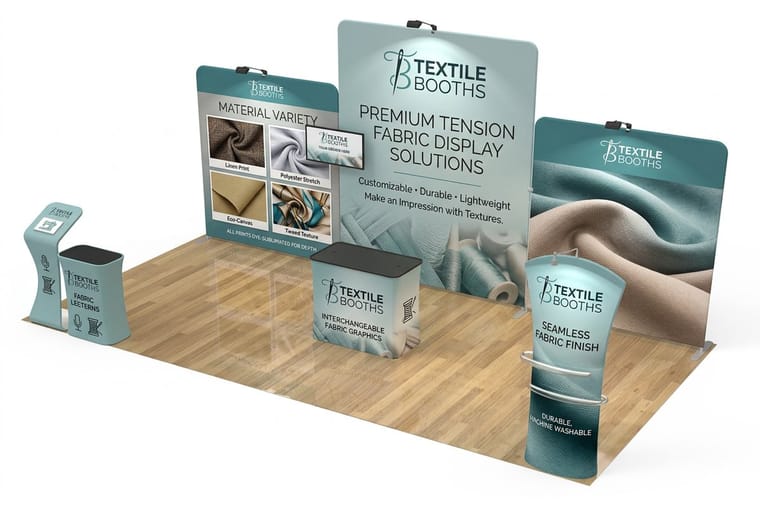
| 6 to 3 months | Booth size, floor position, budget, message | Fabric booth kits, event tents | Structure is sewn and finished after printing, and it is the item you cannot substitute locally. |
| 3 to 2 months | Final artwork, photography, headline | Fabric step-and-repeat, fabric table covers | Dye sublimation on fabric leaves no room for a late color change once it is cut and sewn. |
| 2 to 1 month | Booth layout and sightlines | Retractable banner stands, feather flags | Hardware plus graphic ships as one unit, and you want it standing in your office before it stands in a hall. |
| 1 month to 2 weeks | Offer, pricing sheet, lead capture | Brochures, sales sheets | Late enough that pricing is current, early enough to reprint if something is wrong. |
| 2 weeks to 1 week | Staffing, shifts, badge names | Event badges, business cards | Names change late. These are the cheapest things to reprint and the last to lock. |
| After the show | Who was a real lead | Postcards and follow-up mail | Interest decays within days, so the piece should already be designed before you fly home. |
If you own nothing yet, start at the top of the trade show printing collection and work down. If you exhibited last year, you are probably starting at row two.
Three to Six Months Out, Buy the Things You Cannot Buy Later
This window is for structure and for decisions, not for artwork. Book the space, get the exhibitor manual, and settle the single question everything else hangs on: what does someone walking past at four feet per second need to understand about you.
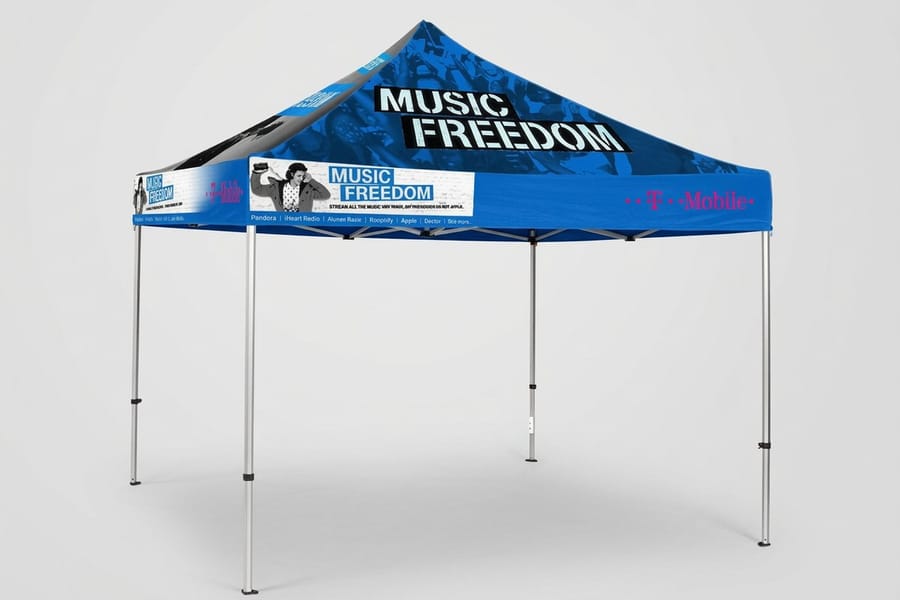
Then buy hardware. A fabric booth kit starts at $2,599 and gives you a full printed back wall that packs into a case, which is the difference between a booth that looks intentional and a table with a banner behind it. Outdoor and hybrid events want an event tent instead, from $987.45. Both are capital items you amortise across several shows, so the price per appearance is much lower than the sticker.
Name the trade-off before you spend: a printed booth kit locks in your footprint and your message. If you move from a 10 by 10 to a 10 by 20 next season, the wall does not stretch, and if you rebrand, the whole graphic is scrap. Buyers who expect either change often buy the frame and treat the fabric skin as the replaceable part. Ask for that split when you request a quote rather than after the wall is printed.
One more job belongs here: check the fire retardancy requirement in your manual. Most convention centers require certified flame retardant fabric for anything hanging in the booth, and the certificate has to travel with the graphic. It is a five minute question at order time and a very bad surprise on move-in morning.
Two to Three Months Out, Lock the Artwork and Print the Fabric
Artwork stops changing here. Fabric graphics are dye sublimated, cut and sewn, so there is no version of a late edit that costs nothing. Lock the logo file, the headline, the photography and the one call to action, then send it.
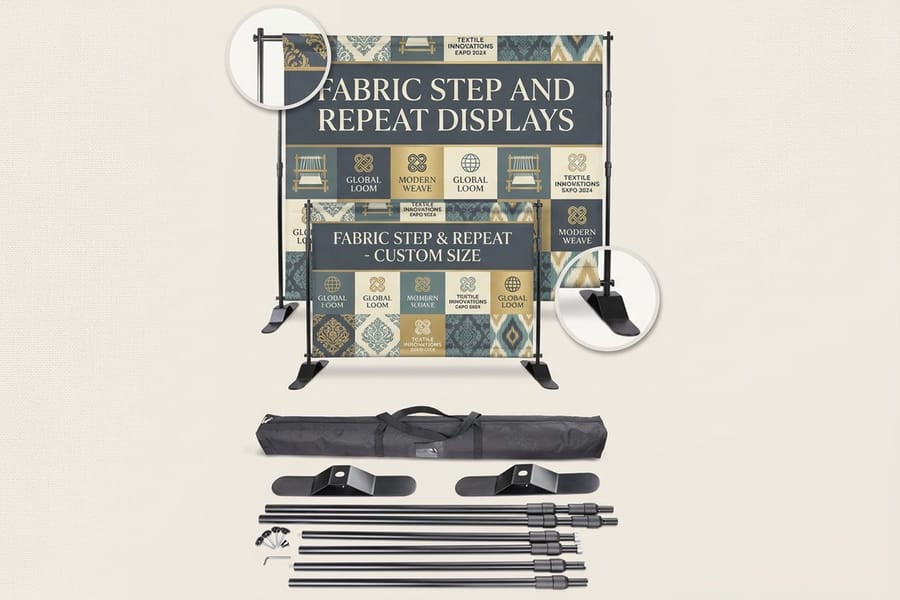
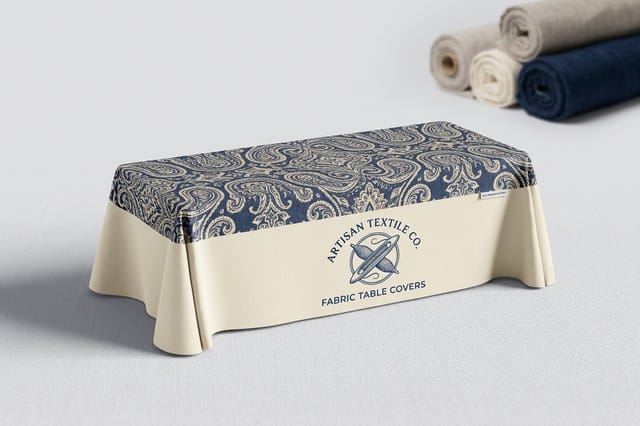
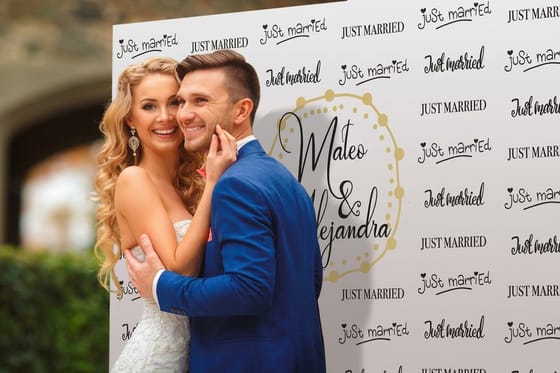
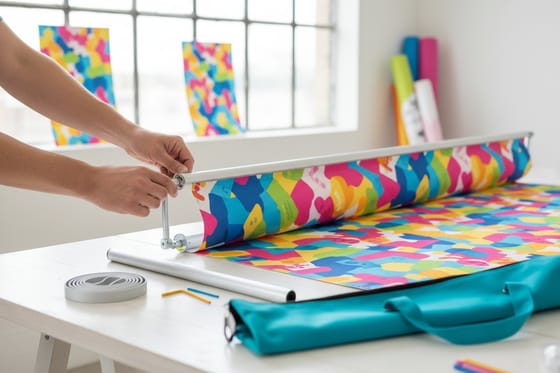
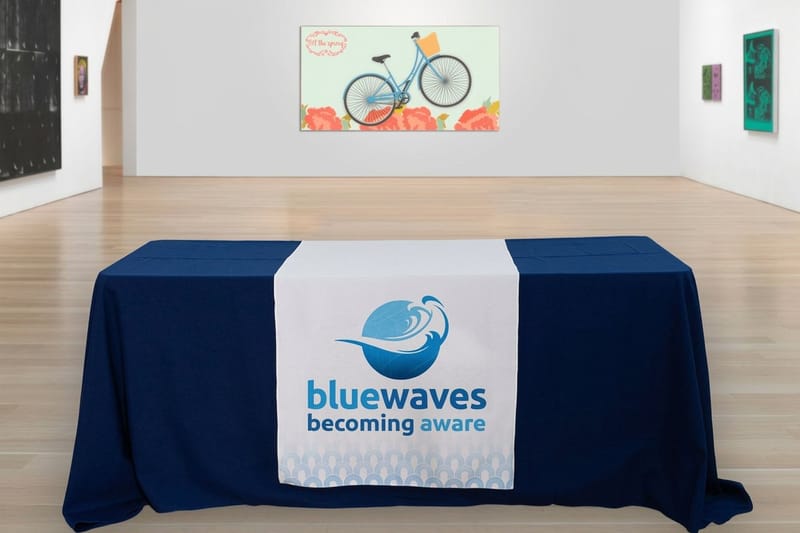
The two pieces that carry the booth are the backdrop and the table. A fabric step-and-repeat from $217.50 doubles as a photo wall and a back wall, and it packs into a bag rather than a tube. A fabric table cover from $225.00 does more work than people expect, because it hides the cases and cables under the table and turns a rented six foot trestle into a branded surface.
Fabric versus vinyl is the real decision at this stage. Fabric folds into hand luggage and shakes out without a permanent crease, takes light softly so it photographs well under harsh hall lighting, and washes. Vinyl is cheaper, stiffer and holds a sharper edge, but it keeps fold lines and it shines back at a camera flash. For a wall behind people, choose fabric. For a hanging banner over a stand outside, a vinyl banner from $79 is the sensible spend. Our guide to step-and-repeat backdrops covers logo spacing, which is the detail most first backdrops get wrong.
Set the file up from a correctly sized layout rather than scaling a poster. The blank template library has the bleed and safe area already in place for each size.
One Month Out, Banner Stands and the Booth Layout
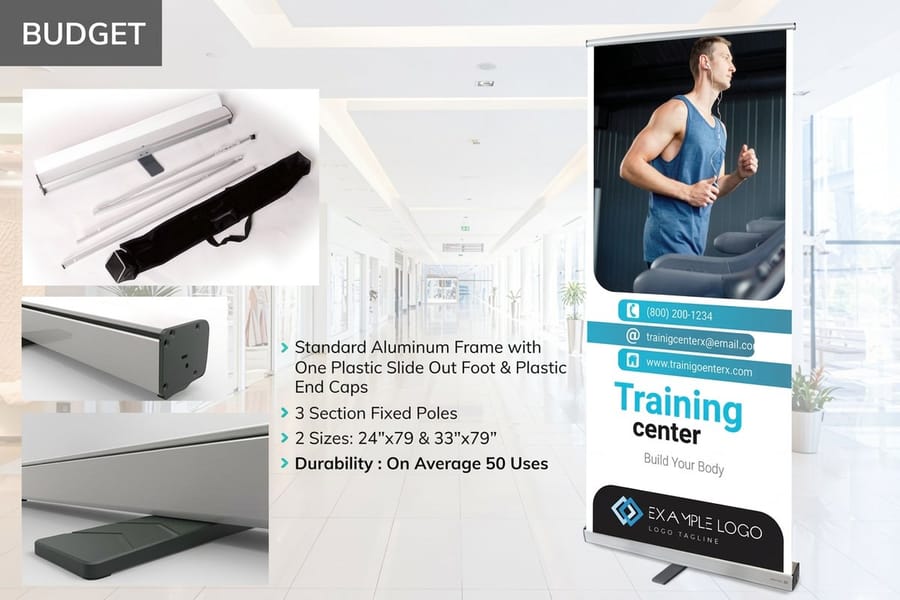
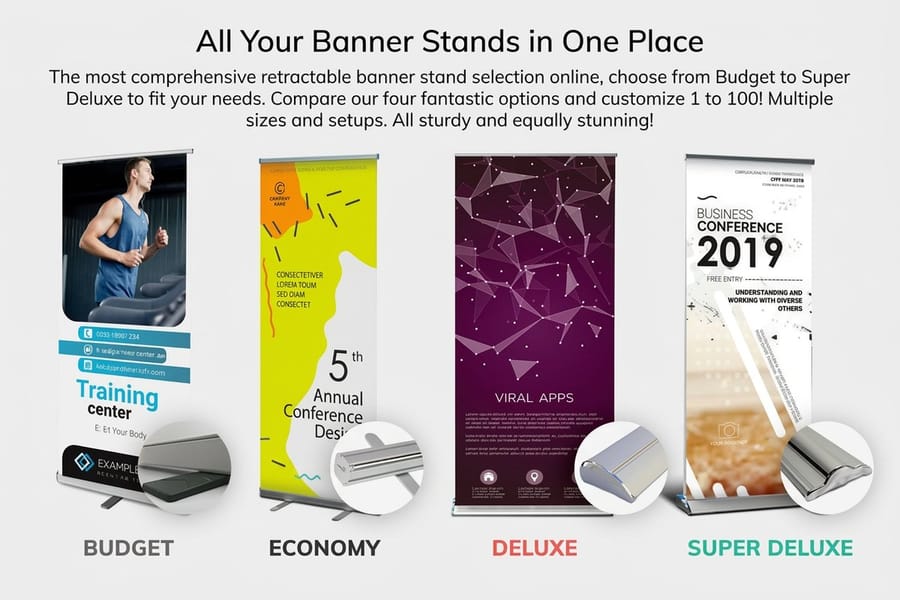
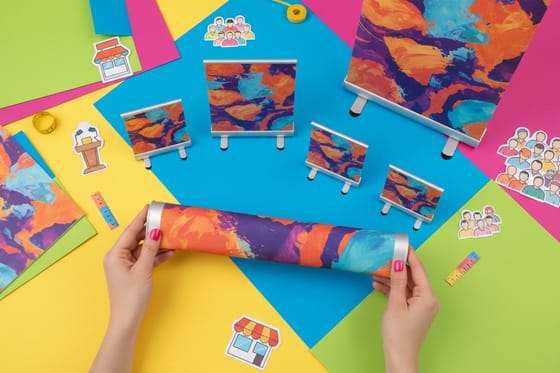
With the wall settled, the last large format items are the ones that shape how people move through the space. Retractable banner stands from $139 ship as hardware plus graphic in one case and go up in under two minutes, which matters when move-in is short.
Place them at the back corners, not at the aisle edge. A banner at the front of a 10 by 10 blocks the entrance and gives you a booth people read from outside instead of walking into. Two banners flanking a back wall widen the visual footprint and leave the aisle open. If the show is outdoors or has an exterior approach, feather flags from $108.75 pull attention from much further away than anything at booth height, though most indoor halls prohibit them, so check before you order.
Keep the banner copy short. A stand is read at a glance from six to ten feet: one line of who you are, one line of what you do, and nothing that requires stopping. Detail belongs in the conversation and in the literature. If you want the sizing worked out properly, the five common retractable sizes explains which width fits which space, and the full range sits in banner stands printing.
Order the graphics with your in-hand date two weeks before the crate ships. Set them up in your office when they arrive. You will find a color that is off, a phone number that changed, or a stand that needs a wider base, and finding it now costs a reprint rather than a show.
Two Weeks Out, Literature, Badges and the Crate
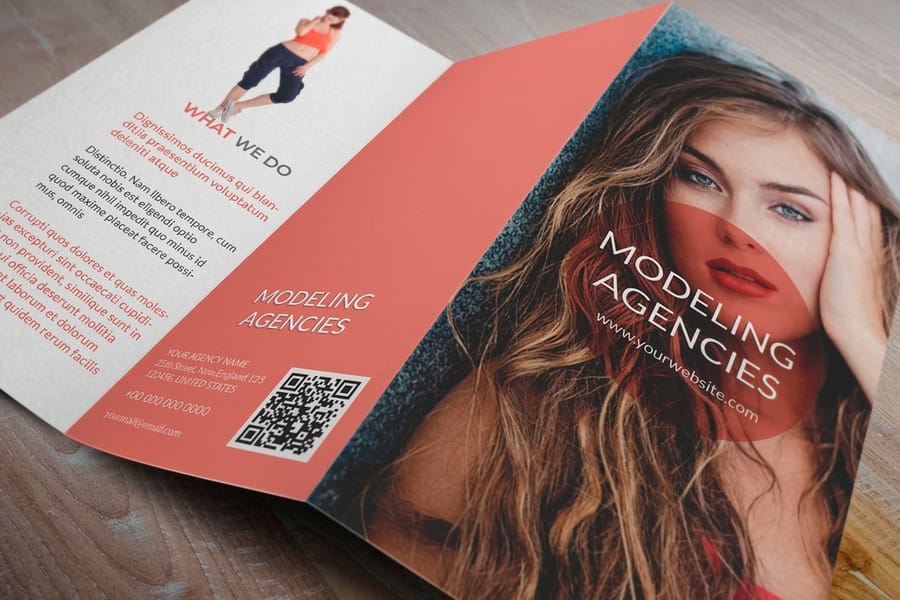
Now the paper. Brochures from $57.11 and sales sheets from $75.80 are late items on purpose, because pricing, availability and the current offer all change, and a brochure printed three months early is a brochure with an out of date number in it.
Print less than instinct suggests. Take the number of real conversations you expect, not the badge scans, and print about that many brochures plus a small margin. Everything past that gets shipped home or binned, and freight back is charged the same as freight out. A one page sales sheet you are happy to hand to anyone, plus a QR code on the table for the full document, beats a heavy brochure most people carry to the next aisle and put down.
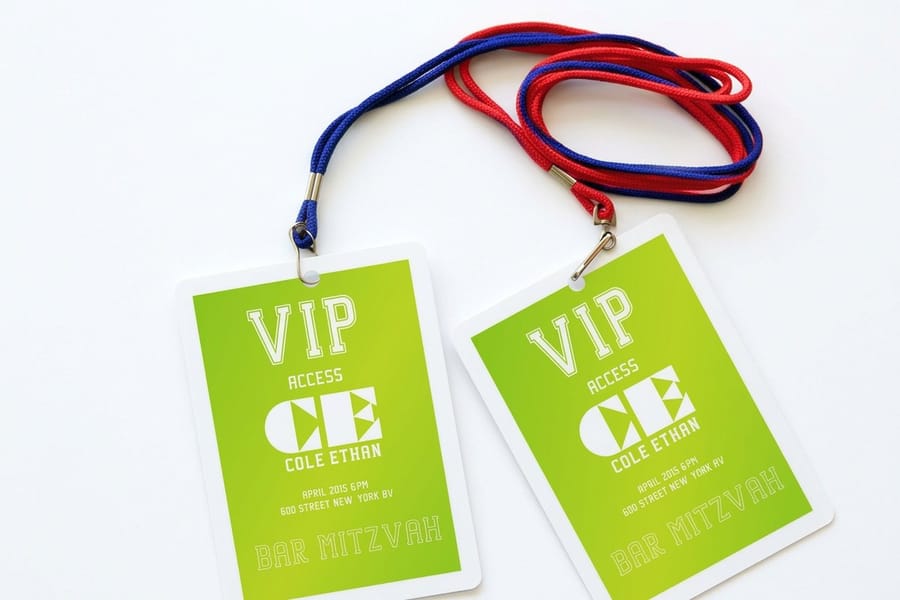
Event badges from $49.88 are worth ordering rather than improvising, because a booth where staff are identifiable gets approached more readily than one where visitors cannot tell who works there. Names change late, which is exactly why this sits at two weeks and not at two months.
Pack the crate this week, not the night before. Build a written pack list, photograph the packed crate, and put a copy of the list inside the lid. Label everything with the show name, your booth number and your company. A crate without a booth number does not get delivered to your space, it gets parked. If a piece is running late, our guide on printing booth materials at the last minute covers what can still be saved and what cannot.
One Week Out, Spares, Cards and the Things That Get Forgotten
Week one is for the small, cheap, fast items and for the box of things nobody remembers until they need one. Standard business cards from $17.57 can be reprinted inside this window, so if a title changed or someone new joined the booth team, fix it now.
The forgotten box, in the order people miss them: gaffer tape, zip ties, scissors, a multi tool, extension lead and power strip, a steamer or wrinkle spray for the table cover, spare pens, hand sanitiser, a clipboard, painkillers, and a phone charger longer than you think you need. Convention floors have very few outlets and none of them are where your booth is.
Bring one spare of anything printed and light. A second banner graphic in the case weighs almost nothing and covers you against a coffee spill on day one. Do not bring a spare table cover or a spare wall, that is weight and freight for a risk that rarely lands.
Finally, confirm the practical details in writing: who is on the stand and when, what time move-in starts, where the freight desk is, and what happens if the crate is not in the booth when you arrive. Every show has that phone call, and the exhibitor who already has the number wins forty five minutes.
Day of the Show, Set Up in the Right Order
Setup has an order that saves rework. Table cover first, before anything is on the table, because lifting a loaded table to fit a cover is how a laptop ends up on the floor. Back wall or step-and-repeat next, since it needs the most floor clearance behind it. Banner stands after that, into the back corners. Literature and giveaways last, in small quantities, restocked from under the table.
Leave the fabric hanging as early as possible. Dye sublimated fabric drops most of its fold lines within an hour or two of being unpacked, and a quick pass with a steamer clears the rest. A wall put up ten minutes before doors open looks like a wall that was put up ten minutes before doors open.
Keep the aisle line open. The single most common booth mistake is a table across the front, which turns a space people could walk into a counter they walk past. Push the table to one side or set it back, stand in front of it rather than behind, and give the entrance to the visitor.
Capture leads in a way that survives the day. Badge scanners, a spreadsheet on a tablet, or written notes on the back of a card all work; what does not work is remembering. Note one specific thing about each conversation, because that detail is what makes the follow-up read like a human wrote it.
After the Show, The Follow-Up That Was Already Printed
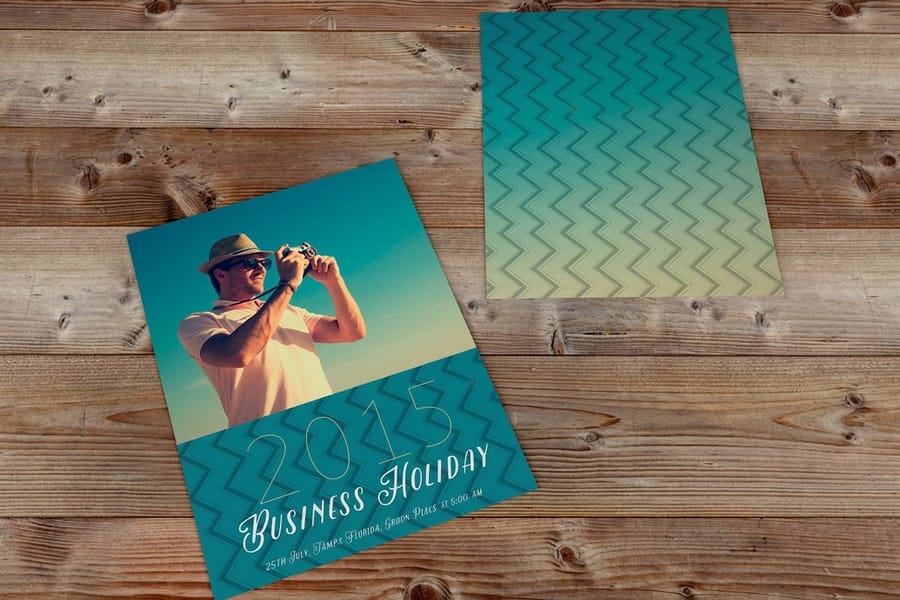
Leads decay quickly, and the exhibitor who contacts someone two days after a show is talking to a person who still remembers the booth. Two weeks later they are a stranger. That is why the follow-up piece is designed and ordered before you travel, not after you unpack.
Split the list before you send anything. Real conversations get a personal message referencing the specific thing you discussed. Everyone else gets one short, useful email. Sending the same paragraph to both groups wastes the good leads to save an hour.
A printed follow-up still works precisely because so few exhibitors bother. Standard postcards from $16.48 arriving a week after the show land on a desk with no inbox to compete with, and they pair well with an email rather than replacing it. Keep it to one message and one link.
Then close the loop on the physical kit. Roll fabric graphics rather than folding them for storage, wipe the table cover before it goes back in the bag, and write down what broke, what you ran out of and what nobody picked up. That note is worth more than the lead list when you plan the next show, and it is the reason the second year is always cheaper than the first. If you are still building your first booth, the first-time exhibitor checklist is the shorter companion to this timeline.
Wally plans a trade show
He works backward from the crate, not the calendar
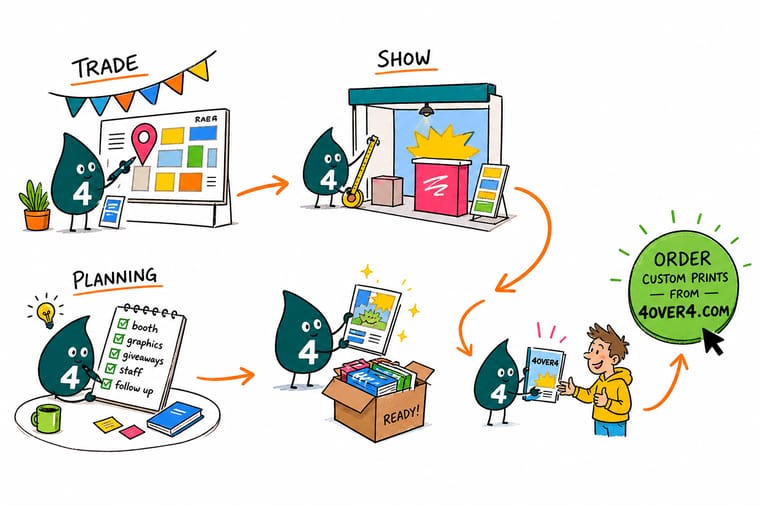
Wally books the space, reads the exhibitor manual, then walks the timeline in reverse. Booth kit and tent at six months, because sewn fabric cannot be rushed. Backdrop and table cover at three months, when the artwork stops changing. Banner stands at one month. Brochures at two weeks, cards and badges in the last week, since names always change late. Every in-hand date sits two weeks before the crate ships, and that gap is the only thing standing between one small mistake and a bare booth.
Shop trade show printing →
Specs and pricing
Booth graphics, sizes, and starting prices
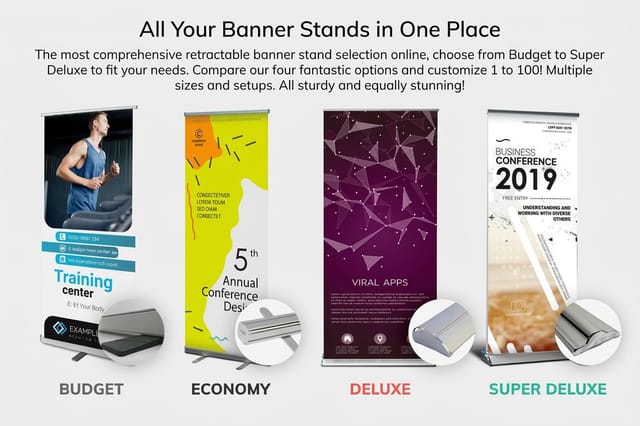
The three items almost every booth needs, with live configuration choices and starting prices straight from the 4OVER4.COM configurator. A retractable banner stand starts at $139 for the 24 by 79 inch Budget stand on 13oz. smooth blockout vinyl, with widths up to 59 inches. A fabric step and repeat starts at $217.50 at 8 by 8 feet, with 8 by 10 feet or any size on 9oz. wrinkle free fabric or 13oz. vinyl. A fabric table cover is $225.00 for a 6 ft table, 84 by 126.5 inches of 9oz premium polyester.


Print it
Order the booth before the calendar orders you
Standard turnaround is 3 business days for a banner stand or a step and repeat and 4 business days for a fabric table cover. On this timeline the table cover and backdrop go in at two to three months and the banner stand at one month, which leaves the rest of the window for artwork approval and freight to the venue.


Explore more
Where to go next
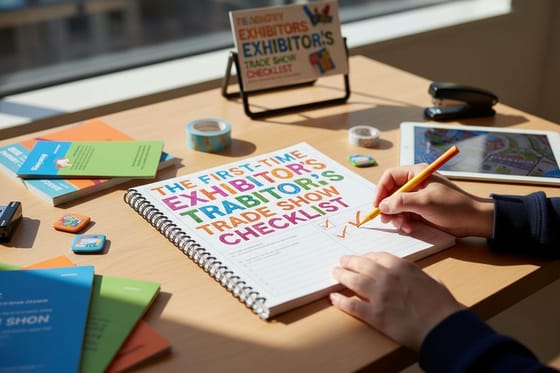
Get the short checklist for a first booth, space the logos on a step and repeat, pick a banner width that fits a corner without blocking the aisle, set a stand up in two minutes, and size a table cover to a 6 or 8 ft show table.
By the numbers
Booth and trade show graphics, and when they arrive
Common Questions
Your trade show planning questions, answered
How far in advance should I start planning a trade show?
Six months if you are buying booth structure, three months if you already own the hardware and only need new graphics. The long pole is never the printing itself, it is the decisions in front of it: booth size, floor position, what the message is, and who is staffing it. A fabric booth kit or a custom tent should be ordered at the six month mark because the artwork has to be approved, printed, sewn and shipped, and because you want it in hand early enough to open the box and check the fit before it matters.
When should I order booth graphics?
Two to three months before the show for large format fabric, one month for retractable banner stands and rigid signage. Set the in-hand date two weeks before the crate ships, not two days. That gap is what pays for a color correction, a typo you only spot on the printed piece, or a freight delay. If your show uses an advance warehouse, work out its receiving window first and count backward from the closing date, because that is the date the graphics actually have to exist.
What should I actually print for a 10 by 10 booth?
A back wall or step-and-repeat, a fitted table cover, one or two retractable banner stands, a small run of literature, and business cards. That is the whole list for most first booths. Retractable banner stands start at $139 and a fabric step-and-repeat at $217.50, so a complete graphics package sits well under the cost of the floor space. Skip the branded giveaway until you have run one show and seen what people at that specific event pick up.
How many brochures should I bring to a trade show?
Fewer than you think, and here is the test: count the badge scans you expect, then print about a third of that number. Most literature handed out at a booth is put down before the attendee reaches the escalator, and shipping the leftovers home costs more than the reprint would. A better structure is a small run of well made brochures for genuine conversations plus a QR code on the table that points to the full PDF, so the people who want detail get it without you paying to freight it twice.
Can I get trade show materials printed at the last minute?
Flat printed items, yes. Business cards, flyers, brochures and sales sheets move quickly and can often be produced on a one business day turnaround, then shipped to your hotel or directly to a nearby address. Large format fabric, tents and booth kits cannot be rushed the same way because sewing and finishing sit after printing. If you are already inside a week, print the paper, buy or rent the hardware locally, and keep the fabric order for next time.
Should I ship to the advance warehouse or direct to show site?
Advance warehouse if the option exists and your graphics are ready in time. It gets the crate to your booth space before you arrive, so setup starts with everything present instead of with a phone call to a freight desk. Direct to show site is the fallback when a graphic runs late, and it carries the risk that the delivery window is a few hours on move-in day. Whichever you choose, label every piece with the show name, booth number and exhibiting company, because a crate without a booth number sits in a marshalling yard.
Get Started
Fabric booth kits cost $2,599.00, event tents $987.45
Pick the wall, the table cover and the banner stands, upload one locked artwork file, and we print a booth package that arrives before your crate has to leave.
Legal Disclaimer
Gold Standard guarantees apply to all standard orders placed through 4over4.com. Price match requires verifiable proof of a competitor's published price for an equivalent product with matching specifications and turnaround time. Satisfaction guarantee covers manufacturing defects and print quality issues. Contact support with order number and documentation.
