
The First-Time Entrepreneur Launchpad for Your First 90 Days in Business


The order that keeps a first business solvent: what to do in month one, what to spend money on in month two, and how to find the first hundred customers by day ninety.
Launching a first business is six moves in order: prove somebody will pay, set the legal and banking side up once, price from your own cost floor, build only the brand a stranger needs to trust you, work one channel for ninety days, then ask every buyer for a referral. Most first-time founders reverse it and buy a logo, a website and a box of cards before anyone has said yes. Spend nothing you can avoid until the first customer has paid at a real price, then spend on the pieces that make an existing business look established.
Quick answer
Proof first, paperwork second, money on print third
The sequence that survives is demand, structure, price, brand, channel, referral. Twenty conversations and ten priced asks tell you whether the business exists. The filing fee, the bank account and the insurance come the week after the first payment lands. Pricing starts from what a year of the business costs you, not from what a competitor charges. Only then does money go on the visible parts, because cards and flyers make a real business look established and do nothing at all for one that has never been paid.
Prove Somebody Will Pay Before You Build Anything
The first job is not a name, a logo, or a website. It is finding out whether the problem you want to solve is one people already pay to solve, and whether they will pay you.
Have twenty conversations with people who have the problem. Not friends, and not people who will be polite. Ask what they do about it now, what that costs them, and what they tried that failed. You are listening for a workaround, because a workaround is proof of demand: somebody is already spending time or money on this and hating it.
Then convert the listening into an ask. Go back to ten of those people with a specific offer at a specific price and ask them to buy. A yes with a deposit attached is data. A yes with "sounds great, send me something" is not. That second answer is the one that fools first-time founders into building for six months.
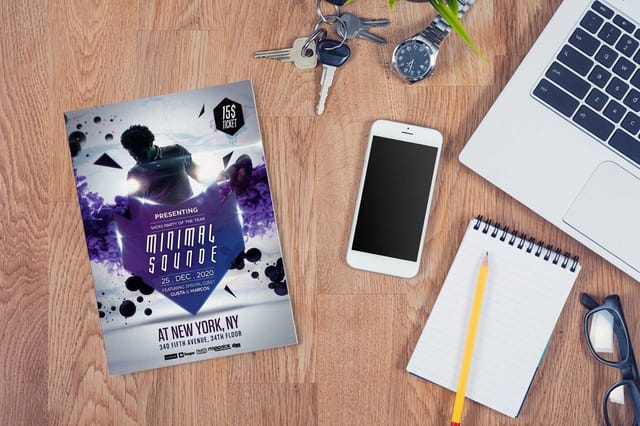
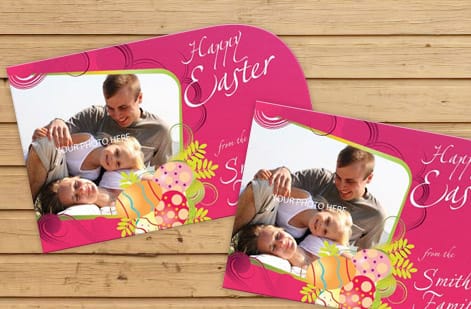
Keep the test cheap. A one-page description of the offer, a phone number, and a price is enough to find out. If you need something physical to hand over in a market, at a meetup, or through a letterbox, standard postcards start at $16.48 and print in a couple of days, which is a smaller bet than a website. Write the offer the way a customer describes the problem, not the way you describe the product, and our guide to brand messaging for small business covers how to find those words.
Two outcomes are useful. People buy, and you have a business. Nobody buys, and you have saved a year. The outcome to distrust is enthusiasm without money.
Set Up the Legal and Money Side Once, Properly
Administrative setup is boring, cheap, and the thing that hurts most when it is done late. Do it in the week after your first paid yes, not before, and not six months after.
Four things belong in that week. Choose a structure. Open a business bank account, because mixing personal and business money makes bookkeeping expensive and weakens the liability protection you paid for. Get the license or permit your city and trade require, which for food, trades, childcare and anything medical is not optional. Buy liability insurance if you enter customer premises or customers enter yours.
| Structure | Cost and effort | Liability | When it fits a first business |
|---|---|---|---|
| Sole proprietor | Usually free, sometimes a local trade-name filing. Same day. | None. Business debts and claims reach your personal assets. | Testing an idea, side income, low-risk service work with no contracts or premises. |
| LLC | A state filing fee plus an annual report in most states. Days to weeks. | Separates business liability from personal assets when you keep the money separate. | Signed contracts, a lease, employees, inventory, or customers on your premises. |
| S-corp election | An LLC or corporation first, then an IRS election and payroll. Ongoing accountant cost. | Same separation as the underlying entity. | Profit high enough that payroll tax savings beat the accounting bill. Ask an accountant for the number in your state. |
The column that decides it is the third one. Liability separation is worth the filing fee the moment somebody could sue you, and worth nothing while you are still testing an idea from a laptop. Structures change easily in that direction, so starting simple is not a trap.
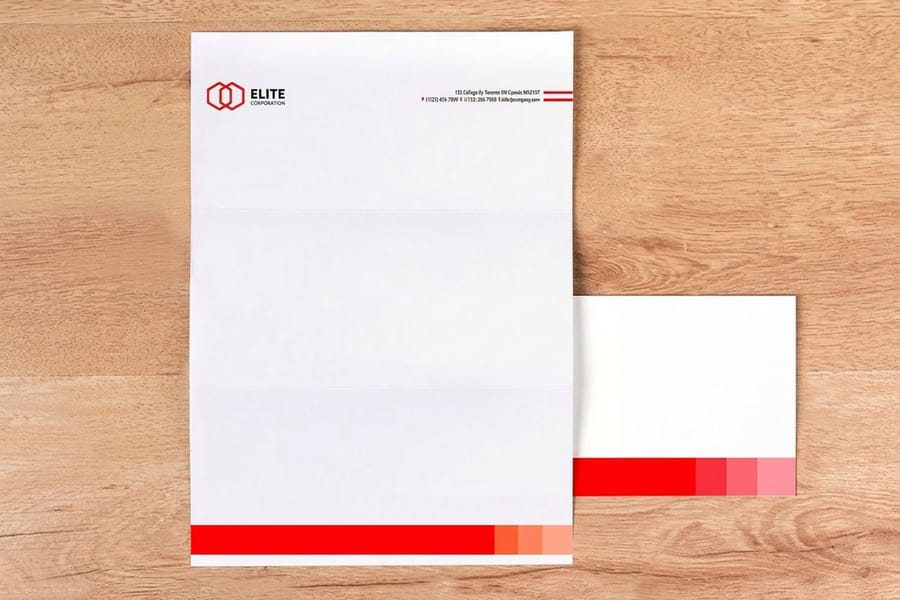
Set up invoicing the same week. Numbered invoices, payment terms written on them, and a stated late fee. If you send proposals or contracts on paper, printed letterheads at $99.95 give a new company the same visual weight as an established one, and our guide to building a branded stationery set shows what belongs in it.
Build the Minimum Brand That Makes Strangers Trust You
Branding at this stage has one job: make a stranger believe you will still exist next month. It is not self-expression and it does not need an agency.
Four decisions cover it. A name people can spell after hearing it once. A wordmark or a simple symbol. Two or three colors, chosen so they survive both a screen and printed ink. One typeface family with a bold weight and a regular weight. That is the whole kit, and a founder can settle it in a weekend using our logo design guide and the brand color palette guide.
Resist the expensive parts. A full brand book, a custom typeface, and a photoshoot are things a business buys with profit, not with runway. What you cannot skip is consistency: the same logo file, the same two colors, and the same way of describing what you do, everywhere. Inconsistency is what actually reads as amateur, not a plain logo.
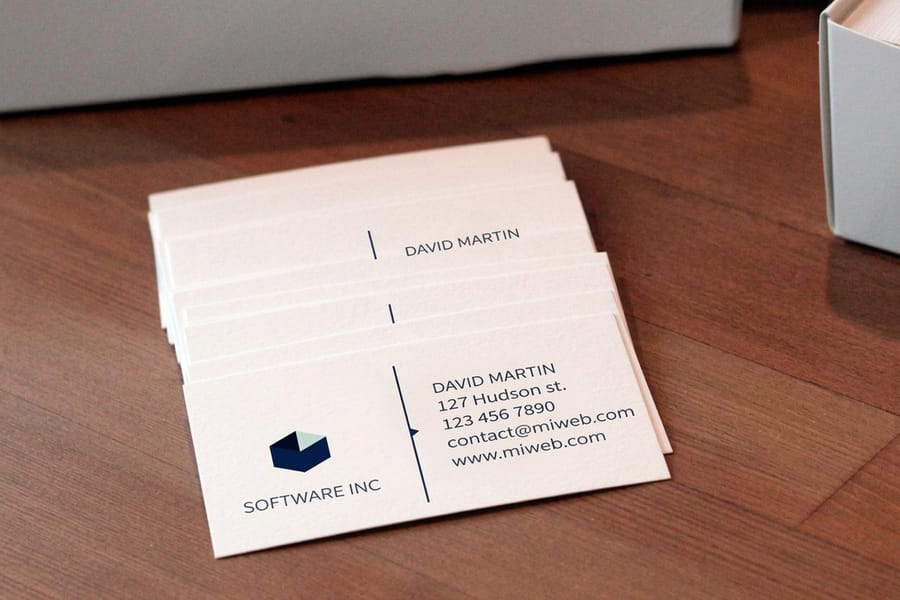
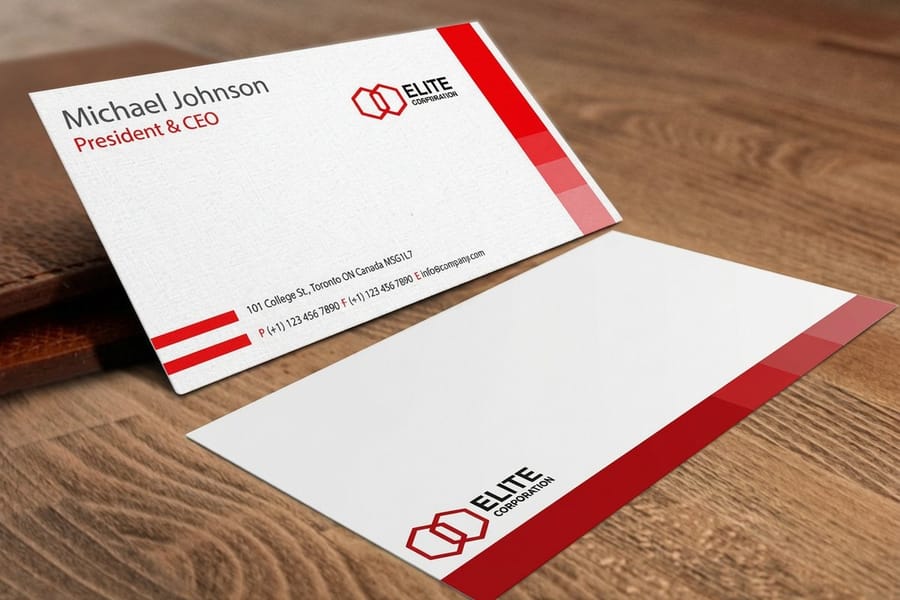
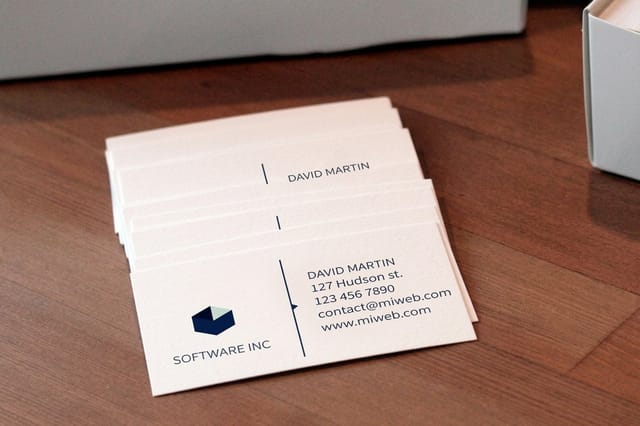
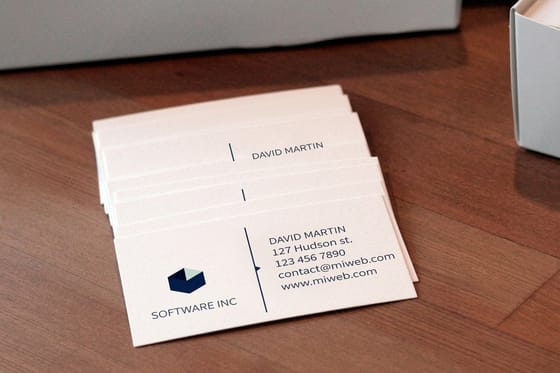
Then print the one item that earns its place immediately. Standard business cards start at $17.57 a box and solve the situation every new founder is in weekly, which is standing in front of someone who just asked what you do and having nothing to leave behind. Set the file up from a correctly sized blank template, or lay it out in the browser with our online design templates if you are not working in design software. Our company business card branding guide covers what to put on it and, more usefully, what to leave off.
One warning worth taking seriously. Do not print anything with a phone number, an address, or a job title you are not certain about. That is how a founder ends up with two thousand cards and a crossed-out line.
Get In Front of Your First Hundred Customers
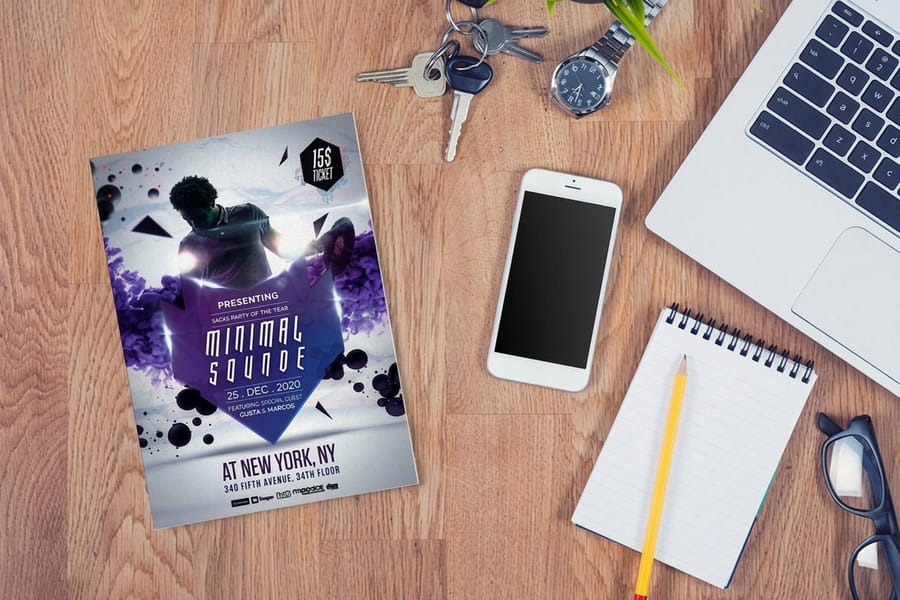
New businesses lose momentum here more than anywhere else, and almost always for the same reason: the budget gets split across five channels, none of which gets enough attention or enough time to produce a readable result.
Pick one channel where your buyers already gather. Choose it from the twenty conversations, not from a marketing article. If they all mentioned the same Facebook group, that is the channel. If they all walk past the same street, that is the channel. Commit to it for ninety days, show up every week, and count what happens.
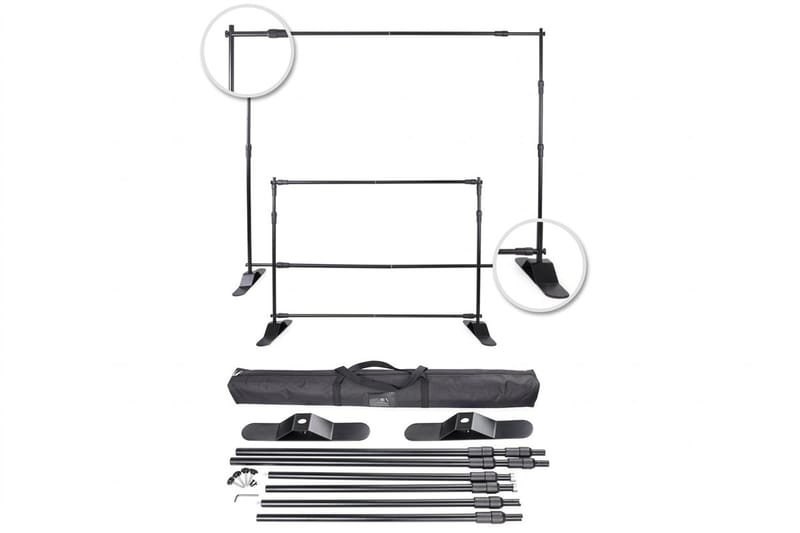
Local businesses have an unfair advantage that founders raised on digital marketing tend to ignore. A physical piece in a defined area reaches people no ad targeting will find, and it is cheap. Standard flyers at $39.54 work for a launch offer, an opening, or a service radius. Yard signs at $25 turn every completed job into an advertisement standing in a front garden for a fortnight, which is why trades keep using them. Die-cut stickers at $93.37 do the same job for a product brand, on laptops and water bottles instead of lawns. Postcards to a targeted list are the most measurable of the group, and our guide to how direct mail marketing works covers lists, formats and postage.
Whatever you choose, make one offer, put one way to respond on it, and use a phone number or a code that only appears on that piece so you can tell what worked. The difference between marketing and branding matters here: branding is the long game, and marketing is the thing that has to bring somebody in this month.
Then ask. Every satisfied customer should be asked for one referral and one review, out loud, at the moment they say they are happy. It costs nothing and it is the highest-return activity available to a business with no reputation yet.
The First Ninety Days, Week by Week

The sequence works as a checklist. The order matters more than the timing: each phase is finished when its proof condition is met, not when the calendar says so.
| Phase | What you do | What it costs | Done when |
|---|---|---|---|
| Days 1 to 30 | Twenty problem conversations. Write the offer in one page at one price. Ask ten people to buy it. | Time only. | Somebody has paid, or you know the offer is wrong and why. |
| Days 31 to 45 | Choose the structure, open the business bank account, get licenses and insurance, set up numbered invoices. | Filing fee, bank minimum, insurance premium. | Money lands in a business account and an invoice has gone out. |
| Days 46 to 60 | Name, wordmark, two colors, one typeface. Print business cards. Set up letterheads if you send proposals. | Cards from $17.57, letterheads from $99.95. | You can hand somebody something and send a document that matches it. |
| Days 61 to 90 | One channel, weekly, with a tracked response route. Flyers, signs, postcards or the group your buyers use. | Flyers from $39.54, yard signs from $25. | You know your cost to get one customer, even roughly. |
| Ongoing | Ask every happy customer for a referral and a review. Review the numbers weekly. | Time only. | Referrals arrive without being chased. |
Two habits hold the whole thing together. Look at three numbers every week: money in, money out, and how many new enquiries arrived. And write down what you tried and what happened, because in month four you will not remember which flyer drop produced the calls.
When it is time to order, pick the paper before the design is finished rather than after, since stock changes how a color prints. Our guide to choosing paper for printed marketing materials covers the weights and coatings, and the business stationery collection holds the pieces a new company sends out on paper.
Wally explains the launch order
Money moves after the first yes, not before
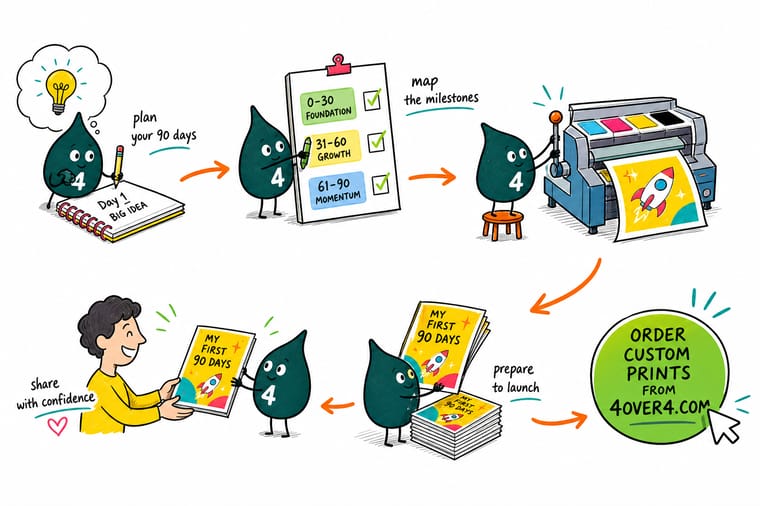
Wally has watched a lot of first businesses. The ones that last talk to twenty people, ask ten of them to buy, and only open the wallet once somebody has actually paid. Then the paperwork gets done in a single week, and only then does the printing start: cards first, because you need something to hand over, then one channel worked hard for ninety days. Print makes an existing business look established. It has never once created a customer out of thin air.
Print your first business cards →Specs and pricing
The three pieces a new business orders first
Cards to hand over, postcards to test an offer, flyers to work a local area. Sizes, stocks and starting prices come straight from the 4OVER4.COM configurator.


Print it
Kit out the launch without overspending

Explore more
Where to go next

By the numbers
The printer new businesses keep coming back to
Common Questions
First-time founder questions, answered straight
How much money do you actually need to start a first business?
Less than most first-time founders spend, because the biggest early costs are optional. A service business can open for the price of a state filing fee, a business bank account, and liability insurance. What eats the budget is everything bought before revenue: a full brand identity, a custom website, inventory ordered on a guess, and an office. Keep a separate figure in mind for the money you need to live on while the business is not paying you yet, and make it at least six months. That personal runway number kills more first businesses than the startup budget does.
Do I need an LLC before I make my first sale?
No. In most states you can operate as a sole proprietor immediately, and plenty of businesses take their first payments that way while they find out whether the idea works. Form an LLC when there is something to protect: a signed client contract, a lease, employees, inventory, physical premises customers walk into, or personal assets you would lose in a claim. An accountant in your state is worth one paid hour before you file, because the tax treatment differs enough between structures that guessing costs more than the advice.
What should a brand new business print first?
Business cards, and nothing else until they run out. A card is the only piece that works in the situation a new founder is in most often, which is standing in front of someone who just asked what you do. Standard business cards start at $17.57 for a box, so the decision is not financial. The second print item depends on how you sell: a service that gets hired at someone else's premises wants letterheads and a proposal folder, a retail or food business wants flyers and a sign, and a business that relies on repeat local buyers wants postcards.
How do I price my work when I have no track record?
Build the number from your own costs, then test it in a real conversation. Total your annual business costs, add the salary you need, divide by the billable hours or units you can genuinely deliver in a year after admin and slow weeks, and that is your floor. Quote at or above it. If a prospect says yes without hesitating, the price was too low, and the cheapest time to correct that is on the next quote rather than a year in. Discounting to win the first client sets a reference price that follows you through every renewal.
How long before a new business pays me a wage?
Plan for longer than the plan says. Service businesses tend to reach a first profitable month faster than product businesses because there is no inventory to fund, but both are usually paying the founder last. The useful milestone is not profit, it is the month the business covers its own costs without a transfer from your savings. Track that one number weekly. If it has not moved in three months of consistent effort, the problem is the offer or the audience, not the effort.
What is the mistake first-time founders make most often?
Building the visible parts of a business before proving anyone wants what it sells. Logo, website, cards, packaging and a company name feel like progress because they produce something you can look at, and none of them answer the only question that matters in month one. The founders who survive run it in the other order: talk to twenty people with the problem, ask ten of them to buy at a real price, and only then spend money making the business look the way it now deserves to look.
Get Started
Got your first yes? Now make the business look the part.
Cards to hand over, flyers to work your area, signs that keep selling after the job is finished. Order one piece, see the quality, then build the rest around it.
Legal Disclaimer
Gold Standard guarantees apply to all standard orders placed through 4over4.com. Price match requires verifiable proof of a competitor's published price for an equivalent product with matching specifications and turnaround time. Satisfaction guarantee covers manufacturing defects and print quality issues. Contact support with order number and documentation. On-time delivery rate based on tracked orders 1999 to 2026. Individual results may vary based on shipping carrier performance.
