
The Advertising Materials Every Business Needs and What Each One Does


Banners, signs, flyers, postcards, brochures and cards, sorted by the distance they are read from, what each one costs to start, and how they hand a customer along from one piece to the next.
Advertising materials are the printed pieces that carry an offer to people who did not ask for it: banners, yard signs and posters to be seen at a distance, flyers, postcards and door hangers to be handed over or mailed, business cards and brochures to be kept. Most businesses need four or five of them, not twenty, and the right four come down to how far away the reader is standing and how long they will hold the piece. Entry prices at 4OVER4.COM run from $16.48 for postcards to $290.41 for door hangers.
Quick answer
Pick by reading distance, then by how long the piece is held
There is no universal list of advertising materials, only a distance ladder. Something has to work from across a lot, something has to work in a hand, and something has to survive in a wallet or on a fridge. Start with one piece for each of those three ranges, add a fourth only when a real sales conversation demands it, and set the letter height from the distance before you write the copy. The prices below are entry configurations from the 4OVER4.COM configurator, so they move with quantity and stock.
The Core Advertising Set and What Each Piece Actually Does
Every printed advertising piece answers one question: how far away is the person, and how long will they hold it. Sort the catalog that way and the choices get short.
| Piece | Read from | The job it does | Starts at |
|---|---|---|---|
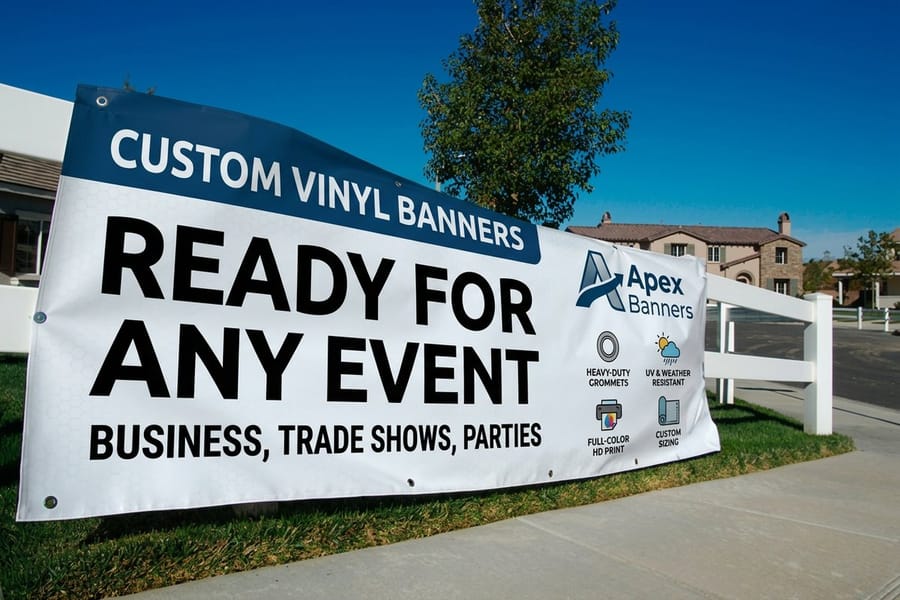
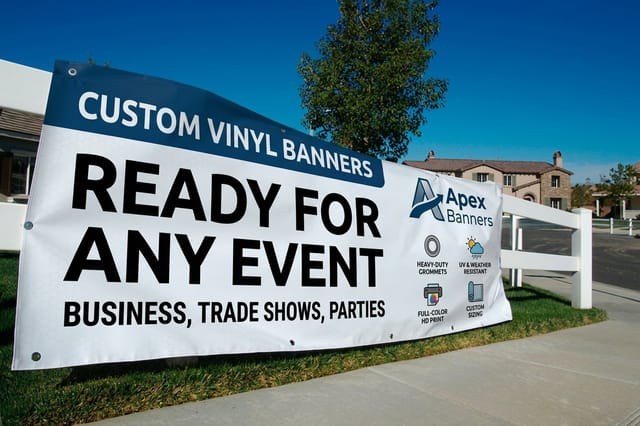
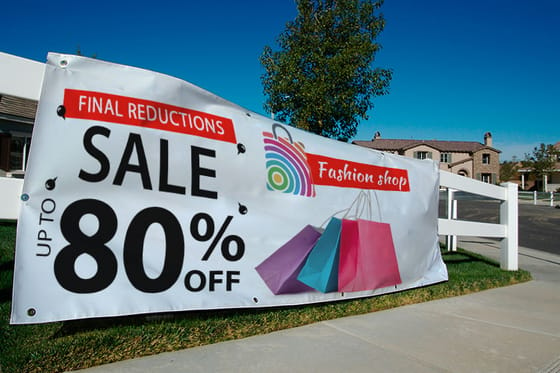
| Vinyl banners | 50 to 100 ft | Announces a location, an opening, a sale. The one piece people see before they decide to stop. | $79 |
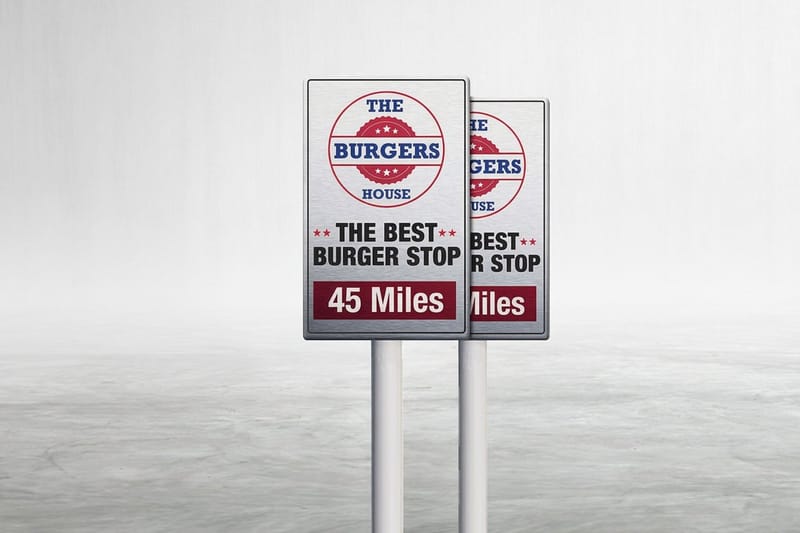
| Yard signs | 20 to 40 ft | Puts your name where the work is happening, on lawns, verges and job sites. | $25 |
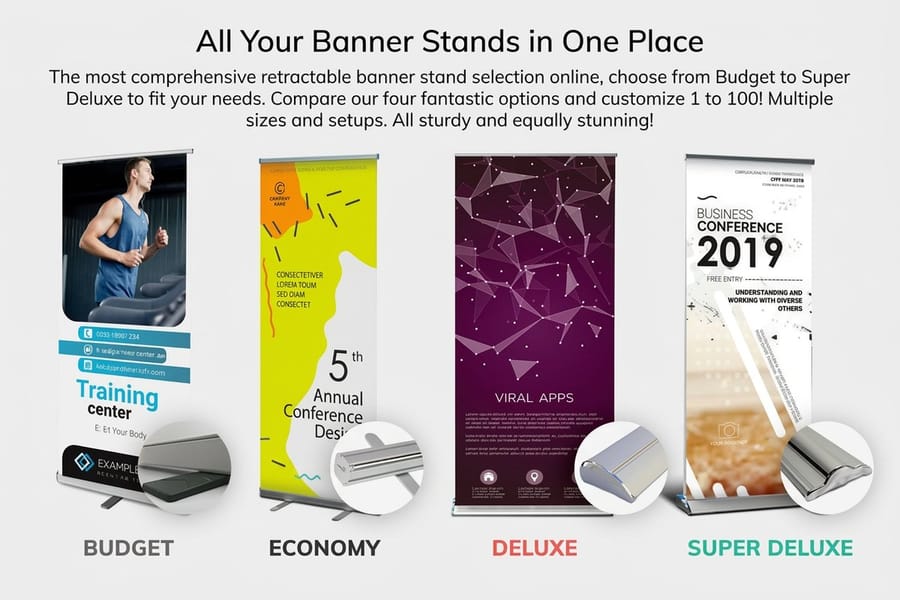
| Retractable stands | 8 to 15 ft indoors | Your booth wall at a trade show or a lobby. Rolls into its own base and travels in a bag. | $139 |
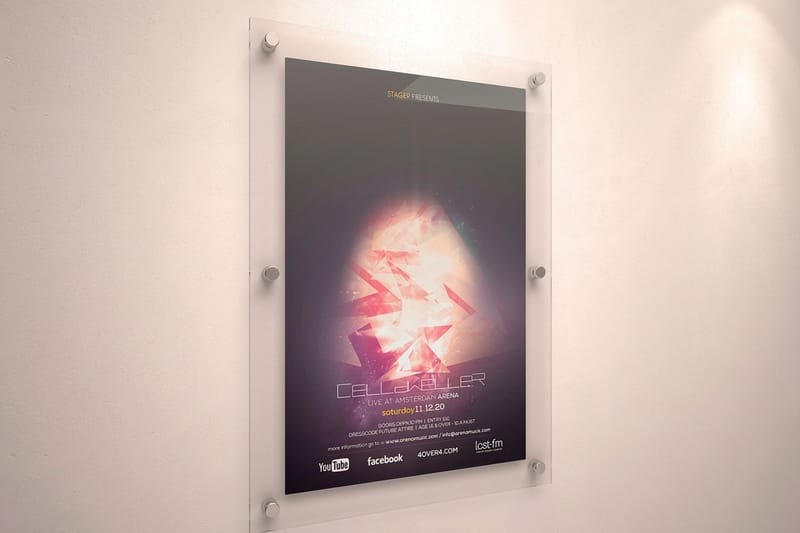
| Posters | 10 to 20 ft | Window and wall placement where you rent the space or already own it. | $108.75 |
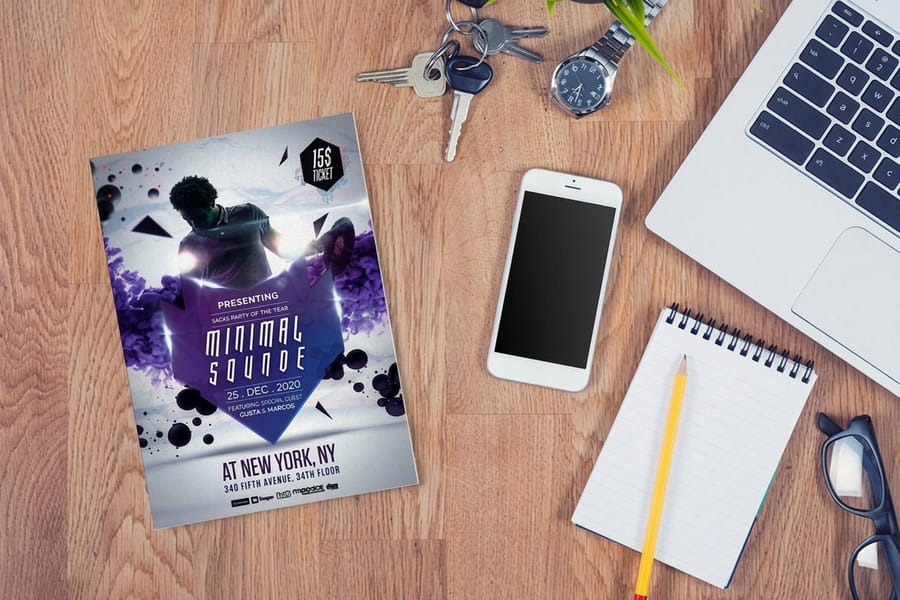
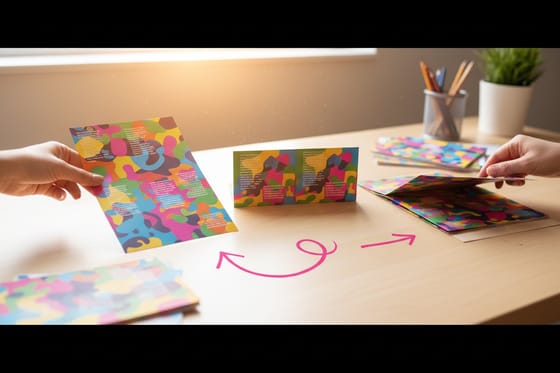
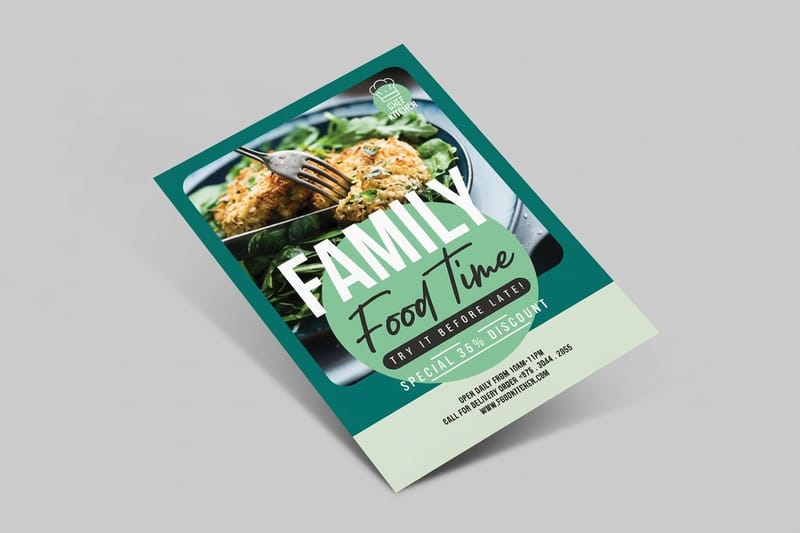
| Flyers | In hand | The everyday handout. Cheap enough per piece to give away and big enough to carry a real offer. | $39.54 |
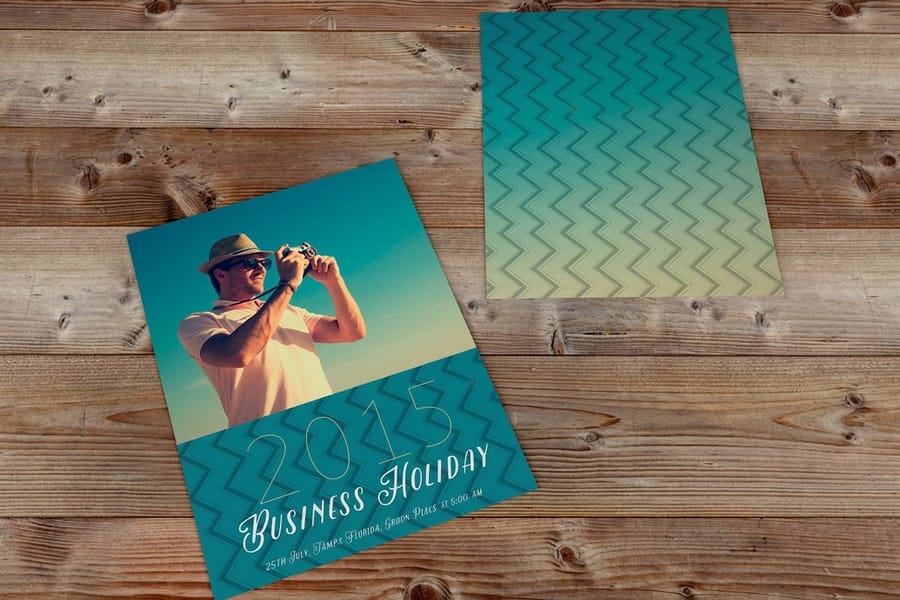
| Postcards | In hand, from a mailbox | The only piece on this list that arrives at an address you chose, with no envelope to open. | $16.48 |
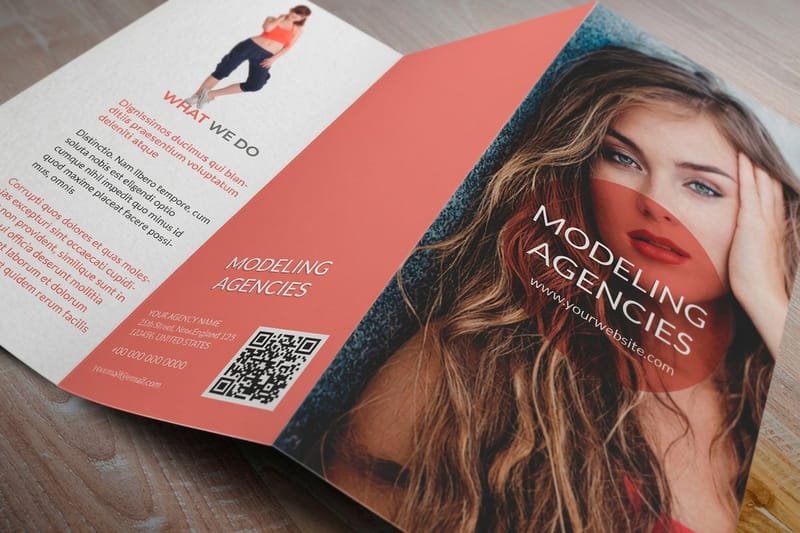
| Brochures | Seated, unhurried | Explains something a flyer cannot fit, for a reader who has already said yes to listening. | $57.11 |
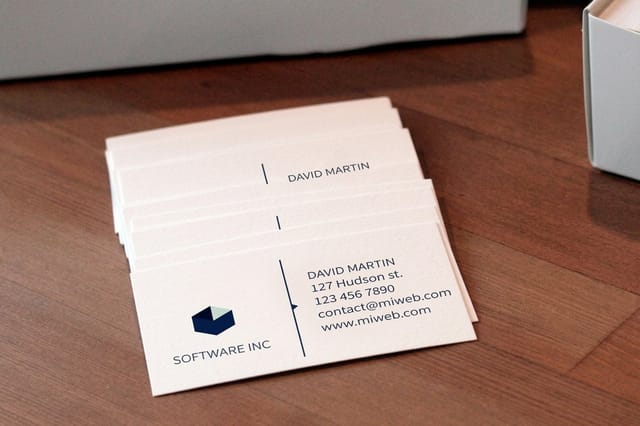
| Business cards | In hand, then kept | The cheapest thing you print that a person deliberately puts in a wallet. | $17.57 |
Two entries deserve a note. Door hangers start at $290.41, several times the entry price of anything else here, because the minimum run is built for a route rather than a handful. They are excellent when you have a neighborhood to walk and poor value when you do not, which our comparison of door hangers against flyers goes through in detail. And brochures only pay off when there is genuinely more to say; if there is not, the format comparison between booklets, brochures and flyers will talk you back down to a single sheet.
How the Pieces Work Together as One Campaign
Advertising materials fail more often from gaps between pieces than from bad printing. The classic gap is a beautiful banner with a phone number on it and nothing for the person to take away while they are standing there.
The set works as a relay. The far piece buys attention: a banner across a fence, a sign at the curb, a stand at the end of an aisle. It has one job, which is to make somebody turn their head and take three steps. The near piece transfers the detail: a flyer, a postcard or a card that carries the offer, the address, the hours, the code. The kept piece survives the day, which is almost always the business card or a postcard with something worth saving printed on it.
Write the same offer across all three. Not the same layout, the same offer, in the same words. When a person reads a discount on a banner and then reads a slightly different discount on the flyer you handed them, you have not reinforced the message, you have created a question. Our guide on how traditional and digital marketing differ covers the same discipline across channels.
One more link in the relay is worth building deliberately. Give every printed piece a destination that can be measured, either a short URL or a QR code that lands on a page built for that campaign. Print then shows up in your analytics next to everything else, instead of being the one line in the budget nobody can defend.
Building a Campaign With Real Numbers
Three common sets price out as follows. These are entry configurations, so the smallest quantity and the standard stock; larger runs raise the total and drop the price per piece, and the configurator on each product shows both.
The storefront opening. A vinyl banner at $79, yard signs at $25 to point people down the block, flyers at $39.54 for the sidewalk, and business cards at $17.57. That is about $161 for a set that covers the parking lot, the sidewalk and the hand. Nothing here needs a designer to redraw for each format if you build one brand kit first.
The trade show table. A retractable stand at $139 to give the booth a back wall, brochures at $57.11 for the people who sit down, and business cards at $17.57 for everyone else. Roughly $214. Skip the banner unless the venue lets you hang one, and check the height limit before you order anything tall.
The service route. Yard signs at $25 that stay in the ground after every job, postcards at $16.48 to mail the surrounding blocks, and flyers at $39.54 for anything hand-delivered. Around $81, and it is the set with the best repeat value, because a sign left behind on a finished job keeps working for weeks without another dollar spent.
Order the whole set on one job when you can. It ships together, the color matches across pieces because the same press run conditions apply, and you are not paying separate freight three times. If you want to see everything in one place first, the marketing materials collection lists the full range, and the large format catalog covers the pieces that work at a distance.
Substrates, Setup, and Where Each Material Gives Out
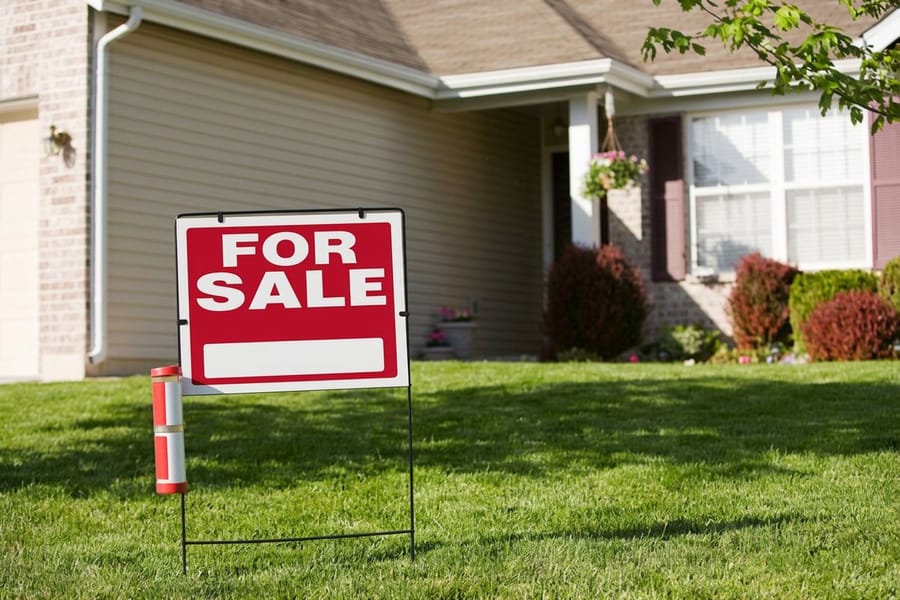
The mistakes that cost the most are not design mistakes. They are choosing a material for a place it cannot survive, or sending artwork that was never built for the format.
Outdoors, the wind decides. A 13oz scrim vinyl banner is the standard for a reason, but a solid banner strapped flat across a chain-link fence becomes a sail; mesh vinyl vents air through the print and holds up where a solid panel would tear at the grommets. Hems and grommets are what actually keep a banner on a wall, so order both rather than punching holes yourself through a raw edge. Yard signs print on 4mm coroplast with an H stake, which handles rain and sun happily and gives up in two situations: frozen ground that will not take a stake, and gravel or hardpack where the wire legs bend before they sink. Both are solved with a stake driven by a mallet into a pilot hole, or a frame.
On paper, the failure is nearly always type size or bleed. Set the letter height from the reading distance, using one inch of capital height for every ten feet, before you write a word. Then keep live text at least an eighth of an inch inside the trim line and extend the background art past it, because a stack of flyers is cut as a stack and the sheets at the bottom move. Our flyer size and dimensions guide gives the exact numbers per format, and the blank template library has a correctly sized file for every product above.
Two more limits worth knowing before you order. Color shifts between a coated flyer stock and an uncoated one, so a brand red that looks right on gloss will read slightly duller on uncoated; ask for samples if the match matters. And anything printed heavily near a fold will crack on thick stock unless it is scored first. If you are new to sending files to a commercial printer at all, how online printing works walks through the handoff from file to shipped box.
Wally explains the advertising set
One piece for the distance, one for the hand, one they keep
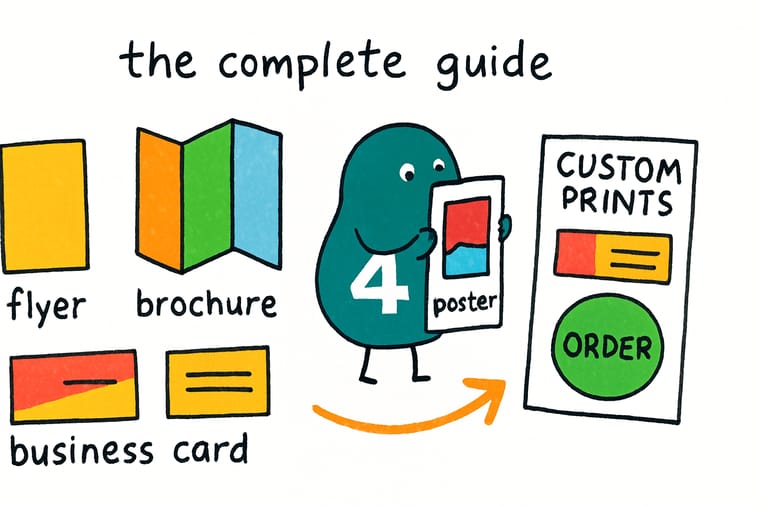
Wally hangs the banner so people across the lot turn their heads, stakes the sign so the ones walking past know which door, and keeps flyers in his hand for the three seconds when somebody stops. Same offer on all three, in the same words. He sizes the banner letters from the distance first, an inch of capital height for every ten feet, then cuts the copy until it fits. The card goes in the pocket and does the rest.
Shop marketing materials →Specs and pricing
Sizes, stocks and starting prices for the core three
The banner, the flyer and the postcard cover the distance, the hand and the mailbox. Configure each one below with live options and starting prices from the 4OVER4.COM configurator.


Print it
Order the set that covers the lot, the sidewalk and the hand
Explore more
Where to go next
By the numbers
The shop printing every piece on this list
Common Questions
Your advertising materials questions, answered
What advertising materials should a new business print first?
Start with three. One piece that works at a distance where your customers already are, which is usually a vinyl banner for a storefront or an event and a yard sign for a service business. One piece you hand over, normally a flyer or a postcard, because it carries the offer and the address. And business cards, because they are the cheapest thing you will ever print that a person deliberately keeps. At starting prices that set is roughly $79 for a banner, $39.54 for flyers and $17.57 for standard business cards. Add a brochure or a retractable stand once you have a sales conversation long enough to need them.
What is the difference between advertising materials and marketing materials?
In practice the words get used interchangeably, and no printer will correct you. If you want the distinction: advertising materials carry a specific offer to people who have not asked for it, so banners, flyers, postcards, door hangers and signs. Marketing materials is the wider bucket that also includes the pieces you give someone who is already talking to you, such as brochures, folders, catalogs and stationery. The whole range sits under our marketing materials collection either way.
How many flyers should I print?
Print for the distribution you can actually complete, not for the price break. One person handing flyers outside a store gets through a few hundred in an afternoon; a two-week door route through a neighborhood absorbs thousands. Flyer pricing drops steeply per piece as quantity rises, so the configurator is worth running twice, once at the number you can realistically distribute this month and once at double it. If the second run has to sit in a box for six months with an expired offer printed on it, the cheaper unit price cost you money.
What size lettering does a banner or sign need?
Work from the distance. The trade rule is one inch of capital letter height for every ten feet of reading distance, so a sign read from thirty feet needs three-inch caps and a banner read across a hundred-foot lot needs ten-inch caps. Apply that rule before you write the copy and most of your first draft disappears, which is the point. A banner that carries six words in big type beats one that carries a paragraph nobody can resolve.
Do printed advertising materials still work alongside digital ads?
They do different jobs, and the pairing is where print earns its keep. A digital ad reaches someone scrolling; a yard sign reaches someone driving past a house they are already interested in, and a postcard lands in a hand with no ad blocker between it and the reader. The practical move is to give every printed piece a trackable destination, either a short URL or a QR code pointing at a landing page, so the print spend shows up in your analytics instead of being invisible.
Can I use the same artwork across every piece?
The logo, colors and typeface should stay identical. The layout cannot. A postcard layout scaled up to a banner leaves type that is technically legible and practically unreadable at the distance the banner works from, and a banner layout scaled down to a flyer wastes most of the sheet. Build one brand kit, then rebuild the layout per format from the correctly sized blank template. Keep the same offer wording across the set so a person who sees the banner recognizes the flyer.
Get Started
Flyers at $39.54, postcards at $16.48, posters at $108.75
Pick the banner, the handout and the card, send one set of files, and we print them together so the color matches across every piece.
Legal Disclaimer
Gold Standard guarantees apply to all standard orders placed through 4over4.com. Price match requires verifiable proof of a competitor's published price for an equivalent product with matching specifications and turnaround time. Satisfaction guarantee covers manufacturing defects and print quality issues. Contact support with order number and documentation. On-time delivery rate based on tracked orders 1999 to 2026. Individual results may vary based on shipping carrier performance.
