
Pamphlet vs Brochure and How to Pick the Right Fold


Same sheet, same press, two words for it. Here is what separates them in practice, what each fold does to your reading order, and the panel widths that fold without bowing open.
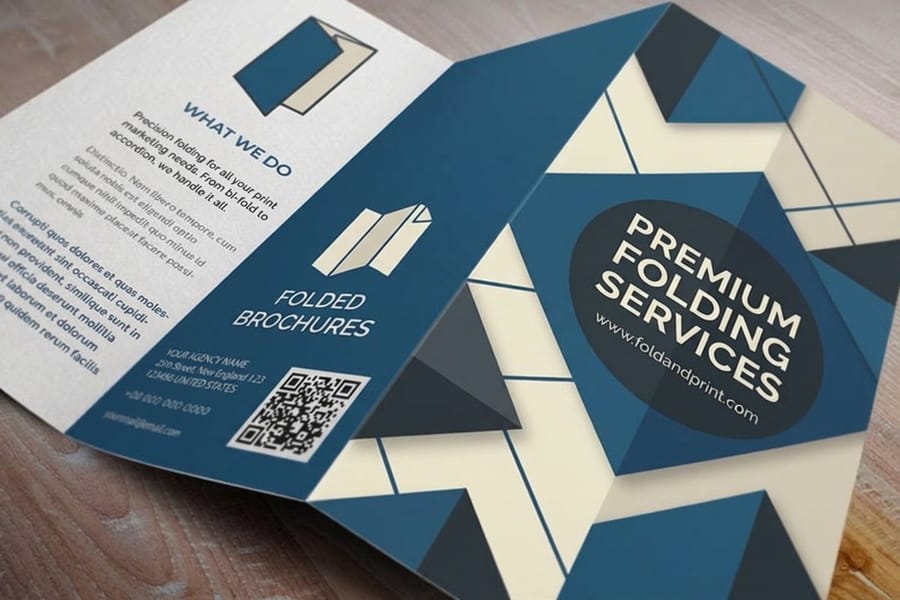
A pamphlet and a brochure are the same printed object: one unbound sheet, usually folded. Pamphlet describes an informational piece, brochure describes the same piece doing a sales job on coated stock, and neither is a separate product on a press. What you actually choose is the sheet size, the stock and the fold, because the fold decides the panel count and the order the reader meets your copy.
Quick answer
Two words, one folded sheet, and a fold that does the real work
Nothing in the plant distinguishes a pamphlet from a brochure. Both are a single unbound sheet, folded or flat, and the words differ only in tone: pamphlet reads informational, brochure reads promotional. The decision that matters is the fold, because it fixes the panel count, the closed size, and whether the piece opens in one motion or unfolds panel by panel. Get the panel widths right and the piece sits closed in a rack. Get them equal and it springs open in the box.
Pamphlet, Brochure, Flyer, Booklet: What Each Word Buys You
The four words get used interchangeably in briefs and then cause trouble at the quote stage, because two of them describe a purpose and two describe a manufacturing method. Sort them by how the piece is made and the confusion clears in one pass.
| Term | What it describes | How it is made | Where it lands |
|---|---|---|---|
| Pamphlet | Purpose. A short informational piece, unbound. | One sheet, flat or folded. No stitching. | Public information, membership notes, clinic handouts, anything explanatory. |
| Brochure | Purpose. The same object doing a sales job. | One sheet, almost always folded, usually coated stock. | Product ranges, service menus, property sheets, rack displays. |
| Flyer | Format. A single flat leaf, one message. | Printed both sides, no fold. | Events, offers, handouts, anything read in five seconds. |
| Booklet | Format. Multiple sheets bound together. | Pages in multiples of four, saddle stitched or perfect bound. | Catalogs, programs, manuals, anything past eight panels. |
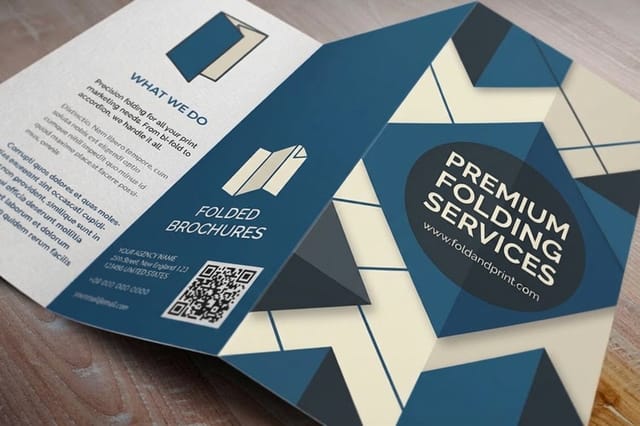
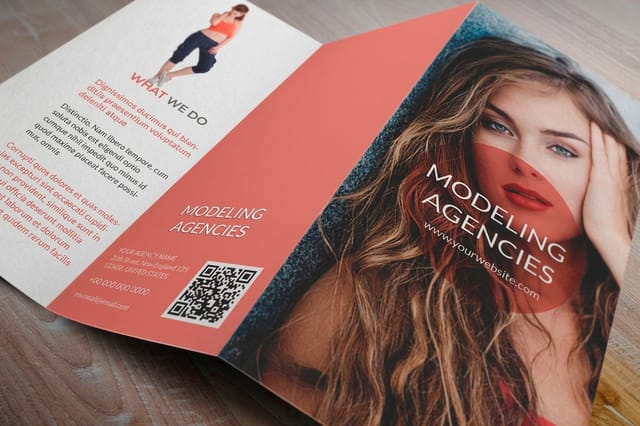
So a pamphlet and a brochure are the same physical thing, and the difference sits in what the copy is trying to do. That is why our order form has no pamphlet button. You buy folded brochures when you want coated stock and a clean rack presence, or folded flyers when the run is large and the piece is disposable. The word you print on the meeting agenda is up to you.
One practical consequence: if a designer hands you a pamphlet spec and a printer quotes a brochure, nothing has gone wrong. Check the sheet size, the fold and the stock. Those three lines are the actual order. If the content has outgrown a single sheet, step across to booklets instead of adding folds, and read the format comparison before you commit.
Six Folds, and What Each One Does to Your Message
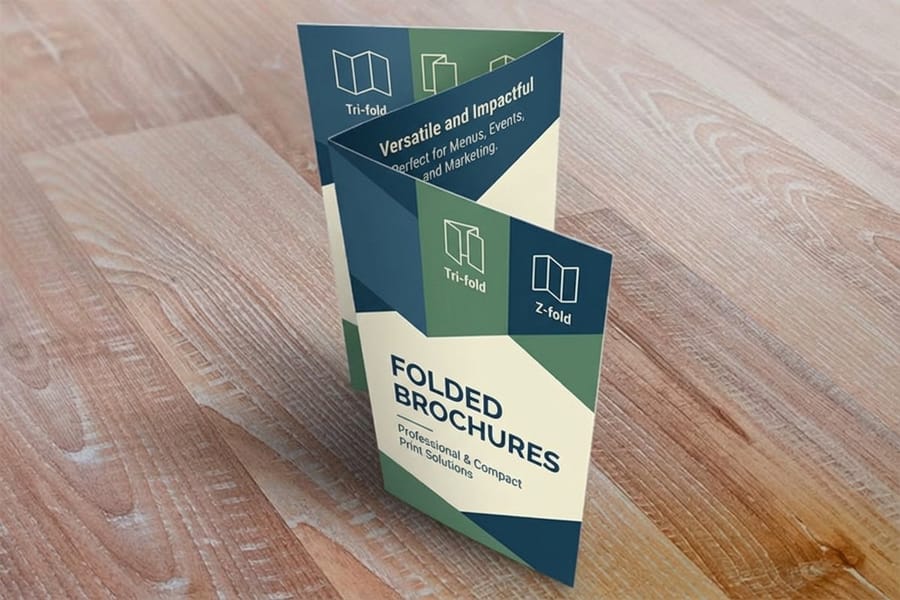
The fold is a reading order, not a finishing detail. It decides how many panels the reader meets, in what sequence, and how much of the message is visible before anything is opened. Pick it before the layout, because changing it later means rewriting to a different panel count.
| Fold | Folds | Panel faces | Closed from 8.5 x 11 in | The message it suits |
|---|---|---|---|---|
| Half fold | 1 | 4 | 5.5 x 8.5 in | One idea with room to breathe. A menu, a programme, a single property. |
| Letter fold | 2 | 6 | 3.67 x 8.5 in | Three related points in sequence. Fits a number 10 envelope and a rack. |
| Z fold | 2 | 6 | 3.67 x 8.5 in | A story that builds. Opens accordion style so panels reveal one at a time. |
| Gate fold | 2 | 6 | 5.5 x 8.5 in | A reveal. Two flaps open outward onto one wide inside image. |
| Double parallel | 3 | 8 | 2.75 x 8.5 in | Dense reference content that still has to fit a pocket. |
| Roll fold | 3 | 8 | About 2.8 x 8.5 in | Step by step instructions. Each panel rolls inside the one before it. |
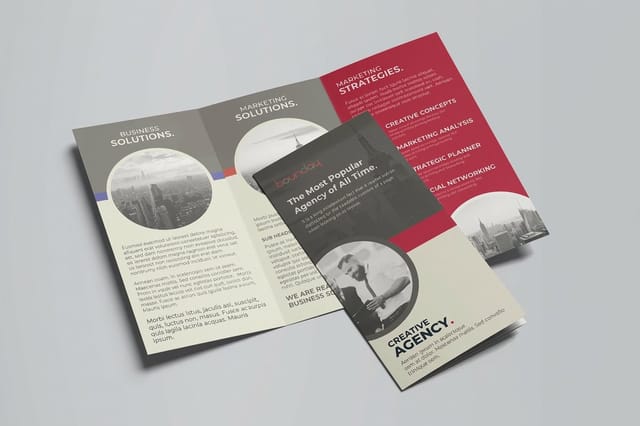
Two of these behave differently from how they look on a screen. A Z fold and a letter fold both use two folds and both give six panels, but the Z fold has no tucked panel, so all three panels can be the same width and the piece opens flat in one motion. That makes it the better choice for a timeline or a process, and the worse choice for a rack, because the closed piece springs open.
The gate fold is the one people over-order. It looks dramatic in a mock-up and it costs more to fold, and the two outer flaps have to be trimmed narrower so they meet without overlapping. Use it when the inside spread genuinely carries one big image. For everything else, the letter fold earns its position as the default. The full fold guide has the panel arithmetic for each one, and the trifold size guide covers legal and 11 by 17 sheets.
Panel Widths, Bleed, and the Quarter Inch That Saves the Layout
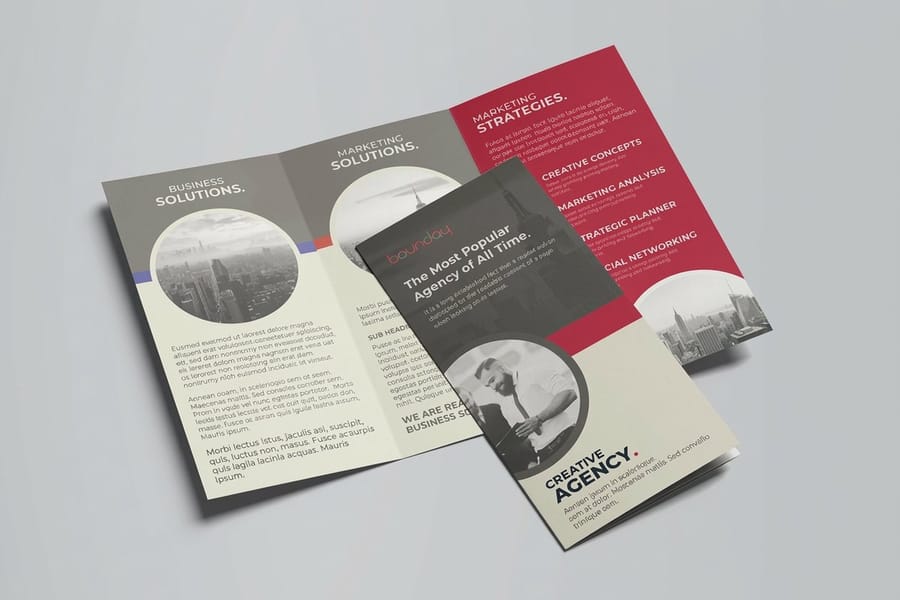
Most folded jobs that come back looking wrong were laid out as three equal panels. Folding is mechanical and the sheet has thickness, so the panel that goes inside has to be shorter than the ones wrapping it.
Set unequal panels on any fold that tucks. On an 11 inch wide letter fold, use 3.6875 inches for the two outer panels and 3.625 inches for the panel that folds in first. That 1/16 inch is clearance, not a rounding error. Skip it and the closed piece bows open along the edge, and every one in the box does the same thing. A Z fold needs no such allowance because nothing tucks: three panels of 3.667 inches is correct there.
Build the file as one flat spread, not as separate panels. Supply two artboards, outside and inside, each at the full 11 by 8.5 inch trim with 0.125 inch bleed on all four sides. Add fold guides on a non-printing layer. Panel by panel files force the prepress team to reassemble your layout, and reassembly is where panels get swapped.
Keep type a quarter inch clear of every fold. Folding tolerance is real: a sheet can shift a fraction and still be within spec. A headline centred on a crease will read as misaligned even on a perfectly folded piece. Images and background colour can cross a fold happily, so long as no fine detail sits in the crease. The same 0.125 inch bleed and 0.25 inch safety logic explained in the bleed and trim guide applies here, with the folds counting as extra edges.
Mind the grain and score the heavy stock. Paper folds cleanly along the grain and fights you across it, which is why a fold running the wrong way looks ragged on the same sheet that folded beautifully the other direction. Cover weights and any fold crossing solid ink need a score first, otherwise the coating cracks white along the crease. Start from a correctly sized layout in the blank template library, and the folding walkthrough shows the panel order for each style.
Stock, Quantity, and Knowing When to Stop Folding
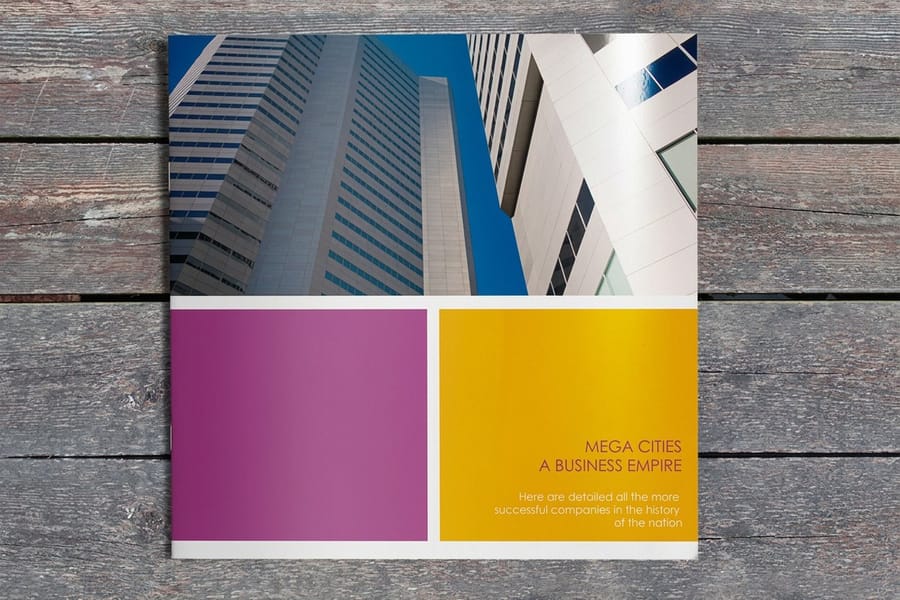
A folded piece has a job to survive: it gets picked up, opened, refolded and shoved in a bag. Stock choice is what decides whether it still looks intentional at that point.
100 lb gloss text is the working default. It takes ink density well, folds without scoring, and holds its shape standing in a rack at 3.67 inches wide. Drop to 80 lb text and you save on a large mail drop, but the piece curls in a display. Move up to 100 lb cover and the brochure gains real weight in the hand, at the cost of a scoring pass and a slightly stiffer fold. The brochure paper guide compares how each one takes a fold.
On price, the honest ranking is simple. Standard flyers start at $39.54 and stay flat, which is the cheapest way to put a message in a hand. Folded brochures start at $57.11 and buy you six panels of structure. Folded flyers start at $68.54 when you want a folded piece on lighter text stock for a bigger run. Standard booklets start at $240.55, which is the number that should stop you from adding a fourth fold just to fit more copy.
That last point is the trade-off worth naming. Every extra fold makes the closed piece narrower and the copy column tighter, and a 2.75 inch panel holds roughly a short paragraph before it looks cramped. Past eight panel faces the answer is a bound piece, not a cleverer fold, and the binding methods guide covers what changes when you cross that line. One more thing if the piece is going in the mail unenveloped: a folded self-mailer needs tabs or a wafer seal to satisfy USPS, so plan the closed edge before you design the cover. Browse the full range in brochure printing or compare the flat options under flyer printing.
Wally explains the fold
Call it a pamphlet or a brochure, the panels still have to fit
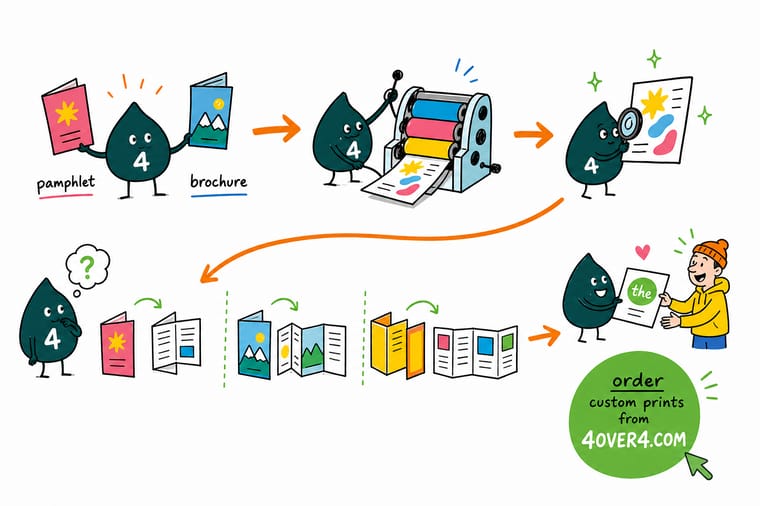
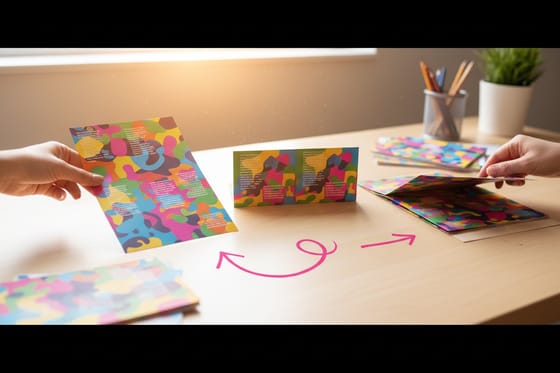
Wally takes one 11 inch sheet and makes two folds. Two panels get 3.6875 inches and the panel that goes inside gets 3.625, because it has to clear the fold rather than push against it. He keeps every headline a quarter inch back from the creases, scores the sheet if it is cover weight, and lets the background colour run right across the folds. Same sheet, same press, whichever word you print on the agenda.
Order folded brochures →Specs and pricing
Folded formats, sizes, and starting prices
Compare the folded options side by side, with live configuration choices and starting prices straight from the 4OVER4.COM configurator.

Print it
Print the pamphlet, order it as a brochure
Explore more
Where to go next
By the numbers
Folded printing you can count on at 4OVER4
Common Questions
Your pamphlet and brochure questions, answered
Is a pamphlet the same thing as a brochure?
In print production, yes. Both are an unbound sheet, usually folded, sometimes flat. The words differ in tone rather than in manufacture: pamphlet is the older, plainer term and carries an informational feel, while brochure implies a sales piece on coated stock. No printer runs a separate pamphlet press. You order folded brochures or folded flyers, choose a size, a stock and a fold, and what comes back is whichever word you prefer to call it.
How many panels do I get from each fold?
Count the faces, not the pages. A single half fold gives four panel faces, two panels on the outside and two inside. A letter fold or a Z fold uses two folds and gives six. A double parallel fold or a roll fold uses three folds and gives eight. An 8.5 by 11 inch sheet with a letter fold ends up about 3.67 by 8.5 inches closed, which fits a standard number 10 envelope and a countertop rack.
Why is one panel of a tri fold narrower than the others?
Because it has to fit inside the other two. If all three panels are exactly 3.667 inches, the tucked panel arrives flush with the fold and pushes the closed piece open along the edge. Shortening it by about 1/16 inch gives it clearance. On an 11 inch wide sheet the working numbers are 3.6875 inches for the two outer panels and 3.625 inches for the flap that folds in first.
What paper weight should a pamphlet be?
100 lb gloss text is the everyday choice for a folded piece: it holds ink well, folds without scoring, and still feels substantial at three panels wide. 80 lb text saves money on large mail runs but goes limp in a rack. Cover stock at 100 lb and up gives a brochure real presence in the hand, and it must be scored before folding. Our guide to brochure paper types walks through how each stock behaves after the fold.
Do I need a score line before folding?
On text weight up to about 100 lb, no. On cover stock, on any digital print with heavy toner across the fold, and on coated sheets folded against the grain, yes. A score crushes a channel of fibers so the sheet bends in a controlled line rather than tearing the coating. Skipping it produces a white cracked line straight through a dark background, which no amount of ink density hides.
When should I print a booklet instead of a folded pamphlet?
When the content passes eight panel faces, or when the reader needs to find something rather than read straight through. Folding a sheet four times gives you ten panels and a piece that will not lie flat or feed through a folder cleanly. Saddle stitched booklets take pages in multiples of four and start at $240.55, against $57.11 for folded brochures, so the jump is real. Make it when the page count forces it, not before.
Get Started
Ready to print the folded piece?
Pick the sheet size, choose the fold, and we set the panel widths so it closes flat and stands up in a rack.
Legal Disclaimer
Gold Standard guarantees apply to all standard orders placed through 4over4.com. Price match requires verifiable proof of a competitor's published price for an equivalent product with matching specifications and turnaround time. Satisfaction guarantee covers manufacturing defects and print quality issues. Contact support with order number and documentation. On-time delivery rate based on tracked orders 1999 to 2026. Individual results may vary based on shipping carrier performance.
