
Minimalist Packaging Benefits for Your Brand and the Planet


What a minimalist box gains your brand, what it saves in material and freight, the recycling rule that decides whether it is genuinely greener, and the shelf where it loses.
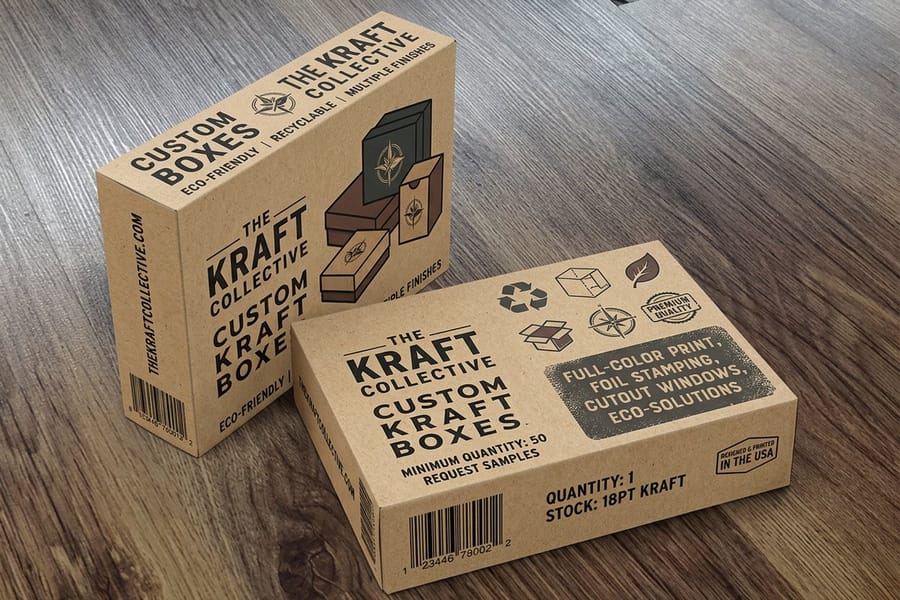
Minimalist packaging strips a box back to the components that do a job, usually a carton and a label, and deletes the sleeve, the window patch, the printed filler and the laminate. The brand gain is a mark that stays legible in a phone photo and a range that looks like a family without a design per SKU. The saving comes from removing whole components and right sizing the box, not from using fewer inks. The environmental gain only holds if everything on the carton is paper or ink, because lamination, foil and a plastic window have to be separated before it recycles. The limit is retail: a quiet box loses a shelf fight it was never built for.
Quick answer
Fewer components, one material, and a right sized box
Minimalist packaging is a parts list, not a look. A loaded box carries five printed items and a minimal one carries two, so the saving comes from deleting components rather than from dropping ink colours. The brand payoff is legibility at thumbnail size and one carton that serves a whole range. The environmental payoff only survives if nothing on the box is laminated, foiled or plastic, since those have to be pulled off before the board recycles. And the honest limit is the retail shelf, where a quiet carton is competing against colour from six feet away.
What Minimalist Packaging Actually Removes
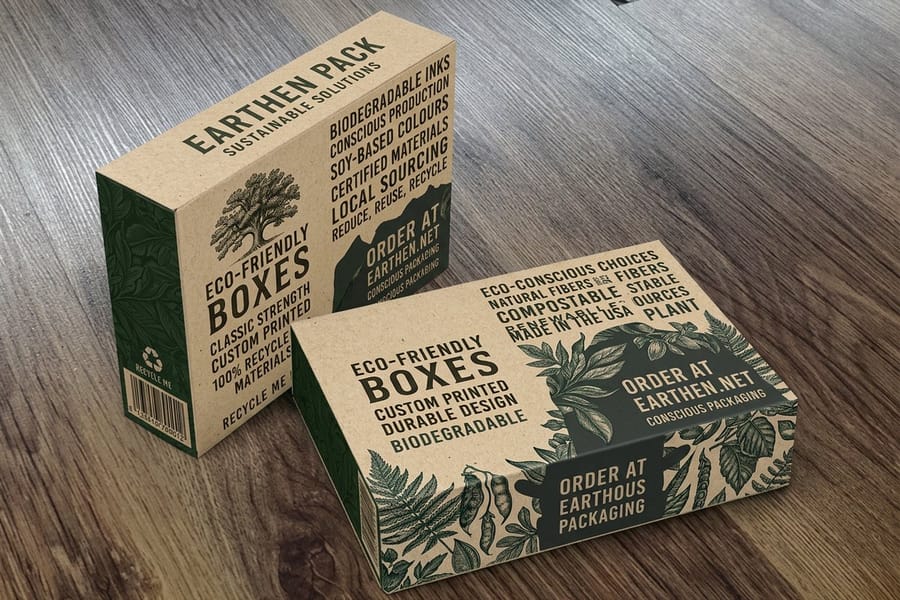
Start with the physical parts list rather than the mood board. A typical over-built box for a small consumer product carries five printed items: an outer sleeve, the carton itself, a plastic window patch, a sheet of printed tissue and a laminated insert card. A minimalist version of the same product carries two: the carton and one label.
That is the whole idea. You are not making the design quieter, you are deleting components. Each one you remove takes with it a die, a minimum order quantity, a stock, a proofing round and an assembly step. The visual restraint is a consequence of the parts list, not the other way round.
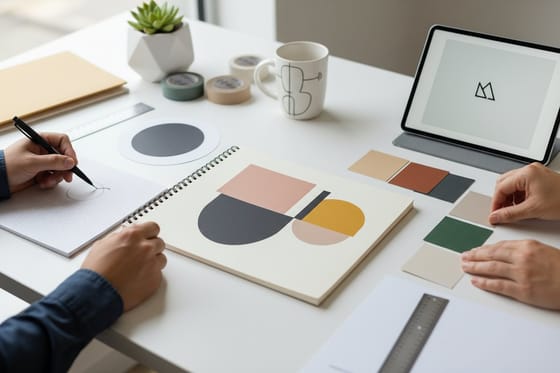
It also changes what has to carry the brand. With a sleeve and a window gone, the work falls to three things: the structure, the paper surface and the position of the mark. A tuck flap that opens cleanly, a kraft board with visible fibre, a mark placed off centre on a mostly empty panel. Those are the levers, and they are the reason a plain box either reads as expensive or reads as unfinished with very little in between.
If the identity itself is still noisy, the box will not fix it. Work through building a minimal brand identity first, then come back to the carton.
What Your Brand Gains, and Where a Plain Box Loses

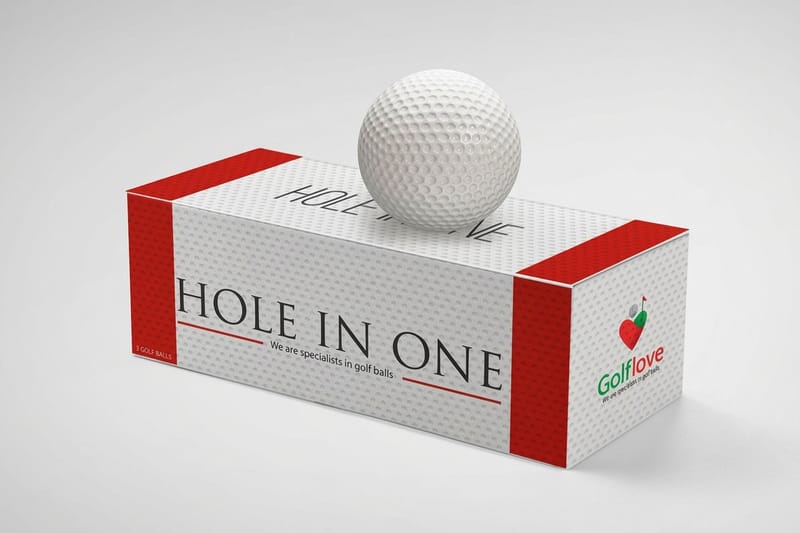
The strongest brand argument for minimalist packaging is legibility at small sizes. A mark on a mostly empty panel survives being photographed on a phone, cropped into a square for a marketplace listing and shrunk into a thumbnail. A panel packed with pattern, badges and three type sizes turns to mush at the same scale, and most people now meet your packaging as a picture before they meet it as an object.
The second gain is consistency across a range. When the carton is plain and the variable content lives on a label, ten SKUs look like one family without ten separate box designs. That is a design benefit and a purchasing benefit at once.
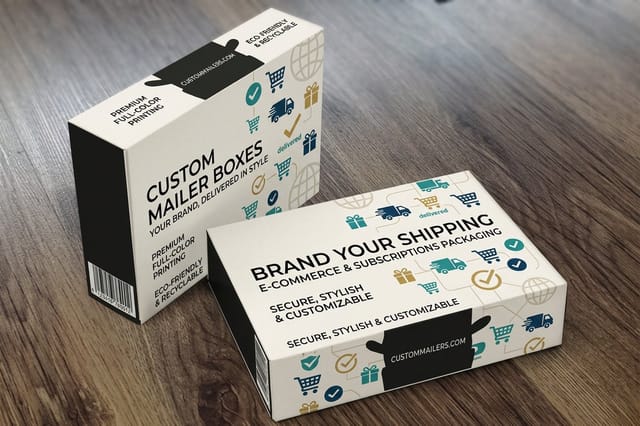
The third is the unboxing. A restrained exterior sets up a small reveal, which is why direct to consumer brands lean on it so hard. Custom mailer boxes are built for exactly this: a self locking structure that survives the courier, and a plain outside that makes the inside feel deliberate.
Now the limit, because it is real. Minimalist packaging assumes the customer already chose you. On a crowded retail shelf you are fighting for attention from six feet away against competitors using colour, and a quiet box loses that fight unless the whole category is quiet. Look at where your product is actually picked up. If it is a supermarket aisle, restraint is a handicap. If it is a parcel on a doorstep, a subscription, a gift or a premium counter, restraint is an advantage. Brands selling in both channels usually run a plain shipper online and a louder carton for retail, and that is a sound answer rather than a compromise.
Where the Money Comes Back
The saving people expect is ink. The saving that actually shows up is components and volume.
| What you cut | What it removes from the job | Size of the saving |
|---|---|---|
| Outer sleeve | A second printed item with its own stock, die and minimum quantity. | Large. It is a whole separate print run. |
| Window patch | A die cut plus a patching pass, plus a plastic film that has to be bought. | Large, and it fixes recyclability at the same time. |
| Lamination | A finishing pass over the whole sheet. | Moderate, and it lightens the carton slightly. |
| Printed filler and inserts | Extra items to print, store and hand assemble. | Moderate, mostly in labour. |
| Ink count, four colours to one | Plate or profile setup only. | Small on modern presses. Do not plan around it. |
| Box volume, right sizing | Board area per unit and the parcel dimensions carriers bill on. | Large, and it compounds on every order you ship. |
Read the last row twice. Carriers bill on dimensional weight as well as actual weight, so a box that is two inches too tall in every direction costs you on every parcel for the life of the product. Deleting the filler that made the box that size is a shipping decision dressed as a design decision.
There is one place minimal design costs more, and it is worth saying plainly. Bare stock has nowhere to hide. An uncoated kraft or a heavier board that looks good with no coating is not the cheapest sheet available, and the die line has to be accurate because a sloppy fold is visible when there is no artwork over it. Budget for a physical proof. Packaging design costs covers the rest of the spend.
The Environmental Case, and the Part That Breaks It
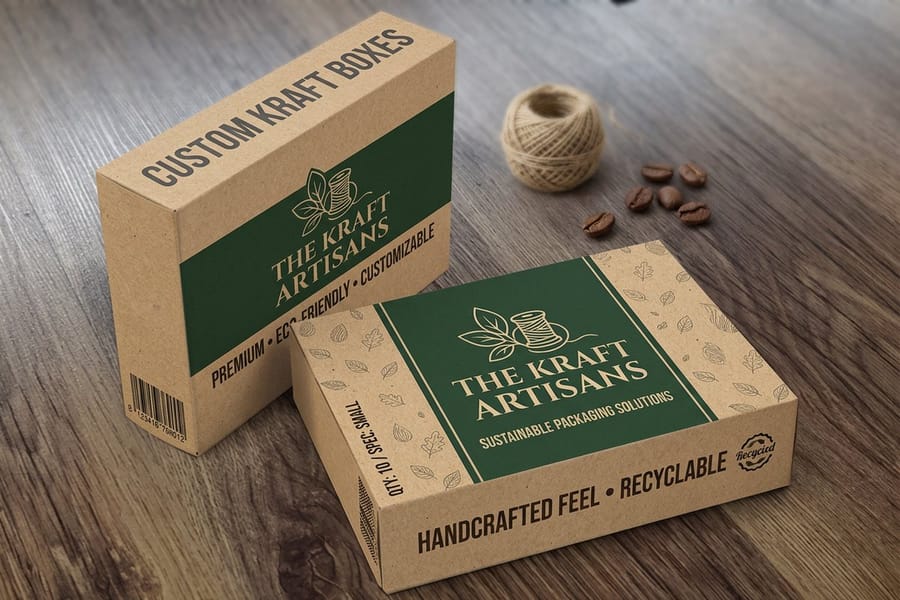
The environmental argument is straightforward: less material and one material. Less material is obvious, and a right sized box with no sleeve and no filler is the biggest part of it. One material is the part most brands get wrong.
A carton is only genuinely easy to recycle when everything on it is paper or ink. Gloss and matte lamination, foil stamping, a plastic window and wide plastic tape all have to be separated by hand before the board enters the paper stream. In practice nobody separates them, so a beautifully printed laminated box with a foil logo ends up in general waste while a plain kraft carton is flattened and put in the paper bin in about three seconds.
So the checklist is short and concrete:
- Uncoated board wherever the product allows it, since coating exists to protect artwork you are no longer printing.
- No lamination, no foil, no spot gloss on the outer carton. Move any premium finish to a small label if you must have one.
- Paper tape rather than plastic tape, so the closure recycles with the box.
- Print the mark rather than applying a plastic sticker over it.
- Right size the carton so you are not shipping air and then filling it with something else to stop the product rattling.
Eco friendly boxes are built on recycled board for this exact brief, and the wider eco friendly printing collection lists the recycled and uncoated stocks we run across the rest of the catalogue. If you want the material comparison in more depth, packaging box materials puts corrugated, folding carton and rigid side by side.
The Rules That Keep a Plain Box From Looking Cheap
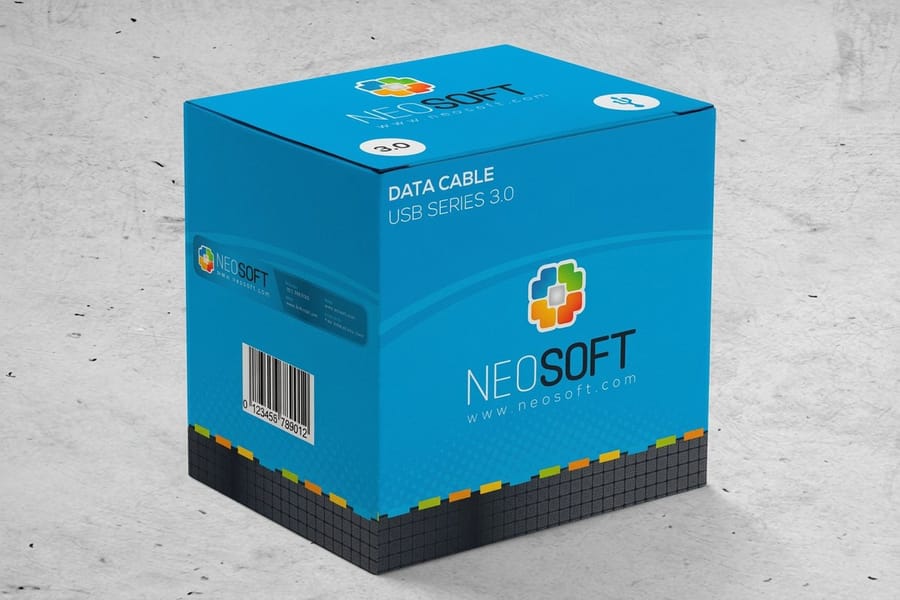
Minimal design fails in a specific way: it stops looking intentional and starts looking like a box the printer forgot to finish. These are the rules that keep it on the right side of that line.
- One hierarchy, three elements. The mark, the product name, one line that says what it is. Everything else moves to the label or comes off entirely.
- Make the empty space a shape. Put the mark off centre on the largest panel and leave the rest genuinely empty. Emptiness that is centred and symmetrical reads as a placeholder. Emptiness with weight on one side reads as a decision.
- Two inks at most, and count the paper as one of them. On kraft, one dark ink plus the board colour is usually the whole palette.
- Let the structure be the feature. A crisp tuck flap, a visible self locking tab, a clean fold on a cube. When there is no artwork to look at, people look at the folds.
- Set type a weight heavier than you would on coated stock. Uncoated and kraft boards absorb ink and spread the dot, so hairline rules thin out and light weights lose their edges. Keep body copy at 8 point and above.
- Avoid reversed type on kraft. A thin white knockout on brown board fills in. Print dark on the board instead.
- Push the variable copy to a label. Ingredients, flavours, sizes, batch codes and barcodes all belong on a label so the carton stays generic.
- Judge it at arm's length and in a phone photo. Those are the two distances that decide whether it works, and neither of them is a full screen mockup.
Build the artwork on the real dieline from the start, not on a rectangle you intend to fit later. Preparing files for packaging products walks through the dieline, the bleed and the fold allowances, and how to make custom boxes covers the structural side.
Materials and Finishes That Suit a Minimal Look
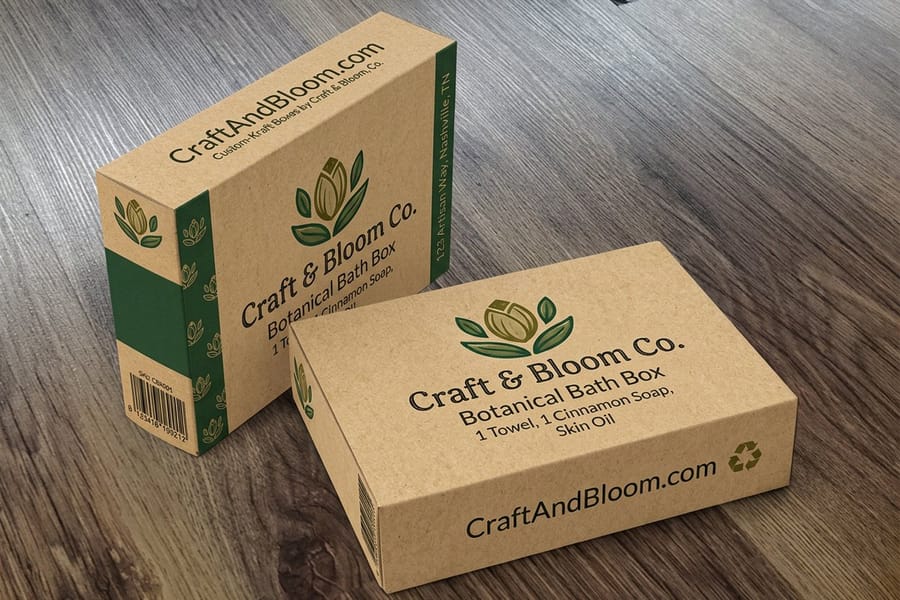
The stock does most of the work once the artwork stops trying to. Four choices cover almost every minimalist brief.
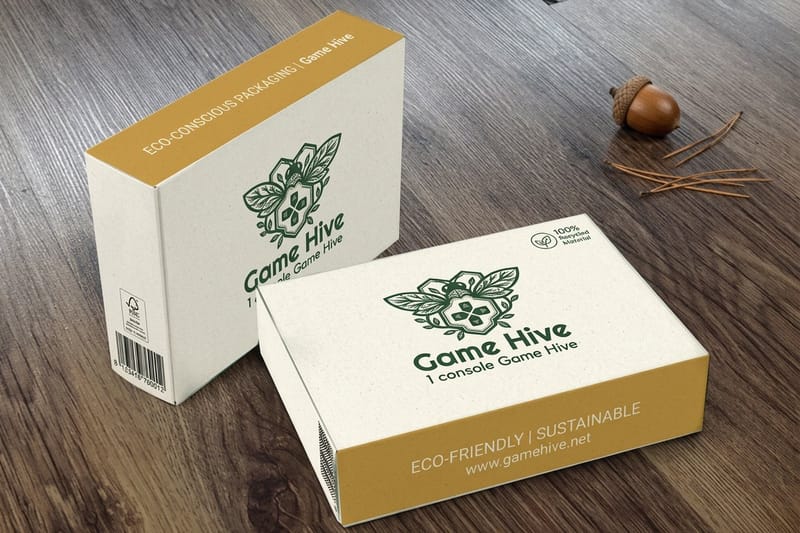
Uncoated kraft. Brown, fibrous, and the default look for the style. Understand what it does to colour before you commit: every ink prints over brown, so it shifts warmer and darker than your screen, bright colours turn muted, and white needs a white underbase or a double hit to stop it going translucent. Design for one dark ink and the board and kraft is the easiest material in the catalogue. Custom kraft boxes start at $711.78.
Recycled and uncoated white. When you need accurate colour but not gloss. It holds a brand colour far better than kraft while keeping the matte, papery hand, and it still recycles as plain board. Eco friendly boxes sit here.
Labels. The pressure valve for the whole system. Colour, detail, barcodes and every SKU difference live here rather than on the carton. Premium packaging labels start at $29.16, and the full range is on the packaging labels page.
Tissue and tags. The two inside touches that stay inside the material rules. Custom tissue paper starts at $126.32 and prints a single mark beautifully across a large area, and kraft hangtags at $57.96 carry the same board and ink language onto the product itself. Both stay paper, so they go in the bin with the box.
What to leave out: gloss lamination, foil, spot gloss and plastic windows. Each one looks good in isolation and each one turns a single material carton into a two material one. If the product genuinely needs to be seen, use a photograph on the label rather than a window.
Ordering the Boxes, Labels and Tissue
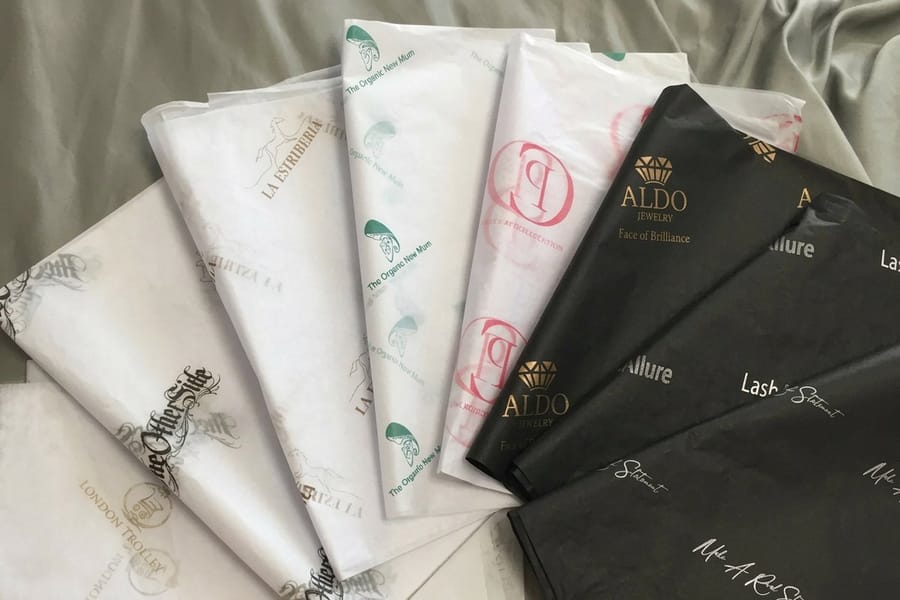
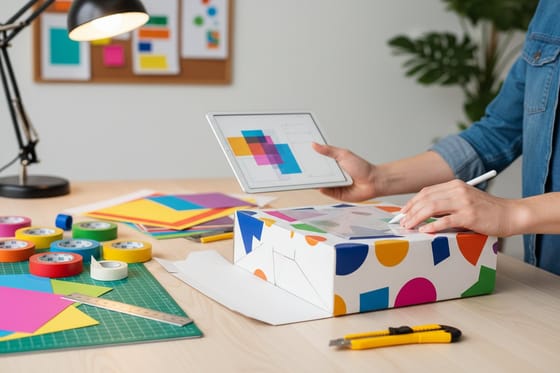
Order in the right sequence and a minimalist system is cheaper to maintain than a decorated one. Get the sequence wrong and you end up reprinting boxes for a change that belonged on a sticker.
Start with the carton size, because it sets your shipping cost for the life of the product. Measure the product with whatever protection it truly needs and no more, then pick the structure: a mailer for parcels, a folding carton for shelf and gifting, a cube or pillow shape when the product is small and the box is part of the gift. Custom boxes run from $711.78, which reflects a real minimum quantity, so size it once and size it properly.
Then decide what goes on the box and what goes on the label. Anything that could change in the next year belongs on the label. That single decision is what lets one carton serve a whole range and survive a reformulation, and at $29.16 a label run is cheap enough to redo whenever you need to.
Order a physical sample before the full run, particularly on kraft. Screen colour and kraft colour are not the same conversation, and a proof settles it in a day. You can also request free paper samples to feel the boards before you choose. When the artwork is ready, the packaging printing collection holds every box, label, tag and tissue option in one place, and custom box printing is where you configure the carton itself.
Wally explains minimalist packaging
Take things out until only the parts with a job are left
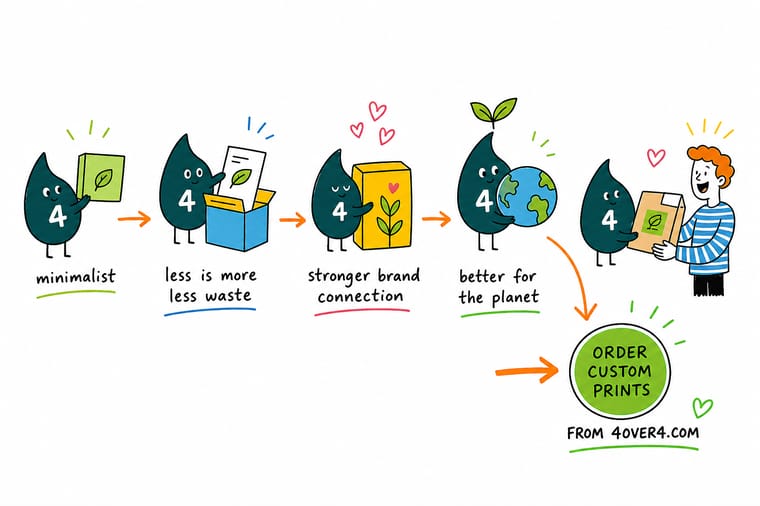
Wally opens a loaded box and starts removing: the outer sleeve, the plastic window, the printed filler, the laminated card. Each one was a separate print run. What he keeps is the kraft carton and one label, because the label can change whenever the product does and the box never has to be reprinted. Then he checks the size. If the product rattles, the box is too big, and a box that is too big costs freight on every single parcel.
Order custom kraft boxes →Specs and pricing
Boxes, stocks, and starting prices
Compare the three carton options a minimalist system usually comes down to, with live configuration choices and starting prices straight from the 4OVER4.COM configurator.
Print it
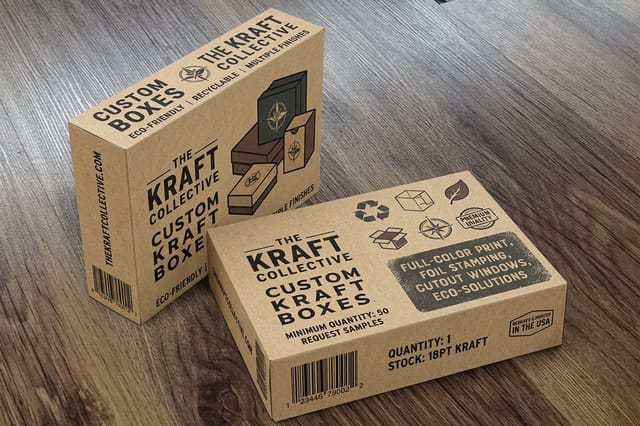
One plain carton, one label, done
Explore more
Where to go next
By the numbers
Packaging you can count on at 4OVER4
Common Questions
Your minimalist packaging questions, answered
What is minimalist packaging?
Minimalist packaging is packaging designed by removing rather than adding. You keep the carton, one or two inks, the brand mark and the legal copy, and you delete the outer sleeve, the window patch, the printed filler, the laminated insert and the decorative pattern. What is left has to work harder, so the structure, the paper texture and the placement of the mark carry the brand instead of a busy print. It is a production decision as much as a visual one, because each component you remove is a separate print run, a separate material and a separate step in assembly.
Does minimalist packaging actually cost less to produce?
Usually yes, but the saving comes from deleting components, not from using fewer inks. A four colour job and a one colour job on the same carton are not far apart on a digital or offset run. An outer sleeve is a whole second printed item with its own die, its own stock and its own minimum quantity, and a window patch adds a die cut plus a patching pass. Remove those and the cost drops in a way that changing ink counts never matches. The one place minimal design costs more is stock: an uncoated kraft or a heavier board that looks good bare is not the cheapest sheet on the list.
Is printed kraft board recyclable?
Uncoated kraft board printed with standard inks goes into the paper stream flat, with no separation needed. What breaks it is anything bonded on top: gloss or matte lamination, foil stamping, a plastic window and heavy adhesive tape all have to be removed first, and in practice the customer throws the whole thing away instead. If recyclability is the point of the exercise, the rule is simple. Nothing on the carton that is not paper or ink.
Can you print white ink on kraft?
You can, but plan for it. Kraft is brown, so every ink prints over brown and shifts warmer and darker than the swatch on your screen. White in particular needs a white underbase or a double hit, otherwise it goes translucent and picks up the board colour. The practical approach on kraft is to design for one dark ink plus the paper, or to order a printed sample before you commit a full run. Our guide to paper stocks including kraft covers how each surface takes ink.
Will a plain box get lost on a retail shelf?
It can, and this is the honest limit of the approach. Minimalist packaging works best where the buying decision has already been made: direct to consumer orders, subscription boxes, gifting and premium goods with a strong name. In a supermarket aisle you are competing for attention at six feet in a wall of colour, and a quiet box loses that fight unless the whole category is quiet. If you sell in both channels, a common answer is a plain shipper for online orders and a louder carton for retail.
What is the cheapest way to brand a plain box?
Labels and tissue. A plain kraft carton plus a printed label carries a full colour mark and every line of variable copy at a fraction of the carton cost, with packaging labels starting at $29.16 and tissue paper at $126.32. That combination also solves the reorder problem: when a SKU changes, you reprint the label rather than the box, and the boxes you already have on the shelf stay usable.
Get Started
Ready to print a box that does not waste a component?
Pick the carton size, choose kraft or recycled white, put the variable copy on a label, and we print packaging that flattens into the paper bin when it is done.
Legal Disclaimer
Gold Standard guarantees apply to all standard orders placed through 4over4.com. Price match requires verifiable proof of a competitor's published price for an equivalent product with matching specifications and turnaround time. Satisfaction guarantee covers manufacturing defects and print quality issues. Contact support with order number and documentation. On-time delivery rate based on tracked orders 1999 to 2026. Individual results may vary based on shipping carrier performance.
