
Custom Shipping Packages That Turn Deliveries Into Repeat Sales


Nadia is our customer education voice, built from the knowledge of our production team, with over 20 years in printing.
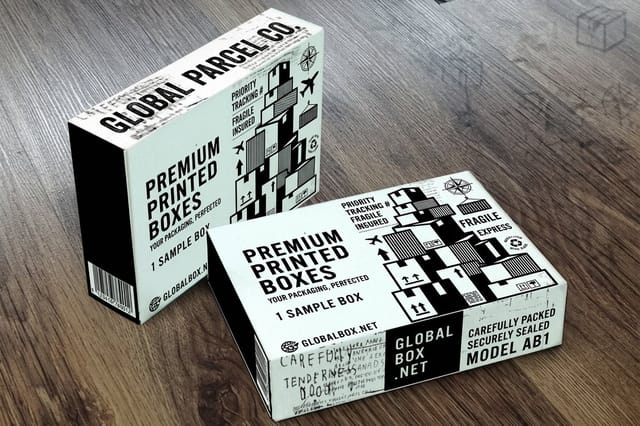
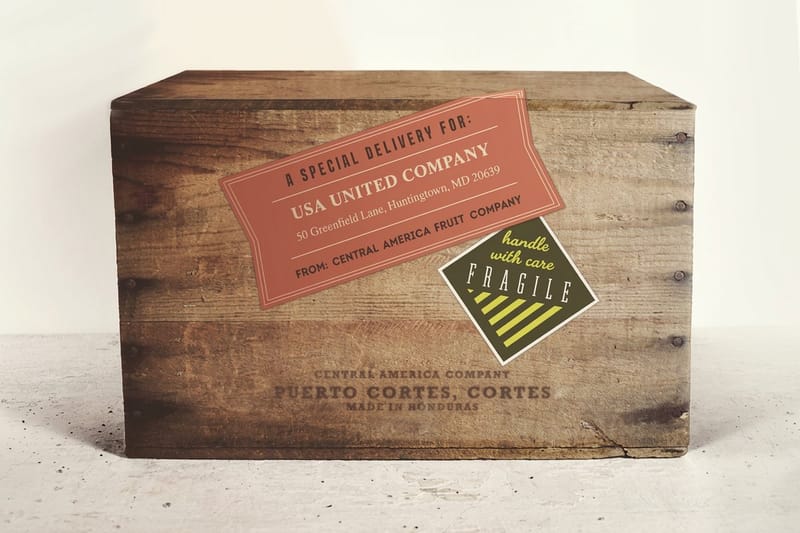
Custom shipping means your orders go out in packaging printed with your brand: the box, the tape, the tissue and the sticker that seals it. The box is the one marketing surface every single customer touches. A mailer and a shipping box suit different products, and sizing decides whether carriers do not bill you for air, and brand the opening in the order it actually happens.
A custom shipping package is the corrugated box, tape, and inner wrap an order travels in, printed with your brand instead of left plain. For most stores the choice is between two boxes: a self-locking mailer box for orders up to about 3 pounds, and a tape-sealed RSC shipping box for everything heavier. Size the interior to the product plus its cushioning, because UPS and FedEx bill empty space at length times width times height divided by 139, and brand the surfaces in the order the customer meets them: tape, lid interior, tissue, seal, one insert.
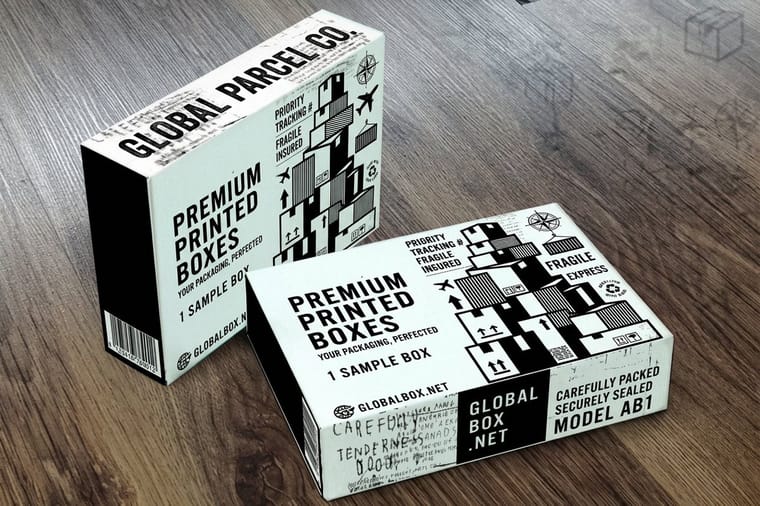
Quick answer
Two boxes, one sizing rule, and a sequence of surfaces
Custom shipping packaging is three decisions. Pick the construction: a self-locking mailer box to about 3 pounds, a tape-sealed RSC shipping box above it. Pick the size: the product plus its cushioning and nothing more, because carriers bill dimensional weight at cubic inches divided by 139. Then brand the surfaces in the order the customer meets them, from the tape on the doorstep to the tissue at the reveal. Everything else on this page is detail inside those three calls.
Mailer Box, Shipping Box, or Product Box
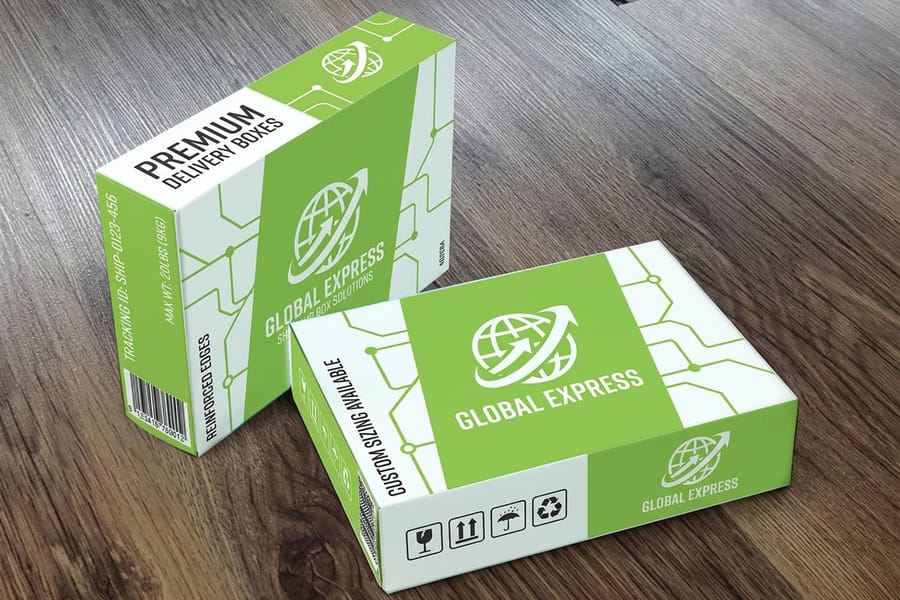
Ecommerce packaging sorts into three jobs, and picking the wrong construction for the job is the most expensive mistake on this page.
| Box | Construction | Sealing | Best for |
|---|---|---|---|
| Mailer box | Die-cut from one sheet, usually E-flute, folds into a tray with a hinged lid. | Self-locking tuck, no tape. | Orders to about 3 lb where the opening moment matters: apparel, cosmetics, subscriptions. |
| Shipping box (RSC) | Regular slotted container, four flaps meeting at a center seam, commonly 32 ECT single wall. | Tape across the seam, H pattern for weight. | Heavier or bulk orders, anything that stacks, palletizes, or rides freight. |
| Product box | Folding carton or rigid piece: cube, tuck, pillow. | Tuck tabs or none. | The retail-style box inside the shipper, or a light gift piece on its own. |
The mailer box is the default for direct-to-consumer brands because it does two jobs at once: it survives the parcel network and it opens like retail packaging, with the interior printed in the same pass as the exterior. The RSC shipping box beats it on cost per cubic inch and on weight, which is why anything over a few pounds, and everything wholesale, ships in one. Product boxes such as cube boxes (see the cube boxes video) and pillow boxes are not shippers at all; they ride inside one, and treating a folding carton as a mailer is how crushed corners happen. The construction differences run deeper than this table, and our mailer vs shipping box guide walks through them flap by flap.
How Much Print Coverage a Shipping Package Needs
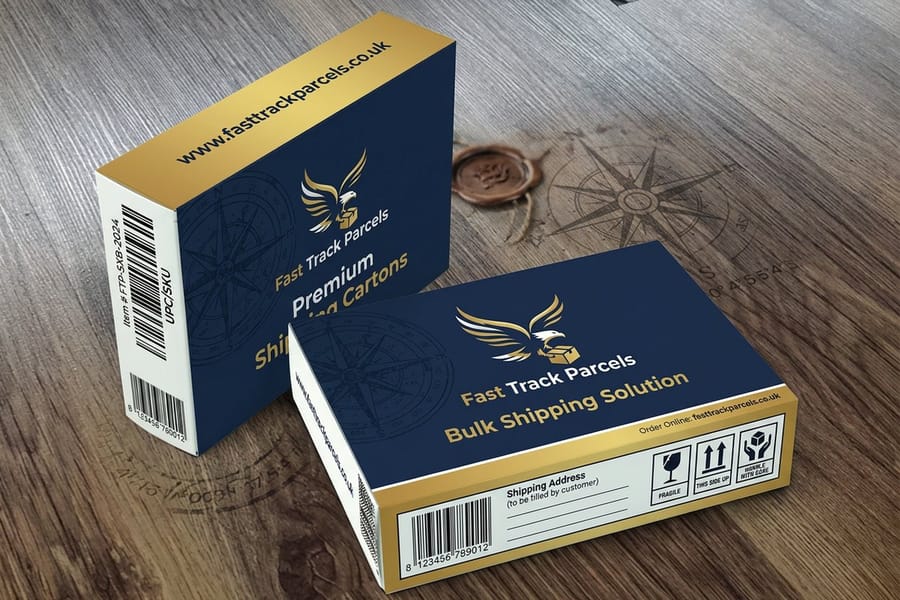
Custom shipping is a scale of print coverage, and you can stop at any step. Each step adds one printed surface to a parcel that would otherwise be plain.
| Coverage | What gets printed | Starts at | When it is enough |
|---|---|---|---|
| A seal | A die cut sticker on a stock box or mailer | $93.37 for 25 | A new shop testing its packaging on a few orders a week |
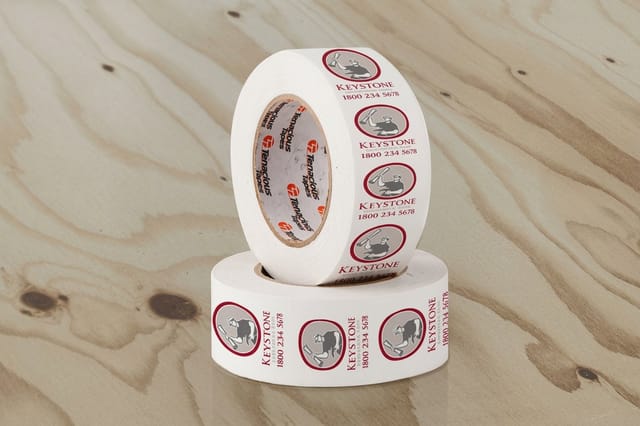
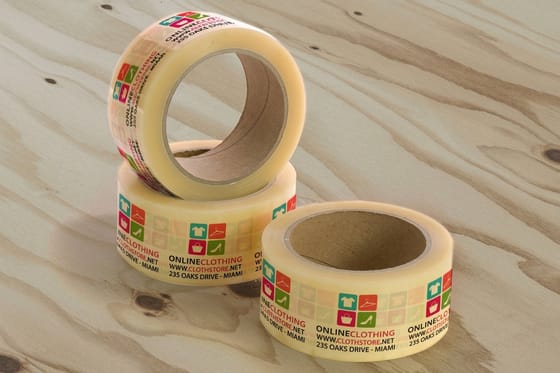
| The seams | Printed tape, 2 or 3 in wide, in one or two ink colors | $347.11 a case | Any volume, since one case brands every box size you stock |
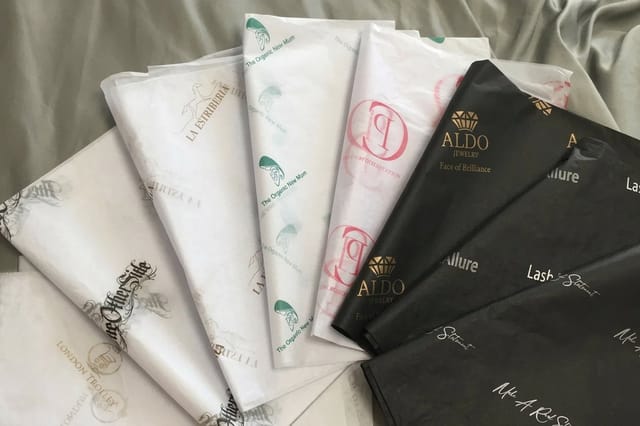
| The reveal | Printed tissue inside, in 10 x 15 to 20 x 30 in sheets | $126.32 for 100 sheets | Gifts, apparel and anything opened on camera |
| The whole box | A full color printed shipping or mailer box | $711.78 for 250 | Steady volume on one or two box sizes |
Most brands start at the seal and the seams, add tissue when the reveal matters, and print the box last, once they know which sizes they ship every week. Tape takes 20 business days and tissue 18, so order them well before a launch; stickers and boxes follow in 5 and 7.
Sizing and Protection, Where the Money Leaks
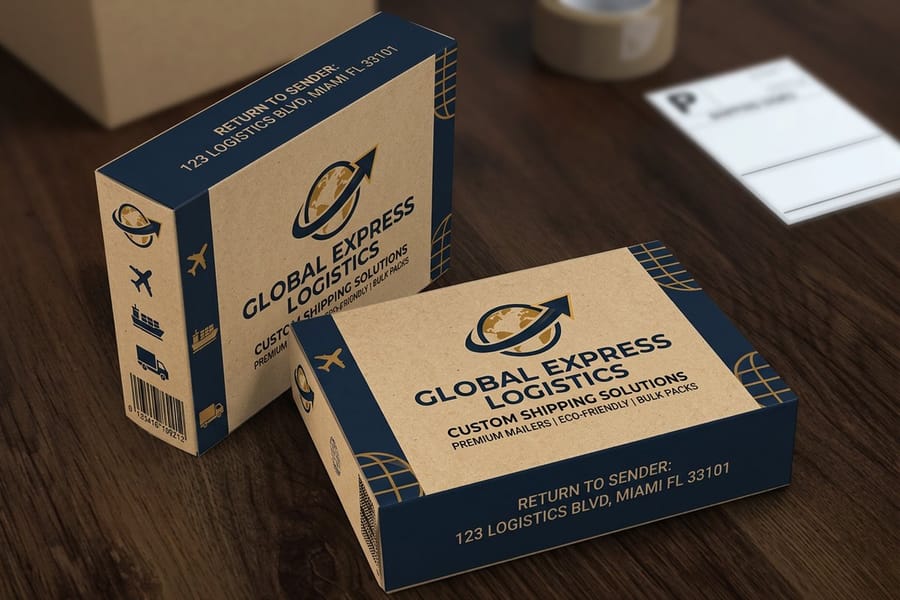
Box sizes describe the interior, and the interior should equal the product plus the cushioning it genuinely needs. That single rule controls both your damage rate and your carrier bill.
The carrier bill first, because it surprises people. UPS and FedEx charge dimensional weight: length times width times height in inches, divided by 139, and you pay whichever is higher, that figure or the scale weight. A box that is one standard size too big does not cost you once, it costs you on every order until you fix it. A 12 x 10 x 6 box bills at 6 dimensional pounds even if the contents weigh 2.
Protection second. Corrugated strength is rated in ECT, edge crush test, and 32 ECT single wall covers most ecommerce; move up only when boxes will be stacked high in storage or the contents are dense. For fragile goods, plan roughly 2 inches of cushioning on every side, which is the padding carriers expect to see before honoring a damage claim. Under-filled boxes fail more often than under-built ones, because a product that can shift builds momentum with every sort.
Get the measurement itself right before ordering: our guide on how to measure a box for shipping covers the interior-versus-exterior trap, and the box size chart by product type is the fast way to a starting dimension for common products.
Branding the Unboxing, in the Order It Happens
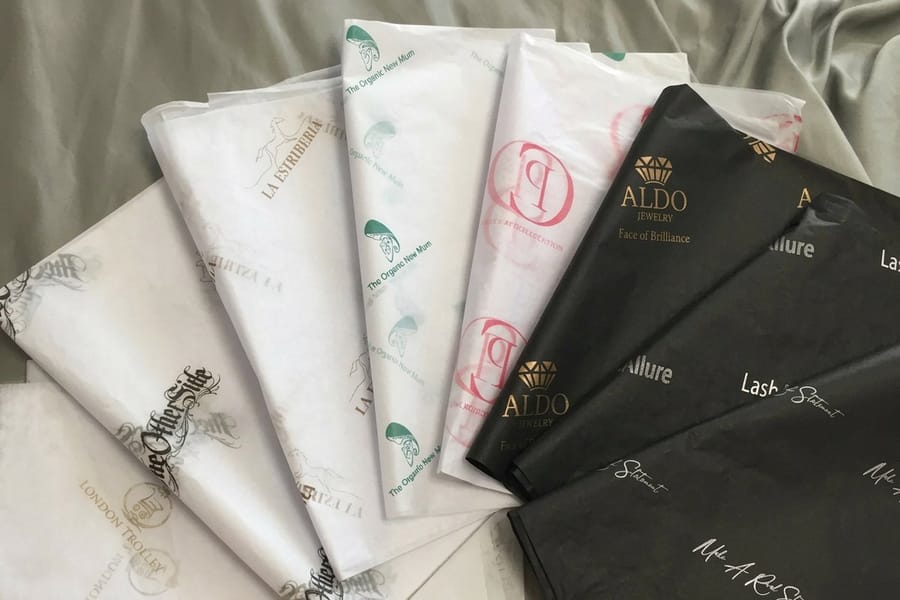
An unboxing is a sequence of surfaces, and each one has a specific job. Brand them in the order the customer meets them and the whole package reads as deliberate rather than decorated.
The doorstep: tape and exterior. Printed packaging tape is the cheapest way to put your name on a parcel, because it brands plain stock boxes and custom ones alike, and it doubles as tamper evidence: a resealed box never has an intact printed seam. If the exterior panels are printed too, keep them simple. A logo and one line beats a wrap of marketing copy that will spend its life under a shipping label.
The lid: the interior panel. On a mailer box this is the highest-attention surface in the whole journey, the thing the customer looks at in the half second before they see the product. A welcome line, a pattern, or a reorder code belongs here, and it prints in the same pass as the outside.
The reveal: tissue and seal. Custom tissue paper wraps the product and slows the reveal down by exactly one beat, which is what makes the moment feel gifted rather than fulfilled. A die-cut sticker holds the wrap closed and makes the opening a deliberate act. Stickers also outlive the box; a good one ends up on a laptop.
The follow-up: one insert. One card, one ask. A review request, a discount code, or a care instruction, not all three. Our packaging inserts guide covers what actually drives repeat orders, and it is shorter than you would expect because most inserts do not.
What It Costs and Where It Pays Back

Real numbers, from the 4OVER4.COM configurator. Custom shipping boxes start at $711.78 for a run, packaging tape at $347.11, tissue paper at $126.32, and die-cut stickers at $93.37. Per order, the full branded stack typically lands within a dollar or two of the plain-kraft version once quantities are sensible, because corrugated pricing is dominated by board and freight, not ink. For the tape line, our guide on how to order custom paper tape without guessing the spec covers widths and adhesives.
Where it pays: products that are photographed, gifted, or subscribed to, and any category where the unboxing gets shared. Where it does not: heavy, low-margin goods, replacement parts, wholesale cases, anything opened in a warehouse. For those, the honest setup is a plain stock box sealed with printed tape, which gets you doorstep recognition without carrying custom board costs on every SKU size you stock.
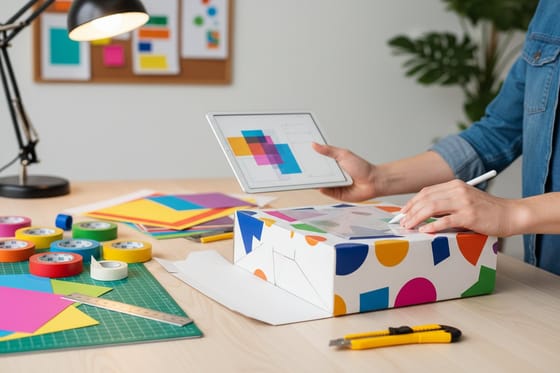
Start small and sequence the spend. Tape and stickers first, because they brand every parcel regardless of box. Tissue second, when reveal matters. Custom boxes last, once your order volume justifies a run per size. Before any of it goes to press, the artwork has to sit correctly on a dieline, with panels in the right order and bleed where the die cuts; our guide on preparing files for packaging products walks the setup, and the whole packaging range lives in the packaging printing collection. When volume grows, Gift Boxes Wholesale and How Bulk Runs Cut Your Cost Per Box shows where the price per box falls.
Wally explains shipping packages
The box does the marketing while the carrier does the miles
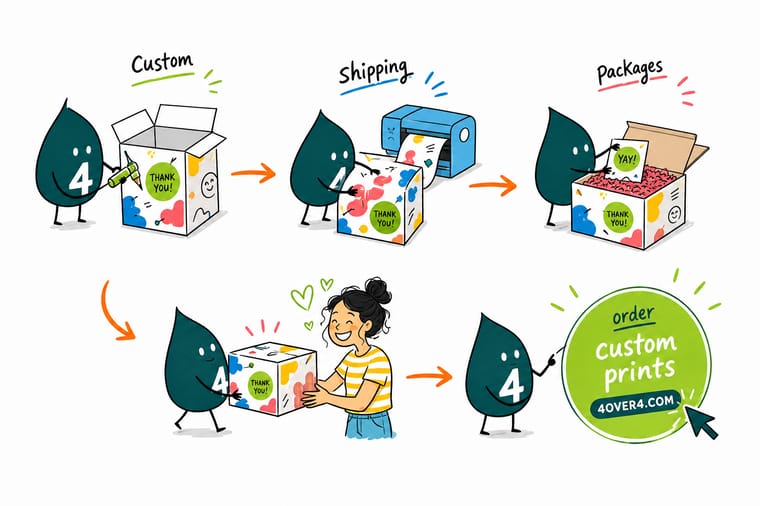
Wally folds a mailer box for the light orders, tapes an RSC shut for the heavy ones, and never orders a box bigger than the product plus its padding, because the carrier bills every empty cubic inch. Then he works the sequence: printed tape on the seam, a message inside the lid, tissue around the product, a sticker to seal it, one insert card. The customer opens a parcel and meets the brand five times before they touch the product.
Configure custom shipping boxes →
Specs and pricing
Shipping packaging, sizes, and starting prices
Compare the packaging staples side by side, with live configuration choices and starting prices straight from the 4OVER4.COM configurator. Shipping boxes come in 5 x 7 x 1.7 or 5.5 x 5.5 x 2.625 inches from 250 in 7 business days. Tape comes 2 or 3 inches wide in 55 or 110 yard rolls on white or clear film, by the case, in 20. Tissue comes in three sheet sizes from 100 sheets in 18.

Print it
Build the branded package your orders ship in
Order in lead time order: tape first at 20 business days, tissue at 18, then the box at 7, so the three land together for the first branded shipment.

Explore more
Where to go next
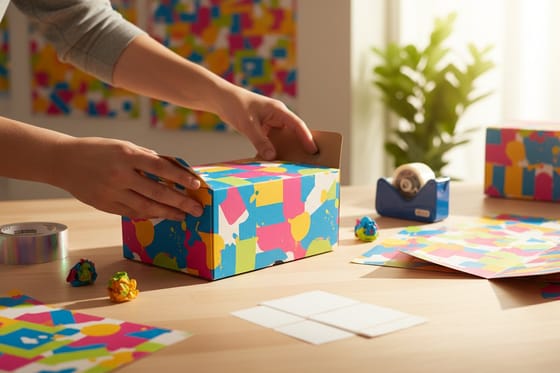
Compare mailer and shipping box construction flap by flap, measure interior against exterior dimensions, write an insert card that earns a second order, and set up print-ready packaging art on a dieline.


By the numbers
Shipping package printing inside 1,000+ products
Common Questions
Your shipping packaging questions, answered
What is the difference between a mailer box and a shipping box?
Construction and sealing. A mailer box is die-cut from a single sheet, usually thin E-flute corrugated, and folds into shape with flaps that lock themselves shut, so it ships without tape and opens like a lid. A shipping box is the classic regular slotted container: four flaps meet at a center seam and you seal it with tape. The mailer suits light orders up to about 3 pounds and gives a retail-grade opening experience. The shipping box takes the weight, stacks, and costs less per cubic inch of capacity. The full comparison lives in our mailer vs shipping box guide.
What size shipping box should I order?
Measure the product, add the cushioning it genuinely needs on every side, and that total is your interior dimension. Box sizes always describe the interior, so a 10 x 8 x 4 box holds exactly a 10 x 8 x 4 interior load. Resist rounding up to a size you already stock for something else: UPS and FedEx bill dimensional weight at cubic inches divided by 139, and a box one size too big raises the billable weight of every order it ships. For fragile goods, plan on roughly 2 inches of cushioning per side, which is the padding carriers expect before they honor damage claims.
Do mailer boxes need tape?
No. The roll-end tucked construction locks shut on its own: the side flaps fold in, the lid tucks into the front wall, and the box stays closed through normal parcel handling. Many brands still add one element on top, either a printed tamper seal sticker across the lid edge or a band of branded tape, not for strength but as tamper evidence and one more printed surface. If an order is heavy enough that the tuck feels strained, it belongs in a taped shipping box, not a reinforced mailer.
Is branded packaging actually worth the cost?
It depends on what happens to the box after delivery. For products that get photographed, gifted, unboxed on camera, or reordered on a cycle, the package is a marketing surface you were paying to ship anyway, and the premium over plain kraft is small at volume. For heavy or low-margin goods where the carton goes straight to recycling, printed packaging tape on a plain box delivers most of the doorstep recognition at a fraction of the cost. Tape at 4OVER4.COM starts at $347.11 and brands every parcel you seal with it, whatever box it is on.
Can I print inside the box as well as outside?
On a mailer box, yes, and it is the highest-value surface on the package. The box is die-cut flat, printed, then folded, so inside and outside print in the same operation. The interior panel is what the customer stares at during the reveal, which makes it the right place for a welcome line, care instructions, or a reorder code. On a taped RSC shipping box, interior printing is possible but less common, and most brands put the budget into the exterior panels and the sealing tape instead.
What goes inside a branded shipping package besides the product?
The working sequence is void fill or tissue around the product, a sticker or seal that holds the tissue closed, and one insert card. Tissue paper printed with a repeating logo starts at $126.32 and wraps most soft goods and boxed items. Die-cut stickers from $93.37 seal the wrap and travel further when customers keep them. The insert earns its place only if it asks for one action, a review, a discount code, or a care step, because a stack of loose cards reads as clutter and goes straight in the bin. Our packaging inserts guide covers what actually drives repeat sales.
Get Started
50 cube boxes cost $213.09, or $4.26 each
Choose your box, add printed tape and tissue, and every order that leaves your shelf arrives as an unboxing instead of a delivery.
Legal Disclaimer
Gold Standard guarantees apply to all standard orders placed through 4over4.com. Price match requires verifiable proof of a competitor's published price for an equivalent product with matching specifications and turnaround time. Satisfaction guarantee covers manufacturing defects and print quality issues. Contact support with order number and documentation.
