
Custom Industrial Labels That Survive Chemicals, Sun and Abrasion


Face stocks, adhesives, laminates and hazard compliance for labels that live on drums, machinery and outdoor tanks. Written the way a printer would talk you through the spec.
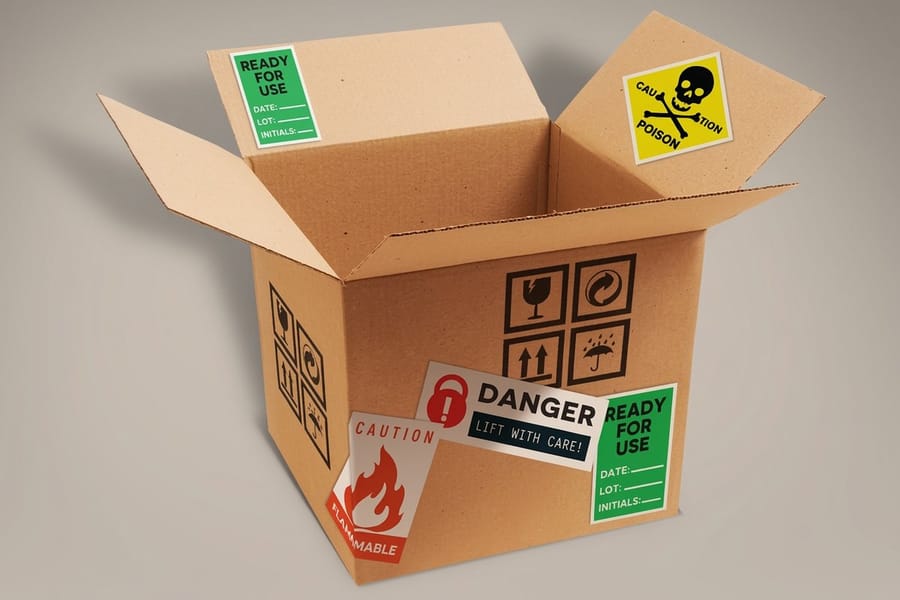
A custom industrial label is a film label, not a paper one: BOPP for moisture and cold, polyester for heat and solvents, vinyl for curved or textured surfaces, with a permanent acrylic adhesive on steel and a high-tack or rubber adhesive on plastic drums and powder coat. Add a clear overlaminate wherever anything rubs the label, because abrasion and solvent wipes take the ink long before they take the film. Hazard artwork follows OSHA HazCom and GHS; marine shipping adds BS5609, which certifies a material, ink and press together rather than a stock on its own.
Quick answer
Spec the enemy first, then the layer that meets it
An industrial label fails one layer at a time, and each layer has its own enemy. Abrasion takes the laminate, solvents and UV take the ink, water takes a paper face, and surface energy decides whether the adhesive ever bonded in the first place. Choose the face stock for what the environment does to plastic, choose the adhesive for what the surface is made of, and add a laminate wherever hands, straps or cloths touch the label. Then test on the real surface before you buy a roll.
How to Spec an Industrial Label, Step by Step
Work in this order and the material almost picks itself. Work backwards from a stock you liked the look of and you end up re-ordering the run.
One, name the surface. Painted steel, stainless, glass and rigid PVC are easy. Polyethylene and polypropylene drums, textured powder coat and freshly moulded parts are the hard ones, and they change the adhesive rather than the face stock.
Two, name the enemy. Be specific. Isopropyl wipes twice a shift is a different brief from three months of UV on a yard tank, which is different again from a chest freezer at minus twenty. Most people write "outdoor durable" and stop, which is not a spec.
Three, pick the face stock. Moisture and cold point at BOPP. Heat and solvents point at polyester. Curves and texture point at vinyl. The table in the next section lines them up.
Four, pick the adhesive. Permanent acrylic for most surfaces, high-tack or rubber-based for low surface energy plastics and rough coatings, removable acrylic for asset tags that have to come off a leased machine without a scraper.
Five, decide on a laminate and a format. Anything that gets rubbed gets a clear laminate. Anything applied by machine gets supplied on a roll. If you want the process end to end, our guide to how label printing works covers the press side, and the labels category lists every stock we run.
Face Stocks That Survive: BOPP, Polyester and Vinyl
Four materials cover nearly every industrial job, and the differences between them are physical rather than marketing. Here is what each one is actually good at.
| Face stock | Holds up to | Where it gives up | Typical use |
|---|---|---|---|
| Coated paper | Dry indoor handling, short shelf life, one-trip cartons. | Pulps in standing water, curls in humidity, fades outdoors. | Shipping and packaging labels that get opened and binned. |
| White BOPP | Moisture, wash-down, cold rooms, general outdoor exposure. | Softens and distorts near sustained heat; less solvent resistance than polyester. | The default durable stock for drums, pails and equipment. |
| Polyester | Heat, solvent wipes, abrasion, long service life. | Stiff, so it tents on tight curves; costs more per label. | Rating plates, asset tags, machine and control panel labels. |
| Vinyl | Curves, texture, outdoor UV, flexing surfaces. | Can shrink over years on some substrates; softer face marks more easily. | Cylinders, hoses, conformable warning marking, tank sides. |
Read the third column before the second. The column that names where a material gives up is the one that tells you whether it fits your plant, and it is the column suppliers leave out. In our catalogue, Premium Waterproof Labels from $84.68 cover immersion and wash-down duty, Premium Vinyl Labels from $29.16 handle curved and textured surfaces, and Premium Warning Labels from $29.16 are the hazard-marking version of the same durable build. If the label is a straightforward interior marker with no water anywhere near it, standard labels at $23.88 do the job for a third of the cost, and there is no reason to overspend on film.
Adhesives, Surface Energy and the Two Temperatures People Confuse
More industrial labels fall off than wear out. The adhesive is the part of the spec that gets one line in a quote and causes most of the complaints.
Start with surface energy. High energy surfaces such as clean steel, aluminium and glass let almost any adhesive spread and grip. Low energy surfaces, polyethylene and polypropylene chief among them, repel a standard permanent acrylic so it sits in beads instead of flowing into the surface. That is why the same label that has held on a steel cabinet for years lifts off a plastic drum in a month. The fix is a high-tack or rubber-based adhesive, not a thicker label.
Then the two temperatures, which is where good specs still go wrong. A face stock and adhesive have a service temperature range, the swing they survive once the bond has formed, and separately a minimum application temperature, the point below which the adhesive will not wet out at all. Most general purpose permanent acrylics list that minimum around 50F. Apply a freezer-rated label to a surface pulled straight out of the freezer and it will look attached, then let go as the pack flexes. Apply at room temperature, then chill: that order works.
Two habits do the rest. Wipe the surface with isopropyl alcohol rather than a shop rag that has met oil, because mould release on new plastic parts defeats good adhesive quietly. And give the bond time. Acrylic keeps building grip for roughly one to three days after application, so judging a test label by how it feels ten minutes in tells you very little.
GHS, OSHA HazCom and BS5609: What Compliance Actually Requires
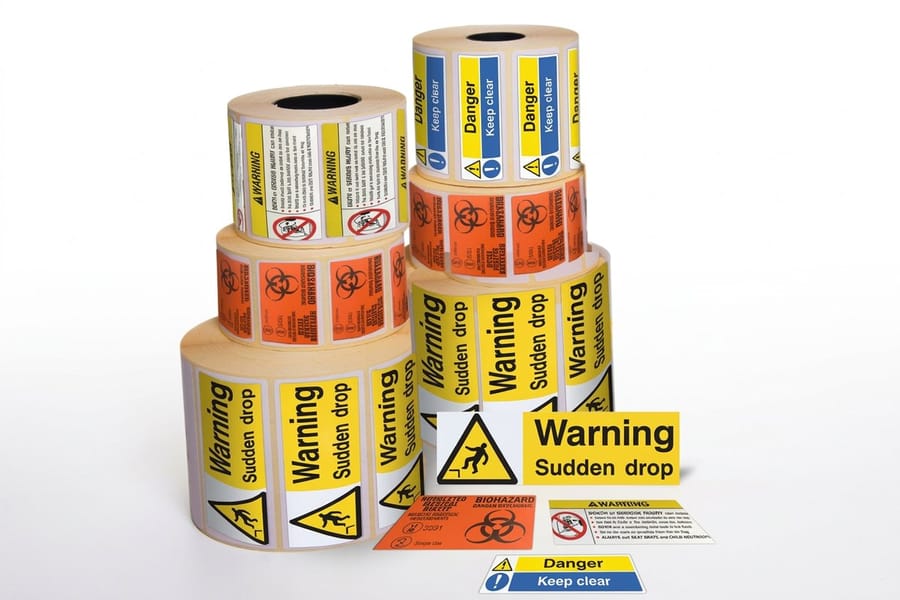
Hazard labelling has fewer rules than people expect and stricter ones than they hope. Here is the shape of it.
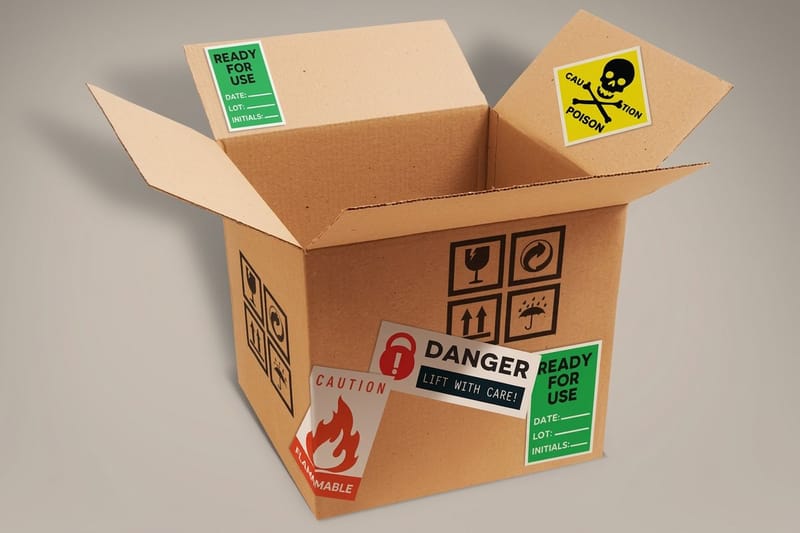
A shipped-container label under OSHA Hazard Communication, 29 CFR 1910.1200, carries six elements: the product identifier, one signal word (Danger or Warning, never both), the hazard statements, the precautionary statements, the supplier name with address and telephone number, and the pictograms. Pictograms are a red diamond frame with a black symbol on a white field, and a blank red diamond is not allowed on a shipped label. Workplace labels made in-house have more latitude in format but still have to convey the same hazard information.
Transport is a separate layer. The hazard class diamonds applied to packages under the UN model regulations have a minimum size of 100 by 100 millimetres, so a warning label that also has to serve as a transport marking needs to be sized for that, not for the artwork.
Then there is BS5609, which is where marketing language gets loose. Section 2 tests the base material after three months of seawater immersion. Section 3 tests the printed image for abrasion and legibility after the same treatment, and it certifies a substrate plus ink plus printing system as a combination. A face stock cannot be Section 3 certified on its own, so treat any claim that skips the ink and the press with caution. Our waterproof and chemical-resistant film stocks are built for immersion and outdoor exposure; if a drum is heading into marine transport under IMDG, say so before the run and we will confirm what the job needs. For layout and wording of the hazard artwork itself, our guide to designing caution labels goes through signal words and legibility distances.
Sizes, Formats and the Test That Beats a Proof
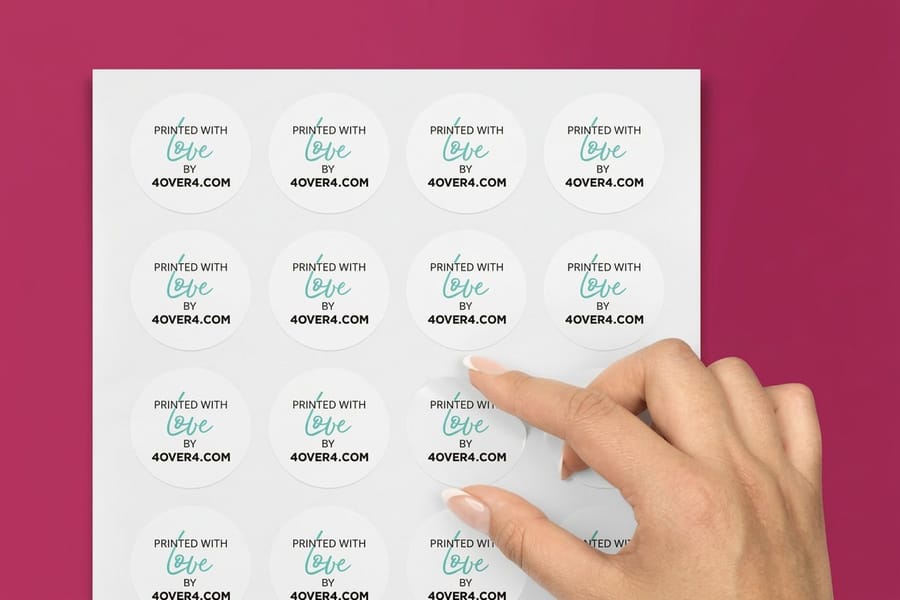
Format is a production decision, not a design one, and it comes down to how the label reaches the surface.
- Sheets suit hand application, mixed artwork and small runs. It is the cheapest way to get durable labels in modest quantity, and the right way to buy a test batch.
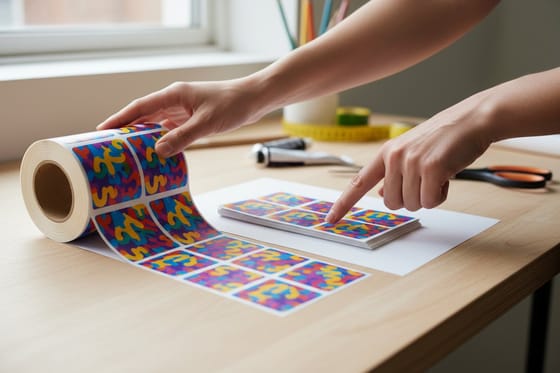
- Rolls are what an applicator head, a print-and-apply unit or a high-volume packing line needs. Roll warning labels start at $322.98 because roll production runs at line quantities, so the per-label cost drops sharply as volume rises. The full comparison sits in our guide to roll labels versus sheet labels.
- Die-cut shapes matter when the label has to fit a recess, wrap a cable or follow the outline of a rating plate. Custom die-cut labels start at $93.37 and take any outline you supply.
On sizing, resist the urge to shrink. A hazard label that people read while wearing gloves and safety glasses, from two metres away, needs type sized for that distance rather than for the space you had left on the drum. Our guide to choosing the correct label size works through the arithmetic, and you can lay out artwork against a real die line from the blank template library.
Every order comes with a free proof, which catches typos, bleed and colour. It cannot tell you whether the adhesive holds. Order the smallest sheet quantity first, apply a handful to the real surface in real conditions, let them sit through a wash cycle or a week of sun, and only then commit to a roll. That single step prevents almost every expensive reprint. If you also need asset tagging across a site, our guide to company labels for products, packaging and asset tagging covers numbering and removability, and tamper-evident stocks are the answer where a seal has to show it has been broken.
Wally explains industrial labels
Name the enemy, then pick the layer that meets it
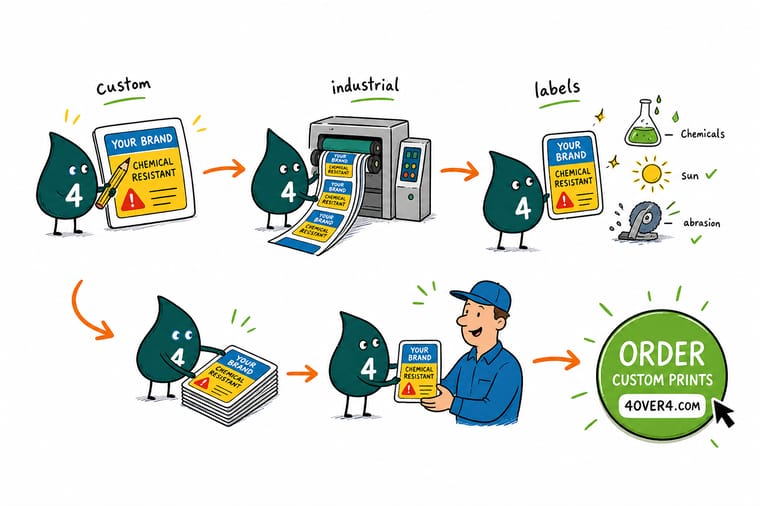
Wally never starts with the label. He starts with what is going to attack it: the solvent wipe, the sun on the yard tank, the freezer, the forklift. Then he picks a film face that laughs at it, an adhesive that suits the surface underneath, and a clear laminate if anything is going to rub. His one hard rule is to test on the real drum, in real weather, before ordering a roll. A proof catches a typo. Only the drum tells you whether it sticks.
Order premium warning labels →Specs and pricing
Durable label stocks, sizes and starting prices
Compare the three industrial stocks side by side, with live configuration choices and starting prices straight from the 4OVER4.COM configurator.



Print it
Order labels built for the plant floor
Explore more
Where to go next



By the numbers
Durable label printing you can count on at 4OVER4
Common Questions
Your industrial label questions, answered
What material should a custom industrial label be printed on?
A film, almost always. Coated paper is fine for a carton that ships once and gets opened, and hopeless anywhere it meets water, oil or sunlight. White BOPP handles general moisture, cold and wash-down. Polyester holds up best to heat and to solvent wipes, which is why it dominates asset tags, rating plates and anything mounted on machinery. Vinyl is the one to reach for when the surface curves or has texture, because it conforms instead of tenting at the edges. If you are choosing between them for a specific job, the breakdown in our guide to paper, vinyl and clear labels compares the same three faces at the print level.
Do your labels meet GHS and OSHA HazCom requirements?
Compliance lives in the artwork and the material, and we print both. A shipped-container label under 29 CFR 1910.1200 needs six elements: product identifier, signal word (only Danger or Warning, one per label), hazard statements, precautionary statements, the supplier name with address and phone, and the red-framed pictograms. We print the red diamond at full saturation with a black symbol on white, on stocks that hold the colour outdoors. What we cannot do is classify your chemical for you, so the classification and the statement wording come from you or your safety data sheet author.
Are your labels certified to BS5609 for marine shipping?
Ask before you order, because the honest answer depends on the whole combination. BS5609 Section 2 tests the base material after three months of seawater immersion, and Section 3 tests the printed image for abrasion and legibility after the same immersion. Section 3 certification belongs to a specific substrate plus ink plus press combination, not to a face stock on its own, so no supplier can promise it from a material name alone. Our waterproof and chemical-resistant film stocks are built for immersion and outdoor exposure, and if a drum is heading into IMDG marine transport, tell us before the run so we can confirm what the job needs.
Why did my label peel off a plastic drum after a few weeks?
Three usual suspects, and they are all fixable. The drum was probably polyethylene or polypropylene, both low surface energy plastics where a general purpose acrylic never fully wets out, so switch to a high-tack or rubber-based adhesive. The surface may have carried mould release, dust or oil, and a quick isopropyl alcohol wipe before application solves that. Or the label went on cold, below the adhesive minimum application temperature, in which case it looked fine on day one and let go as it flexed. Rough, textured powder coat is the fourth case and needs the aggressive adhesive too.
Do industrial labels need a laminate?
If anything rubs the label, yes. The face stock is rarely the weak layer. Abrasion from straps, gloves, pallets and cleaning cloths takes the ink first, and a solvent wipe will lift printing from an unlaminated film long before the film itself gives up. A clear laminate adds a sacrificial layer over the print and adds chemical resistance at the same time. Skip it only where the label is read and never touched, such as an interior rating plate behind a panel.
What do custom industrial labels cost, and can I test one before a full run?
Sheet-format labels are the cheap entry: Premium Warning Labels and Premium Vinyl Labels start at $29.16, standard labels at $23.88, and the heavier-duty Premium Waterproof Labels at $84.68. Die-cut shapes start at $93.37, and roll format, which is what you want if the labels are being applied by machine, starts at $322.98. Every order includes a free proof, and the test that matters more than the proof is a physical one: order the small sheet quantity first, stick a few on the real surface, run them through a real shift, then commit to the roll.
Get Started
Ready to print labels that stay on?
Tell us the surface and what attacks it. We match the face stock, the adhesive and the laminate, send a free proof, and print a test batch before you commit to a roll.
Legal Disclaimer
Gold Standard guarantees apply to all standard orders placed through 4over4.com. Price match requires verifiable proof of a competitor's published price for an equivalent product with matching specifications and turnaround time. Satisfaction guarantee covers manufacturing defects and print quality issues. Contact support with order number and documentation. On-time delivery rate based on tracked orders 1999 to 2026. Individual results may vary based on shipping carrier performance.
