
How to Choose a Sticker Printing Company Worth Reordering From


Sticker sites all look the same on the homepage. The differences sit in the spec sheet, and there are only five that matter.
Judge a sticker printing company on five things: the face material named by spec, whether a laminate is included, whether the shape is kiss cut or die cut, whether the proof shows your cut line, and when the turnaround clock starts. Everything else is presentation. A shop that answers all five without checking prints the job itself, and a shop that has to go and ask is forwarding your file to someone who will answer differently.
Quick answer
Five specs, and the shape of an honest quote
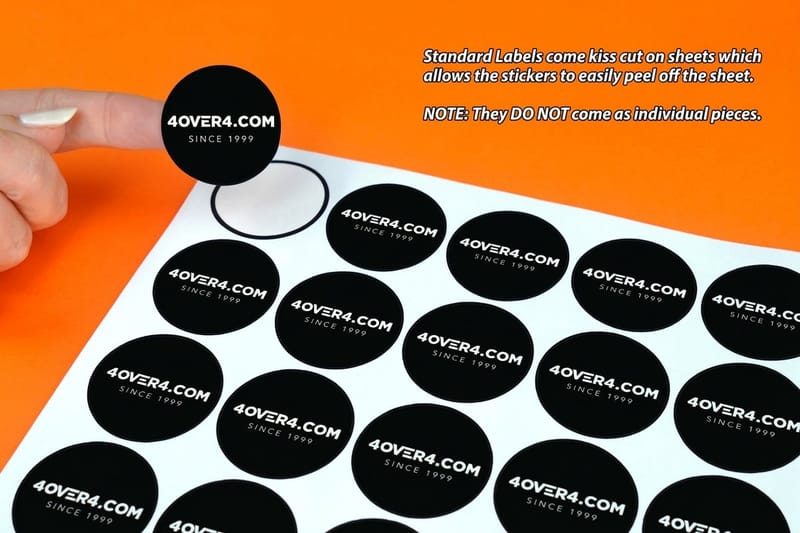
A sticker quote is only comparable once the face material, the laminate and the cut depth are on the page. Paper fails in water, vinyl survives it, clear film needs a white underprint over dark surfaces, and metallic only shows where the ink is not. Kiss cut leaves the sticker on a larger liner, die cut makes the shape the piece. Ask for a proof with the die line drawn on your art, and ask when the turnaround clock starts, because every rush claim in this industry counts from proof approval.
What Separates a Real Sticker Printer From a Middleman
Most of the sticker sites you find in a search do not own a press. They collect the order, mark it up, and forward the file to a trade printer, which is why their answers get vague the moment you ask about stock weight or laminate. That is not fraud, it is just a layer between you and the person who can fix a problem.
Three questions expose the difference in under a minute. Ask what the face material is by name. Ask whether cutting and laminating happen in the same building as the printing. Ask what happens if the cut lands off register by a sixteenth of an inch on a run of two thousand. A printer answers all three immediately, because those are the things they argue about internally every week. A reseller has to go and ask.
The second signal is how the shop treats your file. A printer who intends to run the job wants your die line, your bleed and your color intent up front, and will tell you when the artwork is going to fail before the press is booked. Our bleed, cut line and safety checklist is the same list a prepress operator runs, and a shop that never mentions any of it is not going to catch your mistakes either.
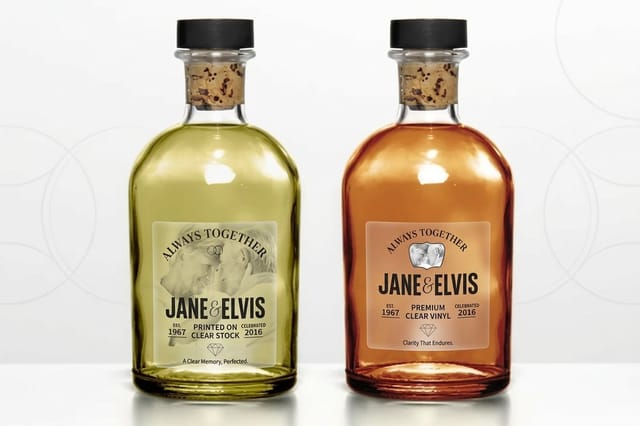
The third is range. A shop that prints only one rectangle in one material is optimizing for its own equipment, not your job. The sticker printing catalog at 4OVER4.COM spans paper, vinyl, clear film, metallic and holographic faces because different jobs genuinely need different stacks, and the price gap between them is the whole reason to ask.
Materials and Lamination Decide How Long the Sticker Lives
This is where quotes diverge and where most disappointment is manufactured. The face material sets what the sticker can survive. The laminate sets how long it looks new. Nothing else on the invoice moves those two numbers.
| Face material | Where it holds up | Cost position | What catches people out |
|---|---|---|---|
| Coated paper | Indoor use: packaging seals, envelope closures, price marks, event handouts. | Lowest. | Water ends it. One rained-on window or one dishwasher cycle and the face pulps. |
| White vinyl | Laptops, bottles, hard hats, toolboxes, bumpers, anything handled or outdoors. | Middle. | Vinyl without a laminate still scuffs. The film is waterproof, the printed ink on top is not armored. |
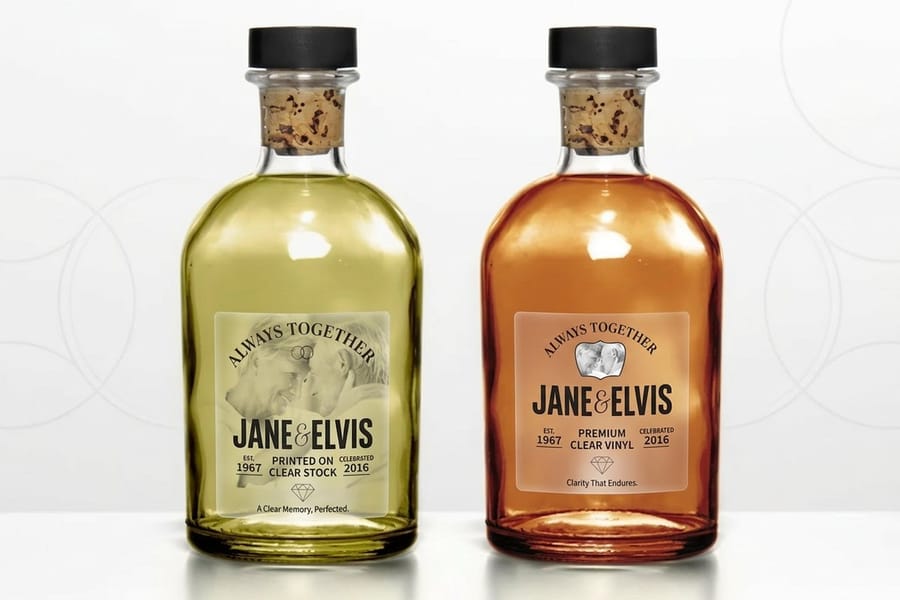
| Clear film | Glass, windows, and packaging where you want the surface to read as the background. | Middle to high. | Colors go translucent over a dark surface unless a white underprint sits behind them. |
| Metallic and holographic | Product seals, limited runs, anything meant to be noticed under store lighting. | Highest. | The effect only shows where there is no ink, so the artwork has to be built with knockouts on purpose. |
Laminate is the part people skip to save a few dollars and then regret. It is a clear film bonded over the printed face, and it takes the abrasion, the UV and the cleaning products so the ink underneath does not. Matte hides fingerprints and photographs cleanly. Gloss keeps colors saturated and looks better on dark stock. Skip it entirely and the ink becomes the outermost layer, which is exactly the layer that gets rubbed.
If you are choosing between films rather than between paper and film, BOPP versus vinyl is the comparison that matters, because BOPP is thinner and cheaper on flat labels while cast vinyl conforms better around a curve. For the wider material decision, the sticker material guide works through each use case. And if the terminology itself is the confusion, stickers, labels and decals are three different things with three different constructions.
Proofs, Cut Lines and When the Turnaround Clock Starts
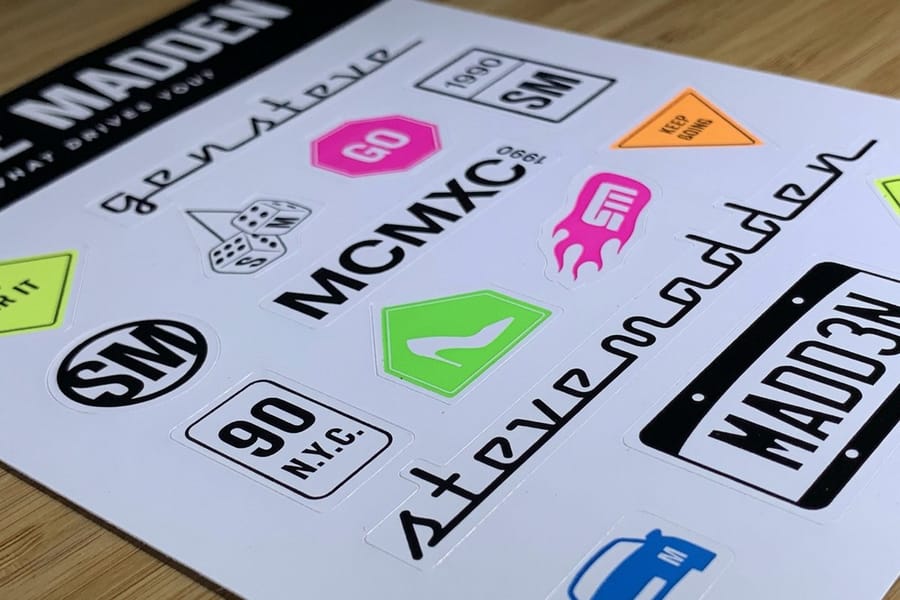
A color proof tells you almost nothing about a sticker. What you want to see is your cut path drawn on top of your artwork, because that single image answers the three questions that cause reprints: does the background run past the blade, does any type sit too close to the edge, and is the shape the one you actually drew.
Set the file up so the proof is a formality. Keep the die line on its own layer as a spot-color path rather than a printed stroke. Extend the background an eighth of an inch past it so a small shift in the cut still leaves color at the edge. Pull text at least an eighth inch inside. Supply artwork at full size at print resolution, not a screen-sized export scaled up, which is the failure our print resolution guide walks through. Starting from a correctly built blank template removes most of this work.
Turnaround is the other place expectations slip. Every fast printing claim in the industry is measured from proof approval, not from the moment your card is charged, so a shop that answers proofs within the hour genuinely ships sooner than one with a faster press and a slow queue. Ask two things: how long until I see a proof, and what is the cutoff time for the same business day. Our same-day and rush options page spells out which products can be pushed and which cannot.
One more thing worth confirming before you pay: what happens when the job comes back wrong. A printer that stands behind the cut says so in writing. Ours is on the 4OVER4.COM guarantees page, and it is a fair thing to compare across every shop you are considering.
What Stickers Cost, and Where Two Quotes Stop Matching
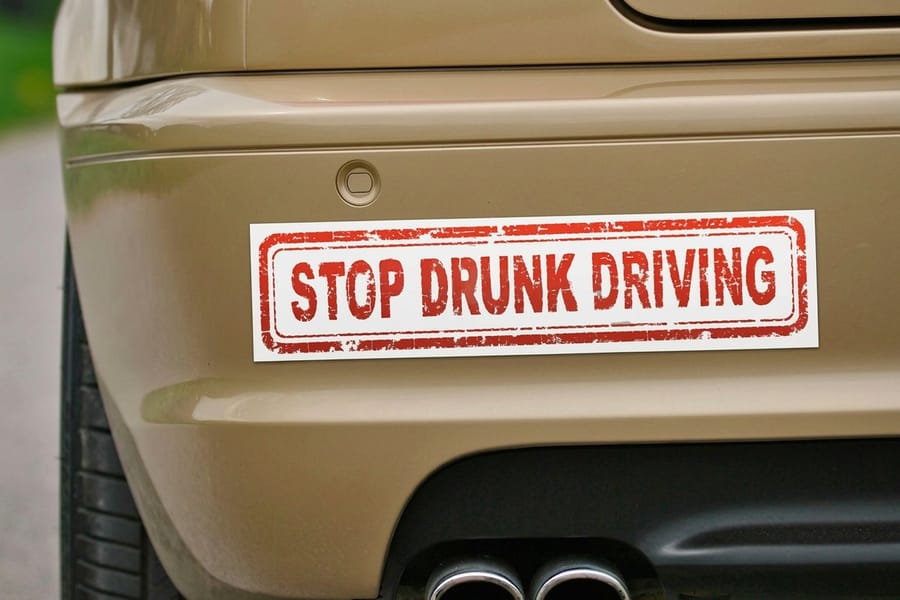
Two quotes for a thousand stickers can differ by triple and both can be honest. One is coated paper on a rectangle. The other is laminated vinyl on a custom contour with a white underprint. Before you compare numbers, line up the specs.
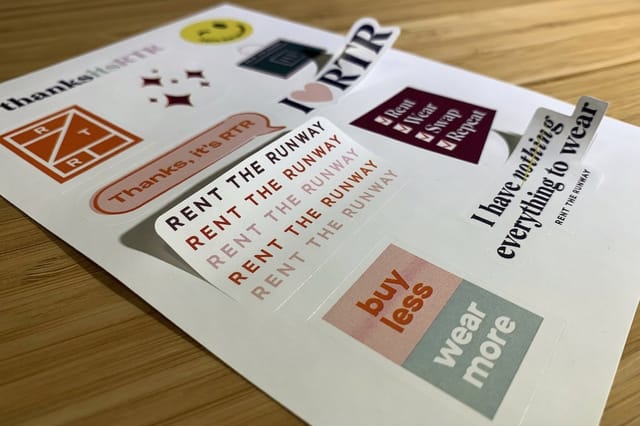
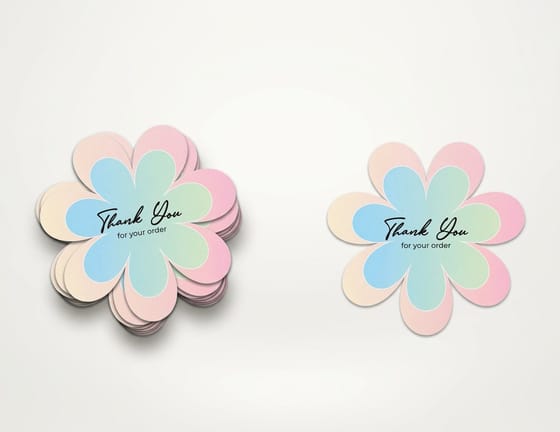
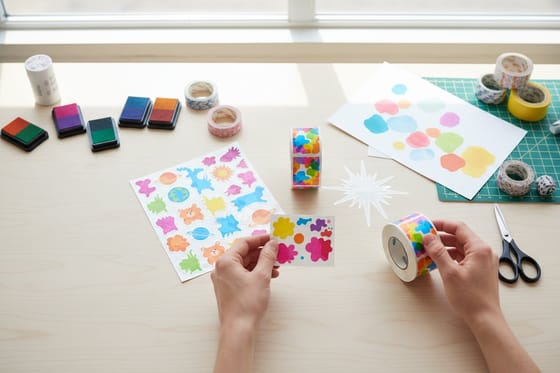
Here is the actual starting spread at 4OVER4.COM so you can see how much the shape and the material move the price. Clear stickers start at $25 and vinyl stickers at $25. Premium stickers start at $29.16. Bumper stickers start at $38.44 because they are sized and finished for a vehicle. Die-cut stickers start at $93.37, since the contour cut is a separate pass over every piece. Sticker sheets start at $181.24, which looks steep until you count how many individual stickers arrive on each sheet.
Quantity is the lever with the most travel. Setup, plate-free as it is on digital, still gets spread across the run, so the per-piece price falls steeply between a hundred and a thousand and then flattens. If you are within reach of the next break, take it. Reordering the same design in three months costs more in total than printing the larger run once.
Two specs quietly add cost and are worth deciding on deliberately rather than discovering on the invoice: a custom contour instead of a stock shape, and a white underprint behind color on clear film. Both are legitimate charges and both are avoidable if the design does not need them. If your job is really a product label rather than a giveaway sticker, price it as one. Die-cut labels start at $93.37 and the label printing catalog is set up for bottles, jars and boxes, where roll versus sheet becomes the real decision.
Wally reads the quote for you
Face material, laminate, cut depth, proof, clock
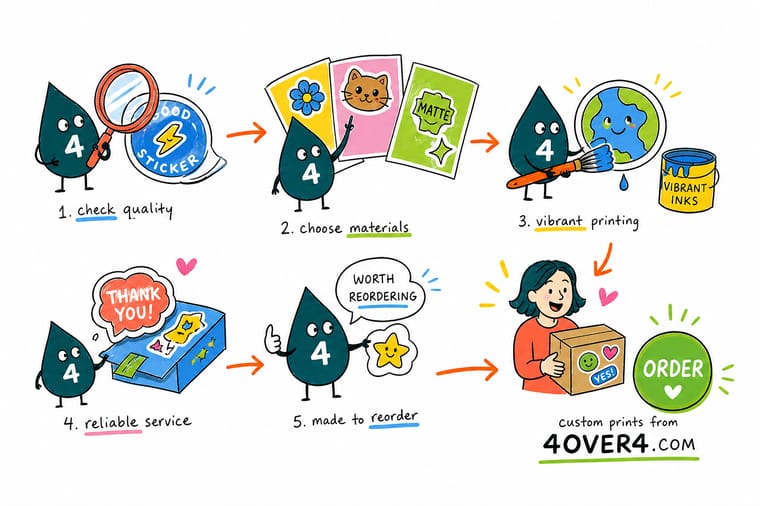
Wally does not compare sticker prices until the specs line up. He asks what the face is made of, because paper and vinyl are not the same purchase. He checks whether a laminate is included, since that is the layer that takes the scuffing. He confirms kiss cut or die cut, because getting the wrong one back means a reprint. Then he asks for a proof with his own cut line drawn on it, and he asks when the turnaround starts counting. Five answers, and the cheap quote usually stops being the cheap quote.
Configure die-cut stickers →Specs and pricing
Sticker options, sizes and starting prices
The same three questions, answered live. Sizes, finishes and starting prices come straight from the 4OVER4.COM configurator, so you can compare a contour cut against a stock shape before you commit.


Print it
Order stickers with the spec written down
Explore more
Where to go next


By the numbers
Why print your stickers with 4OVER4
Common Questions
Questions people ask before they pick a sticker printer
What should I ask a sticker printing company before I order?
Five questions cover almost everything. What is the face material, by name. Is a laminate included, and is it gloss or matte. Is the shape kiss cut or die cut. Will I see a proof with my cut line drawn on it. And when does the stated turnaround start counting. If any of those get a vague answer, you are talking to a middleman who is about to forward your file to someone else, and the answers will change again once it lands there.
Is a local sticker printer better than an online one?
Local wins on one thing: you can walk in and hold the stock before you commit. Everything else usually favors an online printer, because the volume behind a national shop pays for the wide-format cutters, the laminators and the film inventory that a two-press local shop cannot justify. The honest test is not distance, it is whether the shop cuts and laminates in house. Ask directly. A local shop that brokers your stickers to a trade printer adds a day and a margin without adding any control.
How do I know whether I need die-cut or kiss-cut stickers?
Ask where the sticker will be handed over. If someone takes one from a stack, a table or a swag bag, die cut is right, because the piece itself is the shape and it looks intentional. If the stickers ship inside an envelope, get applied by a packer at speed, or belong to a set, kiss cut on a shared liner is faster to peel and cheaper per piece. Sticker sheets are the extreme version of that logic, which is why they suit product inserts and kids sets.
Do I actually need lamination on stickers?
Indoors, on paper, for something that gets used up in a season, no. Anywhere the sticker meets water, sunlight, hands or a dishwasher, yes, and it is the cheapest insurance on the order. The laminate takes the abrasion so the ink does not, and it slows the fading that hits reds and oranges first. Matte laminate hides fingerprints and photographs better. Gloss holds color saturation and looks wetter on a dark stock.
How much do custom stickers cost?
At 4OVER4.COM, Premium Stickers start at $29.16, Bumper Stickers at $38.44, Clear Stickers at $25, Die-Cut Stickers at $93.37 and Sticker Sheets at $181.24, with the price per piece dropping hard as the quantity climbs because the setup is spread across more sheets. The reason two quotes for "1,000 stickers" can differ by triple is that one is paper on a rectangle and the other is laminated vinyl on a custom contour. Compare the spec, not the headline number.
How fast can a sticker order realistically ship?
Rush and next-day options exist and they are genuine, but they buy you press time, not file time. If your artwork arrives without bleed, with live type, or with no cut path, the job stops at prepress and the rush was spent waiting for you. Send a print-ready file with the die line on its own layer and a rush order behaves like a rush order. Our rush and same-day options page lists which products qualify.
Get Started
Ready to order stickers from a printer that names the spec?
Pick the face material, add gloss or matte laminate, choose kiss cut or a custom contour, and see the price move as you go. No forwarded files, no vague answers.
Legal Disclaimer
Gold Standard guarantees apply to all standard orders placed through 4over4.com. Price match requires verifiable proof of a competitor's published price for an equivalent product with matching specifications and turnaround time. Satisfaction guarantee covers manufacturing defects and print quality issues. Contact support with order number and documentation. On-time delivery rate based on tracked orders 1999 to 2026. Individual results may vary based on shipping carrier performance.
