
How to Find Your Niche and Stand Out in a Crowded Market


Four axes you can narrow along, four tests a niche has to pass, and the five ways to stand out once you are inside one. Written for owners who have to choose this week.
You find a niche by naming one customer type and one recurring problem you can solve better than a generalist, then stopping while you can still reach a few hundred of those buyers through a list, a directory or a trade association. You stand out inside it with things that cost you something real: a written guarantee, a held turnaround, a stated point of view, published pricing, a scope you refuse to widen. Test the whole thing on thirty matched conversations before you reprint anything, and change the sentence under your name rather than the name itself.
Quick answer
Narrow until the list runs thin, then stop
Every step you take toward a smaller audience raises what a buyer will pay and how often they reply, and shrinks the number of people you can reach at all. The workable zone sits where those two lines cross: specific enough that a stranger in the trade thinks the pitch was written for them, broad enough that a directory, an association or a mailing list still returns a few hundred names. Narrow past that and the sentence gets sharper while the pipeline empties.
What a Niche Actually Is, and What It Is Not
A niche is a group of buyers you organize the business around. It is not a shorter service list, and it is not a demographic slide. The test is whether the choice changed something expensive: your pricing, your hiring, the first line on your homepage, the trade shows you pay to attend. If narrowing changed nothing but a paragraph, you described an audience and kept working the way you always did.
There are four axes you can narrow along, and most businesses only ever try one of them. Narrowing on two at once is usually what turns a vague position into a sentence a stranger repeats correctly.
| Axis | Broad version | Narrowed version | What it costs you |
|---|---|---|---|
| Customer | Small businesses | Dental practices with two to four chairs | You turn down work that would have paid, and you have to mean it. |
| Problem | Marketing help | Filling the empty Tuesday and Wednesday slots | You have to be measurably good at one thing instead of adequate at nine. |
| Delivery | Consulting, priced by scope | A fixed six week program at one price | Less room to pad an unusual job, so the awkward ones lose money. |
| Geography | Nationwide | Queens and north Brooklyn | The map caps your growth, so you have to earn more per customer. |
Read the last column before the others. Every one of those choices costs you something real, and that cost is the point. A position nobody has to pay for is a position anybody can copy, which is why so many businesses that claim to be specialists still get compared on price. Once the choice is made, the next job is saying it in one sentence, which is what our guide to brand messaging for small business works through line by line.
Four Tests a Niche Has to Pass Before You Commit

Most bad niches fail one of four checks, and all four can be run in an afternoon with a browser and a phone.
- Countable. Can you find a directory, an association membership, a trade paper or a list broker that reaches a few hundred of these buyers? If the only way to reach them is hoping the right person walks past, you cannot mail them, cannot advertise to them, and cannot replace one when they leave.
- Already paying. Are they spending money on this problem right now, badly? An empty niche is rarely an untapped one. Usually it means people have the problem, have priced a solution, and decided to live with it.
- Repeatable. Does the second customer look enough like the first that the second job costs you less to deliver? If every job is bespoke, you have narrowed your marketing without narrowing your operation, which is the worst of both.
- Defensible. Do you hold something a generalist cannot assemble in a week? A licence, a decade in the trade, a location, a dataset, a relationship with the one supplier that matters. Enthusiasm is not defensible.
Now the part people avoid. Fashionable niches fail the fourth test almost by definition, because everybody arrives at the same time with the same story. The unglamorous ones are where the room is: funeral homes, HVAC contractors, veterinary practices, self storage operators, independent pharmacies. Regulated trades are better still, because the compliance detail you learn in year one is a wall the next entrant has to climb too.
And if the only difference you can name is a lower price, stop. Price is not a niche, it is a discount, and it lasts exactly until somebody with more capital notices. Sector by sector examples of this play out in our guide to marketing a clothing brand, where the crowded end of the market competes on price and the narrow end does not.
Make the Position Visible Before You Explain It
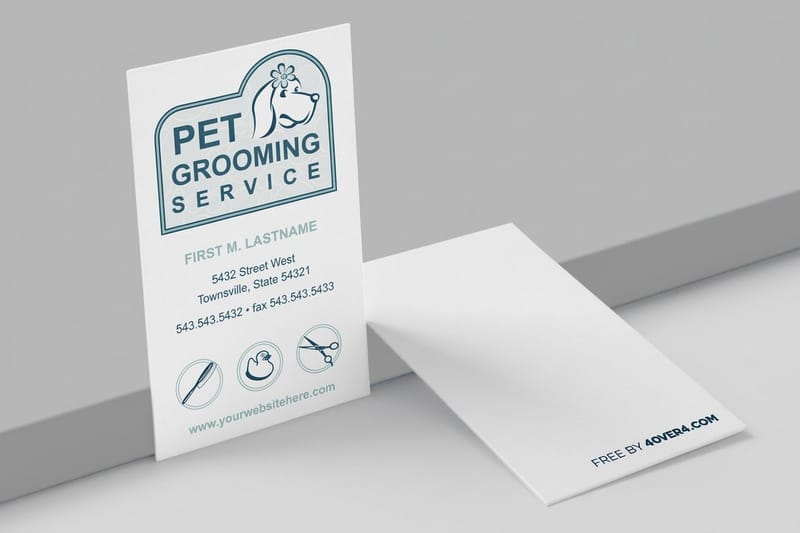
A position that only exists in your head loses to a weaker position that is printed on something. The first physical contact a prospect has with you carries about five seconds of attention, and a card that says Printing competes with everybody in the phone book. A card that says menu and takeout printing for Queens restaurants competes with almost nobody.
Four pieces carry a niche well, and they carry it in a specific order.
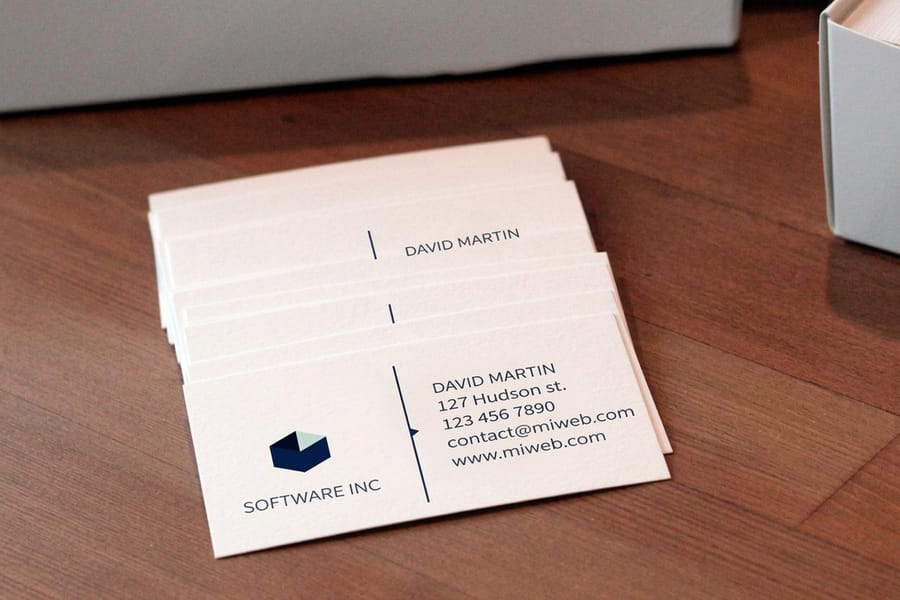
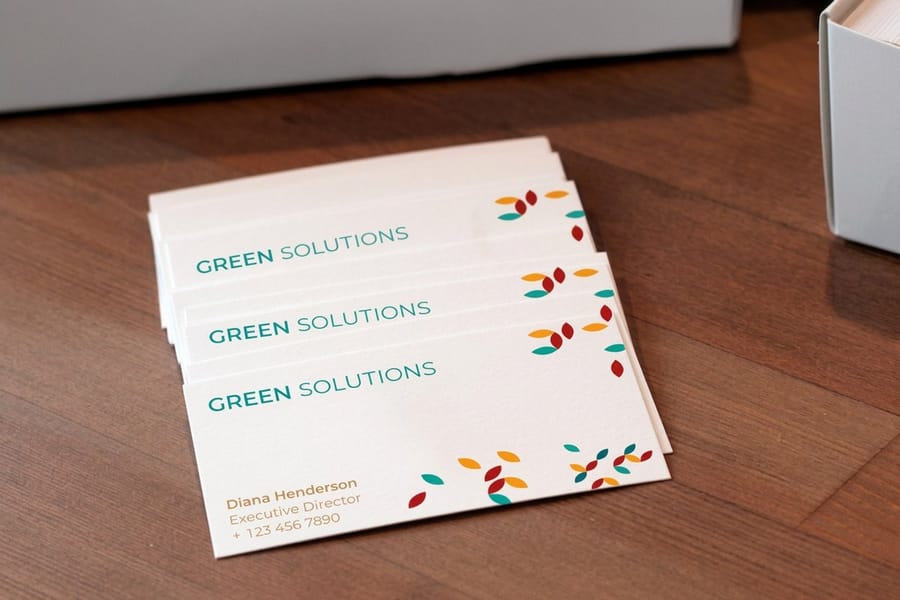
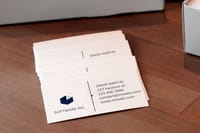
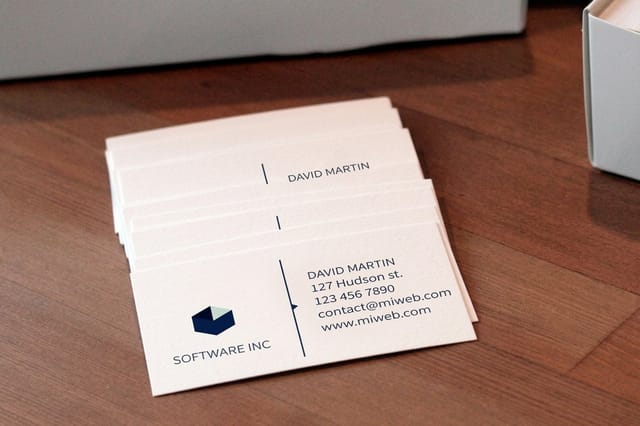
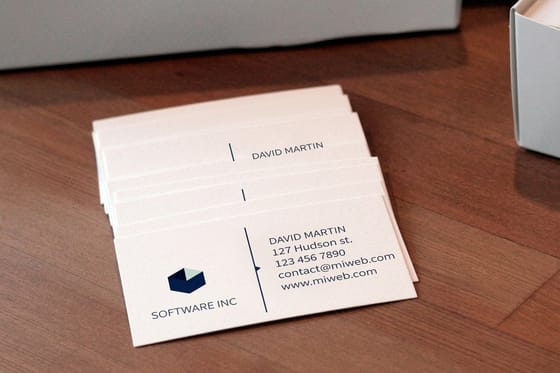
- Standard business cards, from $17.57. The niche sentence goes under your name, not on the back. This is the cheapest place to test wording, because reprinting a box costs less than changing anything else you own.
- Standard postcards, from $16.48. A mailing is only possible when the niche is countable, so this doubles as a check on test one. If you can buy or build the list, you passed.
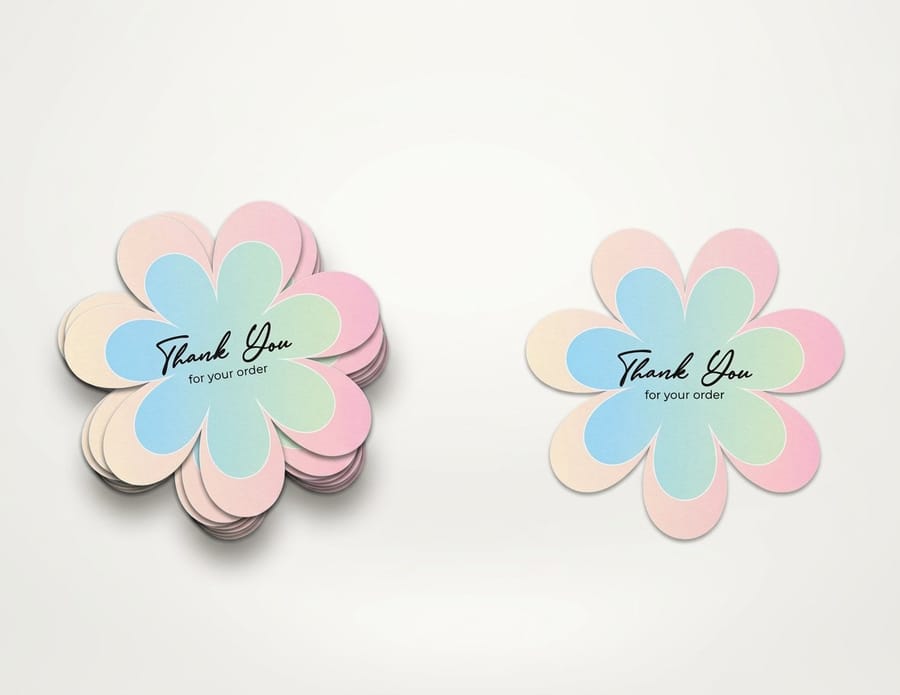
- Die-cut stickers, from $93.37. Cut to a shape only your trade recognizes. The in-joke that outsiders miss travels further on a laptop lid than a logo does.
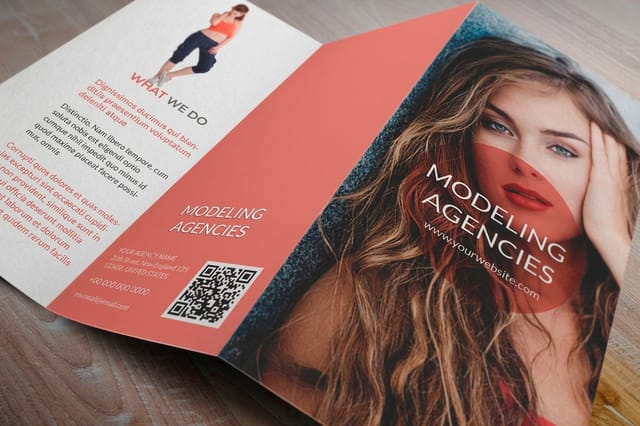
- Standard brochures, from $57.11. For niches where more than one person signs off, because the brochure is what your contact hands to the person who actually holds the budget.
One caution worth the paragraph. Print commits you, and that is both the value and the risk. While the wording is still being tested, order the smallest quantity that still gets you a sensible price break rather than the biggest run the price table rewards, because a position usually gets sharper twice in the first year. Once it stops moving, print properly and stop thinking about it. If you want the whole first run assembled for you, the startup branding starter set puts the pieces together, and the business cards printing and postcards printing categories list every stock and size with live pricing.
Five Ways to Stand Out That Have Nothing to Do With Your Logo
Once you are inside a niche, everybody there looks broadly similar to the buyer. The separation comes from what you are willing to promise, not from how the promise is styled. These are the five levers that survive contact with a competitor.
| Lever | What it looks like in practice | Time to copy | What it costs you |
|---|---|---|---|
| Guarantee | A written promise with a remedy attached, not a satisfaction slogan. | A week, if they dare | You pay out on the jobs that go wrong, publicly. |
| Turnaround | A named cutoff and a named ship date, held every time. | Months | Capacity has to sit idle so the promise survives a busy week. |
| A point of view | Saying plainly which approach in your trade is wrong, and why. | Never, honestly | Part of the market decides you are not for them. |
| Process transparency | Published prices, published steps, no quote gate. | Quarters | You lose the margin that hides inside a custom quote. |
| Narrower scope | One trade, one problem, and a referral for everything else. | Only by giving up revenue | Real revenue, refused out loud. |
The pattern in the third column is the whole lesson. The levers that hold are the ones with a cost attached, and the cheap ones get matched before your next print run. A new color palette or a redrawn mark is not on this list because neither one costs a competitor anything to answer, though it does matter that the look supports the claim rather than fighting it, which is what our brand color palette guide is for.
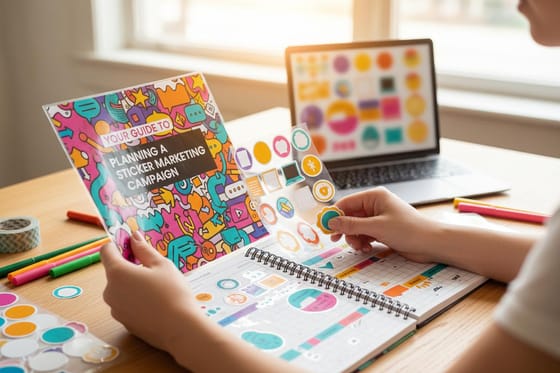
Distribution follows the same rule. A generic sticker handed to anyone is litter. A sticker that only makes sense to people in one trade gets stuck on the toolbox, which is the mechanism behind our sticker marketing campaign guide, and the stickers printing range covers the shapes and finishes that make that work.
Test the Niche Before You Rebrand Anything

Run the test small and run it honestly. One offer, one list, one channel, thirty conversations with people who genuinely match the definition. Not thirty impressions. Thirty conversations, by phone, at a counter or in a reply.
Watch for one signal above all others: does the person describe the problem back to you before you have finished explaining it? When that happens repeatedly, the niche is real. When people are polite but keep steering you toward something adjacent, you have the right customers and the wrong problem, which is a far easier fix than the other way round.
Set the kill criteria before you start, in writing. If thirty matched conversations produce nobody who owns the problem, change the niche, not the copy. If several own it but nobody will pay this year, the budget is elsewhere in their calendar and the timing is what needs to move. Keep the company name through all of it. Change the sentence under the name, print a small run, and only revisit the name after the position has paid for itself for a year. Our brand refresh checklist covers the sequence for when that day arrives, and building a brand that sells picks up where this page stops. If you would rather see the paper before you commit a run to it, the paper selection guide explains what each weight signals to the person holding it.
Wally explains finding a niche
One customer, one problem, one sentence people repeat
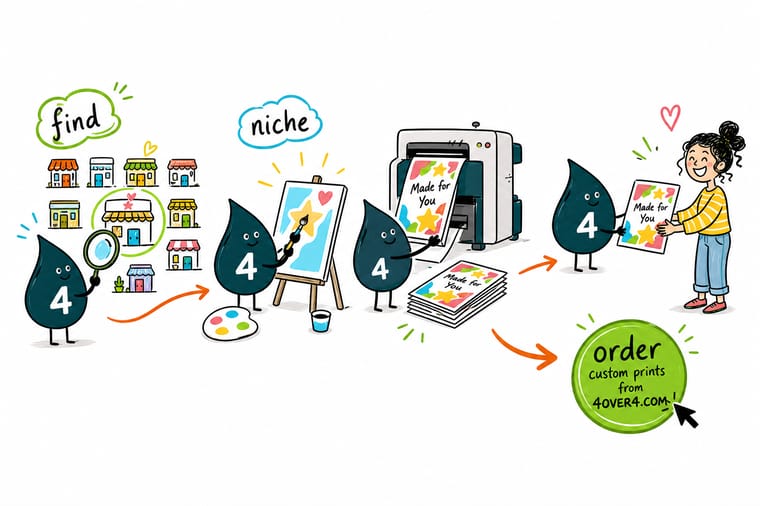
Wally hands out a card that says Printing and nothing happens, because everyone in the room says printing. He crosses it out and writes menus and takeout inserts for Queens restaurants, and suddenly three people in the room are restaurant owners who want to talk. Nothing about the business changed. He named a buyer and a problem, said no to the rest, and put it where a stranger could read it in five seconds.
Print business cards that name your niche →Specs and pricing
The three pieces that carry a position, priced
Cards for the first handshake, postcards for the list you can count, stickers for the audience that recognizes its own shorthand. Live configuration choices and starting prices from the 4OVER4.COM configurator.

Print it
Put the niche somewhere people can read it

Explore more
Where to go next


By the numbers
The print partner behind a lot of first positions
Common Questions
Your questions about choosing a niche, answered
How narrow should a niche be?
Narrow enough that a stranger in that trade reads your one sentence and thinks you work with people like them, wide enough that you can still find a few hundred of those buyers through a directory, an association, a trade publication or a mailing list. Those two conditions usually meet at the level of a named customer type plus a recurring problem, such as veterinary practices that mail reminder cards every month. If you cannot reach the group in bulk, you do not have a market, you have a handful of prospects and no way to replace them when one leaves.
What is the difference between a niche and a target audience?
A target audience is who you would like to sell to. A niche is what you organize the business around. The test is whether the choice changes anything expensive: your pricing, the tools you buy, who you hire, what your homepage says in the first line, which trade shows you attend. If narrowing changed only a slide in a pitch deck, it was an audience description. If it changed what you say no to, it is a niche.
What if somebody is already serving the niche I picked?
That is usually the reason to go in rather than the reason to stay out. An existing supplier proves people in that trade recognize the problem and already release budget for it, which is the single hardest thing to establish. Your job then is not to be the first, it is to be different on an axis that customer already complains about: response time, plain pricing, someone who answers the phone, work that arrives when promised. Read their reviews and their complaint threads, because that is a free list of the gaps you can fill.
Can a business run more than one niche?
Yes, but not at the same time and not from the same front door. Serving two niches means two lists, two sets of proof, two versions of the pitch, and often two landing pages, so the honest cost is close to running the whole marketing effort twice. Most small teams do better taking one niche to the point where referrals arrive without prompting, then adding the second. The exception is when the two share a supply chain and a buyer, for example dental practices and orthodontic practices, where the second is a short step from the first.
How long before I know whether the niche is working?
Set the checkpoint by activity, not by calendar. Thirty real conversations with people who match the definition is enough to see the pattern. If several of them describe the problem back to you before you finish explaining it, the niche is live. If they are polite but keep redirecting you to something else, they have a different priority and you have found the wrong problem for the right people, which is a much easier thing to fix than the reverse.
Do I have to change my company name to commit to a niche?
Almost never, and renaming early is one of the most expensive ways to be wrong. The sentence under the name does the work. Keep Alvarez Print Co on the card and add a second line reading menus and takeout inserts for Queens restaurants, and the prospect learns everything the name does not tell them. That line can be rewritten for the price of a box of cards rather than the price of a rebrand. Change the sentence, keep the name, and revisit the name only after the niche has paid for itself for a year.
Get Started
Chosen the niche? Now put it in someone's hand.
Pick a stock, print the sentence that names your buyer and their problem, and hand it to thirty people who match the definition.
Legal Disclaimer
Gold Standard guarantees apply to all standard orders placed through 4over4.com. Price match requires verifiable proof of a competitor's published price for an equivalent product with matching specifications and turnaround time. Satisfaction guarantee covers manufacturing defects and print quality issues. Contact support with order number and documentation. On-time delivery rate based on tracked orders 1999 to 2026. Individual results may vary based on shipping carrier performance.
