
Custom Metal Cards, How They Are Built and Who Should Carry One


Metal type, thickness, surface finish, outline. Four decisions build the card, and a fifth one, the engraving, decides whether it is a business card or a membership credential. Here is each one, with the real prices and the real wait.
A custom metal card is a business, membership or VIP card cut from a solid metal blank, with the artwork laser engraved into the surface instead of printed on top of it. At 4OVER4.COM you choose from six metal types, three thicknesses and four surface finishes, then add engraving, etched QR codes and per-card variable data. Fifty cards start at $262.52, about $5.25 each, on 15 business days of production.

Start here
What counts as a metal card, and what only looks like one
A custom metal card is cut from solid metal and engraved by a laser. Metallic paper, foil stamping and metallic ink only imitate that surface on a paper card. The difference is not visual, it is physical: a metal card has mass, it does not bend, and the engraved mark changes as the light moves across it. That is also why the build order is reversed. You choose the material first, then design for what the laser can hold, which is the opposite of every paper job you have ever ordered.
The Four Decisions That Build a Custom Metal Card

On paper you design first and pick the stock last. Metal reverses that, because the blank you choose decides what the laser can do to it afterwards. Four decisions, in this order.
One, the metal. There are six metal types on the metal business card platform. Treat them as two families: the hard-wearing ones that shrug off a pocket, and the decorative golds that look extraordinary in a photograph and mark more easily in a wallet. Pick for how the card will live, not for how it looks on screen.
Two, the thickness. Three options, and this is the one people rush. Thickness is the entire sensation of a metal card. The heaviest option lands in the hand with a weight nobody mistakes for a business card, which is the reason to buy metal at all. The thinnest still feels like metal but stacks in a cardholder and travels in quantity without turning a jacket pocket into a brick.
Three, the surface finish. Four choices: matte, mirror (shiny), brushed and textured (etched). Matte is the quietest and the most forgiving. Mirror is the loudest and the least forgiving. Brushed carries a directional grain that makes engraving pop. Textured etch gives the surface a tooth you can feel with a thumb, which is the one people keep turning over.
Four, the outline. The standard card is 2" x 3.5" and can be ordered either way round. Custom laser cutting takes it off the rectangle entirely, so a logo silhouette or a keyed shape becomes the card. Every extra shape is machine time, so decide it before you commit the artwork rather than after.
Then come the personalization layers: nine ink colors for anything printed on the surface, four laser engraving settings, six barcoding and QR options, and engraved variable data. Those are covered further down, because they are what separate a metal business card from a metal membership card.
Which Finish Actually Survives Being Handled
Durability on a metal card is not really about the metal. Every option here outlasts paper by years, does not bend, does not fray at the corners and does not soften in a wallet. The variable that decides whether the card still looks new in six months is the surface finish, and the difference between the four is bigger than the pictures suggest.
Mirror is the trap. It is the finish everybody points at first, it photographs like jewelry, and it takes a fingerprint from the first handshake and keeps it. If the card lives in a display case or gets handed over once at a signing, mirror is right. If fifty people at a booth are going to pick it up, you will spend the weekend wiping it.
Brushed is the working answer. The grain scatters light, so handling marks disappear into it and the engraved areas gain contrast against the directional lines. Textured etch does something similar with tooth instead of grain and adds a tactile hook, which matters more than it sounds on an object whose whole job is to be held. Matte sits between the two, quiet and forgiving, and it is the safest choice for a design that already has a lot going on.
One limit worth naming before you order. Metal does not forgive a file mistake the way paper does, because the fix is another full production cycle and another few hundred dollars. Build the artwork at final size with fonts outlined, start from a correctly sized layout in the blank template library, and check the trim and safe margins against the business card size guide before you upload. If a mark has never been cut in metal before, keep the first order small on purpose.
Custom Metal Membership Cards and VIP Passes
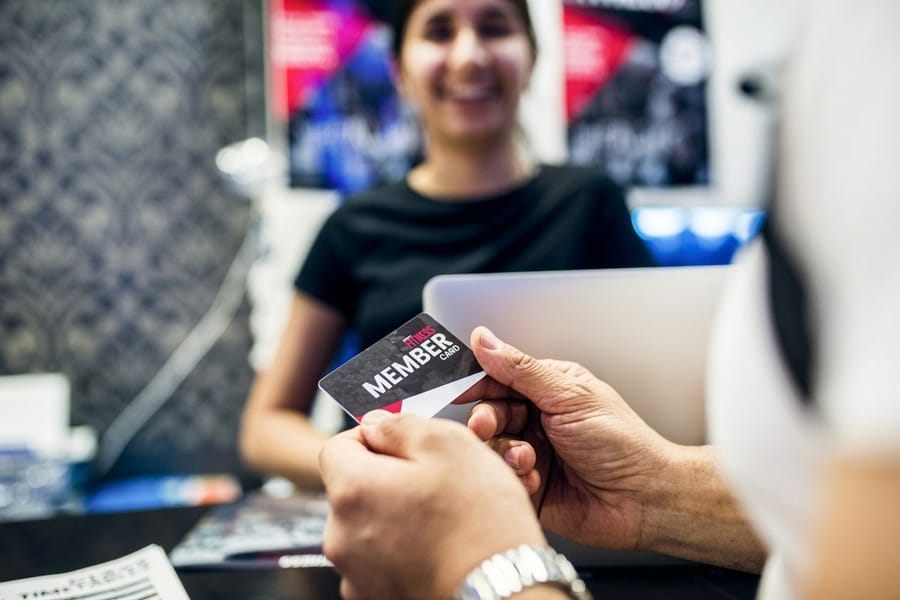
A metal business card and a custom metal membership card come off the same blank. The difference is entirely in the personalization layer, and that layer is where metal earns its price for a members club, a loyalty tier or a VIP list.
Engraved variable data drops a unique name, member number or one-off code onto every card in the run, so fifty cards become fifty credentials rather than fifty copies. Six barcoding and QR options mean a scannable code can be etched into the metal itself, with no sticker to lift and nothing to reprint when it wears. If the numbering scheme matters more than the artwork, our sequential numbering service and barcoding service explain how the run is built and what we need from you.
Now the honest limit. Metal cannot carry a magnetic stripe, because a stripe needs a laminated plastic body to sit in, and it cannot take a punched lanyard slot without compromising the blank. Those jobs belong to plastic membership cards, which are built at the 2.125" x 3.375" credit-card size and add a signature panel, a magnetic stripe, embossed numbering, scratch-off panels and a lanyard slot. Plastic VIP cards run the same specification.
| Card | Size | What it can carry | From price |
|---|---|---|---|
| Metal cards | 2" x 3.5", or custom laser cut | Engraved variable data, etched QR and barcodes, engraving plus printed ink | $262.52 for 50 |
| Plastic membership cards | 2.125" x 3.375" | Magnetic stripe, signature panel, embossed numbering, scratch-off, lanyard slot | $226.11 |
| Silk aluminum foil cards | Standard card sizes | Foil stamping, embossing and silk lamination on shiny aluminum | $276.63 |
| Standard paper cards | Standard card sizes | Full-color printing across a large stock and coating range | $17.57 for 100 |
Most programs that reach any size end up issuing both: plastic to the whole membership, because it scans and hangs off a lanyard, and metal to the tier that is supposed to feel different. If you are designing the program rather than just the card, how to create loyalty cards covers the mechanics, and the membership drive print set lists the rest of the print a sign-up campaign needs.
When a Metal Card Is Worth It, and When It Is Not

Fifty metal cards cost $262.52, about $5.25 each. A box of standard business cards works out at roughly 17.6 cents each. One metal card is about thirty paper ones, and that ratio is the whole argument.
At $5.25 you are not buying reach, you are buying the odds that the card is still on a desk in a year. Metal is extremely good at that and extremely bad at volume. The test we give customers is blunt: can you name the fifty people who get one? A list of investors, closing clients, partners and the handful of people who decide things is a metal order. "Whoever walks past the booth" is a paper order, and the difference is better spent on the booth.
The lead time is the constraint people underestimate. Production runs 15 business days before shipping, which makes metal a planned purchase and never a reorder. Order it for the quarter, not for the conference. If the date is close and the budget is not, a heavy stock with a strong finish gets most of the reaction for a tenth of the money, and what makes a business card premium covers that route. If you want the weight without the wait, plastic business cards and the 30mil plastic card materials guide are the practical middle.
Two tiers is the answer most businesses land on, and it is a strategy rather than a compromise: a box of paper cards for volume, a small set of metal for the meetings that decide something. Browse the whole range on business card printing to see where each material sits, or read plastic vs paper business cards before you rule out the cheaper way off paper.
Wally explains custom metal cards
Pick the metal, then the thickness, then the finish that survives hands
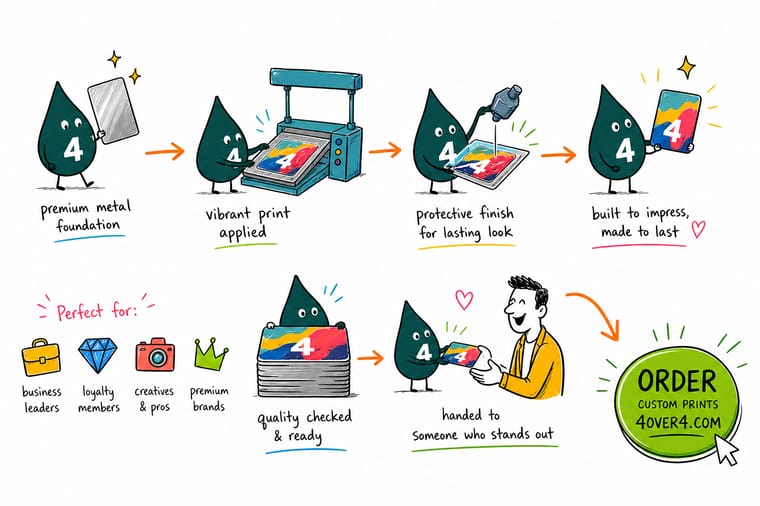
Wally starts with the blank, because the metal decides what the laser can cut into it later. Then thickness, which is the part people feel. Then the finish, and this is where Wally saves customers from themselves: mirror looks incredible in a photograph and holds a fingerprint from the first handshake, while brushed hides handling in its grain and makes the engraving pop. Fifty cards run $262.52 on 15 business days, so Wally orders metal for the quarter, never for the conference.
Configure metal cards →Specs and pricing
Metal card options and live pricing, side by side with plastic
Every option group on the metal card platform, straight from the configurator, next to the plastic membership card it is most often weighed against. Prices update live as you change quantity, metal, thickness and finish.


Order it
Metal, plastic and aluminum cards made in-house at 4OVER4


Explore more
Where to go next

By the numbers
What the metal card platform actually offers
Common Questions
Your custom metal card questions, answered
What is a custom metal card?
It is a card cut from a solid metal blank rather than printed on paper, with the artwork laser engraved into the surface so it reads by shadow instead of by ink. At 4OVER4.COM the metal card platform covers six metal types, three thicknesses and four surface finishes, and it prints in nine ink colors as well, so a colored element can sit on the metal beside an engraved one. The same blank becomes a business card, a membership card or a VIP pass depending on what you engrave into it.
How do I choose the metal and the thickness?
Choose the metal for how it will be handled and the thickness for how it should feel. Of the six metals, the corrosion-resistant ones handle pockets, wallets and years of use; the decorative golds and rose golds photograph better than they wear. Thickness is the part people rush: the thickest option lands in the hand like a coin and is the whole reason to buy metal, while the thinnest still feels nothing like paper but stacks in a normal cardholder and travels in quantity. If the card is going into a wallet next to other cards, go thinner. If it is being handed over once, deliberately, go thicker.
What do custom metal cards cost and how is the price set?
Fifty metal cards start at $262.52, which is about $5.25 each. Price is set by quantity first, then by the four build decisions: metal type, thickness, surface finish and whether the outline needs custom laser cutting. Personalization adds to it, since engraved variable data and etched barcoding are per-card work rather than a one-time plate. For scale, a box of standard business cards starts at $17.57 for 100, roughly 17.6 cents a card, so one metal card costs about thirty paper ones. That ratio, not the sticker price, is the decision.
What sizes, metals and finishes can I order?
The standard metal card is 2" x 3.5", and it can be ordered in either orientation. Beyond the rectangle, custom laser cutting takes the outline to a shape of your own. There are six metal types, three thicknesses, and four surface finishes: matte, mirror (shiny), brushed and textured (etched). Laser engraving has four settings, barcoding and QR codes have six, and engraved variable data is a yes or no switch on the order.
How long do metal cards take to print and ship?
Standard production is 15 business days, made in-house in New York, and shipping is on top of that. It is the longest lead time on any card we make, because cutting and engraving metal is machine time that cannot be compressed the way a paper run can. Plan three to four weeks. If the date is closer than that, print paper for the event and post the metal cards afterwards to the people who mattered.
Can a metal card work as a membership or VIP card?
Yes, and it is the strongest reason to buy metal that has nothing to do with looks. Engraved variable data gives every card in a run its own name, member number or one-off code, and an etched QR code or barcode makes it scannable at a door or a till. A set of fifty stops being fifty identical cards and becomes fifty credentials. What it will not do is open a hotel-style reader, since metal cannot carry a magnetic stripe.
Can a metal card carry a magnetic stripe or a lanyard hole?
No on the stripe. A magnetic stripe needs a laminated plastic body, so that job belongs to plastic membership cards, which are built at the 2.125" x 3.375" credit-card size and offer a stripe, a signature panel, embossed numbering and a punched lanyard slot. Metal handles identity and permanence; plastic handles machine reading and wearables. Programmes that need both usually issue plastic to the whole membership and metal to the top tier.
Will engraving hold my logo, or should I print it?
Engraved detail reads by shadow, so weighted shapes hold and hairlines vanish. Filled logo forms, display type, a monogram, a heavy rule and a QR code with generous modules all survive. Light-weight small text, fine serifs, gradients, screens and photographs do not. The reliable pattern on a card that has both a symbol and an address block is to engrave the symbol and print the rest in one of the nine ink colors.
Get Started
50 metal business cards cost $262.52, or $5.25 each
Choose the metal, the thickness and the finish, add engraving or per-card numbering, and watch the price update live as you go.
Legal Disclaimer
Gold Standard guarantees apply to all standard orders placed through 4over4.com. Price match requires verifiable proof of a competitor's published price for an equivalent product with matching specifications and turnaround time. Satisfaction guarantee covers manufacturing defects and print quality issues. Contact support with order number and documentation. On-time delivery rate based on tracked orders 1999 to 2026. Individual results may vary based on shipping carrier performance.
