
Sequential Numbering That Keeps Every Ticket Accounted For


An unnumbered ticket is a rumor; a numbered one is proof. Sequential numbering prints a consecutive number on every piece in the run, tickets, forms, certificates, in the format and position you choose. Here is how it works and how to order it at 4OVER4.COM.
Sequential numbering is a printing service that puts a consecutive number on every piece in a run, incrementing digitally as the job prints. You choose the starting number, digit count, an optional prefix, and where the number sits, including matching numbers on a tear-off stub or across every copy of a multi-part form. The result is a run that can be counted, matched, and audited: tickets that prove attendance, invoices with an unbroken series, raffles where stub and ticket reunite.
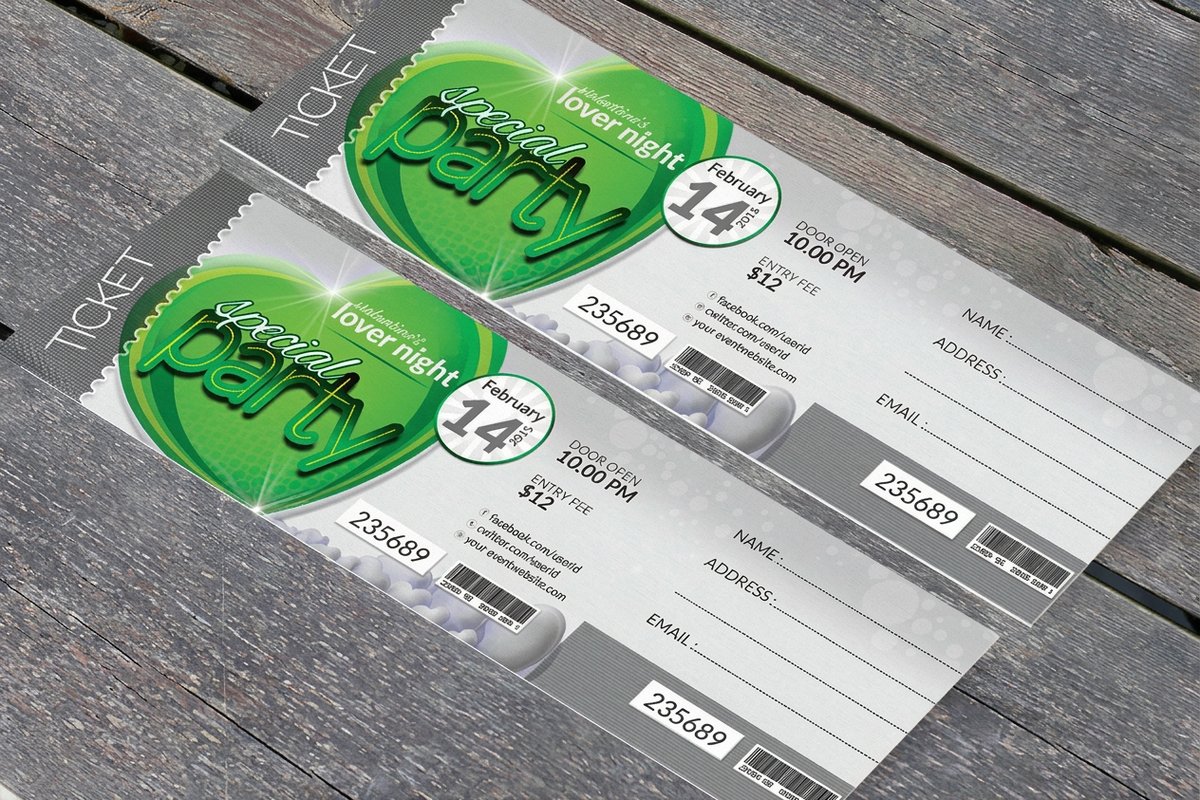
Start here
Sequential numbering in one paragraph
Sequential numbering prints a consecutive number on each piece of a run, in your chosen start, format, prefix, and position, incrementing digitally as the job prints. It turns tickets into capacity proof, invoices into audit trails, and raffles into working draws, and it pairs naturally with perforation for matched stubs. Reserve a high-contrast space sized for the longest value, and the rest is a normal print run.
Why a number turns paper into an instrument

An unnumbered ticket is a rumor: anyone can print another, nobody can say how many exist. Put a consecutive number on it and it becomes an instrument, countable at the box office, checkable at the door, auditable after the event. The ink is the same. The number is what makes it mean something.
The same shift happens across paperwork. An invoice book with an unbroken series is self-auditing, a missing number announces itself. A raffle works because ticket 0847 and stub 0847 can find each other in a drum of hundreds. A voucher with a number can be voided individually instead of killing the whole campaign when one leaks.
Sequential numbering is the service that adds this control to a printed run: every piece carries the next number in order, in the format and position you choose. It ships most often on event tickets and carbonless forms, and this page covers how it works, the formats available, and how to design a piece that numbers cleanly at 4OVER4.COM.
What sequential numbering actually is
Mechanically, sequential numbering is a digital counter attached to the press run. Your piece is designed with a reserved space, and as the run prints, the counter increments once per piece: the first carries your starting number, the last carries the start plus the quantity, minus one. No two pieces in the run match.
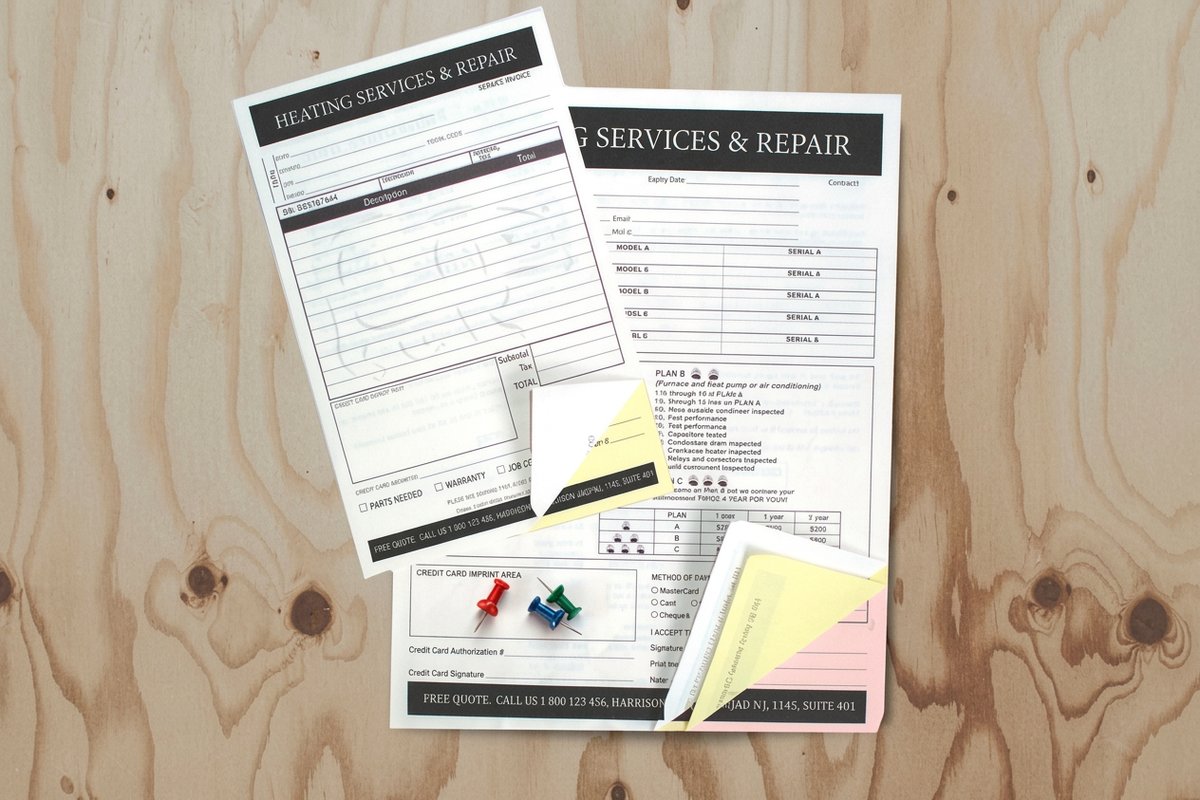
Because the increment is digital, the number is real ink in your chosen typeface, size, and color, not a rubber-stamp afterthought. It can sit anywhere the design allows: a corner, a stub, both, and it can repeat on multi-part sets, on carbonless forms the same number prints on every copy in the set, so the white, yellow, and pink sheets of one transaction stay married.
The service is the simplest member of the data-driven printing family. When the per-piece element is a name, an offer, or a unique random code rather than a counter, the job graduates to variable data printing, and when the number must be machine-readable, barcoding prints it as a scannable symbol alongside or instead of the digits.
Tickets and raffles: the number as the mechanism
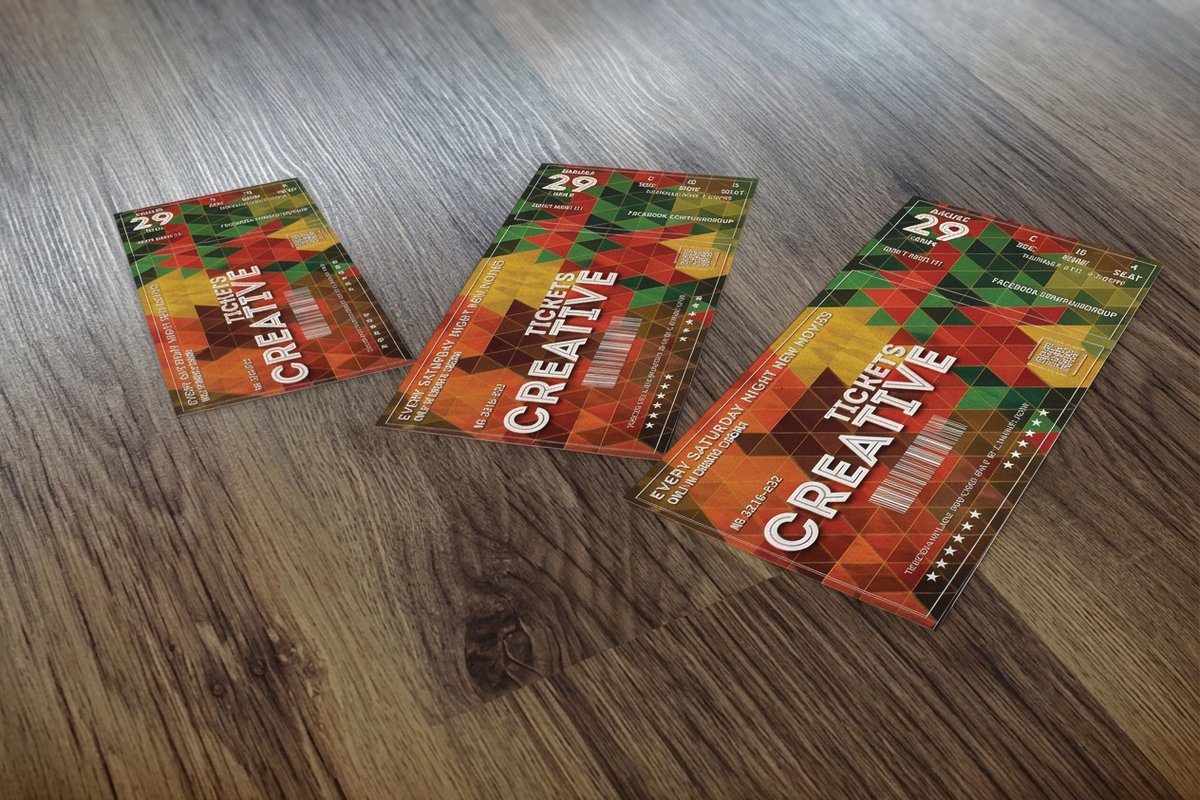
Admission tickets use numbering for capacity truth. The run is printed to the venue count, the series proves it, and the door can verify that ticket 0311 is inside the issued range. Sales tracking rides along free: if the last ticket sold is 0642, that is the attendance, no counting required.
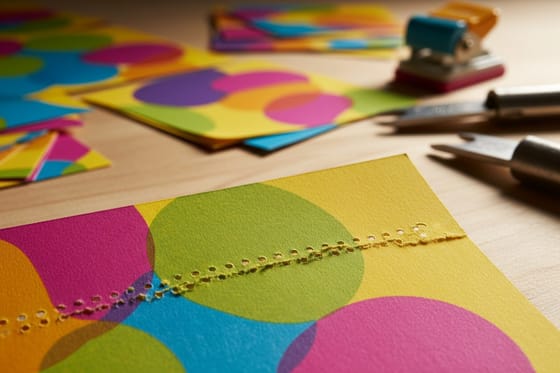
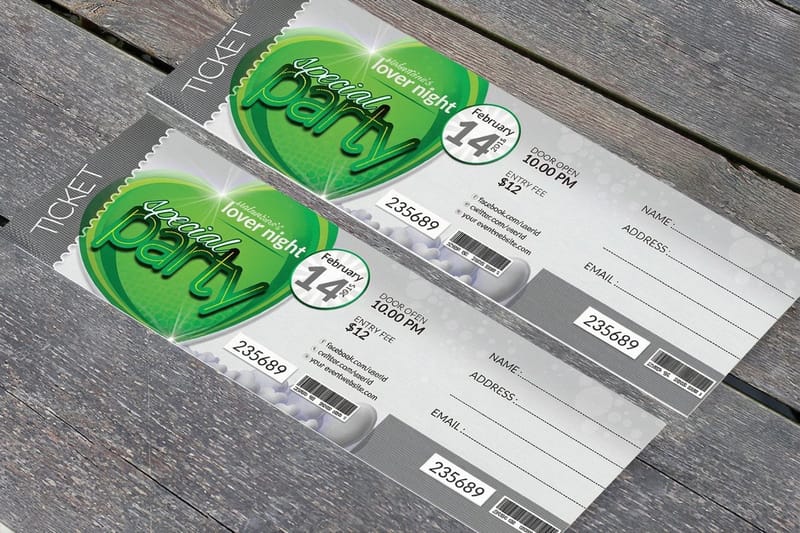
Raffle tickets are the purest case, because the number is the entire product. The standard build is a perforated two-part piece with the same number on both halves: the holder keeps one, the drum gets the other, and the draw works because the pair can reunite. Digit count matters here, a 4-digit series keeps calls unambiguous even in a loud room.
Both formats benefit from the same design habits: the number large enough to read at arm's length, printed on both parts of any stub arrangement, and clear of the tear line itself. Our event tickets ship with numbering and perforation configured together, which is how most runs order them.
Forms, invoices, and the audit trail
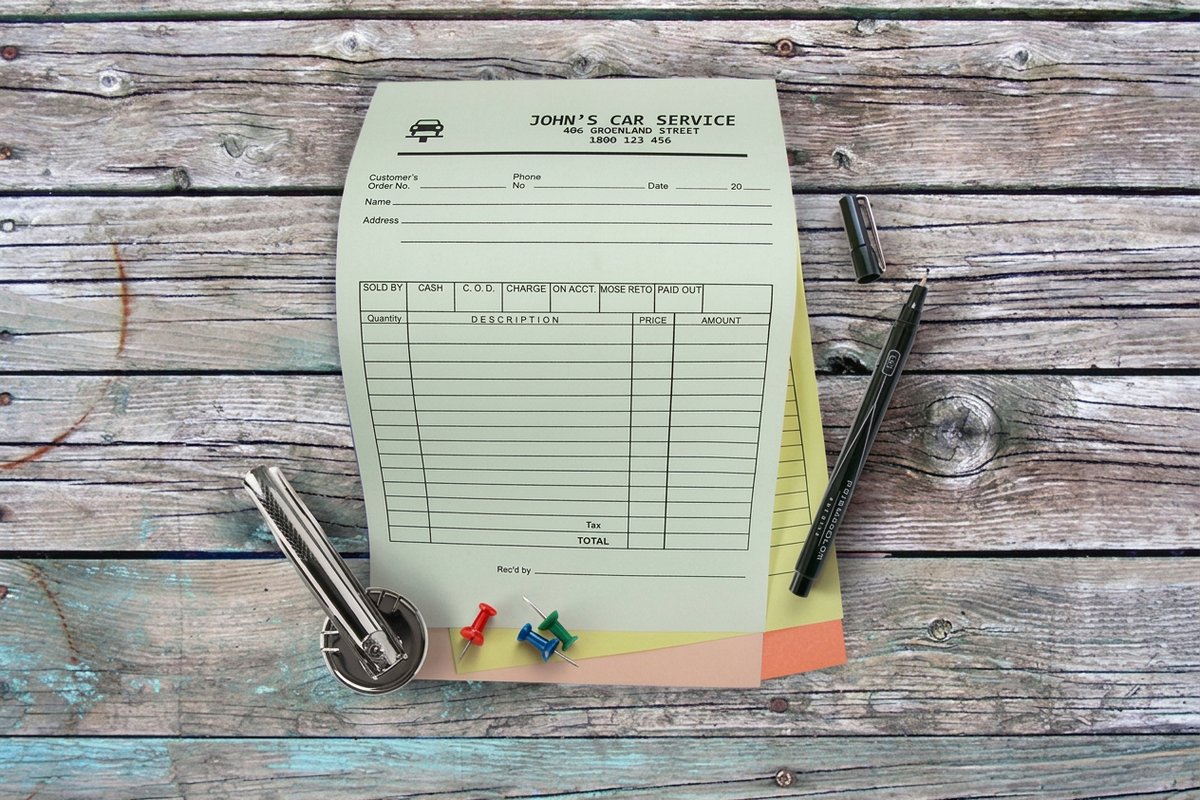
Business paperwork runs on unbroken series. Invoices, receipts, work orders, purchase orders, delivery notes, in each case the number sequence is the audit trail: every document accounted for, every gap an immediate flag. Accountants and tax auditors read number series before they read amounts, which is why numbered stationery is standard practice for any business that writes paper transactions.
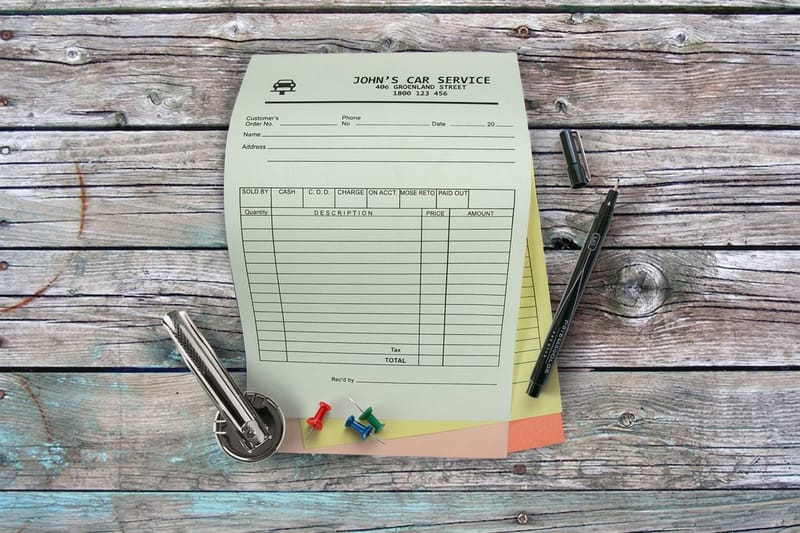
On carbonless forms the numbering has one extra job: the same number prints on every part of the set, so when the white copy goes to the customer, the yellow to the office, and the pink stays in the book, all three still describe one numbered transaction. A reorder can continue the series from your last book, keeping the trail unbroken across years.
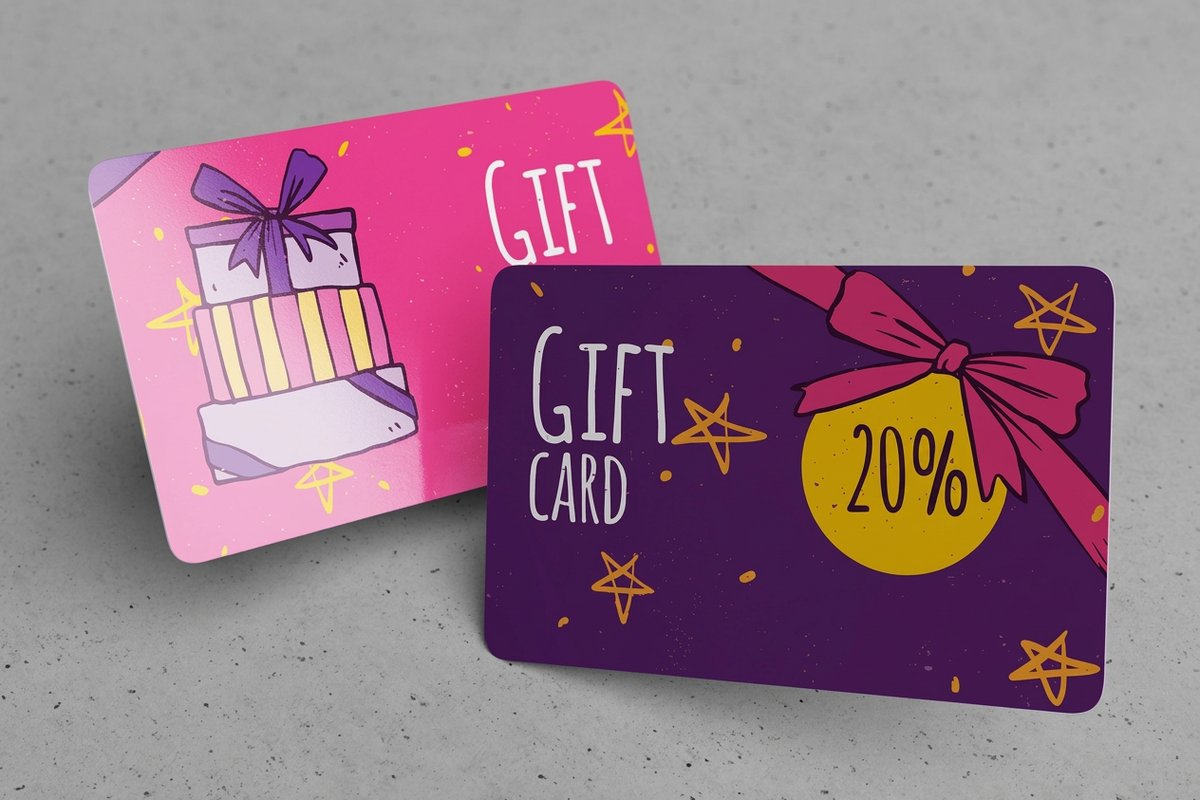
Gift certificates and vouchers use the series for redemption control: mark 0233 as redeemed and it cannot be redeemed twice, void 0234 if it goes missing. Where redemption happens at a register, pairing the printed number with a scannable code through our barcoding service closes the loop between the paper and the system.
Formats: start, digits, prefixes, and positions
A numbering spec has four parts. The start: 0001 is the default, but runs can start anywhere, including continuing from a previous order so the series never restarts. The digit count: fixed-width numbers like 0001 keep columns aligned and calls unambiguous; choose enough digits for the largest number the series will ever reach.
The prefix carries meaning: a year (2026-0001), an event or venue code (GALA-0001), a series letter for multi-batch runs (A-0001, B-0001). Prefixes cost nothing and save confusion the moment you run a second event or a second book. The position: a corner for tickets, the header for forms, both halves of any stub, and optionally twice on one piece for legibility.
Specify all four with your order. If you are unsure what the series should look like, the honest default is a 4-digit zero-padded number starting at 0001 with a year prefix, it reads cleanly, sorts correctly, and scales. For anything unusual, duplicate series, skipped ranges, multiple independent counters on one piece, route the request through the services hub and we will confirm the setup before printing.
Designing a piece that numbers cleanly
The design rule is simple: reserve the space, protect the contrast. Leave a clear field where the number will print, sized for the longest value in the series, prefix included. A number mocked up as 0001 will be wider as 2026-0847, and a field that fits the first will clip the second.
Contrast is what keeps the number legible and, on tickets, verifiable at a glance in bad light. Dark ink on a light, unpatterned background is the safe default; avoid placing the number over photographs, gradients, or heavy texture. Keep it clear of trim edges, folds, and above all the perforation line, a number that tears in half serves nobody.
Everything else is a normal print-ready file with standard bleed and margins, covered in our printing guides and the printing terms glossary if the vocabulary is new. Note the numbering spec, start, digits, prefix, positions, with your order, and prepress verifies the reserved space against the longest value before the run commits.
What numbering costs and how to order it
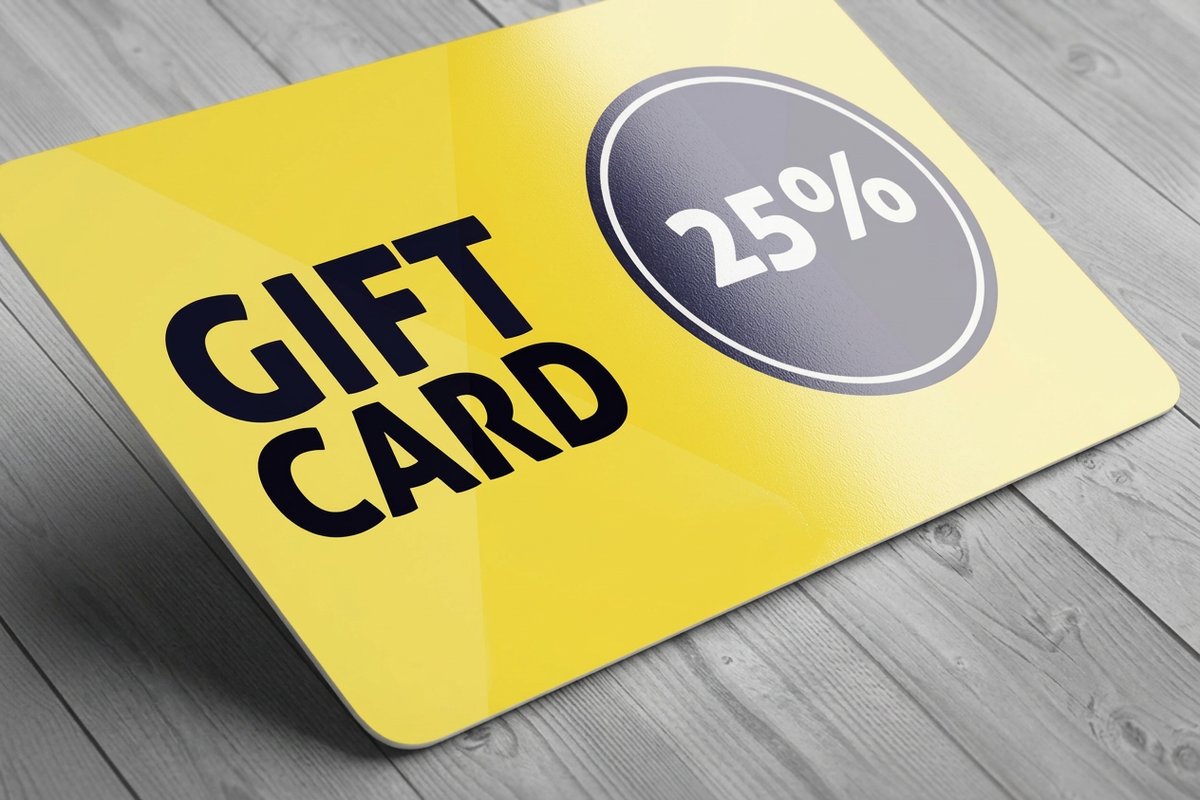
Sequential numbering is a light add-on, because the counter increments digitally during the run rather than requiring a separate pass. The base product carries the price: the ticket stock, the multi-part form set, the certificate. Per-unit cost falls with quantity, and combining numbering with perforation in one order costs less than sourcing them separately.
Order it by configuring the product, event tickets, carbonless forms, or gift cards, and noting your numbering spec. The live pricing panel below shows real numbers for the ticket product on this page, so you can see how quantity moves the price before you commit.
If your run needs more than a counter, per-piece names, random unique codes, scannable symbols, step up to variable data printing or barcoding, both of which build on the same reserved-space design habits described here. And for the full menu of what can ship on one order, browse the finishing services hub.
Compare the options
Per-piece control options side by side
A consecutive number is the simplest form of per-piece control. Here is how it sits against its scannable and data-driven relatives.
| Option | What it does | Best for |
|---|---|---|
| Sequential numbering | Prints a consecutive number on each piece in the run, with your choice of start, format, prefix, and position. | Tickets, raffles, invoices, forms, and gift certificates that need counting or audit control. |
| Barcoding | Prints a scannable symbol per piece, so the number is read by machine instead of by eye. | Items that get scanned at a register, a door, or a warehouse rather than read by a person. |
| Variable data printing | Merges a full data file into the design, names, offers, codes, and images per piece, not just a counter. | Personalized mail and cards where each piece carries more than a number. |
| Perforation | Adds a clean tear line so part of the piece detaches, the stub that numbering makes matchable. | Tickets, coupons, and reply slips, usually ordered together with numbering. |
Infographic
The sequential numbering process in four steps
From a reserved space in your design to a countable, auditable run, here is how numbering comes together.
The counter increments digitally as the run prints, so every piece carries the next number in your format with no separate stamping pass.
Specs and pricing
A live pricing example
Numbering rides on the product it controls, so the piece prices out in the configurator. Here are the live specs and price-per-unit for event tickets, the classic numbered product, straight from 4OVER4.COM.
| Quantity | Price Per Unit | Total |
|---|---|---|
| 50 | 50.5¢ | $25.27 |
| 100 | 42.8¢ | $42.84 |
| 200 | 25.8¢ | $51.62 |
| 300 | 20.1¢ | $60.42 |
| 400 | 17.3¢ | $69.20 |
| 500 | 15.6¢ | $77.99 |
| 600 | 15.4¢ | $92.26 |
| 700 | 15.2¢ | $106.55 |
Number these
Products that print with sequential numbers
Wally explains sequential numbering
Every piece gets a name, and the name is a number.
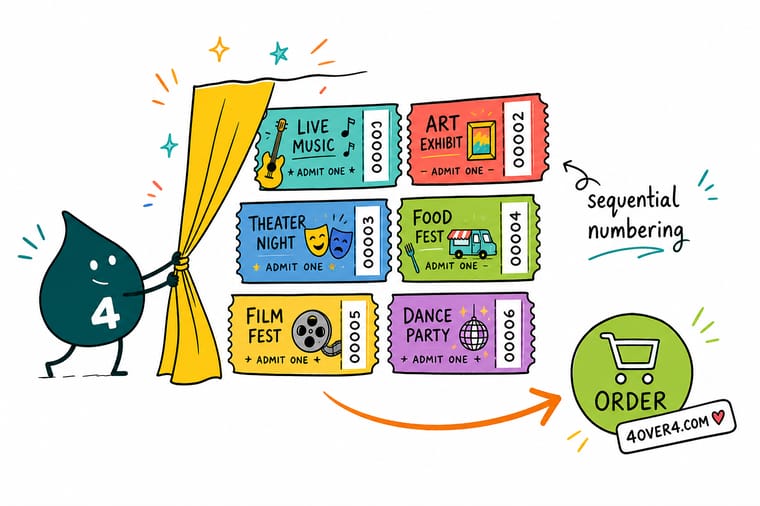
Wally's view: a run without numbers is a crowd, a run with numbers is a roster. Reserve a clear space on the piece, pick the start and the format, and the counter does the rest, ticket 0001 through the last seat in the house, stub matching ticket, invoice following invoice with no gaps. Add perforation for the tear, add a barcode if a machine needs to read it, and let 4OVER4 print the whole series straight.
Start a numbering project →Get Started
Ready to put your run in order?
Bring your tickets, forms, or certificates to 4OVER4.COM and print them with consecutive numbers in your format. Configure your piece and watch the price update live.
Explore more
Where to go next

By the numbers
Printing you can count on at 4OVER4
Common Questions
Common questions about sequential numbering
What is sequential numbering in printing?
Sequential numbering is a printing service that puts a consecutive number on every piece in a run: 0001 on the first, 0002 on the second, and so on to the end. You choose the starting number, the number of digits, an optional prefix, and the position on the piece. The result is a run where every individual piece is identifiable and countable, which is what tickets, invoices, raffles, and controlled documents need to function as more than paper.
Why do tickets and forms need numbering?
Because the number is what turns a printed rectangle into an instrument of control. On an event ticket, the sequence proves how many were issued and catches duplicates at the door. On an invoice or receipt book, an unbroken number series is what an accountant or auditor checks first, a gap means a missing document. On a raffle ticket, the matched number on ticket and stub is the draw mechanism itself. Remove the numbers and each of these becomes unverifiable.
Can I choose the starting number and format?
Yes, all of it. Runs can start at 0001, at 1000, or continue from where your last order ended so a reorder extends the series instead of restarting it. Digit count is your call, 3, 4, 5, or more, and a prefix can carry meaning: a year like 2026-, a location code, or a series letter for multi-batch events. Tell us the format with your order and every piece follows it exactly.
Can the same number print twice on one piece, like a ticket and its stub?
Yes, and for raffles and admission tickets it is the standard setup. The piece is designed with a perforated stub, and the same number prints on both sides of the tear line, so when the stub is torn off and dropped in the drum, it still matches the ticket in the holder's hand. You can also print the number in two positions for legibility, or pair the human-readable number with a scannable barcode carrying the same value.
What products can be sequentially numbered?
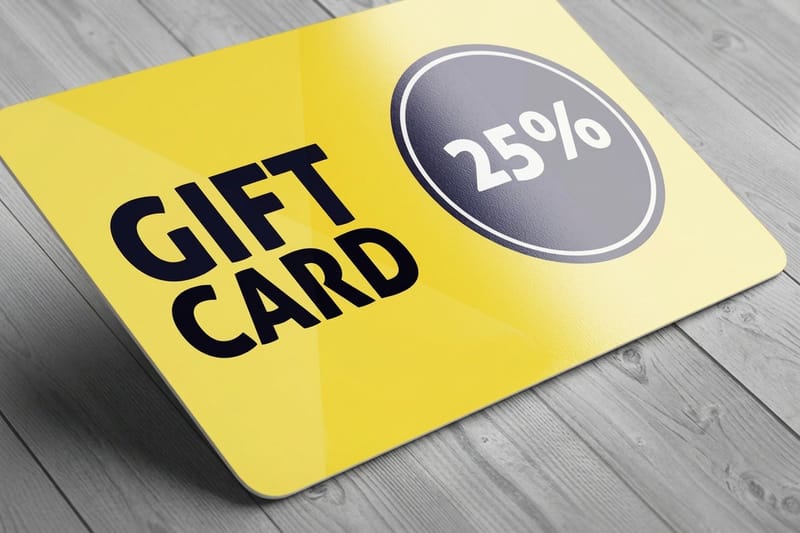
Event tickets and raffle tickets are the classic cases, followed by carbonless forms, invoices, receipts, work orders, and delivery notes, where the number series is an accounting requirement. Gift certificates and vouchers use numbering for redemption control, and plastic gift cards carry unique numbers as a matter of course. Coupons, entry passes, and limited-edition prints round out the list. If the piece needs to be counted, matched, or audited, it is a candidate.
How should I design around the number?
Reserve a clear space for it. The number needs solid contrast against its background, dark ink on a light field is the safe default, and enough room for the largest value in the run: a 4-digit number with a prefix is wider than the 0001 you might mock up with. Keep it clear of folds, perforation lines, and trim edges, and if the piece has a stub, reserve matching space on both halves. We check the number position at prepress before the run prints.
How much does sequential numbering cost?
Numbering is a modest add-on to the piece it runs on, because the increment happens digitally during the print run rather than as a separate pass. The base product, the ticket, the form, the certificate, is the main cost, and the per-unit price falls with quantity as usual. Configure the product in the live configurator for real numbers, and note the numbering format in your order or through the services hub for anything nonstandard.
Legal Disclaimer
Gold Standard guarantees apply to all standard orders placed through 4over4.com. Price match requires verifiable proof of a competitor's published price for an equivalent product with matching specifications and turnaround time. Satisfaction guarantee covers manufacturing defects and print quality issues. Contact support with order number and documentation. On-time delivery rate based on tracked orders 1999 to 2026. Individual results may vary based on shipping carrier performance.
