
What Makes a Business Card Premium, From 16pt Suede to 80pt Painted Edges


Emma is our prepress and print production voice, built from the knowledge of our production team, with over 20 years in printing.
Premium is three upgrades bought separately: the stock, the surface, and the cut edge. Each one changes something in the hand, and each has a price at 4OVER4.COM, and when it is the wrong buy.
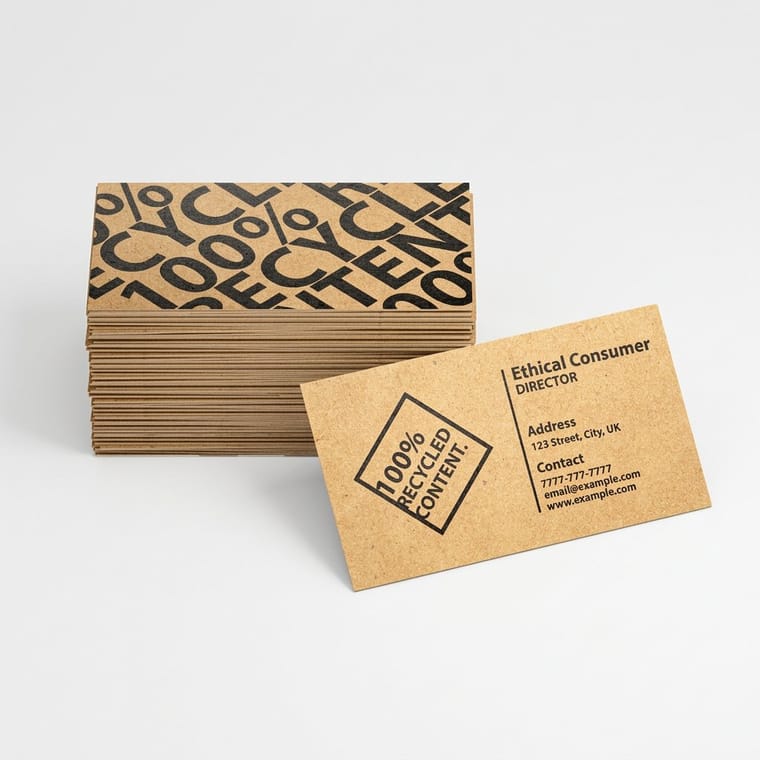
A business card reads as premium when the stock is heavy, the surface is laminated or velvety rather than slick, and the cut edge is painted or foiled. Those three are priced independently. At 4OVER4.COM that means 32pt to 80pt ultra thick stocks from $36.62 per 50, 16pt suede and velvet laminates from $87.15 per 250, painted edges from $141.70 per 250, and gilded edges from $328.42 per 250. Surface does more work than thickness at the same money, and edge treatments only run on 32pt or heavier stock. To double the thickness of a business card and keep a velvet surface, ultra thick velvet laminated cards run 32pt or 48pt from 250.
Quick answer
Stock, surface, edge, and which one people actually notice
Premium is bought in three parts, and touch outranks weight. Thickness runs 14pt or 16pt on a standard card and 32pt to 80pt on the heavy lines. Surface is a suede, velvet or silk laminate over 16pt, or a soft touch uncoated stock that is velvety all the way through. The edge can be painted in 16 colors on 32pt uncoated, or gilded in 19 foil colors on 32pt and 48pt laminated stock. Hand someone a 16pt suede card and a plain 32pt card and most people pick the thinner one as the expensive one.
The Three Levers Behind Every Expensive Feeling Card
Premium is not one upgrade. It is three, and they are quoted separately, which is why two cards at the same price can feel nothing alike.
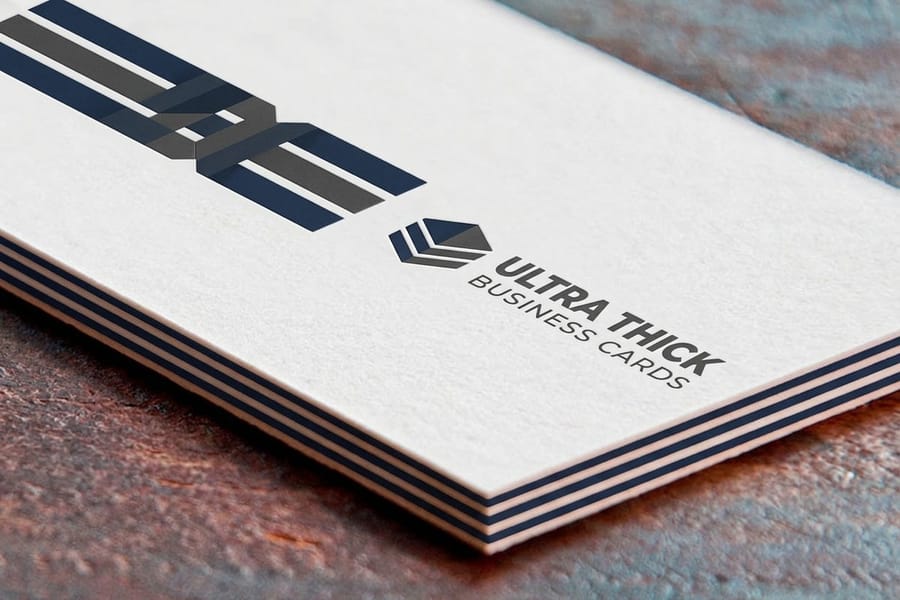
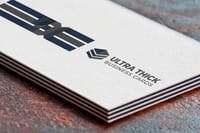
Stock thickness is the first. A standard card is 14pt or 16pt. Ultra thick business cards begin at 32pt on UltraWhite uncoated and go to 48pt, 64pt and 80pt, with gloss cover at 40pt, 56pt and 72pt. Thickness is what people notice when they take the card and what makes a stack sit heavy in a pocket.
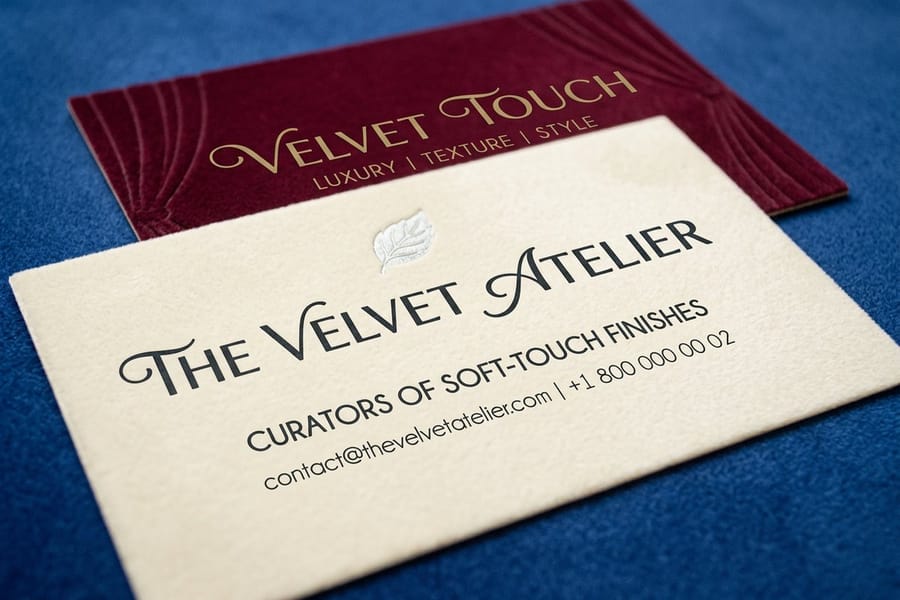
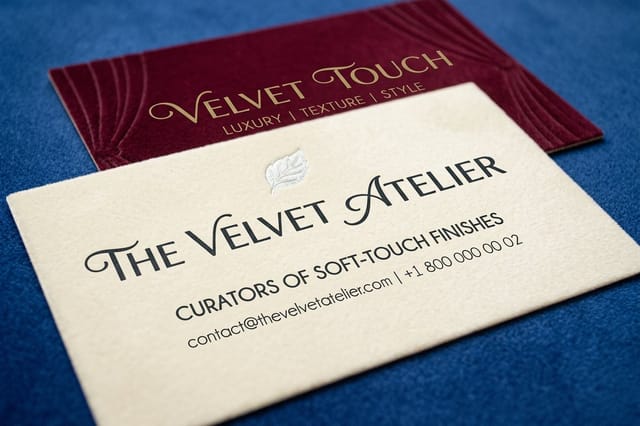
Surface laminate is the second, and it is the one most people underestimate. A film of suede, velvet or silk pressed over a 16pt cover changes the drag under a thumb completely. Hand someone a plain 32pt card and a 16pt suede card and most people call the thinner one the expensive one, because touch registers before weight.
The cut edge is the third and the least used. Paint or foil applied around the perimeter turns the side of the card into a design surface. It only works on thick stock, so it is the one lever that depends on another.
Two more sit on top of those: contrast finishes such as spot UV gloss and raised foil, which play a shiny element against a matte one. Everything else sold as premium, richer ink, a clever layout, a heavier logo, changes how the card looks and not how it feels. Both matter, but only one survives being handed across a table.
How Thick to Go, and Where Thick Stops Helping
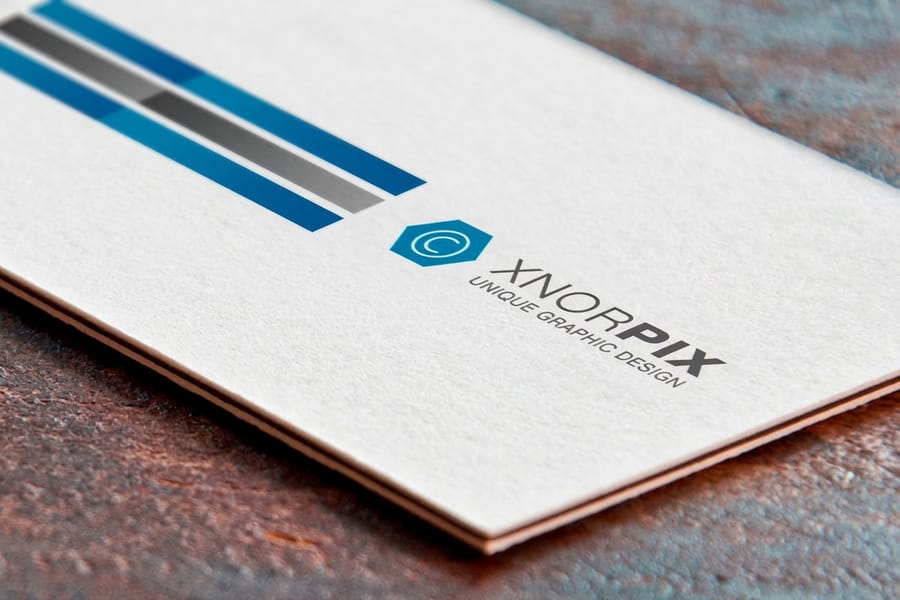
The jump people feel most is 16pt to 32pt. That is a doubling, and it is instantly obvious in a hand. The jump from 32pt to 48pt is real but quieter, and past 48pt the card starts to argue with the world it lives in.
An 80pt card is about five standard cards thick. It is a genuine object, and at a trade show table it works, because nobody is carrying forty of them home. For a salesperson who refills a cardholder every week, 80pt is the wrong buy: the case holds a third as many, and slim wallet slots stop accepting them entirely somewhere around 48pt.
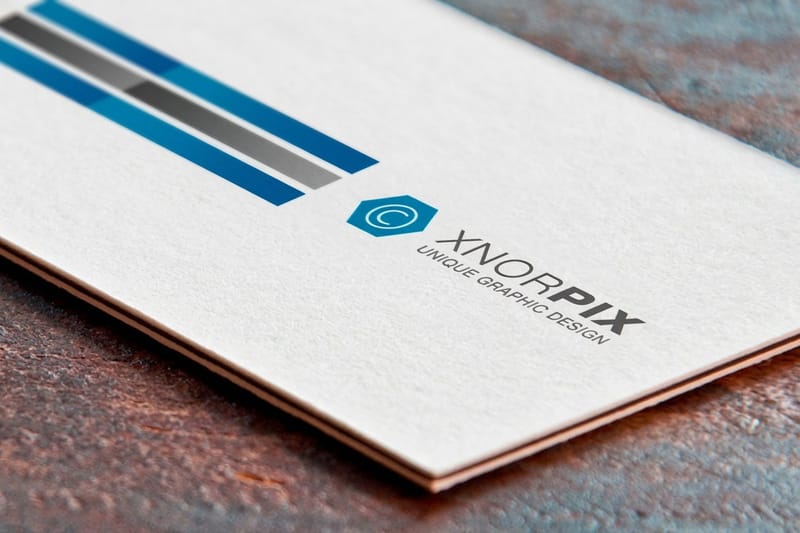
Uncoated heavyweight stock has one advantage no laminated card can match. It takes a pen. If your staff write a quote, a date or a name on the back, order premium prestige business cards on UltraWhite uncoated and skip the film. Ordering is by set of 50 on the thick lines, which also makes them the cheapest way to test a heavy stock before committing to a long run. If price matters more than weight, our guide to the cheapest way to print business cards starts from the thin stocks instead. The premium prestige business cards story shows the thick uncoated stock up close.
For the numbers behind each weight, our business card thickness chart lays out points against calipers and common stock names, and business card stock explained covers what the paper itself is made of.
Suede, Velvet, Silk and Soft Touch Compared
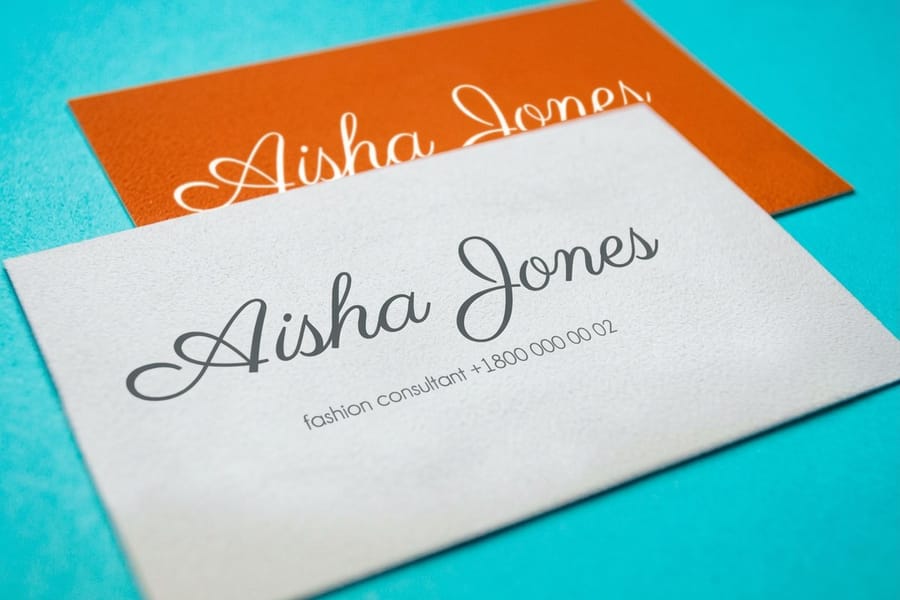
These four names get used interchangeably in quotes, and they should not be. Three of them are laminate films over a 16pt cover, and one is a stock that comes velvety all the way through.
| Finish | What it is | How it reads in a hand | Starts at | Smallest set |
|---|---|---|---|---|
| Silk laminated | 16pt cover under a silk film, both sides | Smooth, matte, the most durable of the three films, tear and water resistant | $74.53 | 250 |
| Velvet | 16pt cover under a soft touch velvet film | Matte with a little more drag than silk, and the usual base for raised foil | $87.15 | 250 |
| Suede | 16pt cover under a suede laminate | The most fabric-like of the films, resists fingerprints | $87.15 | 250 |
| Soft touch uncoated | Soft touch stock from 32pt to 80pt, no film | Velvety and thick at once, the only soft option in real weight | $40.28 | 50 |
Read the last column before the price column. Suede and velvet start at 250 cards, so the entry ticket is $87.15 whether you need 250 or 80. Soft touch uncoated sells in sets of 50, which makes it the cheapest way to put a velvety card in someone's hand this month.
Silk earns its place for a different reason. It is one of the three stocks offered under spot UV business cards, and the one worth choosing, because a strip of high gloss on a matte silk field is the sharpest contrast in the catalog and costs far less than foil. Velvet cards take spot UV too, and silk laminated cards add rounded corners at a 1/8 or 1/4 inch radius if you want the shape to soften as well. The velvet cards story shows that soft surface under a strip of spot UV.
The catch applies to all three films: they are plastic, so a ballpoint will not write on them. That single fact decides the finish for a lot of dentists, stylists and repair shops.
Painted Edges, Gilded Edges and Raised Foil
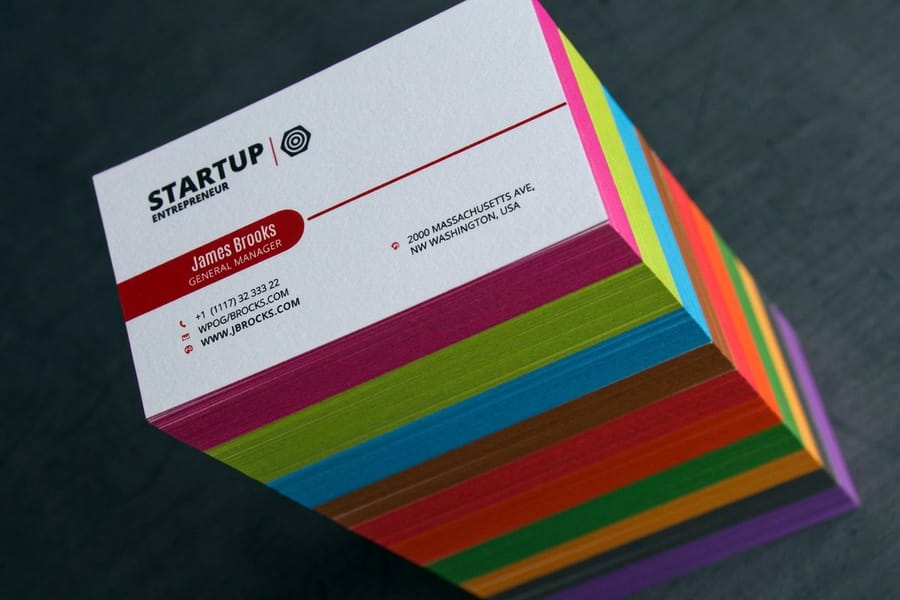
The edge is the part of a business card nobody designs, which is exactly why a treated one gets remarked on. Stack a dozen cards and they read as one white blur from the side. One with a colored band does not.
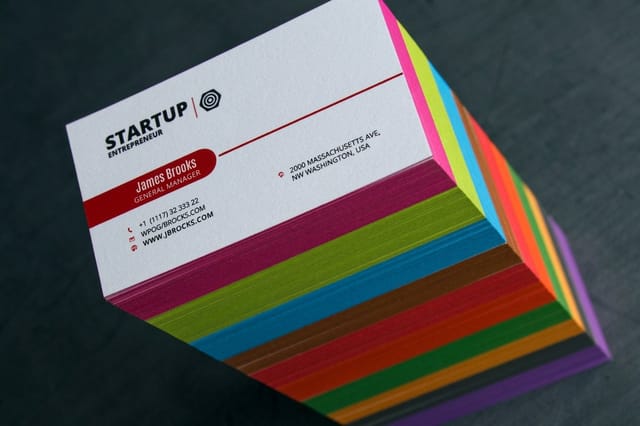
Edge painted business cards run on 32pt UltraWhite uncoated with 16 edge colors, from $141.70 per 250. The stock is not optional: the paint needs a thick, bright, uncoated edge to sit on and show. Edge gilding is the same idea in foil, with 19 colors including gold, silver and holographic gold mirrored onto the cut side, on 32pt or 48pt silk or velvet laminated stock, from $328.42 per 250. The edge gilding foil service page covers the treatment on its own. That is roughly $1.31 a card at the smallest run, so gild the cards the founder hands over and print something plainer for the trade show pile.
Raised foil business cards take a different route to the same reaction. The foil sits up off a 16pt velvet laminated surface in gold, silver or holographic, so the shine has texture under a thumb rather than lying flat. From $86.78 per 100, it is the cheapest way to get metal onto a card, and at 7 business days it is also the slowest to produce.
One rule keeps edge work from disappointing: give the treatment something to frame. A busy full-bleed design fights a painted edge. A calm layout with white space at the border lets the band read as deliberate. The same logic applies to spot UV, which needs a matte field around it to be visible at all.
What to Buy, and What Is Not Worth Paying For
Start from how the card gets used, not from the finish list.
- You hand out a few cards a week to people who decide big things. Buy feel and edge. A velvet card at $87.15 per 250, or gilded edges if the card is part of the pitch. Small run, maximum impression per card.
- You give out hundreds at events. Buy one upgrade, not three. Silk laminated at $74.53 per 250 reads premium and survives a pocket, and the per card cost keeps falling as the run grows.
- People write on your cards. Buy thickness on uncoated stock and no film at all. Ultra thick from $36.62 per 50.
- You want the biggest reaction for the least money. Spot UV on silk, from $76.88 per 500. The gloss against matte does the work that foil normally charges for.
What is not worth paying for: a heavy finish on a card that goes into a bulk mailing and gets skimmed, foil on a design with no quiet area for it to sit in, and 80pt stock for anyone who has to carry a full holder. The standard business card at $17.57 per 100 exists for a reason, and there is no shame in printing plain cards for volume and a small run of good ones for the meetings that matter.
Configure and compare in the business card printing category, or browse the premium printing collection to see which upscale stocks carry across postcards, folders and invitations. If price is the deciding factor, what business cards cost and why breaks a run down line by line.
Wally explains premium
Stock, surface, edge, in that order of cost
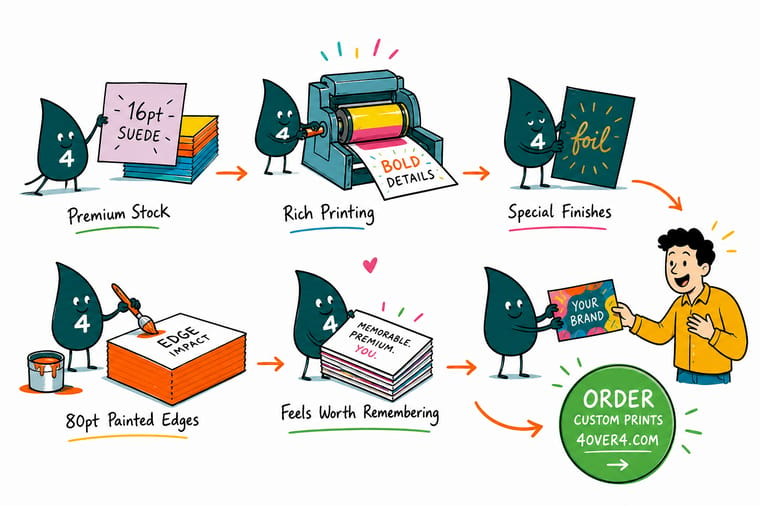
Wally builds a premium card in three moves. He picks the stock, because 32pt sits in a hand differently than 16pt. He presses a suede or velvet film onto the surface, because a thumb notices texture before it notices weight. Then he paints the cut edge, which only works if the stock is thick enough to have an edge worth painting. Skip the film if people write on your cards, since a ballpoint slides right off it.
Configure premium business cards →
Specs and pricing
Stocks, sizes and starting prices, side by side
The configurable premium line in 4 sizes from 100 cards, the 16 point suede laminate from 250 in 4 business days, and the ultra thick stocks from 32pt to 80pt UltraWhite uncoated or 40pt to 72pt gloss from 50, with live options and starting prices straight from the 4OVER4.COM configurator.
Print it
Order a card people keep
Velvet and silk laminated cards start at 250 on 16 point stock with spot UV on one or both sides, and edge painted cards start at 250 on 32pt UltraWhite uncoated in 3 sizes.
Explore more
Where to go next
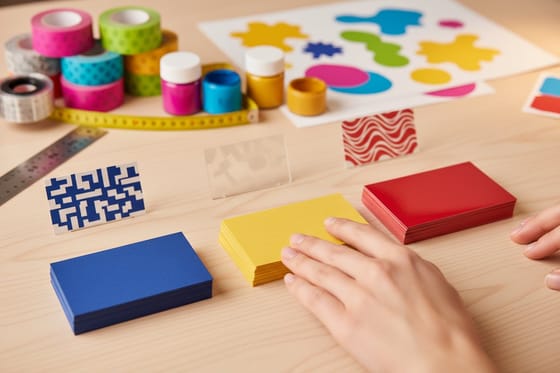
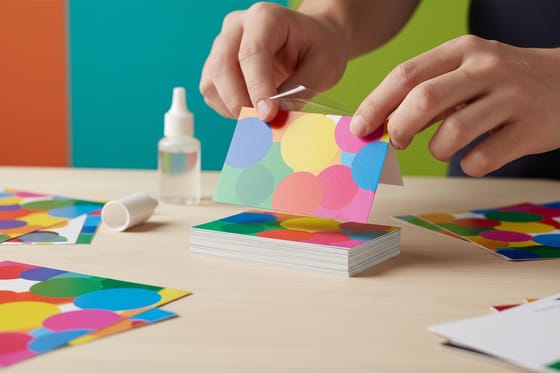
What 14pt to 80pt measure in the hand, which surface finish to pick first, where the money goes on a run and how silk laminate behaves each have their own page below.


By the numbers
Suede, edge painted and raised foil card stocks
Common Questions
Your premium business card questions, answered
What makes a business card premium?
Three upgrades, bought separately. First the stock: a standard card is 14pt or 16pt, while a premium build runs 32pt to 80pt. Second the surface: a suede, velvet or silk laminate replaces the slick coated feel with a matte, velvety one. Third the edge: paint or foil applied to the cut side of a thick card, visible only when the card is held at an angle. Contrast finishes such as spot UV gloss and raised foil sit on top of those three. Everything else people call premium, heavier ink coverage or a fancy layout, does not change how the card feels in a hand.
How thick is a premium business card?
Standard cards are 14pt or 16pt, roughly the thickness of a playing card. Premium builds start at 32pt and climb through 48pt, 64pt and 80pt on the UltraWhite uncoated line, with gloss cover available at 40pt, 56pt and 72pt. An 80pt card is about five standard cards stacked. Above 48pt the card stops fitting comfortably in slim cardholders and a pocket stack gets bulky, which is the practical ceiling for anyone who carries cards daily rather than handing out a few at an event.
What is the difference between suede, velvet and silk cards?
All three are laminate films over a 16pt cover stock, and they differ mainly in how much drag the surface has. Silk is the smoothest and the most durable, with good tear and water resistance, and it is the usual base under spot UV because the gloss pops hard against it. Suede has the most drag, the closest thing to fabric under a thumb. Velvet sits between the two, matte and smooth. Suede and velvet both start at $87.15 per 250 and silk laminated at $74.53 per 250, so the choice is about feel rather than budget.
Can you write on a premium business card with a pen?
Not on a laminated one. Suede, velvet and silk are plastic films, so ballpoint ink beads up and smudges and gel ink takes a long time to dry, if it dries at all. Ultra thick UltraWhite uncoated stock is the opposite: it drinks ink and takes a pen cleanly, which is why service businesses that write the next appointment on the back should buy thickness rather than laminate. A permanent marker will mark a laminated card, but it looks like what it is.
How much do premium business cards cost?
The floor at 4OVER4.COM is $17.57 per 100 for Premium Business Cards, which is the plainest stock inside a 74 stock menu. Moving up the same configurator: ultra thick from $36.62 per 50, silk laminated from $74.53 per 250, suede and velvet from $87.15 per 250, raised foil from $86.78 per 100, edge painted from $141.70 per 250, and edge gilded from $328.42 per 250. Per card, that is roughly 18 cents for the entry stock against about $1.31 for a gilded edge at the smallest run, and every one of those numbers falls as the quantity climbs.
Which premium finish takes the longest to produce?
Raised foil, at a 7 business day standard turnaround, because the foil is applied and raised in a pass after printing. Ultra thick and edge painted cards run 5 business days, suede, velvet and silk 4, and the Premium Business Cards line 3. Rush options down to same day exist on most of them, but a rush charge on a finishing-heavy card costs more than planning the job a week earlier. If a trade show is the deadline, pick the finish first and work backward from the ship date.
Get Started
Edge painted cards run 250 for $141.70, prestige 50 for $36.62
Pick the stock, add a suede or velvet surface, paint the edge if the stock is heavy enough, and we print cards people keep in a drawer instead of a bin.
Legal Disclaimer
Gold Standard guarantees apply to all standard orders placed through 4over4.com. Price match requires verifiable proof of a competitor's published price for an equivalent product with matching specifications and turnaround time. Satisfaction guarantee covers manufacturing defects and print quality issues. Contact support with order number and documentation.
