
Custom Candy Boxes That Keep Sweets Fresh and Sell on the Shelf


Which style fits the way you sell, what has to sit between the candy and the printed board, the footprints we stock, and what a wholesale run actually costs.
A custom candy box is a printed paperboard carton with a liner between the sweets and the board, sized to the candy plus about a quarter inch of clearance. Pillow boxes suit favors, cube and tube boxes suit a counter, and a 5 by 7 by 1.7 inch tuck-top carton is the retail shelf format. Starting prices run from $213.09 for cube boxes to $711.78 for the tuck-top cartons, for a full wholesale run.
Quick answer
A liner, a footprint, and the right panel
Three decisions carry a candy box, and only one of them is graphic design. Put a glassine sheet or a poly bag between the sweets and the printed board, because ink migrates inward through uncoated stock and fat from chocolate and toffee wicks outward and stains the print. Size the box to the filled arrangement plus roughly a quarter inch, so nothing rattles and no flap bows. Then put the statement of identity and net quantity on the display panel and the ingredients, allergens and responsible firm on the panel immediately to its right.
Pick the Box Style Before You Pick the Print
Candy gets sold in four situations, and each one has a box that suits it. A favor handed over at a wedding, a small box bought at a counter, a carton that has to hold its own on a retail shelf, and a seasonal assortment that changes flavor every quarter. Choose for the situation first, because the situation decides the footprint and the footprint decides the price.
| Box style | Catalog size | What it suits | From |
|---|---|---|---|
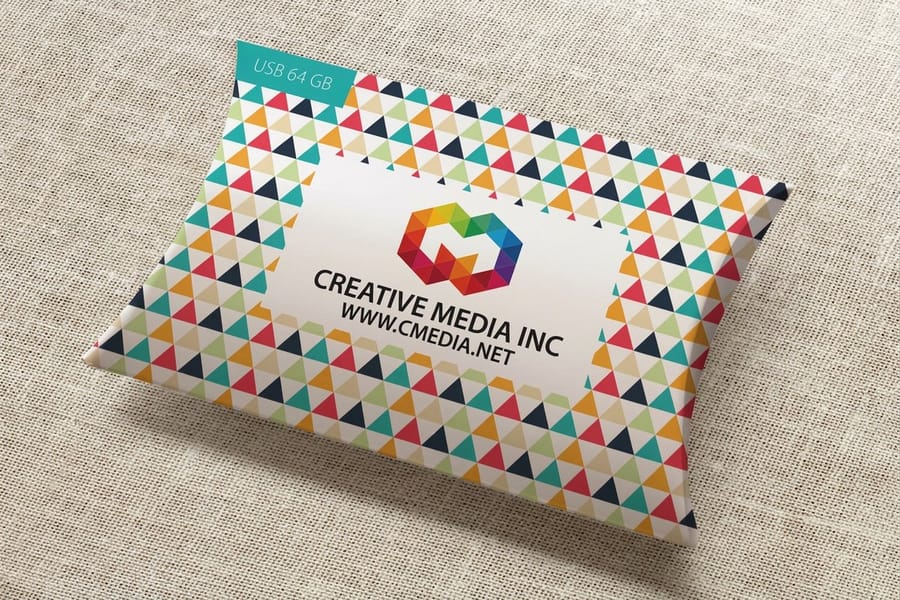
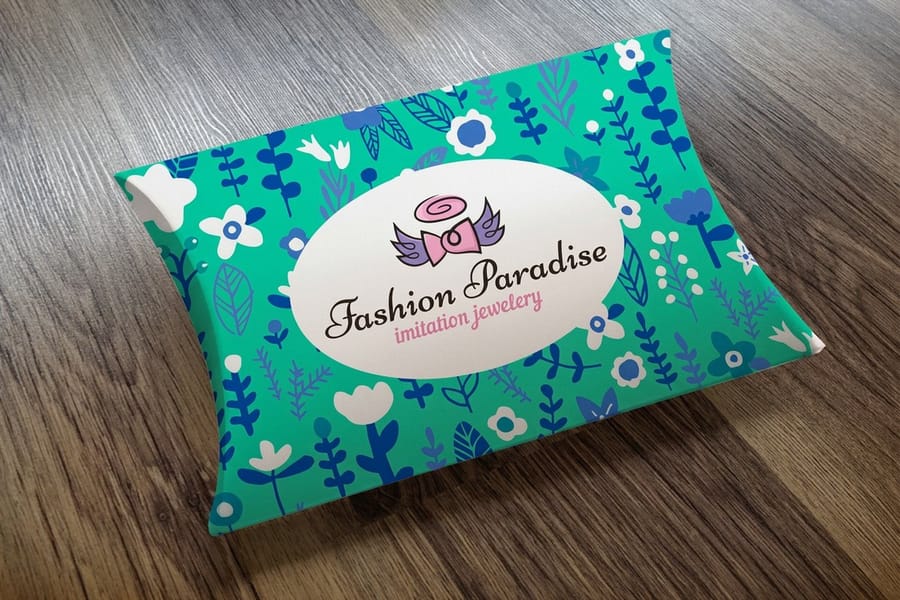
| Pillow Boxes | 3.625 x 1.5 x 7.25 in | Event favors and a short row of wrapped pieces. Ships flat, no glue seam, snaps together by hand. | $284.49 |
| Cube Boxes | 2.75 in cube | A scoop of bulk candy or a small set of truffles. Sits square on a counter and stacks. | $213.09 |
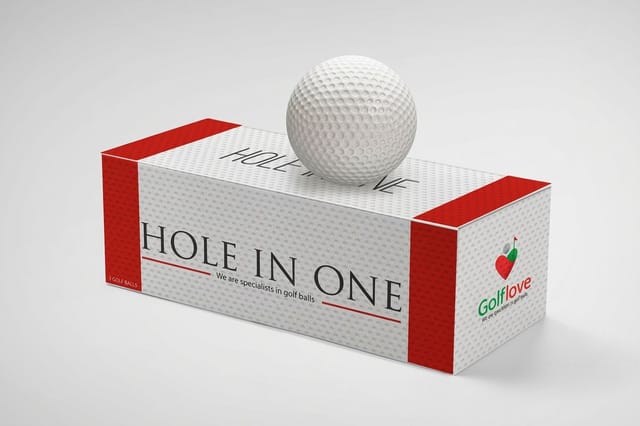
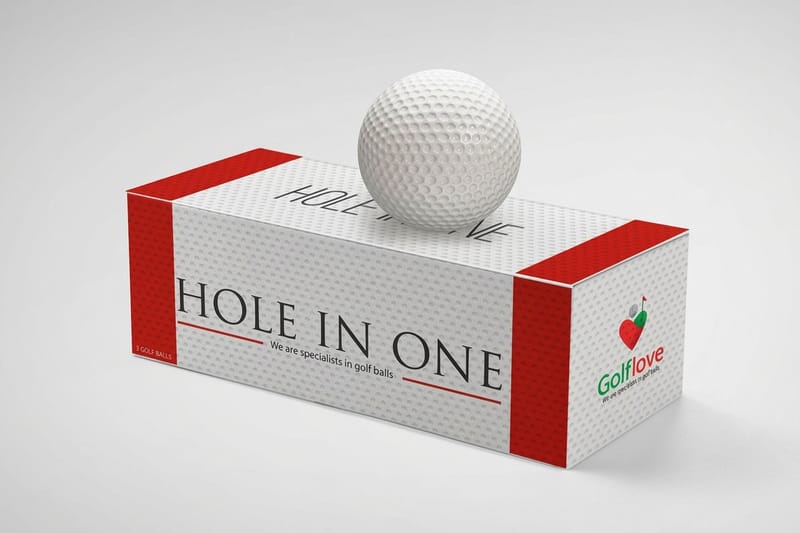
| Golf Ball Boxes | 1.7 x 1.7 x 5 in | A vertical stack of caramels, truffles or gum balls. Reads as a premium single serve. | $269.11 |
| Tuck-top cartons | 5 x 7 x 1.7 in | The shelf format. Deep enough for a shallow insert tray of assorted pieces. | $711.78 |
| Packaging Sleeves | 5 x 5 in sleeve | One plain base box, a different printed sleeve per flavor or per season. | $438.25 |
The sleeve line is worth a second look if you sell more than three flavors. Reprinting a whole carton for a seasonal variant means paying for the die and the glue again. Printing a sleeve means paying for a flat printed band, and the base box carries over. That trick is the difference between a range you can afford to extend and one you cannot.
If none of the stocked footprints fits your pieces, the full custom box printing range covers the rest of the styles, and our guide to choosing a box style for your product works through the same decision for non-food goods.
What Actually Touches the Candy
This is the part most candy box guides skip, and it is the part that ruins product. A printed carton is a secondary package. The candy belongs behind a barrier, and the barrier is doing real work in two directions.
Going inward, ink and coating components move slowly through uncoated board. Nothing dramatic happens in a day, but candy sits in a warehouse and then on a shelf, and a box with bare sweets rattling against a printed inner face is a package nobody in confectionery would ship. Going outward, fat is the problem. Chocolate, toffee, caramel and anything butter based release oil at warm room temperature, and that oil wicks straight through kraft board and prints a dark shadow of the candy on the outside of your box.
The fix is small and cheap. A glassine sheet, a food-grade poly bag, a cellophane twist, or pieces that arrive individually wrapped from your kitchen. Any one of those keeps the sweets off the board. If you use a bag, it also solves the third problem, which is moisture: paperboard is not a moisture barrier, so hard candy goes tacky and gummies go hard inside a carton alone.
Board choice still matters for the look and the feel. Kraft reads as small batch and hides the odd scuff, but it is the most absorbent option and the one most likely to show a grease halo without a liner. A coated white board like the gloss box stock holds color far better for a photographic panel and shows fingerprints more. Our comparison of packaging box materials goes through the stocks in detail.
Sizing a Candy Box So Nothing Rattles or Crushes

Measure the candy, not the idea of the candy. Lay the pieces out in the arrangement they will actually sit in, measure the block they occupy in all three directions, then add about a quarter inch across the length and width so the flaps close without pressing on anything. Depth is the one to get exact, because a carton with too much headspace lets the contents slide and a carton with too little bows its lid.
Two things surprise people the first time. Candy is dense, so a 5 by 7 by 1.7 inch carton filled with caramels weighs more than the same carton holding a candle or a soap bar, and the stress lands on the bottom glue seam rather than the print. Second, an insert tray is not decoration. A shallow paperboard or moulded tray stops the pieces sliding into one corner, keeps chocolates from bruising each other, and lets a shopper see the assortment the moment the lid lifts.
If you are working from scratch, our box size chart by product type gives you a starting footprint, and the packaging inserts guide covers what else goes in the box alongside the candy. Set the artwork up on the real die by starting from a blank template rather than a rectangle you drew yourself.
The Copy the Panel Has to Carry

Candy sold to a consumer at retail is a packaged food, and packaged food carries required copy in fixed places. Getting this wrong after the boxes are printed is expensive, so it belongs in the first artwork round rather than the last.
The display panel, the face the shopper sees, carries the statement of identity, meaning what the product actually is in plain words, and the net quantity of contents in both US and metric units. The information panel is the panel immediately to the right of the display panel as the buyer faces the box, and it carries the ingredient list in descending order by weight, the allergen statement, the Nutrition Facts panel, and the name and place of business of the manufacturer, packer or distributor. Sesame joined the major allergens that must be declared, which caught out a lot of confectioners printing halva, tahini fillings and seeded brittle.
Two practical routes exist. Print the required copy directly on the carton, which is cleanest and cheapest per unit but locks the recipe: change a supplier and the whole run is scrap. Or print the carton with brand artwork only and apply the regulated copy on a label, which costs a little more per box and lets you revise a single ingredient without touching the packaging. Standard packaging labels start at $23.88 and premium packaging labels at $29.16, which is why most small confectioners start with labels and only commit to printed panels once the recipe settles.
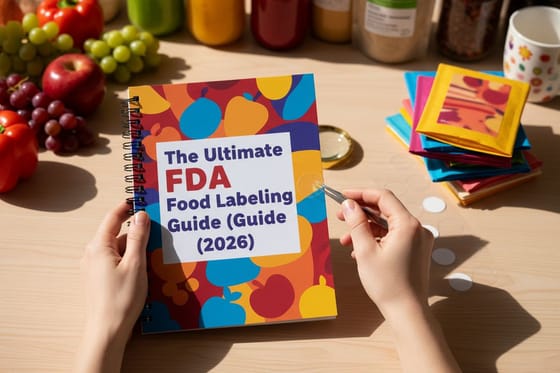
Work through the specifics in the FDA food labeling guide, and if you sell your candy on a shelf next to established brands, optimizing food labels for shelf appeal covers what wins the two second glance.
Ordering Custom Candy Boxes, Step by Step
Six steps take you from a pile of candy to boxes on a pallet, and skipping the fourth one is what produces the box that arrives beautiful and wrong.
- Measure the filled arrangement. Pieces laid out as they will sit, plus a quarter inch of clearance, plus the liner and any tray.
- Match that to a stocked footprint. Pillow, cube, tube or the 5 by 7 by 1.7 inch carton. A stocked die is cheaper and faster than a custom one, and the pieces usually fit one of them.
- Choose the board and the finish. Kraft for a handmade read, coated white for photographic color, gloss or matte lamination for handling, a foil accent if the box is a gift item.
- Lay the artwork on the real dieline. Download the template for your box, keep type off the fold and the glue flap, extend the bleed past the trim, and put the regulated copy on the correct panel.
- Read the proof against the flat, not the render. Check the panel order, confirm the net weight and the allergen line, and look at where the artwork lands on the tuck flap. Our guide to checking a packaging proof lists what to look for.
- Order the closure and the labels in the same run. A printed seal, a sleeve or a circle label finishes the box and keeps color consistent across the set.
File setup is where most packaging jobs stall, so read how to prepare files for packaging products before you build the artwork. For a seasonal assortment, the holiday packaging ideas guide shows how confectioners reuse one carton across a whole gifting calendar, and the full packaging printing collection lists everything that can ship in the same run.
Wally explains candy boxes
Liner first, then the candy, then the lid
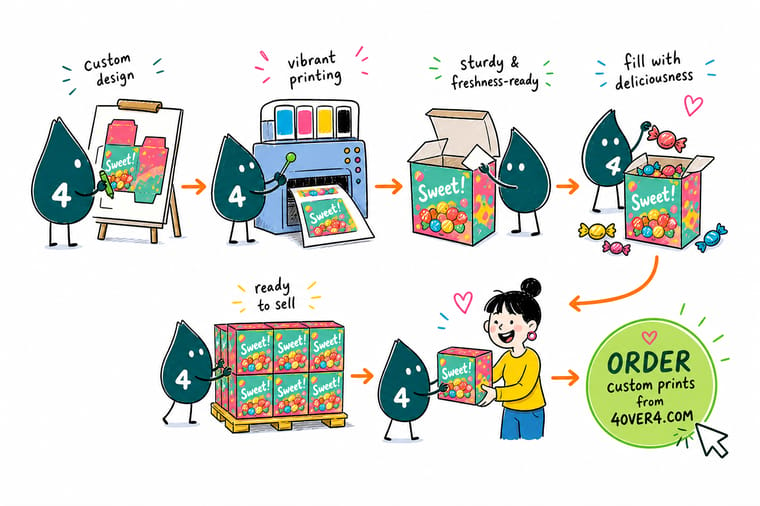
Wally lays the candy out the way it will sit, measures the block, adds a quarter inch so the flaps close easy, then drops in a glassine sheet before a single sweet goes near the print. That liner keeps ink off the candy and keeps caramel grease from printing a shadow on his artwork. Last, he checks the panel order: the name and the net weight on the face, the ingredients and the allergen line on the panel right next to it.
Order pillow candy boxes →Specs and pricing
Candy box sizes and starting prices
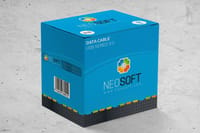
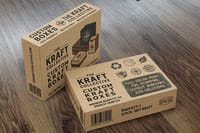
The three footprints that cover most confectionery, with live configuration choices and starting prices straight from the 4OVER4.COM configurator.

Print it
Box the candy and seal it in one order
Explore more
Where to go next

By the numbers
Packaging you can count on at 4OVER4
Common Questions
Your candy box questions, answered
Are custom printed candy boxes food safe?
The box is safe for candy when something sits between the sweets and the printed board. Standard practice in confectionery is a glassine sheet, a poly or cellophane bag, or individually wrapped pieces, because a printed carton is a secondary package rather than a direct food-contact layer. Ink and coating components can migrate inward through uncoated board over weeks of storage, and grease from chocolate or toffee wicks outward and leaves a dark halo on the print. One liner solves both problems at once and costs a fraction of the box.
What size candy box should I order?
Start from the candy, not the box. Lay the pieces out the way they will sit, measure the block they occupy, then add roughly a quarter inch in each direction so the flaps close without crushing anything. Our stocked footprints cover most confectionery: Pillow Boxes at 3.625 by 1.5 by 7.25 inches hold a short row of wrapped pieces, Cube Boxes at 2.75 inches on a side hold a scoop of bulk candy, Golf Ball Boxes at 1.7 by 1.7 by 5 inches hold a vertical stack of truffles or caramels, and the 5 by 7 by 1.7 inch carton holds a shallow tray of assorted pieces.
How much do custom candy boxes cost?
Starting prices at 4OVER4.COM run from $213.09 for Cube Boxes, $269.11 for Golf Ball Boxes and $284.49 for Pillow Boxes, up to $711.78 for the 5 by 7 by 1.7 inch tuck-top cartons in kraft, gloss, retail or bakery board. Those figures are for a full wholesale run, not a sample pack. Packaging is die cut and glued on tooling that has to be set up once, so the per-box price falls quickly as the quantity rises and there is no cheap way to buy fifty.
Can I put a window in a candy box?
A window sells colorful candy well and hurts it in two ways. Light fades fruit and pastel colors over a few weeks on a lit shelf, and any heat coming through the opening pushes chocolate toward bloom, the grey film that appears once cocoa butter separates and recrystallizes. If the candy sits under store lighting for more than a month, a printed photograph of the product on the panel keeps the shelf appeal without exposing the contents.
Does a candy box need a Nutrition Facts panel?
A box sold to consumers at retail generally needs one, alongside the ingredient list, the allergen statement and the name and place of business of the manufacturer, packer or distributor. Very small businesses can qualify for a nutrition labeling exemption, and food sold at a bake sale or given away as a wedding favor sits in a different category from packaged retail food. The rules turn on where and how you sell, so read the FDA food labeling guide before you lock the artwork.
What box works best for wedding and party favors?
Pillow Boxes, for a practical reason rather than a decorative one. They ship and store flat, they snap into shape by hand in a couple of seconds, and there is no glue seam to fail when a helper assembles two hundred of them the night before. Cube Boxes suit a heavier favor or a small stack of chocolates. For either, a printed circle label over the closure turns the box into a seal and lets you change the names or the date without reprinting the box.
Get Started
Ready to box your candy properly?
Pick a stocked footprint, choose kraft or coated board, lay your artwork on the real dieline, and we die cut, glue and ship the boxes flat.
Legal Disclaimer
Gold Standard guarantees apply to all standard orders placed through 4over4.com. Price match requires verifiable proof of a competitor's published price for an equivalent product with matching specifications and turnaround time. Satisfaction guarantee covers manufacturing defects and print quality issues. Contact support with order number and documentation. On-time delivery rate based on tracked orders 1999 to 2026. Individual results may vary based on shipping carrier performance.
