
Creative Postcard Printing Options From Perforation to Foil


Perforation, die cuts, foil, spot UV, oversized formats and stock. What each option does to a postcard, what it does to your postage, and when it is not worth the money.
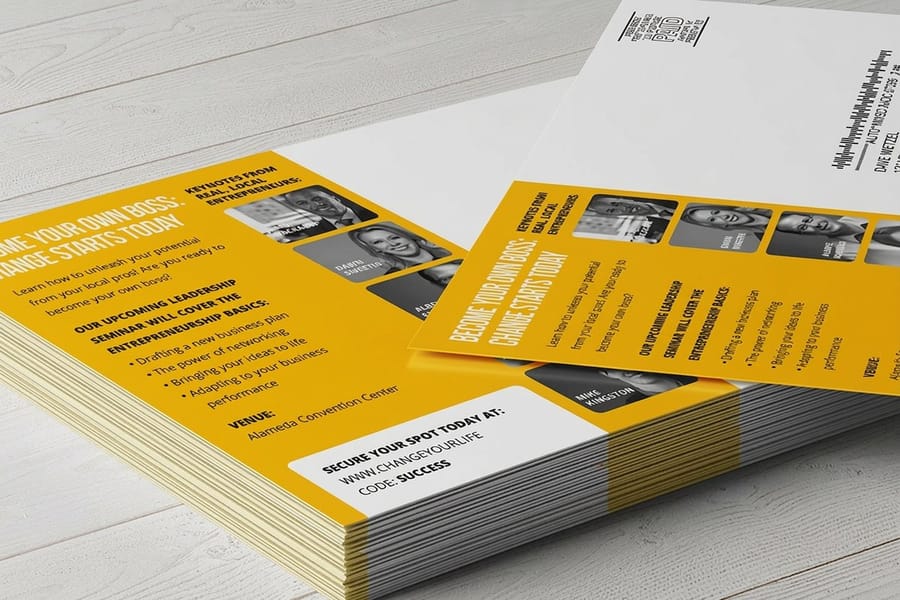
A plain postcard is the cheapest thing you can mail and the easiest to throw away. Five options change that: a perforated tear-off coupon the reader keeps, a die cut outline that is not a rectangle, foil or spot UV on the surface, a larger or folded format, and a stock that feels different in the hand. Perforation is the only one that changes what a person does with the card rather than how it looks, which is why it is the first thing to try on a response mailer.
Quick answer
The tear line does more work than the shiny bits
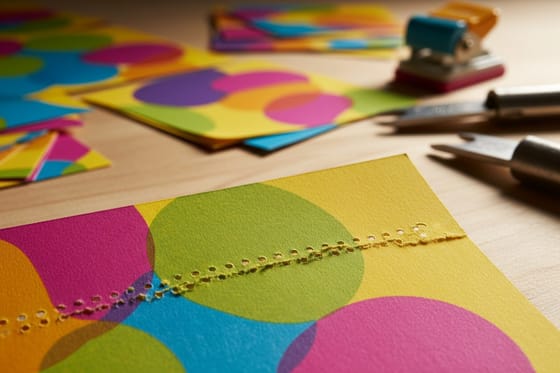
Finishing choices split into two groups: the ones that change how a postcard looks and the one that changes what the reader does with it. Foil, spot UV, metallic stock and a die cut outline all buy attention in the two seconds a card spends over a bin. A perforated tear-off coupon buys something else entirely, because the half that survives carries your offer, your expiry date and a code you can count. Start with the perforation on a response mailer, add the decoration once the layout works, and check what each choice does to your postage before you sign off. The diagram below shows how the tear line is built and where it sits on a 6 by 9 card.
Perforated Postcards and the Tear-Off Coupon
A perforation is a line of small slits separated by uncut ties. The ties hold the card together through the press, the bindery and the mail sorter, then give way the moment somebody folds along the line and pulls. That is the whole mechanism, and it is why the same trick works on a cheque stub, a stamp sheet and the bottom two inches of a postcard.
What it buys you is a second life for the piece. A flat mailer is read once and binned. A mailer with a coupon on the bottom edge gets torn, and the torn half goes onto a fridge, into a wallet, or into the hand of whoever walks into your shop. Put the offer, the expiry date and a redemption code on the coupon, and put the reason to care above the line. Then you can count the returns instead of guessing.
Two decisions matter at the file stage. First, coupon depth: give it about two inches so a thumb can grip it, and keep live copy a quarter inch clear of the line on both sides, because a tear wanders. Second, the perf type. Standard perforation uses larger, wider-spaced slits and tears easily with a slightly ragged edge, which is fine for a coupon nobody keeps for long. Micro-perforation uses finer, closer slits and leaves a near-clean edge, worth choosing when the piece that tears away is a membership card or a reply card the customer hands back to you.
The honest limit: a perf line is a weak line. Run it too close to the trim and the strip works itself off in transit, and heavy lamination fights the tear because the film stretches instead of splitting. We run perforation as an in-house finishing option, so the tear line is placed on the same job as the printing rather than shipped out to a bindery. Pair it with direct mail postcards and the addressing, the perf and the mail drop all happen in one place.
Die Cut and Custom Shape Postcards
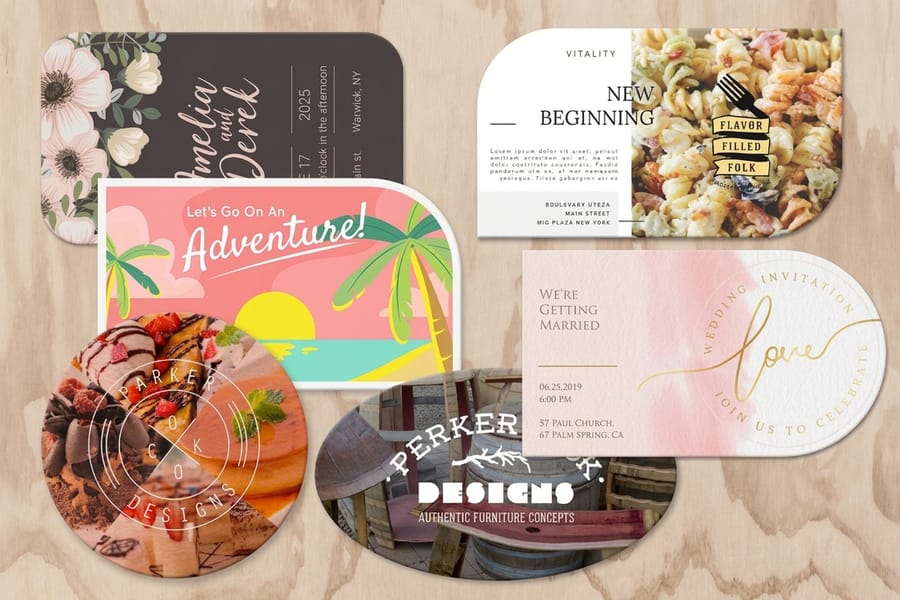
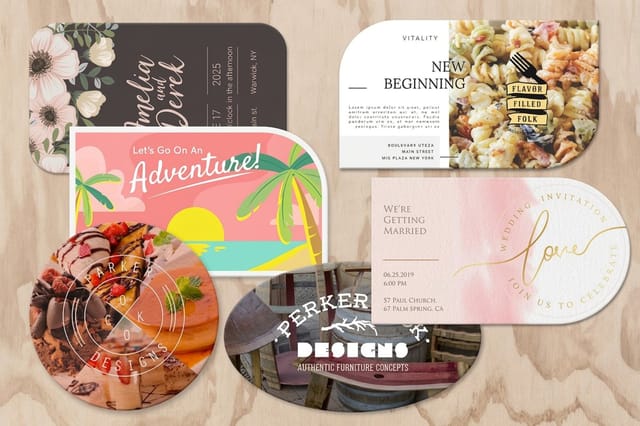
Die cutting replaces the straight trim with a shaped blade, so the card leaves the press as a rounded arch, a house outline, a bottle, a leaf, or a rectangle with one scalloped edge. In a stack of mail it is the only option on this page you can identify without picking anything up, because the silhouette is different before the artwork registers.
The trade-off is postage, and it is the thing most people find out too late. USPS reserves its card price for rectangular pieces of uniform thickness. Cut a shape and the piece becomes nonmachinable, which means it is hand-sorted and priced accordingly, or it has to travel inside an envelope. For a hand-delivered card, a trade show drop or a leave-behind at a counter, none of that applies and a die cut is pure upside. For a ten thousand piece mailing it can quietly cost more than the printing.
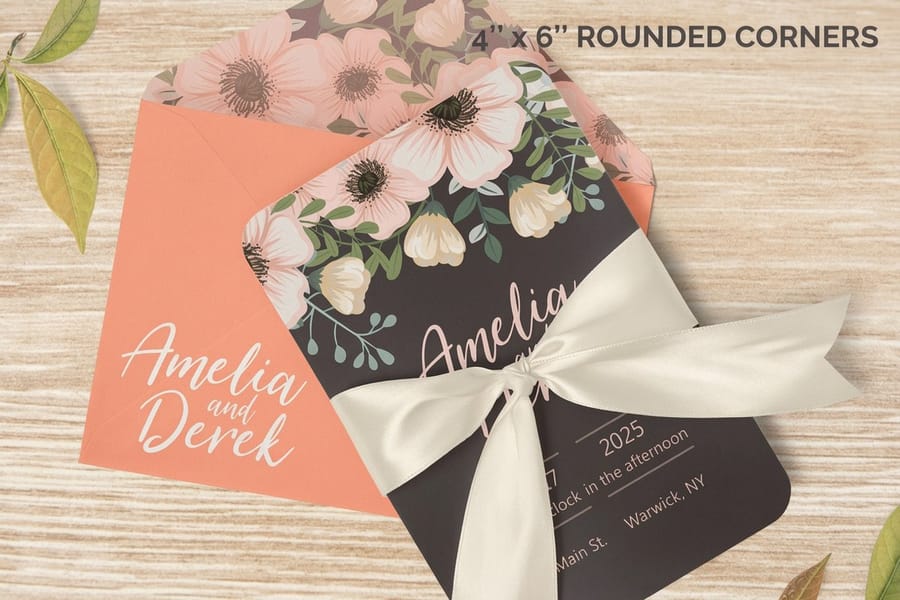
There is a middle path that most buyers miss. Rounded corners, a single die-cut curve on one edge, or a shaped tear-off tab keep the overall outline rectangular while still reading as custom. You pay the die-cut price without paying the postage penalty. Die-Cut Postcards start at $34.05 against $16.48 for Standard Postcards, and Custom Shaped Postcards start at $135.11 when the outline is fully bespoke.
Draw the cut as a separate spot-colour path in the file, not as a black outline in the artwork, and let the background bleed past it. Our die-cutting service page covers how the die is built, and the die cut card printing guide walks through which shapes hold up on thin stock and which ones curl.
Foil, Spot UV, and Metallic Finishes
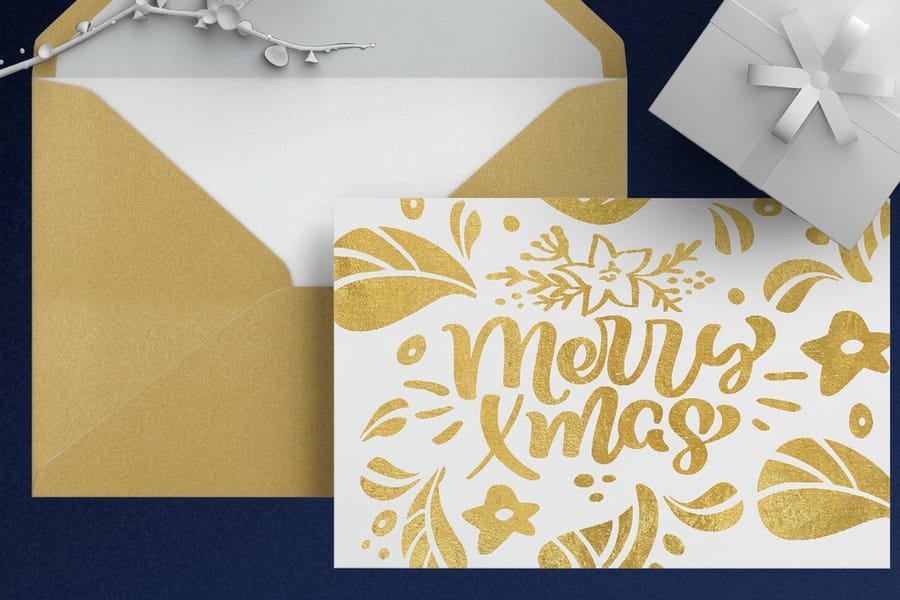
These three get confused constantly because all of them make a card shinier. They behave very differently on a mailer.
| Finish | What sits on the card | Reads from | Starts at |
|---|---|---|---|
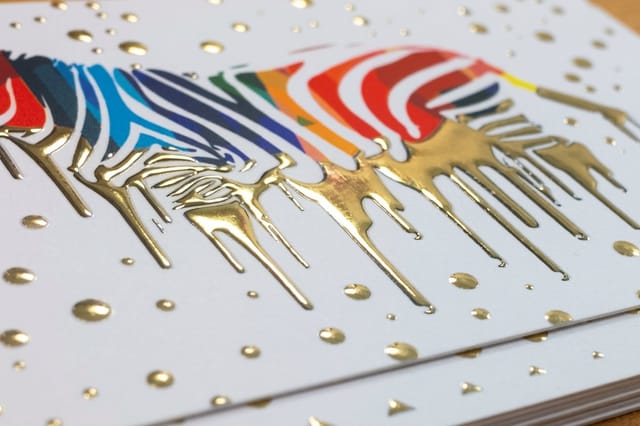
| Metallic foil | A reflective metallic film stamped onto the sheet. | Across a room. It flashes under any light. | $421.91 |
| Raised foil | Foil over a raised clear layer, so it stands up and reflects. | Across a room, plus a ridge you feel. | $299.00 |
| Spot UV | Clear gloss varnish cured onto chosen areas only. | Arm's length, when the card tilts. | $190.02 |
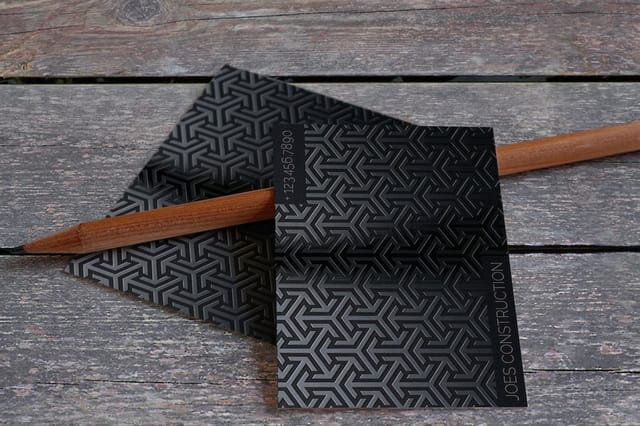
Spot UV depends entirely on contrast. Printed over a gloss coating it vanishes, because gloss on gloss is just gloss. It only works over a matte or soft touch laminate, where the dull surrounding surface makes the varnished shapes read as a separate layer. That is the single most common reason a spot UV job comes back looking like nothing happened. Spot UV Postcards ship on that matte base for exactly this reason, and the spot UV service page shows the effect on real stock.
Foil has a harder rule attached: nothing prints on top of it. Neither inkjet nor toner keys to a metallic film, so an address, a barcode, a QR square or a variable coupon code has to live on bare paper. Plan that panel before you place the foil layer. On a mailer, the usual answer is decoration on the front and a clean uncoated address panel on the back. Metallic Foil Postcards and Raised Foil Postcards both carry that limit, and foil stamping explains how the die and the film work together.
Order samples before you commit to any of the three. A foil swatch photographs badly and describes worse, and holding two cards under the same lamp settles the argument in about four seconds. Free samples exist for that.
Oversized and Folded Postcards
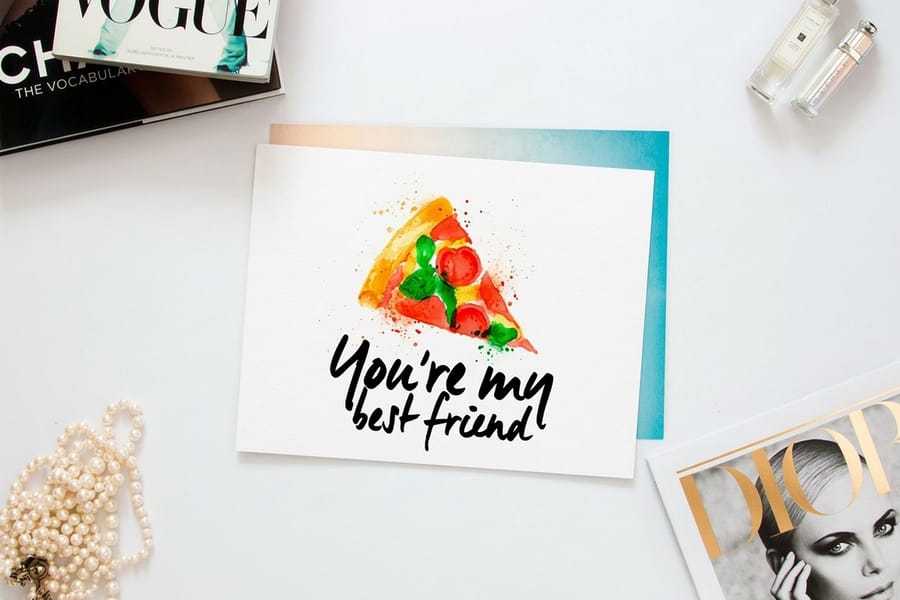
Before you spend money on a finish, consider spending it on area. USPS caps its card price at 4.25 by 6 inches. Anything bigger mails at the letter price, and above 6.125 by 11.5 inches it becomes a flat. Once you have crossed into letter pricing at 6 by 9, going up again to 6 by 11 costs you nothing extra in postage and roughly doubles your visible surface, which is why 6 by 11 is such a common choice for real estate and menu mailers.
Bigger is not automatically better. A 6 by 9 card sits proud of the letter-sized mail around it and gets seen; it also costs more per piece to print and gives a designer enough space to fill with copy nobody reads. The gain comes from a bigger headline and a bigger image, not from more words. Oversized Postcards start at $51.62.
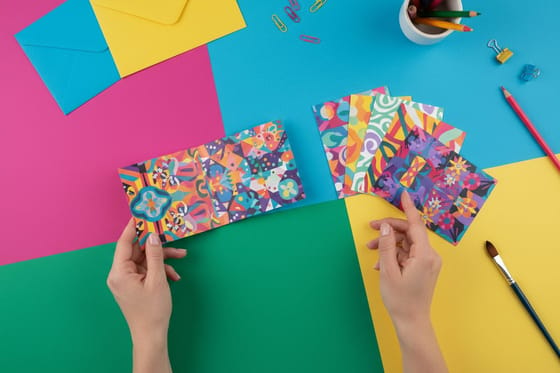
Folded postcards go the other way: a small footprint that opens into four panels. They suit anything sequential, such as a menu, a price list, an appointment reminder with a calendar inside, or a before-and-after story. The catch is that USPS treats a folded self-mailer as its own category, with rules about which edge leads and tabs sealing the open edge, so a folded card is never quite as simple to drop as a flat one. Folded Postcards start at $84.36, and folded versus flat postcards compares the two on cost and response.
Fix the size and the fold before you choose a finish. Changing from 4 by 6 to 6 by 9 halfway through a design costs you the layout; adding foil to a settled layout costs you a line in the order.
Paper Stock and Coating Choices
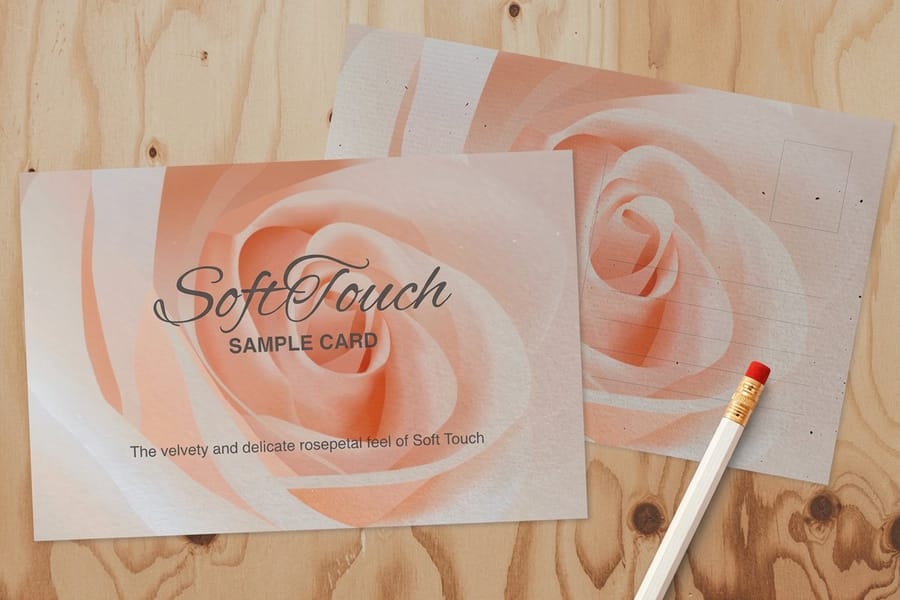
Stock is the option nobody photographs and everybody notices. Weight comes first: 14pt is the standard postcard body and 16pt is noticeably more rigid, which matters on anything over about 4 by 9 inches where a thin card arrives bent. Above that sit the ultra thick stocks, which feel like a small tile and cost accordingly.
Coating is the decision that actually breaks jobs. A UV or gloss coated card looks sharp and repels moisture, and it also repels ballpoint ink and most inkjet. If a recipient has to write on the card, if you are addressing in house on a desktop printer, or if a coupon has a name field, leave that side uncoated or specify matte. Ask for the coating one side only, and the problem disappears.
| Stock | Surface | Best for | Starts at |
|---|---|---|---|
| Standard | Coated, gloss or matte, 14pt or 16pt. | Volume mailers where cost per piece rules. | $16.48 |
| Kraft | Uncoated brown fibre, takes pen ink. | Handwritten notes, craft and food brands. | $28.49 |
| Soft touch | Velvety matte laminate, no glare. | The base layer under spot UV. | $29.44 |
| Silk | Smooth low-sheen laminate, hard-wearing. | Cards that get handled repeatedly. | $74.53 |
Two combinations are worth remembering. Soft touch plus spot UV gives the largest visible contrast for the money, because the varnish has the dullest possible background to sit against. Uncoated kraft plus a perforated tear-off gives you a card a customer can actually fill in and hand back. For everything else, order the stocks you are choosing between and put them side by side; free paper samples settle it faster than any description. Every weight, laminate and finish above is listed under postcard printing with its own configurator. Start the artwork from a correctly sized file in the blank template library, and check the safe margins in the postcard layout guide before you place anything near a trim or a perf line.
Wally explains postcard options
One card, five ways to make it survive the bin
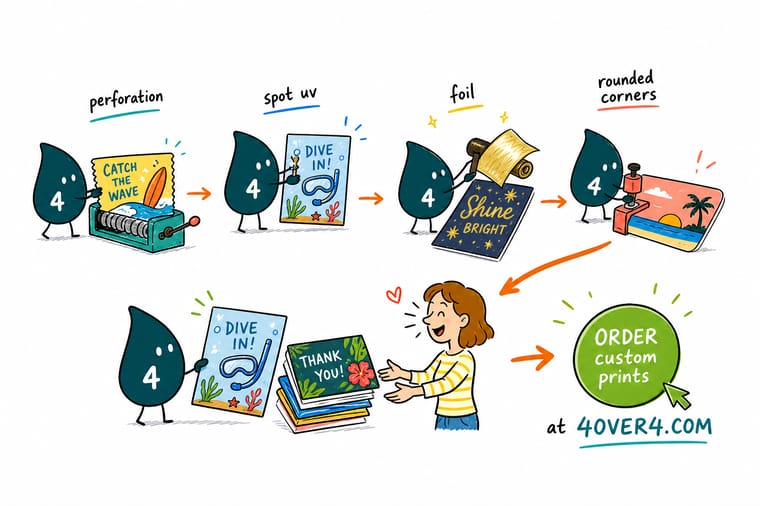
Wally starts with the tear line, because that is the part a customer keeps. He runs a row of slits with uncut ties across the bottom two inches, so the coupon carries the offer and the code away while the rest gets recycled. Then he decorates: a die cut outline if the card is handed over rather than mailed, foil if it has to shout from a stack, spot UV over soft touch if it will be held. He leaves the address panel bare every time, because nothing prints on top of foil.
Add perforation to your postcards →Specs and pricing
Sizes, stocks and starting prices, side by side
Standard, die cut and oversized postcards with live configuration options and starting prices straight from the 4OVER4.COM configurator.


Print it
Order a postcard nobody bins on sight
Explore more
Where to go next

By the numbers
Postcard printing you can count on at 4OVER4
Common Questions
Your postcard finishing questions, answered
Can perforation be added to any postcard?
To almost any of them, yes. Perforation is a finishing pass rather than a separate product, so you order the postcard you want and add the tear line to the same job. It runs in house at 4OVER4.COM alongside the printing, which is why it does not add a separate shipping leg the way an outside bindery would. The one practical limit is stock: very thick cards and heavily laminated cards tear less cleanly than a plain 14pt or 16pt sheet, because the film wants to stretch rather than split.
Does a perforated postcard still mail at the postcard rate?
It does, as long as the whole piece is still rectangular and inside the USPS card size window of 3.5 by 5 inches at the smallest and 4.25 by 6 inches at the largest, with a thickness between 0.007 and 0.016 inches. The perforation is a line inside the card, not a change to its outline, so it does not affect the rate. Most tear-off mailers end up larger than that window anyway, because a coupon needs room, and a 6 by 9 card mails at the letter price instead.
How deep should a tear-off coupon be?
About two inches. Below roughly an inch and a half there is not enough card for a thumb and finger to grip, so people crease the coupon instead of tearing it and the offer arrives at your counter looking mangled. Two inches also gives you room for the offer line, an expiry date and a redemption code without setting the type at six point. Keep live copy a quarter inch clear of the perf line on both sides, because the tear wanders slightly.
Which shows up better on a matte card, foil or spot UV?
Foil, by a wide margin, if the card will be seen at arm's length. Metallic foil is a reflective film, so it flashes across a room and reads instantly in a stack of mail. Spot UV is a clear gloss varnish and only reveals itself when the card tilts under a light, which makes it the subtler and more tactile choice for a piece someone is already holding. On a mailer that has to win attention in a pile, choose foil. On a card handed over in person, spot UV usually feels more expensive.
Can you print a mailing address over foil or spot UV?
No, and it is the most common file mistake on decorated mailers. Both finishes sit on the surface as a film, and neither inkjet ink nor toner keys to them, so an address printed over foil smears and an address printed over cured spot UV beads up. Plan the address panel as bare, uncoated stock from the start and keep the decoration on the other side or on the upper half of the address side.
What do the finished options actually cost?
Starting prices at 4OVER4.COM run from $16.48 for Standard Postcards, $34.05 for Die-Cut Postcards and $51.62 for Oversized Postcards, up to $190.02 for Spot UV Postcards, $299.00 for Raised Foil Postcards and $421.91 for Metallic Foil Postcards. Each product carries its own minimum quantity, so put the run size you actually need through the configurator before you compare two of them: the gap between a plain card and a foiled one narrows considerably at higher quantities.
Get Started
Ready to print a postcard people keep?
Pick your size, add a tear-off coupon, foil or spot UV, and we print, perforate and mail the whole run from one place.
Legal Disclaimer
Gold Standard guarantees apply to all standard orders placed through 4over4.com. Price match requires verifiable proof of a competitor's published price for an equivalent product with matching specifications and turnaround time. Satisfaction guarantee covers manufacturing defects and print quality issues. Contact support with order number and documentation. On-time delivery rate based on tracked orders 1999 to 2026. Individual results may vary based on shipping carrier performance.
