
Creative Booklet Ideas and How to Brainstorm One Worth Printing


A four pass brainstorm that ends in a real page count, an idea bank sorted by marketing, events and product, and the binding each idea can actually carry.
Start a booklet idea from the reader and the job, never from the page count: name who picks it up and where, name the one thing it has to do, then break the content into blocks where one idea owns one spread. Multiply spreads by two, add the cover and back page, and round up to the nearest multiple of four. That number tells you whether the idea is a stitched 12 page piece, a perfect bound 48 page catalog, or a coil bound manual that has to lie flat.
Quick answer
Blocks become spreads, spreads become a page count
A booklet idea becomes printable the moment it has a page count. Write down the reader, the single job, and the content blocks. One block gets one spread, two facing pages the reader sees at once. Double the blocks, add a cover and a back page, then round up to a multiple of four because a folded sheet makes four pages. Under about 64 pages, saddle stitch is the cheapest way to hold it together. Past that, or when you want a title on the spine, perfect binding takes over. Anything a reader works from with their hands busy wants coil or Wire-O so it stays open by itself.
Why Booklets Still Earn Their Place
A booklet is the print format people keep. A flyer gets scanned and binned, a brochure gets folded into a bag, but a bound piece with a cover reads as a document, and documents end up in drawers and on desks. That is the whole argument, and it decides when the format is worth its price.
The second reason is sequence. A folded brochure gives you six or eight panels that a reader can open in any order, which is fine for a menu of services and hopeless for anything with a first step and a last step. A booklet controls the order. Page four comes after page three, and a spread lets you put an instruction on the left and the photo of the result on the right where the eye can hold both.
The trade-off is blunt. Standard Booklets start at $240.55 and Standard Flyers start at $39.54. Print a booklet for people who asked for it, walked into your booth, opened a package, or sat down in your waiting room. Print flyers for the crowd. If you are still weighing the two, our booklet, brochure and flyer comparison puts the formats side by side.
How to Brainstorm Booklet Ideas in Four Passes
Most booklet brainstorms fail the same way: they start with a page count and a mood board, then hunt for content to fill it. Reverse that. Four passes take about twenty minutes and end with a real outline instead of a vibe.
Pass one, the reader. Write one sentence naming who opens this and where they are standing. A patient in a waiting room, a buyer at a trade show table, a customer who just cut the tape on a box. Anything you cannot picture that precisely will not survive to print.
Pass two, the one job. Give the booklet a single verb: sell, explain, instruct, remember. A booklet that tries to sell and instruct at once turns into a catalog with a manual stapled inside it, and readers feel the seam.
Pass three, the blocks. Dump every possible section on a page with no order, then cut anything that does not serve the verb from pass two. Group what is left into blocks where one idea owns one spread. If a block needs more than two facing pages, it is really two blocks.
Pass four, the count. Multiply blocks by two, add the cover and back page, and round up to the nearest multiple of four. Now you know whether the idea is a 12 page piece or a 48 page piece, which is the number that decides binding, paper, and price long before layout begins.
Copy these six lines into a document and fill them in before you open your design software:
- The reader is ................ and they open this while ................
- The one job is to ................
- The reader should do this next: ................
- Blocks, one idea per spread: ................
- Spreads x 2 + cover + back = ........ pages, rounded up to a multiple of four
- Kept or thrown away after reading? ................
That last line is the honest one. If the answer is thrown away, the idea is a brochure and you just saved yourself a few hundred dollars.
A Booklet Idea Bank, Sorted by the Job It Does
These are the booklet ideas that keep coming back through our press, grouped by what the piece is being asked to do. Each one carries a realistic page count, because the count is the part people guess wrong.
| Goal | Booklet idea | Typical pages | Format that suits it |
|---|---|---|---|
| Marketing | Capabilities booklet: what you do, proof it worked, who to call. The leave-behind after a real meeting. | 12 to 20 | Saddle stitch, gloss cover |
| Marketing | Case study collection: five jobs, one spread each, before and after on facing pages. | 16 to 24 | Saddle stitch or square |
| Marketing | Buyer guide answering the questions that stall your sales calls. | 12 to 16 | Saddle stitch, matte text |
| Events | Programme or run of show, with a schedule spread the audience can hold open. | 8 to 16 | Saddle stitch |
| Events | Exhibitor directory or conference guide with a floor plan across the center spread. | 24 to 48 | Saddle stitch or perfect bound |
| Events | Wedding or memorial program, square format, one photo per spread. | 8 to 12 | Square booklet |
| Product | Instruction manual that opens flat on a bench next to the parts. | 16 to 32 | Spiral or Wire-O |
| Product | Lookbook or seasonal catalog with prices in a back-page grid you can reprint alone. | 32 to 64 | Perfect bound |
| Product | Care and warranty booklet dropped in the box, small trim, cheap stock. | 8 to 12 | Saddle stitch |
| Product | Recipe or usage booklet that turns a single product into a habit. | 16 to 24 | Spiral, coated text |
Two patterns are worth stealing from that list. The center spread of a saddle stitched booklet is the only place you get a true uninterrupted double page, because it is a single sheet, so put the floor plan, the timeline, or the big photograph there. And a catalog that keeps prices on their own back pages can be reprinted cheaply when the prices move, which is the difference between a catalog that lasts a season and one that lasts a year.
Page Count and Binding Decide What the Idea Can Be
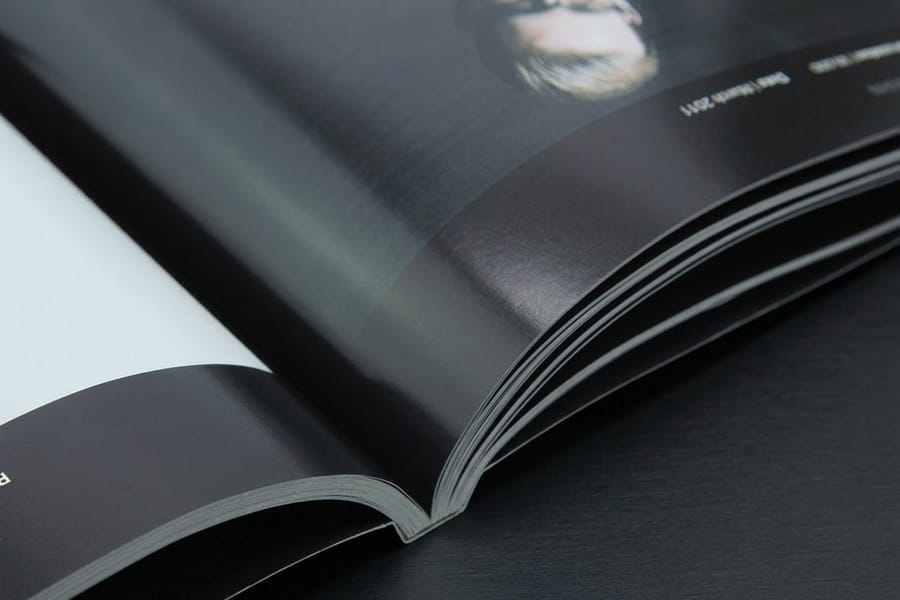
Once you have a page count, the binding choice narrows to one or two honest options. The count is the gate, and the way the reader handles the piece breaks the tie.
| Binding | Page range it suits | What it does well | The catch |
|---|---|---|---|
| Saddle stitch | 8 to about 64 | Lowest cost per copy, fastest through finishing, one true center spread. | No printable spine, and thick counts push the inner pages outward as creep. |
| Perfect bound | About 32 and up | Square glued spine you can print a title on, so it reads as a book on a shelf. | Needs enough bulk to glue, and it will not stay open flat on its own. |
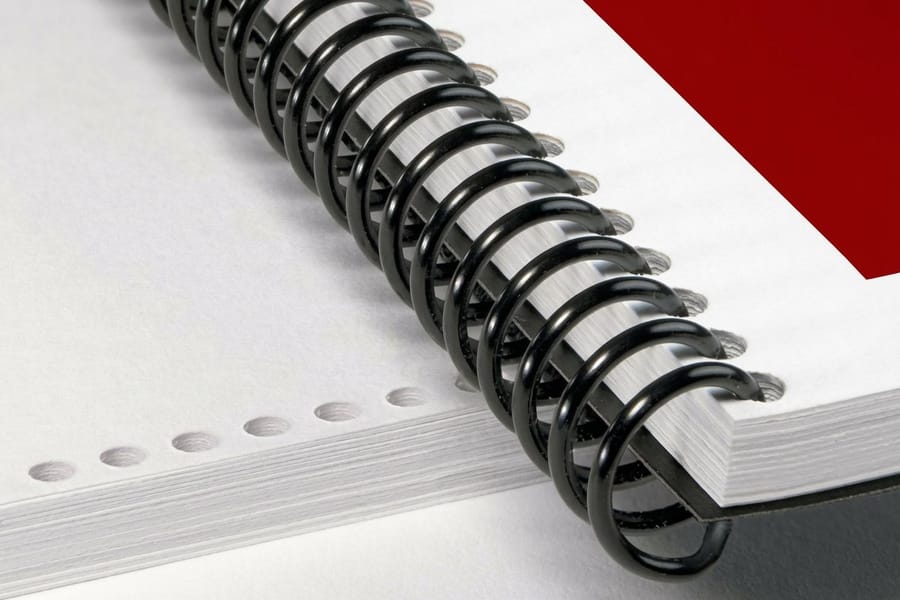
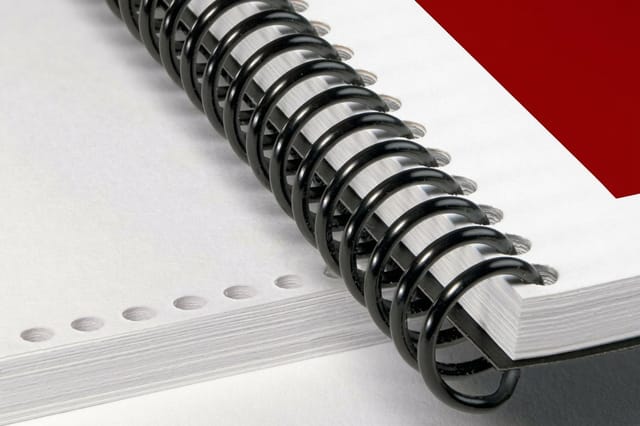
| Spiral coil | Any count, no fours rule | Lies dead flat and folds back on itself, ideal for anything used hands-free. | The coil takes margin space and the piece looks operational rather than premium. |
| Wire-O | Any count, no fours rule | Flat opening with a tidier, more finished look than plastic coil. | Costs more than coil and the wire can crush if the piece is packed badly. |
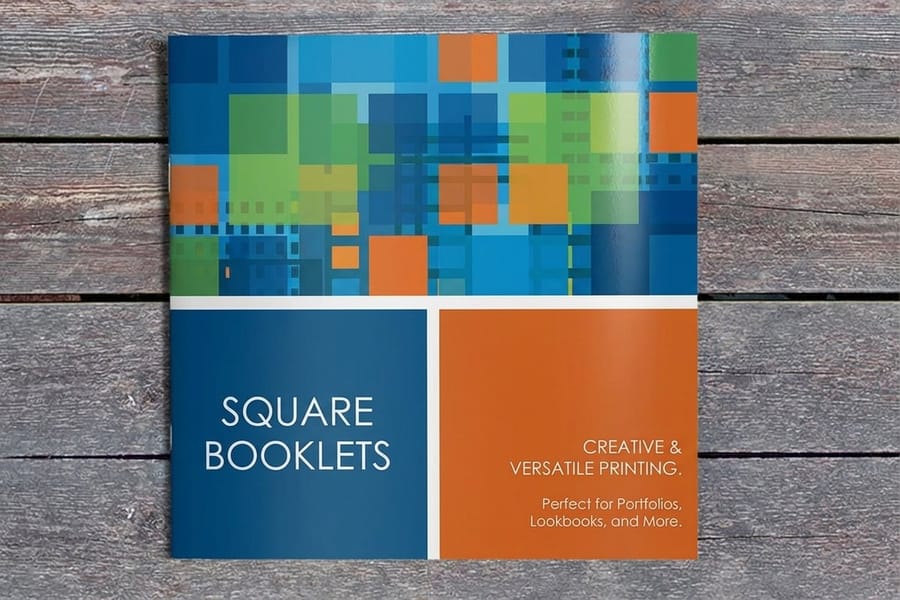
Trim size is the second lever and it changes the character more than people expect. A standard 8.5 by 11 inch booklet reads as a document. Drop to 5.5 by 8.5 and it reads as a handbook people put in a bag. Go square and it reads as a photo piece, which is why Square Booklets keep showing up for lookbooks and event programs.
Cover stock matters too. Run the cover on a heavier stock than the text pages so it protects the block and holds the fold, then match the finish to the job: gloss for photography, matte or uncoated when anyone has to write on it. The full set of choices sits in the binding options collection, and our binding methods guide walks through each one in detail.
How to Design and Print the Booklet You Just Sketched
Build the file the way the press expects it and the job runs clean. Four rules cover almost every booklet we see come through prepress.
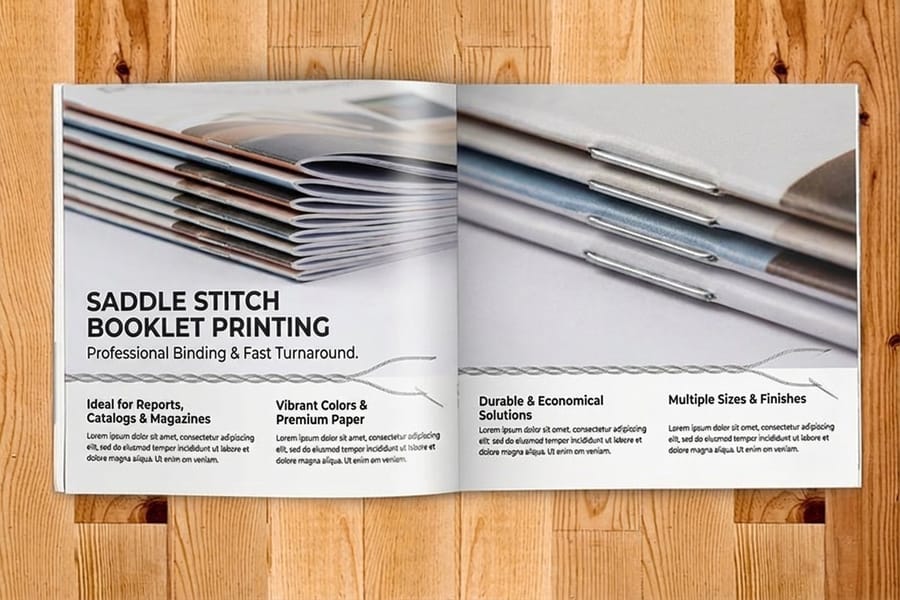
Supply single pages, in reading order. One page per PDF page, cover first, back page last, blanks included. Imposition is the step where the press rearranges pages so they land correctly on the printed sheet, and reader spreads have to be split apart before that can happen.
Bleed 0.125 inch, safety 0.25 inch. Anything touching the edge extends past the trim. Anything that must survive stays inside the safe margin, and on a thicker stitched booklet keep a little extra clear on the inner edge, because creep pushes the middle pages outward and the trim shaves them.
Set the count before the layout. Adding four pages after the design is finished means reflowing the whole thing, since a stitched booklet cannot gain one page or two. Our guide to page counts and creep covers the arithmetic and the margin shift.
Start from a template. Correct trim, bleed and margins already in place beats setting them by hand at midnight. Pull a size from the blank template library, then order the format that matches your count: saddle stitch booklets from $240.55 for slim pieces, perfect bound books from $375.05 when you want a printed spine, or spiral coil books from $423.28 for anything that has to lie flat.
Ordering a larger quantity changes the math in your favour, since setup is spread across the run. If the number is climbing past a few hundred copies, read how bulk booklet runs are priced and where the cost actually sits before you lock the specification.
Wally brainstorms a booklet
Blocks on spreads, then count in fours
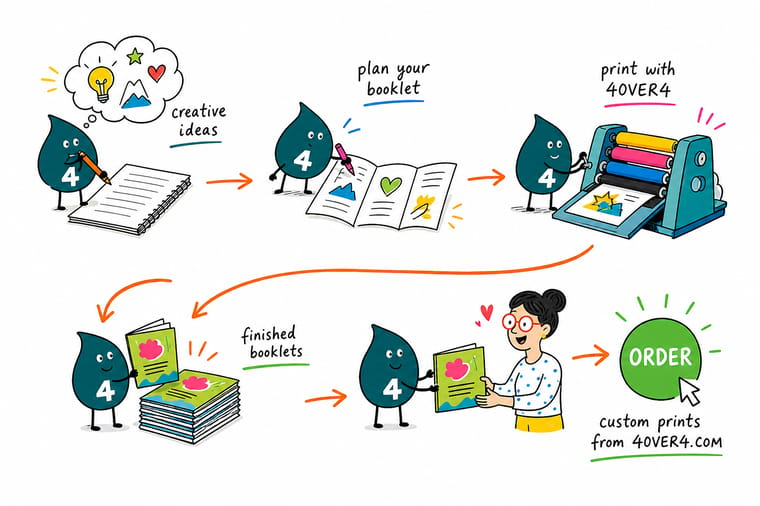
Wally writes one idea per sticky note, drops each note onto a pair of facing pages, and stops adding notes when the story is told. Then he counts: spreads times two, plus a cover and a back page, rounded up to the nearest multiple of four. If the number is small he staples it through the fold. If it is fat he glues a square spine so the title shows on a shelf. If someone has to work from it with both hands busy, he threads a coil through and it lies flat.
Configure your booklet →Specs and pricing
Booklet formats, page counts, and starting prices
Compare the bound formats side by side, with live page-count, stock and quantity choices straight from the 4OVER4.COM configurator.

Print it
Turn the outline into a bound booklet
Explore more
Where to go next


By the numbers
Booklet printing across 25 years and 1,000+ products
Common Questions
Your booklet questions, answered
How do I come up with a booklet idea that is worth printing?
Work backwards from a question your customers keep asking. If the same three questions come up on every call, a 12 page booklet that answers them properly is more useful than any brochure, and you already know it will get read. Then check the idea against the format: does it need sequence, does it need more than a fold can hold, and will the reader keep it. If the answer to all three is yes, it is a booklet. If it is one message on one page, print a flyer and spend the difference on quantity.
How many pages should a booklet have?
Count your spreads and multiply by two. A spread is the pair of facing pages a reader sees at once, so eight sections plus a cover and a back page usually lands between 16 and 24 pages. Round the total up to the nearest multiple of four, because a saddle stitched booklet is built from folded sheets and each sheet carries four pages. Landing on 27 means you print 28 and put something deliberate on the extra page, such as notes, an index, or a full bleed image.
Can a booklet have an odd number of pages?
Not if it is folded and stitched. Four pages come from one folded sheet, so the count moves 4, 8, 12, 16 and up. Spiral and Wire-O binding is the exception, because the pages are drilled and threaded rather than folded, so any count works there. That flexibility is one reason a workbook or a recipe collection often ends up coil bound even when the page count would suit stitching.
Should I supply the file as spreads or as single pages?
Single pages, in reading order, one page per PDF page, including the cover and any blank pages. The press does the imposition, which is the step that rearranges pages so they fall in the right place on the printed sheet, and supplying reader spreads forces that work to be undone first. Keep 0.125 inch of bleed on every outside edge and hold live text at least 0.25 inch inside the trim, more on the inner edge of a thick booklet where creep pushes the middle pages outward.
Booklet or brochure for a small print run?
A brochure is one sheet folded, so it caps out at six or eight panels and Standard Brochures start at $57.11. A booklet is bound, carries as many pages as your content needs, and starts at $240.55. If your message fits on a folded sheet and the reader will scan it once, the brochure wins on cost every time. If the piece has to hold a sequence, a catalog of items, or a set of instructions someone works through, the fold runs out of room fast.
What binding should I pick for a training manual?
Spiral or Wire-O, because a manual gets used with hands busy and it has to stay open on a bench without being held. That is the one job where a glued or stitched spine actively fights the reader. Spiral Coil Books start at $423.28 and the cost buys you a booklet that lies dead flat at any page. For a sales piece that sits upright on a shelf and needs a title on the spine, choose perfect binding instead.
Get Started
Got the outline? Let us bind it.
Pick your page count, trim size and binding, upload single pages in reading order, and we print a booklet that opens the way you designed it.
Legal Disclaimer
Gold Standard guarantees apply to all standard orders placed through 4over4.com. Price match requires verifiable proof of a competitor's published price for an equivalent product with matching specifications and turnaround time. Satisfaction guarantee covers manufacturing defects and print quality issues. Contact support with order number and documentation. On-time delivery rate based on tracked orders 1999 to 2026. Individual results may vary based on shipping carrier performance.
