
Copy and Print Services You Order Online and We Ship to Your Door


Sofia is our design and templates voice, built from the knowledge of our production team, with over 20 years in printing.
Copy print services online cover everything a copy shop prints, flyers, brochures, booklets, letterheads, envelopes and business cards, run on commercial presses instead of an office copier and shipped to your door. Some jobs belong online, some stay local, and the price and the calendar really work.
Copy and print services cover document sets, flyers, booklets, letterheads, envelopes and business cards, and you can order all of them online by uploading a PDF, choosing stock and quantity, and having the finished run shipped to you. Ordering online buys commercial stock and finishing that a counter copier cannot do, and per run pricing that gets cheaper the more you print. A local shop still wins on a handful of copies you need in the next hour, on notarizing, and on laminating one sheet.
Quick answer
Counter pricing is per copy, press pricing is per run
Order online when the job is measured in hundreds, walk to the counter when it is measured in copies. A copy shop charges roughly the same for the fifth sheet as the fiftieth, so it is unbeatable on small jobs and expensive on large ones. A press run is priced as one job, so Standard Flyers start at $39.54 and the cost per sheet keeps falling as the quantity climbs. The trade you make for that is time: production days and transit days are two separate clocks, and you have to add both before you promise anyone a date.
The copy print services we run
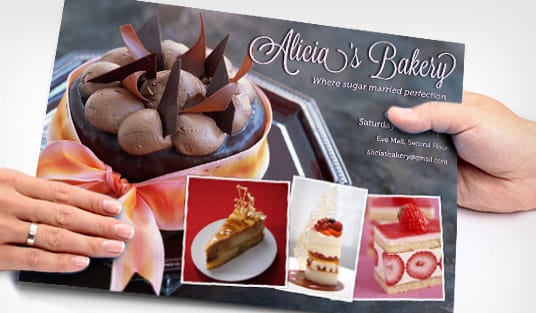
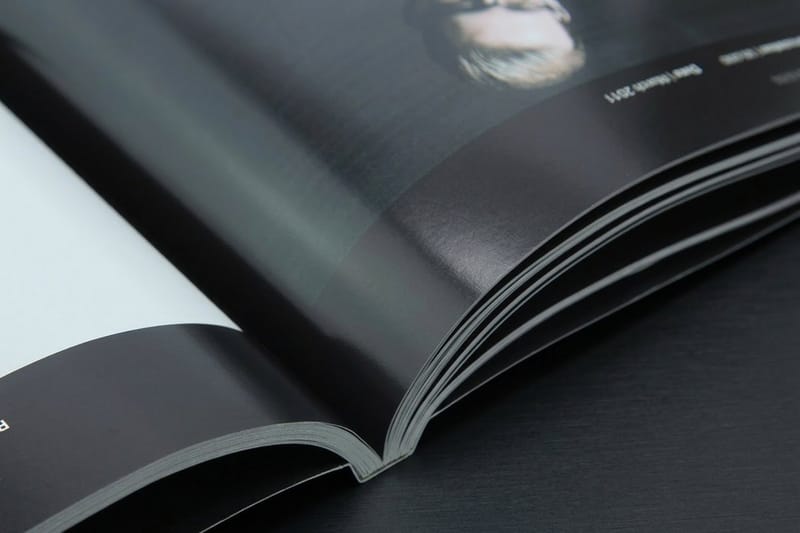
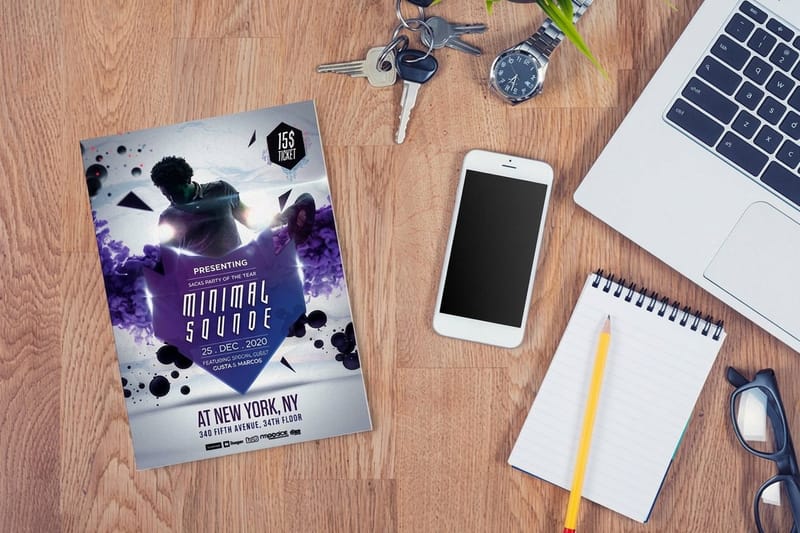
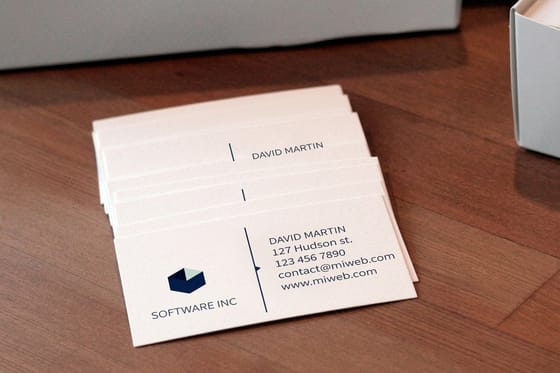
Upload a PDF, pick the stock and quantity, and we print and ship it: flyers in nine sizes from 50 for $39.54, brochures from 50 for $57.11, saddle stitched booklets of 8 to 60 pages from 25 for $240.55, letterheads at 8.5 by 11 inches from 50 for $99.95, envelopes from 250 for $142.99 and business cards from 100 for $17.57. Flyers, brochures and cards print in 3 business days, before transit.
What Copy and Print Services Actually Cover
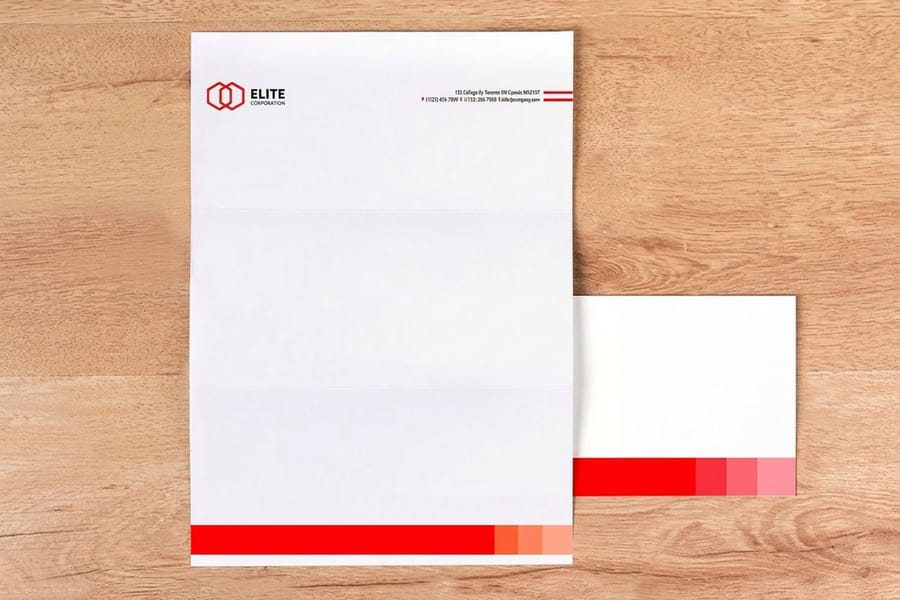
The list is short and it has not changed in decades. Document sets and manuals, flyers and handouts, booklets, letterheads, envelopes, and business cards. That is what walks through the door of a copy shop, and it is the same list people upload online.
What changes is the paper underneath. A counter copier runs 20lb bond, the same stock in the tray at your office, and it does that one thing well. A commercial press gives you the grade the piece deserves: Standard Flyers on 100lb gloss text so the sheet does not flop in a hand, Letterheads on 70lb uncoated text that still takes a pen, Standard Booklets folded and stitched rather than stapled in the corner. Our flyer paper weight guide works through the specific difference between an 80lb and a 100lb handout.
Prices sit where you would expect for run work. Flyers start at $39.54, Standard Brochures at $57.11, Letterheads at $99.95, Printed Envelopes at $142.99, and Booklets at $240.55 because a booklet is many sheets, folded, trimmed and bound. Standard Business Cards start at $17.57, which is usually the cheapest thing in a first order.
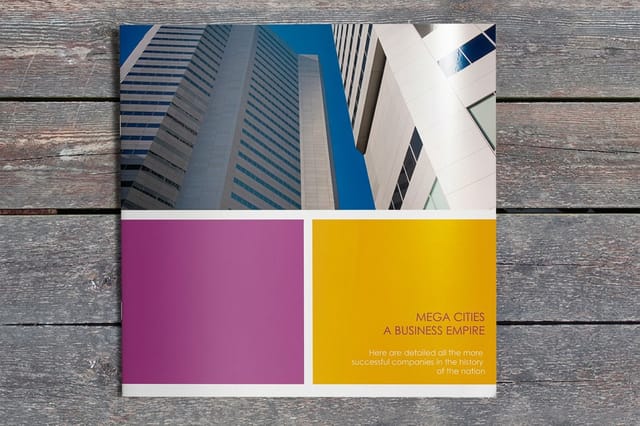
The one thing to decide before you shop is format, since a folded piece and a flat piece are priced and set up differently. If you are still choosing, booklet vs brochure vs flyer lays out which one each job wants, and the flyer printing category and brochure printing category list the sizes we actually run.
Online Order or the Copy Shop Down the Street
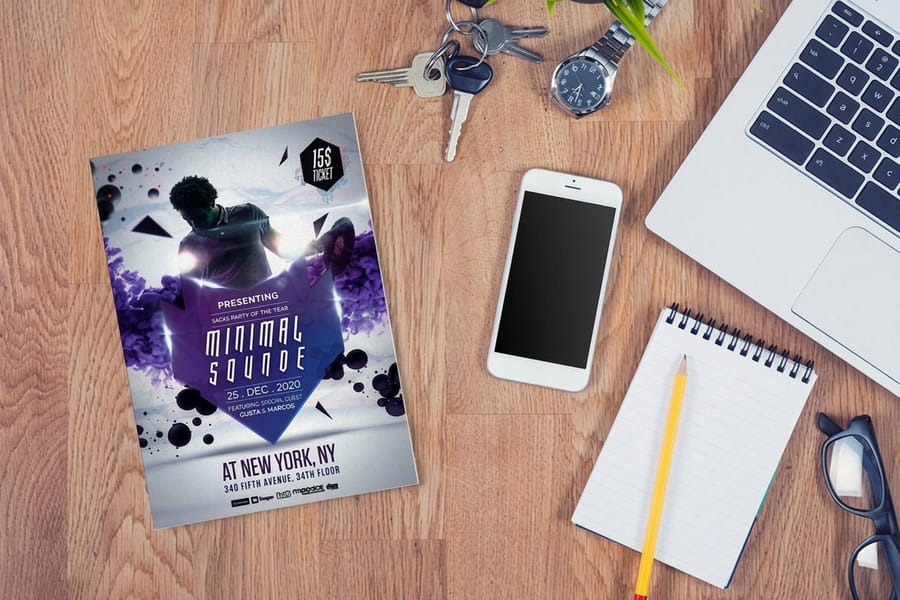
Both are real answers, and which one is right changes with the count on the job: online, 50 flyers cost $39.54 and 500 cost $108.75, while a counter copier charges about the same for every sheet. Look at the quantity first, then the finishing, then the deadline.
| The job | Where it belongs | Why | The catch |
|---|---|---|---|
| Three copies of a signed contract | Local counter | Per copy pricing, no minimum, done while you wait. | Nothing ships fast enough to compete with a walk. |
| 500 flyers on coated stock | Online run | Priced per run, printed on 100lb gloss text, trimmed square. | You need the file finished a few days before the event. |
| 100 stitched booklets | Online run | Folding, collating and saddle stitching are ordinary press work. | Page count has to land on a multiple of four. |
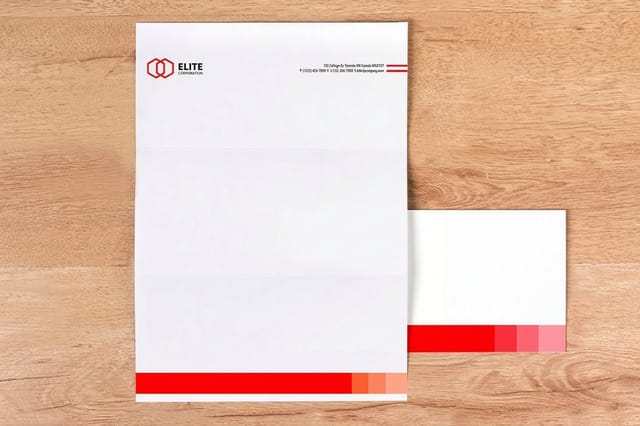
| 500 letterheads and envelopes | Online run | Matched stock across both pieces, one setup, one delivery. | Reprint the whole run if the phone number changes. |
| One notarized or laminated sheet | Local counter | It is a counter service, not a printing job. | No print shop online can do it for you. |
Read the middle column and the pattern is obvious. Anything measured in copies belongs at a counter. Anything measured in hundreds belongs on a press, because that is the point where per run pricing takes over and where the stock and the finishing start to matter more than the convenience. Local print shop vs online printing compares the two on cost and quality in more depth, and best places to print covers the in between cases like a rush poster.
Turnaround Is Production Days Plus Transit Days
Almost every late print job in the world comes from adding one clock instead of two. Production is how long the press and the bindery need. Transit is how long the box needs on a truck or a plane. They are separate, and both are counted in business days.
Production is a priced choice, not a fixed property of the product. Open the configurator on any product page, set your quantity, and the turnaround options list what each tier costs. A faster tier is a real price increase, so decide whether the deadline is worth it before you click.
Two details catch people out. The first is the daily cut off: a file approved late in the afternoon usually starts counting from the next business day, which quietly costs you a day before anything prints. The second is the weekend, which advances the calendar and not the schedule. Friday plus two business days in transit is Tuesday, not Sunday.
The fix is boring and it works. Set your own deadline one business day earlier than the real one, approve files in the morning, and pick the ship method deliberately rather than by price alone. Ground, air and freight for print orders explains what each method actually buys you, and same day printing covers the jobs that can genuinely be pulled forward.
Sending Files That Print the First Time
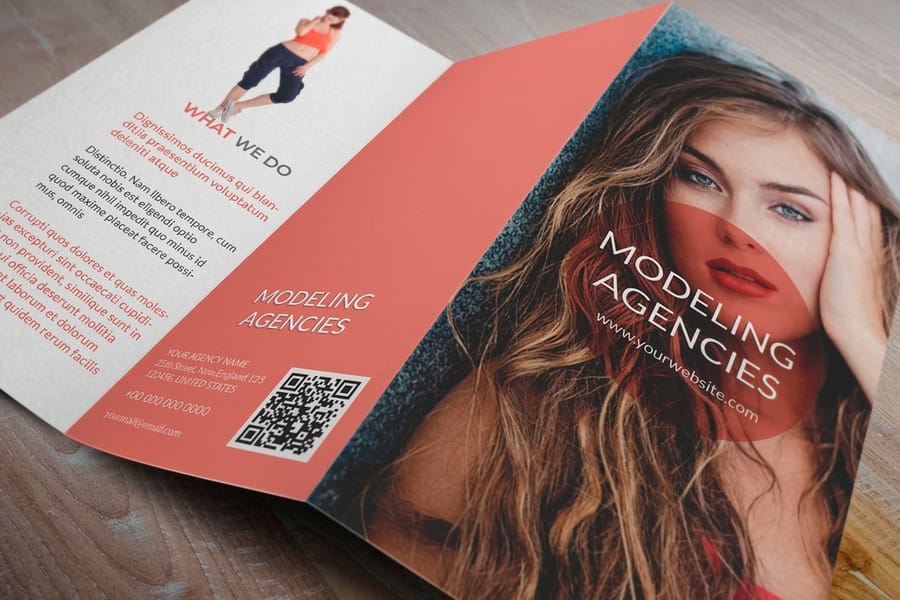
A copy shop can fix a bad file at the counter while you watch. An online order cannot, so the file has to be right when it leaves your machine. Four things settle it.
- Export to PDF, always. A Word or Pages file opens here with different font versions and a different driver, and the text reflows. Two pages become three, headings drift to the wrong page. Converting a Word doc to a print ready PDF walks through the export settings.
- Images at 300 dpi at final size. A logo pulled from a website is usually 72 dpi and looks soft the moment it is printed. Scaling it up in the layout does not add detail.
- Build in CMYK and expect a shift. Screens emit light, ink reflects it, so the brightest blues and greens land slightly duller on paper. That is the process working normally.
- Extend artwork past the trim. Anything meant to run off the edge needs 0.125 inch of bleed, and keep type at least 0.125 inch inside the trim line so a normal cutting tolerance never clips it.
Start from a correctly sized layout rather than measuring one yourself. The blank template library has the trim, bleed and safe area already drawn for each product. The smallest build, a 4 page booklet, is one sheet folded once. For a multi page piece, sort the page count first: booklet page counts and creep explains why 14 pages becomes a 16 page booklet, and binding methods covers what saddle stitch, wire o and perfect binding each need. If you want the whole route from upload to doorstep, how online printing works is the overview.
Wally explains copy and print online
Upload the PDF, pick the stock, the run ships to you
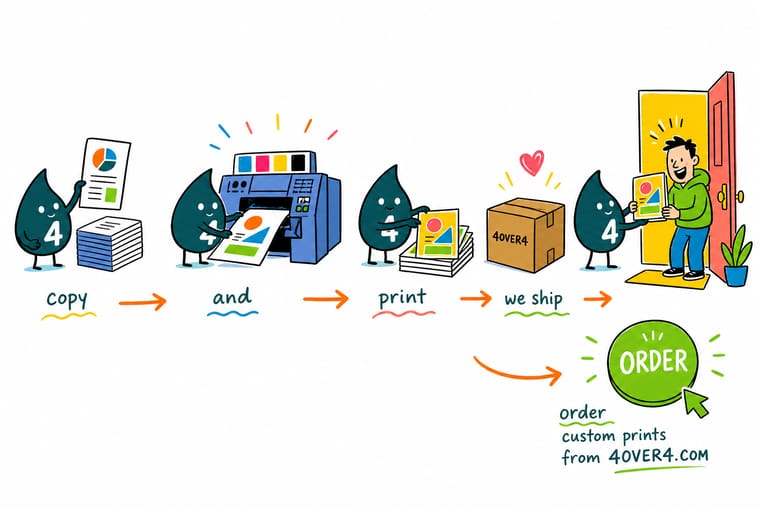
Wally never queues at a counter. He exports a PDF with the fonts embedded, drops it into the configurator, picks the paper and the quantity, and watches the price per sheet fall as the count goes up. Then he adds the two clocks: production days for the press, transit days for the truck, both counted in business days. He orders a day earlier than he needs to, and the box turns up before anyone asks about it.
Price flyers by the run →
Specs and pricing
Sizes, stocks and starting prices for the everyday three
Flyers, brochures and booklets cover most of what people bring to a copy shop. Flyers come in nine sizes from 4.25 by 5.5 to 11 by 25.5 inches on seven stocks, brochures in six sizes flat or folded, and booklets at 5.5 by 8.5, 8.5 by 11 or 11 by 11 inches with 8 to 60 pages.


Print it
Order the run instead of queueing for copies
Order flyers for a handout run, booklets for anything over one sheet, and letterheads on 70# uncoated or Royal Laid stock so the office printer only adds the letter.
%22%2F%3E%3Ccircle%20cx%3D%2235%22%20cy%3D%2219%22%20r%3D%2230%22%20fill%3D%22%23f59e0b%22%20opacity%3D%220.15%22%2F%3E%3Ccircle%20cx%3D%2233%22%20cy%3D%2229%22%20r%3D%229%22%20fill%3D%22%23f59e0b%22%20opacity%3D%220.1%22%2F%3E%3Crect%20x%3D%2275%22%20y%3D%229%22%20width%3D%2220%22%20height%3D%2219%22%20rx%3D%224%22%20fill%3D%22%23f59e0b%22%20opacity%3D%220.08%22%20transform%3D%22rotate(15%2080%2030)%22%2F%3E%3C%2Fsvg%3E)
Explore more
Where to go next
Weigh a local shop against an online run, see which jobs can be pulled forward, export a Word file to a print ready PDF, and pick a binding for a booklet.
By the numbers
The print shop behind the upload button
Common Questions
Your copy and print questions, answered
What are copy and print services?
Copy and print services cover the everyday paper a business hands out or files: document sets, flyers, booklets and manuals, letterheads, envelopes and business cards. At a local copy shop the work runs on an office copier and you collect it at the counter. Ordered online, the same jobs run on commercial digital or offset presses, which adds real stock choices, folding, scoring and binding, and the finished run ships to you instead of waiting in a pile behind the register.
Is it cheaper to print online or at a copy shop near me?
It depends entirely on how many you need. A counter charges per copy and that rate barely moves whether you print 5 or 500, so for a handful of pages the shop down the street is cheaper and faster. A print run is priced as a run: Standard Flyers start at $39.54 and Standard Brochures at $57.11, and the cost per piece drops as the quantity climbs. Somewhere in the low hundreds the online run wins on price and it never loses on paper quality after that point.
Can I get copies made online the same day?
You can start production the same day, but you still have to move the box. Approve the file before the day's press cut off and the fastest production tier begins that day rather than the next one. After that the transit leg decides the arrival date, and ground shipping is counted in business days, so a job that ships Friday afternoon usually arrives Monday or later. If the deadline is today and the piece is small, a local counter is the honest answer, and our guide to same day printing explains which jobs genuinely can be pulled forward.
What file should I send for copying and printing?
A PDF with fonts embedded, images at 300 dpi at final size, and colors set in CMYK. Do not send the working file. A Word or Pages document opens on another machine with different font versions and different printer drivers, and the line breaks move, which is how a two page agenda arrives as three pages with an orphaned heading. Export to PDF, open the PDF, and read the page you exported. Whatever you see there is what the press will print.
Why does my booklet page count have to be a multiple of four?
Because a saddle stitched booklet is made from folded sheets, and one folded sheet always produces four pages: two on the front, two on the back. A 14 page file cannot be built from folded sheets, so it becomes a 16 page booklet with two pages left blank. Plan the content in fours from the start and you decide where those blanks fall rather than finding them at the back after binding.
Do you scan, notarize or laminate single documents?
No. Those are counter services that need you and the original in the same room, and we do not offer them. What we do is print from your file: runs of documents, flyers, booklets, letterheads and envelopes on commercial stock, finished and shipped. If a job needs a wet signature witnessed or one sheet laminated while you wait, use a local shop for that piece and order the printed run online.
Get Started
Envelopes, letterhead and cards in one upload
Upload your PDF, pick the stock and the quantity, and we print the run on commercial presses and ship it to your door.
Legal Disclaimer
Gold Standard guarantees apply to all standard orders placed through 4over4.com. Price match requires verifiable proof of a competitor's published price for an equivalent product with matching specifications and turnaround time. Satisfaction guarantee covers manufacturing defects and print quality issues. Contact support with order number and documentation.
