
Church Postcard Marketing That Grows Sunday Attendance


A postcard is the cheapest way to put one service in front of a whole neighborhood. Here is the size that keeps postage low, the calendar that gets the card there on time, and the tracking that tells you whether it worked.
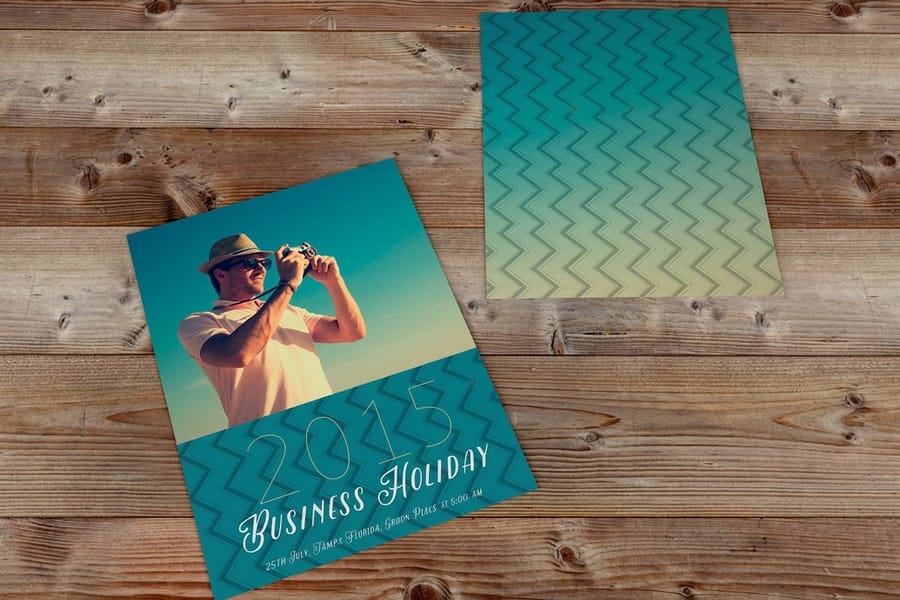
Church postcard marketing works when one card carries one occasion, drops about three weeks before the service, and asks for one countable action. Keep the card at 4.25 by 6 inches or smaller for the First-Class postcard price, or go to 6.5 by 9 if you want Every Door Direct Mail and no mailing list. Put the service time, the street address, the parking and the childcare on the back, print a vanity URL or a QR code, and log the replies per drop rather than per month.
Quick answer
One occasion, one drop date, one countable reply
A church postcard earns its postage when it invites a stranger to a specific service and makes the first visit easy to picture. Size the card at 4.25 by 6 inches to hold the First-Class postcard price, or at 6.5 by 9 if you want EDDM to cover whole carrier routes without a list. Drop the mail about three weeks before the date so the in-home window closes with a week to spare. Print the service time, the street address, the parking and the childcare, give the card one vanity URL or QR code, and measure every drop on its own numbers.
Why a Postcard Outperforms a Letter for Church Outreach

A postcard gets read because there is nothing to open. It lands face up in the pile, and the person sorting the mail over the recycling bin reads the headline whether they meant to or not. A letter asks for a decision before it says anything.
That is the whole advantage, and it is worth understanding what you give up for it. There is no privacy, so a postcard is the wrong piece for a pledge campaign or anything pastoral. There is no room, so a card that tries to cover the youth program, the food pantry and the new sermon series covers none of them. And there is no reply envelope, so the only response you can ask for is a visit, a scan, or a click.
For an invitation, none of those limits matter. You want one service, one date, one address, in front of as many nearby households as the budget reaches. Standard Postcards start at $16.48, which is why a church can test a message on a few hundred homes without a committee meeting about it. If the message needs more space than a card allows, that is the signal to move to brochures at $57.11 or a brochure-led approach instead of shrinking the type. A postcard drop is also one piece of a wider program, and church direct mail end to end covers the letters and welcome packs that sit around it.
Size, Stock, and the Postage Cliff at 4.25 by 6
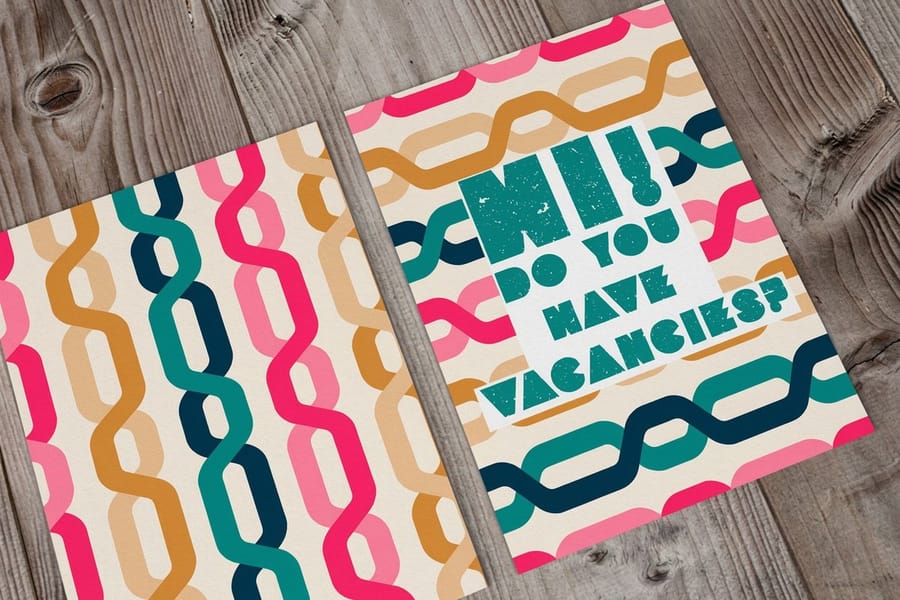
Postage decides the size before design does. USPS charges the First-Class Mail postcard price only for a rectangular card between 3.5 by 5 and 4.25 by 6 inches, at a thickness of 0.007 to 0.016 inch. Cross any of those limits, even by an eighth of an inch, and the same card mails at the letter rate for the rest of the run.
The thickness range is the part that trips churches up, because it is a printing decision. 14pt cardstock measures about 0.014 inch and sits comfortably inside the range. 16pt measures about 0.016 inch and sits exactly on the ceiling, which still qualifies but leaves you no room if the coating adds anything. If the mailing matters and the quantity is large, 14pt is the safer specification.
Coating is the second decision, and it is not cosmetic. A gloss UV coating photographs beautifully and refuses to take ballpoint ink. If a volunteer is going to write a name across the top, or the pastor wants to sign a handful by hand, order matte or uncoated and accept slightly duller color. That single choice has ruined more church mailings than any design error.
| Card | Typical size | Postal class it fits | Use it when |
|---|---|---|---|
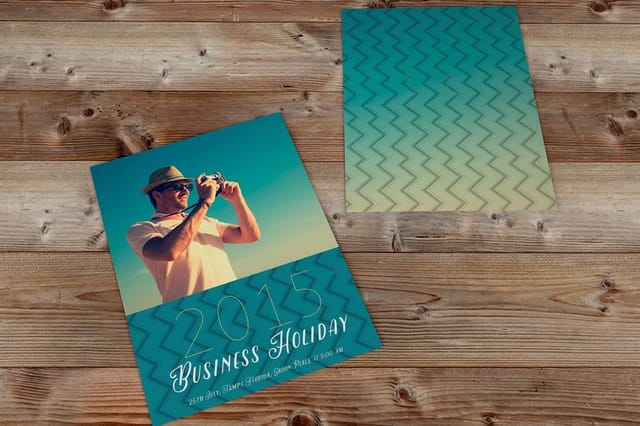
| Standard Postcards | 4.25 by 6 inches | First-Class postcard price | You have addresses and want the cheapest possible stamp. |
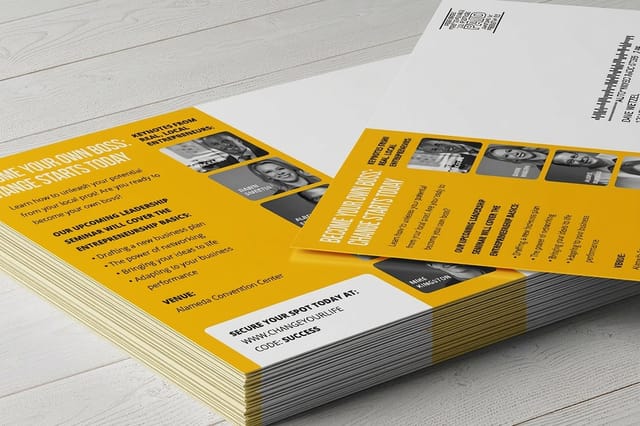
| Oversized Postcards | 6.5 by 9 inches | Flat size, EDDM eligible | You want whole carrier routes and no mailing list. |
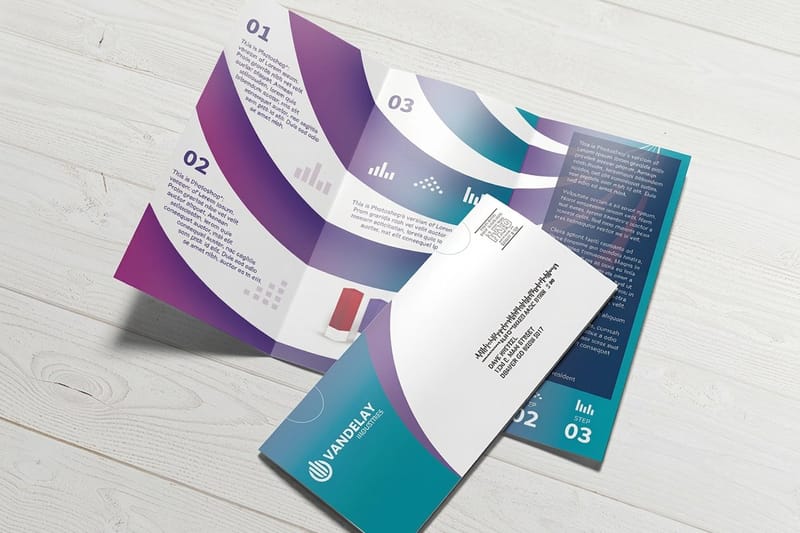
| Direct Mail Postcards | Print plus mailing | Handled by our mail house | Nobody at the church wants to address and stamp them. |
| Invitation Cards | 5 by 7 inches | Letter rate, envelope needed | The piece is a formal invitation and privacy matters. |
Set the trim size in the file before you draw anything. The complete postcard sizes guide lists every size we print with its bleed, and laying out a postcard for mailing covers the address side rules in detail.
Plan the Mailing Backwards From the Service Date
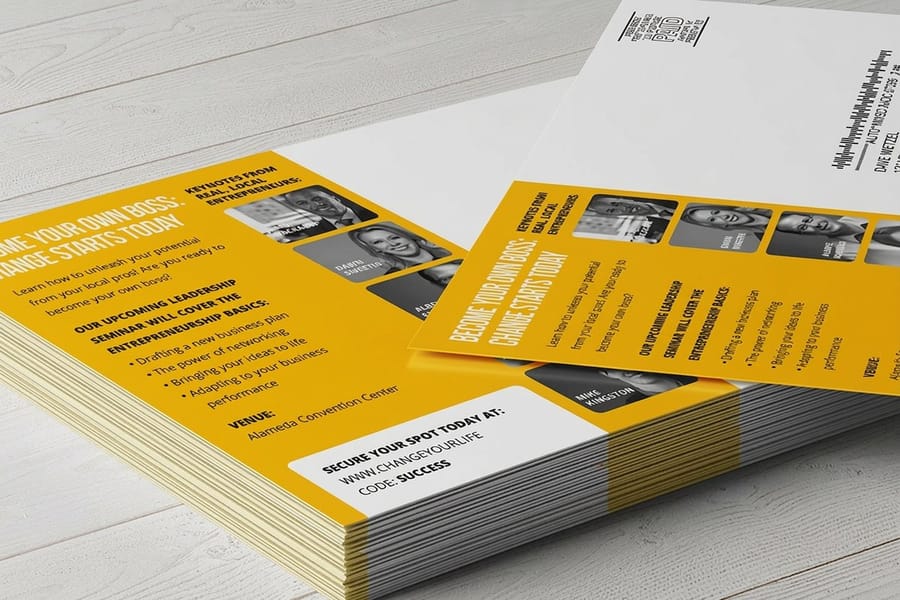
The mistake is counting forwards. Somebody decides in week one to mail something for Easter, the artwork takes three weeks because two people have opinions about the photo, and the cards drop nine days out. Half arrive on time. The rest arrive after the service.
Work the other direction. Fix the service date, then subtract. Around 21 days before, the mail drops. That is the only date you actually control, because the in-home window that follows is a range: USPS quotes three to ten days for Marketing Mail and one to five for First-Class. Around 28 days before, the cards are printed and the list is cleaned. Around 35 days before, the artwork is approved and the order is placed.
Two adjustments to that calendar are worth making. December needs an extra week at every step, because postal volume peaks and every commercial mailer in the country is competing for the same carrier. And if you are running EDDM, add time for bundling and for the trip to the accepting post office, which is a step an addressed mailing does not have.
Aim for the card to land seven to ten days before the service. Earlier than two weeks and it goes in the bin with the coupons. Later than five days and half your list has already made other plans. For a full breakdown of what each stage costs, read direct mail cost per piece.
What Belongs on the Card, and What to Cut
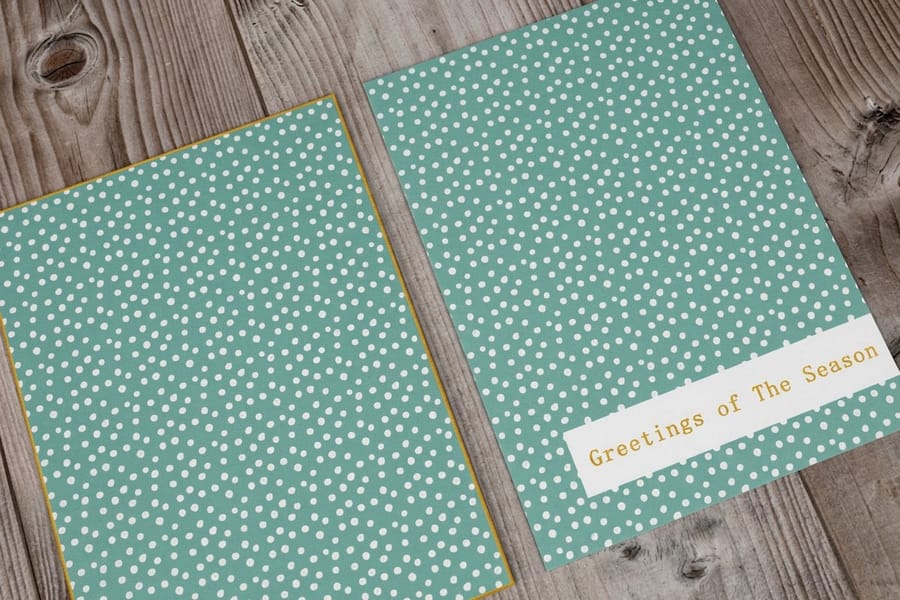
Write for someone who has never been inside the building and is mildly nervous about it. That single instruction fixes most church postcard copy, because it exposes how much of the usual content answers questions nobody asked.
The front carries one message. An occasion, a date, a time. A photograph of people rather than architecture, because a stranger scanning a card is looking for whether anybody there looks like them. The back carries the practical answers: street address, service times, where to park, what happens with children, and how long the service runs. Those four details remove the actual barriers to a first visit.
Cut the mission statement, the founding year, the denominational history, the full staff list, and the QR code that goes to the homepage. Cut the second event too. A card that promotes both the Christmas Eve service and the January small groups launch will get you fewer of both.
- Reserve the right half of the address side. USPS needs it for the address block and the postage, and anything you print there will be covered by the label.
- Keep the bottom 5/8 inch clear. That strip is the barcode clear zone, and artwork running through it causes problems at acceptance.
- Print the street address, not just the church name. Neighbors who have driven past the building for years often cannot tell you what it is called.
- Use one call to action. A short URL, a QR code, or a line asking people to bring the card. Two competing actions produce fewer of either.
If the wording is the part you are stuck on, church invite card wording and design works through the sentences line by line, and direct mail design best practices covers the layout rules that apply to any mailed piece.
The Occasions Actually Worth Mailing For
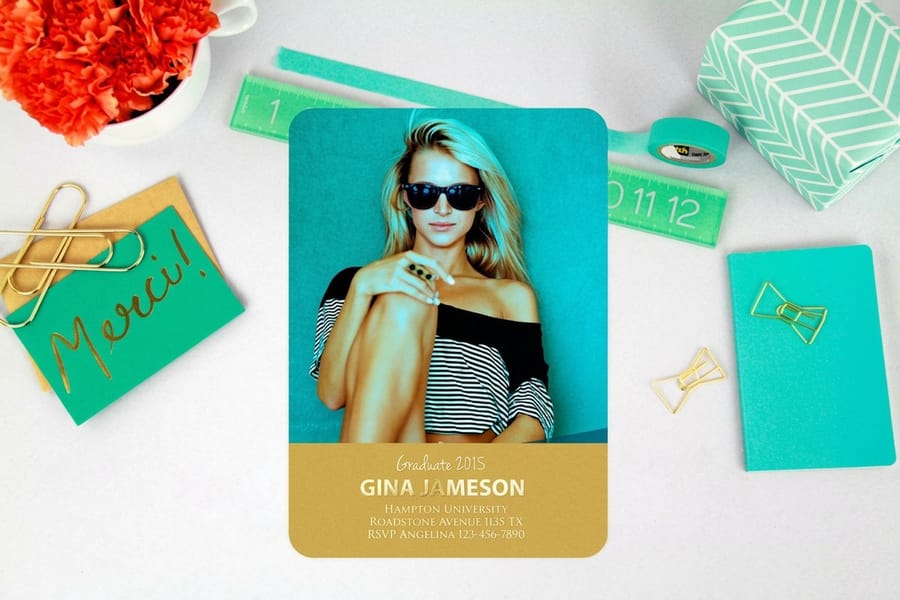
Mailing on a schedule rather than for an occasion wastes money, because a card with no reason attached asks a stranger to change their Sunday for nothing in particular. These are the moments where an invitation makes sense to someone outside the congregation, with the copy angle each one needs.
| Occasion | Drop the mail | What the card should promise |
|---|---|---|
| Easter | 3 weeks before | Service times, including the extra ones. Say plainly that visitors are expected, because on Easter they are. |
| Christmas Eve | 4 weeks before | The time of the family service and how long it runs. Parents are deciding around bedtime, not theology. |
| Autumn relaunch | 2 weeks before | A new series with a start date. A stranger joining at week one is not joining halfway through something. |
| Vacation Bible school | 5 to 6 weeks before | Dates, ages, cost, and the registration link. Parents book childcare early or not at all. |
| Community event | 2 to 3 weeks before | The event itself, with the service mentioned once. A trunk or treat is not a sermon in disguise. |
| New movers | Monthly, ongoing | A welcome to the neighborhood and a practical local detail. This list is small and the response is the best you will get. |
The new-mover drop is the one most churches skip and should not. Someone who moved in six weeks ago has no routine yet, no local friends, and an actual reason to look for a church. The counts are small enough that a monthly card is affordable, and small enough to run off Standard Postcards without a mail house. For Easter specifically, Easter church marketing print ideas covers what to print alongside the card.
Every Door, a Rented List, or Your Own Names

Three sources, and they behave nothing alike. Choosing wrongly is the most expensive mistake in a church mailing, because the piece can be perfect and still land on the wrong doormat.
| Source | What you get | Cost per piece | The catch |
|---|---|---|---|
| EDDM | Every residential address on the carrier routes you select | Lowest, no list to buy | Nothing is addressed, and the piece must be flat size, so a 4.25 by 6 card does not qualify. |
| Rented list | Named households filtered by radius, age or household type | Middle, plus the list rental | Rented names are usually licensed for one use, and the data ages fast. |
| Your own names | Lapsed attenders, visitors, VBS parents, event sign-ups | Highest per piece, smallest count | Only as good as your record keeping, and it needs cleaning before every drop. |
Most churches should run two of the three at once. EDDM covers the streets nearest the building for awareness, and your own names get an addressed card that reads like it was meant for them. The rented list sits in the middle and is worth testing on one drop before you commit a year of budget to it.
Clean the internal list before every mailing. Deduplicate, drop anybody who has asked you to stop, and run the addresses through address correction so the returns do not eat the budget. Building or renting a mailing list walks through the sources, and our mailing services handle addressing, sorting and the postal handoff once the list is ready. For the EDDM route, Oversized Postcards at $51.62 are the size that qualifies, and the full range sits under postcard printing.
Counting Who Actually Came
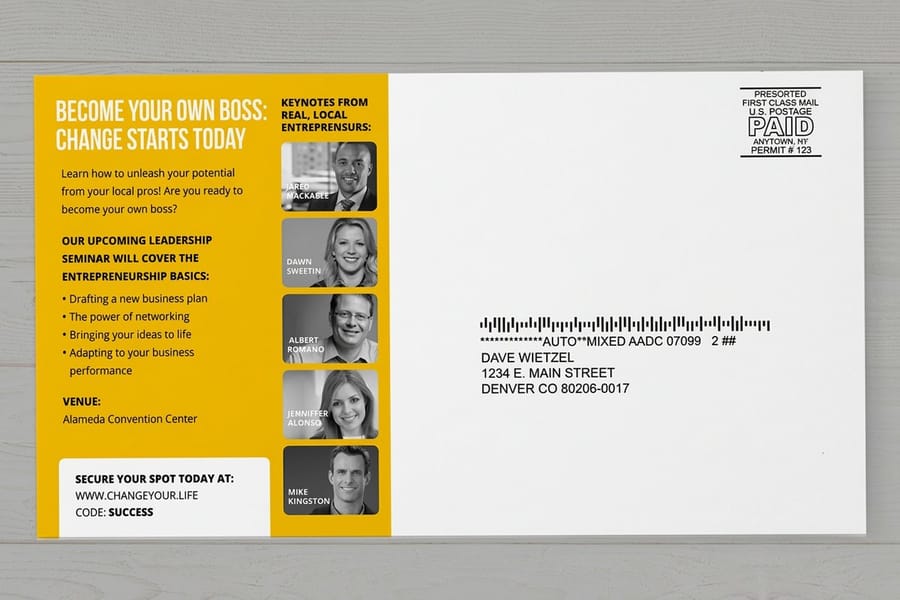
Most churches cannot say whether the last mailing worked, because the card asked for nothing countable. Fix that on the card itself, before it prints.
Three devices do the job, and one of them is enough. A short vanity URL, printed plainly, pointing at a visit-us page that exists only for this drop. A QR code aimed at the same page, which lets you separate the scanners from the typers. Or a printed line that asks people to bring the card to the welcome desk, which costs nothing and works surprisingly well in a room where somebody is already handing out bulletins.
Then keep a log with four columns per drop: quantity mailed, total print and postage cost, cards handed back or codes scanned, and new connect cards completed in the three Sundays after the in-home window closes. Do not measure by calendar month. A card that dropped on the 28th belongs to the following month, and mixing the two is how a mailing gets blamed for a quiet week it had nothing to do with.
Expect the response to arrive slowly and to look small next to the quantity mailed. That is normal for an invitation with no offer attached, and it is why the comparison that matters is between drops rather than against a target somebody invented. Two identical cards to two different lists will teach you more in a season than a year of guessing. If you also hand cards out, church connect cards and church flyers can carry the same tracking code, so the totals stay comparable across every piece you print.
Wally explains the church postcard drop
One service, one card, three weeks out
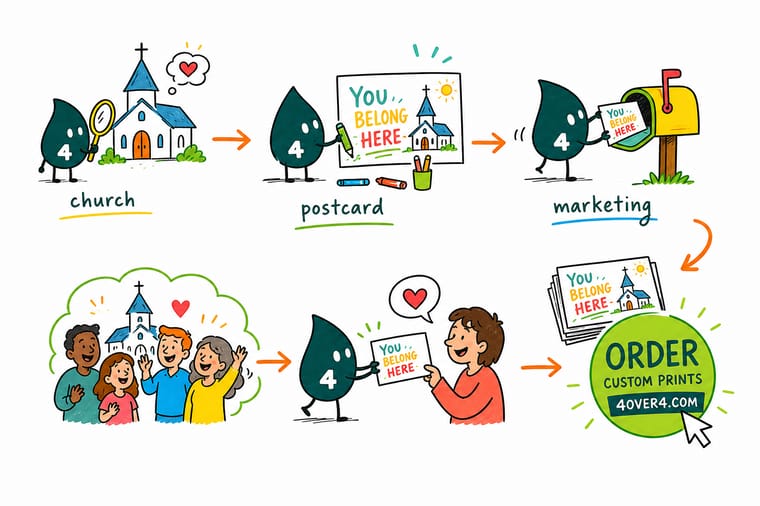
Wally picks the service first, then counts backwards. Order at five weeks, print at four, drop the mail at three. The postal window is three to ten days, so the card lands with time to sit on the fridge. He puts the service time, the street address, the parking and the childcare on the back, one QR code and nothing else, then counts the cards handed in at the welcome desk. Two events on one card and he counts nothing at all.
Order church postcards →Specs and pricing
Postcard sizes, stocks, and starting prices
Compare the three cards a church mailing normally uses, with live configuration choices and starting prices straight from the 4OVER4.COM configurator.


Print it
Order the card that fits your mailing

Explore more
Where to go next

By the numbers
Postcard printing you can count on at 4OVER4
Common Questions
Your church postcard questions, answered
What size should a church postcard be?
Two sizes cover almost every church mailing. A 4.25 by 6 inch card is the largest piece that still qualifies for the First-Class Mail postcard price, which is the cheapest stamp USPS sells, so it is the right choice for an addressed list of neighbors or lapsed attenders. A 6.5 by 9 inch card is the smallest comfortable size for Every Door Direct Mail, because EDDM requires a flat rather than a card. If you are unsure which way the campaign will go, size the artwork for 6.5 by 9 first: shrinking a design is easier than finding room for the parking instructions later.
How far before Easter should we mail church postcards?
Drop about three weeks out for an Easter service, and start the artwork five weeks out. Easter falls at the end of a heavy retail mailing season, and the in-home window for Marketing Mail is a range rather than a promise, so the extra week is what keeps the card from arriving on Easter Monday. Many churches split the quantity and drop half three weeks out and half ten days out, which puts a second reminder in the same house without designing a second card.
Can a church mail postcards without a mailing list?
Yes, through Every Door Direct Mail. You pick the carrier routes around the building on the USPS EDDM tool, and every residential address on those routes gets a card without you buying a single name. The trade-off is that nothing is addressed and nothing is personal, and the piece has to be flat size, so the standard 4.25 by 6 card is out. Our EDDM service handles the bundling and the paperwork; a named list, by contrast, runs through direct mail services.
Do churches get cheaper postage?
A church can apply for Nonprofit USPS Marketing Mail prices by filing PS Form 3624 with the post office where the mail will be entered, and religious organizations are one of the qualifying categories. Two limits catch people out. The nonprofit price applies to Marketing Mail only, never to First-Class, and Marketing Mail has a minimum of 200 pieces per mailing. Below that count, or when you need the faster First-Class delivery, you pay the ordinary rate.
How much does it cost to print church postcards?
At 4OVER4.COM, Standard Postcards start at $16.48 and Oversized Postcards start at $51.62 for print only, which is what you want when volunteers will address and stamp the cards themselves. Direct Mail Postcards start at $89.68 and run through our mailing service, so the addressing and the postal handoff are done for you. Postage is separate in every case and is set by USPS, not by the printer.
How do we know whether the postcards worked?
Give the card one countable action and nothing else. A short vanity URL that redirects to a plain visit-us page, a QR code pointing at the same page, or a printed line asking people to bring the card to the welcome desk all produce a number you can write down. Then log four things per drop: how many you mailed, what print and postage cost, how many cards came back, and how many new connect cards were filled in during the three Sundays after the in-home window. Comparing those four numbers across two or three drops tells you more than any single mailing ever will.
Get Started
Ready to invite the whole neighborhood?
Pick the size that fits your postage, choose 14pt or a writable uncoated stock, and we print church postcards that arrive with a week to spare.
Legal Disclaimer
Gold Standard guarantees apply to all standard orders placed through 4over4.com. Price match requires verifiable proof of a competitor's published price for an equivalent product with matching specifications and turnaround time. Satisfaction guarantee covers manufacturing defects and print quality issues. Contact support with order number and documentation. On-time delivery rate based on tracked orders 1999 to 2026. Individual results may vary based on shipping carrier performance.
