
Nonprofit Brochures That Turn Interest Into Donations


Which brochure to print, what goes on each of the six panels, which fold fits an envelope, and how to spend a small print budget so you are not reprinting in March.
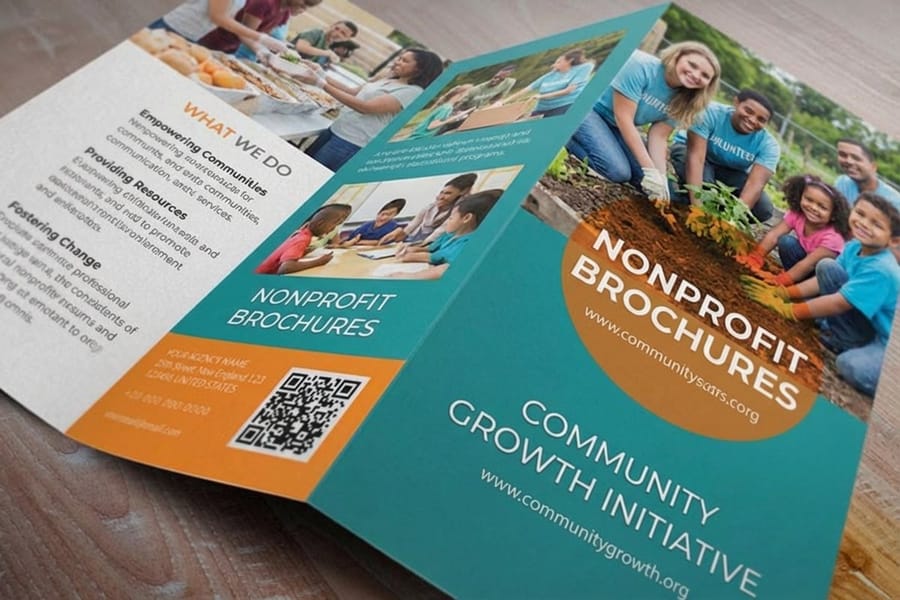
A nonprofit brochure earns its cost when it answers one question fast: what does my money actually do. The format that answers it cheapest is an 8.5 by 11 inch letter tri-fold on 100lb gloss text, which gives six panels, fits a number 10 envelope, stands in a standard rack, and starts at $57.11 at 4OVER4.COM. Treat it as a follow-up piece rather than a cold opener, keep dates and staff titles off it so one run lasts a year or more, and put the ask on the inside-right panel with real dollar amounts attached to real things.
Quick answer
Six panels, one letter fold, and no printed dates
Print one undated general brochure long, and everything dated short. The letter tri-fold on an 8.5 by 11 inch sheet is the format nearly every nonprofit should start with, because it fits the envelope, the rack and the budget at the same time. The panel that rolls inside is cut about a sixteenth of an inch narrower so it clears the spine, which is the one measurement people get wrong. The diagram below shows all four common folds drawn to scale with their real panel widths.
Why a Brochure Still Works When You Are Asking for Money
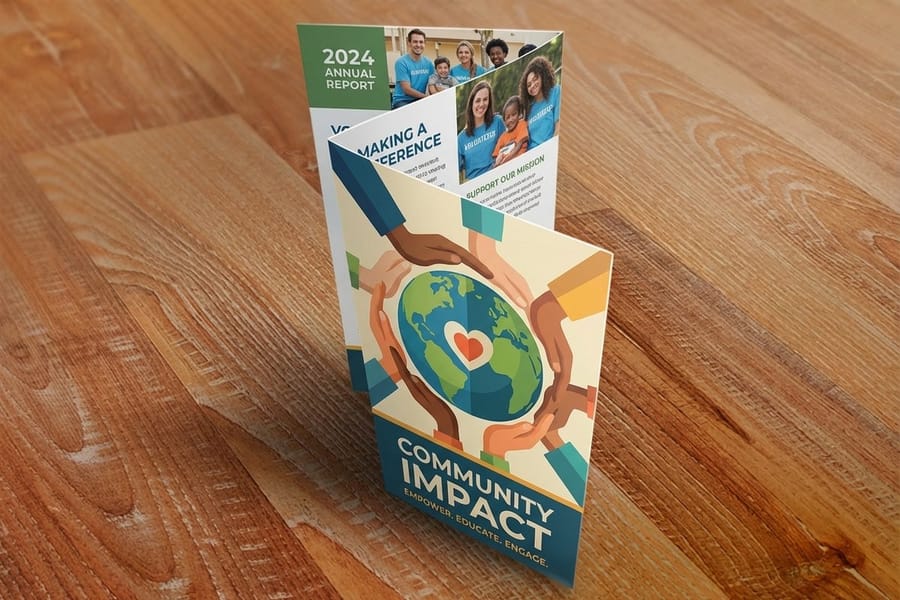
A brochure survives the moment a link does not. Someone finishes a tour, stops at your table, or opens a welcome packet, and there is a gap of about four seconds where they are willing to hear more but will not type anything. The brochure fills that gap, and it goes home in a bag.
It also does something a webpage cannot: it forces you to finish the argument. Six panels is a hard limit. You have to decide what the organization does, who it serves, what a gift buys, and how to give, and you have to decide it in a fixed amount of space. Most organizations discover their messaging is unfinished the first time they try to lay one out.
Here is the limit, and it is the part most nonprofit brochure advice skips. A brochure is a poor cold-acquisition tool. Handing it to a stranger who has never heard of you buys almost nothing, and mailing it to a purchased list buys less. Cold reach belongs to a single-message piece: nonprofit postcards start at $16.48 and put one sentence in front of someone in half a second. The brochure is what you send after they raise their hand. If you only have money for one, and you are trying to find new donors, print the postcard first.
Where the brochure earns its place is the second touch and every touch after: the volunteer orientation packet, the corporate sponsor meeting, the rack at the library, the folder a board member carries. Those are all situations where the reader has already agreed to spend a minute with you.
The Four Nonprofit Brochures Worth Printing
Most organizations try to build one brochure that does everything and end up with a piece that does nothing well. Four distinct jobs exist, and they want four different pieces, though almost nobody needs all four at once.
| Brochure | Who is holding it | What it must answer | Sensible format |
|---|---|---|---|
| General case for support | A prospective donor who just met you | What you do, who it helps, what a gift buys | Letter tri-fold, undated, long run |
| Program or service | A client, a family, a referring caseworker | Who qualifies, what it costs them, how to start | Letter tri-fold, plain language, reprinted when rules change |
| Volunteer recruitment | Someone at a fair or an orientation | The time commitment, the training, the next date | Bi-fold or half-fold, short run, easy to update |
| Campaign or event | A donor already inside your list | The goal, the deadline, the naming levels | Bi-fold or a small booklet, short dated run |
Read the last column. Only the first two deserve a long print run, because only the first two stay true for years. The volunteer and campaign pieces carry dates and numbers, so print them short and accept the higher unit cost. When a campaign piece grows past four panels of real content, stop folding it and bind it: standard booklets start at $240.55 and handle sixteen pages far better than a fold ever will.
If your organization is faith-based, the same structure applies with different labels, and church brochures ship on the same stocks and folds. The full range sits in the nonprofit printing collection.
What Belongs on Each Panel
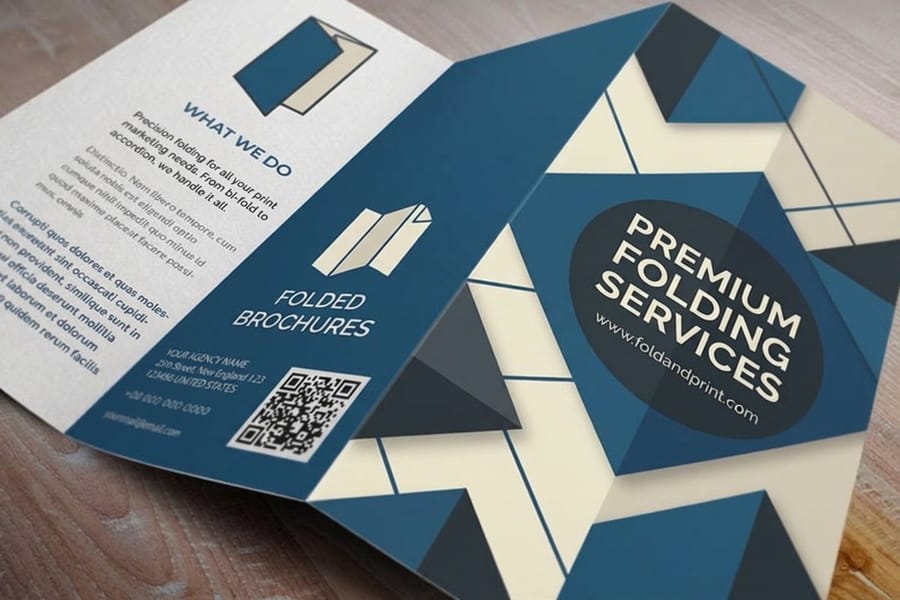
A letter tri-fold gives you six panels, and they are not equal in value. Two of them do most of the work, and one of them is routinely wasted.
- Front cover. The organization name and one line that says what you actually do. Not a tagline. A stranger should be able to repeat it out loud.
- Inside left. The problem, in the smallest true terms you have. One person, one situation, present tense.
- Inside center. What you do about it. This is the panel people read second, so it carries the program in plain sentences.
- Inside right. The ask, with amounts attached to specific things. This panel is the reason the brochure exists.
- Back panel. Contact details, address, how to give, QR code. In a rack, this is the panel facing out on the reverse, so it has to work alone.
- Tuck panel. The one that rolls inside. Almost nobody sees it before they see the rest, so put the board list, the financial summary or the partner logos here rather than anything load-bearing.
Two mechanical rules save reprints. First, the tuck panel is cut narrower than the other two, roughly a sixteenth of an inch, so it clears the spine when the piece closes. Set three equal panels and the inside panel buckles at the fold. Second, keep type and logos at least a quarter inch away from every fold line, because folding equipment has tolerance and a headline that straddles a crease looks like a mistake even when it is within spec.
Build the layout on a correct template rather than a guessed one. Start from the blank template library, and if you are choosing between fold styles first, our guide to brochure folds shows what each one does to the panel count.
Writing Mission Copy That Does Not Read Like a Grant Report
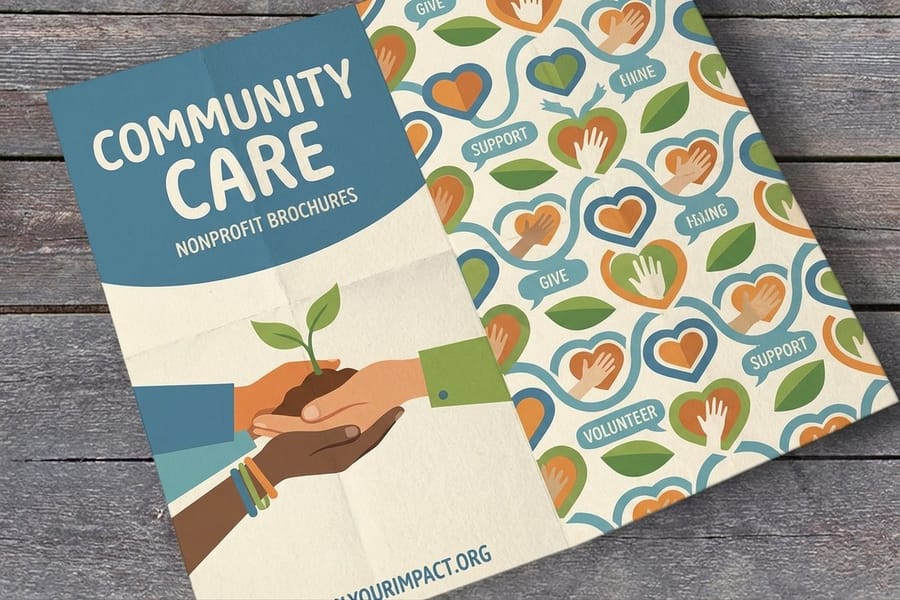
Grant language and donor language pull in opposite directions. A grant reviewer wants scope, methodology and sustainability. A donor wants one person and one number. Nonprofit brochures fail most often because the grant writer wrote them.
Three edits fix most drafts. Delete every sentence containing the words strive, committed to, or dedicated to, because they describe intent rather than action and they survive being moved to any other organization. Replace the abstract beneficiary with a single specific one, in present tense. Then attach money to something countable: what $25 buys, what $100 buys, what $1,000 buys. A reader who can picture the thing gives more often than a reader who is told their gift matters.
Keep the panel that asks for money shorter than you want it to be. The inside-right panel should be readable standing up, at arm length, in bad light, because that is where it usually gets read. Long paragraphs there are the single most common reason a well-designed brochure produces nothing.
One more thing worth stealing from direct mail: give the reader something to do that is smaller than donating. A newsletter signup, a tour date, a volunteer orientation. The nonprofit direct mail case study shows how that second option changes response, and buckslips for nonprofit fundraising covers the cheap insert that carries it.
Folds, Sizes and What Each One Costs You
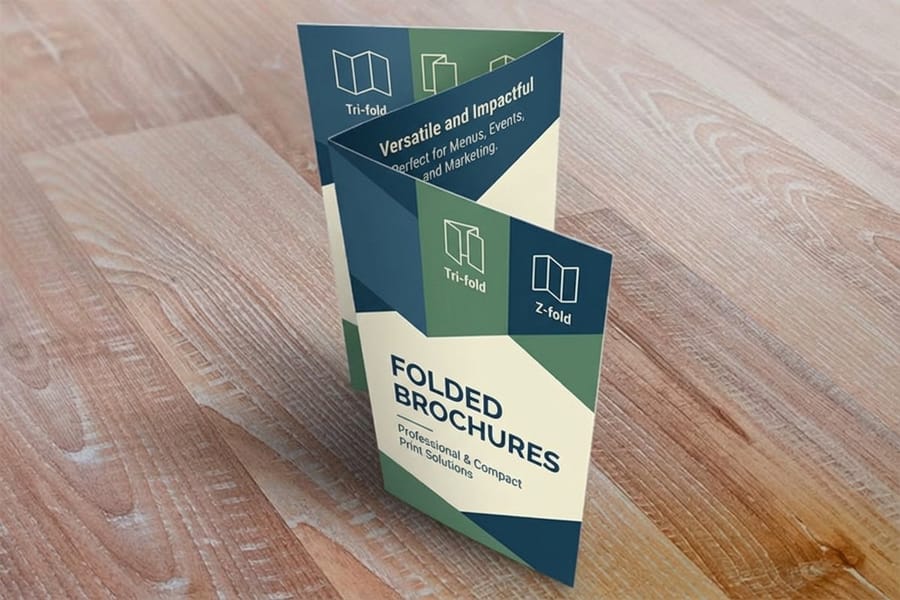
The fold is a budget decision disguised as a design decision. It sets your panel count, whether the piece fits a standard envelope, whether it stands in a rack, and how much of your press sheet you are paying for.
| Fold | Panels | Finished size from 8.5 x 11 | Best use for a nonprofit |
|---|---|---|---|
| Letter (tri-fold) | 6 | 3.67 x 8.5 in | The default case-for-support piece. Fits a number 10 envelope and a standard rack. |
| Half fold | 4 | 5.5 x 8.5 in | Photography-led pieces and volunteer handouts. Simplest to lay out. |
| Z fold | 6 | 3.67 x 8.5 in | Step-by-step content, because all three panels open flat at once. |
| Gate fold | 4 visible | 2.69 in flaps over a 5.63 in center | Campaign reveals. Expensive to design well, easy to design badly. |
Two costs hide in that table. A gate fold and a Z fold both need more precise folding than a letter fold, so short runs of them carry a higher unit cost than the panel count suggests. And any fold on a cover-weight stock needs scoring first, or the coating cracks along the crease and the crack shows white through the ink. On a 100lb gloss text, which is the normal brochure stock, you can fold without scoring.
Size matters less than fold for most nonprofit work. An 8.5 by 11 sheet is what envelope, rack and mailing standards are built around, so leaving it costs you convenience at every downstream step. If you want the full dimension list before you commit, our standard brochure sizes guide lays out every option, and the matte versus glossy comparison settles the finish question.
Printing and Handing Them Out on a Real Budget
Print pricing does not scale the way most boards expect. Setup dominates a short run, so the difference between 250 and 500 pieces is small, while the difference between one run this year and two runs this year is large. That single fact should shape the whole plan.
The pattern that works: one long, undated general brochure, plus small dated pieces around it. Nonprofit brochures and folded brochures both start at $57.11, so the general piece is rarely the expensive part of the year. What costs money is reprinting it because a printed year, a staff title or an event date went stale. Strip those out and the run lasts.
Order a sample before you commit the run. Stock weight and finish are impossible to judge on a screen, and a 100lb gloss text feels different in the hand from an uncoated sheet of the same weight. Our free printing samples guide covers how to get one, and the daily deals and coupon page is worth checking before a large annual order because print discounts move week to week.
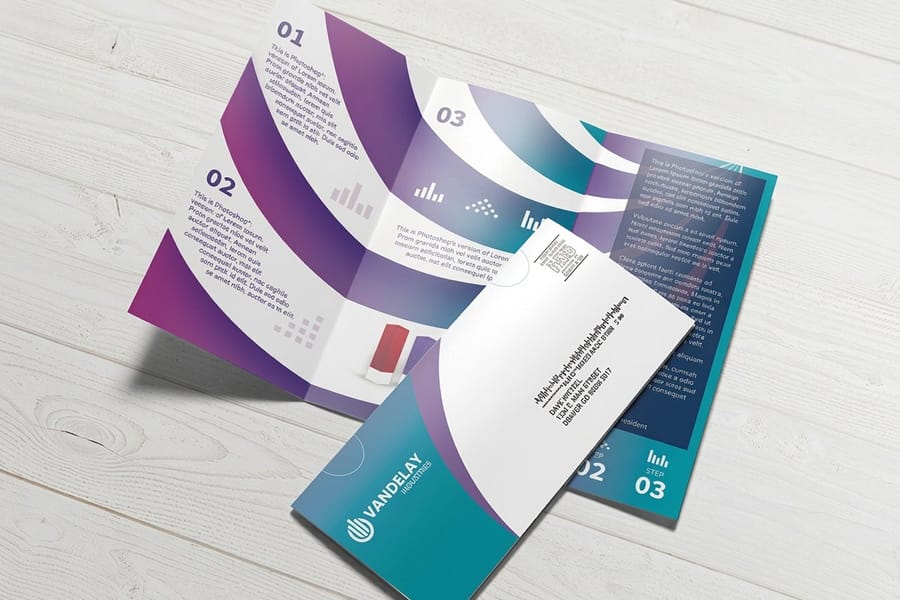
For distribution, mailing a brochure and handing one over are different products. Handed-over pieces come loose in a box. Mailed pieces need tabbing, an address panel and a postage plan, which is why direct mail brochures start at $238.73 with the mailing work included rather than at the flat print price. If your run is large or your spec is unusual, get the number before you budget for it: the instant online quote guide shows how to price a custom quantity in a few minutes.
Knowing Whether the Brochure Did Anything
You will not attribute a brochure the way you attribute an email, and any plan that pretends otherwise falls apart by the second quarter. What you can measure is the run, not the piece.
Four things actually work. Put a unique short URL or QR code on the back panel that resolves to a landing page used by nothing else, so every visit came from paper. Add a brochure option to the how did you hear about us question on your donation form and on your volunteer application. Give the print run its own tribute or source code if your donor database supports one. And count what comes back: if 400 of the 500 you printed are still in the storeroom in November, the piece is not the problem, distribution is.
Set the expectation with your board before the run, not after. A general brochure is an assist, not a closer. It shows up in the middle of a decision that started somewhere else and finishes somewhere else, which is exactly why it is hard to score and exactly why organizations keep printing it.
If you want a piece you can measure cleanly, pair the brochure with something built for response. A mailed postcard with its own code, or a reply insert, gives you a number the brochure never will. Both live in the nonprofit printing collection next to the brochures themselves.
Wally folds the nonprofit brochure
Six panels, one narrower, and no printed dates
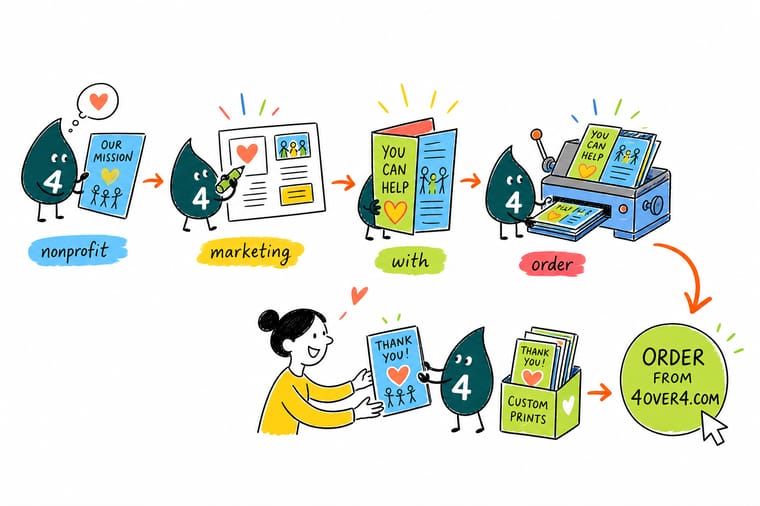
Wally lays an 8.5 by 11 sheet flat and marks three panels, then trims the one that rolls inside by a sixteenth of an inch so it clears the spine. Cover says what you do. Inside-right carries the ask with real dollar amounts. Back panel carries the contact details, because that is the side facing out in a rack. He crosses out the printed year and the staff title, so the run lasts more than one season.
Print nonprofit brochures →Specs and pricing
Brochure sizes, stocks and starting prices
Compare the brochure options side by side, with live configuration choices and starting prices straight from the 4OVER4.COM configurator.


Print it
Print the pieces your mission actually needs
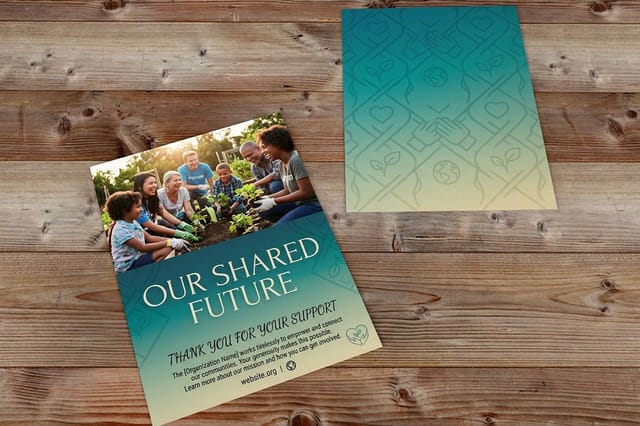
Explore more
Where to go next
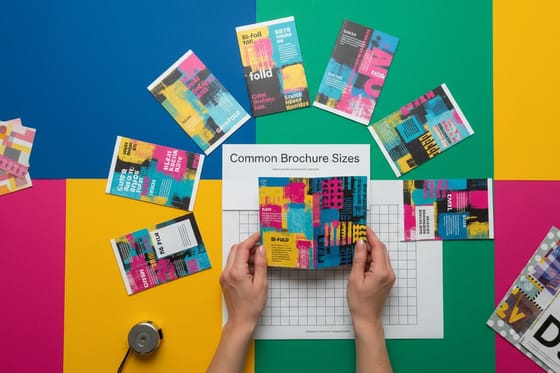
By the numbers
Brochure printing you can count on at 4OVER4
Common Questions
Your nonprofit brochure questions, answered
How many brochures should a small nonprofit print at once?
Enough for a year of handing them out, and no more. Print pricing is dominated by setup, so the gap between 250 and 500 pieces is much smaller than the gap between one print run and two. The practical answer for most small organizations is a single annual run sized to your events plus your walk-in traffic, with the content written so it does not expire. If you genuinely cannot predict demand, print the undated general brochure long and print event pieces short.
Tri-fold or bi-fold for a nonprofit brochure?
Tri-fold for the general case-for-support piece, bi-fold when you have photography that deserves room. The letter tri-fold gives six panels on one 8.5 by 11 inch sheet, fits a number 10 envelope without a second fold, and stands in a standard literature rack. A bi-fold gives you four larger panels and reads more like a small program book, which suits a capital campaign or an annual report summary. Our guide to brochure folds walks through every style if you want to compare them side by side.
What paper should a nonprofit brochure be printed on?
A 100lb gloss text is the default for a folded brochure and it is the right default. It folds without cracking, photographs of people look correct on it, and it is light enough to mail. Go to a matte or uncoated text weight if your copy is long and you want it to read like a document rather than a flyer. Avoid cover weights on a tri-fold unless the job is scored first, because heavy stock cracks along the fold and the crack runs through the ink.
Should the brochure include a donation form?
Include a way to give, but do not turn the brochure into a reply device. A tear-off form makes the piece harder to fold, harder to rack, and more expensive to print. The cleaner pattern is a short give panel with a QR code to a landing page, a mailing address for checks, and a text-to-give number if you have one. If you want a physical reply piece, print a separate reply card or a buckslip and drop it inside, which also lets you change the ask without reprinting the brochure.
Can we mail a brochure without an envelope?
Yes, if it is tabbed and the layout is built for it. A self-mailer needs a clear address panel, a return address, space for the indicia or stamp, and wafer seals or tabs on the open edge so postal equipment does not tear it. The fold orientation matters too, because the closed fold has to lead. Many organizations find it simpler to mail a postcard and save the brochure for the follow-up packet, which is also cheaper per piece.
Do we need a new brochure every year?
Only if the facts changed. What forces reprints is usually avoidable: a printed date, an executive director title, a program that got renamed, a phone extension. Write the general brochure so none of those appear, and it stays accurate for years. Keep the annual numbers, the campaign goal and the event dates on a separate insert or postcard that costs a fraction of the brochure to reprint.
Get Started
Ready to print the piece your board keeps asking for?
Pick the fold, choose a stock that folds without cracking, and we print brochures that fit a number 10 envelope and stand up in a rack.
Legal Disclaimer
Gold Standard guarantees apply to all standard orders placed through 4over4.com. Price match requires verifiable proof of a competitor's published price for an equivalent product with matching specifications and turnaround time. Satisfaction guarantee covers manufacturing defects and print quality issues. Contact support with order number and documentation. On-time delivery rate based on tracked orders 1999 to 2026. Individual results may vary based on shipping carrier performance.
