
CD Cover and Booklet Printing Sizes, Panels and Setup That Fit a Jewel Case


Every trim size in a jewel case package, why the tray card is wider than the cover, how booklet pages fall into fours, and the setup that keeps type off the fold.
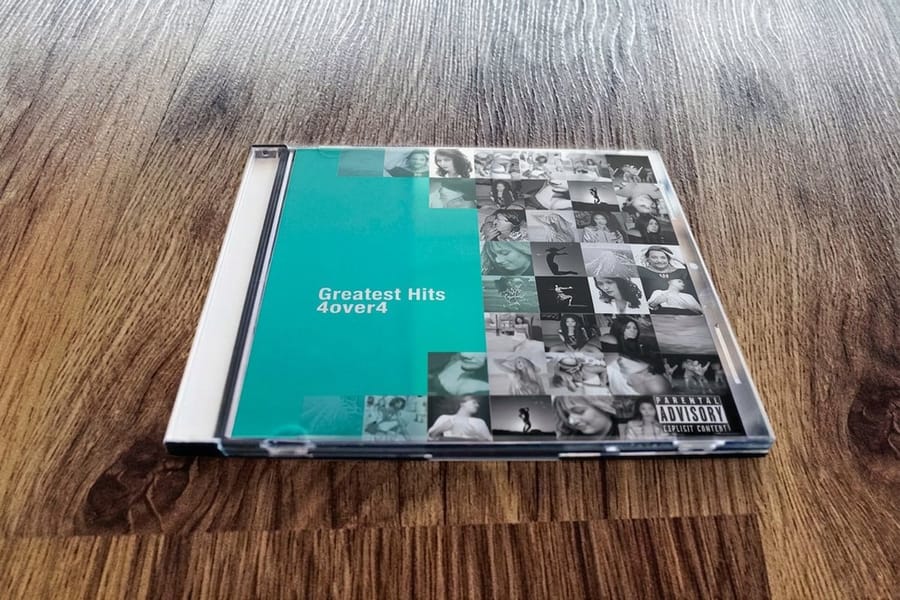
A standard CD cover or booklet cover trims at 4.75 by 4.75 inches, and the tray card behind the disc trims at 5.9375 by 4.625 inches with a 0.25 inch spine tab folding off each end. Booklet pages run in multiples of four because saddle stitching binds folded sheets, so 4, 8, 12, 16, 20 and 24 are the counts a standard case will hold. Add 0.125 inches of bleed to every edge, keep type 0.25 inches inside the trim, and supply single pages in reading order rather than spreads.
Quick answer
Two trim sizes, one fold rule, and a quarter inch of spine
The front insert is 4.75 inches square and the tray card is 5.9375 by 4.625 inches with two 0.25 inch tabs folded away. Booklets add pages four at a time because each folded sheet carries four, and a standard case closes on about 24 pages of 100 lb gloss text. Everything else follows from those numbers: 0.125 inches of bleed on every edge, 0.25 inches of safe margin inside the trim, 6 point type in the spine tabs, and separate print ready PDFs for the booklet, the tray card and the disc face.
What Is Actually Printed in a CD Package

A jewel case release is four separate printed items, and only one of them is square. Designers who treat the whole package as one artboard find out at prepress that three of the four pieces are the wrong size.
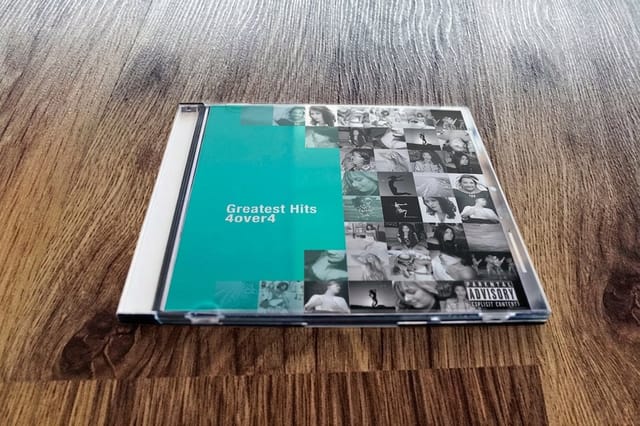
- The front insert. Either a single sheet folded once, or a saddle stitched booklet. The cover is what you see through the lid, and it trims at 4.75 inches square.
- The tray card. The wide piece that sits under the disc tray, 5.9375 by 4.625 inches flat, with a quarter inch tab folding into each spine.
- The disc face. A 4.72 inch circle with a hole in the middle, and a centre area that most duplicators will not print into.
- The outer wrap, if there is one. A sleeve, a wallet or a shrink band, which follows its own die line rather than the case dimensions.
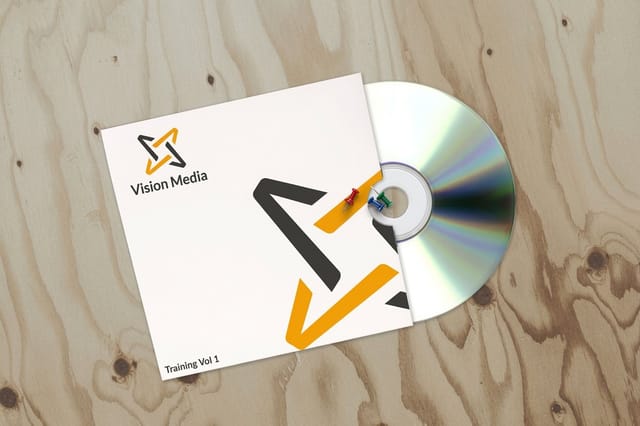
Skip the case entirely and the arithmetic changes again. A paper or card sleeve is a die cut and glued object, so its flat layout includes glue tabs and a disc mouth that never appear on a jewel case insert. That is why CD sleeves and CD covers are ordered as different products with different templates rather than as two sizes of the same thing.
Standard CD Cover, Booklet and Tray Card Sizes

Every number below is a trim size. Add 0.125 inches of bleed to each edge before you export, and keep type at least 0.25 inches inside the trim.
| Part | Trim size | Size with bleed | Watch out for |
|---|---|---|---|
| Front insert or booklet cover | 4.75 x 4.75 in | 5 x 5 in | Metric templates use 120 x 120 mm, which is 0.03 in smaller. Do not mix the two. |
| Booklet, printed flat | 9.5 x 4.75 in per sheet | 9.75 x 5 in | Supply single pages, not spreads. We impose it. |
| Tray card | 5.9375 x 4.625 in | 6.1875 x 4.875 in | 0.25 in folds off each end. Visible panel is 5.4375 in. |
| Slimline tray card | 5.4375 x 4.625 in | 5.6875 x 4.875 in | No spine tabs at all, so no spine type. |
| Disc face | 4.72 in diameter | Bleed to 4.75 in | Inner hub of about 1.575 in stays clear of ink. |
The tray card is the row that catches people. It is wider than the front insert on purpose, because the two tabs disappear into the hinges of the case. Build the back cover artwork inside the middle 5.4375 inches and let the background image run through the tabs, so a millimetre of fold drift never shows as a hard edge on the back panel. If you want the same numbers with pricing attached, the CD cover sizes and sleeve costs guide lays them out per format.
Panel Layouts, Folds and Page Counts
Panels and pages are not the same word. One sheet of paper folded down the middle and printed both sides gives you four pages, and that is the smallest booklet that exists. Add another folded sheet and you are at eight. There is no such thing as a six page saddle stitched booklet, which is the single most common thing to discover a day before a deadline.
| Format | Flat size | Finished pages | When it is the right call |
|---|---|---|---|
| Single folded sheet | 9.5 x 4.75 in | 4 | A single, a demo, or any release where the credits fit on one panel. |
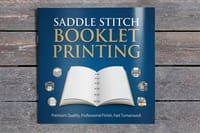
| Saddle stitched booklet | 9.5 x 4.75 in per sheet | 8 to 24 | Full lyrics, per track credits, photos. The default for an album. |
| Roll folded insert | 14.25 x 4.75 in | 6 panels | A short lyric run with no stitching cost, folded in on itself. |
| Accordion insert | 14.25 x 4.75 in | 6 panels | A timeline or a photo strip that reads straight through when opened. |
The roll fold carries a trap. When a panel tucks inside the others, it has to be narrower or it buckles against the fold, so shorten the innermost panel by about 1/16 inch and take the difference off the adjoining panel. An accordion fold needs no such adjustment, because no panel is ever wrapped inside another. That single difference is worth checking before you commit a design, and the fold types guide shows the same behaviour at brochure scale.
On booklets of 20 pages and up, creep starts to matter: the inner folded sheets stick out further than the outer ones and get trimmed back, so a page number sitting 0.125 inches from the edge on page 12 can come back noticeably tighter than the same number on page 2. Keep the safe margin at 0.25 inches throughout and it never bites. The page counts and creep guide covers the arithmetic, and saddle stitch booklet printing starts at $240.55 if you want to price a real page count.
Bleed, Safe Zone and the Two Spine Tabs

Bleed is 0.125 inches on every edge, so a 4.75 inch square cover exports at 5 by 5 inches with the artwork running right to the outer boundary. The safe zone is 0.25 inches inside the trim, and on a piece this small that margin is doing real work: a 4.75 inch panel is not much wider than a business card, so half an inch of combined margin is already a fifth of the width.
The spine tabs are the part that goes wrong quietly. Each one is 0.25 inches wide, the type runs sideways in it, and the fold has a tolerance of roughly 1/32 inch either way. Set spine type at about 6 point, centre it in the tab, keep 1/16 inch clear of both fold lines, and print it in a colour that survives being slightly off centre. Artist name and album title and label logo will not all fit in a quarter inch strip that is under five inches long. Pick the title.
Two more habits save reprints. Keep a solid background colour running across both fold lines rather than butting two colours together at the fold, because a fold that lands 1/32 inch out turns a clean join into a visible sliver. And do not put a thin frame around the edge of the cover: a border 0.125 inches from the trim looks even in the file and uneven on the finished card, since trimming a stack of small pieces moves a little. Our bleed and trim guide shows what that variation looks like on press, and every layout above is available pre built in the blank template library.
Paper Weight and Finish That Still Fits the Case

The case sets the budget. There is around 5 mm of clearance between the tray and the inside of the lid, and everything you print has to live in it. That is why booklet stock is a thickness decision before it is a look decision.
For inner booklet pages, 100 lb gloss text is the workhorse and holds photography well. Drop to 80 lb text when the page count climbs past 20, because the thickness you save is what lets the case shut. Uncoated stock reads better for lyrics, since gloss under a room light bounces glare straight back at whoever is trying to read the second verse, but it will not give you the same depth of black on a full bleed photo. That trade off is genuine, and on a lyric heavy release the readable option is usually the right one.
The cover carries the finish. A gloss aqueous coating is the safe default and resists fingerprints. Matte looks more expensive and photographs beautifully, though it shows a scuff from the case hinge sooner. Spot gloss over a matte cover is the one finish that reads instantly through a case lid, because the contrast is what your eye catches rather than the shine itself. For tray cards, stay with a coated cover weight: an uncoated tray card absorbs moisture and can curl inside the well. Choosing booklet paper, finish and binding goes through the same choices at larger page counts, and ordering free paper samples before you commit a run is cheaper than reprinting.
Preparing the Files So Nothing Shifts
Send a print ready PDF per piece: one for the booklet, one for the tray card, one for the disc face. Keep them separate. A single PDF holding four different trim sizes has to be pulled apart by hand, and hand work is where pages get swapped.
- CMYK, 300 dpi at final size. Album art built for streaming is usually RGB and square, so it has the pixels but not the colour space. Convert it yourself and look at what the saturated blues do before you send it.
- Fonts outlined, or embedded. Six point spine type in a font we do not have will substitute and change width, and a quarter inch strip has no room to absorb that.
- Single pages in reading order. Page 1 is the cover, page 2 is its reverse. No printer spreads, no blank filler pages added to reach a count you liked.
- Rich black for large solids. Use a build rather than 100 percent K on a full bleed cover, or the black reads flat and grey next to the disc.
- Crop and fold marks outside the bleed. Marks that sit inside the bleed area print onto the piece.
If the colour conversion is the part you are unsure about, the CMYK and RGB conversion guide covers what shifts and why, and how to make custom CD covers walks the same package through from a blank template. When the files are ready, CD covers start at $75.80 and standard booklets at $240.55, with the full range of stitching and page counts in the binding options collection.
Wally explains the jewel case
Why the back panel is wider than the front
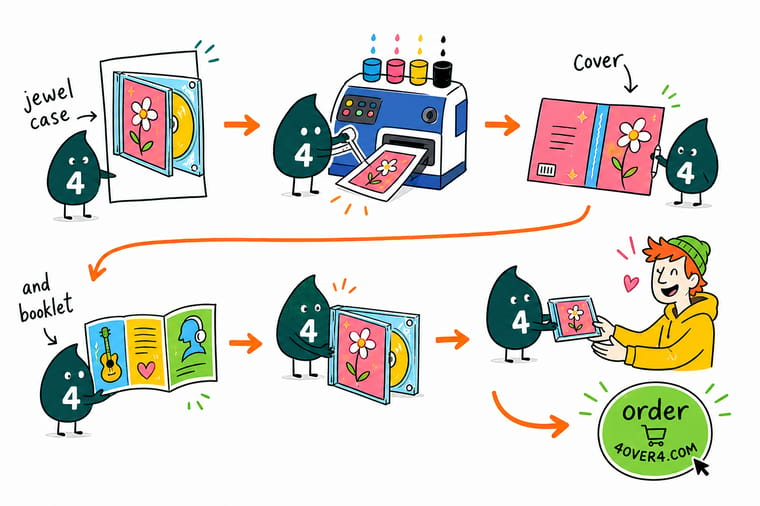
Wally holds up the cover first: 4.75 inches square, the piece you see through the lid. Then the tray card, which looks too wide until he folds a quarter inch back at each end and drops it into the case. Those two tabs become the spines, and only the middle 5.4375 inches ever shows. Inside, the booklet is folded sheets, which is why the pages come four at a time and why a 24 page booklet is about as much as the lid will close on.
Order CD covers →Specs and pricing
CD covers, sleeves and booklets with live options
Sizes, stock choices and starting prices straight from the 4OVER4.COM configurator, so you can price a real page count before you finish the artwork.


Print it
Print the package, not just the cover

Explore more
Where to go next



By the numbers
Short run music printing you can count on at 4OVER4
Common Questions
Your CD cover and booklet questions, answered
What size is a CD cover?
A standard jewel case front insert trims at 4.75 by 4.75 inches, which is 120.65 mm. Most metric templates round that to 120 by 120 mm, and the 0.03 inch difference is invisible in the case but very visible in your file if you build the artwork at one size and the trim marks at the other. Supply the artwork at 4.75 inches square with 0.125 inches of bleed on all four sides, so the sheet you send is 5 by 5 inches.
What size is a CD tray card and where do the folds go?
The tray card trims at 5.9375 by 4.625 inches flat, which is 5 15/16 by 4 5/8. A 0.25 inch spine tab folds back at each end, so the panel you actually see through the back of the case is 5.4375 inches wide. Put the fold marks 0.25 inches in from the left and right trim edges, keep the back cover artwork inside that middle band, and treat the two tabs as separate little panels for the spine type.
How many pages can a booklet be inside a jewel case?
Four is the practical minimum and around 24 is the ceiling on 100 lb gloss text. A standard jewel case has roughly 5 mm of clearance under the lid, and a 24 page text weight booklet uses most of it. If your booklet needs 32 or 40 pages, either move to 80 lb text to buy back the thickness, or switch to a double width case or a digipak. Page counts are always multiples of four because saddle stitching works on folded sheets, which the guide on booklet page counts and creep explains in more detail.
Do I supply booklet pages as spreads or as single pages?
Single pages, in reading order, one page per PDF page. Do not impose the file into printer spreads and do not send page 1 paired with page 4 on one sheet. Our prepress imposes the job to match the binding and the stock, and a pre imposed file forces us to take it apart again, which is where pages get flipped. Number the pages in the file name if the running order is unusual.
Can I print the back of the tray card?
You can, but check the tray first. A standard black or grey tray hides everything behind it, so a printed reverse is wasted money. Clear trays are the reason the option exists: with a transparent tray, artwork printed on the underside of the tray card shows through the disc well, which is where a lot of releases put the credits or a second image.
Is a sleeve cheaper than a jewel case insert?
Per piece it usually is, but the run size is what actually decides your bill. CD covers start at $75.80 at 4OVER4.COM and CD sleeves start at $438.25, because sleeves are die cut and glued packaging that runs in larger minimum quantities rather than short digital runs. For a demo run of 100 discs, printed inserts in a jewel case cost less. For a few thousand units, the sleeve wins on both handling and postage.
What resolution and colour mode should the artwork be?
CMYK at 300 dpi at final size. Album art that was built for streaming is usually a 3000 pixel RGB square, and at 4.75 inches that lands at roughly 630 dpi, so it downsamples happily. The problem is colour, not resolution: saturated RGB blues and oranges shift when converted, so convert to CMYK yourself and look at the result before you send the file rather than letting the conversion happen out of your sight.
Get Started
Ready to print the whole package?
Set the booklet at 4.75 inches square, the tray card at 5.9375 by 4.625, add the bleed, and we print, fold and stitch it to fit the case.
Legal Disclaimer
Gold Standard guarantees apply to all standard orders placed through 4over4.com. Price match requires verifiable proof of a competitor's published price for an equivalent product with matching specifications and turnaround time. Satisfaction guarantee covers manufacturing defects and print quality issues. Contact support with order number and documentation. On-time delivery rate based on tracked orders 1999 to 2026. Individual results may vary based on shipping carrier performance.
