
CD Cover and Sleeve Sizes That Fit a Standard Case Every Time


Exact trims for the booklet, the tray card, the sleeve and the disc, what has to fold where, and the four things that actually decide what a run of packaging costs.
A jewel case front booklet page trims to 4.75 by 4.75 inches, and the tray card behind the disc trims to 5.9 by 4.6 inches including a 0.25 inch spine strip at each end. The disc itself prints on a ring from about 46 mm out to 118 mm, and a cardboard sleeve finishes at 5 by 5 inches. Add an eighth of an inch of bleed to every panel and keep type an eighth of an inch inside the trim.
Quick answer
Four panels, three trims, one ring
The booklet page is 4.75 inches square, the tray card is 5.9 by 4.6 inches with two quarter inch spine folds, a cardboard sleeve finishes at 5 inches square, and the disc prints on a ring from 46 mm to 118 mm. Everything carries an eighth of an inch of bleed and an eighth of an inch of safe margin. Cost follows the number of printed pieces the format needs and the booklet page count, which can only move in multiples of four, so the choice between a sleeve and a jewel case matters more to the invoice than any paper decision you make afterward.
Every CD Panel and What It Trims To
A jewel case is a fixed piece of moulded plastic, so the paper inside it has almost no tolerance. Get these five trims right and the rest of the job is ordinary printing.
| Panel | Trim size | With 1/8 in bleed | What to watch |
|---|---|---|---|
| Front booklet page | 4.75 x 4.75 in (120.65 mm) | 5 x 5 in | Sits under the clips in the lid. Page count must be a multiple of four. |
| Tray card (back inlay) | 5.9 x 4.6 in | 6.15 x 4.85 in | Two 0.25 in spine strips fold up at each end. Barcode goes bottom right of the back panel. |
| Cardboard sleeve | 5 x 5 in finished | 5.25 x 5.25 in | One flat sheet, one fold, one glue flap, plus a thumb notch die cut on the open edge. |
| Slimline back insert | around 5.4 x 4.7 in | add 1/8 in all round | No spine wings at all. Trim varies by case brand, so get the die line from the case supplier. |
| Disc face | 118 mm outer, 46 mm inner | print to the ring edge | A 120 mm disc with a 15 mm hole. The middle is clamping area and cannot carry artwork. |
Bleed is an eighth of an inch on every edge, and the safe margin is another eighth inside the trim. Supply CMYK at 300 dpi with fonts outlined. Rich black on the back panel should be built rather than left as flat 100K, otherwise a large dark area next to white type looks washed out under the plastic.
The tray card catches almost everybody once. Those two narrow strips are the spines you read on a shelf, they bend at ninety degrees, and copy that crosses a fold line is copy nobody reads. Treat each spine as its own quarter inch column. Fold behaviour on a flat sheet works the same way for any folded piece, and the brochure sizes and fold options guide covers how to mark and allow for folds properly.
The Same Panels in Millimeters, Centimeters and Pixels
Design software works in whatever unit you set it to, and every panel above converts cleanly. Here is the same set at trim size, before bleed, in the units people ask for.
- Booklet page, 4.75 in square, which is 120.65 mm or 12.065 cm.
- Tray card, 5.9 by 4.6 in, which is 149.9 by 116.8 mm or 14.99 by 11.68 cm.
- Cardboard sleeve, 5 in square finished, which is 127 mm or 12.7 cm.
- Disc, 120 mm across with a 15 mm hole, printing on the ring from 46 mm out to 118 mm.
For a pixel canvas, multiply the inch figure by 300 and build at that size, so the 4.75 in booklet page is 1425 pixels square before bleed. Set the canvas to the bleed size rather than the trim size, and keep the file in CMYK, because a pixel tool opens in RGB by default and the conversion at the press is where a deep cover black turns muddy.
Jewel Case, Digipak or Sleeve: What You Have to Print
Choosing the package decides how many separate printed pieces you are paying for. That count, not the paper, is what moves the invoice.
| Format | Printed pieces | Typical extent | Where it fits |
|---|---|---|---|
| Jewel case | Booklet plus tray card | 4 to 24 booklet pages | Retail, press and radio mailers. Accept that some cases crack in transit and order spares. |
| Slimline case | One insert | 1 to 2 panels | Demos, promos, anything mailed flat where the case is disposable. |
| Digipak | Printed board with a glued tray | 4 or 6 panels | Deluxe editions. Ask the manufacturer for the die line, never build one from a generic template. |
| Cardboard sleeve | One folded sheet | 1 piece, 2 printed sides | Tour runs and merch tables. Cheapest per unit and it survives a box better than plastic. |
The sleeve wins more often than musicians expect. It ships flat, it does not crack, it takes a full colour wrap on both sides, and it costs a fraction of a booklet plus tray card. What it gives up is space: there is no room for lyrics, so credits get compressed onto the back or moved to a download page. If the record needs liner notes, you need a booklet and a jewel case, and that is the honest reason to pay for one.
Digipaks look the best and cause the most file trouble, because every manufacturer cuts a slightly different die and the glue flaps are not where you would guess. Get the template first, design into it second. For a sense of what plastic can and cannot do on the packaging side, our plastic printing options article is worth ten minutes before you commit.
Design Tips for a Cover That Survives 4.75 Inches
A CD cover is a small square read at arm's length and then again as a thumbnail, so the design work is mostly subtraction. Three or four elements is the working limit, usually the artist, the title, one image, and nothing competing with them.
Type is where most covers fail. Anything under about 8 point disappears under the plastic lid, and a long title set across the full 4.75 inches leaves no margin for the clips that hold the booklet in place. Set the title at the size you want, then look at it scaled down to a thumbnail, because the same artwork is going to a store page and a streaming grid.
Two production notes that are easy to miss. Build a rich black rather than flat 100K anywhere a dark field meets white type, since the case lid makes a weak black read grey. And hold the artwork out of the outer eighth of an inch on every panel, because trim on a small square is less forgiving than on a large sheet.
What Actually Drives the Cost of CD Packaging
Four levers move the number, and paper choice is not one of them. In rough order of impact: how many printed pieces the format needs, the booklet page count, whether the inside pages print in colour, and the quantity.
Page count moves in fours. Saddle stitching folds a sheet in half and staples through the spine, so every sheet gives four pages. Your options are 4, 8, 12, 16 and up, with nothing in between. A four page booklet is one folded sheet and sits close to the cost of a single printed card. Eight pages is a genuine step up, not an incremental one. If the lyrics run to eleven pages, you are buying twelve. The binding options collection shows how saddle stitch compares to the other methods once a booklet gets thick.
Inside pages in black cost less than inside pages in colour. Printing 4/1 rather than 4/4 is a real saving on a longer booklet and it looks deliberate on a lyric spread. It looks cheap on a four page booklet, where the inside is half of what anyone sees.
Quantity behaves in two regimes. Short runs print digitally, so the price per unit barely improves as you add copies. Longer runs move to offset, where the plate setup is amortised and the unit cost drops hard. Ask where the crossover sits for your page count before you round your order up or down, because ordering 400 when the break is at 500 is the most common way to overpay.
Disc manufacturing is a separate budget from packaging. Replication stamps discs from a glass master and carries a minimum order, usually a few hundred units, then gets very cheap per disc. Duplication burns discs one at a time with no minimum and costs more each. Below the replication minimum, duplication always wins. Above it, it never does.
Everything else on the list is small and easy to forget: shrink wrap, a barcode you have to buy from GS1 rather than generate, and a hype sticker if you want one. If you are printing in the United States and it matters to your buyers, where the printing happens is worth putting on the back panel.
The Disc, the Seal and the Rest of the Merch Table

Start with the thing that ruins discs. Do not put an adhesive paper label on the playing side of a CD. The label adds weight that is never perfectly centred, the disc spins fast enough to turn that imbalance into vibration and read errors, and in a slot-loading car or laptop drive a lifted label edge can jam the mechanism. Screen print or thermal print the disc directly, or leave it silver with the title in one colour.
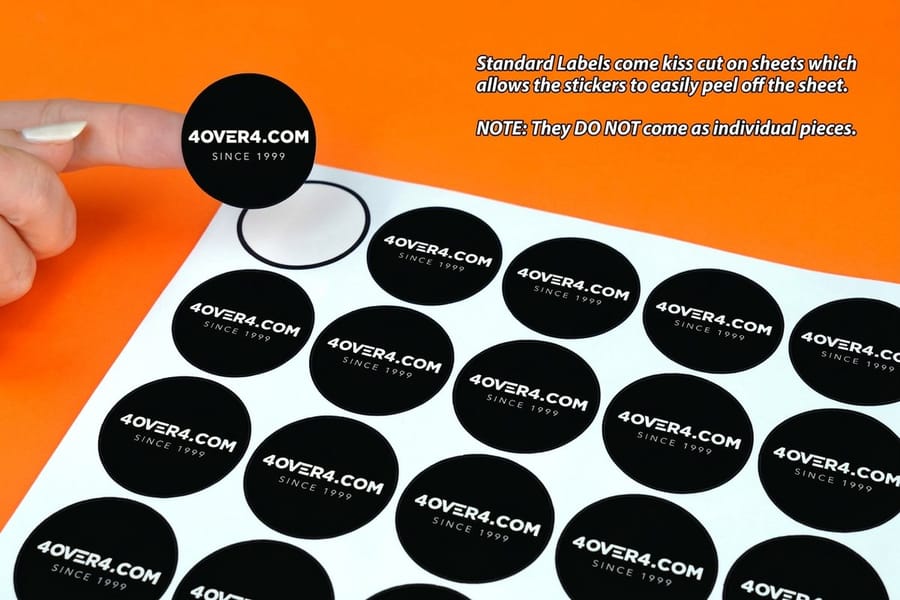
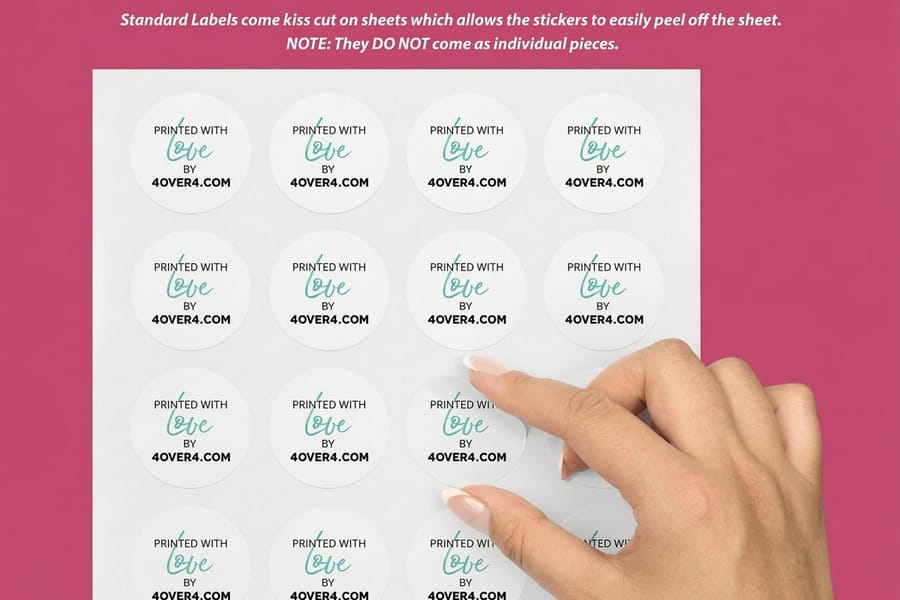
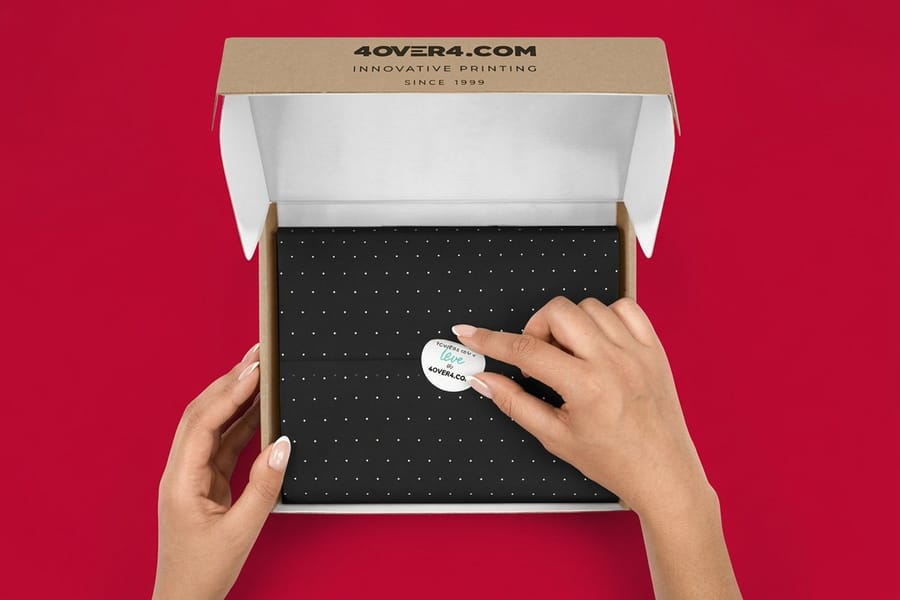
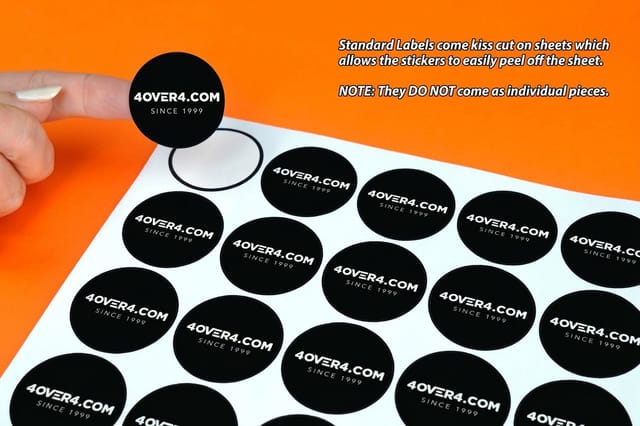
Labels earn their place everywhere else on the package. A round seal across the shrink wrap opening, a spine sticker so the case reads on a shelf, a flap seal on a cardboard sleeve, a hype sticker calling out the single. Standard labels start at $23.88 and cut to any shape you supply, which is what makes them useful for a round seal that has to sit concentric with the disc window.
Mailing promos is its own small discipline. A jewel case in a plain paper envelope arrives cracked more often than not, so use a rigid or padded mailer and print the addresses rather than writing them. Standard address labels start at $23.88 for a run large enough to cover a press list, and the standard envelope sizes guide covers what fits what before you buy the wrong box of mailers.
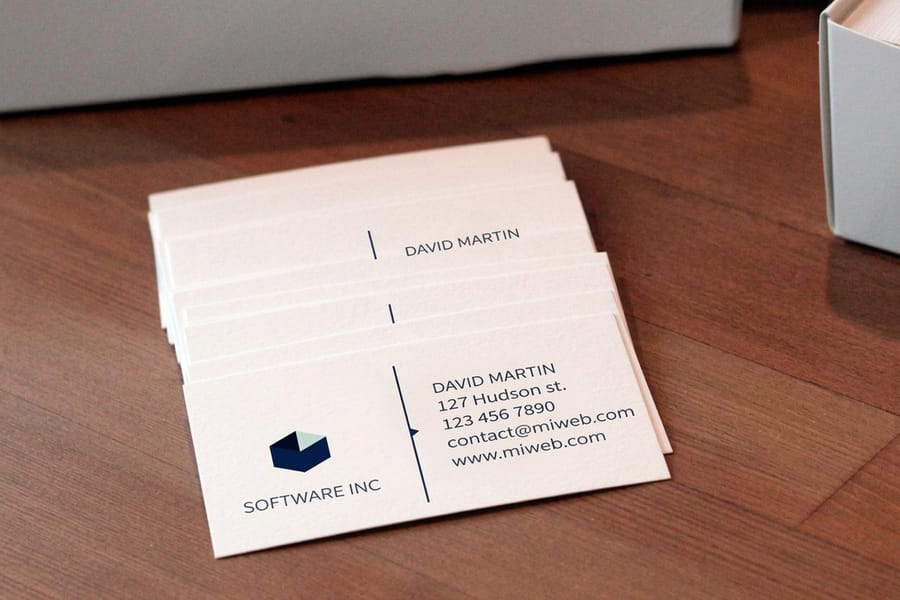
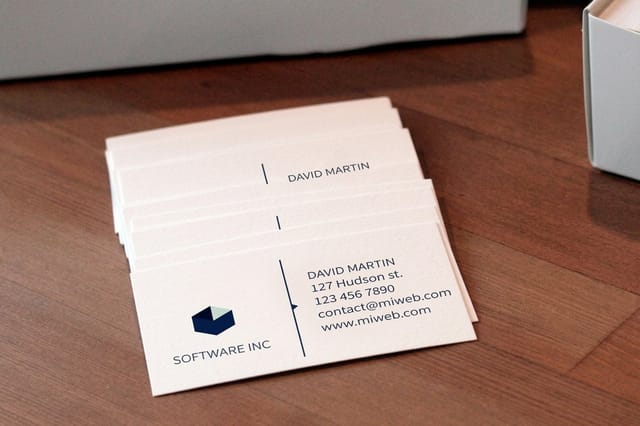
At the table itself, the CD is rarely the only thing selling. Standard business cards from $17.57 work as a take-away with the streaming link and the tour dates on the back, and they cost less than giving away a disc to someone who was never going to buy one. Printed t-shirts start at $21.96 and carry the same cover art that had to shrink to 4.75 inches on the booklet, this time at a size where the detail survives. If you want the download code to feel like something, scratch-off printing turns a card into a small event. And if the cover art needs a reference point before you commit to it, nine iconic 1990s hip hop covers is a lesson in how few elements survive at this size. Everything else on the table, from flyers to the setlist, sits in the standard printing collection.
Wally sizes up a CD package
Booklet square, tray card wide, disc on a ring
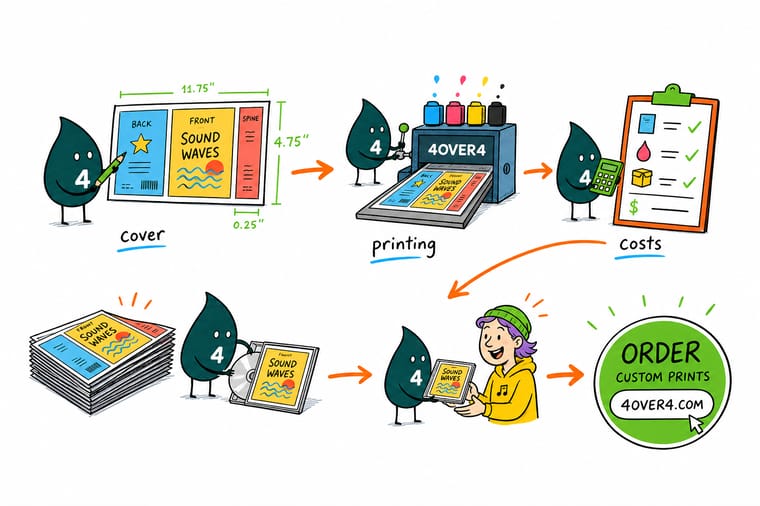
Wally cuts the booklet page at 4.75 inches square so it slips under the clips in the lid. The tray card he cuts wider, 5.9 by 4.6 inches, then folds a quarter inch up at each end for the spines and keeps the title inside those strips so the fold does not eat it. The disc he treats as a ring, printing from 46 mm out to 118 mm, because the middle is clamping area. Then he adds an eighth of an inch of bleed everywhere and stops touching it.
Order labels for your release →Specs and pricing
Print for a release, sizes and starting prices
The seals, mailing labels and take-away cards a release actually needs, with live configuration choices and starting prices straight from the 4OVER4.COM configurator.

Print it
Everything on the table beside the disc

Explore more
Where to go next



By the numbers
A short sleeve run on a floor built for 150,000+ businesses
Common Questions
Your CD packaging questions, answered
What size is a CD case in cm?
A standard jewel case is about 14.2 by 12.5 cm on the face and 1 cm deep, which is the box the paper inside has to fit. The booklet page is 12.065 cm square and the tray card behind the disc is 14.99 by 11.68 cm including both spine strips. A slimline case has the same face size at roughly half the depth.
What is the size of a standard CD?
A CD is 120 mm across, which is 12 cm, with a 15 mm hole in the center and a clamping ring around that hole. It is 1.2 mm thick. Only the band from about 46 mm out to 118 mm can carry artwork, so a design built as a full circle loses its middle.
How do I print a CD cover at the right size?
Set the artboard to the panel you are printing rather than to the case, so 4.75 inches square for the booklet page and 5.9 by 4.6 inches for the tray card. Add an eighth of an inch of bleed on every edge, keep type an eighth of an inch inside the trim, supply CMYK at 300 dpi with fonts outlined, and export a flat PDF. Printing at home on letter paper is fine for a proof, but set the print dialog to 100 percent scale or the panel comes out small.
What size is a CD cover?
The front cover of a standard jewel case booklet trims to 4.75 by 4.75 inches, which is 120.65 mm square. Set the artboard up at 5 by 5 inches so you carry an eighth of an inch of bleed on all four sides, and keep type and logos at least an eighth of an inch inside the trim line. The back of the case is a separate piece called the tray card, and it is a different shape entirely at 5.9 by 4.6 inches.
What are the tray card dimensions and where do the spines go?
The tray card trims to 5.9 by 4.6 inches overall. That total splits into a 5.4 inch back panel with a 0.25 inch spine strip at each end, and both strips fold up at ninety degrees so they face outward on a shelf. Set the spine text as its own vertical column inside that quarter inch. Artwork that runs continuously across the whole 5.9 inches will have a fold running through it, and the type sitting on that fold is lost.
How big is the printable area on the disc itself?
A CD is 120 mm across with a 15 mm hole in the middle. Around that hole sits the clamping and stacking area, so most plants print an outer diameter of 118 mm and an inner diameter of about 46 mm. Some presses will go in tighter, to roughly 43 mm, but only ask for that after the plant confirms it. Design the disc as a ring from the start, because a full circle design will simply lose everything in the centre.
How many pages can a CD booklet have?
Any multiple of four. Saddle stitching folds sheets in half and staples through the spine, and each folded sheet gives four pages, so the count runs 4, 8, 12, 16 and upward. A four page booklet is one folded sheet and is the cheapest real booklet you can order. If your lyrics need eleven pages, you are ordering twelve and leaving one blank or adding credits.
What actually drives the cost of CD packaging?
Four things, roughly in order: how many separate printed pieces the format needs, the booklet page count, whether the inside pages print in colour or in black only, and the quantity. Paper choice moves the number less than any of those. A cardboard sleeve is one printed piece and one fold, so it is consistently the cheapest way to package a run for a merch table, while a full jewel case needs a booklet and a tray card printed and folded separately.
Can I use a paper label on the CD instead of printing the disc?
You can, and it is a bad idea for anything you hand to another person. An adhesive label adds weight that is never perfectly centred, and a disc spinning at reading speed amplifies that imbalance into vibration and read errors. In a slot-loading car or laptop drive a label edge that lifts can jam the mechanism outright. Labels belong on the shrink wrap seal, the case spine and the sleeve flap, not on the playing side of a disc.
Get Started
Ready to print the rest of the release?
Seals for the shrink wrap, spine stickers, address labels for the press list, cards for the merch table. Pick a size, upload the art, and we print it.
Legal Disclaimer
Gold Standard guarantees apply to all standard orders placed through 4over4.com. Price match requires verifiable proof of a competitor's published price for an equivalent product with matching specifications and turnaround time. Satisfaction guarantee covers manufacturing defects and print quality issues. Contact support with order number and documentation. On-time delivery rate based on tracked orders 1999 to 2026. Individual results may vary based on shipping carrier performance.
