
Bakery Boxes vs Premium Food Labels vs Bakery Flyers for a Growing Bakery


Three pieces, three very different starting prices, and only one of them talks to a customer who has not walked in yet. That sets the order to buy them in.
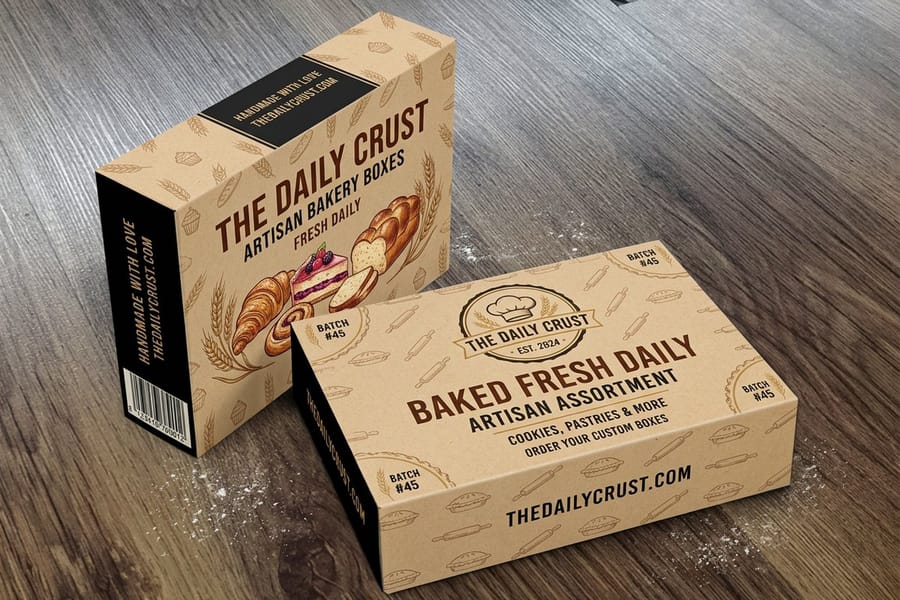
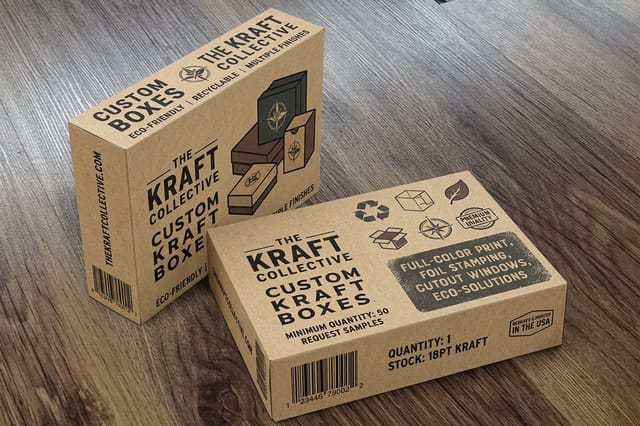
For most bakeries the order is labels first, flyers second, printed boxes last. Premium food labels start at $29.16 and turn a plain white or kraft box into branded packaging that also carries your ingredient panel. Bakery flyers start at $39.54 and are the only one of the three that reaches somebody who has never bought from you. Bakery boxes start at $711.78 because a custom carton is a full production run you have to store, so print them when volume, size and artwork have all settled.
Quick answer
One reaches strangers, two fight over the same moment
Labels and boxes do the same job at wildly different entry prices. Both meet the customer at the counter and travel home in the bag, but premium food labels start at $29.16 and printed bakery boxes start at $711.78, roughly 24 times as much, because a custom carton is a production run with storage attached. The flyer is a different animal: at $39.54 to start it is the only piece of the three that puts your name in front of someone who has never bought from you.
What Each One Actually Does for a Bakery
The three pieces are not competing for the same job. They are competing for the same budget, which is why they end up on the same shopping list.
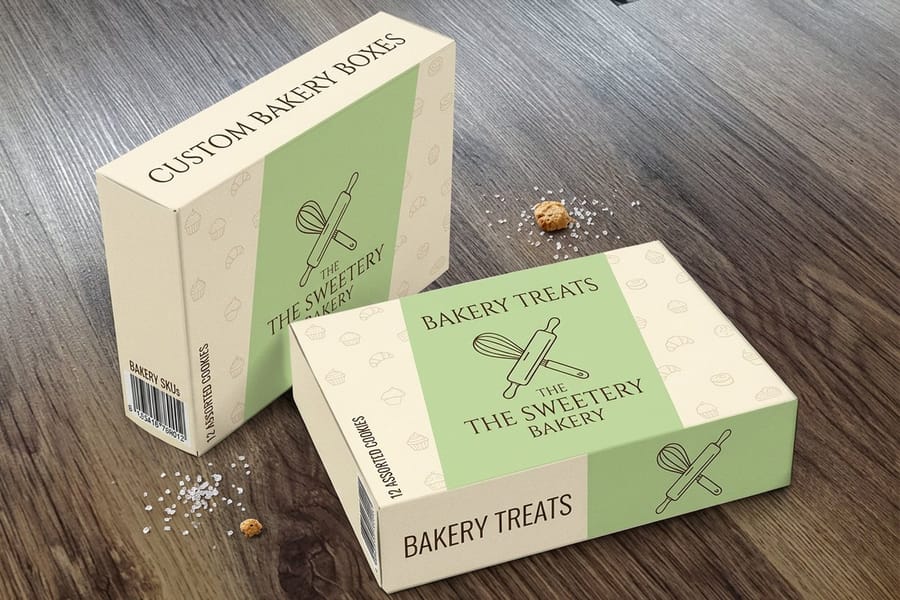
A bakery box is the object the customer carries out of the shop and puts on a kitchen table. A premium food label is what turns a plain box into your box, and it is where the ingredient panel lives. A bakery flyer is the only one of the three that a person who has never bought from you will ever see.
| Piece | Starts at | Who sees it | What it cannot do |
|---|---|---|---|
| Bakery boxes | $711.78 | Customers who already bought, plus whoever they show the box to at home. | Bring in a new customer, or change with a seasonal menu once the run is printed. |
| Premium food labels | $29.16 | The same people the box reaches, from the counter to the kitchen table. | Replace the box. You still buy the plain box, and someone still has to apply the label. |
| Bakery flyers | $39.54 | People on the street, in mailboxes, on a noticeboard, or in a neighbouring shop. | Do anything after the sale, or carry a legible ingredient panel. |
Read the third column, then the fourth. The boxes and the labels are fighting over the same moment, which means only one of them needs to win it. The flyer is not in that fight at all.
The Minimum Order Is the Real Difference
Comparing $711.78 against $29.16 looks unfair until you understand what each number buys. They are not the same kind of price.
Custom bakery boxes are folding cartons. The sheet gets printed, cut on a die, creased, and shipped flat, and that whole chain has a floor under it. The $711.78 starting price is a production run, not a starter pack. It is roughly 24 times the entry price of labels, and the boxes arrive as a large flat stack that needs dry storage where nothing heavy can crush the creases.
Premium food labels are printed and cut on a sheet, so the floor is far lower. A first order is small enough to be a test rather than a commitment. If the design is wrong, you find out for $29.16 instead of finding out on a pallet.
Flyers sit in between at $39.54 to start, but flyer economics are unusual: the printing is rarely the expensive part. Handing out 5,000 flyers costs more in time or distribution than the flyers themselves, which is why the honest question is never how cheap the print is. Our notes on flyer distribution are worth reading before you set a quantity.
Labelling a Plain Box Skips the Whole Decision
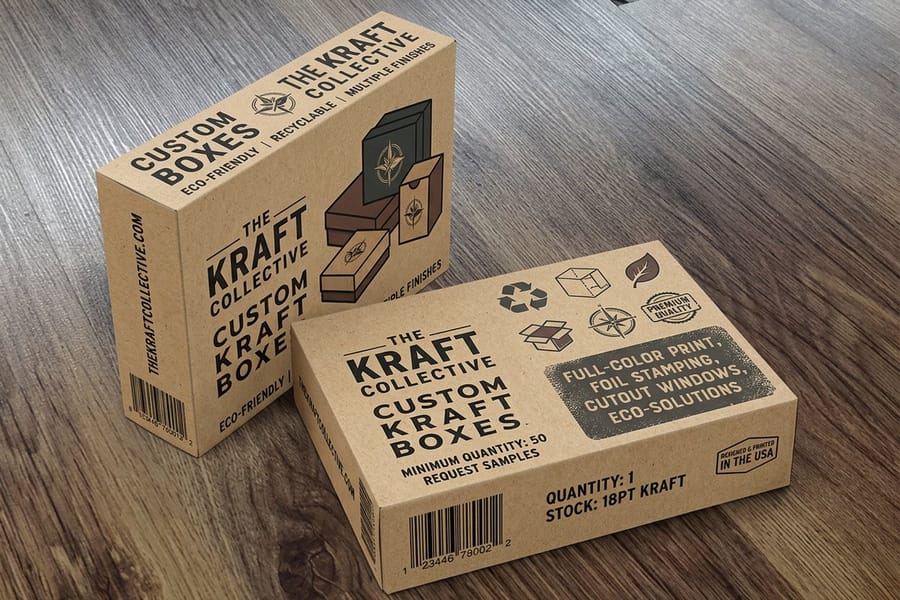
Most bakeries that look like they print their own boxes do not. They buy plain white or kraft cartons and put one good label across the lid.
It works because a label solves three problems at once. It brands the box, it seals the box so the lid does not swing open in a car, and it carries the ingredient and allergen panel that a printed box would have to be reprinted to change. Swap the label and the whole package changes for the season without touching your box supply.
Two things decide whether it holds. The first is the stock underneath: uncoated kraft is slightly fibrous and takes adhesive well, while a heavily coated glossy box gives the adhesive less to grip. The second is the food. Butter and oil wick into an uncoated paper label and turn it translucent within hours, and a box that goes into a chilled display picks up condensation that lifts a label edge. For anything warm, greasy, or refrigerated, specify a coated or laminated face rather than plain paper.
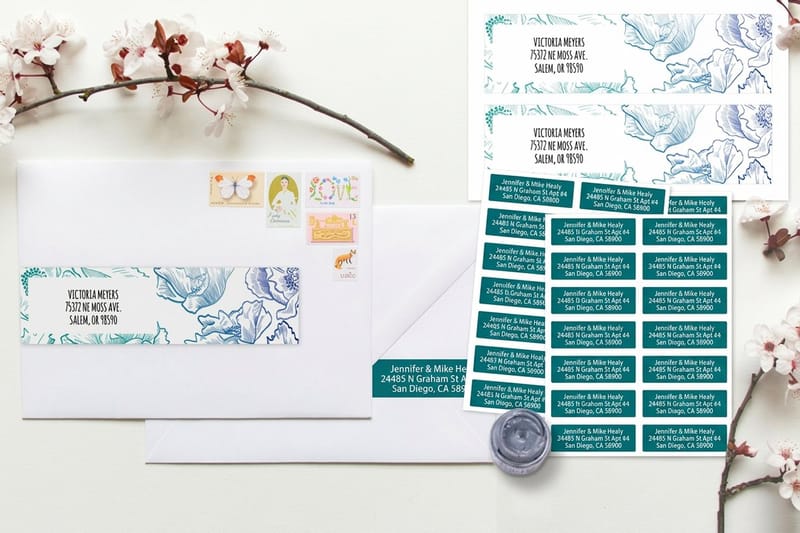
Size the label to the panel, not to the roll. Measure the flat lid, take about two thirds of its width, and the label reads as a seal instead of a sticker. The label size guide covers the measuring, and roll labels versus sheet labels explains which format suits hand application at a counter. If your boxes are kraft, the kraft printing collection shows how ink behaves on that surface.
When a Printed Box Actually Earns Its Price
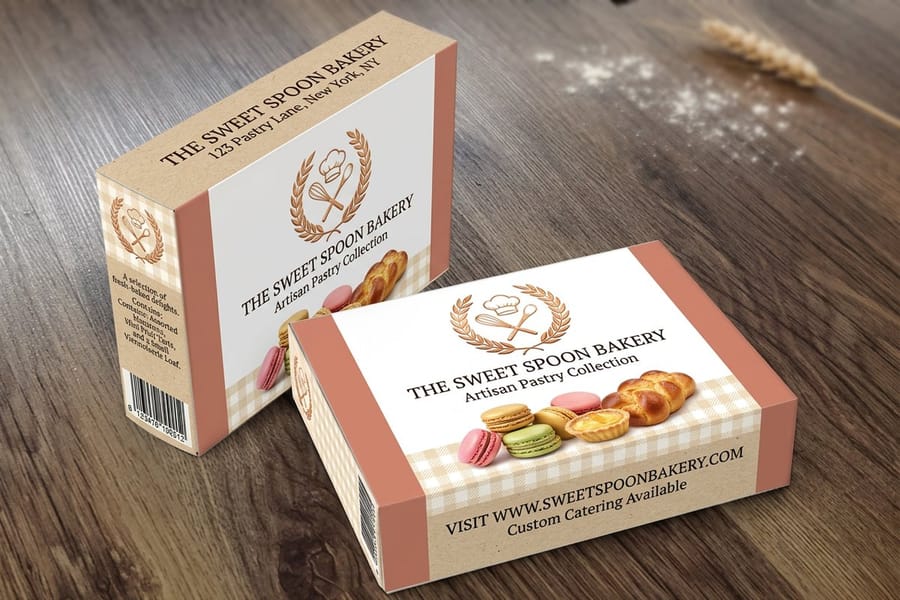
There is a point where the label becomes the expensive option, and it arrives sooner than most people expect. It is a labor point, not a print point.
Every labeled box costs a few seconds of someone standing at a counter. At twenty boxes a day nobody notices. At three hundred boxes a day on a Saturday morning, that is a person doing nothing else, and the printed box stops being a branding decision and becomes a staffing one. Print the box when the volume is steady, the size is settled, and the artwork has stopped changing.
The second case is when the box itself is the product photograph. A tall cake box, a window box, or a fully printed pattern across all four sides cannot be faked with a label, and for a bakery that lives on social posts that matters. A label sits on one panel. Printing covers the whole carton.
The case against is storage and commitment. Printed cartons take space, they crease if stacked badly, and a rebrand strands whatever is left. Before you order, get the die line right: our guide on preparing files for packaging products covers the fold lines and bleed that packaging artwork needs, and the packaging materials comparison covers which board suits a heavy cake versus a dozen pastries.
What the Flyer Does That Neither Other Piece Can
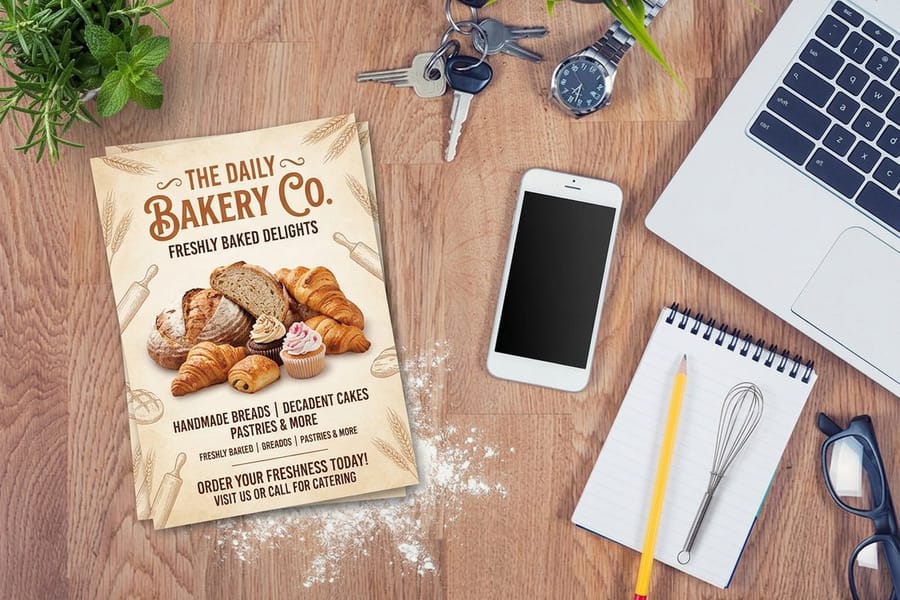
Boxes and labels only reach people who already found you. That is the gap the flyer fills, and it is the reason the flyer is not really in competition with the other two.
The flyers that work for bakeries are specific. A named item, a price, a date, and a reason to come this week. A flyer that only says a bakery exists is a leaflet somebody drops in a bin at the corner. Put a QR code on it that lands on your order page or a preorder form and you can count exactly how many people acted, which is the only way to know whether the distribution was worth repeating. Our guide to QR codes on printed pieces covers placing and sizing the code so it actually scans.
Flyers also do a job inside the shop. A stack at the counter turns a walk-in into a catering enquiry, and a flyer folded into the box is the cheapest repeat purchase prompt there is. That last one is worth more than most street distribution, because it reaches a person who has already decided they like what you make.
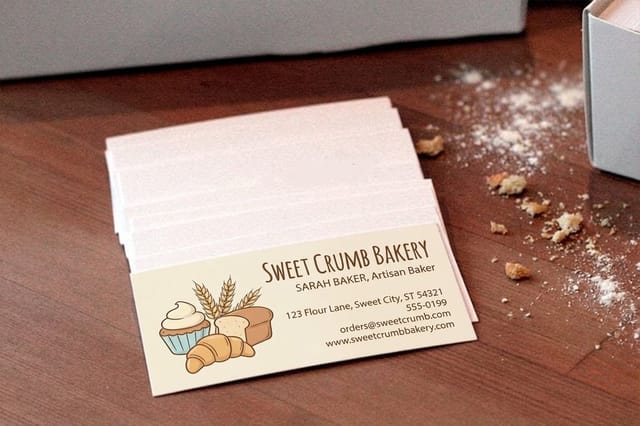
Pair the flyer with something the customer keeps. Bakery business cards survive a wallet in a way a flyer does not, and kraft menus handle the catering and custom order conversation the flyer starts. Start any of them from a correctly sized layout in the blank template library.
The Verdict, by Where Your Bakery Is Now
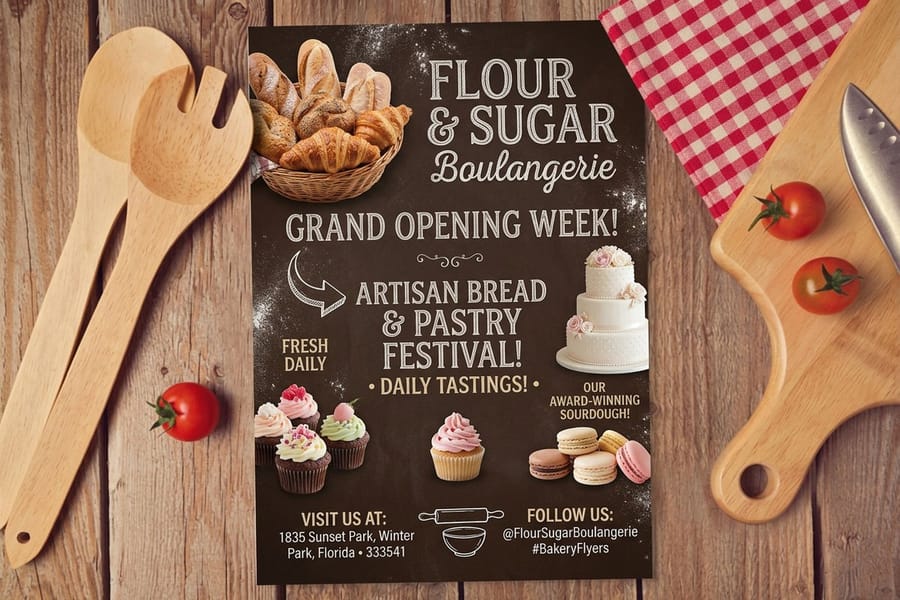
Labels first, flyers second, printed boxes when the volume justifies them. That order holds for almost every bakery, and the only thing that changes is how fast you move through it.
| Where you are | Print this | Why |
|---|---|---|
| Opening, or under 50 boxes a day | Premium food labels on plain boxes | From $29.16, no storage problem, and the design can change as fast as your menu does. |
| Steady trade, growing local name | Labels plus bakery flyers | The label handles everyone who already buys. The flyer is the only piece that reaches anyone who does not. |
| High weekend volume, settled artwork | Printed bakery boxes | Removes a hand step per box at the counter, and prints across the whole carton instead of one panel. |
One warning worth repeating: do not order a box run to save money on labels. Order it to save time at the counter, or because you want printing on panels a label cannot reach. If the reason is anything else, the label is still the better buy, and the packaging and labels range covers every format that fits a bakery box.
Wally runs the bakery counter
One label, one plain box, and a stack of flyers by the till
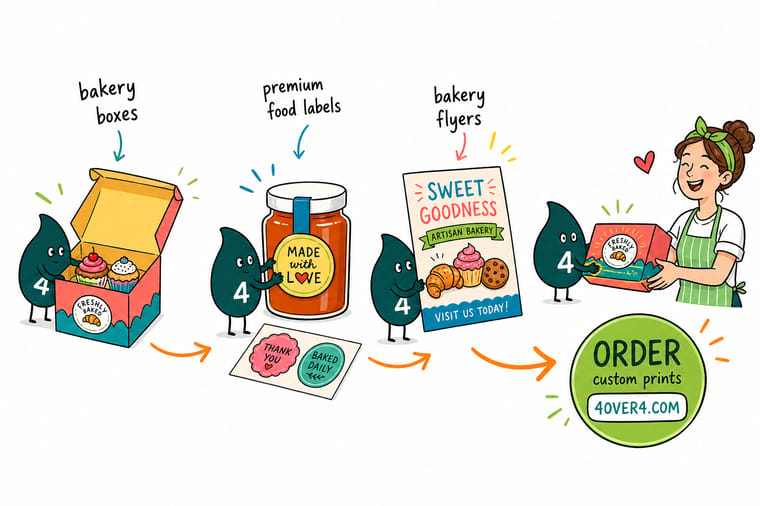
Wally does not print boxes on day one. He buys plain kraft cartons, seals each one with a food label that carries the ingredients, and keeps flyers by the till for the people who have not found the shop yet. When Saturday mornings get busy enough that somebody is standing there applying labels all day, that is when he orders printed boxes. Not before, because a pallet of boxes with last year's logo on them is money sitting in a stockroom.
Configure premium food labels →Specs and pricing
All three side by side, with live configuration
Sizes, stocks and starting prices for boxes, food labels and flyers, straight from the 4OVER4.COM configurator.
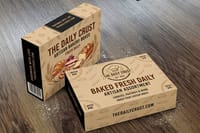
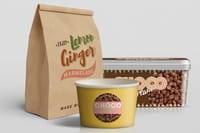
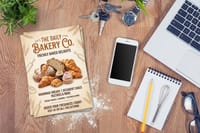
Print it
Packaging a bakery actually uses
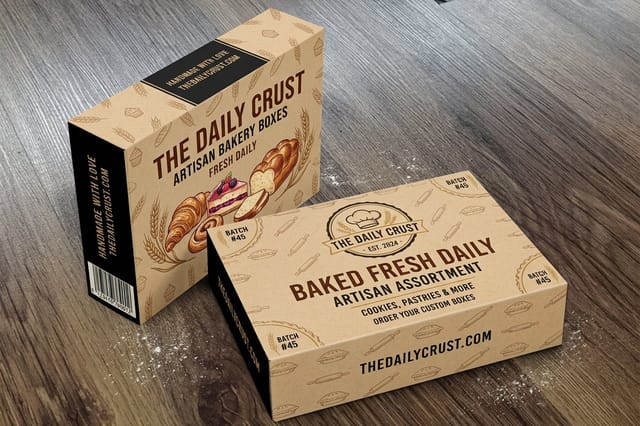
Explore more
Where to go next
By the numbers
Bakery printing you can plan around
Common Questions
Bakery packaging questions, answered
Should a new bakery print boxes or labels first?
Labels, in almost every case. A premium food label run starts at $29.16 and works on the plain white and kraft boxes you can already buy from a restaurant supplier, so your packaging looks like yours from the first week. Bakery boxes start at $711.78 because a custom folding carton is a production run with tooling and a minimum quantity behind it. Print boxes once you know your box size will not change, your artwork is settled, and you have the shelf space to store a pallet.
How many boxes do I have to buy to make a printed box worth it?
Work backwards from the label alternative rather than from a rule of thumb. Add the cost of the plain box you buy now to the cost of a label per box, then compare that per unit figure against the per unit price the configurator shows for your bakery box run at the quantity you would actually order. The printed box usually wins at high volume because it removes a hand step at the counter. At low volume the label wins because you are not paying for boxes you have not sold yet.
Do I need an ingredient and allergen list on a bakery box?
If the item leaves your premises packaged rather than being made and handed over fresh, in most cases yes, and the rules vary by state and by how the food is prepared and sold. Do not guess it from a blog post. Our guide to food labeling covers what the label has to carry and how the panel is laid out, and it is the reason a lot of bakeries choose a label over a printed box: the ingredient panel changes with the recipe, and a label can change with it.
What size label covers a standard bakery box lid?
Measure the flat lid panel and take roughly 60 to 70 percent of its width, so the label reads as a deliberate seal rather than a sticker that missed. A round label from 2 to 3 inches suits a small pastry box, and a rectangle around 3 by 4 inches suits a cake box lid. If you want the label to hold the lid shut, place it across the front edge so it breaks when the box opens. Our label size guide walks through measuring the panel before you set the artwork.
Are bakery flyers still worth printing?
They earn their place when they carry an offer and a way to measure it. A flyer that says a bakery exists does very little. A flyer with a named item, a price, a date, and a QR code that lands on your order page tells you exactly how many people acted. At $39.54 to start, the piece is cheap enough that the real cost is distribution, so decide where they go before you decide how many to print.
Can I use the same artwork on the box, the label and the flyer?
Use the same mark and the same colors, but not the same file. Each piece is a different size and a different reading distance, so type that works on a flyer held at arm length is far too small once it is reduced onto a 2 inch label. Build the logo once as vector artwork, then lay out each piece at its own trim size from a blank template. Colors will also sit differently on uncoated kraft than on a coated flyer stock, which is worth ordering samples for before a full run.
Get Started
250 bakery boxes cost $711.78, 50 bakery flyers $39.54
Start with a food label that seals the lid and carries your ingredients, then move to printed cartons when the counter gets busy enough to need them.
Legal Disclaimer
Gold Standard guarantees apply to all standard orders placed through 4over4.com. Price match requires verifiable proof of a competitor's published price for an equivalent product with matching specifications and turnaround time. Satisfaction guarantee covers manufacturing defects and print quality issues. Contact support with order number and documentation. On-time delivery rate based on tracked orders 1999 to 2026. Individual results may vary based on shipping carrier performance.
