
100lb Cardstock Thickness, Weight and What It Prints Best


What the 100 measures, how the sheet compares to 14pt on a caliper, the jobs it suits, and the two places it is the wrong stock.
100lb cardstock means 100lb cover, a sheet that measures about 0.010 inches on a caliper and about 271 gsm. It is a genuine card, but it is roughly forty percent thinner than the 14pt stock most buyers picture when they say cardstock. It is the standard weight for postcards, folded greeting cards and invitations, it clears the USPS 0.007 inch minimum for the postcard price, and it is the wrong choice for business cards.
Quick answer
Cover grade, 0.010 inches, and why the number misleads
A paper weight is the weight of 500 sheets at that grade's basic size, and every grade uses a different basic size. Cover is weighed at 20 by 26 inches, text at 25 by 38 inches, which is why 100lb cover runs near 271 gsm and 100lb text near 148 gsm. Cardstock always means the cover version. Measured on a caliper it comes out around 0.010 inches, thick enough to mail at the postcard price and to fold cleanly once scored, thin enough that it should never be quoted for a business card.
Where the Number 100 Comes From
US paper weights are not a measure of thickness. They are the weight of 500 sheets of that paper cut to the basic size for its grade, and every grade has its own basic size. Cover grade is weighed at 20 by 26 inches. Text and book grade is weighed at 25 by 38 inches, a much larger sheet.
That is the whole trick. Because the cover sheet on the scale is smaller, a cover sheet has to be far heavier per square inch to reach the same 100 pounds per ream. So 100lb cover comes out at roughly 271 gsm and 100lb text at roughly 148 gsm, and the two papers have almost nothing in common except a number on an invoice.
When somebody says 100lb cardstock they mean 100lb cover. Nobody calls a flyer sheet cardstock. But quotes and vendor spec sheets abbreviate to "100lb" constantly, and that ambiguity is how a customer ends up approving a proof for a card and receiving something closer to a heavy flyer. If a quote does not spell out the grade, ask for the caliper in points or the gsm before you approve it. The full text versus cover breakdown walks through both grades side by side.
How Thick 100lb Cardstock Actually Feels
Caliper is the number that tells you how a piece will feel, and it is measured in points, where one point is one thousandth of an inch. 100lb cover lands near 0.010 inches, so about 10pt. Here is where that sits against the stocks it gets confused with.
| Stock | Caliper | Metric weight | What it is for |
|---|---|---|---|
| 100lb text | about 0.006 in | about 148 gsm | Heavy flyers, brochure pages, catalog interiors. Not a card. |
| 80lb cover | about 0.009 in | about 216 gsm | Light cards, inserts, rack cards that sit in a holder. |
| 100lb cover | about 0.010 in | about 271 gsm | Postcards, invitations, folded greeting cards, presentation inserts. |
| 14pt card | 0.014 in | about 350 gsm | The default business card weight, and the one most buyers picture. |
| 16pt card | 0.016 in | about 400 gsm | Premium cards, thick postcards, anything meant to feel expensive. |
Read the caliper column, not the weight column. Those numbers move a little between mills and coatings, and an uncoated sheet almost always measures thicker than a coated one at the same basis weight, because coating fills the surface and the sheet is calendered flat under pressure. That is why an uncoated 100lb cover can feel closer to 12pt while a gloss 100lb cover feels exactly like the 0.010 it measures.
The practical takeaway is a gap most people miss until the box arrives. 14pt is roughly forty percent thicker than 100lb cover. If your reference sample is a business card, 100lb cover will feel light. If your reference is a magazine cover, it will feel about right. Our card thickness chart lists every caliper we carry, and the 300 gsm conversion guide handles the metric side.
What 100lb Cover Prints Well, and Where It Falls Short
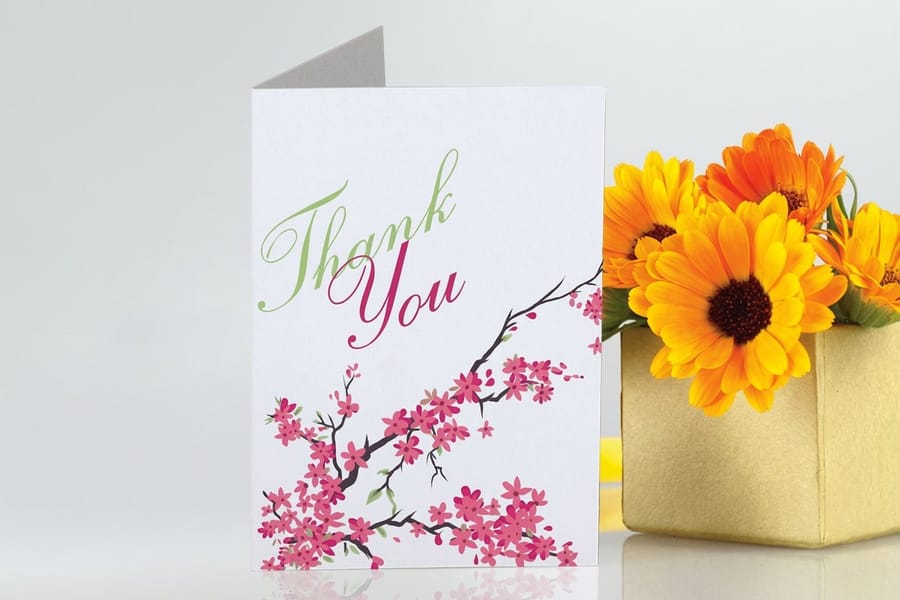
This weight earns its place on anything that has to fold, mail cheaply, or sit in a stack without adding bulk. It is stiff enough to read as a card and thin enough to behave.
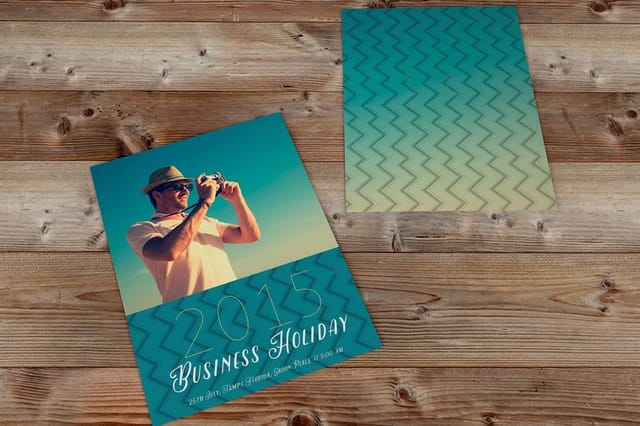
- Postcards. It clears the USPS 0.007 inch minimum for the postcard price with margin, and it costs less to mail in volume than a 16pt card. Standard Postcards start at $16.48 and the configurator lists the stock and coating options for each size.
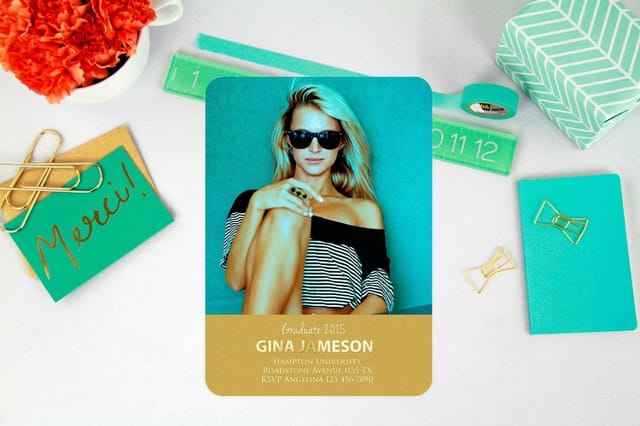
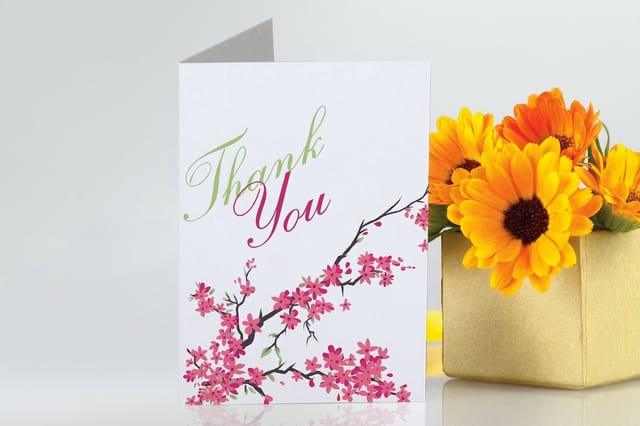
- Folded greeting cards and invitations. A scored 100lb cover closes flat. Greeting Cards start at $56.02 and Invitation Cards at $19.77.
- Inserts and pocket folder contents. Six or eight sheets at this weight still fit a folder pocket, where the same count at 14pt will not.
- Menus, price lists and tent cards that get replaced often. Stiff enough to stand up to a shift, cheap enough to reprint when a price changes.
Where it falls short is just as specific. It is too thin for business cards, which live in wallets and get judged by feel. It is too thin for anything that has to stand unsupported on a counter for weeks. And it is the wrong answer for a piece meant to signal expense, because a raised or foiled finish on a light sheet reads as a mismatch rather than a luxury.
Going the other way, if the job is a mailed sheet rather than a card, drop to a text weight and spend the difference on quantity. Standard Flyers start at $39.54 and Standard Brochures at $57.11, both on stocks built for folding and stuffing. Our notes on the right paper weight for flyers and brochure paper types cover that decision.
Coated, Matte or Uncoated, and How to Order It
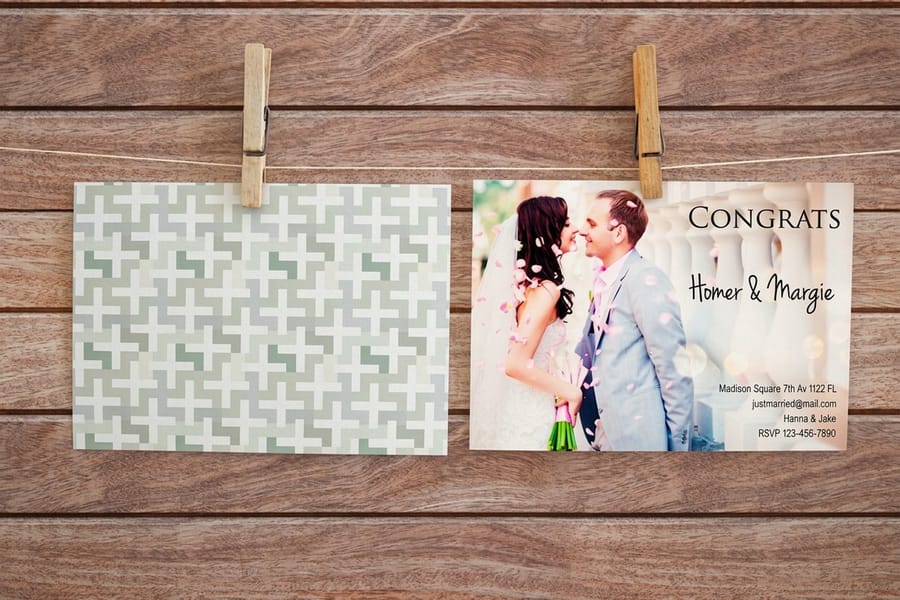
At the same 100lb cover weight, the finish changes more about the job than the paper does. Gloss coating makes photographs snap and colors sit dense, and it is the cheapest way to make a postcard look sharp. It also seals the surface, so a ballpoint pen will not dry on it and a fingerprint shows on a dark solid.
Matte coating keeps the ink protection and kills the shine, which is easier to read under overhead light and takes a pencil or a permanent marker. Uncoated is the one to pick when anyone writes on the piece: reply cards, appointment reminders, invitations with a handwritten name. Uncoated also absorbs more ink, so solids print a shade softer, and a photograph will never look as crisp as it does on gloss. That is a trade, not a flaw.
Ordering is straightforward. Pick the size first, because size decides the mailing rate before stock ever comes into it. Then pick the finish based on who touches the piece. Then check the caliper on the configurator rather than trusting the pound number in a comparison chart. Start your file from a correctly sized layout in the blank template library, keep artwork at full size with bleed, and browse the full range in postcard printing or invitation printing when you want to see what each size costs.
Wally explains 100lb cardstock
Same number, different sheet on the scale
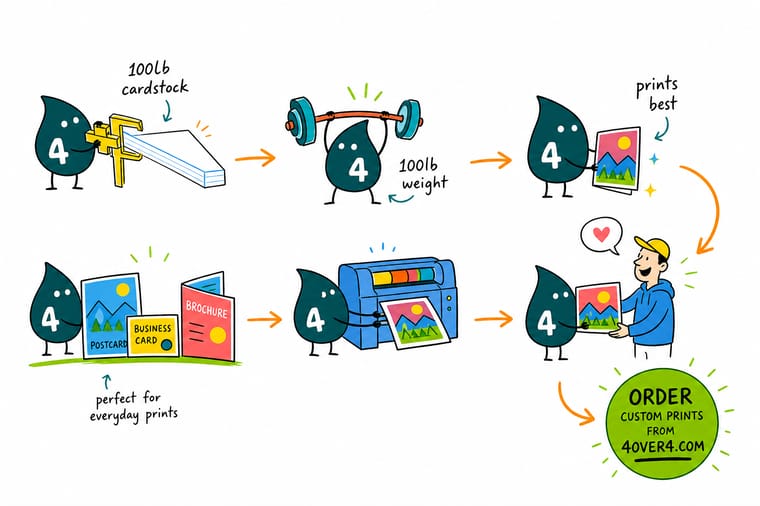
Wally puts 500 cover sheets on one scale and 500 text sheets on the other. Both read 100 pounds, but the cover sheets were cut smaller, so each one has to be much heavier to get there. That is how 100lb cover ends up near 271 gsm and 100lb text near 148. Then he puts a caliper on it: about ten thousandths of an inch. Thick enough to mail as a card and to fold without cracking once it is scored. Not thick enough for a business card, which is why he reaches for 14pt on those.
Order postcards on card stock →Specs and pricing
Card weight products, sizes and starting prices
Check the stock and coating choices for each size against live configuration options and starting prices from the 4OVER4.COM configurator.

Print it
Order the pieces that suit a cover weight sheet
Explore more
Where to go next

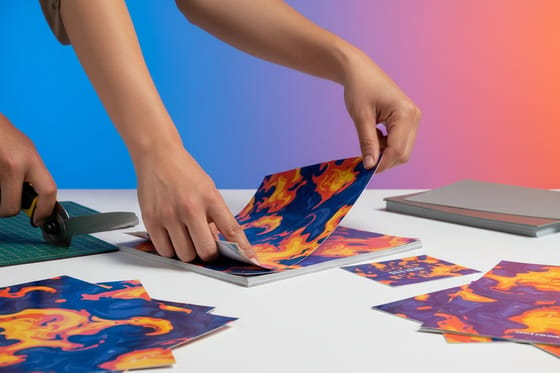
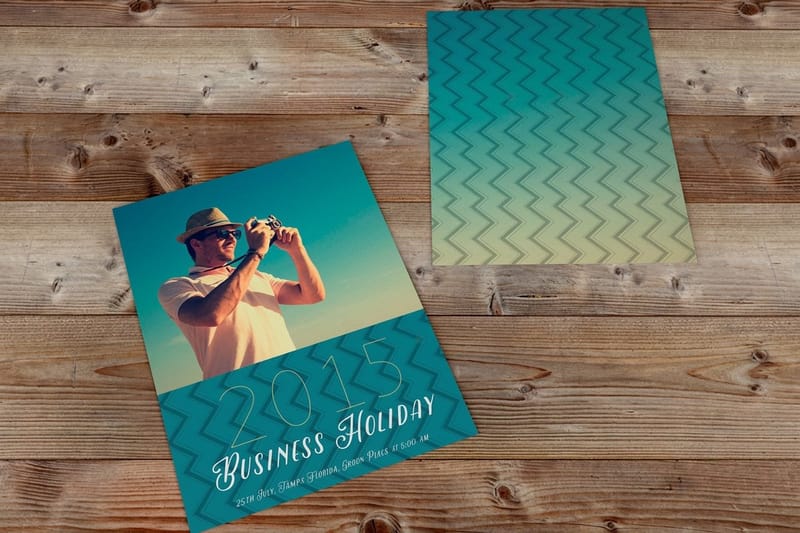
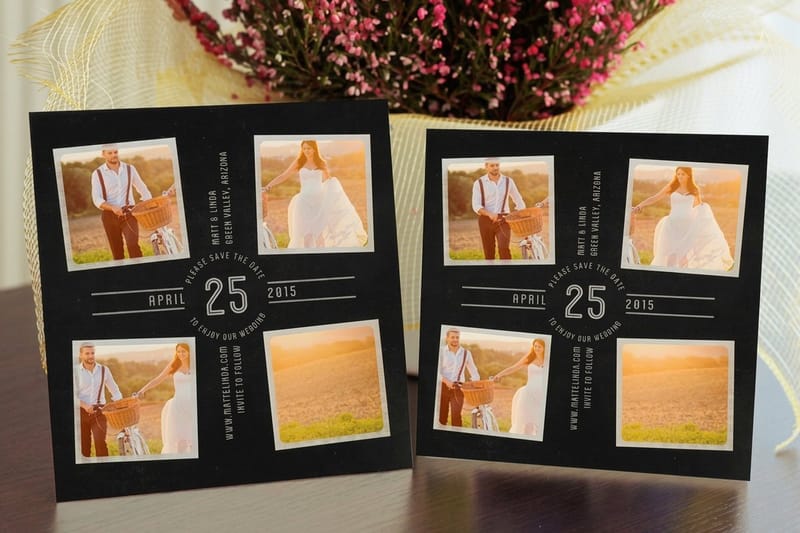
By the numbers
Card stock printing you can count on at 4OVER4
Common Questions
Your 100lb cardstock questions, answered
Is 100lb cardstock the same as 14pt?
No. 100lb cover measures roughly 0.010 inches on a caliper and 14pt measures 0.014 inches, so 14pt is about forty percent thicker. In gsm the gap reads 271 against roughly 350. People often assume the two are interchangeable because both get called cardstock in online store listings, then get a proof that feels lighter than the sample they were comparing against. If the piece needs to feel like a business card, ask for 14pt or 16pt by caliper rather than by pound.
How many gsm is 100lb cardstock?
About 271 gsm. The conversion for cover grade is pounds multiplied by 2.708, so 100 x 2.708 gives 270.8 gsm, which mills and print shops round to 270 or 271. Text grade uses a different factor, 1.48, so 100lb text is only about 148 gsm. When you are quoting an overseas supplier or matching a stock you saw in Europe, quote the gsm and the caliper together, because gsm describes mass and caliper describes thickness, and an uncoated sheet can hit the same gsm at a noticeably greater thickness. Our conversion walkthrough for 300 gsm covers the arithmetic in both directions.
Can you mail a postcard printed on 100lb cover at the postcard rate?
Yes, on thickness. USPS requires a card to be rectangular, at least 3.5 by 5 inches, at least 0.007 inches thick and no more than 0.016 inches thick to qualify for the postcard price. At about 0.010 inches, 100lb cover sits comfortably inside that window, while 100lb text at 0.006 inches falls under the minimum and is treated as a letter. Size matters as much as stock: the postcard price also caps the piece at 4.25 by 6 inches, so a 5 by 7 card mails at the letter rate no matter what it is printed on.
Will 100lb cover crack when you fold it?
Not if it is scored first, which is why it is the standard weight for folded cards. Coated stock cracks at the fold when the fibers on the outside of the bend are stretched and the clay coating splits, and the risk climbs with every extra point of caliper. At 100lb cover a proper score line usually gives you a clean, flat fold even on a dark solid that shows every flaw. Print the fold as part of the job rather than folding a flat card by hand later.
Can you write on 100lb cardstock with a pen?
On uncoated or matte, yes, and ballpoint or gel dries in seconds. On gloss coated 100lb cover, no, or at least not reliably: the coating is a sealed clay surface with nothing for the ink to soak into, so a ballpoint line sits wet on top and smudges under a hand. This is the single most common regret on greeting cards and reply cards. Decide who writes on the piece before you pick the finish, and if part of the card gets written on and part needs to pop, ask about coating one side only.
Is 100lb cover thick enough for business cards?
It works, but almost nobody chooses it. A card at 0.010 inches feels thin in a stack and bends in a wallet, which is why 14pt and 16pt dominate the category. Standard Business Cards start at $17.57 at 4OVER4.COM and run on stock built for handling, so the saving from dropping to a lighter sheet is not worth the impression it makes. Save 100lb cover for pieces that get read once and set down, like postcards and inserts.
Get Started
Ready to print on the right weight?
Pick your size, choose gloss, matte or uncoated, and we print cards that mail at the postcard price and fold without cracking.
Legal Disclaimer
Gold Standard guarantees apply to all standard orders placed through 4over4.com. Price match requires verifiable proof of a competitor's published price for an equivalent product with matching specifications and turnaround time. Satisfaction guarantee covers manufacturing defects and print quality issues. Contact support with order number and documentation. On-time delivery rate based on tracked orders 1999 to 2026. Individual results may vary based on shipping carrier performance.
