
300 GSM to LB Paper Conversion, Grade by Grade


Emma is our prepress and print production voice, built from the knowledge of our production team, with over 20 years in printing.
One metric weight turns into four different pound numbers, depending on the grade. The math lands on a caliper, and that caliper tells you how 300 gsm stock behaves once printed.
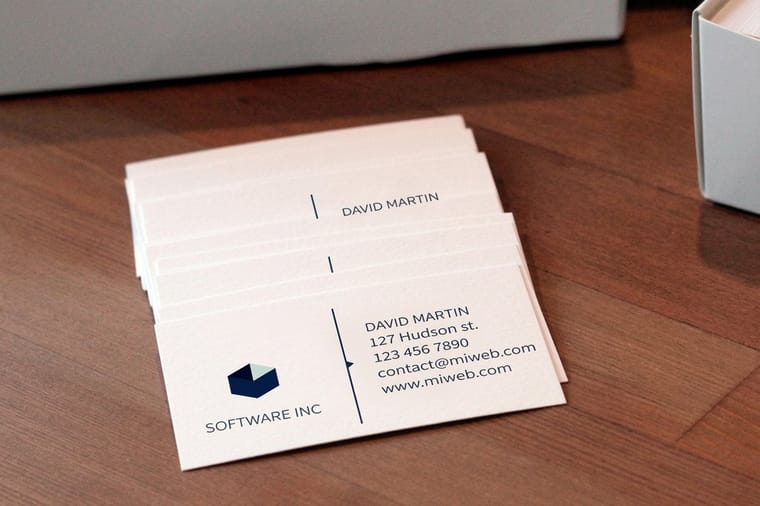
300 gsm is 111 lb cover, the same sheet as 166 lb index or 80 lb bond depending on which grade you are buying. Cover is the answer that matters for cardstock. In thickness terms a coated 300 gsm sheet runs about 0.012 inches, which printers call 12pt, one step below the 14pt Gloss Cover our business cards default to.
Quick answer
Why the grade has to be named
Quote the grade with the number, every time. Gsm weighs one square metre of any paper, while the pound system needs to know whether the sheet is sold as cover, index or bond, and thickness is a separate measurement again.
The Conversion, Grade by Grade

Gsm counts grams in one square meter of paper, and every paper on earth is measured the same way. The American pound system weighs a ream of 500 sheets, but at a sheet size that changes with the grade, which is where the confusion starts.
| Grade | Basis size | Divide 300 by | Result |
|---|---|---|---|
| Cover | 20 x 26 in | 2.708 | 111 lb cover, the cardstock answer |
| Index | 25.5 x 30.5 in | 1.813 | 166 lb index, used for tabs and file cards |
| Bond / writing | 17 x 22 in | 3.760 | 80 lb bond, a heavy letterhead sheet |
| Text / book | 25 x 38 in | 1.480 | 203 lb text, a number no mill actually sells |
Read the last row carefully, because it explains a lot of bad quotes. Text stock is manufactured up to about 100 lb and stops there, so a 300 gsm sheet simply is not a text weight. When somebody hands you a gsm figure and asks for pounds, the useful question back is which grade they are buying in.
For anything card-shaped, the answer is cover. That is why standard business cards and postcards are both quoted in cover weight and caliper rather than gsm, and why the difference between cover stock and cardstock is worth ten minutes before you order.
What 300 GSM Feels Like, and Why Weight Is Not Thickness
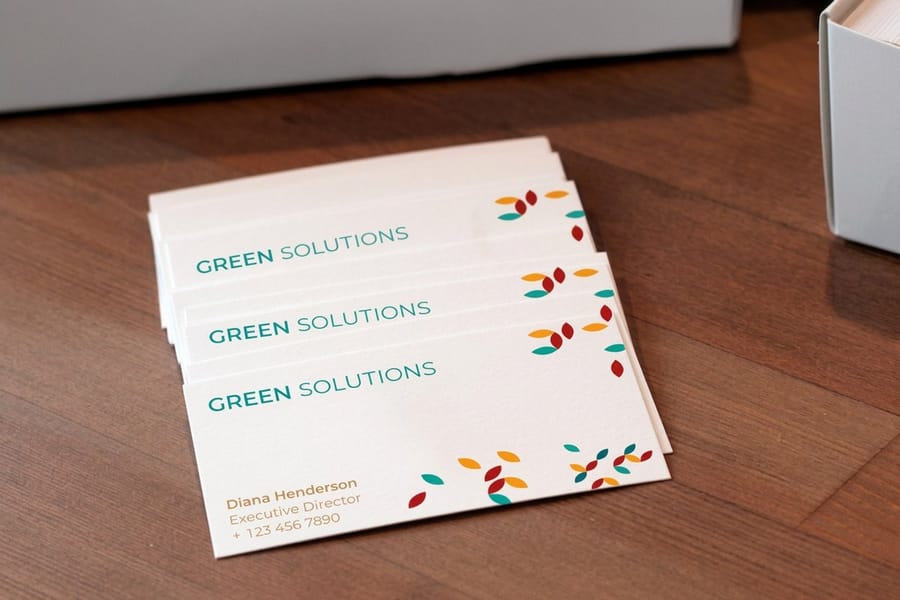
Hold a sheet of 300 gsm and it flexes a little before it resists. It is stiff enough to stand in a card holder, soft enough that a hard crease will stay in it. It sits close to a good greeting card or a menu insert.
The caliper is where the surprises hide. A coated 300 gsm sheet measures around 0.012 inches, which the trade calls 12pt. Take the coating away and the same weight can measure 0.014 inches, because clay coating compresses the fiber mat while uncoated stock keeps its loft. Two sheets, identical on the invoice, visibly different at the edge. Bulk is a property of how the paper was made, not of what it weighs.
So when a designer specifies 300 gsm and the client says the card feels thin, the fix is usually not more weight. It is a different finish, or a jump to the next caliper. Here is the practical ladder printers use, and it is close enough to work every time:
- 300 gsm is roughly 12pt. A real card, on the lighter side of the card range.
- About 325 gsm is roughly 14pt. The 14pt Gloss Cover our business cards default to.
- 400 gsm is roughly 16pt. Noticeably more rigid, and the point where a card stops bending in a shirt pocket.
If the exact step matters, hold the stocks rather than the numbers. The point-weight guide lays out the whole ladder, and the paper thickness chart puts every common weight next to its caliper.
Ordering When Your Spec Sheet Says 300 GSM
Convert the gsm to cover weight, then order by caliper. That single move avoids nearly every mismatch, because our configurator and our presses both speak in points.
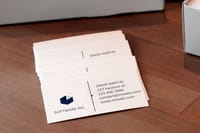
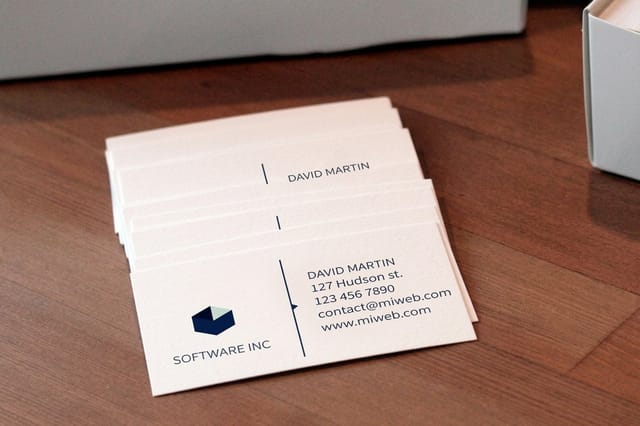
For cards, 300 gsm means you are shopping in the 12pt to 14pt band. Standard business cards start at $17.57 for 100 on 14pt Gloss Cover, and their menu also lists 110# Strathmore Bright White Wove and 13pt Uncoated Cover (100% PCW) for a spec that must stay near 300 gsm. Standard postcards start at $16.48 for 50 and list 100# Silk/Matte Cover and 13pt uncoated below the 14pt default, so the same spec has close matches there too.
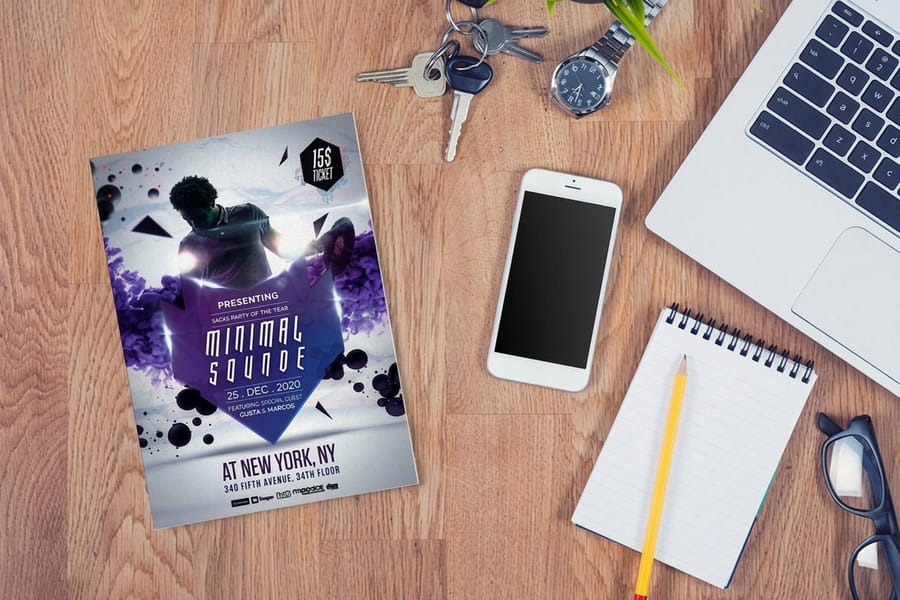
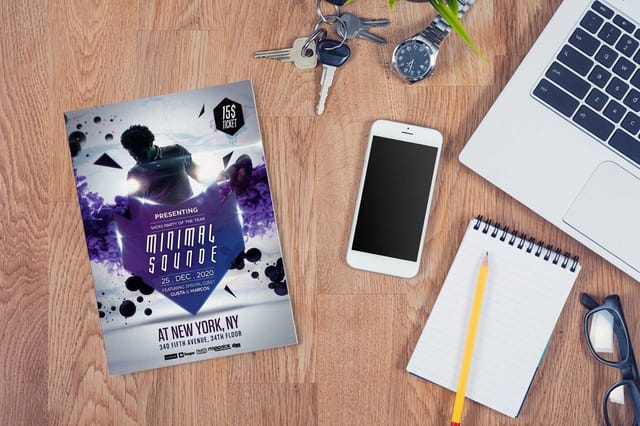
For anything that folds or stacks in quantity, drop out of cover weight entirely. Standard flyers at $39.54 for 50 and standard brochures at $57.11 for 50 run on text weights because a 300 gsm flyer is expensive to mail, awkward to fold, and reads as a card rather than a handout. That is a genuine trade-off, not a downgrade: text stock is the right material for a piece that gets picked up, read, and put down.
| Product | Stocks near a 300 gsm spec | Sizes | From | Production |
|---|---|---|---|---|
| Business cards | 110# Strathmore Bright White Wove, 14pt gloss or uncoated cover | 2 x 3.5, 2 x 2, 1.5 x 3.5, 2.125 x 3.375 in or custom | $17.57 for 100 | 3 business days |
| Postcards | 100# Silk/Matte Cover, 14pt gloss or uncoated cover | 2.5 x 2.5 to 6 x 11 in, 14 sizes | $16.48 for 50 | 3 business days |
| Flyers | 100# Silk/Matte Cover, 80# Gloss Cover, 14pt gloss cover | 4.25 x 5.5 to 11 x 25.5 in | $39.54 for 50 | 3 business days |
The pound-rated stocks in that table are the closest matches to a 300 gsm paper spec. The 110# Strathmore on business cards is the 110 lb cardstock retail packs sell as 300 gsm, and 100# Silk/Matte Cover sits one step lighter at roughly 270 gsm, so pick the 110# sheet when the spec is firm and 14pt when you want the card a touch stiffer.
Neighboring specs convert with the same 2.708 cover factor: 250 gsm is about 92 lb cover, 350 gsm about 129 lb and 400 gsm about 148 lb. Upload a PDF built on the matching blank template, and choose the free online proof or the next day hardcopy proof in the configurator if you want to check the stock before the run.
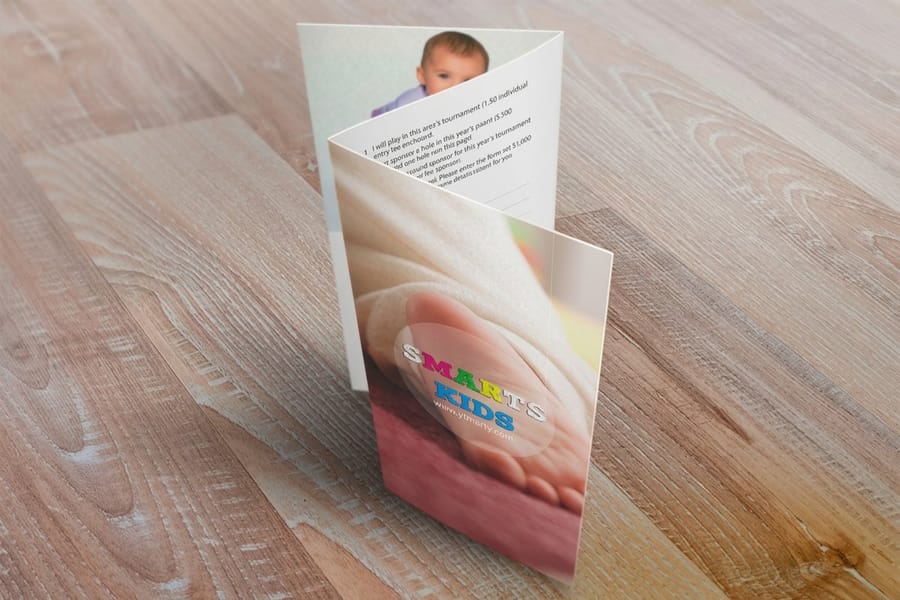
One limit is worth planning around before you commit. Folding 300 gsm cracks the surface, worse on coated stock than uncoated, so a folded piece belongs on a product that ships scored, such as greeting cards. Build the file at the right size from the start using the blank template library, and compare the stocks that carry the finish you want across business card printing and postcard printing.
Where the Conversion Goes Wrong
Four mistakes cause most conversion trouble, and all four come from treating gsm as if it were a single fact about a sheet.
Quoting a pound number without the grade. Asking a mill for 300 lb paper gets you a confused phone call. Asking for the cover weight by name gets you paper. Always attach the grade to the number.
Assuming heavier means thicker. An uncoated 280 gsm sheet can out-caliper a coated 300 gsm sheet. If the brief is about how the piece feels, specify points.
Comparing gsm across mills as if it settles quality. Two 300 gsm sheets can differ in brightness, opacity, surface, and how they take a dense solid. Weight tells you almost nothing about how the ink will sit, which is why choosing stock by job beats choosing it by number.
Rounding 111 down to 110 and then again to 100. 100 lb cover is roughly 270 gsm, a real step lighter, and the drop shows on a card even if it hides on a folded piece. The 100 lb paper guide covers where that weight belongs, and it is not usually where a 300 gsm spec was heading.
Wally converts 300 gsm
One square meter, 300 grams, 111 lb cover
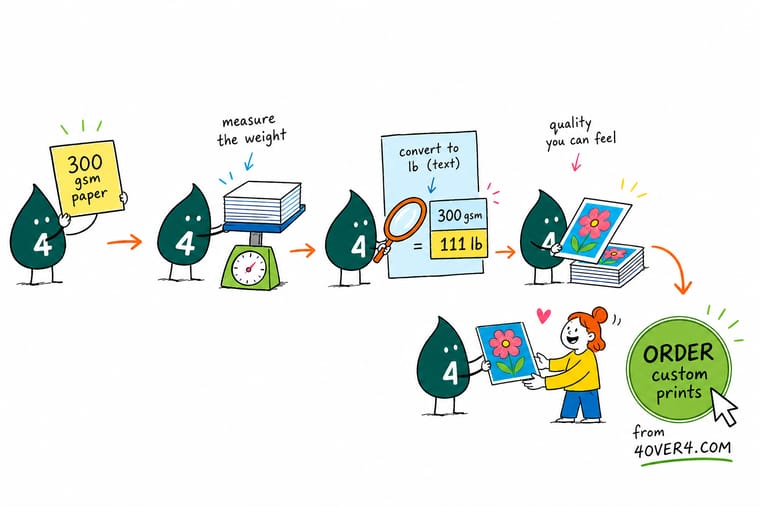
Wally puts a square meter of the sheet on the scale and it reads 300 grams. That is all gsm ever means. To get pounds he has to ask which grade the paper is sold as, because cover, index and bond each weigh a different sized ream. Cover divides by 2.708, so 300 gsm is 111 lb cover. Then he reaches for the caliper, because weight will not tell him how thick it is: coated lands near 12pt, uncoated bulks a little more.
Compare our card stocks →
Specs and pricing
Stock options, sizes, and starting prices
A 300 gsm spec lands on three products here: business cards from $17.57 for 100 on 14pt cover or 110# Strathmore, postcards from $16.48 for 50 in 14 sizes, and brochures from $57.11 for 50, with a 14pt Gloss Cover option when the piece has to feel like a card. The live stocks and prices for each come from the 4OVER4.COM configurator.


Print it
Order the weight you actually meant
Order 14pt cover for a card that matches or beats 300 gsm, 100# Silk/Matte Cover for a flyer at about 270 gsm, and 100# text for anything that folds. All three print in 3 business days.

%22%2F%3E%3Ccircle%20cx%3D%2243%22%20cy%3D%221%22%20r%3D%2218%22%20fill%3D%22%23f59e0b%22%20opacity%3D%220.15%22%2F%3E%3Ccircle%20cx%3D%2240%22%20cy%3D%2250%22%20r%3D%225%22%20fill%3D%22%23f59e0b%22%20opacity%3D%220.1%22%2F%3E%3Crect%20x%3D%2273%22%20y%3D%22-7%22%20width%3D%2228%22%20height%3D%2210%22%20rx%3D%224%22%20fill%3D%22%23f59e0b%22%20opacity%3D%220.08%22%20transform%3D%22rotate(8%2080%2030)%22%2F%3E%3C%2Fsvg%3E)
Explore more
Where to go next
Line up 12pt, 14pt and 16pt by caliper, compare every weight on one thickness chart, see how 100 lb cover and text differ, and check which card stocks stay under the 0.016 inch postcard limit.




By the numbers
Who prints on the stock you just converted
Common Questions
Your 300 gsm questions, answered
What is 300 gsm in pounds?
300 gsm is 111 lb cover. The conversion divides the metric weight by the factor for the grade, and cover stock uses 2.708, so 300 divided by 2.708 gives 110.8 lb. If the sheet is being sold as index it is 166 lb index, and as bond or writing paper it is 80 lb bond. Retail cardstock labeled 110 lb is the same material, rounded down a pound by the packager.
Why does one gsm number convert to several pound weights?
Because the American system weighs 500 sheets at whatever size that grade is manufactured in, and every grade uses a different size. Cover is measured at 20 by 26 inches, index at 25.5 by 30.5, bond at 17 by 22, text at 25 by 38. The metric system skips all of that and weighs one square meter of every paper the same way. So gsm to lb is never one number until you say which grade you mean.
Is 300 gsm thicker than 14pt cardstock?
No, it is a little thinner. 14pt means 0.014 inches of caliper, which on a coated sheet works out near 325 gsm. You can feel the difference if you hold the two side by side, though both are sturdy cards. If rigidity is what you are after, order the caliper rather than the gsm.
Can you fold 300 gsm without it cracking?
Not reliably, not without scoring first. At 300 gsm the outer fibers on the fold stretch far enough to split, and a coated surface cracks sooner than an uncoated one because the coating has no give at all. Score the fold line, fold with the grain where you can, and keep heavy ink coverage away from the crease.
What is 300 gsm in millimetres and inches?
Around 0.30 mm, or 0.012 inches, for a coated sheet. Uncoated and textured stocks of the same weight run thicker, sometimes 0.014 inches, because bulk varies with how the sheet was made. That is why a spec sheet that gives only gsm still leaves the thickness open, and why printers quote caliper in points.
Does 4OVER4.COM sell paper by gsm?
We spec in points and pounds because that is what the presses and the paper merchants use here. If your designer or your overseas supplier handed you a gsm figure, convert it to cover weight, then match it to a caliper on the ladder above. Order free samples if the step between two calipers matters to the job.
Will a 300 gsm postcard qualify for the USPS card rate?
Yes. USPS requires card-rate mail to measure between 0.007 and 0.016 inches thick, and a 300 gsm postcard lands well inside that range. The stock that gets people in trouble is 18pt, at 0.018 inches, which is over the ceiling and gets rated as a letter. If postage is the deciding factor, stay at or below 16pt.
Get Started
100 business cards cost $17.57 on 14pt gloss cover
Pick a caliper instead of a gsm figure, choose your coating, and we print cards and postcards on stock that holds its shape in the hand.
Legal Disclaimer
Gold Standard guarantees apply to all standard orders placed through 4over4.com. Price match requires verifiable proof of a competitor's published price for an equivalent product with matching specifications and turnaround time. Satisfaction guarantee covers manufacturing defects and print quality issues. Contact support with order number and documentation.
