10 Brochure Copy Fixes That Make Every Panel Sell


Sofia is our design and templates voice, built from the knowledge of our production team, with over 20 years in printing.
Great Copy Is Cheaper Than a Redesign
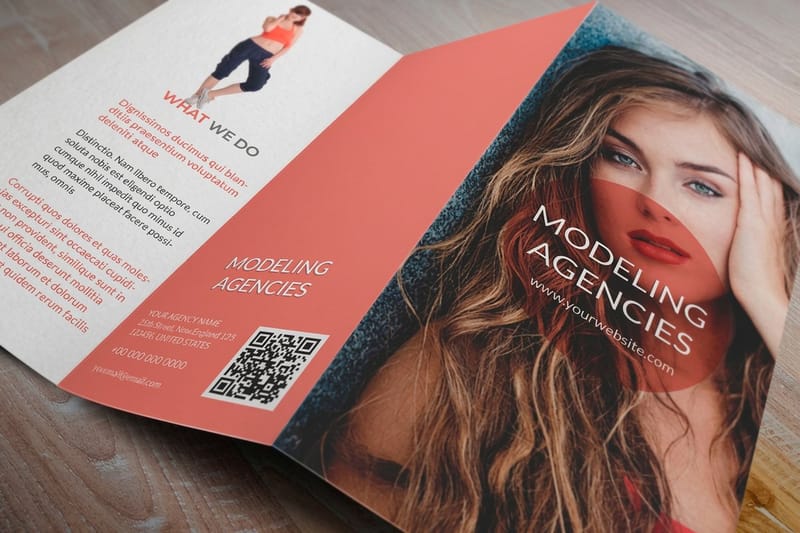
Brochure copywriting is the job of writing every panel so a reader who is only skimming still walks away with the promise, the proof and the next step. A brochure lives or dies on its words. You can pour a budget into photography and stock, but if the copy is vague, the reader puts the piece down before the design ever gets a chance. Sharpening copy costs nothing, and a fix to a headline or a call to action is cheaper to test than a new photo shoot.
Weak brochure copy fails in three ways: it talks about the company instead of the reader, buries the point, and forgets to ask for anything. Below are ten fixes for that, two panels rewritten before and after, and the formats that give the words room to work. Layout and folding live in the how to make brochures guide; this page sticks to the words.
Shop the range
Brochure printing
Every fold and size, so sharpened copy meets the reader on the right printed stage.
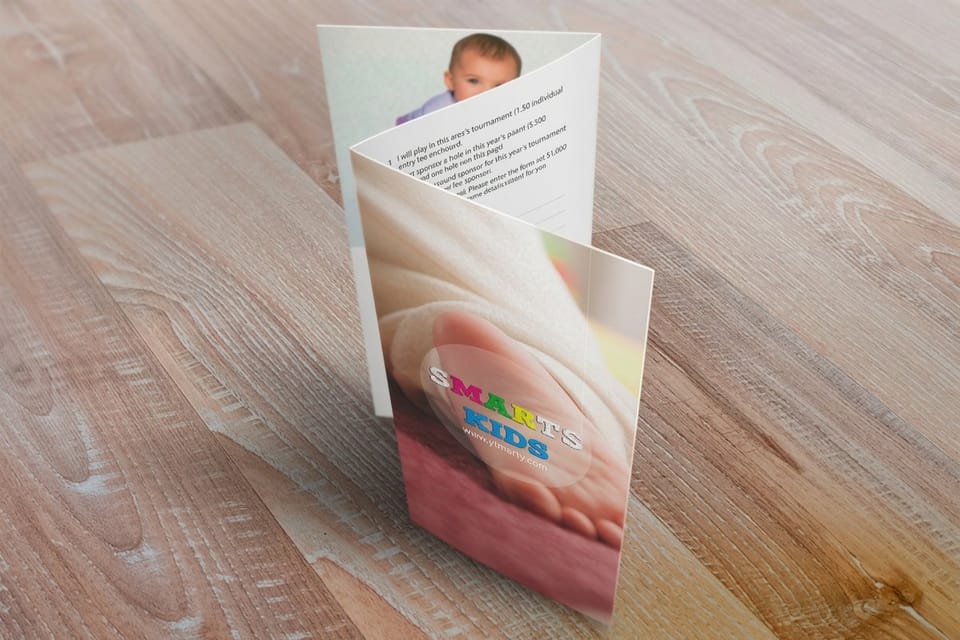
Brochure Copywriting Basics, Ten Fixes That Make Copy Work Harder
None of these need a copywriter. Work through the list with a red pen and the piece gets sharper with every pass. Take one fix at a time and hold the panel in front of you against it before you move to the next.
- Lead with the reader, not the company. Swap "We have" for "You get." The reader cares about their problem, not your founding story. Underline every "we" in the draft and see how many flip to "you" without losing the meaning.
- Write a headline that makes a promise. The cover line is the whole ballgame. Say what the reader gains, clearly, and earn the open. "Quality service since 1999" promises nothing, "Your roof watertight before the first frost" promises a result and a deadline.
- Turn features into benefits. "Ten years in business" is a feature. "You are in hands that have seen it all" is the benefit. Print the benefit. Run the "so what" test on every feature line: state the fact, ask so what, and print the answer instead.
- Cut every sentence in half. Short sentences and plain words read faster than clever ones. Read the panel out loud, and anywhere you run out of breath, put a full stop.
- Give it a road map. Decide the one action you want, then make every panel push toward it. A brochure that wanders loses the reader. Write that action at the top of your draft, call, book, visit or buy, and delete any line that does not move the reader toward it.
- Use subheads a skimmer can follow. A reader should get the whole story from the headlines alone. Make the subheads carry the argument. Cover the body copy with your hand, read only the subheads, and if the pitch still lands, a skimmer gets it too.
- Answer the objection. Name the reason a reader hesitates and handle it on the page. Pick the doubt your sales team hears most, such as price, switching hassle or contract length, and answer it in a single sentence.
- Make it scannable. Bullets, short paragraphs, and white space let a busy reader pull the point in seconds instead of skipping it.
- End with one clear call to action. Tell the reader exactly what to do next, and make it easy. One CTA beats three competing ones.
- Read it out loud. If a sentence trips your tongue, it trips the reader's eye. Fix anything that does not sound like a human.
The thread through all ten is empathy plus editing. Write to the reader, then cut until only the useful words remain. The rest of this piece is about giving those words the right printed stage.
Print picks
Three stages for your message
Live prices, ready to customize with your headline, benefits, and call to action.
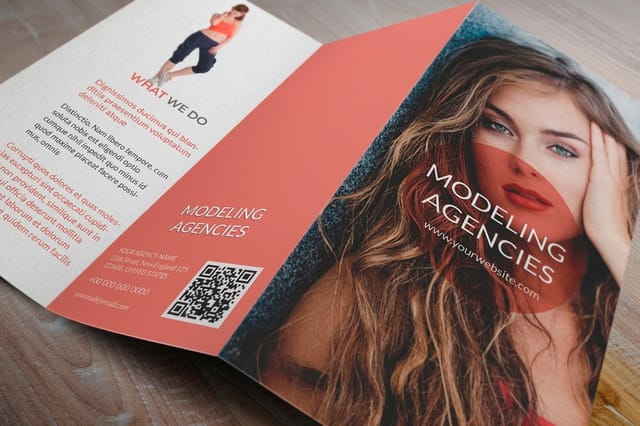 Standard Brochures 50 for $57.11 The workhorse for a full pitch. Give your headline, benefits, and CTA room to breathe.
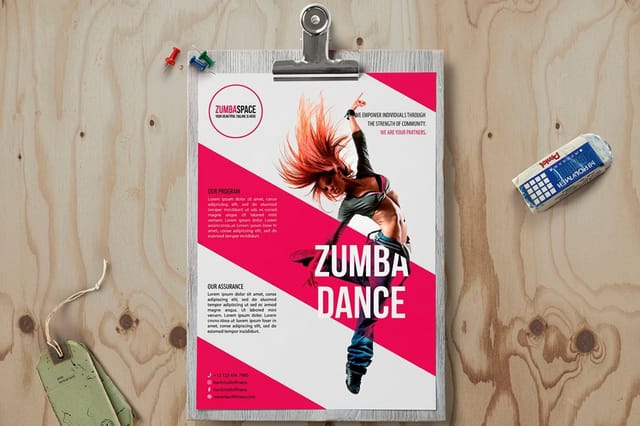 Sales Sheets 50 for $75.80 A single face for the whole pitch, printed flat or with an optional fold.
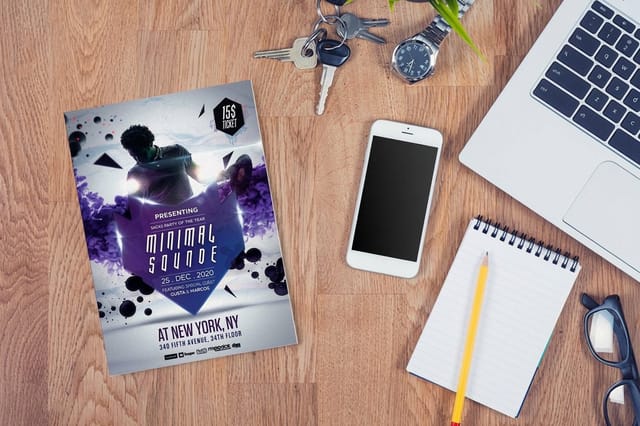 Standard Flyers 50 for $39.54 The smallest stage, for a promo that has to land at a glance.
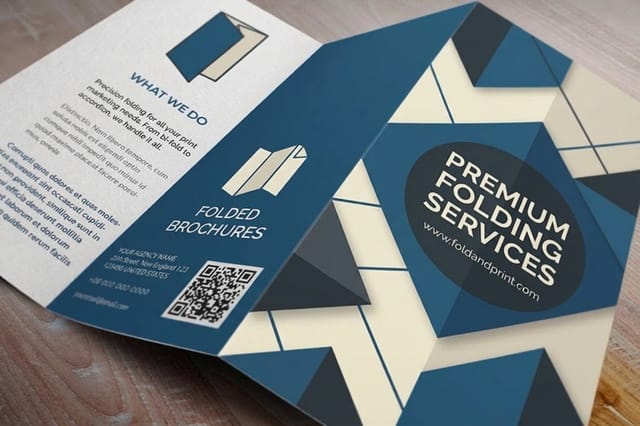 Folded Brochures 50 for $57.11 Half folded, so the cover and the back panel do the selling.
Match the Copy to the Format
Match the word count to the sheet. A 5.5 x 8.5 inch flyer suits a single offer. An 8.5 x 11 inch tri-fold gives you six panels, enough for a cover promise, three benefits, an answered objection and a call to action. An 11 x 17 inch sheet folded in half gives a full pitch four letter-size pages. A tight one-liner is wasted on six panels, and a full pitch cannot fit on a flyer, so choose the format by the length of your message. 4OVER4.COM prints all three: the flyer as a Standard Flyer, the tri-fold as a sales sheet with optional trifold folding, and the half fold as a Standard Brochure.
When the copy is final, free proofs let you catch a typo before the whole run prints it.
Not sure whether your message wants a folded brochure or a single sheet? The brochures vs sales sheets guide lays out the tradeoffs.
Write for the Panel, Because Layout Is Copy Too
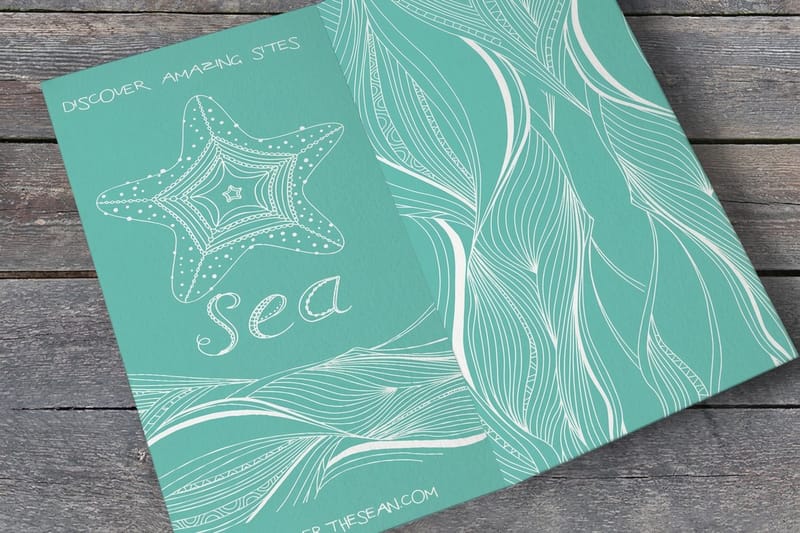
The best copy still fails if the layout buries it. On a folded brochure, the words meet the reader in the order the panels open, so a headline stranded on an inner panel gets missed, and a call to action on a fold flap gets overlooked. Copy and layout are the same job, and writing to the panel is what makes both land.
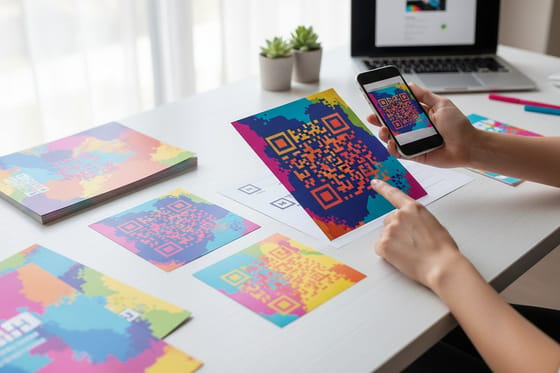
Put your hook on the outer panels a reader sees first, and let each inner panel carry one idea from your road map. Keep the body legible so a skimmer can actually pull the benefits, using the fonts and sizes guide, and bridge the printed piece to a booking page or a demo with a scannable code from the QR codes on brochures guide.
Before and After, a Brochure Panel Rewritten
Brochure copywriting is easier to learn from a rewrite than from a rule, so here are two panels printed twice, weak version first, fixed version second, with a note on what actually changed. The company name is a placeholder, drop your own in its place.
Panel one, the cover of a tri fold for a heating and cooling company. Before: Welcome to [Company]. Established for over ten years, we are a full service heating and cooling provider committed to excellence, quality workmanship and complete customer satisfaction. After: Your furnace will quit on the coldest night of the year. We answer the phone at 2am and the part is already on the van. [Company], heating and cooling. What changed: the promise moved to the front and the company name moved to the back, and excellence, quality and satisfaction, three words no reader can picture, were traded for the one night they can.
Panel two, an inner panel that was listing services. Before: Our services include full color printing, a wide selection of stocks, multiple finishing options and fast turnaround times. After: Pick the stock, we print it, and the boxes land while the campaign is still running. Ask for a folded sample before you commit the whole run. What changed: four features became one benefit and one instruction, the reader now knows what happens next, and the panel ends with something to do rather than a full stop.
Both rewrites follow the same order: name the reader's moment, promise the result, ask for one action. Write every panel that way and the piece reads the same whether someone studies it or flicks past it on a counter.
Print Specs So Good Copy Feels Good Too
Sharp copy on flimsy paper sends a mixed message, so pick the sheet as carefully as the headline. Standard brochures print on 100# Gloss Text, 100# Silk/Matte Text, 70# Uncoated Text or 14pt Gloss Cover. Silk/matte keeps long body copy easy to read under office light, gloss lifts photography, uncoated takes a pen, and 14pt cover gives a half fold the heft of a card. The real configurator numbers are below, so you can plan a run around the copy you worked on.
Quantity and price
Brochure pricing and specs
Real configurator numbers. Volume drops the per-piece cost, so strong copy can sit on a heavier stock.
| Quantity | Price Per Unit | Total |
|---|---|---|
| 50 | $1.14 | $57.11 |
| 100 | 82.4¢ | $82.38 |
| 200 | 53.3¢ | $106.55 |
| 300 | 41.0¢ | $123.02 |
| 400 | 34.9¢ | $139.49 |
| 500 | 31.2¢ | $155.97 |

Copy Formulas That Fit a Brochure Panel
Two old formulas do most of the work in brochure copywriting, and both fold neatly onto the panels of a tri fold. AIDA runs attention, interest, desire, action. PAS runs problem, agitate, solution. Pick one per piece, never both, and write the panels in the order the reader opens them, not the order they sit on the flat sheet.
AIDA, panel by panel. Use it when the reader does not yet know they need you, such as a walk-by or counter pickup.
- Front cover, attention. Template: [Result the reader wants], [by the time or in the condition they care about].
- Inside flap, the first panel that opens, interest. Template: Here is what usually goes wrong, and here is the part that costs you if you skip it.
- Inner left, desire, the proof. Template: Here is how we handle it, in three steps you can picture.
- Inner middle, desire, the offer. Template: What you get, what it covers, and what it does not.
- Inner right, action. Template: Do this one thing next, and here is exactly how long it takes.
- Back panel, action again. Template: Phone, address, hours, and the same one action repeated word for word.
PAS, panel by panel. Use it when the reader already has the problem and is shopping, such as a mailed or handed-over brochure.
- Front cover, problem. Template: [The exact thing that keeps going wrong], stated in the reader's own words.
- Inside flap, agitate. Template: What it costs to keep living with it, in money, time or risk.
- Inner spread, solution. Template: The fix, what it includes, and the objection answered on the same panel.
- Back panel, action. Template: One instruction, one number, one way to book.
Fold a blank sheet the way the finished piece will fold, write one template line per panel in pen, and only then open a layout. The online design templates hold the same panel boundaries, so the copy you drafted by hand lands inside the fold and bleed lines instead of getting trimmed off.
When One Sheet Forces Better Writing
The fastest way to improve brochure copy is to give yourself less room. An 8.5 x 11 inch sales sheet printed on one side is a single face, so every idea fights for its place: a headline, three benefits, one line of proof and a call to action fill it. If your pitch survives that one panel, it is tight enough to spread across a tri-fold.
A sales sheet is that discipline in printed form.
Force tighter writing
Sales sheets
The tightest edit you can give a brochure, on a single printed face.
Compare Formats for Your Message
Line the formats up before you commit. Standard brochures come in six sizes from 5.5 x 8.5 to 11 x 25.5 inches, sales sheets in five sizes from 8.5 x 11 inches up, and flyers run in nine sizes from 4.25 x 5.5 inches.
Compare formats
Popular brochures, side by side
Stock, finish, size, quantity, turnaround, and from-price across our most ordered brochures.
| Standard Brochures | 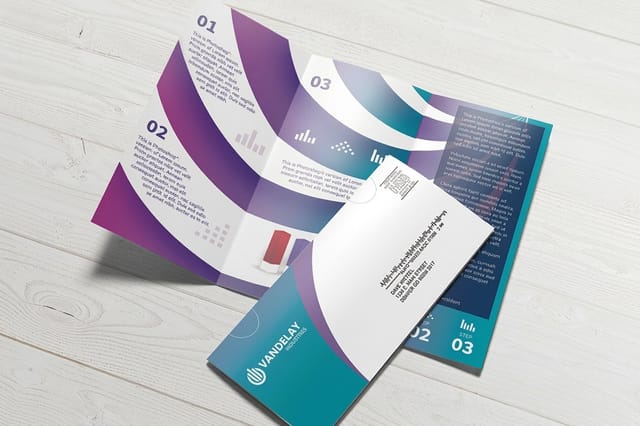 Direct Mail Brochures | 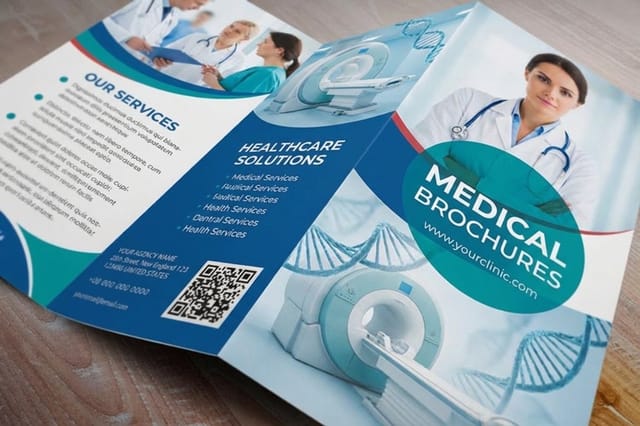 Medical Brochures | 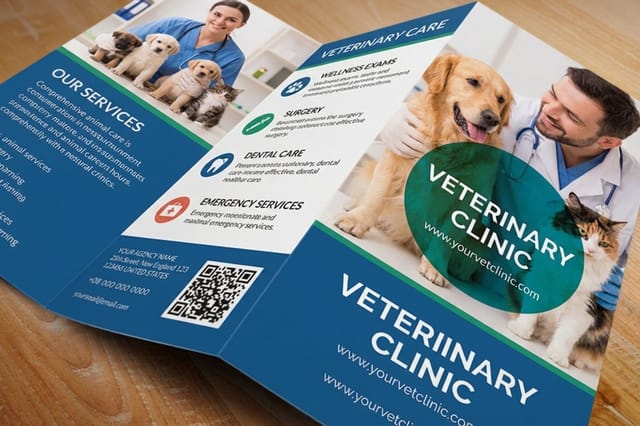 Veterinary Brochures | |
|---|---|---|---|---|
| Min price | $57.11 | $238.73 | $57.11 | $57.11 |
| Paper / stock | 100# Gloss Text | 100# Gloss Text | 100# Gloss Text | 100# Gloss Text |
| Finish | Standard Finish | Standard Finish | Standard Finish | Standard Finish |
| Size | 5.5" x 8.5" | 8.5" x 11" | 5.5" x 8.5" | 5.5" x 8.5" |
| Default qty | 50 | 500 | 50 | 50 |
| Turnaround | 3 business days | 6 business days | 3 business days | 3 business days |
| Rating | ||||
| View & customize | View & customize | View & customize | View & customize |
When One Headline Does the Whole Job
The shortest copy test is a flyer. A 4.25 x 5.5 inch flyer has room for one bold headline, one offer and one way to respond, which is the exercise that sharpens a wandering brochure. If you can write a flyer that works, the brochure version writes itself.
A flyer holds one strong line and little else.
One strong line
Flyers
The smallest sheet we print a pitch on, ready for your headline.
Wally sharpens a brochure with a red pen
Reader-first headlines, benefits, scannability, one CTA
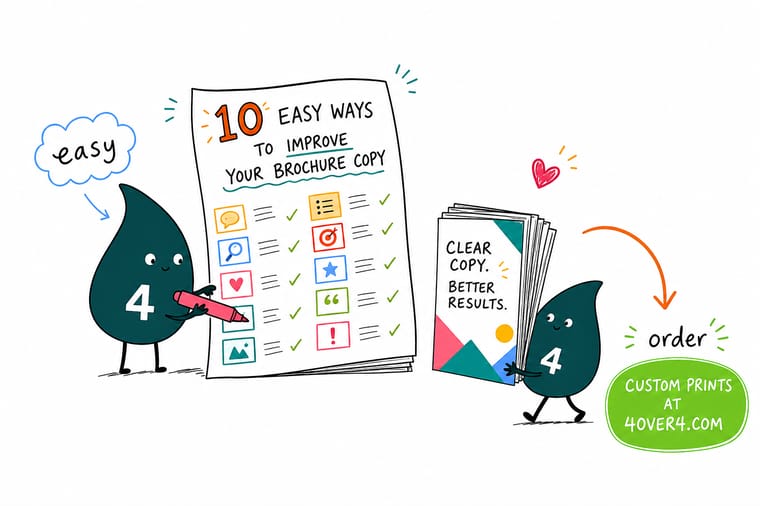
A brochure lives or dies on its words, and sharpening copy costs nothing. Lead with the reader, make the headline a promise, turn features into benefits, cut every sentence in half, and end with one clear call to action. Then give the words the right stage. 4OVER4.COM prints brochures, sheets, and flyers so a sharpened message lands sharp.
Print a brochure with copy that works →The copy fixes that pay for themselves
Explore more
More ways to write and print copy that sells
Brochure, sales sheet and flyer pages, plus the wording guides that sharpen the panels on all three.
Shop Brochure Printing Room for a headline, benefits, and a close.  Collection Sales Sheet Printing The one-page pitch, printed flat or folded.
 Product Flyers Quick promos on the smallest sheet.
 Guide Fonts and Sizes Keep benefit copy legible and scannable. Guides Wording and Messaging How to write print that sells.
 Article Company Brochure Examples How strong pieces balance words and layout. Product Standard Brochures The full-pitch workhorse for your copy.
 Benefit Free Proofs Catch a typo before the whole run prints.
 Service Online Design Templates Keep copy inside the fold and bleed.
 Guide QR Codes on Brochures Bridge print copy to a booking page.
 Guide Brochures vs Sales Sheets Match format to the length of your message.
Ready to print a brochure your reader actually finishes?
Standard brochures, sales sheets and flyers print in 3 business days as standard, with same day available on all three.
Sticking points writers hit when tightening a brochure
How do I improve my brochure copy quickly?
Rewrite the cover line until it states a result the reader wants, then work inward through the ten fixes above, one pass per fix.
What does brochure printing cost, and how are prices set?
Price moves with the size, stock, finish and quantity: 500 standard brochures cost $155.97, about 31 cents each, against $1.14 each at 50.