
6 Print Pieces for Writing Content That Sells Without Sounding Salesy
Copy sounds salesy when the claim is bigger than the proof behind it. The format you print on decides how much proof fits, so picking the right piece fixes the writing before you edit a word. Six formats, from $16.48 for 50 postcards, in order of how much they let you say.
Write to the word budget of the format and the hype falls out on its own. Standard postcards from $16.48 hold about fifty words, so only a checkable fact fits. Standard flyers from $39.54 carry one offer read in a second. Sales sheets from $75.80 let a spec table persuade. Standard brochures from $57.11 give six panels, one question each. Standard newsletters from $75.80 are mostly about the customer. Standard booklets from $240.55 are worth binding only when you have real jobs to fill them. All six start at $505.28 together, or $264.73 without the booklets.
The picks
Six formats, from a $16.48 postcard run to $240.55 booklets
Work down the list, not across it. Each piece holds more words than the one above, and each one needs more proof to justify them. Start where your message currently stalls, and build the file from scratch in the online designer or from a design template that already respects the trim. Prices come straight from the configurator and drop per piece as the quantity climbs.
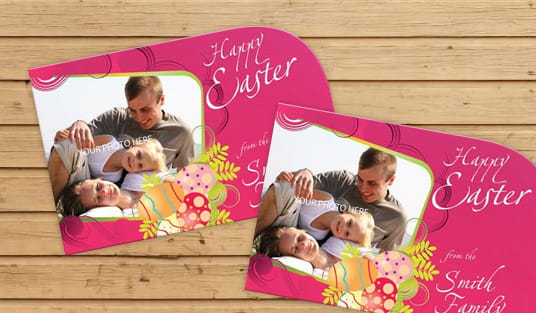
Standard postcards from $16.48
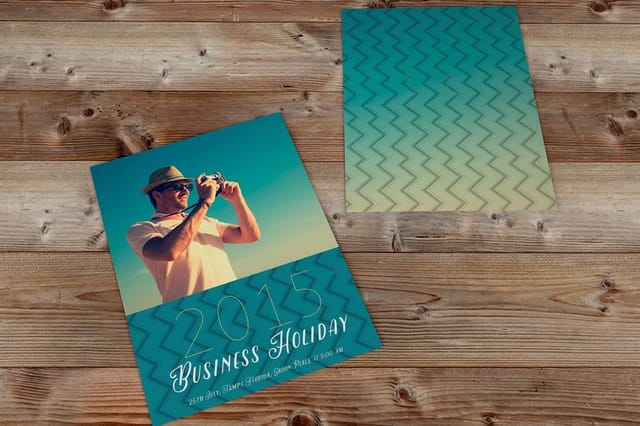
About fifty words of usable space, which is the cheapest writing lesson you can buy. One specific and one next step fit. An adjective covering for a missing number does not.
Standard flyers from $39.54
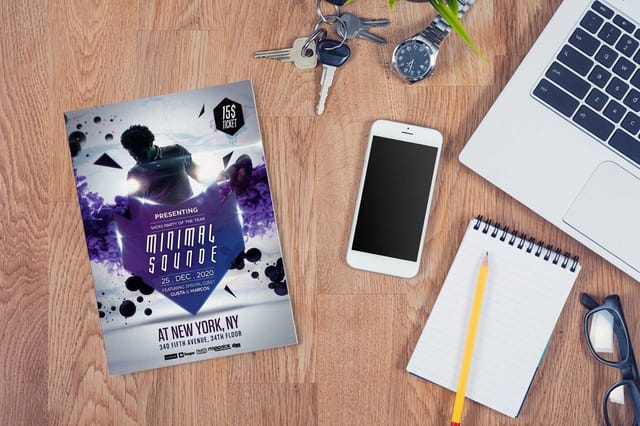
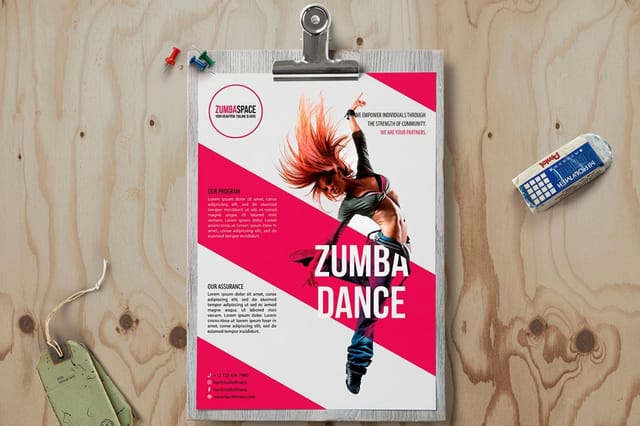
Read at arm’s length in about a second, usually while somebody is walking. If the headline only makes sense once you read the paragraph under it, the headline is not finished.
Sales sheets from $75.80
The page you hand over when somebody asks what it costs. A spec table carries the argument, so the sentences around it stop reaching for words like premium.
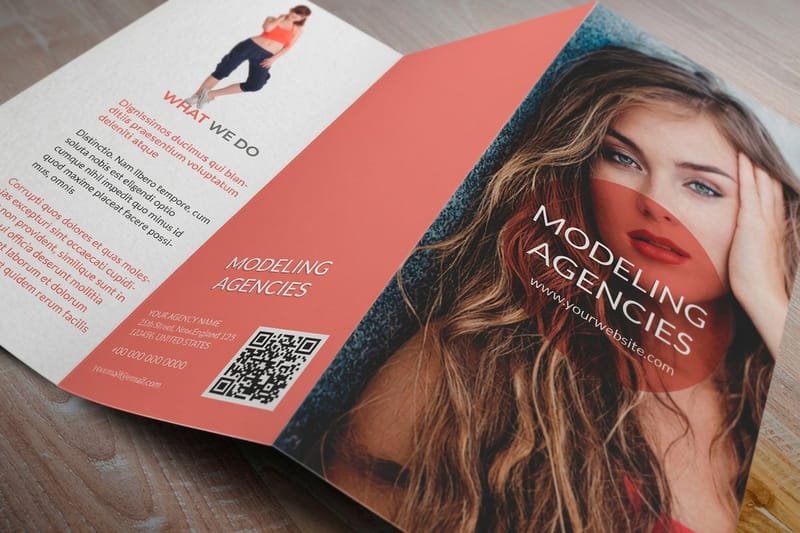
Standard brochures from $57.11
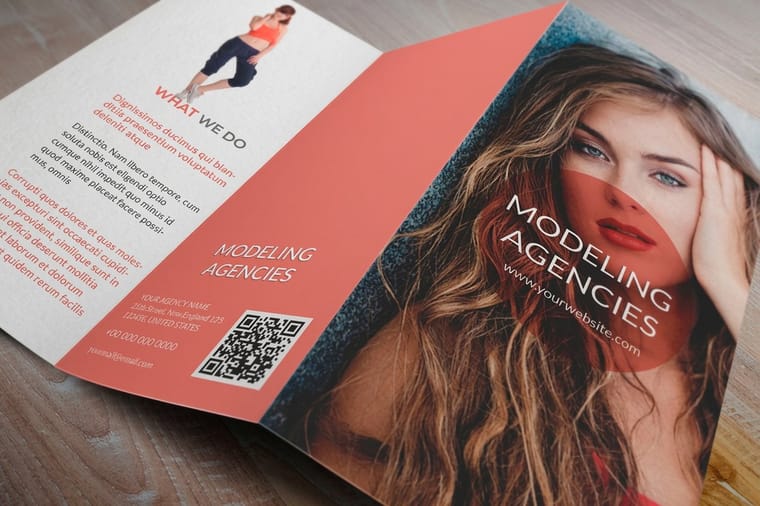
Six panels is six chances to say the same thing again. Assign one question per panel and the tour becomes an argument the reader can follow.
Standard newsletters from $75.80
Written for people who already bought. It stops sounding like a pitch the moment most of the page is about their work rather than yours.
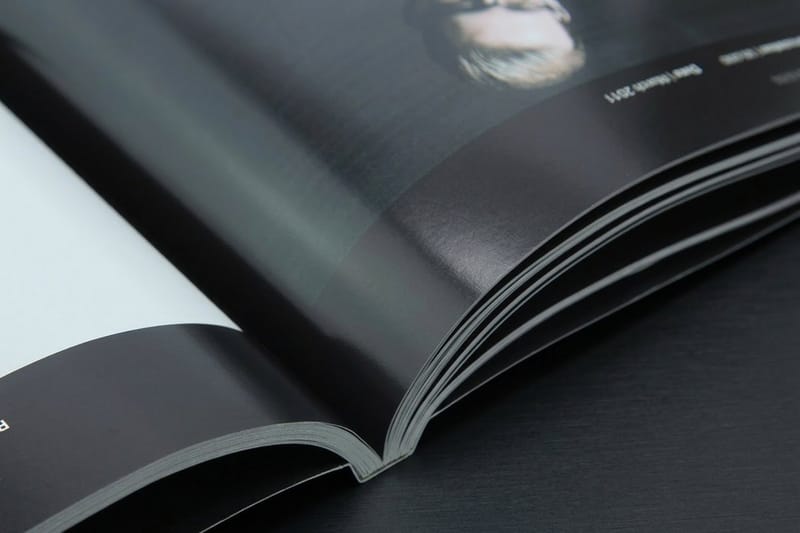
Standard booklets from $240.55
The long version, bound. Only worth the money when you have real jobs, real numbers and named customers to fill it, because padding shows over sixteen pages.
Before you write a word
How much copy each format can actually hold
Space grows about fifty times between a postcard and a bound booklet. The number of true, checkable things you can say does not, and the gap between the two is where sales talk comes from.
Work out the ceiling before you draft. At 10 pt body copy with 0.25 in margins, a 4 by 6 in postcard back holds around fifty words once the address panel and the barcode clear zone are removed. An 8.5 by 11 in flyer can physically hold six hundred, but it is read standing up in about a second, so anything past roughly two hundred is being written for a reader who does not exist. A trifold brochure spreads five to seven hundred across six panels. A sixteen-page booklet passes two thousand and keeps going.
Now count your proof. Not claims, proof: a specification, a price, a turnaround measured in your own business days, a customer with a name and a town, a job with a date and a quantity. Most small businesses can list six to ten. That is a sales sheet or a brochure. It is not sixteen bound pages, and the mismatch is exactly what a reader detects when they say a piece feels like a sales pitch. They are not reacting to enthusiasm. They are reacting to a paragraph that could have been written about any company in your trade.
The practical rule that follows: pick the smallest format your proof can fill, then write to fill it completely. A postcard full of one hard fact outperforms a brochure with two facts and four panels of tone, and it costs $16.48 to start instead of $57.11. When the proof genuinely outgrows the format, move up one step, not three. The full rewrite method, including how to find the number each adjective is hiding, sits in our guide on writing content that sells without sounding salesy.
What each piece does
Word budget, proof required, and what each format costs
Read the row, tap the piece to jump to its section, and start with the format whose proof requirement you can actually meet today.
| Piece | Words that fit | Proof it needs | When it makes sense | Starts at |
|---|---|---|---|---|
| Standard postcards | About 50 | One number the reader can check | The offer is already simple and you want it repeated | $16.48 |
| Standard flyers | 120 to 200 | One offer plus one reason to believe it | You have a counter, a board or a route to work | $39.54 |
| Sales sheets | 250 to 350 | A spec table and a starting price | Somebody has asked what it costs and what is included | $75.80 |
| Standard brochures | 500 to 700 | One answered objection per panel | The sale needs a conversation and a quote | $57.11 |
| Standard newsletters | 700 to 1,200 | Customer stories with names and dates | You are keeping buyers rather than finding them | $75.80 |
| Standard booklets | 2,000 and up | Full case studies, methods and pricing | The purchase is considered and several people approve it | $240.55 |
1. Standard postcards: fifty words, and every one has to earn it
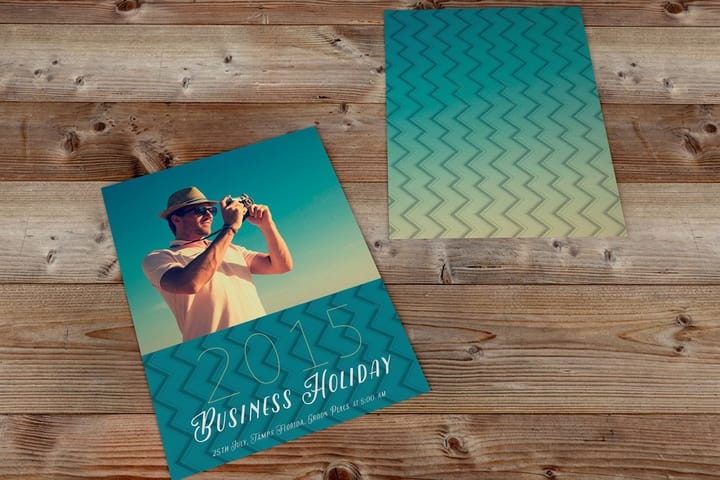
Start here if your writing has a padding problem. Standard postcards from $16.48 give you a 4 by 6 in back, and once the address panel and the barcode clear zone are gone you are left with roughly fifty words at a size somebody can read at arm’s length. Fifty words will not hold a mission statement. They hold one fact and one instruction.
That constraint is the point. Take your current homepage paragraph and try to fit it. What survives the cut is your actual offer, and what falls out is almost always adjectives propping up a claim with nothing behind it. Print the survivor. If you find yourself shrinking the type to 8 pt to fit one more sentence, the sentence is not the problem, the argument is.
The mechanics matter as much as the words. Keep the address side clear for the sorting machine, hold anything you need read at least 0.125 in inside the trim, and do not reverse small type out of a photograph, because a 9 pt white letter on a busy image is unreadable in a hallway. Our walkthrough on how to write a postcard covers the sentence order, and how to make postcards covers the file.
Where postcards fail: they cannot answer an objection. If your reader’s real question is why you cost more than the shop down the road, fifty words will not settle it, and forcing the attempt is what makes a card read as pushy. Use the postcard to earn the next step, then let a longer piece do the arguing.
2. Standard flyers: one offer, read while somebody is walking
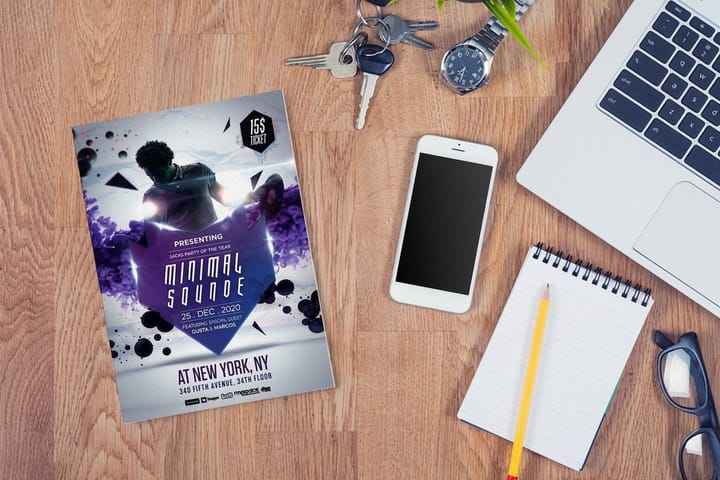
Standard flyers from $39.54 buy you 8.5 by 11 in and about a second of attention. That combination is why so many flyers sound desperate: the space invites a paragraph, and the reading time only supports a headline. Write the headline as if the rest of the sheet does not exist, then use the rest of the sheet to prove it.
A test that takes ten seconds and saves a print run. Print the draft, put it face down on a table, flip it over, count to one, and turn it back. Whatever you can repeat is what the flyer actually says. If the answer is your logo, the layout is working for you and not for the reader.
Stock changes the tone before a word is read. A 100 lb gloss text sheet holds saturated color and suits food, retail and event work. Uncoated takes a pen, so a service checklist or a quote sheet that gets written on at a job site should be ordered uncoated even though the photographs go flatter. The trade-offs are laid out in best paper weight for flyers and the paper picks for flyer printing.
The limit worth naming: the printing is the small half of the bill. Somebody has to carry them to the counter, the board, the windshields at the far end of the plaza. Two hours of your own Saturday is a real cost, and it is the reason a flyer campaign that looks cheaper than a mailing often is not. Layout choices that survive being handed over are covered in how to design flyers.
3. Sales sheets: let the spec table do the persuading
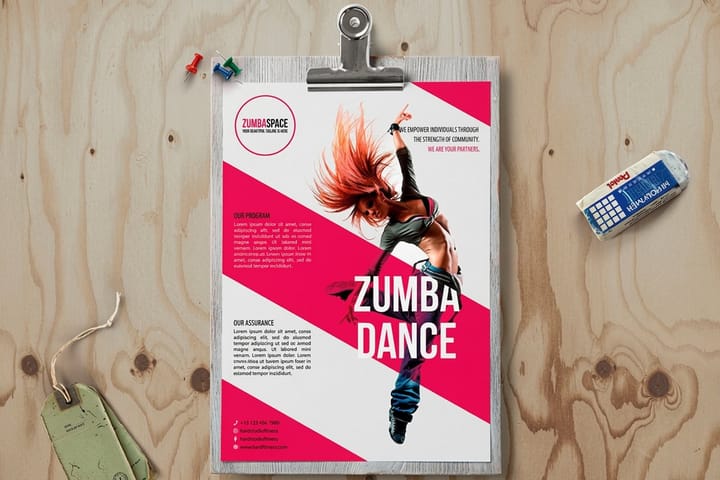
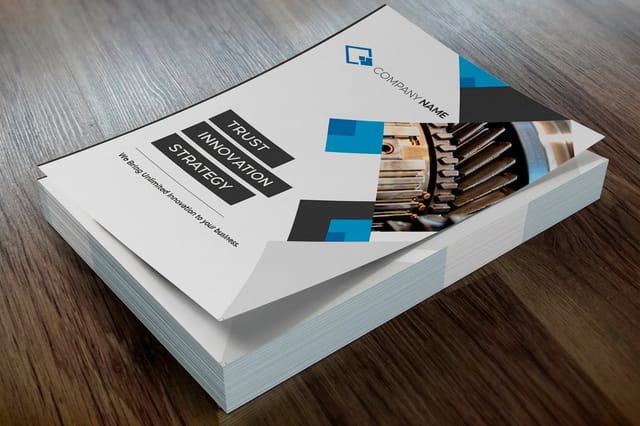
This is the piece that cures salesy writing faster than any editing pass. A sales sheet from $75.80 is one page built around a table: what it is, what it includes, what it does not, what it costs, how long it takes. Once the table is on the page, the sentences around it have nothing left to oversell, so they get short and factual on their own.
Build the table before you write a line of prose. Rows are the things a buyer compares: size, material, quantity break, lead time, price. Leave a row blank rather than filling it with a word like varies, because a blank prompts a question and varies ends the conversation. The full method behind this, including how to find the number hiding behind each adjective, is in our guide on writing content that sells without sounding salesy.
Include the row that hurts. Minimum order, setup fee, the finish that adds four days. A sheet that names its own friction gets trusted on the rest of the page, and it saves the call where a customer finds out late and feels handled. This is the single change that moves a sales sheet from a brochure with fewer folds into something a buyer actually keeps on the desk.
Sales sheets do not travel well as a first touch. Handed cold to somebody who has not asked a price, a spec table reads as an assumption. Send it after the question, not before it, and keep the folded formats over in brochure printing for the version that has to introduce you first.
4. Standard brochures: one question per panel, not one paragraph per panel

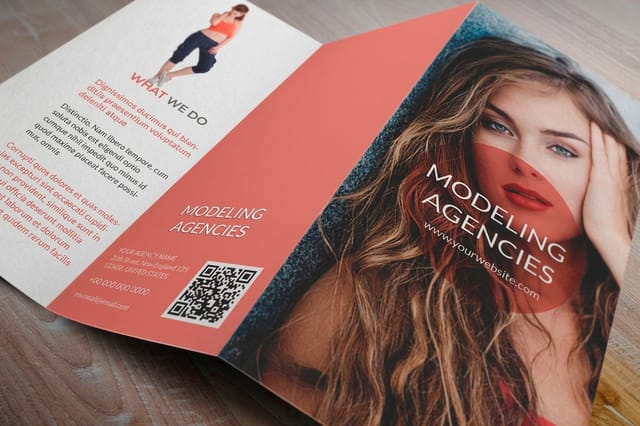
Standard brochures from $57.11 give a trifold six panels, and six panels is where most copy goes wrong. The usual result is the same claim restated in six moods. Assign each panel a question a real customer has asked you instead, and the brochure turns into an argument that survives being read out of order.
A panel plan that works for most service businesses: cover carries one specific rather than a slogan, panel two answers what this is, panel three answers what it costs, panel four answers who it is not for, panel five is proof with a name and a date on it, back panel is the contact detail and the one next step. Notice that only one panel is a pitch. That ratio is what stops the piece sounding like a pitch.
The fold has geometry you cannot argue with. On a trifold the panel that tucks inside is trimmed roughly 1/16 in narrower so the piece closes flat, so artwork laid out as three equal panels sits off center once it is folded. Set the real widths from the start. The measurements are in standard brochure sizes and folds, and the fold styles themselves in how to fold a brochure.
Be honest about when the money is wasted. A brochure only earns its cost when the sale involves a conversation and a quote. If a customer buys from you in ninety seconds at a counter, they will not open three panels, and the budget belongs on postcards. Our explainer on what a brochure is and when to use one draws that line.
5. Standard newsletters: the piece that is mostly not about you
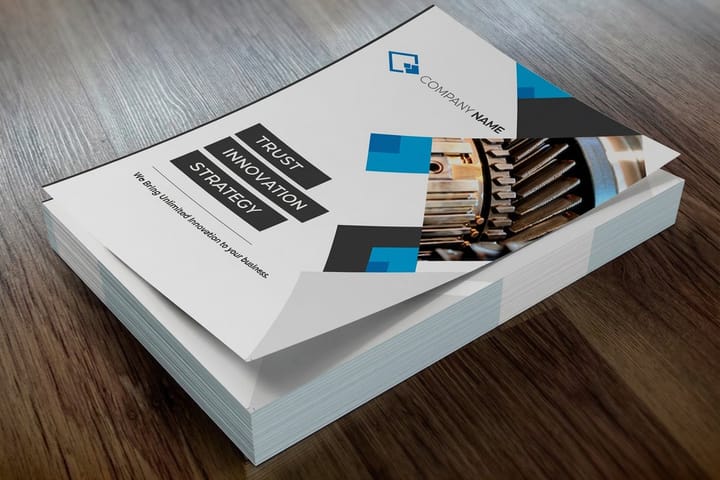
Standard newsletters from $75.80 are written for people who have already paid you, which changes the writing job completely. A newsletter that talks about the company in every column is a catalogue with a date on it. One that reports what customers did, what changed in the trade, and what you learned on a job that went sideways gets read.
A ratio that holds up in practice: three items about them for every one about you. A customer profile with a name and a town. A short piece answering the question your phone has been ringing about all month. A practical note somebody can use whether or not they buy anything. Then one item that is genuinely your news, sitting in a fixed spot so regular readers know where to find it.
Print at four pages rather than two if you send quarterly. Two pages forces you to cut the customer story to a caption, and the customer story is the reason the piece works. Stock choice sets the tone here more than on any other format, and the options are compared in choosing paper for printed marketing materials.
The limit: a newsletter cannot rescue a cold list. Mailed to strangers it is a long advertisement, and the response reflects that. Send it to buyers, past buyers and the people who asked for a quote and did not proceed. If you are measuring, the direct mail response rate benchmarks are the yardstick to set your expectation against before the first run.
6. Standard booklets: bind it only when you have proof to fill it
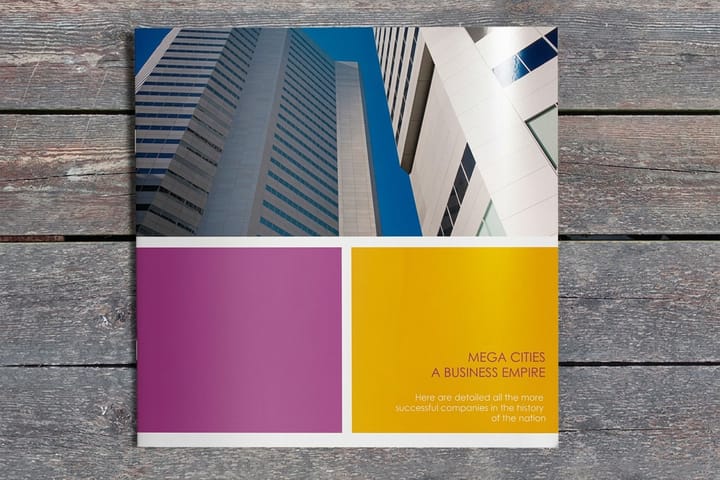
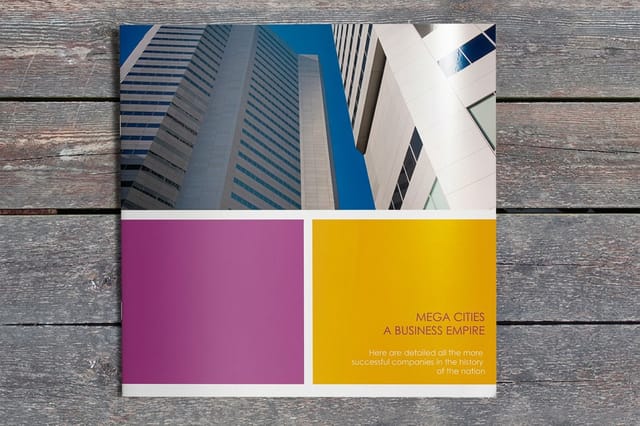
Standard booklets start at $240.55, the most expensive entry here by a wide margin, and they are the easiest piece to get wrong. Sixteen bound pages look serious, which tempts people into printing sixteen pages of tone. Padding is invisible in a paragraph and obvious across a booklet, because the reader turns a page, finds the same claim in new clothes, and stops.
The honest test before you order: can you fill it with things that happened? Named customers, dated jobs, quantities, the specification you actually ran, what went wrong once and what you changed. If you can list eight of those, a booklet is the right format and nothing shorter carries them. If you can list two, print a sales sheet and revisit this in a year.
Binding is a real decision, not a finish. Saddle stitch runs in multiples of four pages and lies reasonably flat, which suits anything up to about forty-eight pages. Perfect binding gives a printed spine that reads on a shelf and starts to make sense once the page count climbs. The thresholds are in the guide to binding types.
One more reason to be strict about the page count: a booklet outlives every other piece in this kit. It sits in a waiting room for a year, so a price that changes in March is a booklet that lies from March onward. Put prices in the sales sheet you can reprint for $75.80 and keep the booklet to the work, the method and the numbers that hold. For the wider argument about where long-form print pays, see the content marketing benchmarks.
Specs and pricing
The two pieces most businesses reprint, side by side
Brochures and sales sheets are the pair that carry the argument once somebody has asked a price, and they are the two where stock and quantity move the per-piece cost most. Here are the live specs and price ladders straight from the configurator.


| Quantity | Price Per Unit | Total |
|---|---|---|
| 50 | 79.1¢ | $39.54 |
| 100 | 57.1¢ | $57.11 |
| 200 | 37.3¢ | $74.69 |
| 300 | 28.6¢ | $85.68 |
| 400 | 24.4¢ | $97.76 |
| 500 | 21.8¢ | $108.75 |
| 600 | 18.7¢ | $112.03 |
| 700 | 16.5¢ | $115.33 |
| Quantity | Price Per Unit | Total |
|---|---|---|
| 50 | 33.0¢ | $16.48 |
| 100 | 24.2¢ | $24.16 |
| 200 | 15.9¢ | $31.86 |
| 300 | 12.8¢ | $38.45 |
| 400 | 11.3¢ | $45.04 |
| 500 | 10.3¢ | $51.62 |
| 600 | 9.89¢ | $59.31 |
| 700 | 9.57¢ | $67.00 |
Wally cuts the brochure down to a postcard
The format decides how much you can get away with
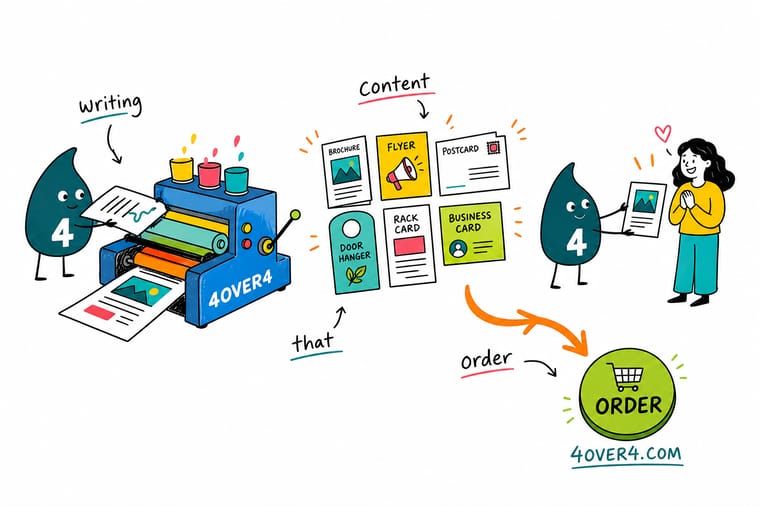
Wally wrote sixteen bound pages about how premium and trusted his shop was, and nobody finished page two. So he took the same message and tried to fit it on a postcard back. Fifty words in, only the true parts survived: the stock weight, the turnaround in real business days, and one customer with a name. That postcard did the work the booklet never did. Now he picks the smallest format his proof can fill, and fills it completely.
Shop all marketing materials →See it in use
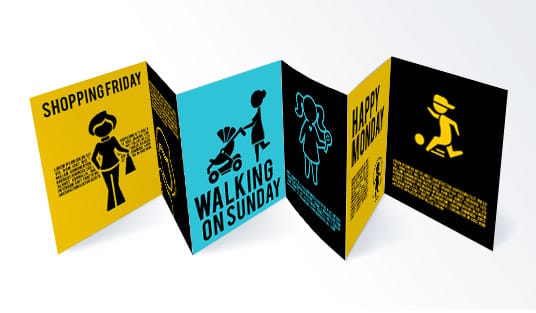
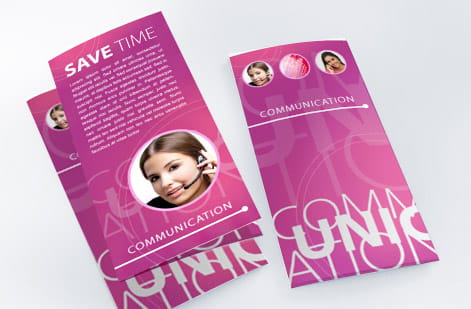
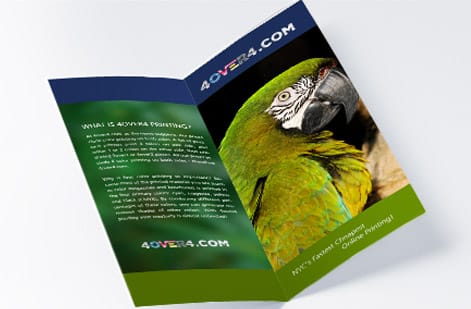
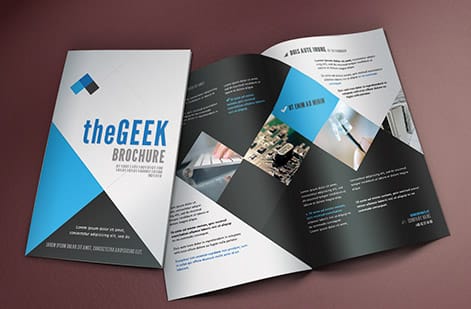
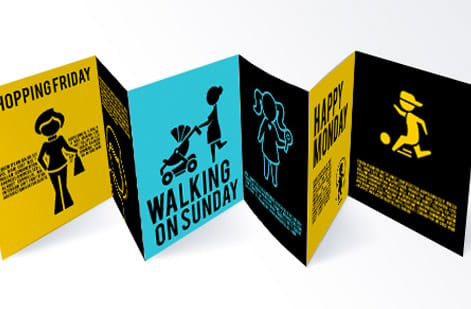
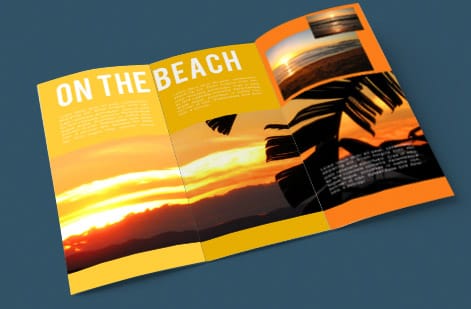
Brochures with room for the proof


Explore more
Where to go next


By the numbers
What a claim can be printed on
Common Questions
Common questions about writing copy for print
Which printed piece should I write first?
The postcard, even if you never mail one. It holds roughly fifty words once the address panel is gone, so it forces you to decide what your single strongest specific is. Once that sentence exists, every longer piece has a spine to build on, and you avoid the usual mistake of writing a brochure first and then trying to compress six panels of mood into a headline. Standard postcards start at $16.48, so the exercise costs less than an hour of anyone’s time.
How do I make a printed piece persuasive without hype?
Replace each adjective with the fact it was standing in for, then add one sentence naming a limit. Premium stock becomes 100 lb gloss text. Fast turnaround becomes the number of business days you actually run. Suitable for every business becomes a line saying who it is wrong for. Readers grade a claim by how much of it they can check, so a page of checkable detail reads as confident while a page of adjectives reads as a pitch.
How many words fit on each format?
At 10 pt body copy with 0.25 in margins, a 4 by 6 in postcard back holds about 50 words once the address panel is removed, an 8.5 by 11 in flyer holds 120 to 200 if you want it read rather than studied, a sales sheet holds 250 to 350 around a spec table, a trifold brochure holds 500 to 700 across six panels, a four-page newsletter holds 700 to 1,200, and a sixteen-page booklet passes 2,000. Those are ceilings, not targets.
What does the six-piece kit cost to start?
The six starting prices add up to $505.28 at 4OVER4.COM: standard postcards from $16.48, standard flyers from $39.54, standard brochures from $57.11, sales sheets from $75.80, standard newsletters from $75.80, and standard booklets from $240.55. Leaving out the booklets brings the other five to $264.73. Every price falls per piece as the quantity climbs, and the configurator updates live as you change size, stock and finish.
Do I need a brochure and a sales sheet, or is one enough?
They answer different questions and most businesses eventually carry both. The brochure introduces you to somebody who has not asked a price yet, which is why it opens with a specific rather than a table. The sales sheet is what you hand over after the question, and it lives or dies on the spec rows. If you can only print one this quarter, print the one that matches where your leads currently stall.
Should I put prices on a printed piece at all?
Yes, on the pieces you can cheaply reprint, and carefully on the ones you cannot. A printed price is a promise for as long as the piece is in circulation, so put the numbers on the sales sheet and the flyer, which are reprinted anyway, and keep them out of a booklet that will sit in a waiting room for a year. Naming a starting price and what changes at higher quantities is more persuasive than any sentence about value.
How do I know whether the copy worked?
Give each piece its own short URL or phone extension so the response is attributable, then read the questions that still arrive. Every repeated question is a paragraph your copy has not written yet, and answering it in the next reprint is worth more than a rewrite of the tone. Compliments about how the piece looks are not evidence, because the people who called are the only ones you can count.
Can I write this way about a commodity product?
That is where it works best. When the product is close to identical everywhere, the specifics are the only differentiator left, so the piece that publishes the stock weight, the turnaround, the proof process and the real starting price beats four panels of adjectives. Standard brochures start at $57.11 and sales sheets at $75.80, and naming both, along with what changes at higher quantities, does the persuading on its own.
Get Started
Pick the format your proof can fill
Print the piece that matches what you can actually back up, from a $16.48 postcard to a bound booklet. Choose your size, stock and finish at 4OVER4.COM and watch the price update live as you build the order.
Legal Disclaimer
Gold Standard guarantees apply to all standard orders placed through 4over4.com. Price match requires verifiable proof of a competitor's published price for an equivalent product with matching specifications and turnaround time. Satisfaction guarantee covers manufacturing defects and print quality issues. Contact support with order number and documentation. On-time delivery rate based on tracked orders 1999 to 2026. Individual results may vary based on shipping carrier performance.
