
7 Lenticular 3D Print Pieces That Work as One Motion Set
We print seven lenticular products, and they are not interchangeable. Each one suits a different viewing distance, a different lens direction and a different number of frames. Here is the whole set in order, with the starting price on every piece and the reason each effect belongs where it does.
The lenticular set is seven pieces: posters, postcards, business cards, stickers, magnets, greeting cards and bookmarks. Posters carry depth at distance, postcards and business cards carry a two-image flip in the hand, stickers and magnets hold a surface for months, and greeting cards carry the longest animation because they get the most attention. Starting prices run from $631.57 to $1,316.96, set by the lens stock rather than the ink.
The picks
The 7 lenticular pieces, numbered and priced
Each price below is the lowest configuration in the configurator, and it moves as you change size, quantity and effect. Order one to learn the format or the whole set to run a campaign where every touchpoint moves. Start artwork from scratch in the free online designer or from a design template.
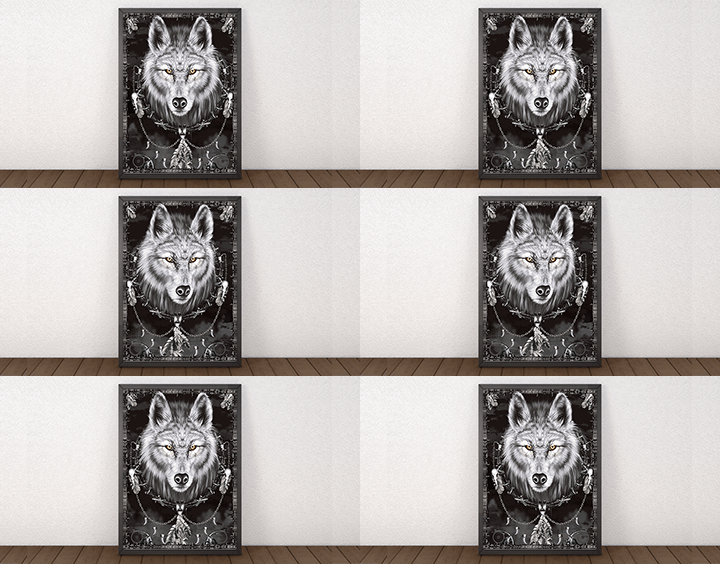
- 3D Lenticular Posters from $823.78. The only piece in the set that works across a room. Order it when the message has to land on someone walking past a window, not someone holding paper.
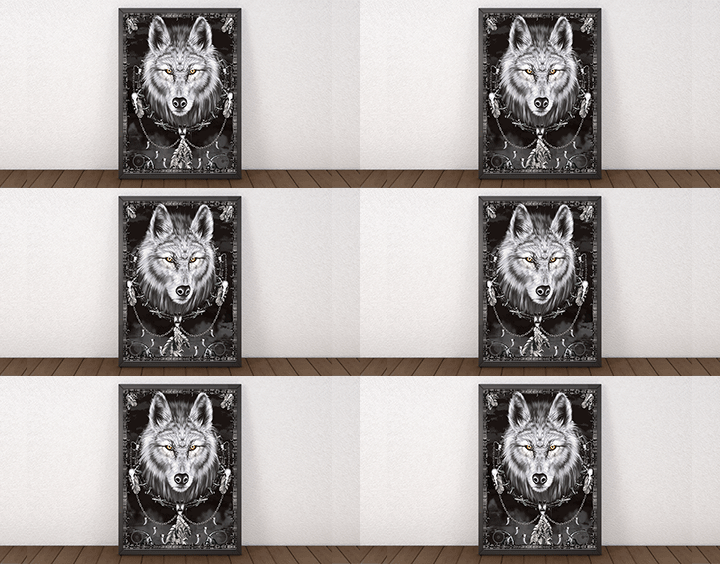
- 3D Lenticular Postcards from $1097.28. A mail piece nobody throws away unopened, because the effect only reads when it is picked up and moved. Budget for nonmachinable postage before you commit.
- 3D Lenticular Business Cards from $690.88. The lens sheet makes it thicker and stiffer than a 16pt card, so it feels different in the hand before anyone tilts it. Best two-frame flip in the set.
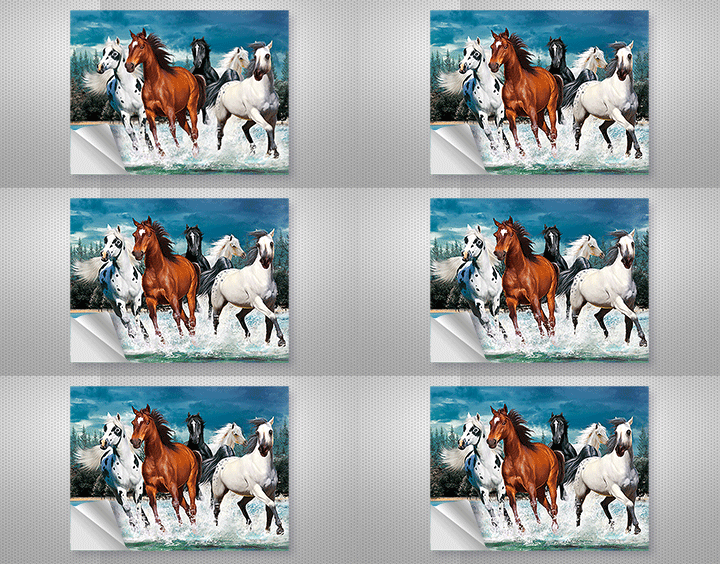
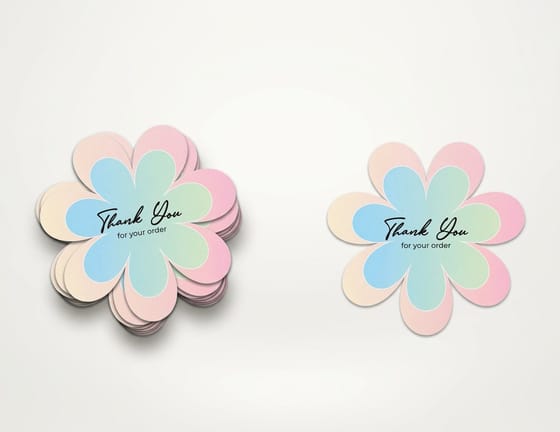
- 3D Lenticular Stickers from $866.62. The cheapest way to put motion on a laptop lid, a hard case or a shop window. Keep the artwork bold, because a small sticker cannot carry many frames.
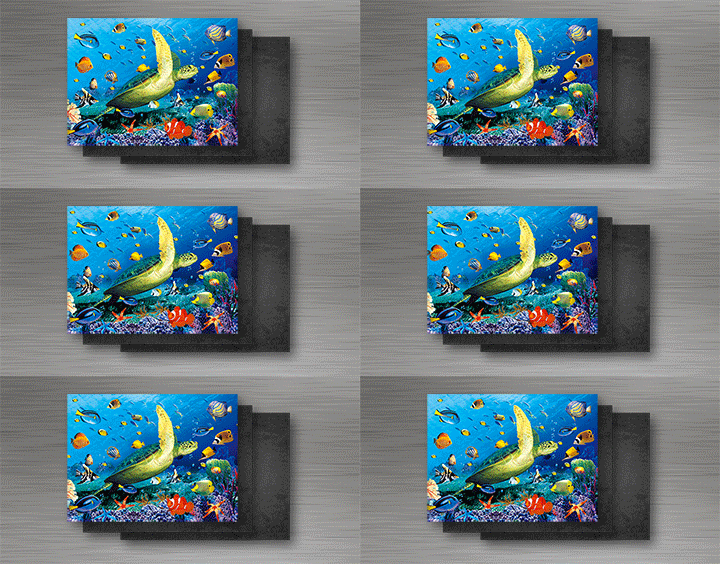
- 3D Lenticular Magnets from $1316.96. Longest dwell time of anything here. A fridge door holds it for a year, and every person who walks past tilts their head at it.
- 3D Lenticular Greeting Cards from $631.57. The lowest starting price in the lineup, which makes it the sensible first lenticular order if you have never proofed one of these before.
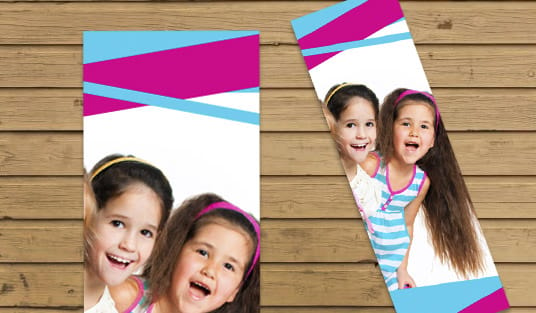
- 3D Lenticular Bookmarks from $987.45. Tall and narrow, which suits a horizontal lens and a clean two-image flip. Publishers, libraries and museum shops order these by the box.


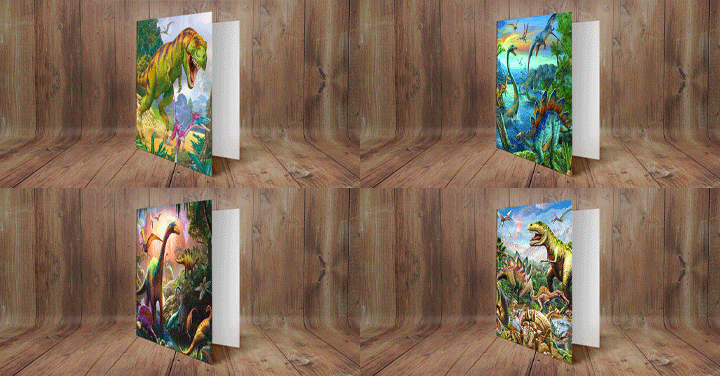
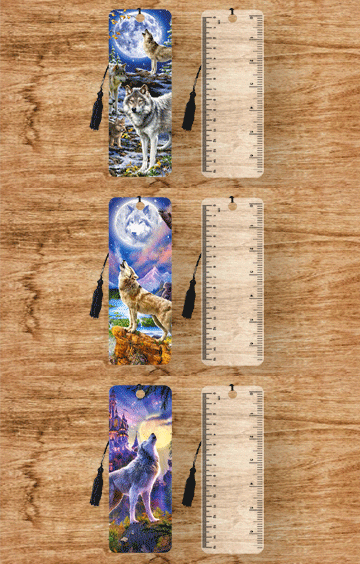
Start here
How a lenticular print actually works
Two or more images are sliced into strips, interlaced into one file, and printed behind a sheet of plastic lenses. Each lens shows you only the strips sitting directly under it at your current angle, so changing the angle changes the picture. Every effect in the format comes from that one mechanism, and so does every limitation. The direction the lenses run decides whether you get depth or motion, and the number of frames decides how much printed detail each frame keeps.
Vertical lenticules send a different frame to each eye, and because your eyes sit a couple of inches apart, that difference reads as depth without anybody moving. Horizontal lenticules feed both eyes the same frame, so the image holds still until the piece is tilted, which is what makes a flip or an animation. That is why a 3D poster and a flip business card are not the same product with a different trim size.
Effect and distance
Which effect belongs on which piece
Distance and dwell time decide the effect, not taste. A person walking past a window has half a step to see something change. A person opening a card has ten seconds. Read the row, tap the piece to jump to its section, then order the effect that matches how long your viewer will actually look.
| Piece | Effect that works | Read from | Starts at |
|---|---|---|---|
| 1. Lenticular posters | 3D depth, or a slow 4 to 6 frame zoom | Six to twenty feet, through glass | $823.78 |
| 2. Lenticular postcards | Two-image flip, before and after | In the hand, at a mailbox | $1,097.28 |
| 3. Lenticular business cards | Two-image flip, logo to offer | Arm length, handed over | $690.88 |
| 4. Lenticular stickers | Flip or a short 3 frame animation | Close, on a laptop or a case | $866.62 |
| 5. Lenticular magnets | Flip, or depth on a single photo | Three to six feet, on a fridge | $1,316.96 |
| 6. Lenticular greeting cards | Morph or animation, 8 to 12 frames | In the hand, opened slowly | $631.57 |
| 7. Lenticular bookmarks | Two-image flip along the long edge | In the hand, tucked in a book | $987.45 |
1. Lenticular posters: the piece that works from across the room
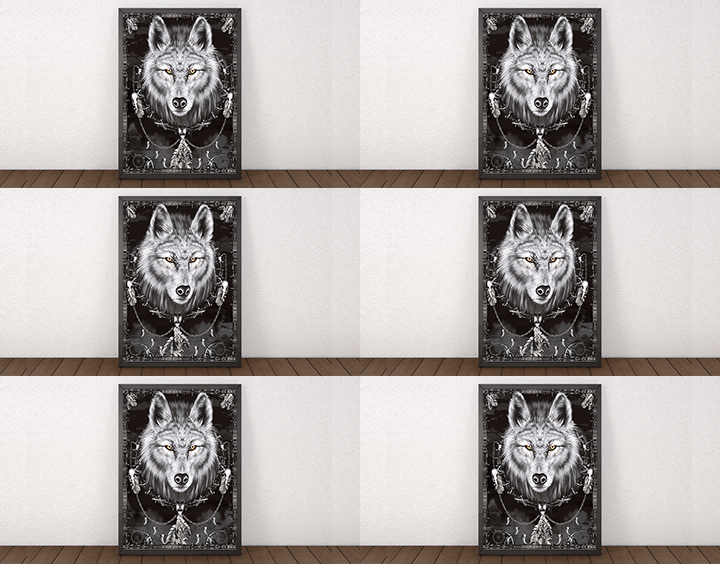
Start here if the job is a window, a lobby wall or a trade show back wall. 3D lenticular posters are the only item in this set that does its work at distance, and distance changes the engineering. A large piece read from six to twenty feet takes a coarser lens than anything held in the hand, because the viewer moves their whole body past it rather than tilting their wrist.
That also decides which effect to buy. Depth holds up at distance. A slow four to six frame zoom holds up at distance. A snappy two-image flip does not, because a person walking past a window crosses the whole transition in half a step and sees a smear rather than a change. Build the poster as layered artwork with a clear foreground, midground and background if you want depth, and keep the headline flat on the background plane so it never separates from the sheet.
Size the file the way you would size any large print, then double check the effective resolution after interlacing. Our note on the right resolution for printing covers the arithmetic, and standard poster sizes is worth reading first so the lens format matches a size we actually stock. Posters start at $823.78.
2. Lenticular postcards: the mail piece that gets picked up

A 3D lenticular postcard solves one specific problem, which is that most mail is sorted over a recycling bin without ever being turned over. A lenticular card cannot be judged flat. The effect only appears once it moves, so the recipient has to hold it, and holding it is the whole battle.
Here is the catch nobody mentions until the run is printed. The lens sheet makes the card noticeably thicker and stiffer than a 16pt cardstock, and rigid thick pieces are handled differently by mail equipment. Confirm the postage class and any nonmachinable surcharge with your mail house before you commit to a run, or plan to send it inside an envelope where thickness stops being an issue. Do that first and the piece is a strong performer. Skip it and the postage can cost more than the printing.
Design it as a two-image flip rather than an animation. Before and after, closed and open, empty room and finished room. Put the address panel and any small type on the flat back, never on the lensed face, because fine text on a flipping frame ghosts. If you want the same attention without the lens, perforation and specialty postcard finishes get partway there for a fraction of the setup. Lenticular postcards start at $1,097.28.
3. Lenticular business cards: the one that survives the desk drawer

Most business cards are judged in about two seconds and filed by feel. A 3D lenticular business card wins that two seconds twice, once because the lens sheet is thicker and more rigid than a 16pt card so it reads as substantial before anyone looks at it, and again the moment the person tilts it.
Keep the effect brutally simple. Two frames. Logo on one, offer or portrait on the other. At 3.5 by 2 inches there is no room for a twelve-frame animation, and every extra frame you add is detail subtracted from the frames you actually care about. Set the lens horizontally so the flip triggers on the natural wrist tilt rather than on a sideways sweep.
Contact details go on the unlensed back, printed flat and full color, so a phone number never sits on a transition. Build the two frames in CMYK from the start; a saturated screen green that snaps between frames on your monitor can arrive as two shades of the same olive, which is the failure mode explained in CMYK versus RGB for printing. Lenticular business cards start at $690.88, and if you want to hand one out at a booth alongside conventional collateral, the trade show lead capture lineup covers the rest of the table.
4. Lenticular stickers: motion on a surface you do not own
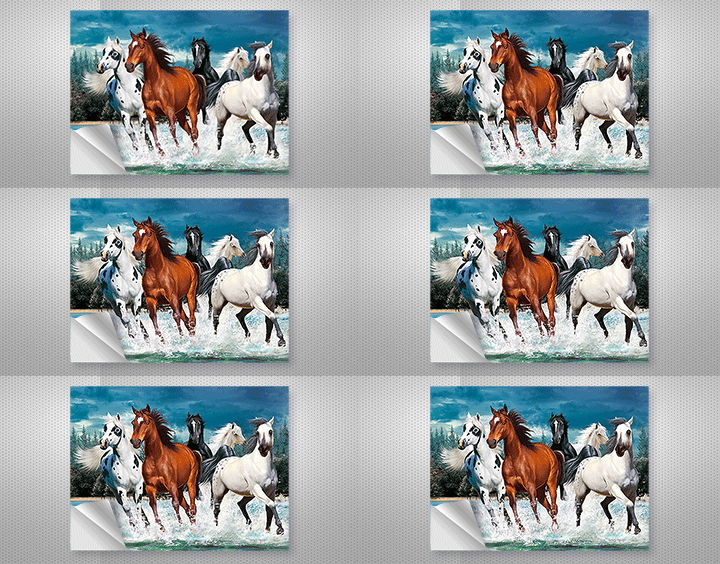
3D lenticular stickers put your artwork on a laptop lid, a hard case, a helmet or a shop window, which are all surfaces you could never buy advertising on. They are also the cheapest per-piece entry to lenticular once the quantity climbs, which is why band merch tables and museum shops lean on them.
The size limit is real. A two-inch sticker simply does not have the physical area to carry many frames, so three frames is a sensible ceiling and two is better. High contrast between frames is what makes a small flip read at all; two similar photographs turn into one blurred photograph. Think black to white, day to night, closed eyes to open eyes.
Understand what you give up against ordinary vinyl. A lenticular sticker is a rigid lens sheet, so it will not conform to a curved bottle, it does not want a hot car dashboard, and it cannot be die cut into a fine filigree shape without the lens chipping at thin points. When the surface curves or the shape is complex, the material guide on choosing the right sticker material points at the vinyl and BOPP options that will actually stick. Lenticular stickers start at $866.62.
5. Lenticular magnets: twelve months on a fridge door
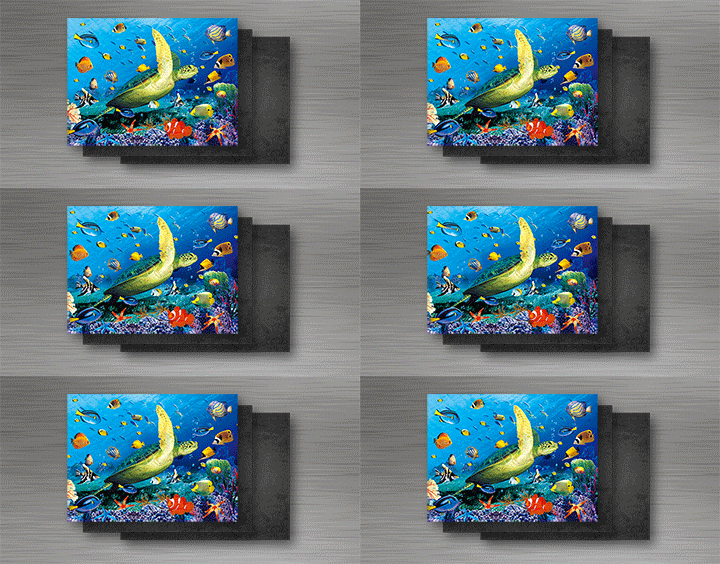
No other piece in this kit stays in front of a household for a year. A 3D lenticular magnet lands on a fridge and keeps working every time someone reaches for the milk, which is the whole argument for the format and the reason it carries the highest starting price here at $1,316.96.
Because the viewing distance sits somewhere around three to six feet, this is the one small piece where depth beats flip. A single photograph built in layers, foreground subject lifted off a receding background, reads as genuinely three dimensional from the doorway and does not require anyone to touch it. A flip, by contrast, needs a hand.
Print the phone number large and flat rather than clever. The magnet is a reference object first and a novelty second, and a number that ghosts across a frame boundary is a number nobody dials. The rest of the placement thinking, size against the fridge, what to put on it, when a magnet beats a flyer, is worked through in our business magnets marketing guide.
6. Lenticular greeting cards: the cheapest way to test the format
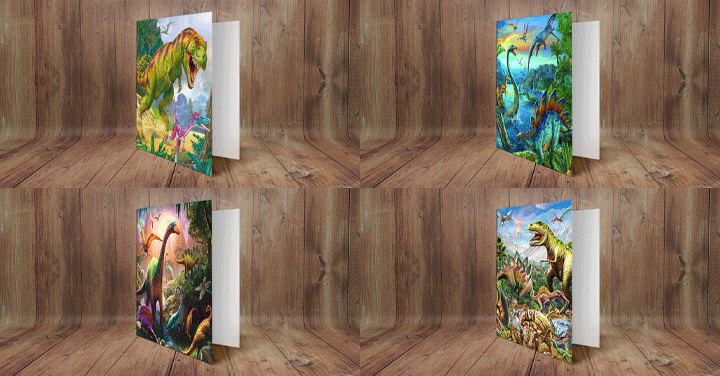
At $631.57 the 3D lenticular greeting card has the lowest entry price of the seven, which makes it the sensible first order if you have never held your own artwork behind a lens before. Order this one, live with it for a week, then scale the effect you liked into the pieces that cost more.
It is also the only piece in the set with a genuine reason to use a long animation. A card gets opened slowly, in one pair of hands, with full attention, so eight to twelve frames of a morph or a walk cycle actually get watched instead of flashing past. That is the opposite of the poster brief.
One structural warning. The lens panel cannot be folded, so a lenticular greeting card is built as a lensed face mounted to a folding card body, not as a single sheet creased down the middle. Any crease you put through a lens sheet cracks it and the crack shows as a white line forever. Plan your inside message and your fold on the paper part, and confirm the construction on the proof before the run goes ahead.
7. Lenticular bookmarks: a long narrow shape the lens likes
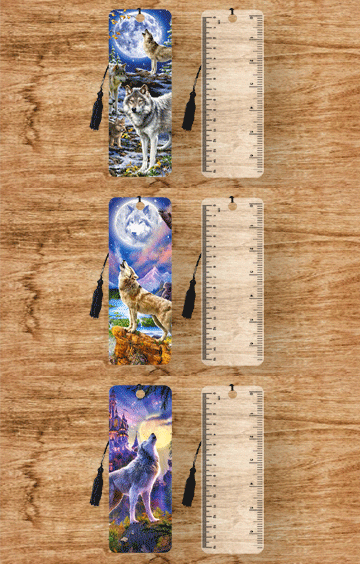
3D lenticular bookmarks close the set, and the shape is doing more work than it looks. A tall narrow piece with lenticules running across the short dimension gives you a long clean run of lens with almost no wasted area, and it is held the way a bookmark is always held, which is upright in one hand where a tilt is natural.
Publishers, libraries, museum shops and authors are the buyers here, and the reliable effect is a two-image flip: cover to author photo, before to after, character to character. Keep the title on the flat reverse. A book title that ghosts is a book nobody searches for.
Two practical points. Lenticular stock is thicker than a standard bookmark board, so it will splay a paperback slightly if you leave it in a thin book, and the finished piece is stiff enough that it will not curl to a spine. Check the shape against the sizes people actually buy in the complete bookmark size guide before you commit the artwork. Bookmarks start at $987.45. If you want the same idea with more pages attached, we also print 3D lenticular notebooks, which put the lens on the cover of a functional book.
Before you send the file
The four mistakes that ruin a lenticular run
Lenticular punishes a late file fix harder than any other product we print, because the artwork and the lens pitch are locked to each other. Fix these four before the proof rather than after.
- Small type on a moving frame. Anything under roughly headline scale ghosts as it transitions. Move body copy, phone numbers and legal lines to the flat unlensed side, or into a background layer that is identical in every frame.
- Too many frames for the size. A sticker with ten frames is a blurry sticker. The interlaced file divides one sheet of printed resolution across every frame you asked for, so frames are bought with sharpness.
- Layers with holes behind them. For a 3D build, the interlacing shifts your layers against each other, which exposes whatever sits behind the subject. Every layer has to be complete under the one in front of it, not cut out around it.
- Frames built in RGB. Two colors that snap apart on screen can converge into near neighbours in CMYK, and a flip between near neighbours is a flip nobody notices. Build and judge the frames in CMYK, and check the prepress basics in our guide to print-ready commercial files. Unfamiliar terms are defined in our printing terms reference.
Specs and pricing
Compare the two most ordered pieces
Business cards and postcards are the two lenticular items most buyers start with, one for the hand and one for the mailbox. Here are the ink, stock and finishing options on both, pulled live from the configurator.


Wally explains the lens sheet
Two pictures, one sheet, one angle at a time
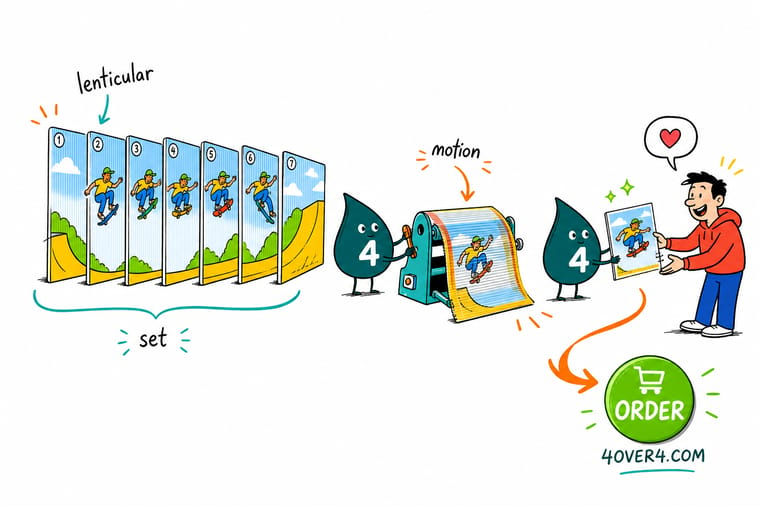
Wally slices two pictures into thin strips, shuffles them together, and prints them under a row of tiny plastic lenses. Each lens only shows the strips underneath it at your current angle, so a tilt swaps the picture and a pair of eyes sees depth. Turn the lenses upright and you get 3D. Lay them flat and you get a flip. That is the whole trick, and it decides which of the seven pieces suits your job.
Shop lenticular printing →Explore more
Where to go next


By the numbers
What a 22 business day lens build gets you
Common Questions
Common questions about lenticular printing
What is lenticular printing, in plain terms?
A lenticular print is two or more images sliced into thin strips, interlaced into a single file, and printed directly behind a sheet of plastic lenses called lenticules. Each lens only lets you see one set of strips at a time, so changing the angle between your eye and the sheet changes which image you see. That single mechanism produces every effect in the format: flip, animation, morph, zoom and 3D depth.
Why does lenticular cost so much more than normal printing?
Almost all of it is the lens stock and the setup. The interlaced file has to be built and aligned to the exact pitch of the lens sheet, and a misalignment of a fraction of a millimeter ruins the whole run, so there is real work before a single sheet prints. That cost does not shrink with a small order, which is why the lowest configuration of every lenticular product at 4OVER4.COM still lands in the hundreds: $631.57 for greeting cards, $690.88 for business cards, $1,316.96 for magnets. Per unit, the number falls quickly as the quantity climbs.
Can I put text on the part that flips?
You can, but keep it short, large and high contrast. Fine type sitting on a transition ghosts, which means you see a faint copy of the other frame behind the letters as the piece moves. The rule most print buyers settle on after one bad proof is simple: phone numbers, addresses and body copy live on the flat unlensed side or in a background layer that never changes between frames, and only headline-scale words ride the effect.
Can lenticular postcards be mailed?
Yes, but treat them as thick rigid mail rather than a normal postcard. The lens sheet adds real caliper and stiffness compared with a 16pt card, and rigid pieces are handled differently by mail equipment, so confirm the postage class and any nonmachinable surcharge with your mail house before you print the run. Plenty of senders sidestep the whole question by mailing the piece inside an envelope, which also protects the lens face from scuffing in transit.
How many frames should an animation have?
Match the frame count to how long the viewer will hold the piece. Two frames for a business card or a sticker, because the tilt is quick and detail matters more than motion. Eight to twelve for a greeting card, which gets opened slowly in one pair of hands. Four to six for a poster, since a person walking past covers the whole transition in a couple of steps. Every added frame divides the printed resolution again, so more frames always costs you sharpness somewhere.
Can a lenticular piece be folded, scored or die cut?
Not folded or scored. A crease through a lens sheet cracks the lenses and leaves a permanent white line, so a lenticular greeting card is built as a lensed panel mounted on a folding paper body instead of one creased sheet. Straight cuts are fine. Fine decorative die cuts are risky, because thin points in a rigid lens stock chip at the edge.
What artwork do you need from me for a 3D job?
For depth, supply a layered file with the subject, the midground and the background on separate layers, each one complete behind whatever sits in front of it, because the interlacing shifts those layers against each other and will expose any hole you left. For a flip or an animation, supply the frames as separate flattened images at the same dimensions and the same color build. Either way, work in CMYK and check the file against the standard prepress list in our guide to print-ready commercial files.
Which of the seven should I order first?
Order the greeting card. It has the lowest starting price of the set at $631.57, it tolerates the longest animation so you can see what the format is capable of, and it puts a physical sample in your hand before you spend four figures on magnets or postcards. Once you know which effect held your attention, scale that same effect into the piece your campaign actually needs.
Get Started
Order 500 3D lenticular business cards from $690.88
Pick one lenticular piece to learn the format or the whole seven-piece set to run a campaign where every touchpoint moves. Sizes, quantities and effects update the price live as you build the order.
Legal Disclaimer
Gold Standard guarantees apply to all standard orders placed through 4over4.com. Price match requires verifiable proof of a competitor's published price for an equivalent product with matching specifications and turnaround time. Satisfaction guarantee covers manufacturing defects and print quality issues. Contact support with order number and documentation. On-time delivery rate based on tracked orders 1999 to 2026. Individual results may vary based on shipping carrier performance.
