
18 Deli and Sandwich Shop Print Pieces That Move the Lunch Line
A deli lives on a two-hour lunch window and the habits it builds inside it. These 18 print pieces work that window from every side: the glass that sells the special, the menu that colonizes desk drawers, and the branded box that turns one catering order into a standing account.
The deli and sandwich shop pack is 18 print pieces that build a lunch habit: menus, table tents, die-cut stickers, business cards, window clings, banners, custom kraft boxes, flyers, postcards, catering menus, laminated menus, food labels, drink coasters, posters, staff t-shirts, fridge magnets, gift certificates, and catering brochures. The banner, clings, flyers, postcards, and posters win the noon walk-by, the menus, tents, labels, and coasters move the line and plant the next order, and the stickers, boxes, cards, brochures, shirts, magnets, and certificates ride every sandwich and platter into the offices nearby.
The picks
The lunch counter's 18 pieces, with their starting prices
Fifty takeout menus start at $57.11, and catering and laminated menus start at the same price. Drink coasters start at $10.98, business cards at $17.57 and window clings at $30, while custom kraft boxes from $711.78 and table tents from $554.39 are the two bulk buys that carry the catering side. The 18 are numbered in the order a deli usually needs them, each priced live from the configurator.



Design and print help
Same logo on the glass, the wrap and the platter lid
Set your logo and two colors once in the online designer or a menu template, and they carry from an 8.5 by 11 in takeout menu on 100# gloss text to a 2 by 2 in die-cut sticker and an 18 by 24 in window cling. With one file set behind all 18, the shop reads as one brand without a design budget.
How they work together
Noon walk-by, counter, then the office down the street
A lunch customer meets your print three times: on the noon walk-by, at the counter decision, and on the sandwich that leaves with them. Cover all three and the shop starts feeding whole buildings as well as walk-ins.
The banner introduces the shop to the block, the window clings sell the special of the day to the lunch crowd walking past, and the flyers, postcards, and wall posters carry the offer into the lobbies and mailboxes the sidewalk cannot reach. All of it works hardest in the two hours that pay the rent.
A printed menu in the line and in every takeout bag speeds up orders and plants the next one, the laminated counter menu survives the rush, the food labels sell the grab-and-go case, and the table tent and coaster pitch the daily special and the catering platter to the seated crowd.
The sticker seals every wrap, the kraft box carries the platter into offices, the brochure and business card turn the who-catered-this question into next week's order, and the shirts, fridge magnets, and gift certificates keep the name working between lunches.
1. Menus: the piece that decides a hundred lunches a week
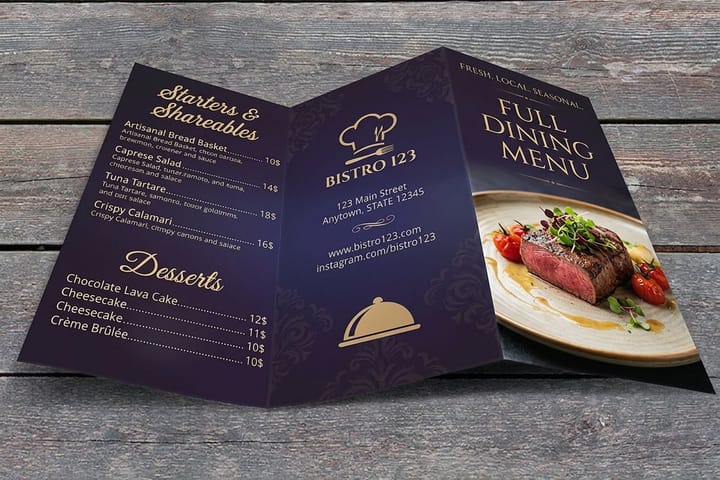
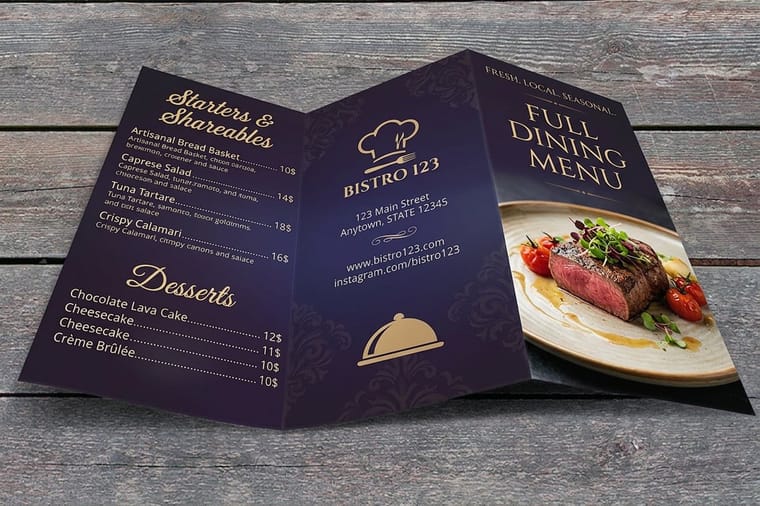
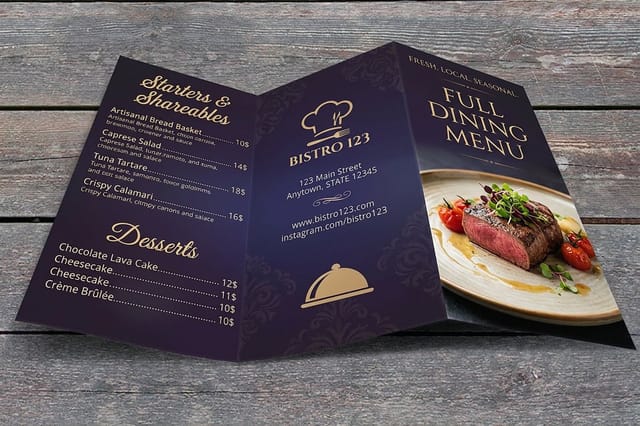
Deli lunches are group decisions made at desks. Somebody says sandwiches, somebody opens a drawer, and whatever menu is in that drawer wins. The printed takeout menu is how you get into the drawer: one goes into every bag, every delivery, every catering drop, until the shops within walking distance have your menu closer to hand than any app.
Build it for speed. Signature sandwiches with names people can shout down a hallway, sides and combos priced plainly, and the pickup number plus order-ahead link in the largest type on the page. The layout mechanics are covered in building a restaurant menu in Canva and making custom menu cards, and a coated stock survives the mustard.
Reprint when prices change, not after. A menu with crossed-out numbers reads as a shop in trouble; a crisp one reads as a shop in demand.
2. Table tents: the catering pitch that works while they chew
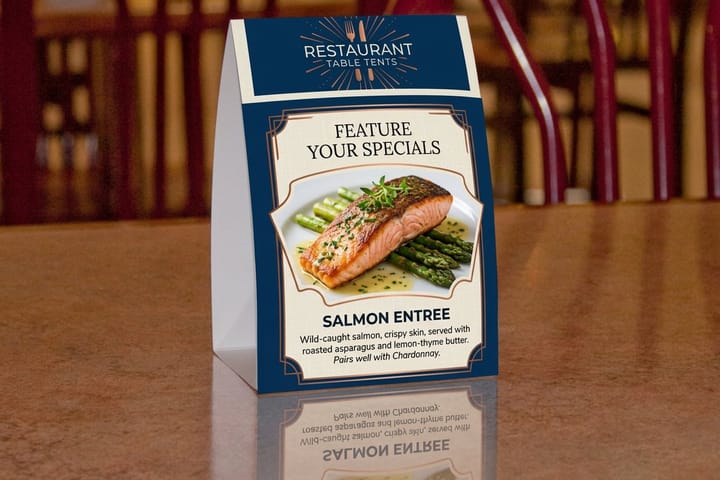
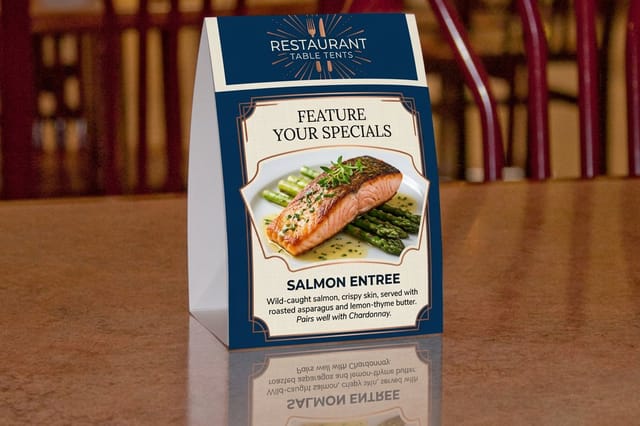
The person eating at your table has already decided they like you; the tent's job is to widen the order. Side one: the daily special, one photo, one price, so tomorrow's visit has a reason. Side two: the catering platter, because the easiest catering lead in the world is someone currently eating the evidence.
Table tents earn their place by being read during the one idle moment of a deli visit, the chewing. Keep each side to a single message and swap the special side weekly; the format basics live in what table tents are, and there are broader tabletop ideas in vendor table display ideas.
Point one tent at the register line too. The queue reads anything at eye level, and the queue is your densest audience of the day.
3. Die-cut stickers: the seal that signs every sandwich
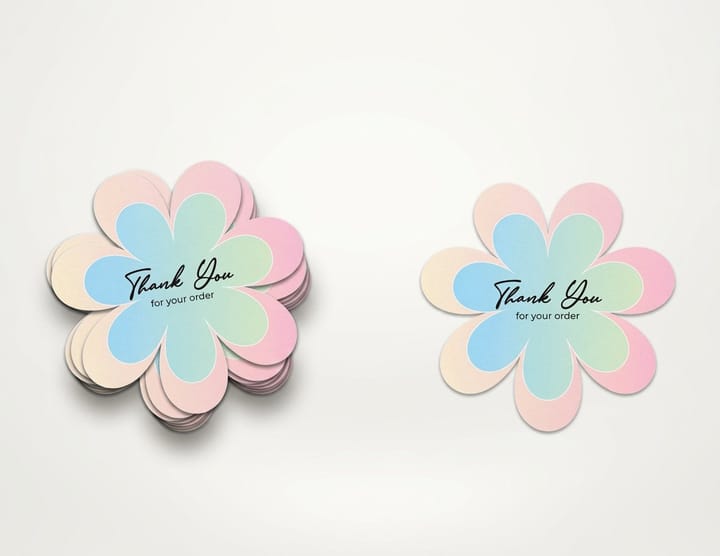
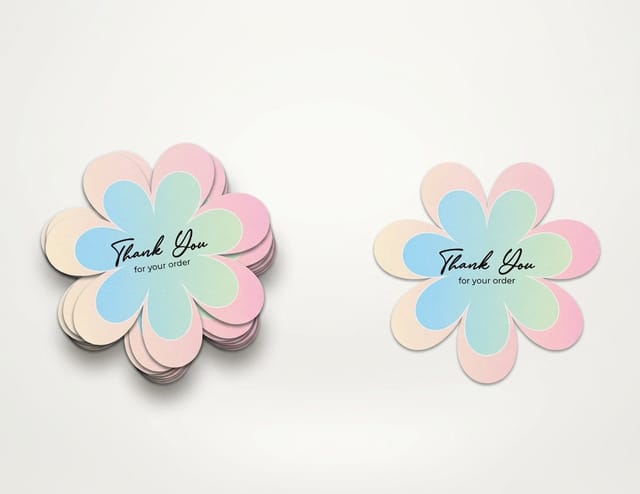
Every wrap that leaves a deli needs sealing anyway; the only question is whether the seal says anything. A die-cut sticker with your logo closes the paper, labels the order, and then spends lunchtime on a desk in some office, doing the one thing no ad budget can buy: sitting next to a sandwich the person is enjoying.
Cut it to your mark rather than a plain circle, print a batch big enough that the counter never rations them, and consider a second run with short order labels, the classics by name, for speed at the wrap station. Artwork prep and material choices are in how to make stickers, with the full format range at sticker printing.
Stick one on every bag, not just the wraps. The bag rides the elevator; the wrap stays at the desk. Both should say your name.
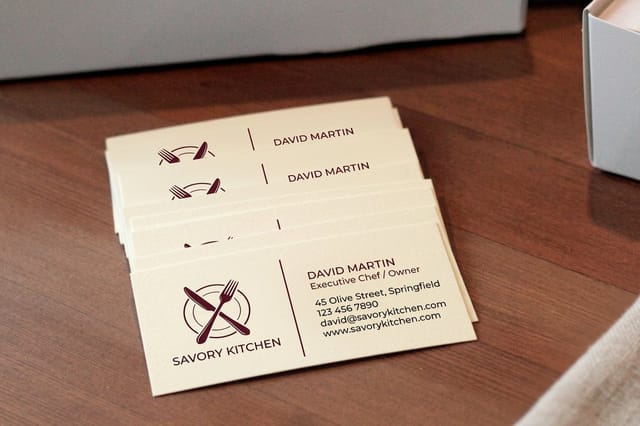
4. Business cards: where the platter order starts
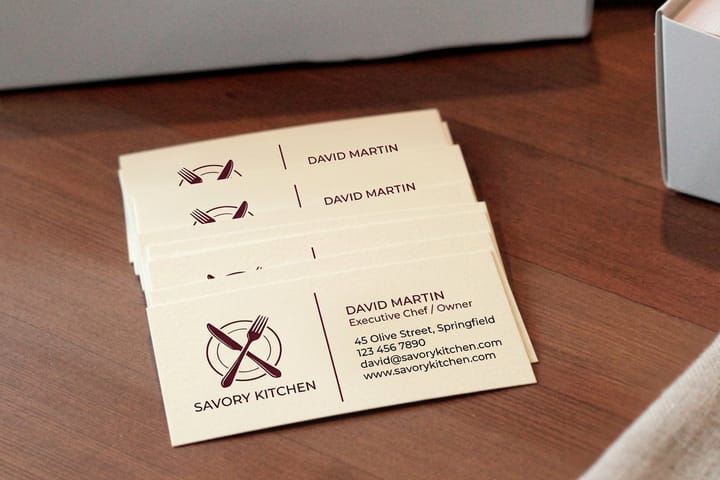
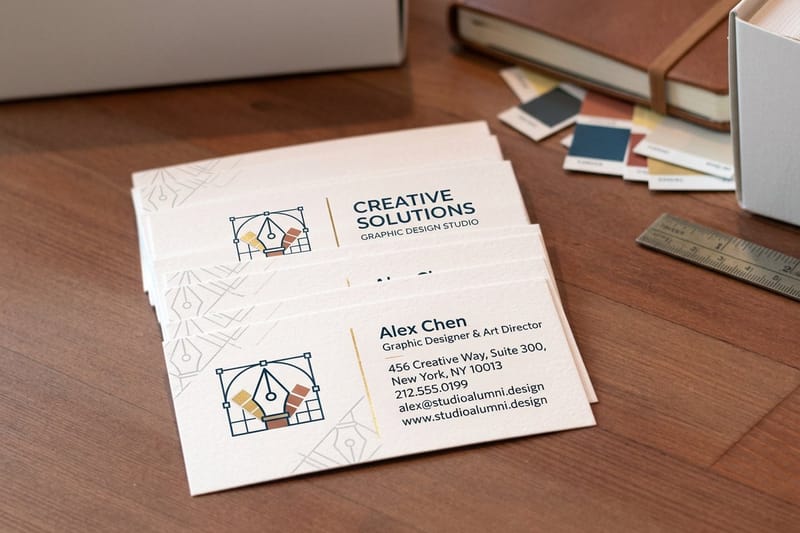
Catering is the deli's quiet second business, and it starts as a question at the register: do you do platters? The business card is how that question survives the walk back to the office. Name, number, catering line, and a QR code to the platter menu on the back, handed over in the three seconds the conversation allows.
Treat it as the catering card specifically. The front can say Platters, boxed lunches, office delivery in plain words, because a card with a job outperforms a card with only a name. The fundamentals in business card basics apply, and business card printing has heavier stocks that feel like a shop worth trusting with fifty lunches.
Staple one to every catering receipt and drop one in every large order. The person who ordered six sandwiches today is the person who orders forty next month.
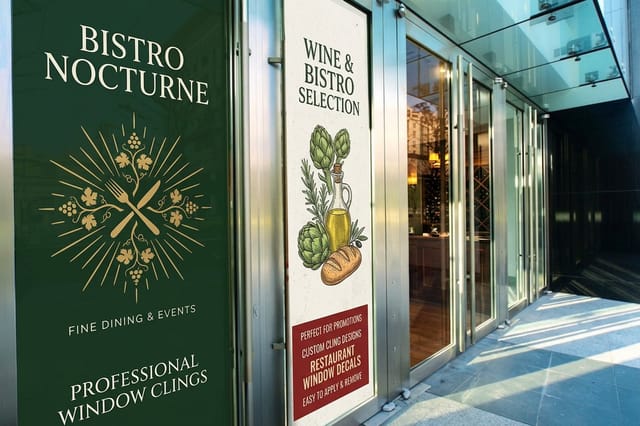
5. Window clings: the special of the day, sold from the glass
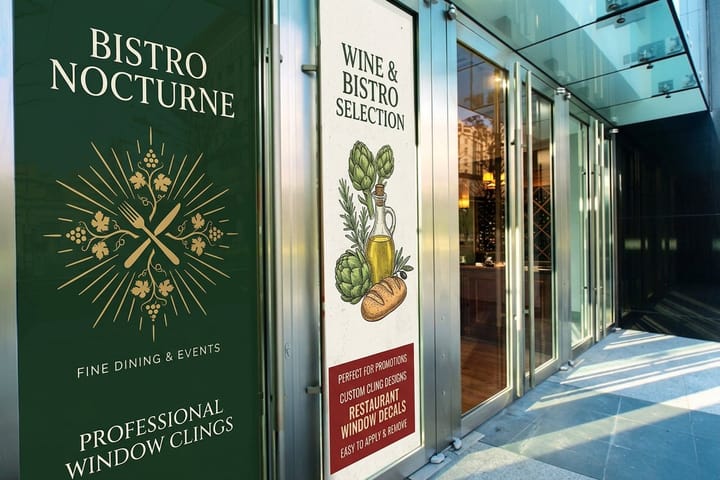
At noon your storefront has an audience it will never have again that day: hungry people moving fast with money in their pockets. Window clings turn the glass into the pitch, the special with a photo, the combo price, the line that gets a first-timer through the door. It is the cheapest sales hire a deli can make, and it never calls in sick.
Design for a six-foot read at walking speed: one special, one price, one signature item. Clings apply without residue and peel cleanly, so the weekly swap takes five minutes; the mechanics are in what window clings and decals are and how to apply window clings.
Keep one cling evergreen: the catering line and phone number. Offices scout caterers on foot more often than anyone admits.
6. Banners: now slicing, and the whole block knows it
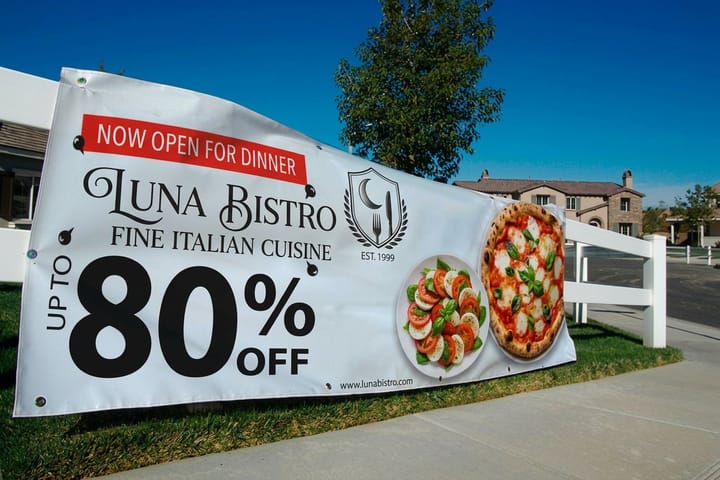
Before the first regular exists, the banner does the introducing. Strung across the storefront or facing the busiest corner, it announces the shop at neighborhood scale: now open, hot pastrami daily, catering available. For a deli, whose entire market walks or drives past twice a day, the banner reaches exactly the right people at exactly zero incremental cost.
Write it for two seconds of attention: five words, one offer, letters readable from a moving car. The focal-point discipline in how to make banners applies directly. Durable vinyl handles weather, so the opening banner returns for anniversaries, holiday platters, and the summer cold-cut push.
Hang it during the fit-out, not on opening day. The block should be waiting for the bread, not discovering it.
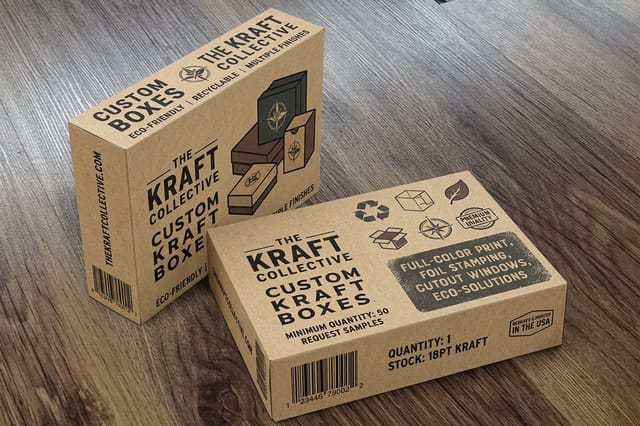
7. Kraft boxes: the platter that walks into the meeting branded
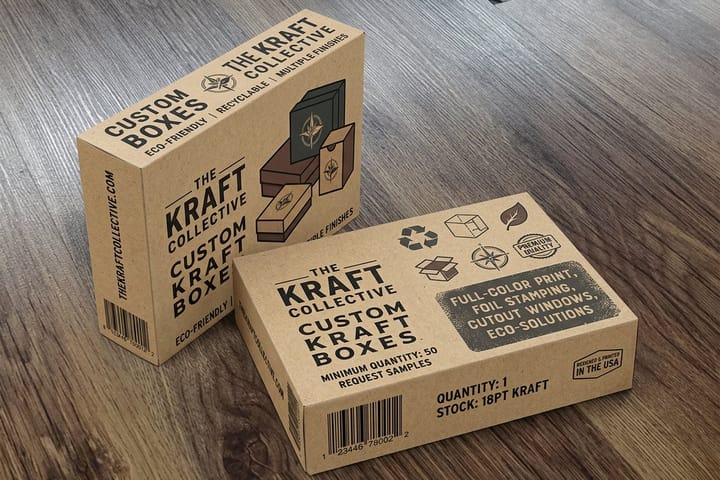
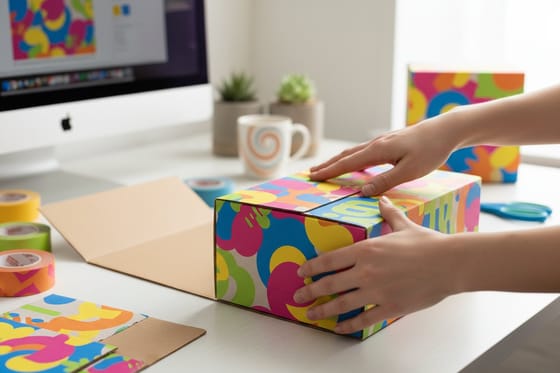
When the platter lands in a conference room, your shop is in the room with it, or a plain brown lid is. The branded kraft box is the difference. Ten people eat, the box sits open on the table for an hour, and the question this is great, where is it from answers itself. No other piece in this pack advertises to as captive an audience.
Kraft stock takes print beautifully and reads as fresh and honest, the right register for food. Size the run to your platter and boxed-lunch formats, and get the structure right with how to make custom boxes and packaging design from concept to print; the wider range lives at the packaging printing collection.
Print the catering line on the inside of the lid. The person who opens the box is the person who orders next time.
8. Flyers: the lunch offer walked into every lobby
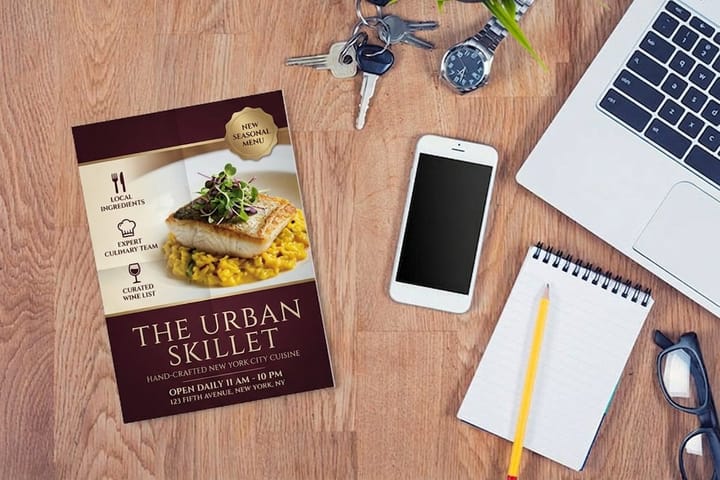
The half mile around a deli holds hundreds of desks, and each one is a lunch decision waiting for input. A flyer run works that geography directly: the front desk of every office, the break-room board of every warehouse, the counter of the gym and the laundromat, all reached in one afternoon of walking with a stack under your arm.
Lead with one offer, the combo, the daily special calendar, the ten-percent office discount, and keep the menu highlights to five items with prices. The layout rules in how to design flyers keep it readable at arm's length, and flyer distribution best practices covers the etiquette of asking for board space and refreshing the stack.
Reprint monthly with the current special. A dated flyer signals a live kitchen, and it gives the buildings a reason to look twice.
9. Postcards: the catering pitch in the office mailbox
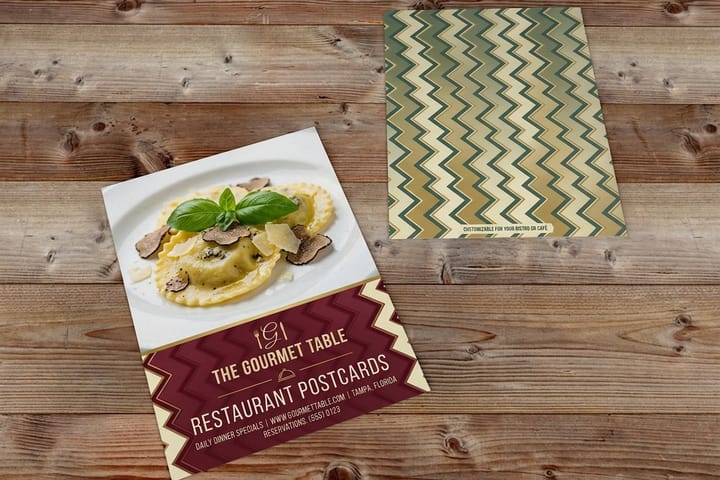
Office managers decide more deli revenue than any walk-in customer, and they are reachable by the oldest channel there is. A postcard with a platter photo on the front and per-head pricing on the back, mailed to the offices in the delivery radius, puts the catering pitch on the one desk where fifty-lunch decisions get made.
One image, one offer, one order line. The checklist in postcard design for direct mail covers what earns a card a spot on the corkboard, and building a mailing list assembles the office file the mailer needs.
Time the drops to the catering calendar: early November for holiday parties, January for meeting season. Starting under twenty dollars, the card that lands one office account pays for the whole run.
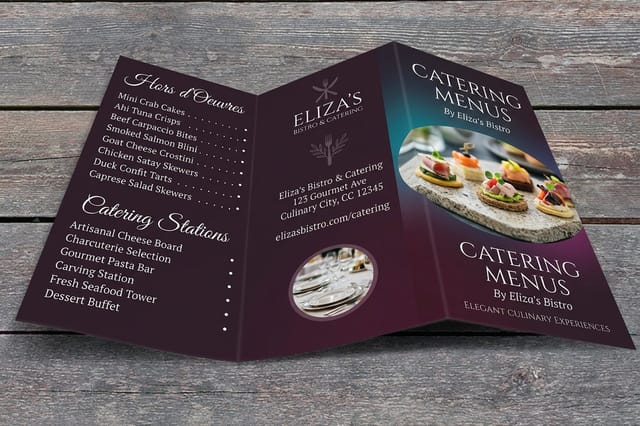
10. Catering menus: platters and per-head pricing on file
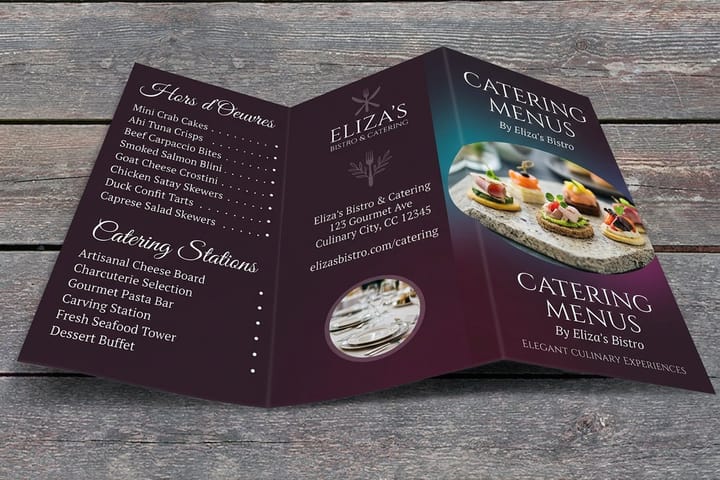
The takeout menu sells one lunch; the catering menu sells fifty at a time. It is a different document with a different reader: an office manager comparing per-head prices, delivery minimums, and how easy you are to order from. Give that reader a dedicated sheet, platters, boxed lunches, add-ons, lead times, and the order line, and the comparison usually ends in your favor.
Structure it like a proposal: packages first, per-head math visible, and a photo of the platter actually being delivered. The menu-building fundamentals in making custom menu cards apply, and the formats at menus printing run from single sheets to folded packets.
One goes into every catering delivery and every business card handoff. Offices file caterers; make sure the file contains you.
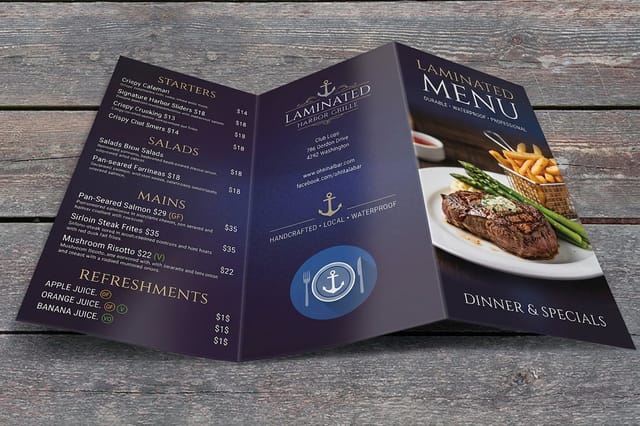
11. Laminated menus: the counter copy that survives the rush
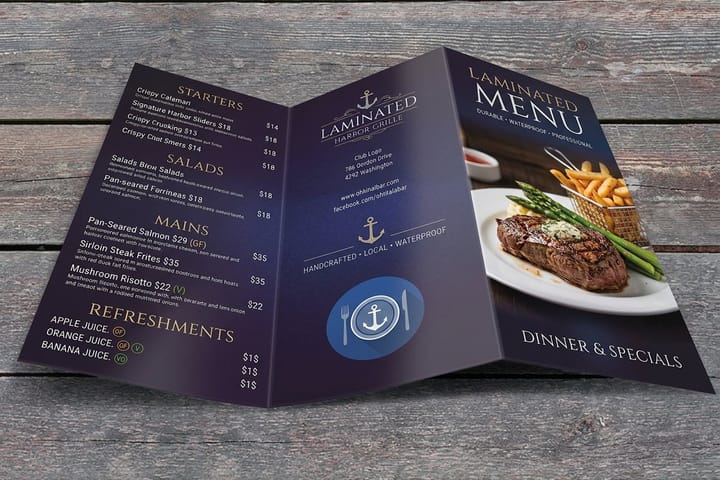
The menu at the counter lives a hard life: mustard, grease, wet hands, and three hundred readers a day. A laminated copy takes all of it and wipes clean, which means the piece your busiest customers actually touch never looks tired. Tired menus cost real money; people order less from paper that feels neglected.
Print a small set for the counter and the register line, matching the takeout menu exactly so nobody has to re-learn the layout. Lamination also holds color under the counter lights, so the pastrami photo stays appetizing at month six. The full format range lives at menus printing.
Keep one laminated copy taped by the phone. The person taking call-in orders reads it a hundred times a day, and it never needs replacing.
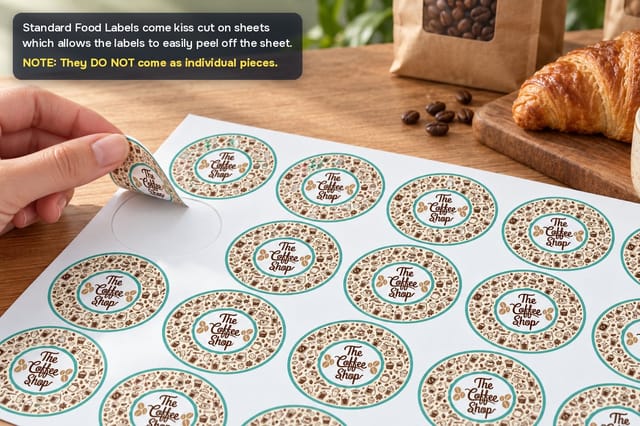
12. Food labels: the grab-and-go case, named and dated
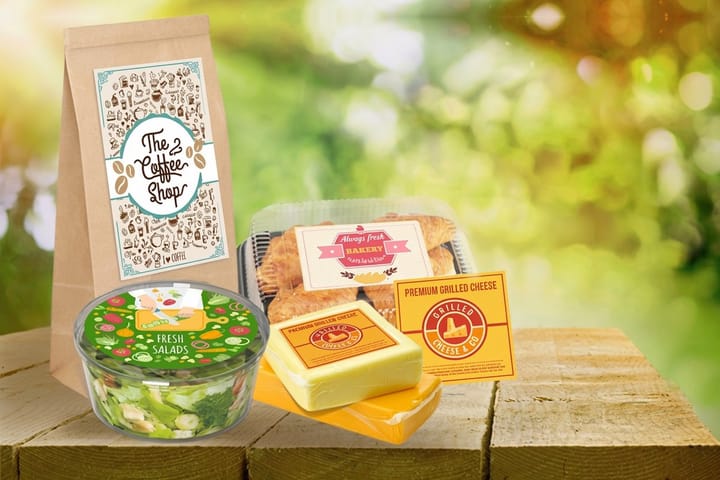
The grab-and-go cooler is the deli's silent salesperson, and unlabeled containers sell nothing. A printed food label does the case's whole job: the item name that makes a salad sound deliberate, the date that makes it trustworthy, the ingredients that answer the allergy question, and your logo on every container that rides back to a desk.
Print a base label with the logo and blanks for name and date, plus dedicated labels for the volume items. Sizing guidance lives in choosing the correct label size, and the material options at labels printing include stocks that handle cooler condensation.
Labeled containers also travel better: the office fridge full of your labeled leftovers is a tiny billboard network you restock daily.
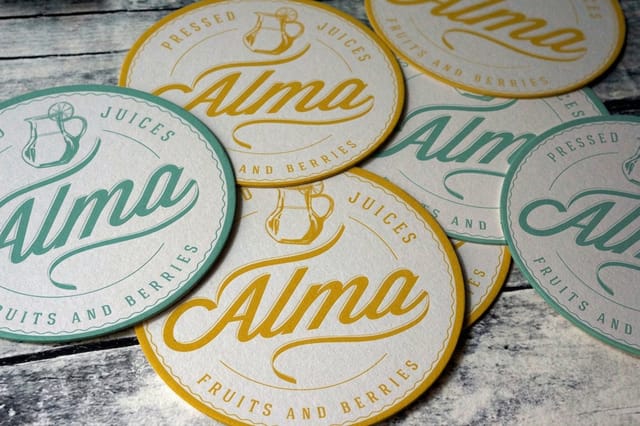
13. Coasters: the tabletop square that pitches tomorrow
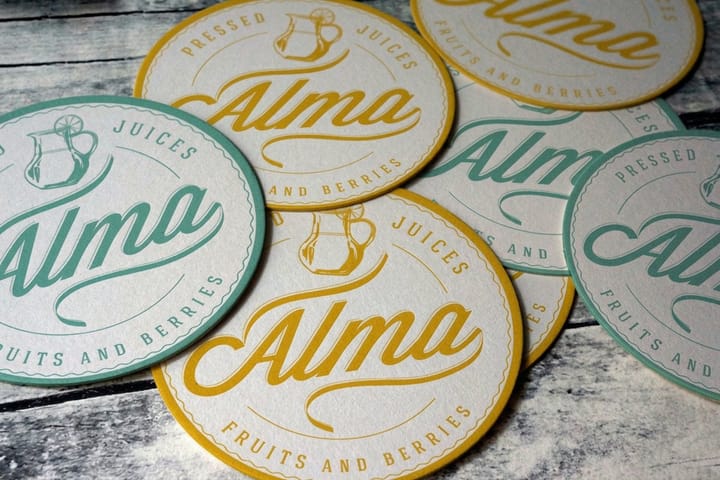
Every soda, iced tea, and coffee at your tables sits on something for twenty minutes. A branded coaster makes that surface work: logo on one side, the message that needs eyes on the other, the daily special calendar, the catering line, the loyalty pitch. At the lowest price in this pack, it is tabletop media you own outright.
Rotate the message side monthly so regulars keep reading, and let people pocket them; a coaster on a desk at work extends the pitch through the afternoon. Board weights and print methods are compared in how to make coasters.
Pair the coaster with the table tent: the tent gives the details, the coaster keeps repeating the headline under every glass.
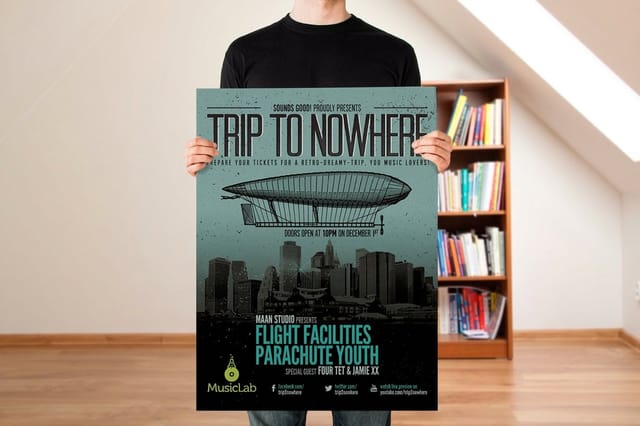
14. Posters: the signature sandwich at wall scale
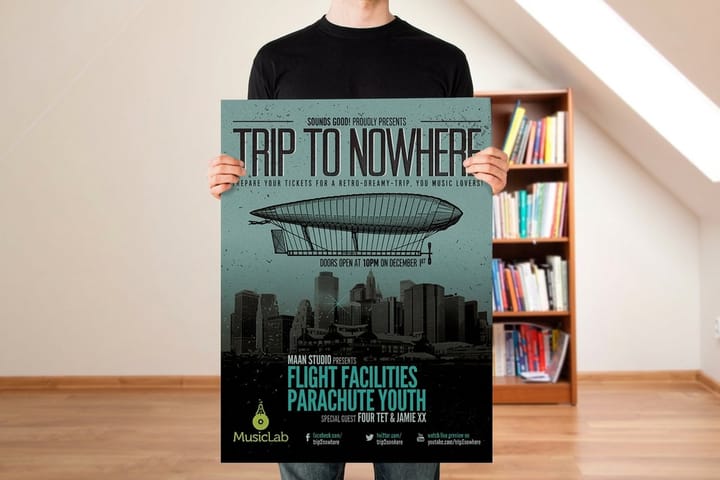
The line at a deli spends five to ten minutes staring at your walls, and bare walls waste that audience. A run of posters, the signature sandwich shot large, the story of the bread, the catering platter in full spread, sells to the queue without a word from the counter, and it makes the shop photograph well, which is its own kind of marketing now.
One strong image per poster and a short line of type; the wall is not the place for menus. Our how to design a poster in 8 steps keeps the hierarchy readable across the room, and how to hang posters without a frame gets them up cleanly on brick and tile.
Swap one poster seasonally, the summer cold-cut spread, the holiday platter, so the walls keep announcing what the counter is about to say.
15. T-shirts: the counter crew as the brand
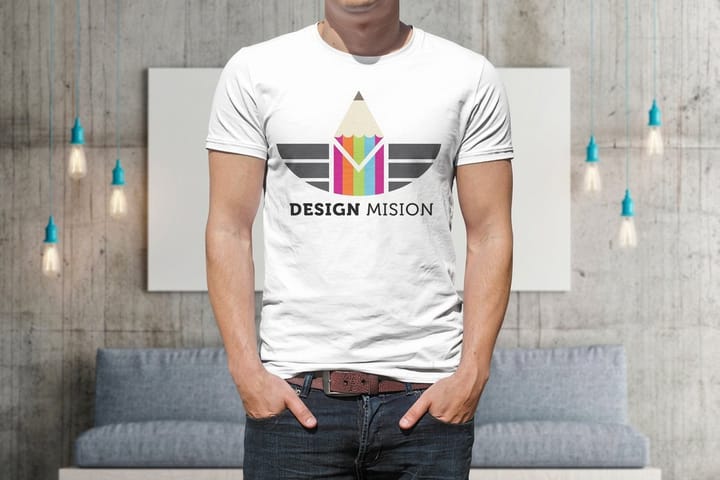
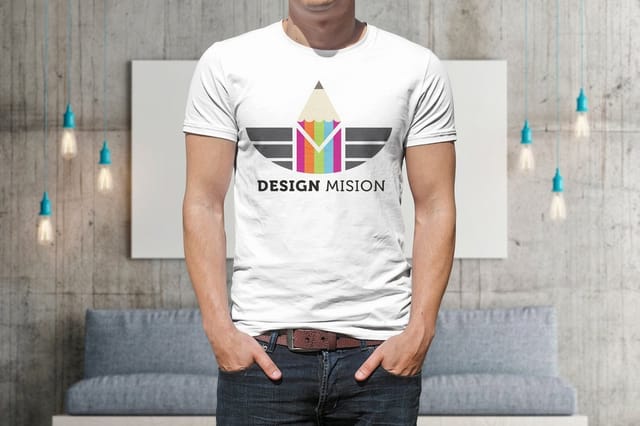
A crew in matching shirts makes a three-person deli read like an institution. The uniform does the shop's credibility work during the rush, and the same shirt doubles as merch: regulars genuinely buy the tee of a place they love, and every one they wear to the park is a walking recommendation.
Front mark small and clean, back print with personality, the sandwich name people order by, the shop's catchphrase, the year it opened. Our how to make custom t-shirts covers art and color setup, and the t-shirt print size guide settles the print dimensions.
Start with crew sizes plus a small retail stack by the register. At about twenty-two dollars a shirt, the first regular who buys one has already amused the whole neighborhood on your behalf.
16. Magnets: the pickup number on the office fridge
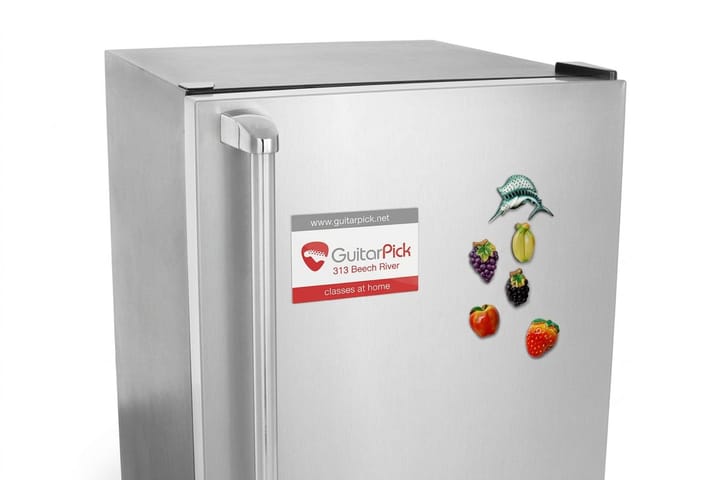
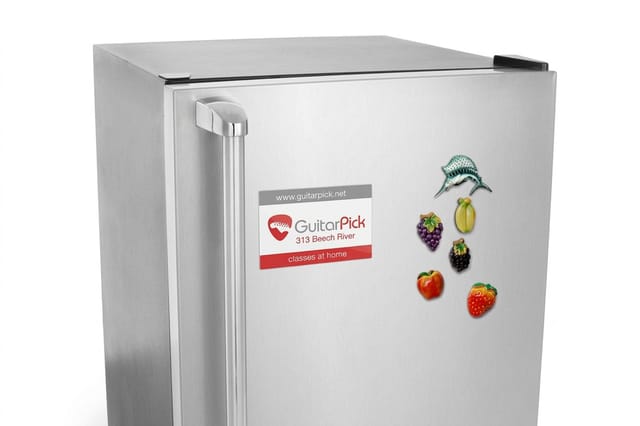
Lunch decisions happen standing in front of refrigerators. A magnet with your logo and pickup number, dropped into every catering delivery and takeout bag for a month, colonizes the exact surface where the what-do-we-eat conversation happens, in break rooms you will never see.
Keep it to the name, the number, and one line, order ahead, we deliver. The production notes in how to make custom magnets cover sizes and stocks, and magnets versus stickers explains why the fridge piece outlives every flyer.
At cents apiece, print thousands and treat them like confetti. Every fridge that holds one is a standing order channel that cost less than a slice of provolone.
17. Gift certificates: lunch, sold in advance
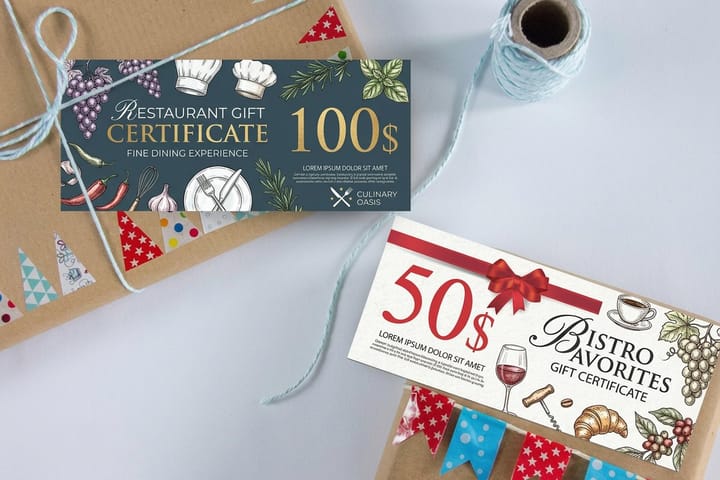
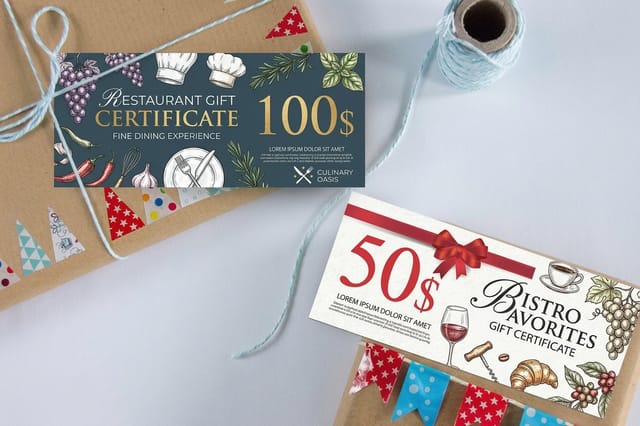
A deli gift certificate is revenue collected today for sandwiches served later, usually to someone new. Regulars buy them for coworkers and neighbors, offices buy them as small thank-yous, and every redemption walks a first-timer through the door with money already spent and a good impression pre-paid.
Print them on heavy stock so they feel like a present rather than a receipt, with a clean line for the amount and the shop's mark doing the talking. Our guide to gift-certificate expiration rules keeps the fine print compliant across states.
Rack them by the register from November on. December sells them, January redeems them, and the new faces that arrive are the cheapest customer acquisition of the year.
18. Brochures: the catering story, left behind after every drop
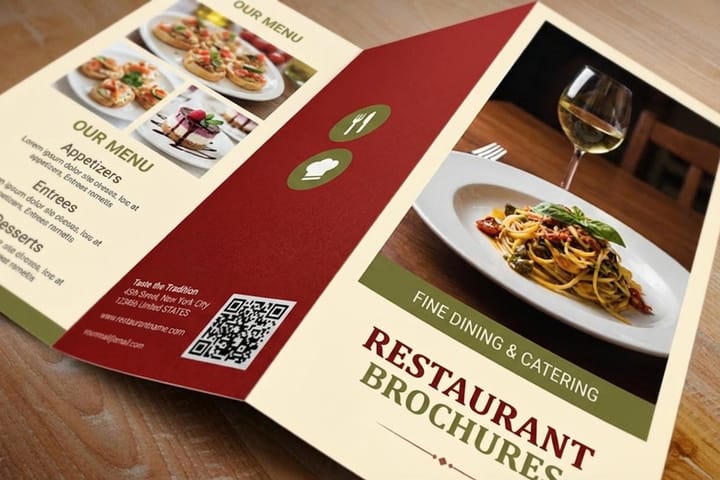
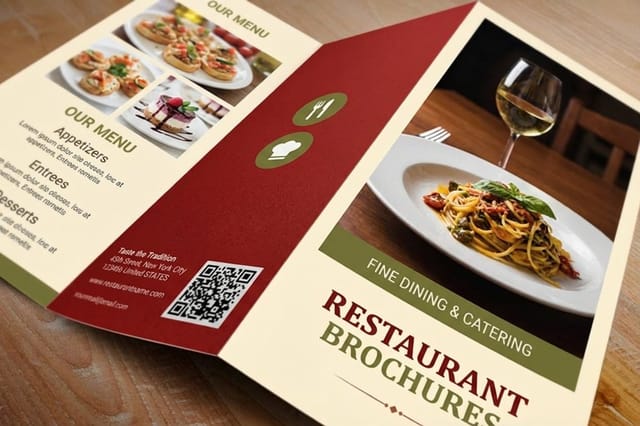
The catering menu lists the packages; the brochure sells the decision. Photos of real spreads, the how-it-works in three steps, the delivery radius, and a line about the bread being baked at six a.m. give an office manager everything needed to defend choosing you in front of a boss. That defense is what the brochure is really for.
Fold it so the platter photo opens first and the order line lands on the back panel, by the phone. The fold options in how to fold a brochure match format to story, and keeping the palette identical to the kraft box makes the delivery and the paperwork read as one operation.
Leave one with every catering drop and every platter inquiry. The brochure that rides back to a desk keeps pitching for the rest of the quarter.
Specs and pricing
Anchor the pack: menu specs and live pricing
The menu is the piece that builds the lunch habit, so start the order there. Here are the live specs and price-per-unit for restaurant menus at 4OVER4.COM, straight from the configurator.
| Quantity | Price Per Unit | Total |
|---|---|---|
| 50 | $1.14 | $57.11 |
| 100 | 82.4¢ | $82.38 |
| 200 | 53.3¢ | $106.55 |
| 300 | 41.0¢ | $123.02 |
| 400 | 34.9¢ | $139.49 |
| 500 | 31.2¢ | $155.97 |
| 600 | 26.7¢ | $160.36 |
| 700 | 23.5¢ | $164.75 |
Wally explains the pack
18 pieces, one lunch habit, printed to match
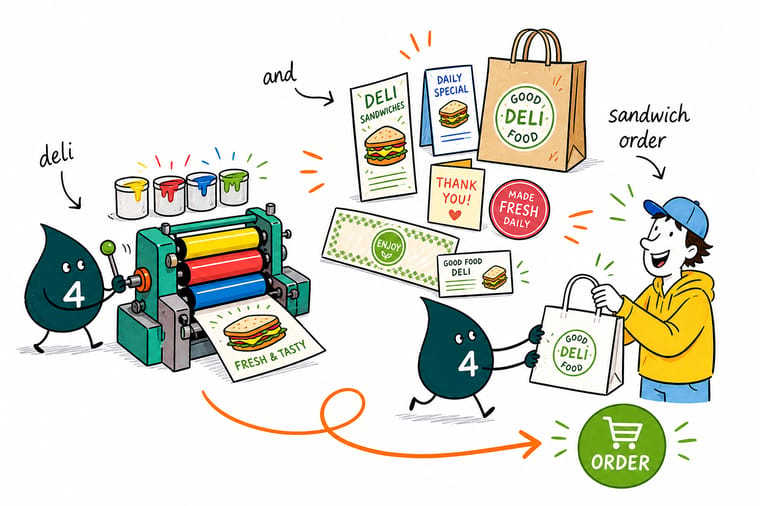
Wally thinks of a deli as a shop that feeds buildings. The banner, window clings, flyers, and posters win the noon foot traffic, the menus dig into desk drawers within a half mile, the labels and coasters work the case and the tables, and the sticker, kraft box, brochure, magnet, and gift certificate ride every wrap and platter into offices where the next order gets decided. Put the same logo on all 18 and the brand matches from the glass to the box lid.
Shop restaurant printing →See it in use
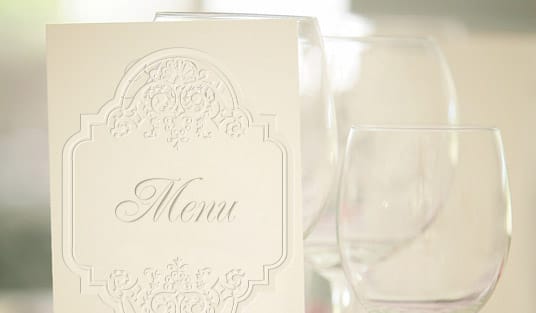
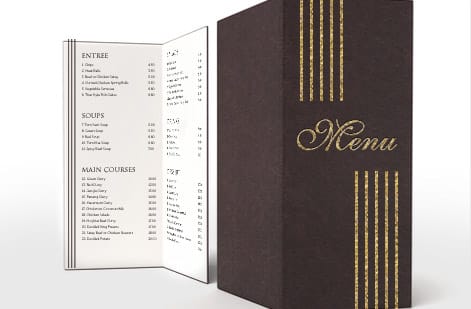
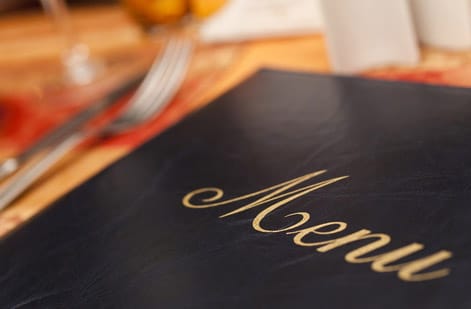
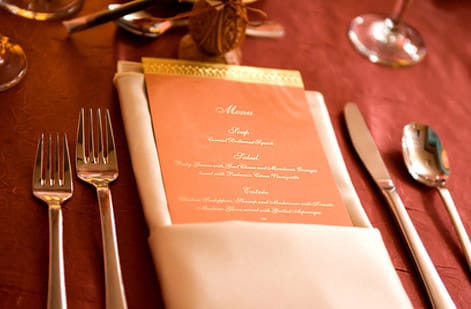
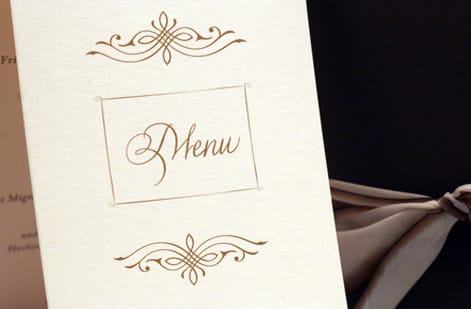
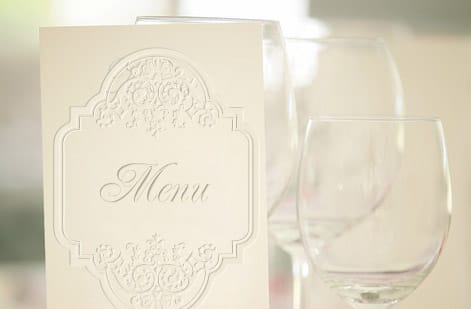
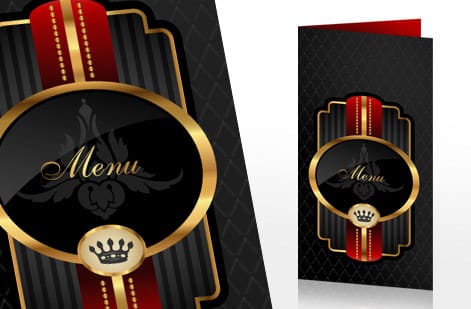
Menus we have printed for customers
%22%2F%3E%3Ccircle%20cx%3D%2247%22%20cy%3D%2220%22%20r%3D%2222%22%20fill%3D%22%23a78bfa%22%20opacity%3D%220.15%22%2F%3E%3Ccircle%20cx%3D%2254%22%20cy%3D%2227%22%20r%3D%22-3%22%20fill%3D%22%23a78bfa%22%20opacity%3D%220.1%22%2F%3E%3Crect%20x%3D%2277%22%20y%3D%22-9%22%20width%3D%2232%22%20height%3D%2220%22%20rx%3D%224%22%20fill%3D%22%23a78bfa%22%20opacity%3D%220.08%22%20transform%3D%22rotate(42%2080%2030)%22%2F%3E%3C%2Fsvg%3E)
Explore more
Where to go next
By the numbers
One pack, printed to own the lunch hour
Common Questions
Common questions about the deli pack
What is in the deli and sandwich shop pack?
18 print products that cover a deli from the sidewalk to the office meeting: restaurant menus, table tents, die-cut stickers, business cards, window clings, banners, custom kraft boxes, flyers, postcards, catering menus, laminated menus, food labels, drink coasters, posters, staff t-shirts, fridge magnets, gift certificates, and catering brochures. The banner, clings, flyers, postcards, and posters capture the lunch crowd, the menus, tents, labels, and coasters move the line and raise the ticket, and the stickers, boxes, cards, brochures, shirts, magnets, and certificates carry the brand out with every wrap and platter.
Why does a deli need printed takeout menus?
Because deli lunches are decided at desks, not at your counter. The menu that goes out in every bag ends up in drawers and break rooms within a half mile, and it gets consulted every time a group asks what should we get. A phone can look up your menu; paper volunteers it. Print the pickup number and order-ahead link large, and the menu becomes your least expensive order channel.
What should the window clings say?
The special of the day, the combo price, and one signature item with a photo, in type readable from across the street. The noon crowd walks fast and decides faster; the window that answers what can I get and how much wins the walk-in. Clings peel and reposition cleanly, so update them weekly and the storefront always looks alive.
How do stickers earn their keep in a deli?
Three jobs at once. They seal the wrap so the sandwich arrives intact, they label what is inside, turkey club, the number 4, no onions, which every busy counter needs, and they put your logo on food that gets carried into offices and parks all day. A custom die-cut shape makes the bag look intentional rather than generic, at pennies per sandwich.
Are branded kraft boxes worth it for catering?
One delivered platter is seen by every person in the meeting, and the box is the only part of your shop in the room. A plain lid wastes that audience; a branded one answers the this-is-great-who-made-it question before anyone asks. Since a single office account reordering monthly can outearn a week of walk-ins, the box that wins those accounts is marketing that also holds sandwiches.
What goes on the table tents?
Two messages, one per side: the daily or weekly special, and the catering pitch. The person eating a good sandwich at your table is the easiest catering lead you will ever get; the tent makes the suggestion while the evidence is in their hands. Keep each side to one item, one photo, one price, and rotate the special side so regulars keep reading it.
How much does the whole pack cost to print?
The 18 starting prices add up to $2,016.23, and the two catering pieces, 250 custom kraft boxes for $711.78 and 250 table tents for $554.39, make up more than half of that. The counter side is small money: 100 business cards for $17.57, one window cling for $30, 50 takeout, catering or laminated menus for $57.11, one banner for $79, and 25 die-cut stickers for $93.37. The boxes and tents are bulk buys that dress the tables and the catering runs for months. Each product is priced live on its own page and scales with quantity and options, so configure each one and the price updates as you go.
Get Started
Laminated menus, 50 for $57.11, on a five day turnaround
Laminated menus are 50 for $57.11 and print in 5 business days. Catering menus price the same, die-cut stickers are 25 for $93.37, and kraft boxes start at 250 for $711.78 on a 7 day turnaround.
Legal Disclaimer
Gold Standard guarantees apply to all standard orders placed through 4over4.com. Price match requires verifiable proof of a competitor's published price for an equivalent product with matching specifications and turnaround time. Satisfaction guarantee covers manufacturing defects and print quality issues. Contact support with order number and documentation.
