
Business Card Basics From the Ground Up


Emma is our prepress and print production voice, built from the knowledge of our production team, with over 20 years in printing.
Everything that goes into a great business card, explained simply: the standard size, the contact details that belong on it, the stocks and finishes that set the tone, and how a finished design becomes a printed card.
A business card is a 3.5 by 2 inch printed introduction to you and your brand. The essentials are a clear name, title, and company, a readable contact block with phone, email, and website, and a stock and finish that fit the impression you want to leave. Design for one clear message, proof the file for spelling and bleed, then print. Standard 14pt or 16pt cards suit most people, and 24pt Ultra Thick or foil adds weight you feel in the hand.
Quick tips
Business card basics at a glance
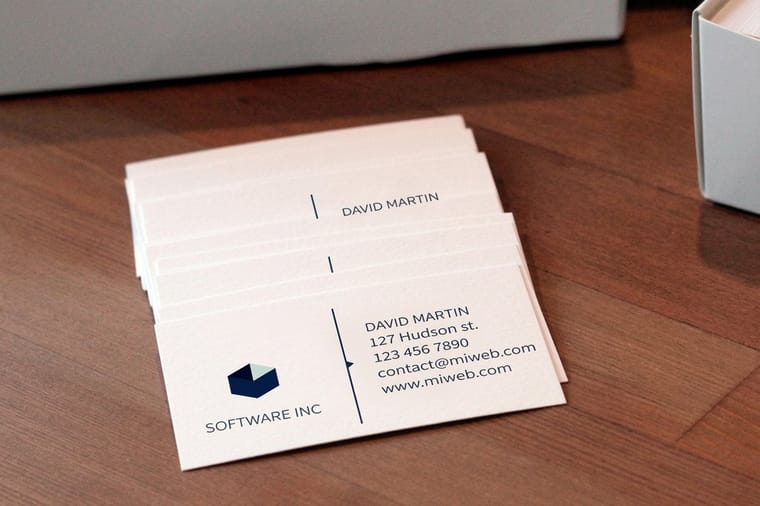
Keep the card 3.5 by 2 inches so it fits every wallet and holder. Lead with name, title, company, phone, email, and website, and only add social handles that matter to your work. Choose 14pt or 16pt stock with a matte, gloss, or soft-touch finish to match your brand, design for one clear message, and proof spelling and bleed before you print. 4OVER4.COM customers who nail these basics get cards that read sharp and hold up for years.
Why business card basics still matter
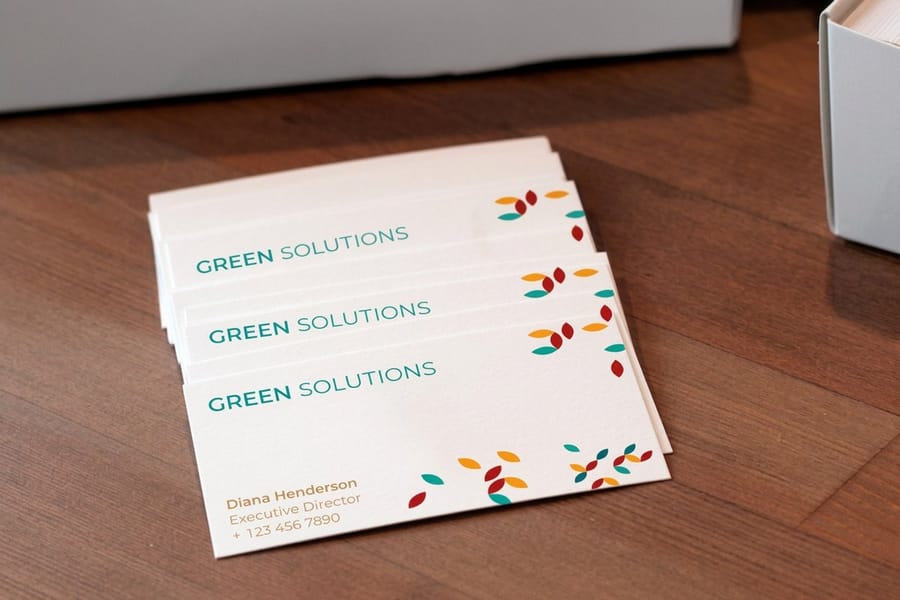
A business card is one of the few marketing tools you physically hand to another person. It is 3.5 by 2 inches of 14pt or 16pt stock that stands in for you after the conversation ends, and 88% of cards are thrown out within a week, so the basics decide whether yours is one of the few kept. Get them right and the card does quiet work in a wallet or on a desk for weeks. Get them wrong and it gets tossed before you reach the parking lot.
This page is the ground-up version: what a business card is made of, the size and stock choices that shape it, the contact details that belong on it, and how a finished design becomes a printed card. If you are weighing whether a card is even worth it in a digital world, our guide on why business cards are important makes the case, and 4OVER4.COM prints the full range at business card printing.
Everything here points back to one idea: a card that is easy to read, comfortable to hold, and consistent with your brand does its job. The rest of this guide breaks that down one piece at a time so you can order with confidence.
The anatomy of a business card
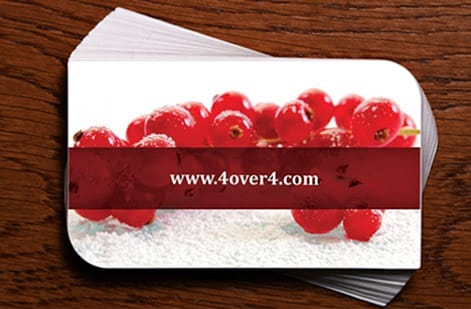
Every effective card is built from the same handful of zones. Once you can see them, laying out your own becomes far simpler.
- Logo and brand mark anchor the card and are usually the first thing the eye lands on.
- Name and title tell people who you are and what you do, set slightly larger than the details below.
- Contact block holds phone, email, website, and address, grouped so it reads in one pass.
- Safe area and bleed keep important content away from the trim edge so nothing gets cut off.
- The back is prime space for a tagline, a QR code, or a clean second color.
Keeping these zones organized is the whole game. If you want a head start, the 4OVER4.COM online designer lays the safe area and bleed out for you so your text always lands where it should.
Business card size and dimensions
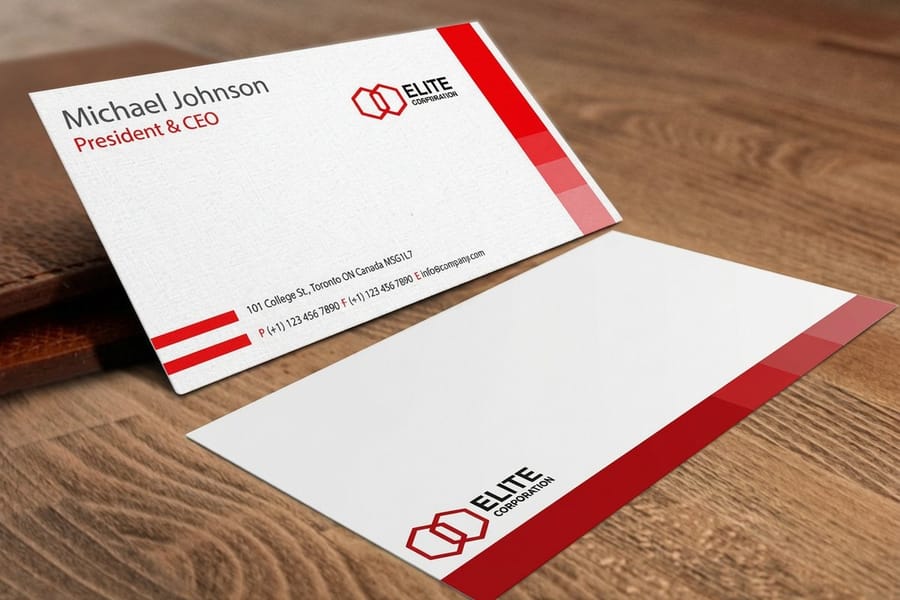
The standard business card in the United States is 3.5 inches wide by 2 inches tall. That number is not arbitrary. It fits wallets, cardholders, and rolodex slots that were all built around it, so a standard card never gets bent to fit somewhere it does not belong.
When you set up artwork, you are actually working with three measurements: the trim size (3.5 by 2), a small bleed that extends your background past the edge, and a safe area inside the trim where text lives. Getting those right is what keeps a printed card looking clean instead of clipped. Our business card size guide lists the exact bleed and safe-area numbers for every format.
You are not locked to the standard. Square, rounded-corner, folded, and die-cut cards all have their place. Our square business cards come at 2 by 2, 2.5 by 2.5 and 3 by 3 inches. If you are torn between shapes, rounded vs square business cards weighs the trade-offs. Just remember the wallet test: a card that will not fit is a card that gets left behind.
What contact information belongs on a card
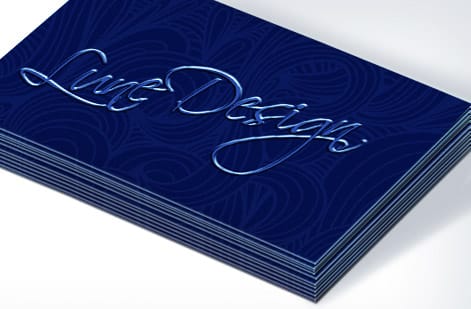
The point of a business card is to be reachable, so the contact block earns the most attention. Include the essentials and resist the urge to add everything.
- Name and title so people remember who they met and what you do.
- Company name and logo for brand recognition.
- Phone and email, the two channels most people actually use to follow up.
- Website so they can learn more on their own time.
- One or two social handles if they are genuinely part of your work.
A physical address matters for storefronts and offices that take visitors, and it can be skipped for fully remote work. If social is central to what you do, writing social media handles on a business card shows the cleanest way to format them. For a full checklist, what to include on a business card covers the details most people forget.
The rule of thumb: every element should either help someone reach you or reinforce your brand. If it does neither, leave it off and give the rest room to breathe.
Paper stocks and finishes explained
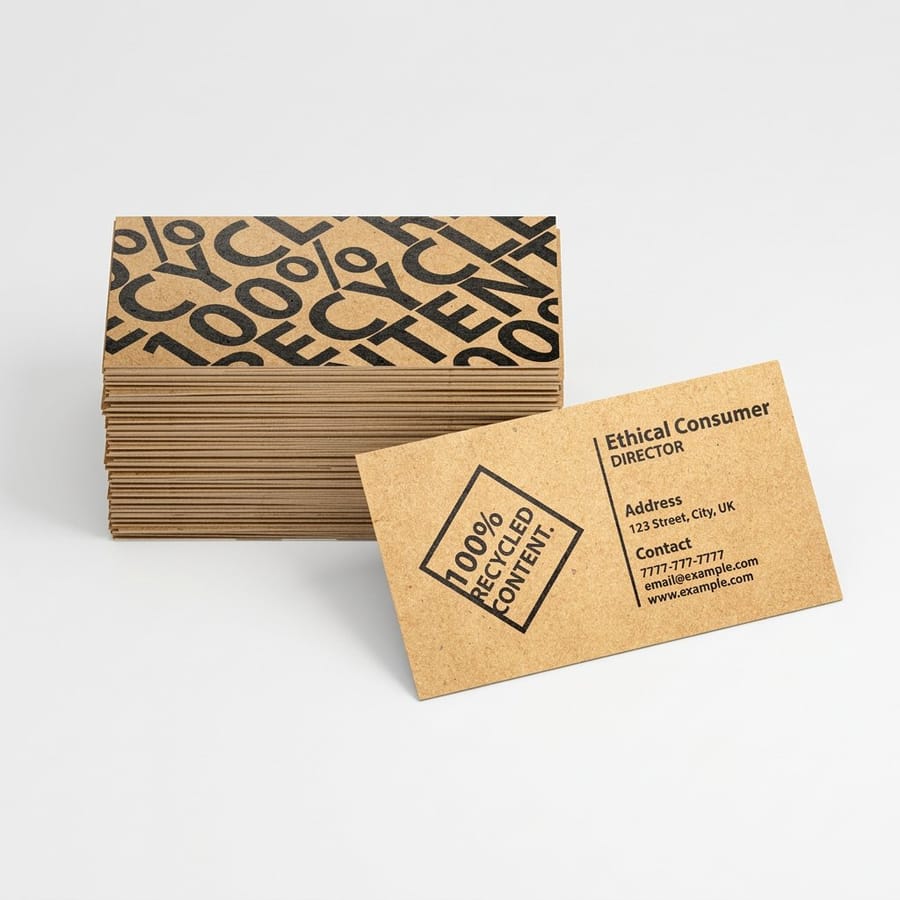
Two cards can carry the same design and feel completely different in the hand, and that difference is stock and finish. This is where a card starts to feel premium.
Stock is the paper itself, measured in points. A 14pt card is sturdy and suits almost any use, while a 16pt card feels heavier and signals a more considered brand. Specialty stocks like cotton, plastic, and layered cards push the feel further. The right cardstock for your business cards guide compares the common weights.
Finish is the coating on top. Matte is quiet and easy to write on, gloss makes color pop and resists fingerprints, and soft-touch adds a velvety surface that people notice instantly. If you are choosing between the first two, matte vs glossy business cards lays it out, and soft-touch cards and UV coating cover the premium options. When in doubt, order samples and feel the difference before you decide.
Business card marketing and design
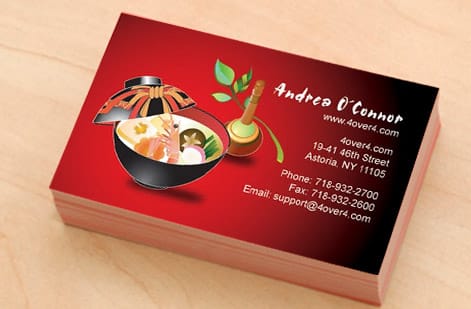
Good card design is not about cramming in everything you offer. It is about one clear message and the room to let it land. Treat the card as a first impression, not a brochure.
Keep a strong visual hierarchy: your name and logo lead, the contact details support, and nothing competes for the same attention. Stick to your brand colors and one or two typefaces so the card matches your other marketing materials. Readability wins over decoration every time, so avoid tiny type and low-contrast color pairs.
Use both sides. The front handles identity and contact, and the back is free real estate for a tagline, a QR code that links to your site, or a bold block of brand color. If you want inspiration before you start, the 4OVER4.COM business card design showcase is full of real customer work, and the online designer lets you build it without a design program.
From final proof to printed card
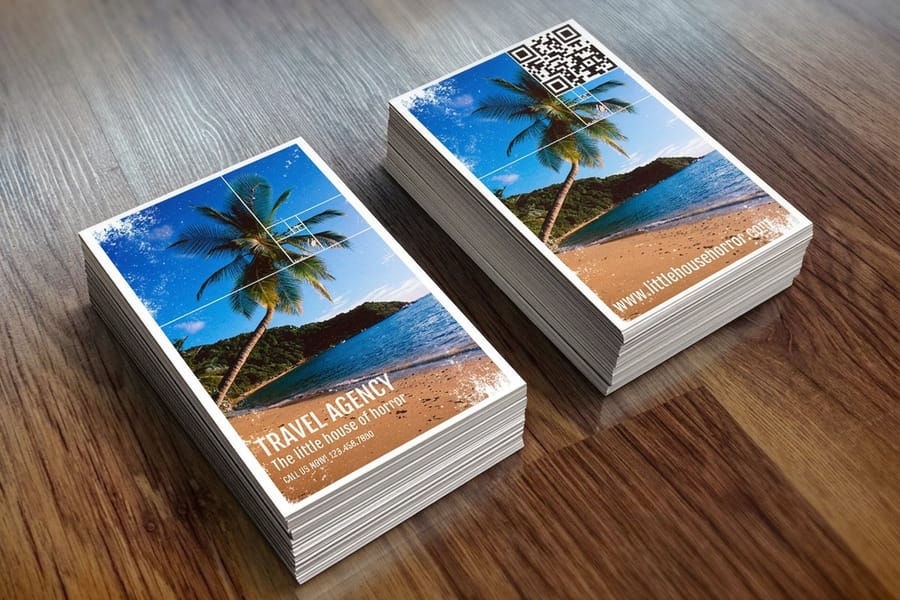
The last step before printing is the one that saves you from reprints. Before you approve anything, slow down and check the proof carefully.
- Spelling and numbers first, especially the phone number, email, and website. A single wrong digit makes the whole card useless.
- Bleed and safe area, so backgrounds run to the edge and text stays clear of the trim.
- Resolution, so logos and photos print crisp rather than soft.
- Color, checked in CMYK since screen brightness does not match print.
When the proof is clean, ordering is quick. Our step-by-step how to make business cards guide walks through file setup, and the online designer handles bleed and safe area for you so the proof comes out right the first time. Once approved, your file goes to press and ships from our New York facility. If you design in your own software, start from the blank business card template, which carries the 3.5 by 2 inch trim, the bleed and the safe area.
What business cards cost and how prices are set
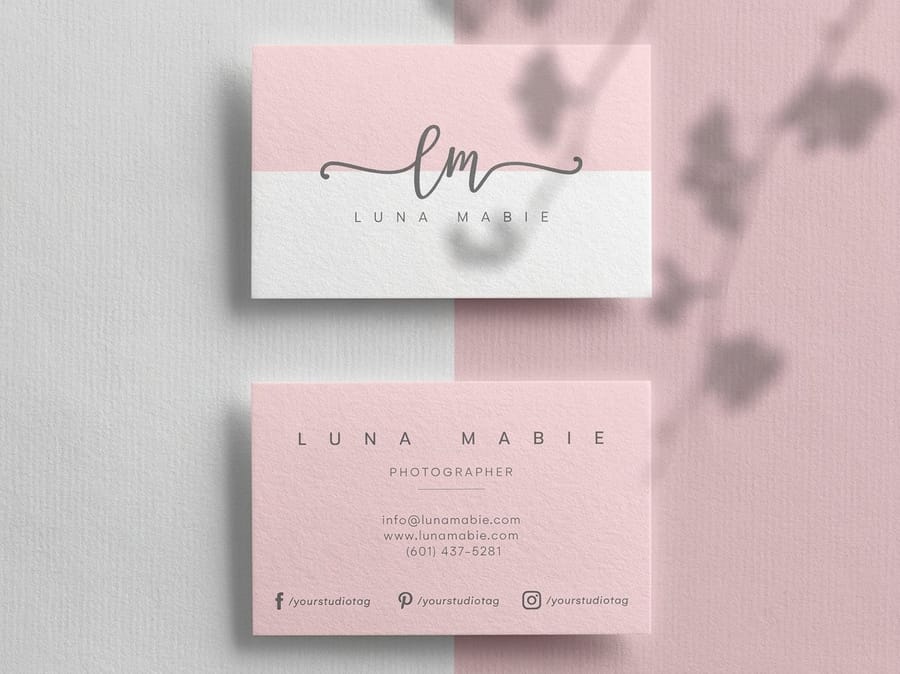
Price moves on four levers: quantity, stock, finish, and specialty options like foil or die-cutting. Each one moves the price of a standard 3.5 by 2 inch card from its starting point, which the price table shows at each quantity.
Quantity is the biggest factor. Setup cost is spread across the whole run, so the per-card price falls sharply as you order more. In the catalog, 500 standard cards cost $36.26, about $0.07 each, against $0.18 each on a run of 100. A box of 500 costs far less per card than a run of 100, which is why most people order a larger batch once the design is locked. Stock and finish move the price next, with heavier stocks and premium coatings costing a little more.
The most reliable way to see real numbers is the live price table, which updates as you change quantity and options with no guessing and no fabricated averages. Pull it up on the standard business cards page, or read how much business cards cost for a full breakdown of what each lever does to the total.
Wally explains business card basics
A great card is easy to read, easy to hold, and unmistakably yours
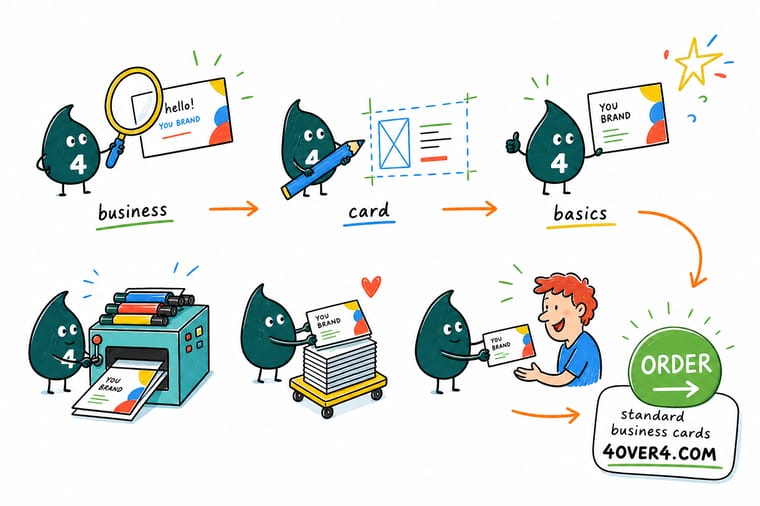
Wally builds every card from the ground up: start at the standard 3.5 by 2 inch size so it fits any wallet, lead with real contact details, then pick a stock and finish that feel like your brand. Design for one clear message, proof it once, and print. Skip the guesswork and configure a sharp standard card built to your exact logo and text at 4OVER4.
Order business cards →
Specs and pricing
Standard business card specs and pricing
Standard cards run 100 for $17.57, which is $0.18 each, with live specs and price-per-unit updating as you change quantity and options.
| Quantity | Price Per Unit | Total |
|---|---|---|
| 100 | 17.6¢ | $17.57 |
| 200 | 11.5¢ | $23.07 |
| 300 | 9.15¢ | $27.46 |
| 400 | 7.96¢ | $31.86 |
| 500 | 7.25¢ | $36.26 |
| 600 | 6.77¢ | $40.64 |
| 700 | 6.43¢ | $45.04 |
| 800 | 6.18¢ | $49.43 |
3.5 by 2 inches, 3 business days
Order business cards at 4OVER4
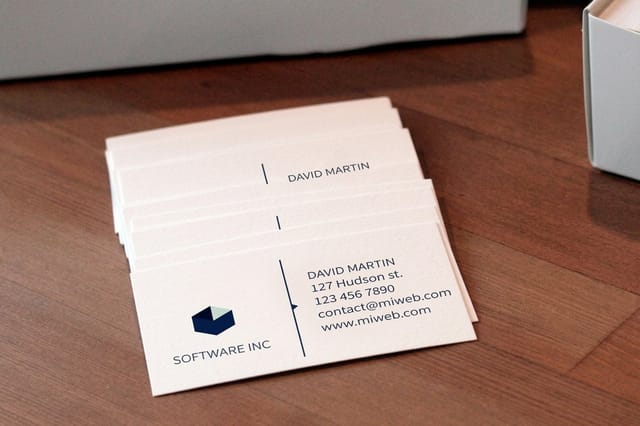
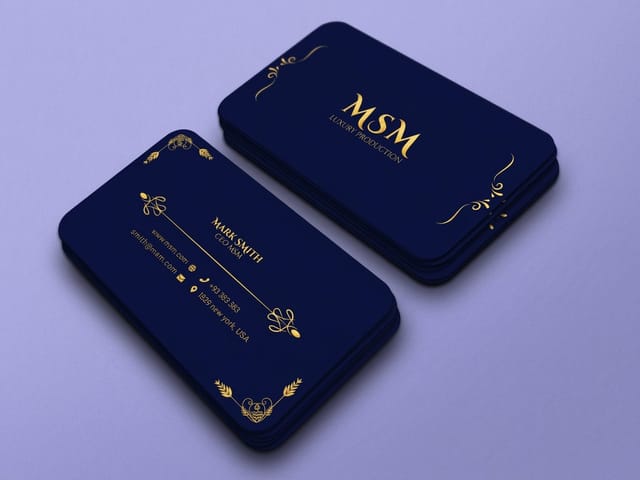
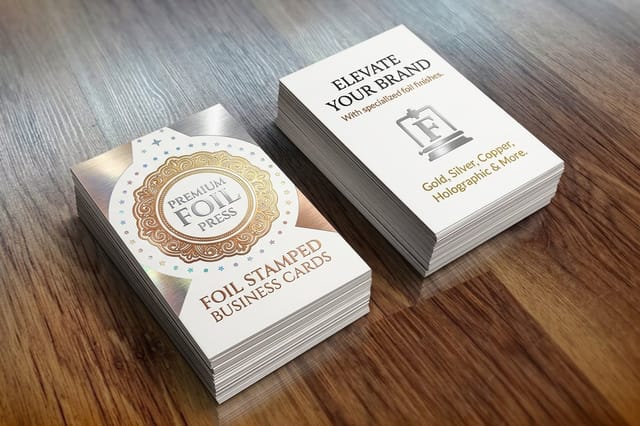
Standard cards we printed
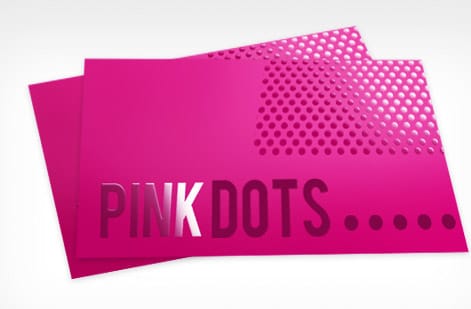
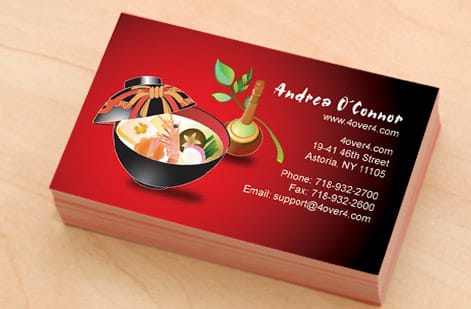
First card orders we printed for customers
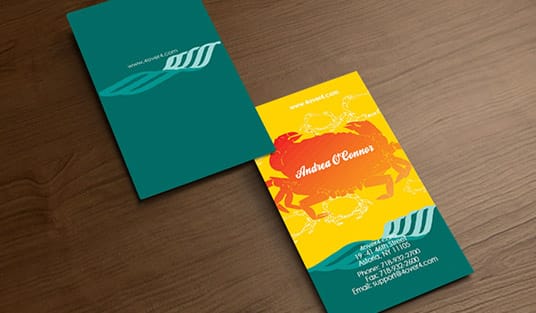
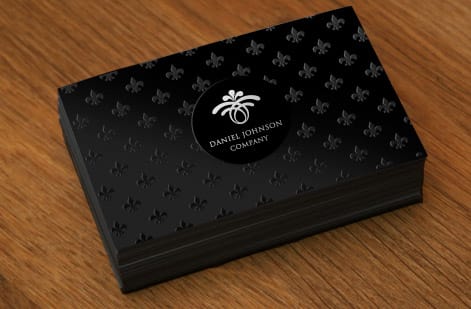
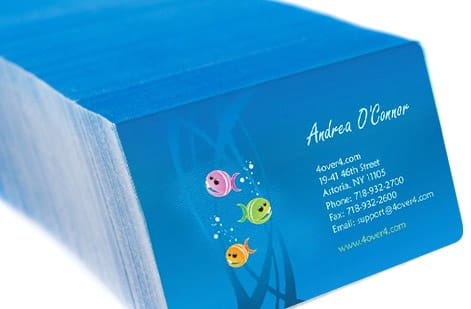
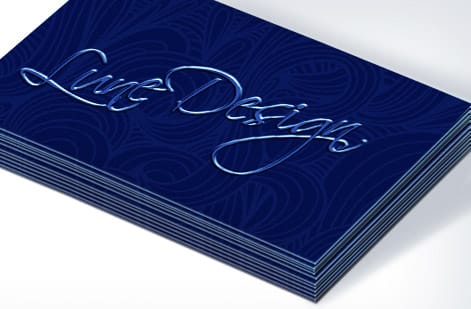
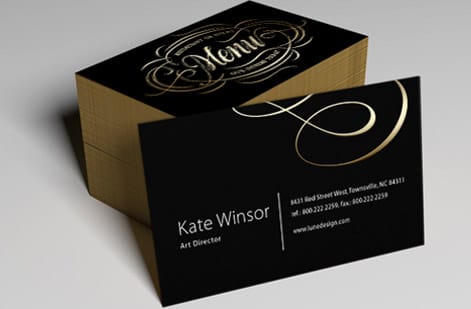

Designs, sizes and prices
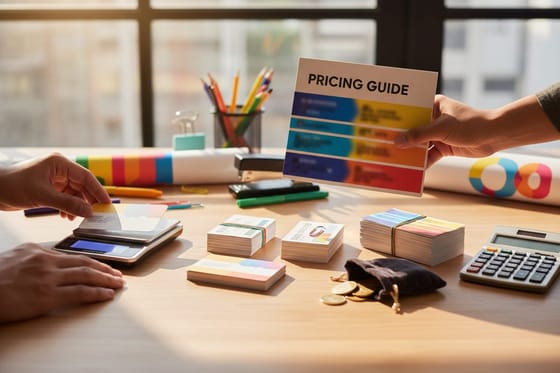
Where to go next

By the numbers
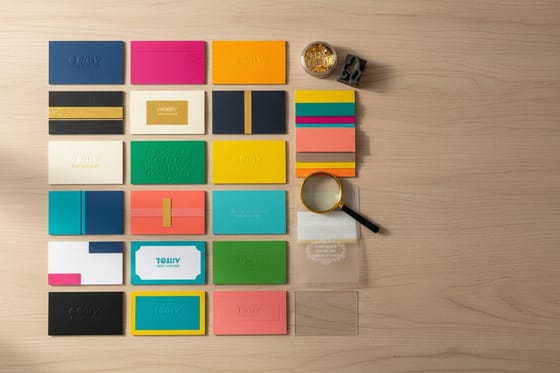
The stocks a 3 day card run draws on
Common Questions
Common questions about business cards
What is the standard business card size?
In the United States the standard business card is 3.5 inches wide by 2 inches tall, with a small bleed added on each edge for printing. That size fits every common wallet, cardholder, and rolodex, which is why it stays the safe default. If you want something that stands out you can go square, rounded, folded, or die-cut, but check that it still fits a wallet before you commit. Our business card size guide walks through every standard and custom option in detail.
What contact information should a business card include?
At minimum, include your name, job title, company name, phone number, email address, and website. Add a physical address if walk-in visits matter, and one or two social handles if they are part of how you do business. The goal is to give someone every reasonable way to reach you without crowding the card. Leave enough white space that the essentials are easy to read at a glance rather than packing every field onto the front.
What are the most popular business card finishes?
Matte, gloss, and soft-touch are the three most requested finishes. Matte is understated and easy to write on, gloss makes colors pop and resists fingerprints, and soft-touch adds a velvety feel that reads as premium. Beyond those, spot UV, foil, and painted edges add contrast and texture for cards that need to make an impression. Each finish changes how the card feels in hand, so request free samples if you are deciding between them.
How thick should a business card be?
Thickness is measured in points, and 14pt and 16pt cardstock are the two most common weights. A 14pt card feels sturdy and works for almost any use, while 16pt is noticeably heavier and signals a more premium brand. Specialty options like cotton, plastic, and layered stocks go thicker still. Heavier stock costs a little more per card but resists bending and creasing, so it holds up better in a wallet over time.
What should my first business card actually say?
Start with how the card will be used, then match the stock, finish, and shape to the impression you want to leave. A contractor handing out dozens of cards a week is well served by a durable 14pt matte card, while a designer or consultant might choose 16pt soft-touch or a foil accent. Keep the layout consistent with your logo, colors, and other printed materials so every touchpoint feels like the same brand.
How much do business cards cost and how is the price set?
Price depends on quantity, stock, finish, and any specialty options like foil or die-cutting, and it drops sharply as your quantity goes up because setup is spread across more cards. That is why a box of 500 costs far less per card than a run of 100. The live price table on each product page shows the exact cost for every quantity as you configure it, so you never have to guess. Our guide on how much business cards cost breaks down what drives the number.
Get Started
Order 100 premium business cards from $17.57
Pick your size and stock, drop in your logo and details, and we print sharp, long-lasting cards that ship fast from New York.
Legal Disclaimer
Gold Standard guarantees apply to all standard orders placed through 4over4.com. Price match requires verifiable proof of a competitor's published price for an equivalent product with matching specifications and turnaround time. Satisfaction guarantee covers manufacturing defects and print quality issues. Contact support with order number and documentation.
