
5 Print Picks That Build a Positive Digital Presence Offline
A profile grid only reaches people who already found you. These five printed pieces do the other half of the job: they hold the brand steady across every channel, and they put your handle in front of people whose cameras and shoulders you do not control.
A positive digital presence needs two things print supplies better than a screen: one consistent look everywhere, and surfaces other people carry. Five pieces cover both. A brand booklet settles the logo, colors and type for everyone posting. A fabric step-and-repeat puts your mark in other people’s event photos. Die-cut stickers, hang tags and canvas totes carry the handle out of the building. Five starting prices add up to $599.42, or $358.87 without the booklet.
The picks
The 5 picks, numbered and priced live
Buy them in reverse order of price if your brand is young. The tote, the hang tag and the sticker start earning the week they arrive; the backdrop needs an event with cameras in it; the brand booklet only pays off once your logo has stopped moving. Prices come straight from the configurator and drop per piece as the quantity climbs.
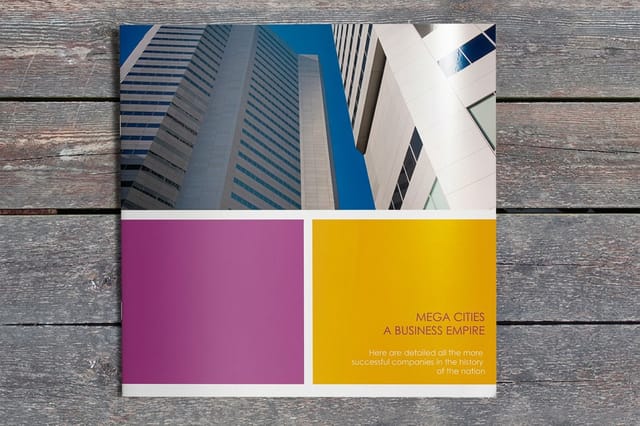
Standard booklets from $240.55
The brand rules on paper, so the intern posting on Tuesday and the freelancer editing on Thursday pick the same logo, the same two colors and the same type. Inconsistency is what makes a small brand look unstaffed.
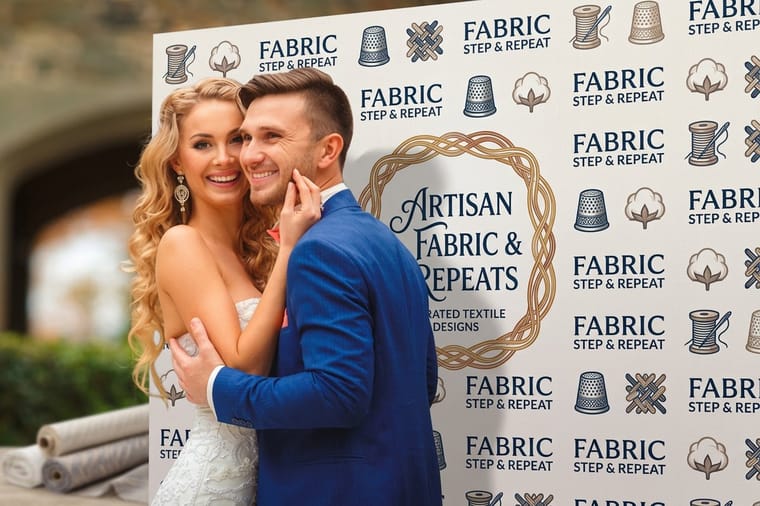
Fabric step-and-repeat from $217.50
The wall behind every photo taken at your event. Dye-sublimated fabric does not throw a flash hotspot back at the lens the way a vinyl banner does, which is the whole reason this piece is fabric.
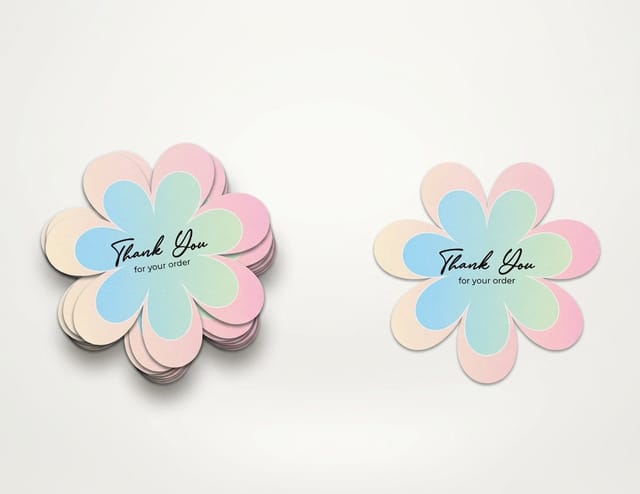
Die-cut stickers from $93.37
Cut to the outline of your mark, so it reads as a symbol rather than a label on a square. It travels on a laptop lid into rooms you will never be invited to.
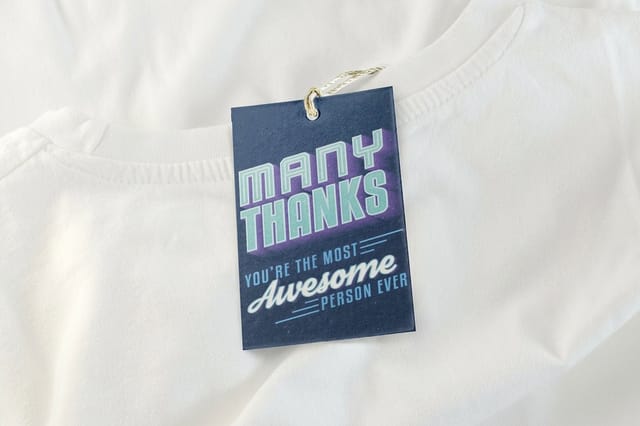
Standard hang tags from $25.27
The one piece of your packaging that is always in frame during an unboxing video. Put the handle on it, not the web address, because the phone filming it already has the app open.
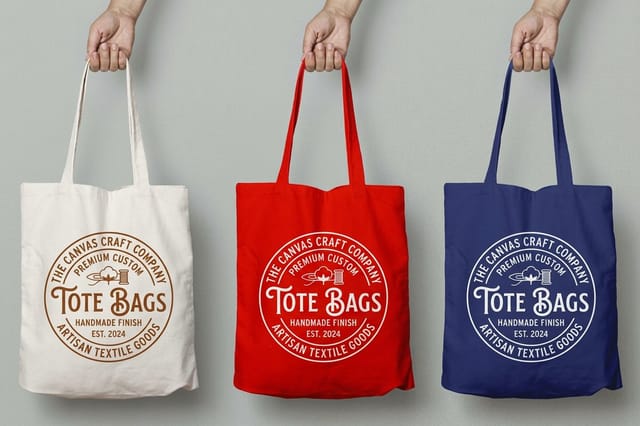
Canvas tote bags from $22.73
A mark that walks past strangers at reading distance for years. Print one short handle large enough to be caught at a glance and nothing else.
Before you send a file
Print the handle, and route every scan through your own domain
Two decisions made before the first order determine whether these five pieces still work in a year, and whether you can tell which of them did anything.
The first decision is what string goes on the paper. Put the handle, not the web address. The person looking at your hang tag, your sticker or your backdrop is holding a phone with an app already open, and a handle is a few seconds of typing inside it. A full address means quitting the app, finding a browser and typing punctuation, and that is where most of them give up. A handle also tends to survive a platform changing its URL scheme, while a printed link does not.
The second decision is where the QR codes point. Never at a platform URL directly, and never at a file. Point every code at a short path on a domain you own, and give each printed surface its own path, so the booklet, the backdrop, the sticker, the tag and the tote redirect through five different addresses to the same profile. Two things follow. You can change the destination later without reprinting anything, which matters because a printed run has no edit button. And the hit counts on those five paths are the only attribution a printed piece will ever give you, which answers a question worth money: which surface actually produced the follow.
Keep the codes physically honest while you are at it. Around 0.8 in square is a sensible floor for a first-try scan at arm’s length, with a clear quiet border on all four sides and at least 0.125 in of clearance from the trim so a shift on the cutter never clips a corner. Dark code on a light ground, never reversed, never sitting on a photograph. The complete guide to QR codes covers error correction levels and what happens to a scan when contrast drops.
One last piece of housekeeping before anything goes to print: check that the handle you are about to commit ink to is actually free everywhere you might want it. Claiming the same name on every platform, even the ones you will not use this year, costs nothing today and is the difference between one brand and four near-misses. The rest of the strategy sits in the build a positive digital presence guide, and the voice that goes with it is worked out in how to write brand tone of voice guidelines.
What each piece does
The five pieces and where each one gets seen
Each piece reaches a different audience through a different surface, and only two of the five are seen by people who already follow you. Read the row, tap the piece to jump to its section, and start with whichever surface your brand currently has no presence on.
| Piece | What it carries | Where it gets seen | Starts at |
|---|---|---|---|
| Standard booklets | Logo rules, color values, type pairing, the things nobody should improvise | A desk drawer, a new-hire pack, the hand of anyone who posts on your behalf | $240.55 |
| Fabric step-and-repeat | The mark, repeated, at two sizes so any crop still contains a whole one | Behind the people being photographed at your event, in their posts, not yours | $217.50 |
| Die-cut stickers | The symbol alone, with no words that need reading at arm’s length | A laptop lid, a water bottle, a hard case going through an airport | $93.37 |
| Standard hang tags | The handle and a QR code, on the thing a buyer photographs first | On the product, inside the unboxing video, on a shelf at home | $25.27 |
| Canvas tote bags | One handle at street-legible size, in one color | A grocery run, a commute, a market, for as long as the bag lasts | $22.73 |
1. Standard booklets: the brand rules, where people will actually meet them
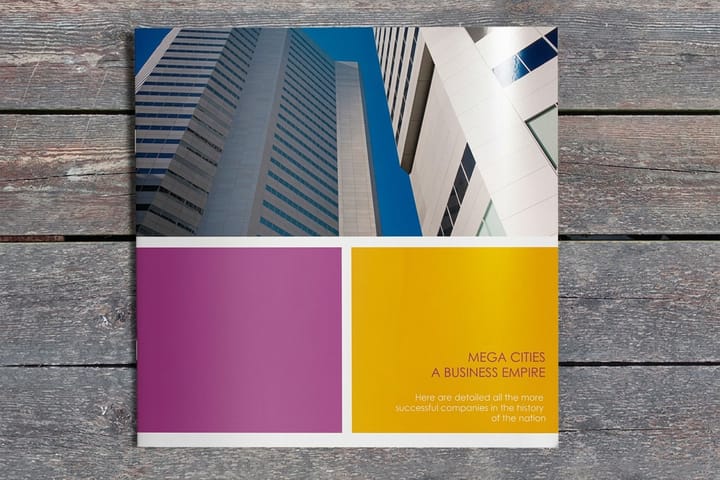
Most small brands look scattered online for a boring reason: three different people posted this week and each one used a different logo file. A printed brand book fixes that, and standard booklets from $240.55 are the cheap bound format to put it in. Hand one to every person who touches an account, and the argument about which blue is the blue stops happening.
Keep it short and put only the decisions in it. Which logo lockup goes on a square avatar and which one goes on a wide header. The two colors that are yours and the one that is an accent. The type pairing, and the one you will not use. A worked example of a right post and a wrong post side by side does more than a page of rules, and our guide on how to create a brand style guide lays out the sections in order. If the palette itself is still open, settle it first with choosing your brand color palette, and work out the lockups with the logo variations every brand needs.
Two production facts shape the file. Booklets are saddle stitched, which means folded sheets stapled through the spine, so every sheet carries four pages and your total has to land on a multiple of four. Plan 8, 12, 16 or 24 pages and fill any gap with a notes page rather than ordering an odd count. Past roughly 48 pages the staples start to buckle and the fold stops sitting flat. The page counts and creep guide covers both limits, and what a saddle stitched booklet is walks the format end to end.
The honest limit: print the rules, never the assets. Hex values, logo files and font licences belong on a page you can edit, because the day you refresh the mark, every printed copy is wrong and there is no edit button on paper. Put a QR to the live asset folder on the inside cover and let the booklet carry only the thinking. It is also the piece to buy last if your logo is still moving. Order it once the mark has survived six months without a redraw, and see brand guideline examples for how much detail is enough.
2. Fabric step-and-repeat: get your name into other people’s photos
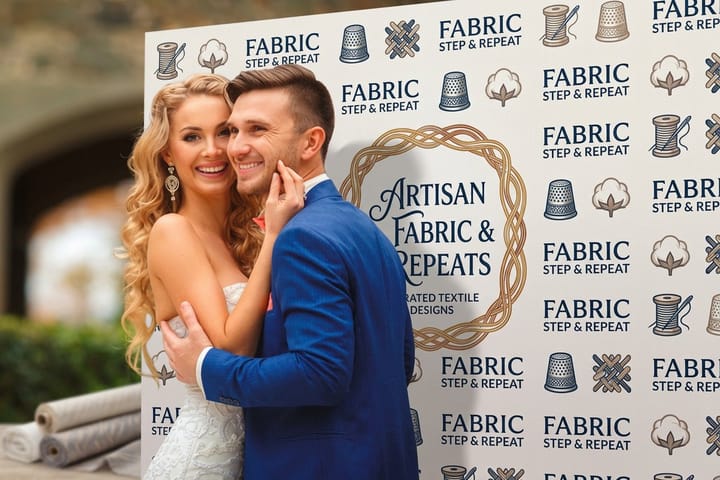
Everything else in this kit is content you publish. A backdrop is different: it puts your mark into photos other people publish, tagged with their own words, to an audience that never followed you. A fabric step-and-repeat from $217.50 is the piece that does that, and it is the one most small brands skip because it looks like something only award shows need.
The material choice here is not a preference, it is optics. A step-and-repeat exists to be photographed, usually under a flash, a ring light or a phone torch. Coated vinyl is a smooth reflective surface and bounces that light straight back as a bright patch, so half the shots come out with a white blob sitting over the logo. Dye-sublimated fabric has ink sitting in the weave rather than on a gloss film, so it scatters the light instead of mirroring it. That is the entire reason this one is ordered in fabric and a vinyl banner is not a substitute.
Lay it out for the crop, not for the wall. People post head-and-shoulders shots, and a head-and-shoulders crop takes in maybe three feet of the backdrop, so a repeat spaced wider than that will produce photo after photo with half a logo in the corner and nothing readable. Set the marks on a staggered grid, tilt them slightly so a vertical crop still catches a whole one, and mix two sizes so the pattern does not read as wallpaper. Skip the web address entirely and use the handle, which is what a viewer can act on without leaving the app they are already in.
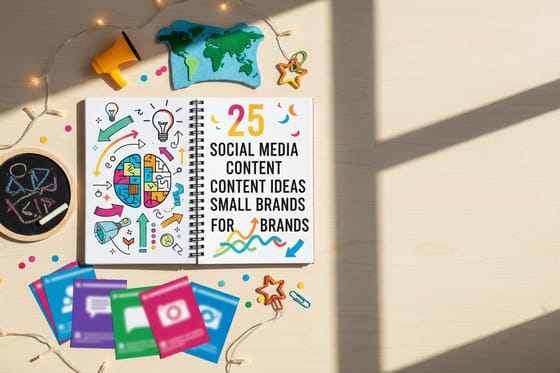
The limit is worth naming, because $217.50 is real money. A step-and-repeat only works when someone else’s camera is pointed at it. If your events are ten people in a room and nobody photographs anything, it is furniture. The always-on version for a market stall or a trade table is a custom tablecloth from $225.00, which sits in every wide shot of the booth for the whole day, and our guide to designing a branded business tablecloth covers the drop and the fold lines that eat a logo. For what to do with the photos once you have them, there are ideas in 25 social media content ideas for small brands.
3. Die-cut stickers: the mark that travels on somebody else’s laptop
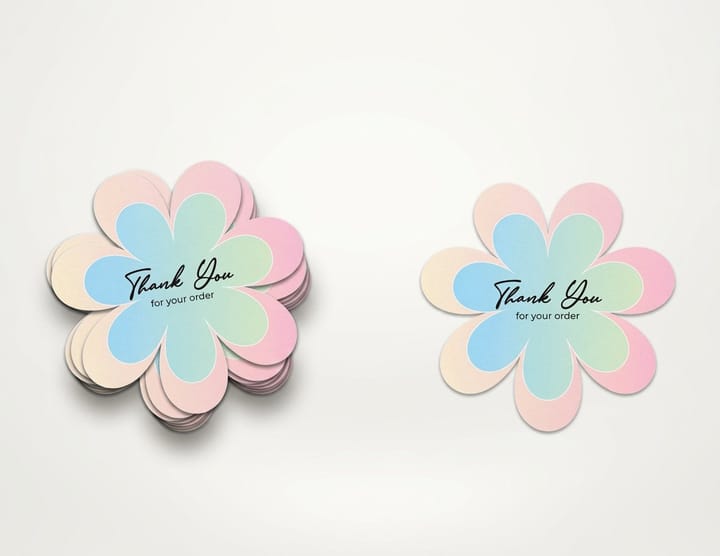
A sticker is the only piece of print people ask you for. Die-cut stickers from $93.37 are cut to the outline of your mark rather than to a rectangle, and that cut is the difference between a symbol somebody wants on a laptop lid and a label that looks like it came off a shipping box.
Design it as a silhouette. At laptop-lid distance nobody reads a tagline, a web address or a strapline under the logo, so the only things that survive are the shape, one or two colors, and a handle short enough to take in at a glance. If your mark has no distinct outline, the die cut buys you nothing and you are better off with the round version. What die-cut stickers are explains how the cut line is set and how much clearance it needs from the artwork.
Here is the real fork on cost. Circle stickers start at $23.88 against $93.37 for die-cut, a gap wide enough to matter on a first order, and the round shape hands a QR code its quiet zone for free. Print circles when the sticker is a free extra in a shipping box and volume is the whole point. Pay for the die cut when the shape is the brand and the sticker has to win a spot against stickers somebody chose for themselves.
Material decides where it survives. Paper stock is fine for a sticker that ends up on a notebook and dies with it; vinyl is what holds up on a water bottle that goes through a dishwasher and a car window that sits in July sun. Choosing the right sticker material compares the stocks, and outdoor sticker materials covers what fades and what does not. The wider case for the format, and why people accept an advert they have to stick on themselves, is in why sticker marketing works.
4. Standard hang tags: the piece that is always in the unboxing shot
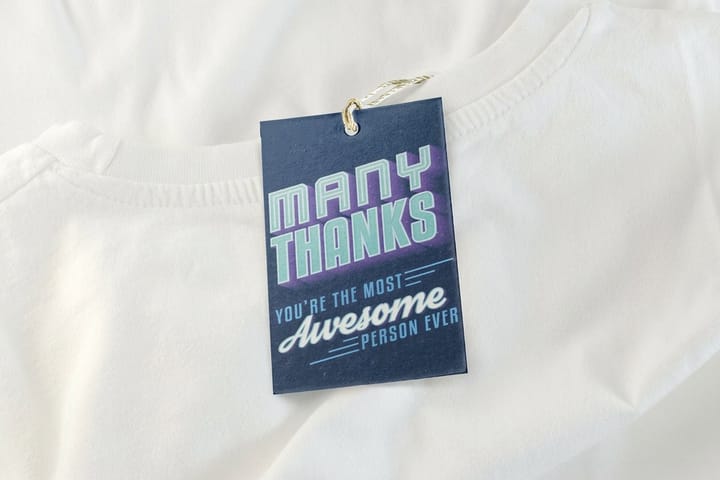
If you ship anything physical, one small printed piece ends up in almost every photo a customer takes of it. Standard hang tags from $25.27 are cheap, and they are the cheapest surface in this kit that reaches a camera you do not control.
Put the handle on the tag, and put it where a thumb does not cover it. A handle can be typed into an app that is already open on the phone taking the photo; a full web address means switching to a browser, and that switch is where most of them stop. If you add a QR code, give it room: keep it around 0.8 in square as a working floor for a first-try scan at arm’s length, leave a clear quiet border on all four sides, and keep it at least 0.125 in from the trim so a shift on the cutter never clips a corner. Dark code, light background, never reversed and never over a photograph. The complete guide to QR codes covers error correction and the size floor in detail.
The physical details are where hang tags go wrong. The punched hole needs enough card between it and the edge or the tag tears off in a delivery van, and a heavier stock is what keeps a tag from curling in a humid box. String color is a real design decision, because it is in the photo as much as the card is. Our custom branding tags guide goes through sizes, hole placement and stock weights.
The limit is obvious but worth saying out loud: this piece only exists if you sell something physical. A consultancy, a newsletter or a course has nothing to hang a tag on, and the money is better spent on the sticker or the backdrop. If you do ship, the tag is the highest-return item in the kit per dollar, because the photograph gets taken whether you ask for it or not. The wider print set that surrounds it is laid out in the brand kit print essentials checklist.
5. Canvas tote bags: one handle, carried past strangers for years

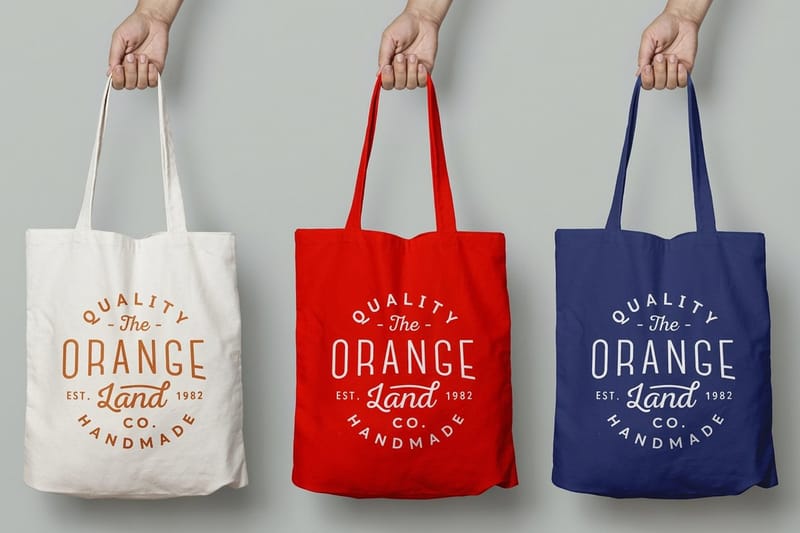
The last piece is the one with the longest life. Canvas tote bags from $22.73 get carried on a commute, into a supermarket and around a market for as long as the bag holds together, which puts one handle in front of strangers at reading distance over and over.
Design it for a moving target. Somebody sees a tote for about two seconds, from the side, while walking past, so it carries exactly one thing: a large mark or a short handle, in one color, high on the panel where the bag is not creased by the contents. A web address on a tote is unreadable in motion. A slogan in small type is decoration nobody parses. If it does not survive being squinted at from ten feet, it is not a tote design.
Weight is the trade-off, and it decides whether the bag lasts. Cotton totes start at $5.00 and are the right call for a conference giveaway where the count is high and the bag is expected to be a carrier bag. Canvas is heavier, holds a shape and survives a full grocery run, which is the only reason anyone keeps reaching for it a year later. A cheap tote that splits on its third use has advertised you once. Pay for the heavier cloth when the bag is meant to be kept.
Print it in one color if you can. A single-color mark on natural canvas ages better than a dense multi-color print, which stiffens the panel and cracks along the fold line where the bag gets folded into itself. The case for the format, including who actually keeps them, is in the benefits of branded tote bags, and the rest of our in-print branding thinking sits in how to brand your business in print.
Specs and pricing
The two pieces with real money attached
The brand booklet and the fabric backdrop are the two orders worth reading the spec sheet for, because page count drives one and finished size drives the other. Here are the live specs and price ladders straight from the configurator.


| Quantity | Price Per Unit | Total |
|---|---|---|
| 25 | $9.62 | $240.55 |
| 50 | $6.04 | $302.06 |
| 100 | $3.61 | $361.37 |
| 200 | $2.22 | $444.85 |
| 300 | $1.65 | $495.38 |
| 400 | $1.29 | $515.14 |
| 500 | $1.06 | $531.61 |
| 600 | 91.5¢ | $549.19 |
| Quantity | Price Per Unit | Total |
|---|---|---|
| 1 | $217.50 | $217.50 |
Wally fixes the handle before the ink
One name, five surfaces, five counters
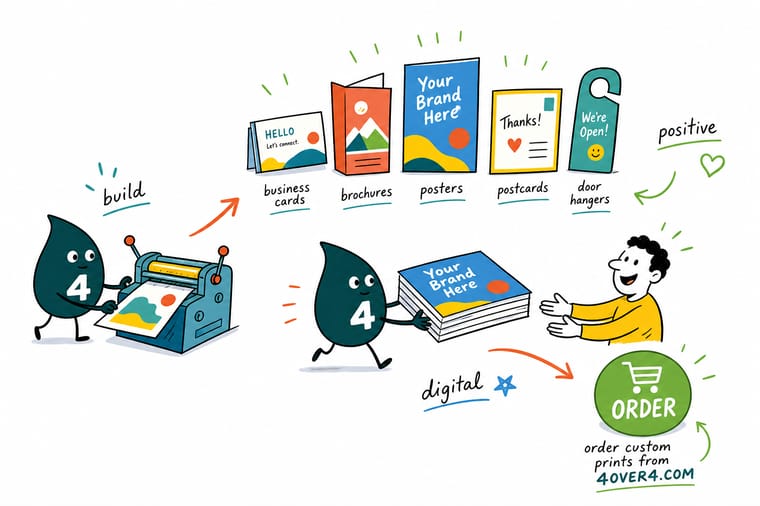
Wally printed 2,000 hang tags with a full web address on them, then moved the site and turned every tag into a dead end. Now the handle goes on the paper, the QR code points at a short path on his own domain, and each of the five pieces gets its own path so he can see which one actually brought the follow. Change the destination whenever you like. The printed piece never has to be right about anything except the name.
Shop the creative professionals collection →See it in use
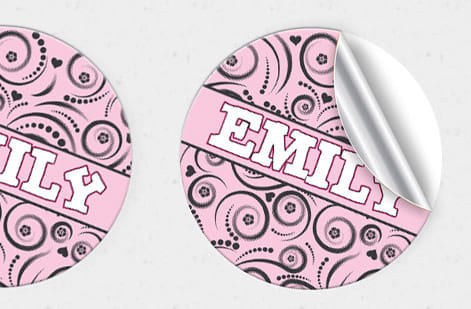
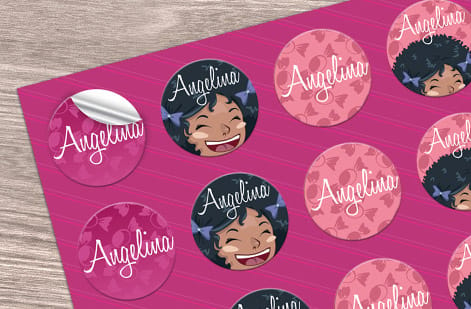
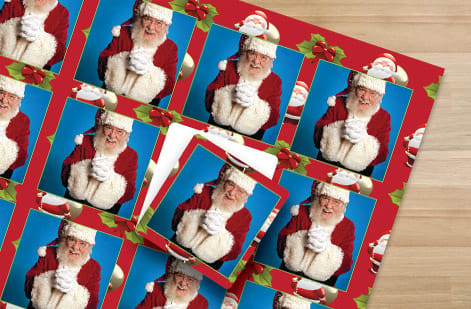
Sticker designs that went to print





Explore more
Where to go next

By the numbers
Printing that holds one look across four channels
Common Questions
Common questions about print and your digital presence
How does printed material help a digital presence at all?
It reaches people who are not searching for you. Every channel you post on shows your work to people who already follow you or who typed something into a box. A sticker on a laptop, a tote on a shoulder and a backdrop in somebody else’s event photo all put your mark in front of an audience that had no intention of finding you, and they carry a handle that can be typed into an app in a second. The second thing print does is enforce consistency, because a printed brand book is harder to ignore than a folder nobody opens.
Should the printed piece carry a handle or a web address?
A handle, in almost every case. The phone that sees your tag, your sticker or your backdrop already has the app open, and a handle is four seconds of typing inside it. A full web address means leaving the app, opening a browser and typing a longer string with punctuation in it, and most people simply do not. Use a QR code when you need to send someone to something that is not a profile, and point that code at a short path on a domain you own so you can change the destination later without reprinting.
Fabric or vinyl for a step-and-repeat backdrop?
Fabric, because the piece exists to be photographed. Coated vinyl is a smooth reflective surface, so a flash or a ring light bounces back as a bright patch that lands over the logo in a good share of the shots. Dye-sublimated fabric holds the ink in the weave, scatters the light and photographs evenly. Fabric also folds into a bag and travels without the crease marks a rolled vinyl banner keeps. Vinyl is the better buy when the same graphic has to live outdoors in weather, which a backdrop does not.
How should the logos be spaced on a step-and-repeat?
Space them for the crop people actually post, which is head and shoulders and takes in roughly three feet of the panel. If the repeat is wider than that, most photos will contain half a logo and nothing readable. Stagger the marks on an offset grid, tilt them a few degrees so a vertical phone crop still catches a whole one, and print at two sizes so the pattern does not flatten into wallpaper. Put the handle in the repeat and leave the full web address off.
Die-cut or circle stickers for a brand mark?
Circle stickers start at $23.88 and die-cut stickers at $93.37, so the shape has to earn the gap. Pay for the die cut when your mark has a distinct outline and the sticker has to compete on a laptop lid against stickers somebody chose for themselves. Order circles when the sticker is a free extra in a shipping box, when volume is the point, or when the design is mostly a QR code, because a round sticker gives the code its quiet zone without any extra layout work.
What does the five-piece kit cost to start?
The five starting prices add up to $599.42 at 4OVER4.COM: standard booklets from $240.55, a fabric step-and-repeat from $217.50, die-cut stickers from $93.37, standard hang tags from $25.27, and canvas tote bags from $22.73. Leave the brand booklet until your logo has stopped changing and the other four start at $358.87. Every price falls per piece as the quantity climbs, and the configurator updates live as you change size, stock and finish.
Is a printed brand style guide worth it when a PDF is free?
It is worth it for the people in the room and pointless for the people who are not. A booklet on a desk gets picked up when somebody is halfway through building a post; a PDF in a shared drive gets opened once during onboarding and never again. Print the decisions, which is the logo lockups, the colors, the type pairing and the tone, and keep the actual asset files and hex values behind a QR to a page you can edit. That way a rebrand does not turn every printed copy into a wrong answer.
Do hang tags make sense if I sell mostly online?
They make more sense, not less. An online sale is the one moment a customer holds your brand in their hands, and the hang tag is the piece most likely to be in frame when they photograph the parcel. Put the handle where a thumb will not cover it and give any QR code about 0.8 in square with a clear border. If you sell nothing physical at all, skip the tag entirely and put the money into the sticker or the backdrop.
Get Started
Put the handle on something people carry
Print the five-piece kit as one branded set at 4OVER4.COM. Pick your sizes, stocks and finishes, and watch every price update live as you build the order.
Legal Disclaimer
Gold Standard guarantees apply to all standard orders placed through 4over4.com. Price match requires verifiable proof of a competitor's published price for an equivalent product with matching specifications and turnaround time. Satisfaction guarantee covers manufacturing defects and print quality issues. Contact support with order number and documentation. On-time delivery rate based on tracked orders 1999 to 2026. Individual results may vary based on shipping carrier performance.
