
The 13-Piece Bookstore Seasonal Promo Set Readers Notice
Summer reading, back to school, the holiday rush, the quiet new year: a bookstore sells seasons. These 13 pieces let you redress the whole shop for each one, from the glass on the street to the bookmark in the bag.
The bookstore seasonal promo set is 13 pieces that redress a shop for every season: bookmarks, die-cut stickers, hangtags, counter cards, window clings, banners, business cards, flyers, posters, postcards, tote bags, gift certificates, and table tents. Clings, posters, and the banner announce the season from the street, counter cards, table tents, and bookmarks sell it at the register, and hangtags, stickers, totes, cards, and postcards carry the reader back for the next one.

The picks
What the 13 bookstore pieces cost to start
Start here. Bookmarks start at 50 for $16.48, business cards at $17.57, one counter card at $21.97 and posters at $108.75. Bookmarks, counter cards and clings are the pieces you reprint each season; the banner is a one-time buy. Order the 13 together from one set of files, then read on for what each one does and when to rotate it.



Design and print help
Four seasonal swaps, one bookstore look
Four seasonal swaps a year only work if the shop stays recognizable through all of them. Keep the logo, the palette and the front of the 2 x 6 inch bookmark fixed, and change only the dated line on the clings, counter cards and table tents. A free proof lets you check every date and title list before a season prints. These 4OVER4.COM services keep the look consistent from the window to the bookmark.
How they work together
Window first, register second, bag last
A reader meets the season on the glass, pays under a counter card and carries a bookmark home in a tote. Print the three groups below in that order and the season reads the same at every stop.
The season starts on the glass. Clings swap in minutes without residue, posters give the window and walls a new release to sell, a banner turns a sidewalk sale into something people cross the street for, and flyers carry the event to the coffee shops and corkboards where readers already gather.
The counter is where browsers become buyers. A counter card pitches the seasonal promotion, a table tent on the display or cafe table sells the events calendar, the bookmark goes into every bag, stickers become impulse buys, and gift certificates turn December browsers into January customers.
Hangtags dress gift bundles and staff picks, a branded tote carries the stack home and around town, a business card with your events calendar QR code rides in every purchase, and a postcard in the mailbox brings the mailing list back when the next season opens.
1. Bookmarks: the house ad your customers read mid-book

A bookstore owns a promotional piece the customer chooses to look at every night for two weeks. A branded bookmark slipped into every purchase is a bookstore's house ad, and at 500 it costs about 10 cents per reader.
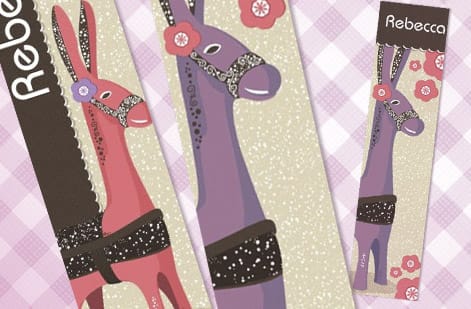
Make it worth keeping. Put the shop name and a line of personality on the front, and something useful on the back: this season's event calendar, a staff-picks list, or a loyalty punch grid. Print a new design each season and regulars start collecting the series, which is a loyalty program disguised as a giveaway. For design direction, see beautiful custom bookmarks and the practical steps in how to make bookmarks.
At under twenty dollars to start, this is the piece to print generously: one in every bag, a stack by the register, and a handful at every author event.
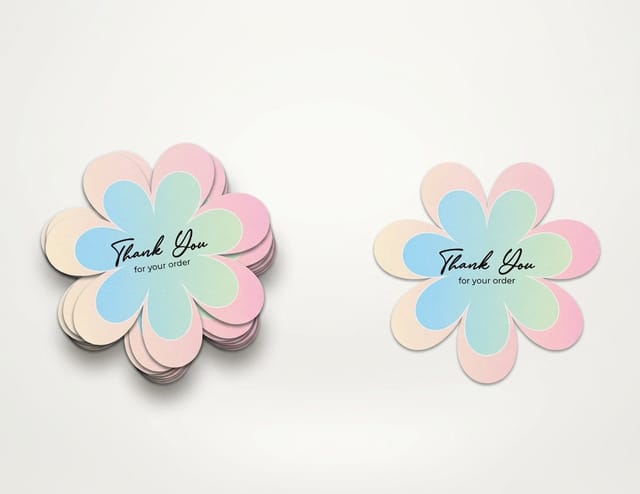
2. Die-cut stickers: impulse merch that advertises around town
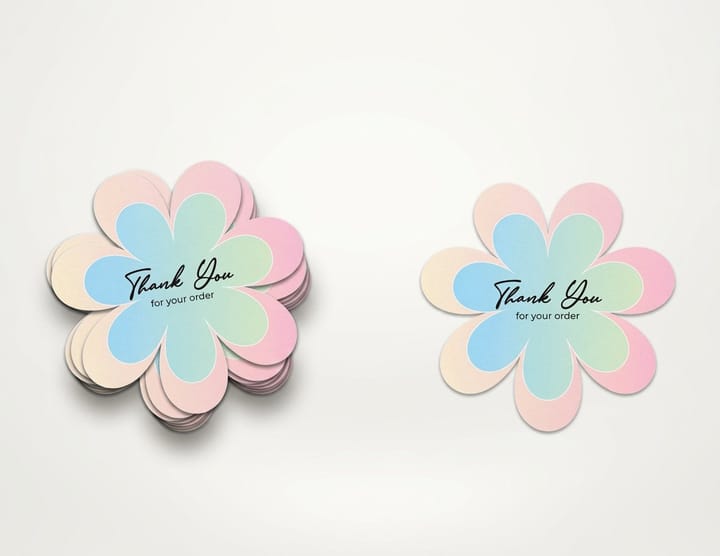
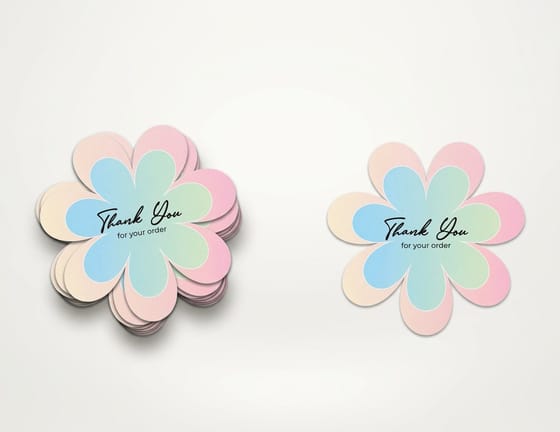
Stickers earn their place in this set twice. At the register they are the cheapest impulse buy in the shop, the thing a kid adds to the pile or a regular grabs with their coffee-stained paperback. Out in the world they are advertising: your shop's mark on laptops, water bottles, and car bumpers all over the neighborhood.
Die cutting is what makes them feel like merch instead of labels. Cut to the shape of your logo, your shop cat, or a stack of books, they read as collectible. Design a small seasonal run alongside your evergreen design, and give one away free during promotions to seed them around town. Our guides on how to make stickers and choosing sticker materials cover shapes, vinyl versus paper, and outdoor durability.
Independent bookstores grow by word of mouth, and the word-of-mouth marketing data shows why giving customers a badge to display matters.
3. Die-cut hangtags: turn stock into staff picks and gift bundles
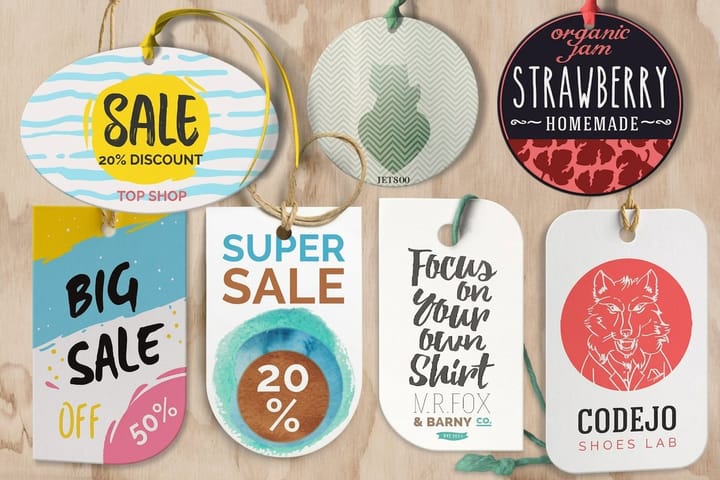
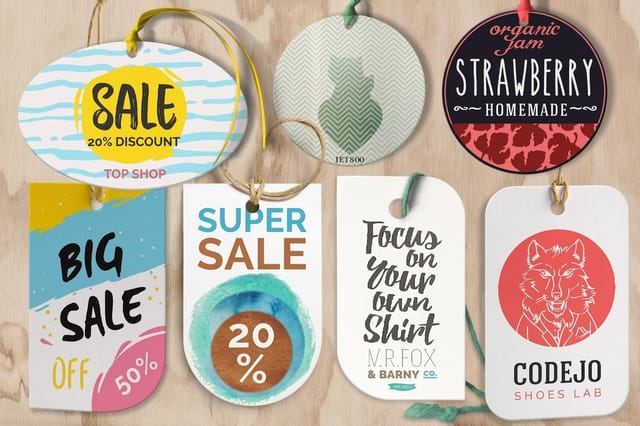
A table of books is inventory. The same table with a few printed tags on it is a curated display. Hangtags are how a bookstore points a browser's attention: staff pick, signed copy, local author, buy-two-get-one, gift bundle under twenty-five dollars.
During the holiday season they work hardest, hanging from ribbon-wrapped bundles and gift sets that turn a single-book purchase into a three-book one. Print a seasonal batch with the promotion on one side and space for a handwritten staff note on the other; the handwriting is what makes the recommendation feel personal. Keep the shape distinctive so your tags are recognizable across the shop.
Pair them with the counter cards and window clings from this set so the same seasonal promotion reads the same from the sidewalk to the shelf.
4. Retail counter cards: the pitch at the moment of payment
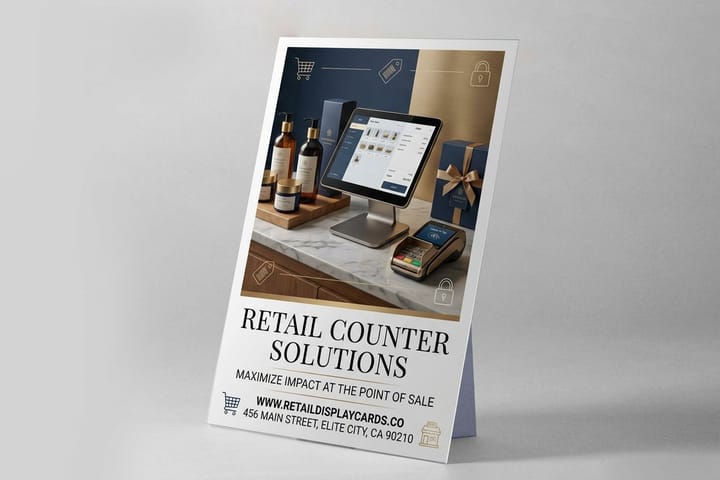
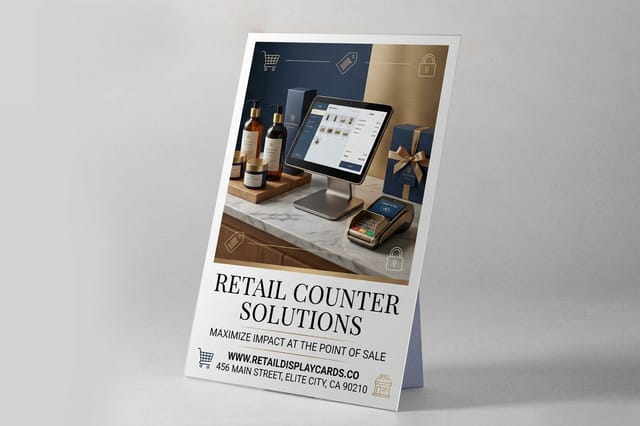
Every customer in your shop ends up at the counter, wallet already out. A counter card standing beside the register is the highest-conversion ad placement you own, and it costs about as much as a hardcover.
Give it one seasonal job at a time: announce the summer reading program, push the holiday gift-wrap service, promote the loyalty card, or list next month's author events. Rotate the card when the season turns so regulars always see something current. Keep the type large enough to read upside down from the customer's side of the counter, and end with one action: ask, scan, or sign up.
Because counter cards are small and cheap to reprint, they are the piece that carries your dated offers, letting the more durable pieces in this set stay evergreen.
5. Retail window clings: a new season on the glass in minutes
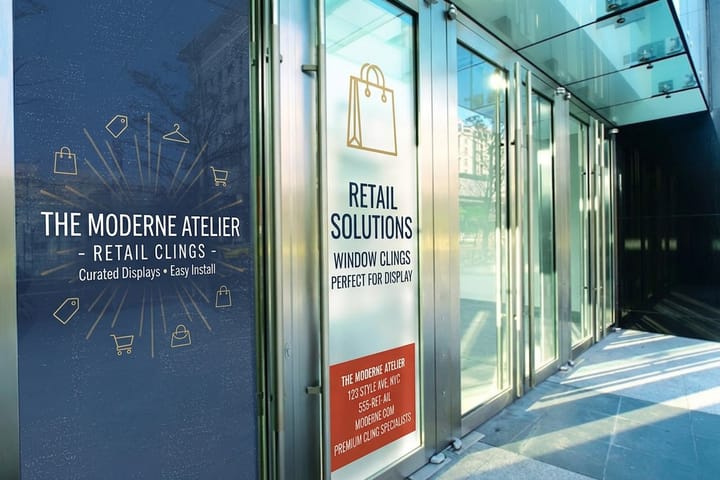
Your window is the only ad every passerby sees, and clings are the fastest way to change what it says. They apply in minutes, remove without residue, and store flat until the season comes around again, which suits messages that expire: summer reading starts now, holiday hours, signed copies this Saturday.
Design for a person walking past at full speed: one line, big type, high contrast against whatever is behind the glass. Leave clear sightlines into the shop, because the books themselves are your best display. A seasonal cling refresh also signals the shop is alive; a window that never changes tells the neighborhood nothing new happens inside.
Print the full year's seasonal clings in one order and every season stays on brand.
6. Retail banners: event-scale visibility for sale days
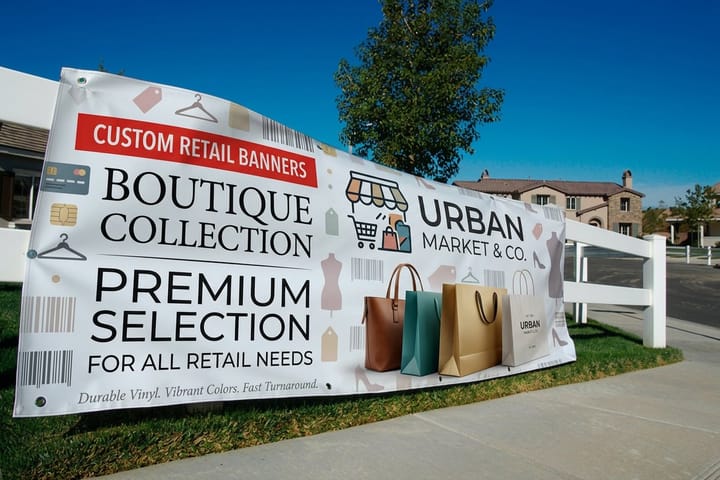
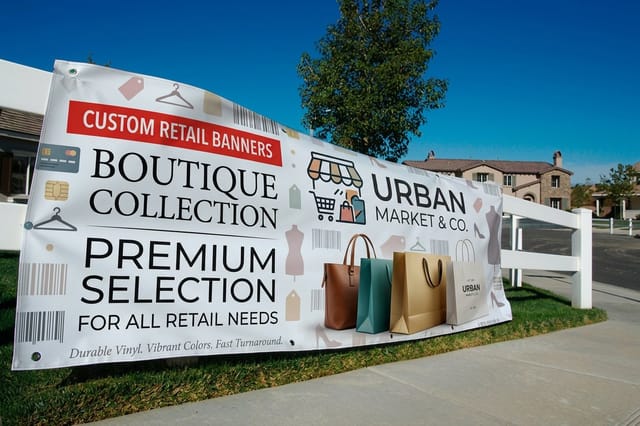
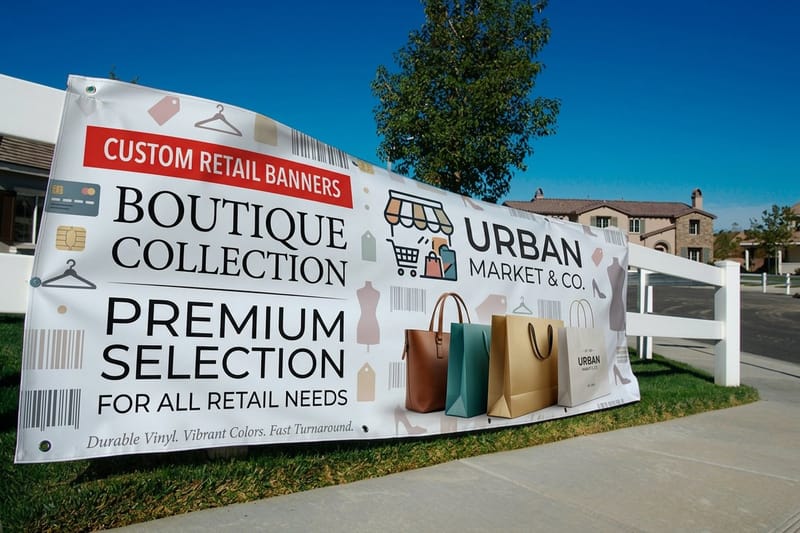
Some moments are bigger than the window: the anniversary sale, the sidewalk sale, the holiday late-night shopping event, the author signing that deserves a crowd. A banner is how a small shop announces an event at street scale, readable from a moving car.
Buy it once, use it for years. Keep the printed message season-neutral, like the shop name and "SALE" or "AUTHOR EVENT," and let the window clings and counter cards carry the dates. Durable vinyl shrugs off weather, and grommets make it fast to hang above the door or along a railing. The design rules in our guide to making banners and the placement advice in how to hang banners apply directly.
One banner, hung six or eight times a year, spreads its cost across every event.
7. Business cards: the shop that fits in a wallet
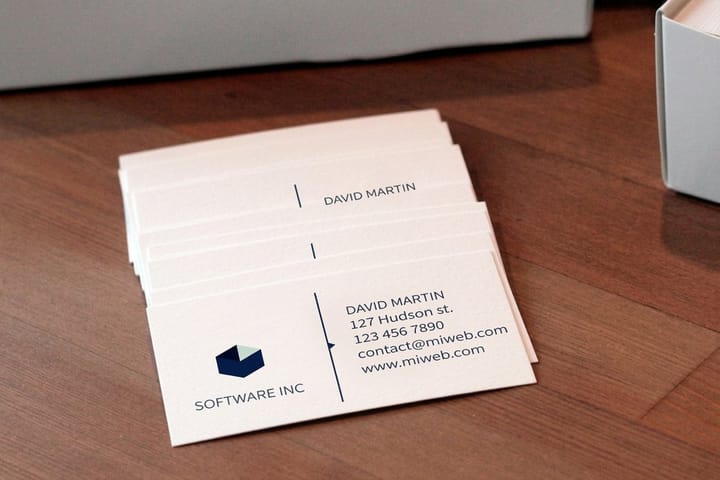
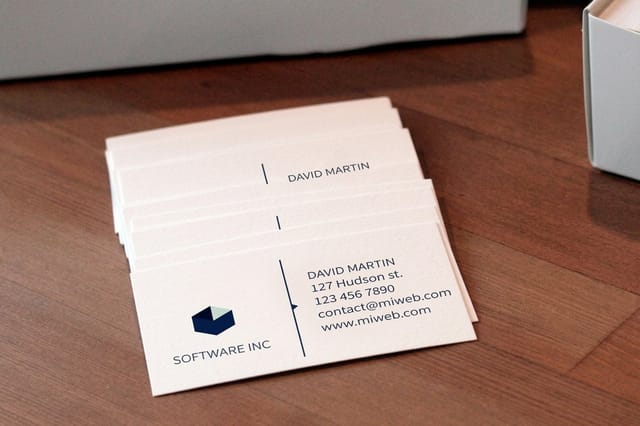
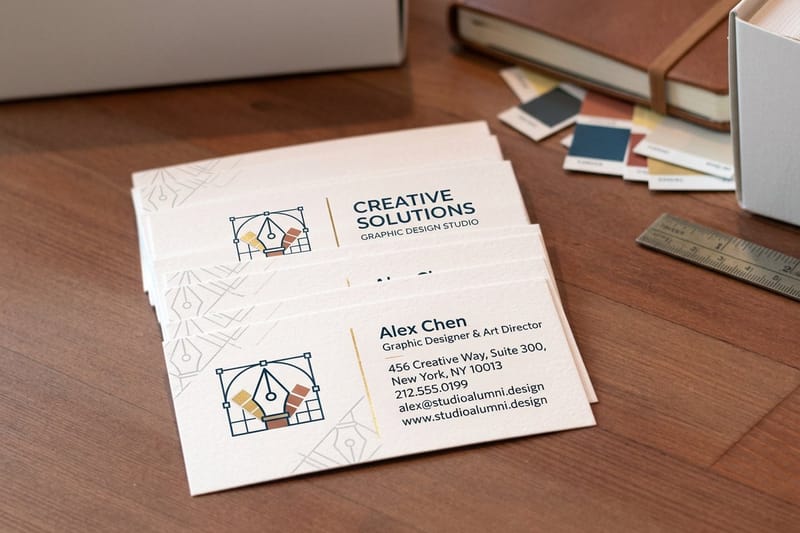
A bookstore business card is less about the owner and more about the shop: hours, location, and a QR code to the events calendar or online catalog. It goes into every bag with the bookmark, gets pinned to community boards, and travels in the pockets of tourists who will recommend the shop when they get home.
Special orders are the quiet, steady use. When a customer requests a title you do not have, hand them a card with the pickup date written on the back; it makes the promise physical and brings them back through the door a second time, which the customer retention benchmarks show is where retail profit lives.
A sturdy stock keeps the card presentable for months; compare finishes across our business card printing range and the options in laminated business cards.
8. Flyers: the author event, posted where readers already are
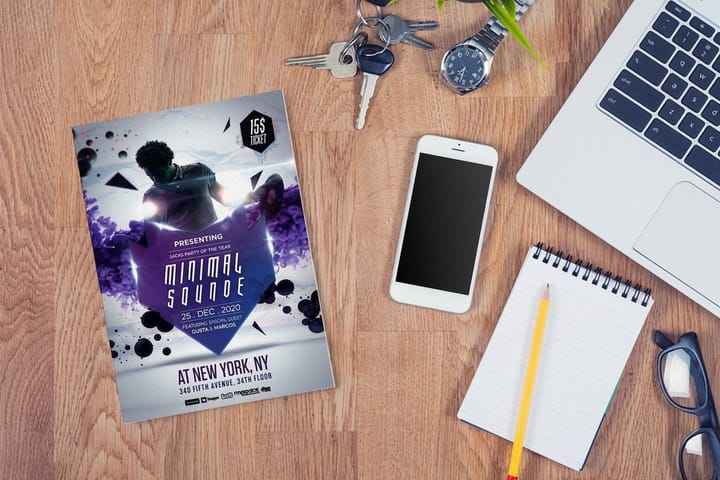
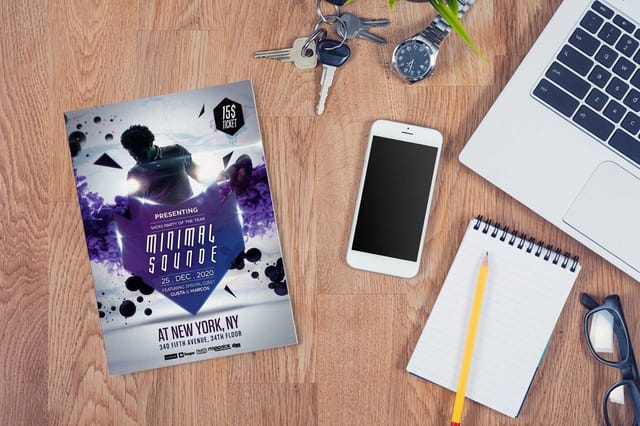
An author signing or a summer reading kickoff only draws a crowd if the neighborhood hears about it, and the neighborhood does not all walk past your window. A stack of flyers at the coffee shop, the library, the community center, and the campus corkboard carries the event to the exact people who already spend their afternoons around books.
Lead with the author or the program name, one date, one time, and the shop address, and let the cover art do the visual work. Our guide to how to design flyers covers the focal-point rules that keep a corkboard flyer readable from arm's length, and flyer distribution best practices covers where to ask, how many to leave, and when to refresh the stack.
Print a small run per event; 50 flyers cost $39.54, so a few extra attendees pay for the batch.
9. Posters: the new release, sold at window scale

Between the small clings and the big banner, the poster owns the middle distance: the sidewalk browser who has slowed down but not yet touched the door. A poster in the window for the season's big release, the staff-picks wall inside, or the reading program of the month gives the shop the visual drama of a cinema lobby at a fraction of the cost.
Design one strong poster per season rather than five competing ones, and let the cover art or a bold typographic quote carry it. Our how to design a poster in 8 steps keeps the hierarchy readable from across the street, and how to hang posters without a frame gets it onto glass and brick without wrecking the print.
Rotate the poster when the season turns and regulars get a visible cue that something new is worth a browse.
10. Postcards: the mailing list, brought back through the door
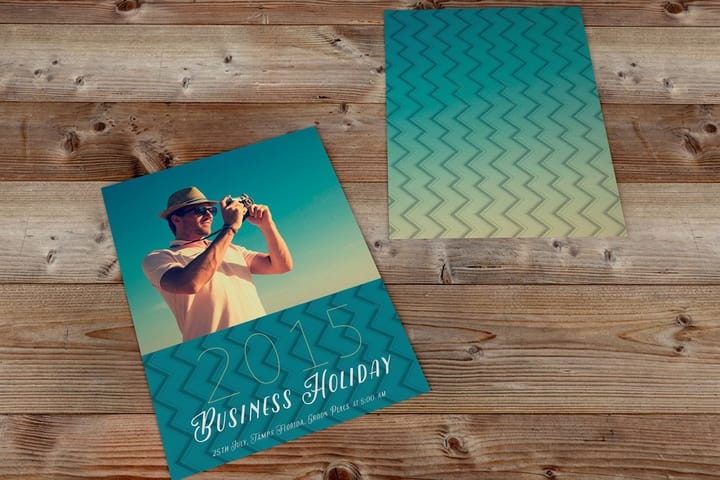
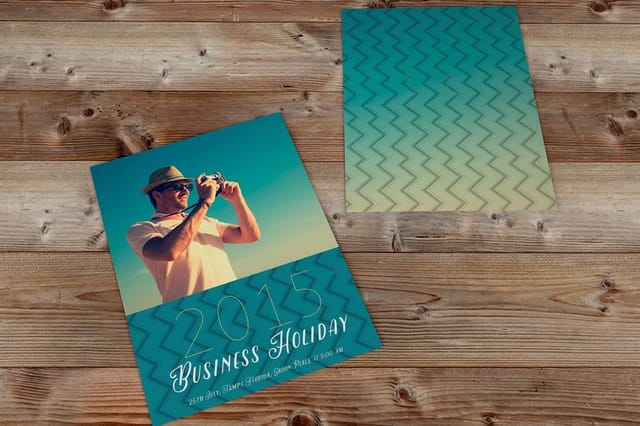
Every bookstore has a list: loyalty members, event attendees, special-order customers. A printed postcard is how that list hears about the holiday open house, the anniversary sale, or the author dinner in a channel with no spam folder. A card with a beautiful cover image gets pinned to the fridge, which is exactly where you want the event date to live.
Keep one side to a single image and the other to the offer, the date, and the address. Our guide to postcard design for direct mail covers what earns a card a spot on the fridge, and building a mailing list turns the names in the special-order notebook into a proper file.
Starting under twenty dollars a run, the postcard is the cheapest way to make the shop's best customers feel personally invited.
11. Tote bags: the book bag that advertises all over town
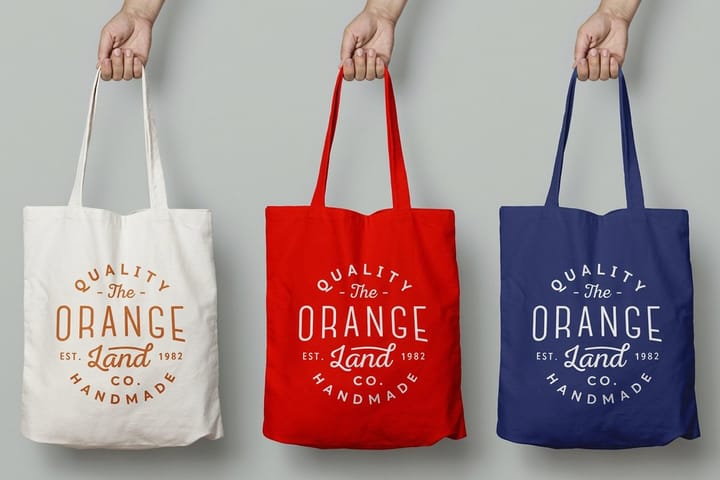
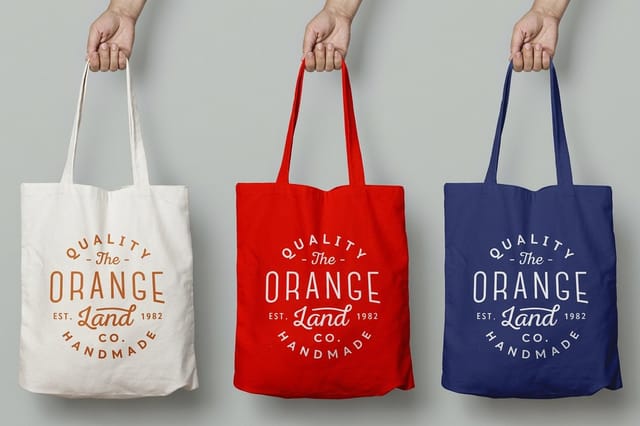
Nobody carries a bag as proudly as a reader carrying books, and a branded tote turns every purchase into a walking endorsement. A bookstore tote can sell as merch: customers keep it for years and carry them to the farmers market, the library, and the beach, where your shop name reads from across the street.
Print the mark or a bookish line big and simple so it reads across a street, and offer the tote both as merch and as a gift-with-purchase during the holiday rush, when a stack of gift books needs a way home anyway. A tote built on solid logo fundamentals stays wearable for years instead of one season.
Order before the gift season, when carry-out volume peaks and a sturdy branded bag is the difference between a plastic sack and a keepsake.
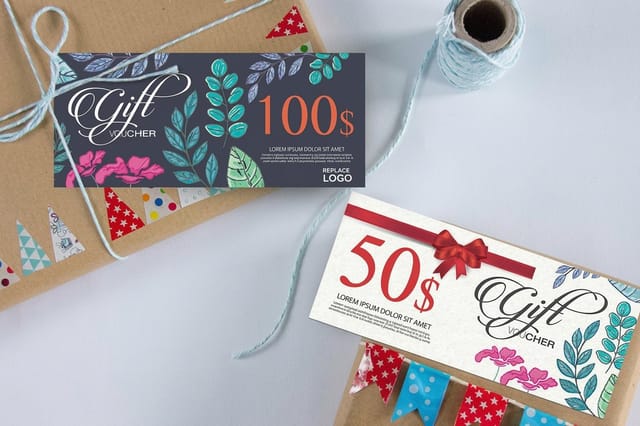
12. Gift certificates: the bookstore, given as a present
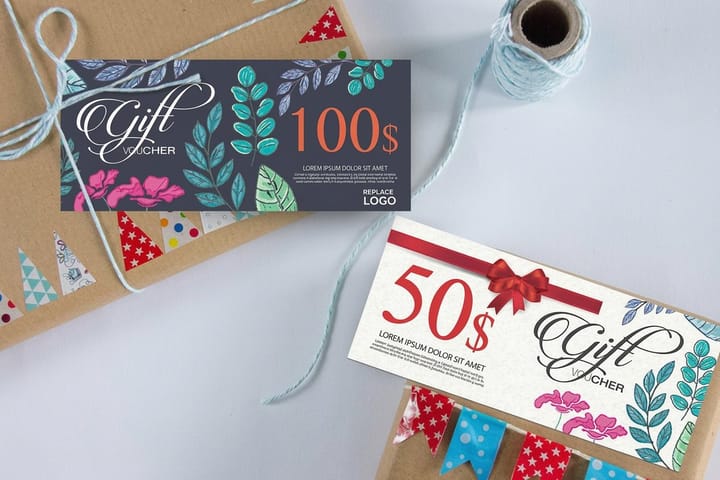
A gift certificate is the answer to the hardest holiday question in the shop: what do you buy the reader who has read everything? It collects revenue now for a visit that happens later, and it can walk in a brand-new customer, because the recipient may never have been inside.
Make it look like a present, not a receipt: heavy stock, the shop mark, a clean line for the amount, displayed in a rack beside the register from November on. Our guide to gift-certificate expiration rules keeps the fine print compliant so the shop can honor every certificate it sells.
Print a stack before the gift season and restock for graduations and teacher-appreciation weeks; a certificate rack is found money in December and new faces in January.
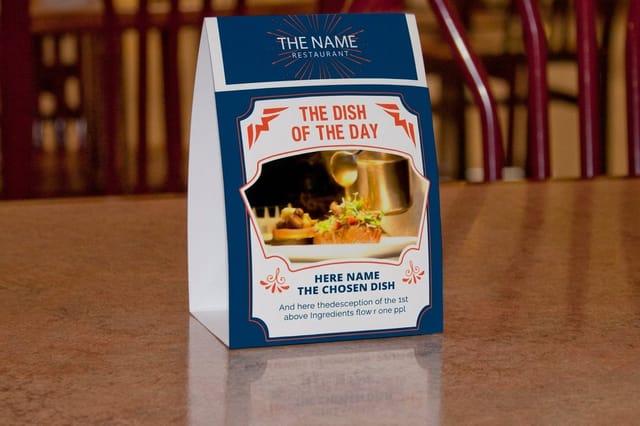
13. Table tents: the events calendar standing on every table
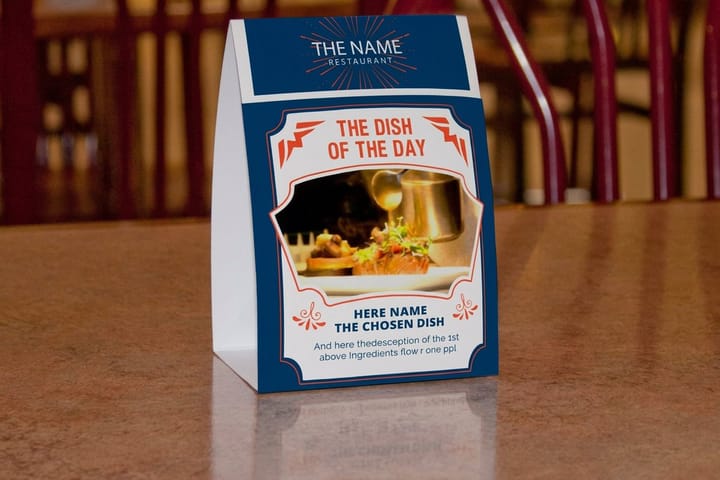
Display tables and cafe corners are where browsers linger, and a table tent puts a message right at their elbow: this month's book club pick, the author event on the 20th, the buy-two-get-one bundle on this very table. It sells the calendar to a standing-still audience without a staff member saying a word.
Give each face of the tent its own message and swap both when the season or the events list turns. The tent is 4 x 6 inches folded, 16.25 inches long flat, on 14pt gloss cover with high gloss UV, and it starts at 250 pieces on a 5 business day turnaround, so print a season of tents at once. Regulars who visit weekly stop reading a tent that never changes, and regulars are who the calendar is for. At 250 for $554.39, a seasonal run of tents covers every display table for the season.
Pair the tent with the counter card: the tent works the tables where people browse, the card works the register where they pay, and both carry the same seasonal message.

Specs and pricing
Bookmark specs: 50 for $16.48, three business days
The bookmark is the piece you will reprint most often, so its stock and finish set the standard for the rest. Here are the live specs and price-per-unit for bookmarks at 4OVER4.COM, straight from the configurator.

| Quantity | Price Per Unit | Total |
|---|---|---|
| 50 | 33.0¢ | $16.48 |
| 100 | 25.3¢ | $25.27 |
| 200 | 15.9¢ | $31.86 |
| 300 | 12.8¢ | $38.45 |
| 400 | 11.3¢ | $45.04 |
| 500 | 10.3¢ | $51.62 |
| 600 | 9.89¢ | $59.31 |
| 700 | 9.57¢ | $67.00 |
Wally explains the seasonal set
Thirteen pieces that redress the shop four times a year
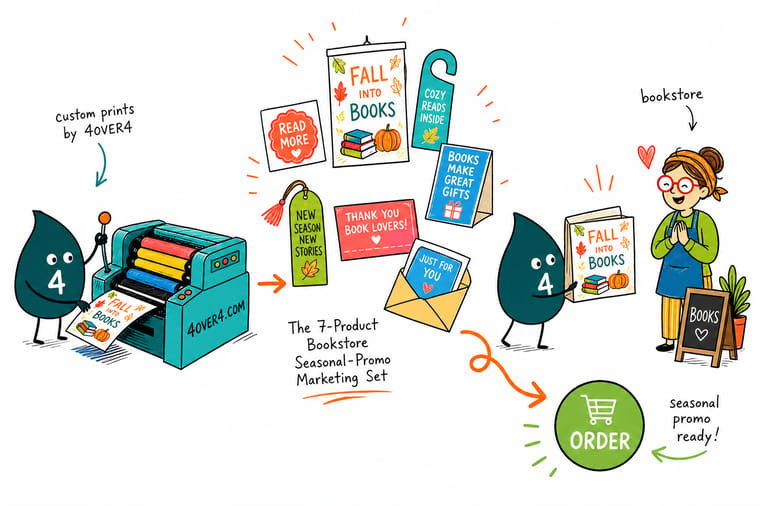
Wally treats a bookstore like a stage with four acts. Each season, the window clings and banner change the scenery, the counter cards change the pitch, and the bookmark in every bag sends the season home with the reader. Keep one logo and palette through all of it, print the whole set at 4OVER4 in one order, and the shop stays unmistakably yours while the message stays fresh.
Shop the retail collection →See it in use
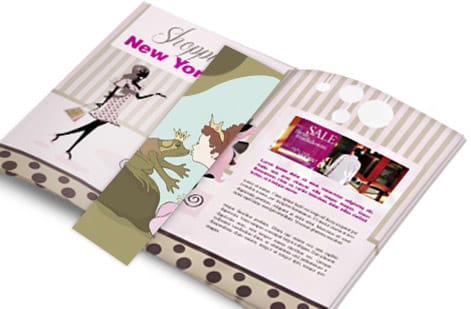
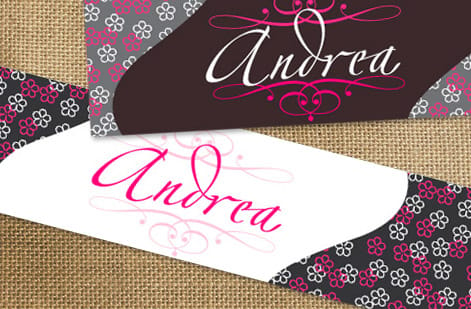
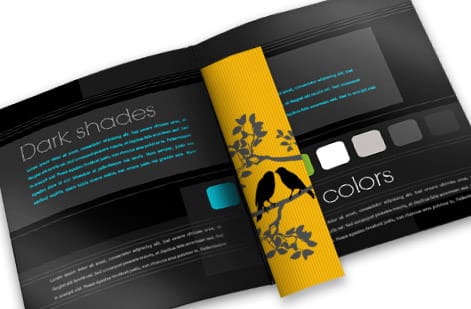
Bookmarks and shelf print from bookstores




Explore more
Where to go next


By the numbers
One set, printed for every season
Common Questions
Common questions about the bookstore seasonal set
What is in the bookstore seasonal promo marketing set?
Thirteen print pieces that let a bookstore redress itself for every season: standard bookmarks, die-cut stickers, die-cut hangtags, retail counter cards, retail window clings, retail banners, standard business cards, flyers, posters, postcards, tote bags, gift certificates, and table tents. The window and street pieces announce the season, the register pieces sell it in the shop, and the in-the-bag and in-the-mailbox pieces bring the reader back for the next one.
How often should a bookstore refresh its printed promotions?
Four seasonal swaps cover most shops: summer reading, back to school, the holiday gift season, and a new year refresh. The set is designed so the expensive, durable pieces like the banner carry a season-neutral message you reuse, while the cheap, fast pieces like clings, counter cards, and bookmarks carry the dated offer and get replaced. That way each season costs a small reprint, not a redesign.
Why are bookmarks the anchor of this set?
Because a bookmark is the only promotion your customer is guaranteed to look at repeatedly after leaving the shop. Slip one into every purchase and your brand sits inside the book they read every night. Print a seasonal series, list next month's events or staff picks on the back, and regulars start collecting them, which turns a giveaway that costs about 10 cents at 500 into a loyalty program.
What should go in the window versus at the counter?
The window earns the walk-in, so it gets the fewest words in the biggest type: the season, the offer, the date. Window clings handle that job and peel off cleanly when the season ends. The counter closes the sale, so counter cards can carry detail: the bundle price, the loyalty offer, the event schedule. If a passerby has to slow down to read your window, the message is too long.
How do stickers and hangtags help sell books?
Stickers do two jobs: they are low-cost impulse merchandise at the register, and they are free advertising when they end up on laptops and water bottles around town. Hangtags turn ordinary stock into merchandised stock, marking staff picks, signed copies, and gift bundles so browsers notice them. Both cost little and make the shop feel curated rather than warehoused.
How much does the full seasonal set cost to print?
Each piece is priced live on its own product page and scales with quantity, size, and material. Bookmarks and business cards start under twenty dollars, at 50 bookmarks for $16.48 and business cards from $17.57 for 100. One 8.5 x 11 counter card costs $21.97, window clings start at $30, and the banner, from $79, each is a one-time buy you reuse for years. Table tents are the largest line, 250 for $554.39. Configure your exact quantities on each product and the price updates as you go, so a single-location indie shop can size the set to its budget.
Can this set work for a used bookstore or a campus shop?
Yes, the structure holds; only the calendar changes. A used bookstore leans on buyback season and rare-find promotions, a campus shop on semester start, finals week, and graduation. Swap the seasonal messages, keep the same 13 pieces, and the window-register-bag sequence works exactly the same way.
Get Started
Order 50 bookmarks at $16.48
Order the full seasonal set from 4OVER4.COM and print all 13 pieces with one logo and one palette, in one order. Adjust size, material, and quantity on any product and watch the price update live.
Legal Disclaimer
Gold Standard guarantees apply to all standard orders placed through 4over4.com. Price match requires verifiable proof of a competitor's published price for an equivalent product with matching specifications and turnaround time. Satisfaction guarantee covers manufacturing defects and print quality issues. Contact support with order number and documentation.
