
How to Write a Campaign Message That Wins Votes


Marcus is our print marketing voice, built from the knowledge of our production team, with over 20 years in printing.
Develop a campaign slogan and message in that order: the message is the one promise you want every voter to remember and repeat, and the slogan is the short phrasing that carries it. A message is not a slogan or a policy list. This builds one that holds up, then carries it onto the printed pieces that win the block: campaign yard signs from 12 x 18 to 18 x 24 inches on 4mm coroplast, campaign stickers from 25 pieces and blockout banners from 2 x 3 feet, with the size and material to pick for each.
A persuasive campaign message is one clear promise, written in the voter's own words and repeated everywhere. Name the voters you need, the problem they feel, the stand you take, the contrast with the alternative, and the ask. Keep it to a single sentence, then carry that exact sentence onto your yard signs, stickers, banners, and mailers so every piece says the same thing.
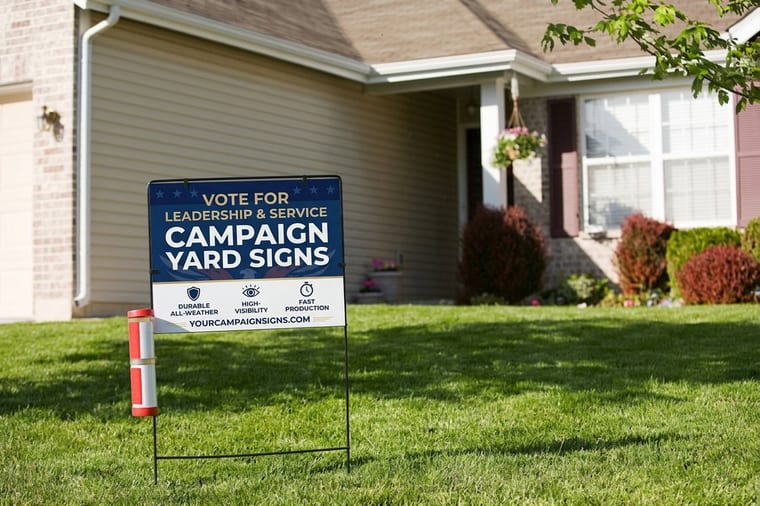
Start here
The message, in a single pass
A winning campaign message is a single promise, said in the voter's own words and repeated on every piece you print. Choose the voters you actually need, name the problem they already feel, take a clear stand, draw the contrast with the other option, and make the ask. Trim it until one sentence carries the whole thing, then hold that sentence steady across your yard signs, stickers, banners, and mailers. The framework further down lays out all seven moves at a glance.
Slogan and message
Develop a campaign slogan and message in four steps
Write the message first, then cut the slogan out of it. Draft the promise five or six ways out loud, say each version to a real voter, and keep the one that makes them nod before you finish. Trim it to one sentence in the voter's words. Then take the four or five words from that sentence that still read from thirty feet away on an 18 x 24 inch yard sign, and test them on a 3 x 5 inch sticker before you order the run. Stickers print in 3 business days and yard signs in 5, so settle the words a week before the signs go in the ground.
The elements of an effective campaign message

Ask ten campaigns for their message and most will hand you a slogan, a list of positions, or a paragraph about the candidate. None of those is a message. A message is the one promise you want a voter to remember on the walk to the ballot box, and effective ones are built from five working parts.
Those parts are the audience you actually need, a problem those voters already feel, the stand you take on it, the contrast that separates you from the other option, and a clear ask. Each part answers a question a voter is quietly asking: are you talking to me, do you understand what worries me, what will you do, why you and not them, and what do you want me to do. When all five say the same thing, the message holds up on a debate stage and on a campaign yard sign alike.
Before you write a word, it helps to see the pieces the message has to live on. Sketch it against the real format in our online designer or start from a ready campaign template, so the sentence you land on is one that still reads from thirty feet away on a lawn.
What a message is and what it is not

The fastest way to sharpen a message is to be strict about what it is not. It is not your slogan, which is the memorable phrasing that comes later, the four or five words that fit across an 18 x 24 inch yard sign. It is not your policy list, which is the evidence that backs the promise up. And it is not your biography, however good the story is. All three can support a message, but none of them is one.
A message is the single idea you want a voter to hold and repeat to a neighbor. The test is simple: can you say it in one breath, in words a voter would actually use, without notes. If it takes a paragraph, you have a platform, not a message. If it only makes sense to insiders, you have jargon. Cut until one plain sentence carries the whole idea.
This discipline is what lets the same idea survive every format, from a thirty-second answer down to a single line on a campaign sticker. The smaller the surface, the harder you have to trim, which is why a 3 x 5 inch sticker and a yard sign are an honest test of whether you have one.
Know your audience before you write

Every campaign is tempted to write for the people already clapping. The votes you need, though, usually sit with people who have not decided, and they do not share your vocabulary or your priorities. Knowing your audience means choosing the specific voters who will settle the race and learning what worries them. Write down the precincts that decide it and the one concern you hear most at the doors there; that list also tells you where the yard signs go and how many stickers your volunteers carry.
That work is closer to marketing research than to speechwriting. Listen at the doors, read the local threads, and notice the exact phrases people use for their worries, then write the message in those words rather than yours. The same audience-first habit runs through our guide to building a marketing plan, and it applies just as cleanly to a precinct as to a storefront.
When you know who you are talking to, the channel choices get easier too. Door-to-door voters respond to a sign and a handshake, while households you cannot reach in person are better served by a printed piece in the mailbox, the case our guide to a direct mail campaign makes in detail.
Developing the message

With the parts and the audience in hand, developing the message is mostly drafting and cutting. Write the promise five or six different ways, out loud, without editing. Say each version to a real person and watch where their attention catches and where it drifts. The line that makes someone nod before you finish is usually the one to keep.
Then draw the contrast on purpose. Voters choose between options, so a message that never says how you differ from the alternative is just a pleasant sentence. Name the difference in plain terms, tie it back to the problem your audience feels, and make sure the ask at the end is unmistakable. A vague line reads as weak to a voter who has not decided.
Test the finished message on the hardest surface you have before you scale it. If it still lands on a rally blockout banner that people read in a second from across a crowd, it will survive anywhere. If it needs a paragraph of setup, go back and cut again.
Carry the message onto print
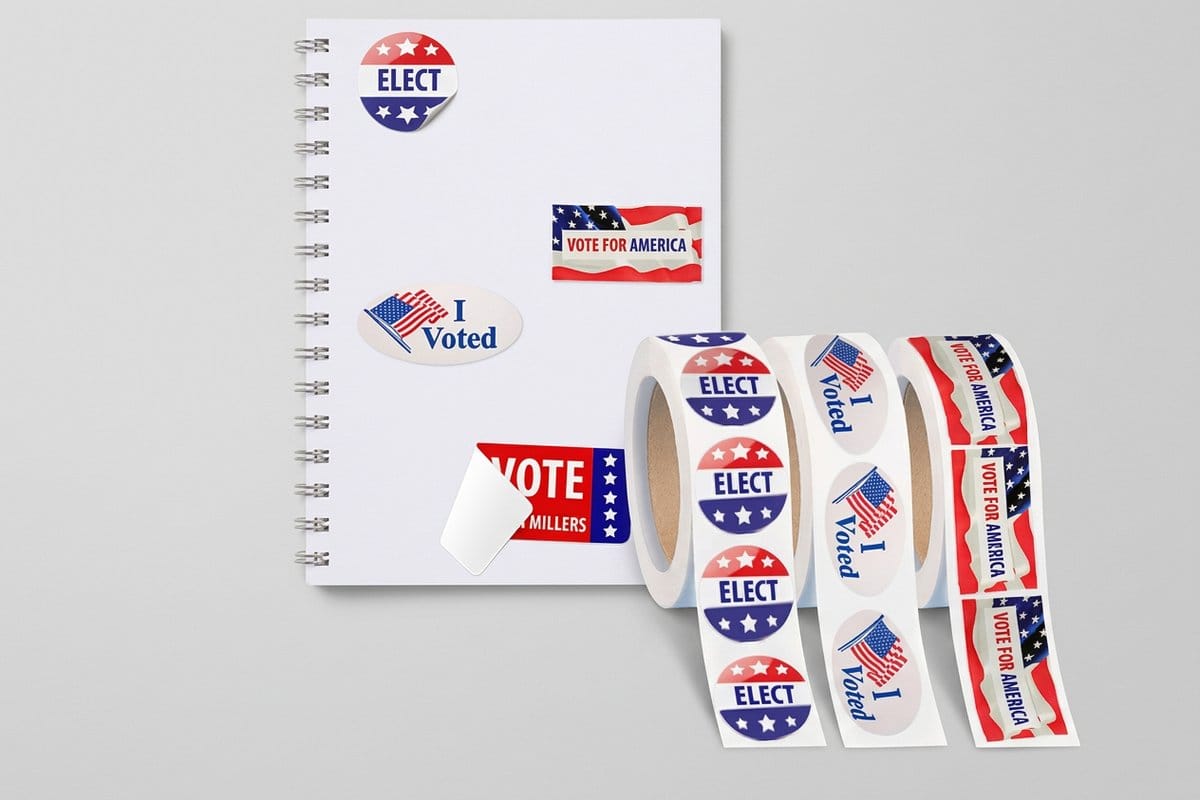
A message that lives only in your head or your stump speech persuades almost no one. It starts working when a voter sees it, in the same words, in more than one place: the sign on the lawn, the sticker on the water bottle, the banner at the rally, and the card in the mailbox. Seeing the same words on the lawn, the bottle and the mailbox is how a voter comes to recognize your name at the ballot.
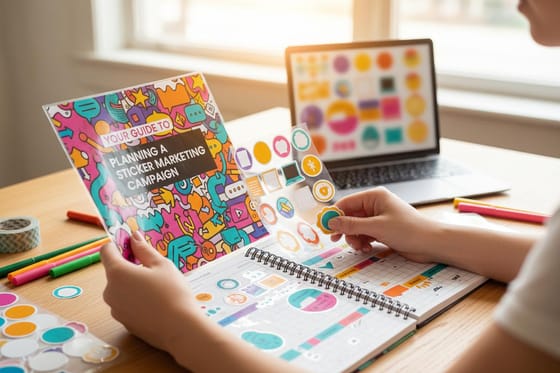
The rule is to say the same thing the same way everywhere. Lock one headline, one color palette, and one type treatment, then hold them across every format so the campaign reads as one voice. A run of roll stickers handed out at events, matched to the yard signs and the mailers, puts the same line in front of each voter one more time. Our sticker campaign guide walks through how to plan that spread.
Build the pieces from a shared set of design templates so the headline, colors, and fonts carry over automatically, and browse real work for ideas in our campaign sticker templates.
Order your campaign print
Once the message and the design are set, printing is the simple part, and the cost is easy to reason about. Price scales with a few levers: quantity, size, material, and finish. More pieces lower the unit price, and you can watch the total update live in the configurator as you change each option before you place the run.
For a ground campaign, campaign yard signs carry most of the message, printed on weatherproof stock that holds up through a full season outdoors and starting around $25. Pair them with standard campaign stickers for volunteers and events, and the same message reaches voters on the lawn and in the hand.
If you want to judge the material before you commit, order free samples first and feel the stock in your hand. Then use the specs and live pricing panel below to lock your size, quantity, and finish, and send the run to 4OVER4.COM.
Wally explains the message
One promise, said everywhere the same way
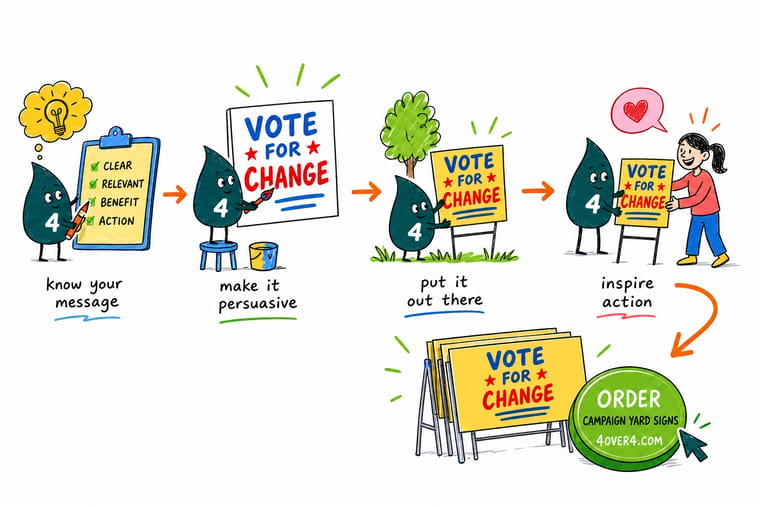
Wally treats a campaign message like a single thread you pull through every piece: pick the voter, name the worry, take a stand, and make the ask, then keep the exact words steady from the yard sign to the mailer. Voters believe what they hear more than once, so he repeats the same words on every piece. Write the promise short, then let 4OVER4 print it sharp on signs, stickers, and banners.
Print campaign yard signs →
Framework
The campaign message framework at a glance
One frame, the whole build. Keep it beside you the next time you draft a line for a yard sign, a sticker, or a mailer.
A campaign message is not built in one line. Name your voter and their problem, take a clear stand, draw the contrast, and make the ask, then repeat it, in the same words, on every printed piece you send out.
Specs and pricing
Campaign yard sign specs and live pricing
When the message and the design are ready, the printing decisions come down to size, material, and finish: 12 x 18, 12 x 24 or 18 x 24 inches, or any size up to 18 x 24, on 4mm white coroplast printed on one side or both, with grommets or an H-stake if you need them, from a single sign up to 100. Here are the live specs and price-per-unit for campaign yard signs at 4OVER4.COM, straight from the configurator.
| Quantity | Price Per Unit | Total |
|---|---|---|
| 1 | $25.00 | $25.00 |
Print it
Put your message on campaign print
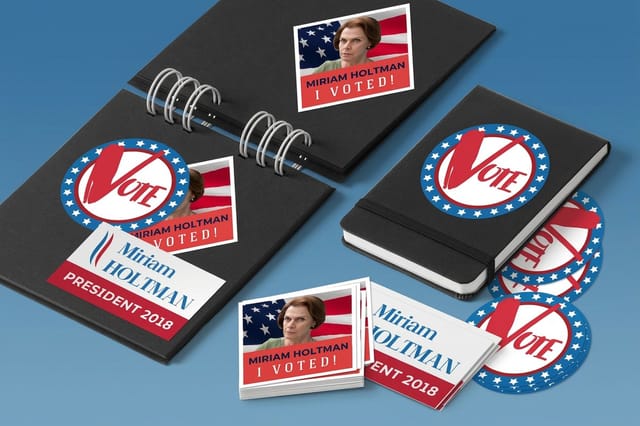
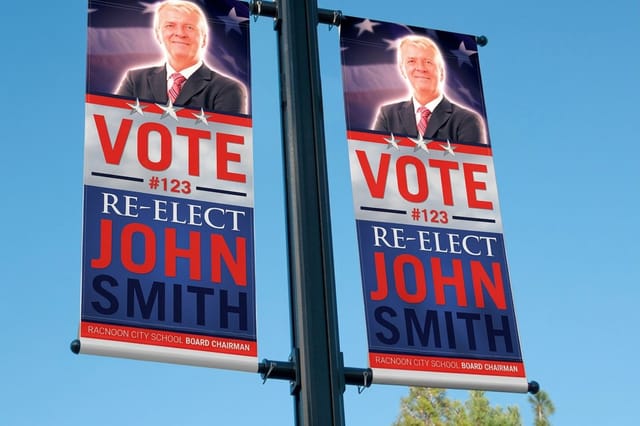
Premium stickers from 3 x 5 to 5 x 7 inches starting at 25 pieces, yard signs on 4mm coroplast from one sign, and two sided blockout banners on 15 oz vinyl from 2 x 3 up to 4 x 10 feet for the rally stage.
See it in use
Real campaign print, made in-house
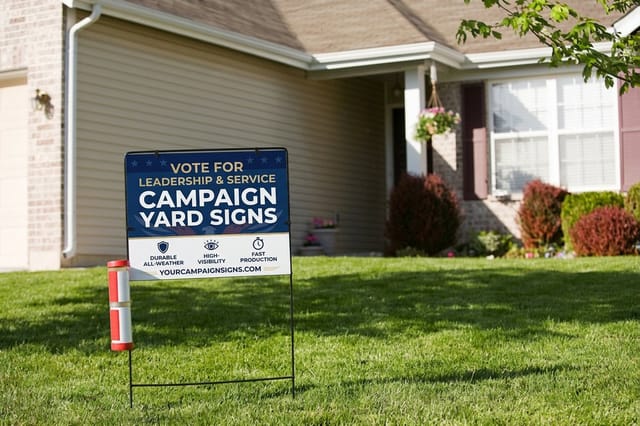
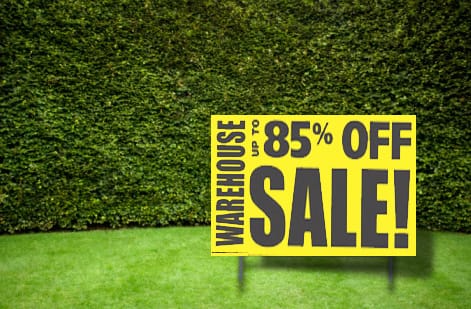
Campaign yard sign orders from our customers on 4mm coroplast, so you can judge how a four or five word line reads at 18 x 24 inches before you set yours.


Explore more
Where to go next
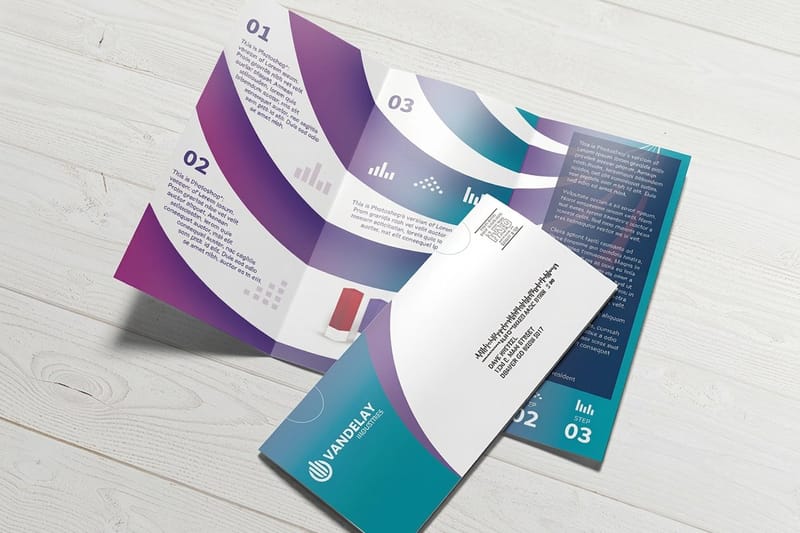
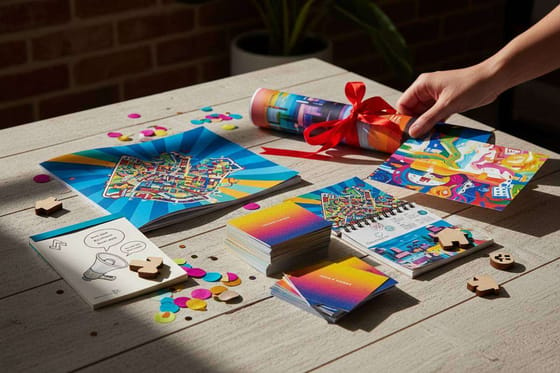
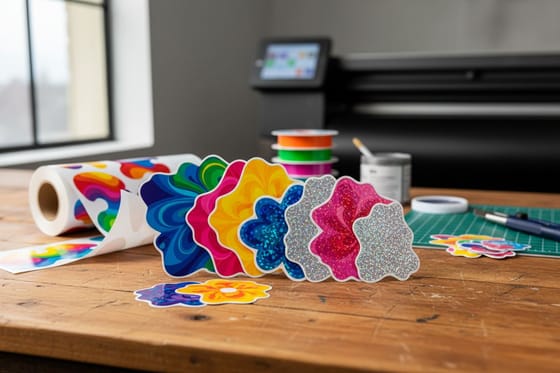
Six next reads: the same message in the mailbox, local print ideas block by block, re-election sticker layouts, a sticker campaign plan, where signs fit against other formats, and the printing FAQs.
By the numbers
The print behind a full campaign season
Common Questions
Common questions about campaign messaging
What are the elements of an effective campaign message?
An effective campaign message has five working parts: the specific voters you are speaking to, a problem those voters already feel, the stand you take on it, the contrast that separates you from the other option, and a clear ask. Miss any one and the message goes soft. Get all five saying the same thing and it holds up on a debate stage and on a yard sign alike.
What is a message, and what is it not?
A message is the single idea you want a voter to remember and repeat to a neighbor. It is not your slogan, not your policy list, and not your biography, though all of those can support it. If you cannot say it in one breath, in words a voter would use themselves, it is not a message yet.
What is a support message for election candidates?
A support message for election candidates is the short, repeatable statement that tells voters why to back you and what you will do for them. It sits at the center of everything the campaign says, from the stump speech down to the last line on a door hanger, so every touchpoint reinforces the same promise.
How do I choose the right support message for my campaign?
Start from the voters you actually need, not the ones already clapping. Find the problem they care about most, state where you stand in plain language, and draw a clear contrast with the alternative. Draft several versions, read them aloud, and cut until one sentence carries the whole idea, then test it on real people before you commit it to print. Yard signs print on 4mm white coroplast and take 5 business days.
How do I keep the message consistent across all my printed materials?
Say the same thing everywhere and say it the same way. Lock one headline, one color palette, and one type treatment, then repeat them across yard signs, stickers, banners, and mailers. Our design templates and online designer make that repetition easy to hold, so a voter sees one coherent campaign instead of five unrelated ones.
What does campaign printing cost, and how is the price set?
Price scales with a few simple levers: quantity, size, material, and finish. More pieces lower the unit cost, and you can watch the total update live in the configurator as you adjust each option. Campaign yard signs start around $25, and stickers and banners price the same transparent way.
What sizes and materials work best for campaign yard signs?
Standard lawn-sign sizes read well from the curb, and heavier weatherproof stock holds up through a full season outdoors. Order a free sample first so you can judge the material in your own hand, then use the specs and pricing panel on this page to lock your size, quantity, and finish before you print the full run.
Get Started
Print 25 campaign stickers from $23.88
Bring your campaign message to 4OVER4.COM and print it on the signs, stickers, and banners that carry it block by block. Campaign stickers ship in 3 business days, yard signs in 5.
Legal Disclaimer
Gold Standard guarantees apply to all standard orders placed through 4over4.com. Price match requires verifiable proof of a competitor's published price for an equivalent product with matching specifications and turnaround time. Satisfaction guarantee covers manufacturing defects and print quality issues. Contact support with order number and documentation.
