
What Is VDP Printing and How Variable Data Personalizes Every Piece


Variable data printing is how one press run produces thousands of individually different pieces. Here is the mechanism, the jobs it suits, how to hand over your data, and where static printing still wins.
VDP printing (variable data printing) is digital printing where text, images, or codes change on every piece within a single run, driven by a spreadsheet. The press merges one design shell with one data row per piece, so 5,000 postcards can carry 5,000 different names, offers, or QR codes without stopping. It runs on digital presses only, because an offset plate cannot change mid-run, and it is the engine behind addressed direct mail, unique coupon codes, and numbered tickets.

Quick answer
One design, one spreadsheet, thousands of different pieces
VDP merges a fixed design shell with a data file, one row per piece, and prints the result on a digital press that re-images every impression. Whatever a column can hold can vary: a name, an address, which photo prints, which offer shows, what a QR code links to. Offset cannot do this, because its plate is fixed for the whole run, and that single mechanical fact decides where VDP fits: addressed mail, versioned campaigns, unique codes, and numbered tickets, at quantities where the data earns more than the digital premium costs.
How VDP Actually Works, From Spreadsheet to Press

A VDP job has two ingredients: a design shell and a data file. The shell is a normal print layout with certain areas flagged as variable, a name line, an address block, an offer panel, a QR code. The data file is a spreadsheet with one row per piece and one column per variable field.
Before the run, software merges them: row one fills the variable areas of piece one, row two fills piece two, and so on down the file. The press then prints the merged stream, re-imaging every impression. Piece 3,847 comes out different from piece 3,846, and neither one slowed the press down.
This is why VDP only exists on digital equipment. An offset plate is etched once and stamps the same image for the whole run, which is precisely its strength for static work. A digital press writes each sheet fresh from data, so there is no physical reason two consecutive sheets must match. Our digital vs offset guide covers that split in detail.
Anything the data can describe can vary: names and addresses, obviously, but also which photo prints, which coupon code appears, which map shows the nearest store, and which URL a QR code encodes. A run of postcards where every card carries a unique tracking QR is a routine VDP job, not an exotic one.
Where VDP Earns Its Money: Mail, Coupons, and Numbering
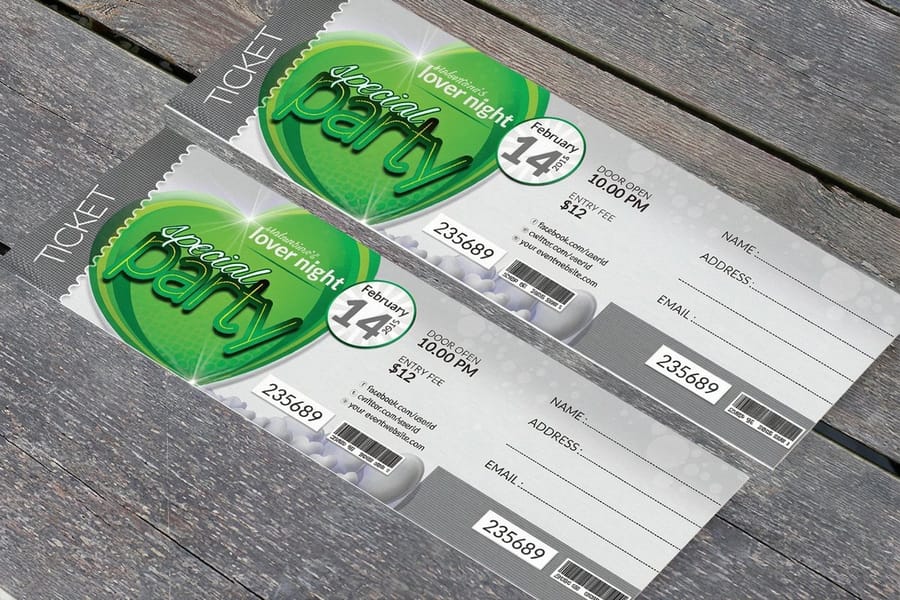
The uses sort themselves by how much of the piece actually changes.
| Level | What varies | Typical job | Why bother |
|---|---|---|---|
| Addressing | Recipient name and address only. | Any mailed postcard or envelope. | Required to mail to a list at all; the minimum useful VDP. |
| Personalization | Name woven into the message or offer line. | Renewal notices, loyalty mailers. | A first name in the headline gets read differently than Dear Customer. |
| Versioning | Whole panels swap by segment. | One campaign, different offers per neighborhood or customer tier. | One press run replaces four separate print jobs. |
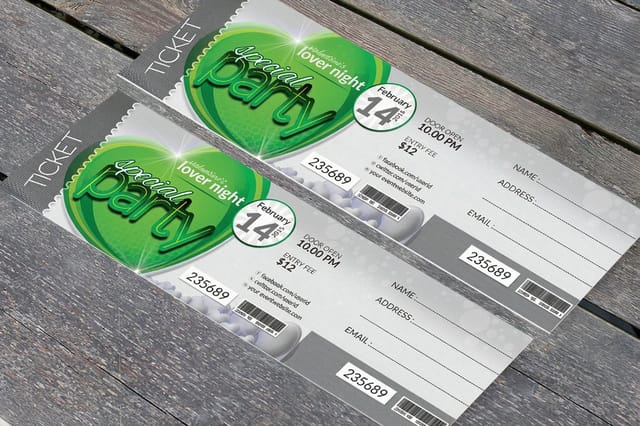
| Unique codes | A code or QR no two pieces share. | Coupons, event tickets, raffle entries. | Makes each piece trackable and single-use; numbering comes free. |
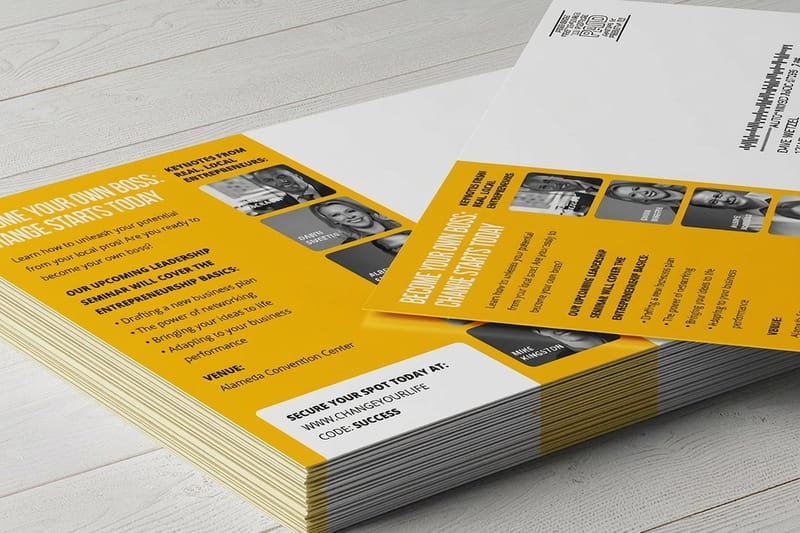
Direct mail is the natural home for the first three levels, and it is where the economics are easiest to defend: the postage costs the same whether the card is generic or personal, so the variable upgrade is a small share of total campaign cost. The direct mail guide walks the full campaign side.
The fourth level shows up beyond mail. Sequential numbering on tickets is VDP in its plainest form, and unique coupon codes are how a print campaign becomes measurable: when code K4R2-88 is redeemed, you know exactly which piece worked. Addressed printed envelopes and personalized letterheads cover the correspondence end of the same trick.
How to Supply Your Data So the Run Comes Out Clean

Nearly every VDP problem is a data problem that got printed. The press does exactly what the file says, five thousand times, so the file has to be right before anything else matters.
Supply a CSV or Excel file with one row per piece and one column per field, with header names that say what the column is: FirstName, LastName, Address1, Address2, City, State, ZIP, OfferCode. Do not merge cells, do not add totals rows, and do not hide extra data in unused columns. If a field can be empty, decide the fallback in advance: Dear Neighbor where the first name is missing beats Dear on a line by itself.
Three cleanups pay for themselves every time. First, casing: a list export that contains JOHN SMITH next to Mary Jones will print exactly that way unless it is normalized. Second, length: sort each column longest-first and check the longest value fits the design without wrapping, because Alexandrina Featherstonehaugh will find the name line that was only tested with Ann Lee. Third, duplicates: two rows with the same address means the same household gets two pieces and you pay twice.
Where the list itself comes from, buying, renting, or building one, is its own decision; our guide to building or renting a mailing list covers it. The design shell is a normal print file, so the usual rules apply, and a correctly sized layout from the blank template library is the fastest starting point. For the layout itself, the direct mail design guide shows where the address block and clear zones have to sit.
What VDP Costs, and When Not to Use It
VDP runs digital, and digital pricing is close to linear: the thousandth piece costs about what the first did. Static offset is the opposite, expensive to start and cheap to continue. So a personalized run costs more per piece than the same quantity of identical pieces, and the gap widens as quantity grows. For scale, static postcards start at $16.48 at 4OVER4.COM and standard business cards at $17.57; variable work adds data processing and digital-only production on top of a base like that.
That premium buys response, and only response. A unique offer code you never track, or a first name dropped into a headline nobody reads, is money spent on mechanism rather than effect. The honest test: would this campaign do worse if every piece were identical? If the answer is no, print it static and spend the difference on stock weight or quantity.
Two cases genuinely do not want VDP. Saturation mail, where every mailbox on a route gets the same piece, needs no list and no addressing; EDDM handles that at lower postage than an addressed list ever will. And very large identical runs belong on offset, where the plate cost disappears into the quantity. VDP wins in the middle: addressed campaigns in the hundreds to low thousands where the data does real work. If you are weighing printers for that kind of job, our guide to choosing a variable data printing company lists the questions that separate a data-capable shop from a shop with a digital press, and the direct mail services collection shows everything we run.
Wally explains VDP
A spreadsheet goes in, and no two pieces come out the same
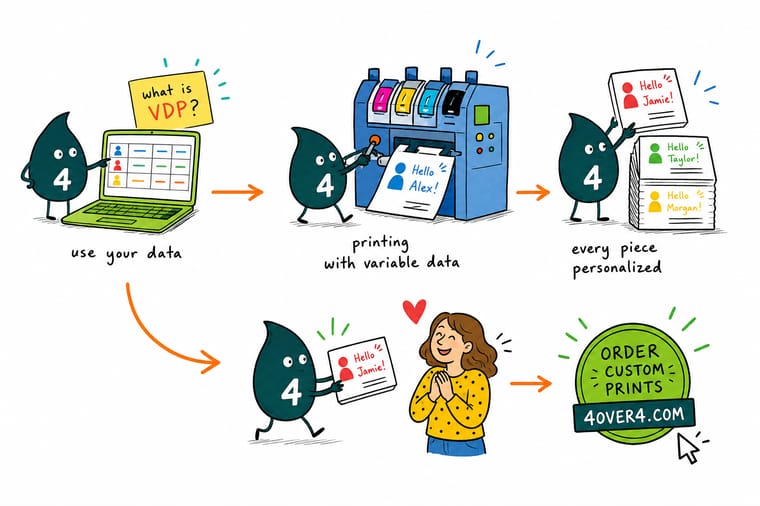
Wally holds one postcard design and one spreadsheet. Row one says Maria, so the first card greets Maria and carries her offer code. Row two says James, different card, different code, same run, and the press never slows down. Give Wally a clean list with one row per person and he will personalize every piece. Give him a list full of blanks and ALL-CAPS names, and he will print those too, five thousand times, which is why he checks the data before he checks the ink.
Order direct mail postcards →Specs and pricing
The products VDP runs on, with live starting prices
Compare the formats variable jobs actually print on, with live configuration choices and starting prices straight from the 4OVER4.COM configurator.


Print it
Put your data to work on paper


Explore more
Where to go next



By the numbers
Variable data printing you can count on at 4OVER4
Common Questions
Your VDP questions, answered
What does VDP stand for in printing?
VDP stands for variable data printing: a digital printing method where elements of the design change from one piece to the next within a single run, driven by a database or spreadsheet. Text, images, barcodes, and QR codes can all vary. The everyday version is a direct mail postcard where each card carries a different recipient name and address, but the same mechanism drives unique coupon codes, sequentially numbered tickets, and per-recipient QR links.
Is VDP the same as a mail merge?
Same idea, industrial scale. A mail merge in Word swaps fields into a letter one document at a time on an office printer. VDP does the swap in the press workflow itself, so the merge happens at production speed across thousands of pieces, and it can vary images and machine-readable codes, not just text. If you have ever run a mail merge, you already understand how to prepare a VDP data file.
What file format should my mailing list or data be in?
A CSV or Excel file with one row per piece and one clearly named column per variable field: first name, last name, address lines, city, state, ZIP, and any offer code or URL column. Keep casing consistent, spell out fallbacks for blank fields, and do not merge cells or add summary rows. The design file itself is a normal print PDF with the variable areas agreed in advance.
Does variable data printing cost more than regular printing?
Per piece, yes, because every job runs digitally and there is data processing on top. Postcards at 4OVER4.COM start at $16.48 and printed envelopes at $142.99 as static pieces, and adding variable fields adds a data setup step to that. The comparison that matters is against offset at volume: a static offset run gets cheaper per unit as quantity climbs, while VDP cost stays roughly flat per piece. Personalization has to earn that gap through response.
Can VDP run on an offset press?
No. An offset plate is a fixed image: once it is made, every impression is identical, which is exactly what offset is good at. VDP requires a press that re-images each sheet, so it runs on digital toner or inkjet equipment. Some campaigns split the difference by printing a static offset shell and adding the variable addressing digitally afterward, which is how a lot of high-volume mail is actually produced.
How do I proof a VDP job before it prints?
Ask for proofs of the edge cases, not just row one. Sort your data for the longest value in each field and check it fits without wrapping or shrinking, check a record with a blank field to confirm the fallback text appears, and check any row typed in all caps. Then verify one or two unique codes or QR links actually resolve. A VDP job with 5,000 records is 5,000 chances for one bad row to print, so the proof stage is about the data as much as the layout.
Get Started
Ready to make every piece personal?
Send us one design and one clean list, and we print a run where every postcard, envelope, or ticket carries its own name, code, or number.
Legal Disclaimer
Gold Standard guarantees apply to all standard orders placed through 4over4.com. Price match requires verifiable proof of a competitor's published price for an equivalent product with matching specifications and turnaround time. Satisfaction guarantee covers manufacturing defects and print quality issues. Contact support with order number and documentation. On-time delivery rate based on tracked orders 1999 to 2026. Individual results may vary based on shipping carrier performance.
