
Wayfinder Signs Explained, From the Parking Lot to the Door


Four sign types, five decision points, and the substrate that survives each one. A wayfinding system is assembled in a set order, it carries a printed cost, and there is one part of it we cannot make.
Wayfinder signs are the panels that move a person from the street to a specific door without them having to ask anyone. A system that works is four types running in order: identification at the boundary, an informational directory at the entrance, directional panels at every junction, and room identification at the destination. Coroplast covers temporary routes, PVC covers interior corridors, aluminum covers anything permanent outdoors, and acrylic covers the lobby. Tactile ADA room signs are the exception, because raised characters and braille are fabricated rather than printed.
Quick answer
One sign job at each point where a visitor can choose wrong
A wayfinding system is a chain, and a visitor only notices the weakest link in it. Identification tells them they arrived, an informational directory tells them what is inside, directional panels carry them through every junction, and room identification confirms the door. Match the substrate to the exposure at each point, size the type from the viewing distance rather than the panel, and treat tactile room signs as a separate purchase from a fabricator.
What a Wayfinder Sign Is, and the Four Jobs Signs Do
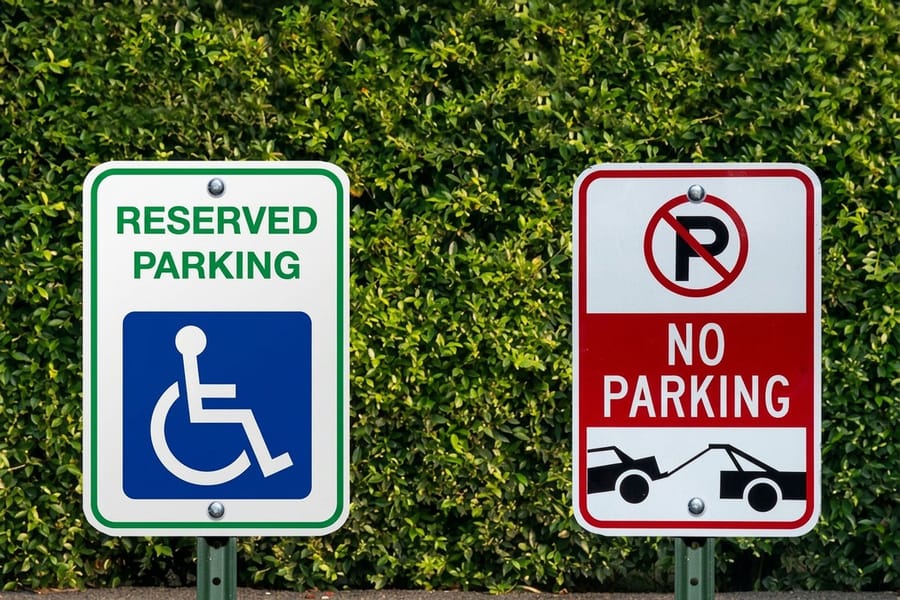
A wayfinder sign is any sign whose job is to move a person along a route rather than sell them something. Signage consultants split that job four ways, and the split is useful because each type has a different failure mode.
| Type | The question it answers | Where it belongs | Usual size and format |
|---|---|---|---|
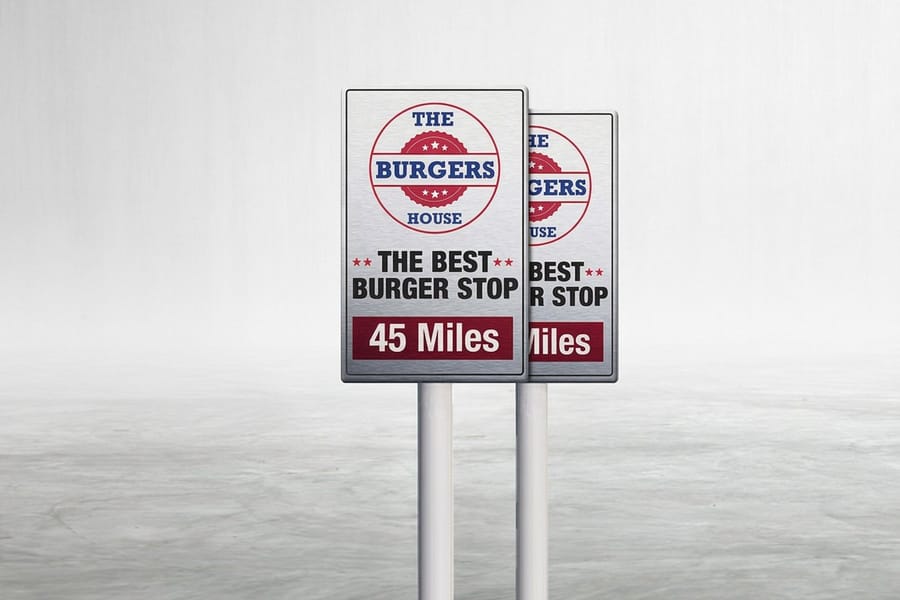
| Identification | Am I at the right place? | Street frontage, the building face, and the front of each room | 18 by 24 inches or larger at the drive, small acrylic plates at doors |
| Directional | Which way now? | Every junction where the path splits, plus one confirmation sign after it | 12 by 18 or 18 by 24 inches, an arrow and three destinations at most |
| Informational | What is in this building, and when is it open? | Lobby, elevator lobby, entry vestibule | Directory panel, floor plan, hours board |
| Regulatory | What am I not allowed to do here? | Parking bays, restricted doors, loading areas | Reflective aluminum with standard legends and pictograms |
Most buildings are heavy on identification and regulatory signage and thin on directional, because identification signs get bought when a tenant moves in and directional signs only get bought after enough people get lost. That is backwards. A visitor who cannot find the room does not blame the missing arrow, they blame the organization. If you are pricing a full system rather than one panel, our wayfinding signage planning guide walks the floor plan stage that has to come first.
Regulatory panels are the one group with legal exposure attached, since parking restrictions and fire lane markings are enforced by local code. Check what your municipality mandates before you print, and see how sign permits work state by state for anything mounted outdoors on a pole or a facade.
Choosing the Substrate for Each Position on the Route
The substrate decision is made by exposure and expected life, not by taste. Four materials cover almost every wayfinding position, and the differences between them are physical rather than cosmetic.
| Material | Real thickness | Outdoor life | Where it belongs | Starts at |
|---|---|---|---|---|
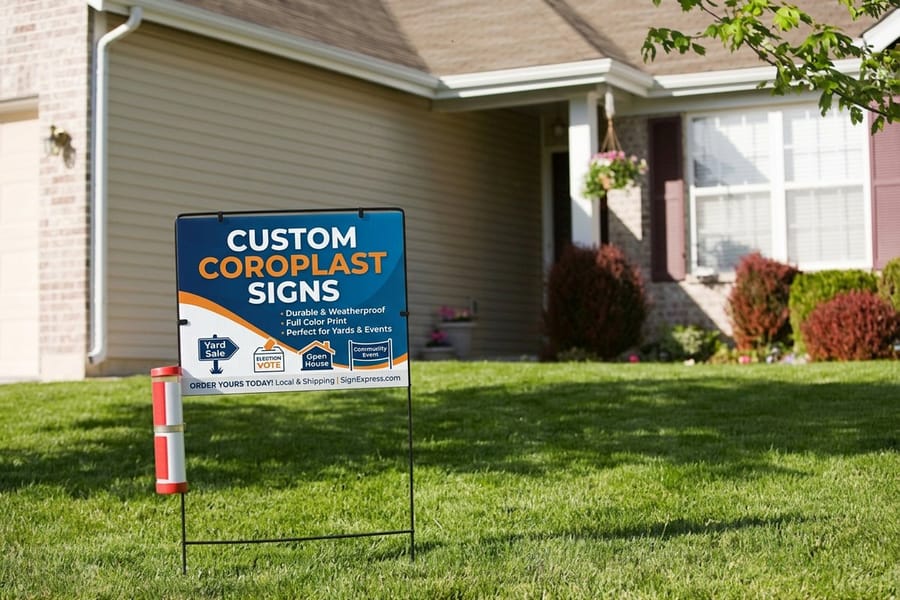
| Coroplast | 4mm fluted polypropylene | About one season in direct sun | Events, construction phases, anything with an end date | $25 |
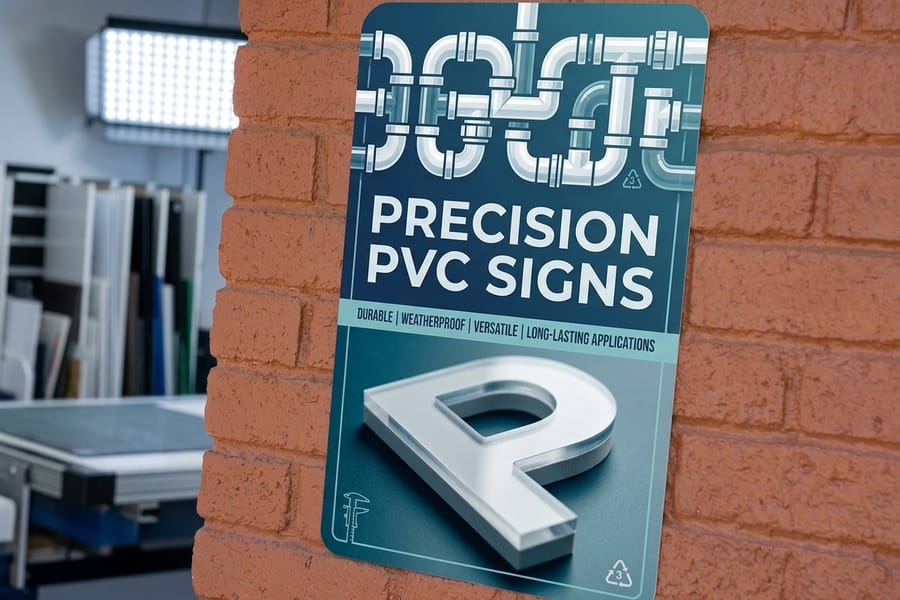
| PVC | 3mm or 6mm rigid foam board | Indoors for years, outdoors only in shade | Corridors, interior directional panels, back of house | $25 |
| Aluminum | .040 or .063 gauge sheet | Years, and longer with a reflective face | Parking, entrances, poles, anything permanent outdoors | $36 |
| Acrylic | 1/8 to 1/4 inch cast sheet | Interior only | Lobby directories and any panel people stand close to | $152.72 |
Three details decide more jobs than the price column does. Coroplast flutes run in one direction only, so a 24 by 36 inch panel with the flutes running the short way will bow visibly in a frame within weeks. PVC softens in heat, which is why a 6mm panel bolted to a south facing wall in Phoenix will sag between its fixings while the same board indoors stays dead flat for a decade. And aluminum gauge matters more than people expect: .040 is fine up to about 12 by 18 inches, but at 18 by 24 and above it flexes and drums in wind, so aluminum signs ordered at .063 are the safer specification for anything on a post.
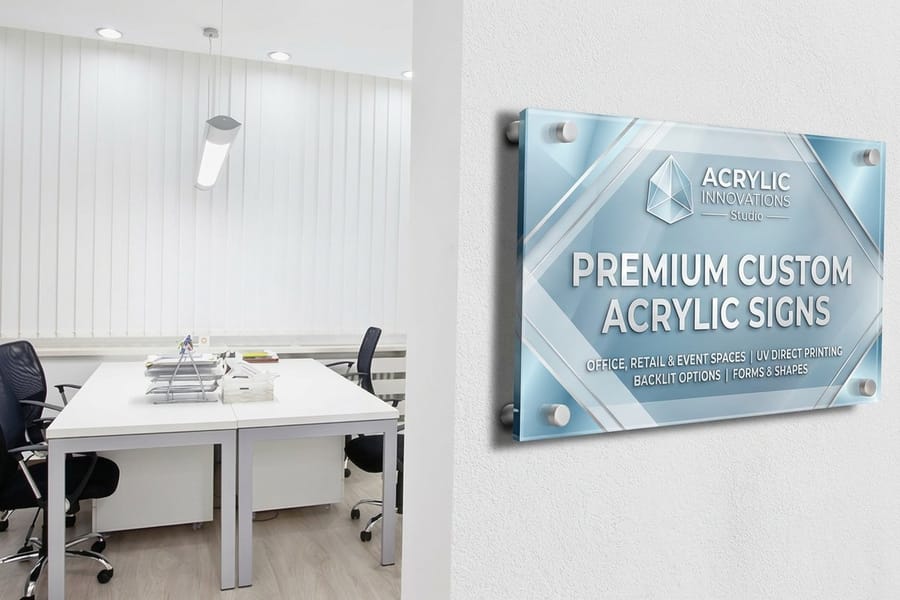
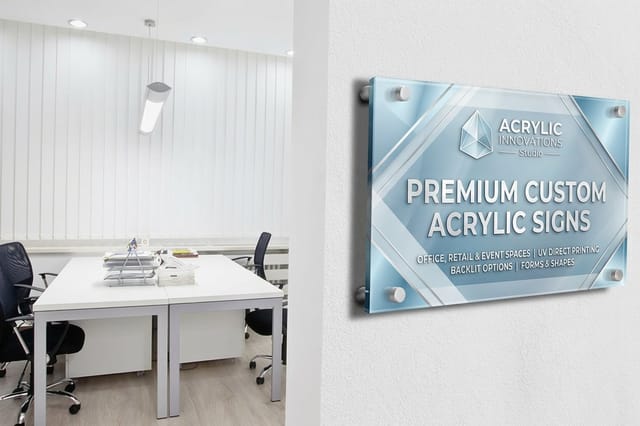
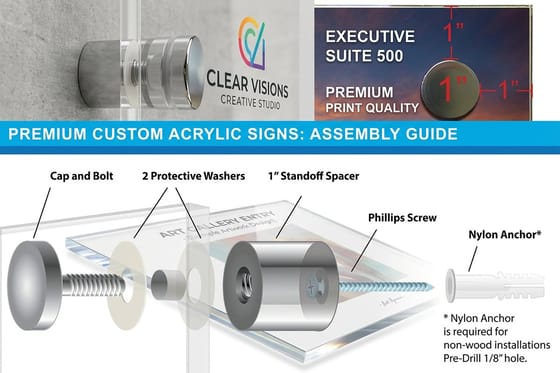
Acrylic is the outlier. It costs several times what a rigid board costs, and the standoff hardware often costs more than the panel, but it is the only substrate that reads as permanent architecture when a visitor is standing three feet away in a lobby. Use it where people stop, not where they walk past. Our note on how standoff signage works covers the hardware, and PVC thickness explained settles the 3mm versus 6mm question for interior panels. For a straight substrate comparison, read aluminum signs vs coroplast vs PVC.
Placement, Sight Lines and the Height That Signs Actually Get Read At
Placement is where most systems fail, and it fails in the same three ways every time. Walk the route as a stranger with the floor plan in hand and you will find all three in an afternoon.
The first is the junction rule. A person decides where the corridor splits, so the sign belongs in the sight line approaching that split, not on the wall after it. The second is confirmation. After a visitor turns, they want a small sign within the next stretch that repeats the destination, otherwise they slow down and start reading door numbers. The third is competition: an arrow panel hung among framed photographs, a fire extinguisher and a poster is invisible, because the eye filters the whole wall as decoration.
- Cap height by distance. Roughly one inch of capital height per 25 feet of viewing distance on foot. Two inch letters for a 50 foot corridor, four inches and up for anything a driver reads.
- Three destinations per panel. More than that and the type shrinks, which shortens the read distance and undoes the reason the sign is there.
- Overhead clearance of 80 inches. Any sign or projecting panel that hangs over a walking route needs 80 inches of clear headroom underneath it.
- Wall mounted directional panels around 60 to 72 inches to center. High enough to clear furniture and heads in a queue, low enough to sit in normal eye travel.
- Reflectivity outdoors. A parking or entrance sign that is only read after dark earns a reflective face far more than it earns a second color.
Contrast does more work than color choice. Dark characters on a light field or the reverse, at a wide separation, survives dusk, glare and a visitor who left their reading glasses in the car. Our guide to the best colors for signs covers the pairings that hold up outdoors, and outdoor sign printing deals with finish, lamination and mounting once the artwork is settled. Start the artwork at the right trim size using the blank template library.
The ADA Rules That Decide Your Room Signs
Two different rule sets apply, and confusing them is what produces a set of beautiful signs that fails inspection. Signs identifying a permanent room or space must be tactile. Directional and informational signs do not have to be tactile, but they do have to meet the visual character rules.
For tactile room identification, the 2010 ADA Standards ask for characters raised at least 1/32 of an inch, uppercase, sans serif, and never italic, script or highly decorative. Grade 2 braille sits directly below the characters. The baseline of the lowest tactile line must be at least 48 inches above the floor and the baseline of the highest at most 60 inches. Mounting goes on the latch side of the door, and where there is no wall on the latch side it moves to the nearest adjacent wall. A clear floor space of 18 by 18 inches must sit in front of the characters, positioned so a person standing there is outside the arc of the door swing. Pictograms, where used, need a field at least 6 inches tall with the text descriptor below the field rather than inside it.
Most printers leave out that limit. Raised characters and braille are fabricated, not printed. We do not make tactile room signs, so the sign beside the exam room door or the restroom needs a tactile sign fabricator. What we print is everything else in the system, and the visual character rules that govern that layer are ones our stocks meet directly: a non glare finish, sans serif characters, and high contrast between the characters and their background.
That split is worth pricing deliberately. A hundred room signs from a tactile fabricator plus forty printed directional panels usually costs less than sending the whole package to a fabricator, and the printed layer is the part you will reprint when a department moves. For interior panels, PVC signs from $25 handle corridor work and acrylic signs from $152.72 carry the lobby directory. The indoor signage guide covers how the two layers sit together in an office fit out, and acrylic office and lobby signs goes deeper on the directory panel itself.
Temporary Wayfinding for Events and Construction Phases

Event wayfinding has the opposite problem to a building. Nothing can be screwed to a wall, the route changes on the morning, and everything has to come down in an hour at the end. That pushes the whole system onto free standing and adhesive formats.
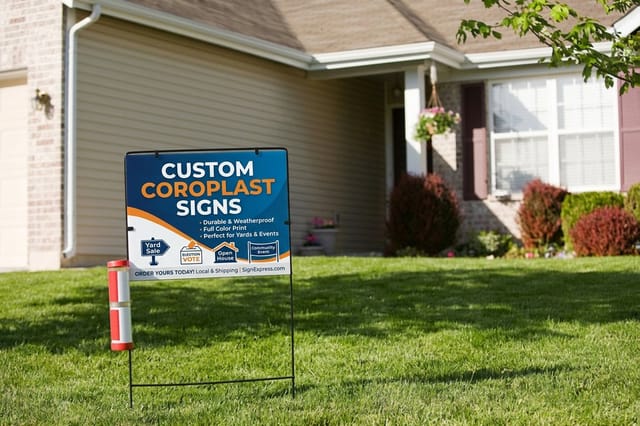
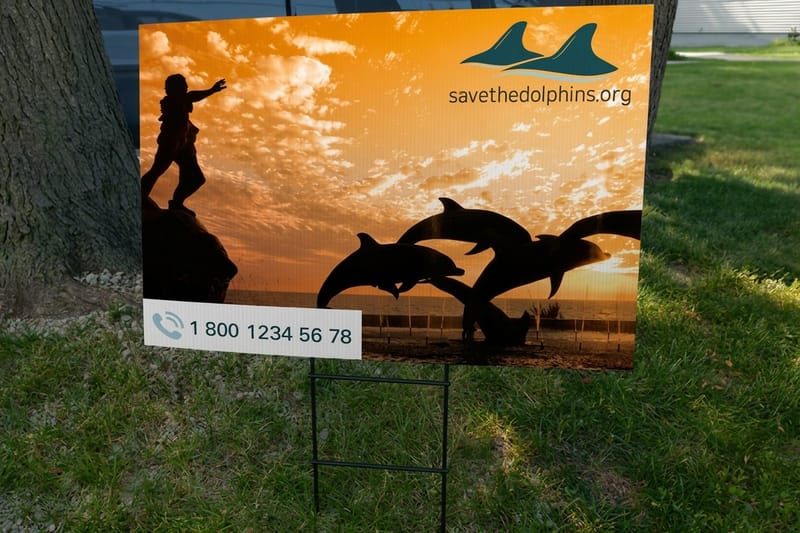
Coroplast on wire stakes covers most of it. Plastic coroplast signs start at $25, print full color on both sides, and go into soft ground in seconds, which is why they run the perimeter of almost every festival and open day. Their weakness is wind and hard ground: a stake will not go into asphalt, and an unweighted panel above 24 inches wide acts as a sail. A frames solve both. They stand on any surface and take sandbags, though a standard A frame will still walk or fold in sustained wind above about 15 to 20 miles an hour unless it is weighted at the feet.
Indoors, floor graphics do the routing that walls cannot. Floor decals start at $34 and hold a queue line or a one way circulation route without any hardware at all, provided the floor is smooth, sealed and clean. Broom finished concrete and unsealed grout lines will lift a corner, and a lifted corner in a corridor is a hazard rather than a sign. Test one decal on the actual floor before ordering the set.
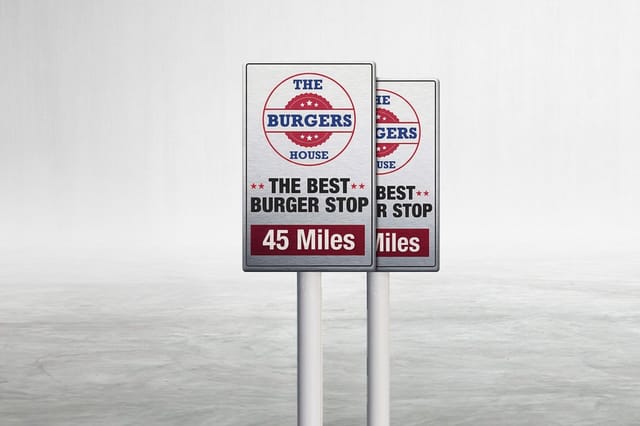
Site entry is worth doing properly even for a two day event, because arriving drivers are the group most likely to give up. Parking signs from $30 on reflective aluminum stay legible in headlights at the point where someone is deciding between your gate and the next one. Everything else can be coroplast. For the full temporary set, read directional signs for events, and browse the substrates side by side in the coroplast signs range and the aluminum signs range.
Wally explains wayfinding
Sign the junction, not the wall after it
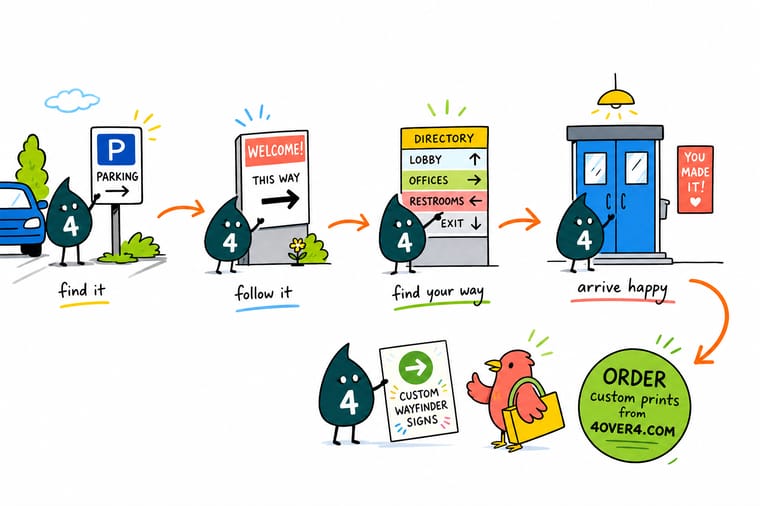
Wally walks the route as a stranger. At the gate he needs to know he is in the right place, at the door he needs to know what is inside, and at every fork he needs an arrow with no more than three names on it. He puts each sign where the path splits, because that is where a person decides. Outdoors he uses aluminum, indoors PVC, and for a weekend event coroplast on stakes. The one sign he does not print is the tactile room plate beside the door, because raised letters and braille are fabricated.
Order aluminum wayfinding signs →Specs and pricing
Substrates, sizes and starting prices
Compare the three panel substrates a wayfinding system runs on, with live size and finishing choices and starting prices straight from the 4OVER4.COM configurator.


Print it
Order the panels your route needs
Explore more
Where to go next


By the numbers
Sign printing you can plan a schedule around
Common Questions
Your wayfinding questions, answered
What is the difference between a wayfinder sign and a wayfinding sign?
Nothing, in practice. Wayfinder sign is the shorthand facilities and event teams use for a single panel, and wayfinding is the name for the whole system those panels belong to. Architects and specifiers usually write wayfinding signage in a scope of work. If you are pricing one arrow panel for a corridor, either word will get you the same product.
How many destinations should one directional sign list?
Three is the working limit, four if two of them share the same arrow. Every extra line adds reading time at exactly the moment a person is walking and deciding, and it forces the type smaller, which shortens the distance the sign can be read from. If you have seven departments down one corridor, group them by floor or by zone on the directional sign and let the informational directory in the lobby carry the full list.
How big do the letters need to be on a wayfinding sign?
Work back from the viewing distance. Roughly one inch of capital letter height reads at about 25 feet on foot, so a corridor sign read from 25 feet wants an inch, and an entrance sign read from across a parking lot wants four inches or more. Round up rather than down, because glare, low light, and a visitor moving at speed all cost you legibility that the tape measure did not account for.
Are 4OVER4 signs ADA compliant?
Our printed signs meet the visual character rules that apply to directional and informational signage: non glare finish, high contrast between the characters and their background, and sans serif characters that are not italic or script. They are not tactile signs. ADA room identification, which covers permanent rooms and spaces, requires characters raised at least 1/32 of an inch and Grade 2 braille below them, and that is a fabrication process rather than a printing process. Buy those from a tactile sign fabricator and print the rest of the system with us.
What material should outdoor wayfinding signs be?
Aluminum for anything permanent, and .063 gauge rather than .040 once the panel gets to 18 by 24 inches, because the thinner sheet flexes and drums in wind. Reflective aluminum is worth the upcharge on parking and entrance signs that people read in headlights. Coroplast is the right answer only when the sign has a known end date, since the fluted plastic bows on wide panels and the print fades noticeably after a season of direct sun.
Can wayfinding signs go on the floor?
Yes, and floor graphics work well for queue routing and one way circulation, but the surface decides. Floor decals need a smooth, sealed, clean floor to hold their adhesive. Broom finished concrete, unsealed tile grout, and anything that gets wet mopped daily will lift a corner within days, and a lifted corner in a corridor is a trip hazard rather than a wayfinding aid.
Get Started
Spec coroplast, PVC or aluminum in the sign configurator
Send us the panel list and the sizes. We print coroplast for the weekend, PVC for the corridor, and aluminum for the parking lot, all on the same order.
Legal Disclaimer
Gold Standard guarantees apply to all standard orders placed through 4over4.com. Price match requires verifiable proof of a competitor's published price for an equivalent product with matching specifications and turnaround time. Satisfaction guarantee covers manufacturing defects and print quality issues. Contact support with order number and documentation. On-time delivery rate based on tracked orders 1999 to 2026. Individual results may vary based on shipping carrier performance.
