
How to Choose an Outdoor Sign Board Material That Survives Your Climate


Tobias is our voice for cutting, binding and large format, built from the knowledge of our production team, with over 20 years in printing.
Pick the board by how long it has to stay up and what your weather does to it. Coroplast, expanded PVC, aluminum and vinyl each behave differently in sun, heat and wind, and each gives out somewhere.
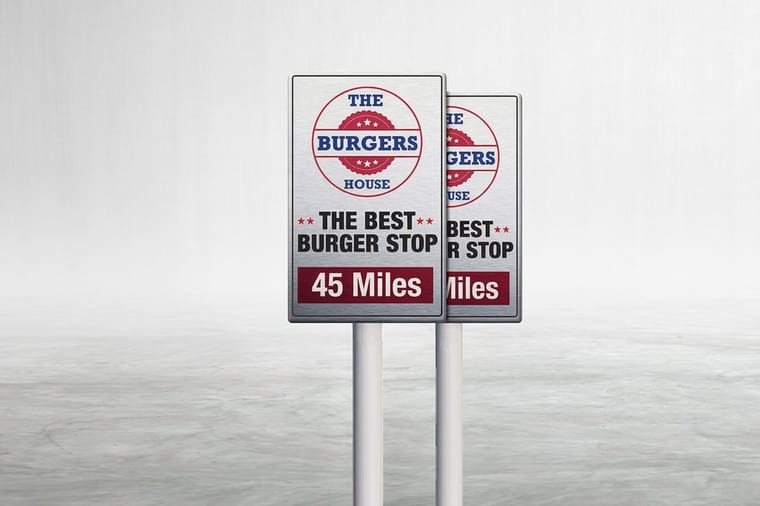
Choose by lifespan first: 4mm coroplast for weeks to a season, 3mm expanded PVC for a year or two on a wall or fence, .040 aluminum for anything that has to stay years in open weather. All four common boards are waterproof, so what really ends them is ultraviolet light on the ink, daily heat cycling on the panel, and wind pulling at the fixing points. Thickness and mounting follow from the wind, not from the rain.
Quick answer
Duration decides the board, mounting decides the thickness
Every common outdoor sign board is waterproof, so durability is not about rain. It is about how long the ink survives ultraviolet light and how well the panel tolerates expanding and contracting while something holds it still. Coroplast is the season material, expanded PVC is the year or two material with the better print face, and aluminum is the one that outlives its own artwork. Wind and the way you attach the sign decide the thickness, and they are also where most early failures actually happen.
Start With the Weather, Not the Price List
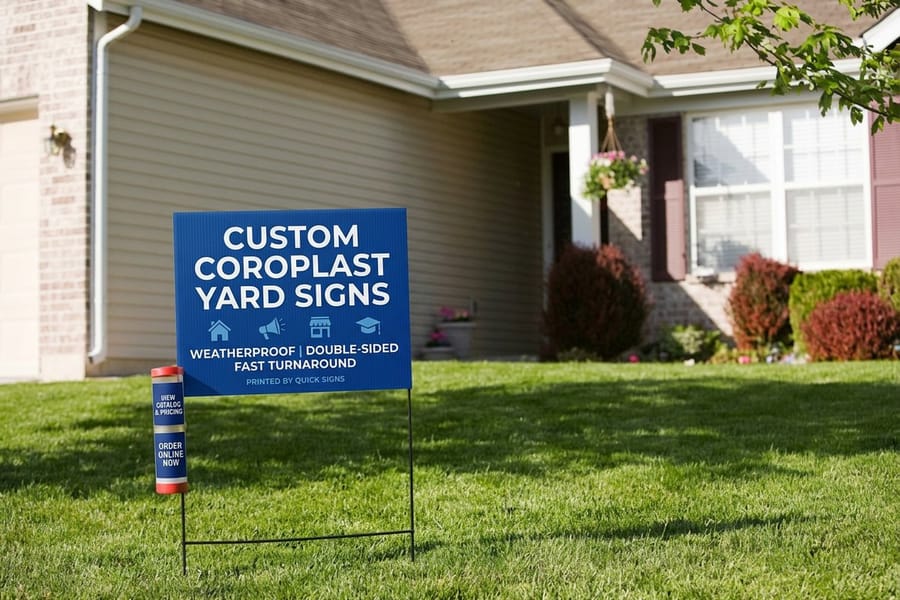
Four things kill outdoor signs, and rain is not really one of them. Coroplast, expanded PVC, aluminum and vinyl are all waterproof out of the box. What actually finishes them is ultraviolet light, temperature cycling, wind loading, and the freeze and thaw that follows water sitting in a hole or a flute.
Ultraviolet light attacks the ink long before it attacks the panel. This is why two signs made of the same board can age completely differently: the one with a UV laminate over the print stays readable, the bare one chalks and goes pale on the reds first. If your sign faces south with nothing shading it, the laminate matters more than the substrate you picked.
Temperature cycling is the quiet one. Expanded PVC expands and contracts more than most people expect across a single day, so it is the material most likely to bow after installation rather than during it. Aluminum barely moves. Coroplast moves but is flexible enough not to care.
Wind decides the thickness and the mounting, not the material. A 24 by 18 coroplast sign on a wire stake in an exposed field is a sail, and it will fold at the stake before the print fades. Freeze and thaw matters most where water can collect: an open coroplast flute that fills with rain and then freezes splits from the inside.
Work out which of those four your location does worst, and the shortlist gets very short. Coastal salt air, for example, rules out steel hardware but does nothing to any of these boards. Deep cold makes PVC more brittle to handle in January but does not shorten its service life. For the head to head numbers on the three rigid boards, our aluminum vs coroplast vs PVC comparison takes them apart side by side.
Coroplast, PVC, Aluminum and Vinyl Side by Side
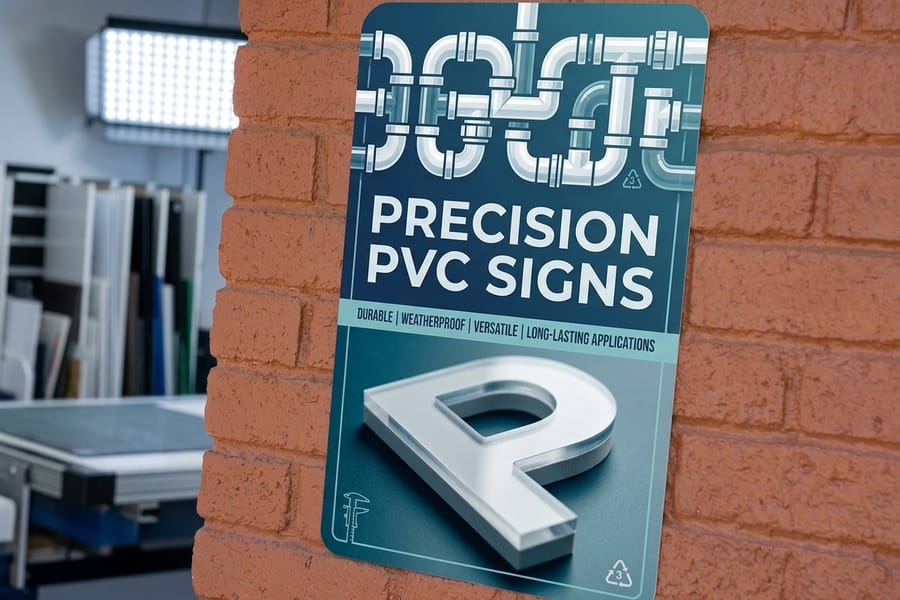
These four cover almost every outdoor sign a business orders. The differences that matter in practice are stiffness, how the panel behaves in heat, and how it wants to be attached to something.
| Board | What it is | Plan on it lasting | How it fails | Best fit |
|---|---|---|---|---|
| Coroplast 4mm | Corrugated polypropylene with hollow flutes running one direction. | A season outdoors, longer if sheltered. | Stake slots wallow out, a flute splits, the face chalks. | Events, open houses, campaigns, seasonal promotions, anything staked in a lawn. |
| Expanded PVC 3mm | Foamed rigid PVC sheet with a smooth closed face. | A couple of years, best under an overhang. | Bows between fixings when it heats up and cannot move. | Wall signs, fence signs, real estate riders, A-frame inserts, anything where print quality shows. |
| Aluminum .040 | Solid aluminum sheet, oxidizes to a protective skin instead of rusting. | Years. The artwork gives out first. | It usually does not. The print fades or the hardware rusts. | Parking, directional, building and regulatory signs meant to stay put. |
| Vinyl banner 13oz | Scrim reinforced flexible vinyl, hemmed and grommeted. | A year or two of intermittent use. | Hems fray, grommets pull through, wind tears a corner. | Spans wider than a rigid panel makes sense, fences, building fronts, temporary announcements. |
Read the fourth column before the third. A material that fails at the fixing point, like coroplast on a stake or a banner on a grommet, can often be made to last twice as long by changing the mounting rather than the board. That is a much cheaper fix than jumping to aluminum. If the span is what is driving the decision rather than the weather, compare the flexible options in our banner material types guide before committing to a rigid panel.
Thickness, Flute Direction and Mounting, Where Signs Really Fail
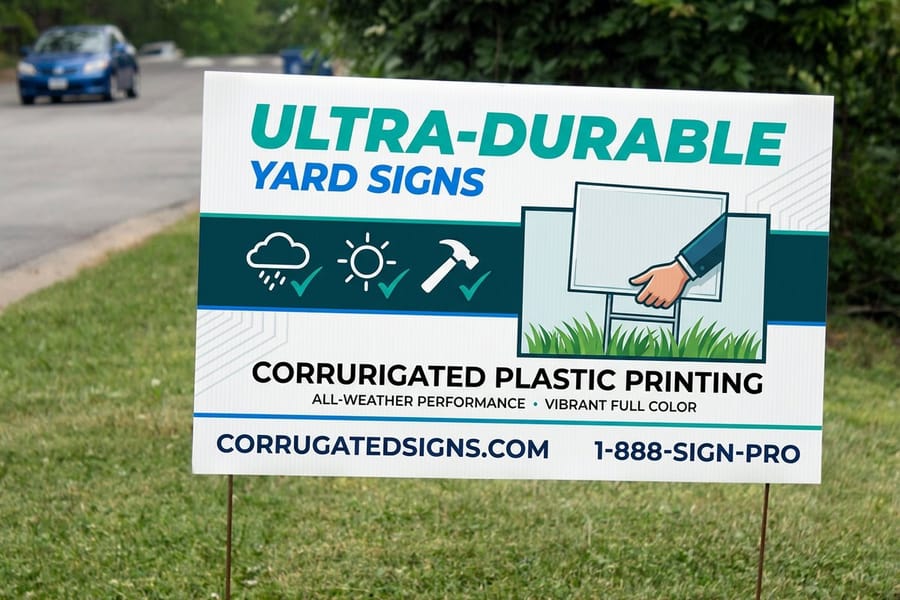
Most outdoor signs that come back early were not the wrong material. They were the right material fixed to the world badly.
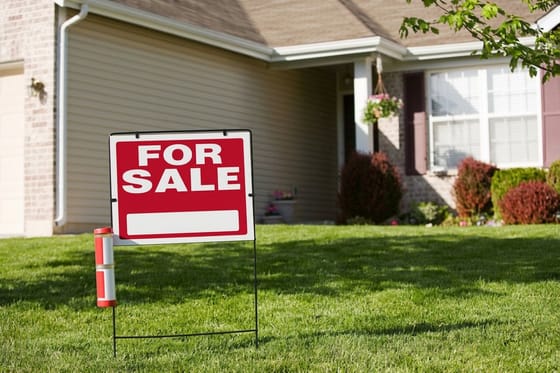
Coroplast flutes run one direction only. The stake slides up inside the hollow channels, so the flutes have to run the same way the stake legs do. On a standard landscape yard sign that means vertical flutes across the short dimension. Order horizontal flutes on a landscape sign and no H stake will fit it, which is the mistake we see corrected most often on coroplast yard signs. Say how the sign will be mounted when you order and the flute direction gets set for you.
Expanded PVC needs room to move. Drill the fixing holes oversize, roughly double the screw shank, put a washer under the head, and stop turning before the screw pinches the panel. Support anything over about 36 inches along its length rather than only at the ends. Do that and a PVC sign stays flat through a summer. Skip it and you get the gentle bow between screws that everybody blames on the material.
Aluminum gauge is about handling as much as wind. .040 is stiff enough for the overwhelming majority of wall and post signs. Move up to .063 when the panel is large, when it is on a post that catches gusts, or when people will be taking it down and putting it back and could dent a corner. Drill the holes back from the edge and radius the corners so wind loading has nothing to tear through. Our aluminum signage guide goes deeper on gauges and finishes.
Wind slits in a solid banner are mostly a myth. Cutting half moons into 13oz vinyl removes material and gives every gust a place to start a tear, and it does very little to relieve pressure. If wind is the problem on a fence run, the honest fix is a mesh banner that lets air through, or more grommets and bungee cord rather than zip ties pulled bar tight. Regular vinyl banners start at $79, and for a freestanding sidewalk sign that has to sit on concrete in a breeze, a weighted Signicade A-frame at $182.32 is a different answer to the same problem.
Match the Spend to How Long the Sign Has to Live
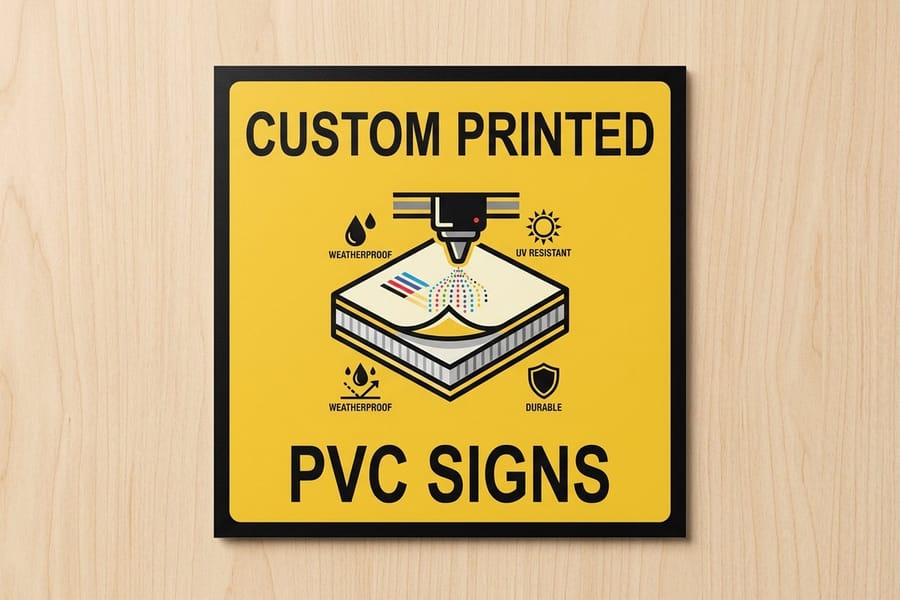
Once you have the duration, the budget arranges itself. Coroplast yard signs start at $25, PVC signs start at $25, and aluminum signs start at $36. The gap between the cheapest and the most durable rigid board is smaller than most people assume, which changes the calculation: if a sign is going to be up for more than a year, aluminum is rarely the extravagant choice.
Where the money genuinely goes is quantity and repetition. Twenty directional signs for a weekend event are a coroplast job every time, and paying for metal there is money burned. One sign at the entrance of a building that has to look correct for the next five years is the opposite: the reprint cost of doing it twice in coroplast exceeds doing it once in aluminum, and the second version never quite matches the first.
The middle case is the one worth thinking about. A sign that has to last a year or two, sits under an eave or on a wall, and needs a clean flat face because there is a logo on it, is expanded PVC. It prints noticeably better than coroplast because there are no flute shadows telegraphing through the face, and it costs nothing like a metal panel. If you are stocking A-frames or riders that get changed a few times a year, PVC inserts are the sane default.
Set the file up at final size with the bleed and the safe margin the substrate needs, since a staked sign loses more at the bottom edge than a wall sign does. Start from a correctly built layout in the blank template library, and browse everything we print on a rigid board in the rigid signs collection or, for staked work specifically, the yard signs collection.
Wally sizes up the weather
How long it stays up decides what it is made of
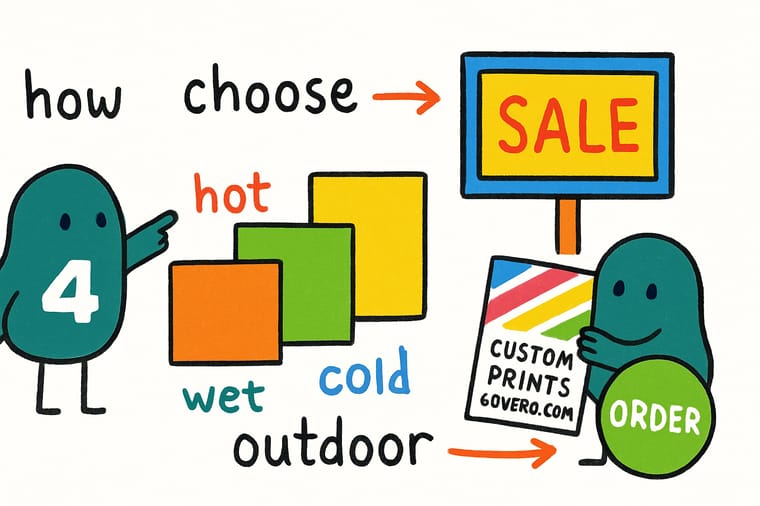
Wally does not start with the price. He asks how long the sign has to be there. A weekend or a selling season and he reaches for 4mm coroplast, making sure the flutes run the way the stake does. A year or two on a wall and he takes 3mm expanded PVC, then drills the holes oversize so the panel can grow on a hot afternoon without bowing. Years out in the open and he takes .040 aluminum, because the print will fade long before the metal complains. Rain never worried him. Sun, heat cycling and wind at the fixing points are what he plans around.
Compare rigid sign materials →%22%2F%3E%3Ccircle%20cx%3D%2241%22%20cy%3D%2249%22%20r%3D%2226%22%20fill%3D%22%2314b8a6%22%20opacity%3D%220.15%22%2F%3E%3Ccircle%20cx%3D%2278%22%20cy%3D%2258%22%20r%3D%2214%22%20fill%3D%22%2314b8a6%22%20opacity%3D%220.1%22%2F%3E%3Crect%20x%3D%2271%22%20y%3D%2228%22%20width%3D%2226%22%20height%3D%2234%22%20rx%3D%224%22%20fill%3D%22%2314b8a6%22%20opacity%3D%220.08%22%20transform%3D%22rotate(36%2080%2030)%22%2F%3E%3C%2Fsvg%3E)
Specs and pricing
Sizes, thicknesses and starting prices for each board
Coroplast, expanded PVC and aluminum with live configuration choices and starting prices straight from the 4OVER4.COM configurator. Coroplast yard signs are 4mm at 12 by 18, 12 by 24 or 18 by 24 inches or any size, with grommets or an H-stake, from $25 and 5 business days of production. PVC signs come in 14 sizes from 11 by 17 inches, with 1 inch rounded corners and grommets as options, from $25 and 4. Aluminum signs are .040 inch at 12 by 18, 18 by 24 or 24 by 36 inches with drilled holes, from $36 and 4.
Print it
Order the board that matches your weather
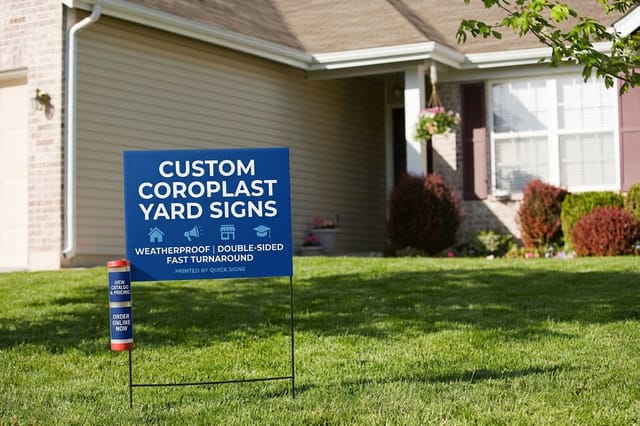
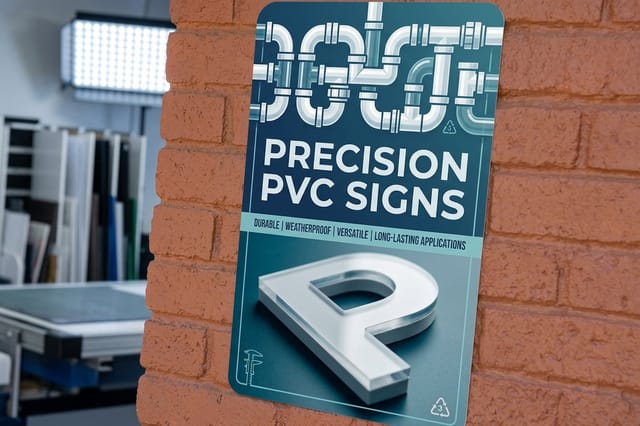
A season on a lawn: coroplast yard signs from $25 with vertical flutes for the H-stake. A year or two on a wall: PVC signs from $25, drilled oversize. Years in open weather: .040 aluminum signs from $36 with the corner holes drilled back from the edge.

Explore more
Where to go next
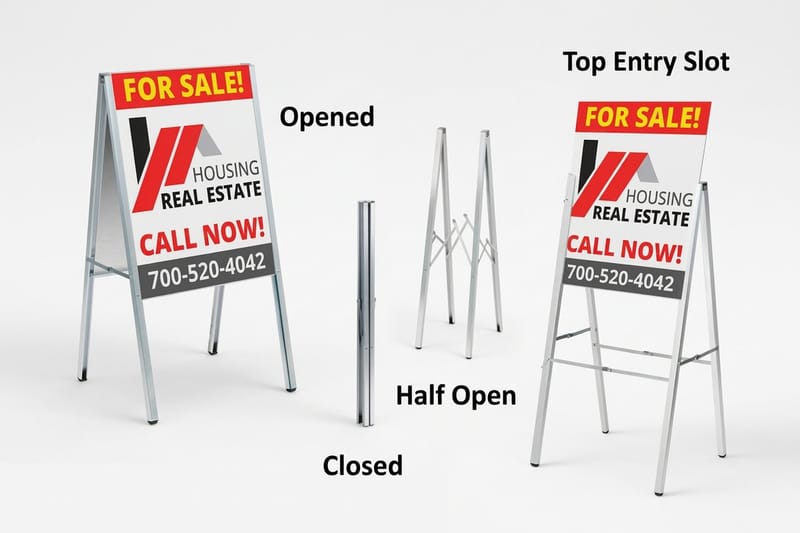
Put aluminum, coroplast and PVC head to head on cost and stiffness, sort the seven types of signage, pick a banner material for a windy fence, and fit an A-frame insert, then shop rigid signs and yard signs.

By the numbers
Outdoor board materials, and the record they ship against
Common Questions
Your outdoor sign material questions, answered
What is the best material for an outdoor sign?
There is no single best one, only the right one for the duration. For a sign that has a job to do for a few weeks or one selling season, 4mm coroplast is the correct answer and anything else is wasted money. For a year or two on a wall, a fence or a post, 3mm expanded PVC gives a flat, smooth face that photographs and prints better than coroplast. For a permanent parking, directional or building sign that has to survive full sun, wind and freezing weather, .040 aluminum is the standard, and it is the only one of the three that will still be structurally sound after the artwork has faded.
How long does a coroplast yard sign last outside?
Plan on one season, and treat anything beyond that as a bonus. Coroplast is corrugated polypropylene, so it never absorbs water and it will not rot, but the failure is mechanical rather than chemical. The stake slots wallow out, wind flexes the panel until a flute splits, and the printed face chalks under ultraviolet light. Signs mounted flat against a fence, out of the wind, routinely go much longer than staked signs on an exposed lawn, because the stake holes are where they usually die first.
Will a PVC sign warp in the sun?
It can, and how you mount it decides whether it does. Expanded PVC has a high rate of thermal expansion, so a panel that is a hair over 24 inches on a cold morning is measurably longer by mid afternoon in July. If the fixing holes are drilled the same size as the screw shank, the panel has nowhere to grow and it bows between the fixings. Drill the holes oversize, use washers, leave the screws just short of tight, and support long horizontal spans in the middle. Dark artwork on a large panel runs hotter and moves more than light artwork.
Does aluminum rust outdoors?
No. Aluminum forms a thin oxide layer that seals the surface instead of flaking away like iron oxide, which is why highway and parking signs are aluminum rather than steel. The part that rusts is the hardware. Mount an aluminum panel with plated steel bolts near the coast and you will get rust streaks running down your sign within a season while the panel itself is untouched. Use stainless or aluminum fasteners and nylon washers, and drill the corner holes back from the edge so wind loading does not tear through.
What thickness should an outdoor sign be?
For coroplast, 4mm is the working standard and 10mm exists mainly for stiffness on very large panels. For expanded PVC, 3mm suits anything up to roughly 24 by 36 inches with support at the edges, and 6mm is the honest choice above that or for any unsupported span. For aluminum, .040 covers the vast majority of wall and post signs, and .063 is worth the extra only on large panels, on posts that catch heavy wind, or where the sign will be handled and could take a knock.
Can I use foam board outside?
Not for anything that has to survive weather. Foam core has a paper face over a polystyrene core, and the exposed edges wick water straight into the middle, which delaminates the face and buckles the board after the first real rain. It is an excellent indoor presentation and event material and a poor outdoor one. If somebody quoted you foam board for an exterior sign, they quoted the wrong product, and coroplast at a similar price will actually last.
Get Started
Order a vinyl banner, printed in 3 business days, for the outdoor job
Tell us the size, the mounting and how long it has to stay up, and we will print it on the board that suits the job instead of the one that suits the invoice.
Legal Disclaimer
Gold Standard guarantees apply to all standard orders placed through 4over4.com. Price match requires verifiable proof of a competitor's published price for an equivalent product with matching specifications and turnaround time. Satisfaction guarantee covers manufacturing defects and print quality issues. Contact support with order number and documentation.
