
Event Directional Signs That Get Every Guest to the Right Room


A wayfinding plan that maps each spot on the guest route to the sign that survives it, from the driveway to the room door, with real sizes, materials and starting prices.
Directional signs for events are the arrows, entrance signs and room panels that carry a guest from the parking lot to the right chair, and you plan them by decision point rather than by room. Walk the guest route on a floor plan, mark every place where someone could turn the wrong way, and put one sign at each of those points. Size the letters for the distance they are read from, about one inch of cap height per ten feet, and pick the material by where the sign stands: coroplast on stakes outdoors, a weighted A frame on pavement, foam board indoors.
Quick answer
One sign per decision point, sized for the distance
A guest gets lost at forks, not in rooms. Trace the route from the road to the seat, mark every junction, and give each junction a sign that says one thing: an arrow and a destination. Letter height decides the panel size, since roughly one inch of cap height reads at ten feet, and the surface the sign stands on decides the product. Soil takes a staked coroplast panel, pavement takes a weighted A frame, and a carpeted lobby takes an easel or a banner stand.
The Five Jobs Event Signs Do, and Why They Are Not Interchangeable
Every sign at an event is doing one of five jobs. Mixing two of them onto one panel is the fastest way to lose a guest, because a person walking at three miles an hour reads about four words.
- Directional. An arrow and a destination. Nothing else. This is the sign that lives at forks and turns, and it is the one most events under order.
- Identification. The sign on the thing itself: Registration, Ballroom B, Coat Check. It confirms the guest arrived and it is the reason directional arrows can be short.
- Informational. The agenda board, the floor map, the schedule. These are read standing still, so they can carry small type and a lot of it. Put them where people can stop without blocking traffic.
- Regulatory. Staff Only, No Entry, Badge Required. Short, high contrast, and placed at eye level on the door itself rather than beside it.
- Welcome and brand. The banner at the entrance and the photo backdrop. It sets the tone but it does not route anyone, so never let it replace a directional sign at the same spot.
The practical test is simple. If a sign needs two sentences to explain itself, it is an informational sign and it belongs where people stand still. If it can be read at a glance from across a parking lot, it is directional and it belongs at a fork. Outdoors that usually means yard signs on stakes, and indoors it means a rigid panel on an easel.
Where Every Sign Goes, Spot by Spot

Open the venue floor plan and trace the guest route with a finger. Wherever the finger has to choose, a sign goes. This table maps the usual spots to the product that actually survives them, with the price each one starts at.
| Spot on the route | What the guest is deciding | The sign that does it | Starts at |
|---|---|---|---|
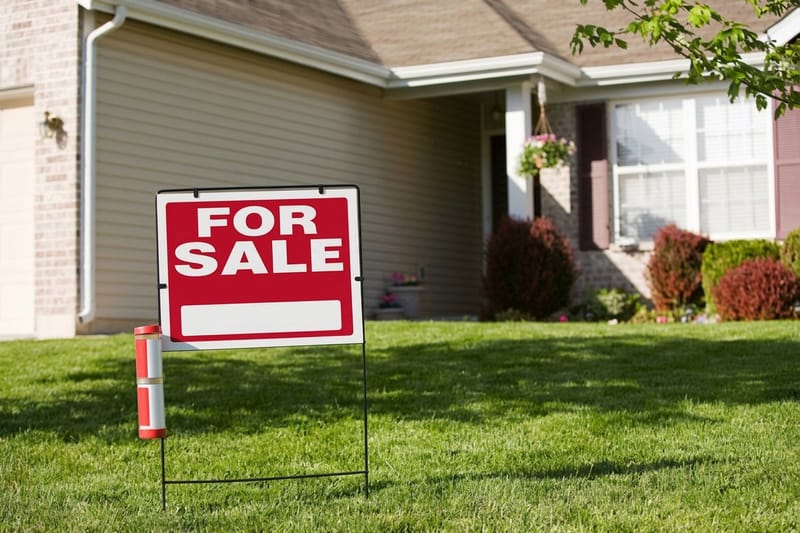
| Road and driveway | Which entrance to turn into, at speed | 18 by 24 yard signs on wire stakes, or a feather flag that is visible above parked cars | $25 |
| Parking lot | Where to walk once the car is parked | Yard signs at the row ends, facing the walking direction | $25 |
| Building entrance | Whether this is the right door | Signicade A frames with both faces printed, or a vinyl banner above the door | $79 |
| Lobby and registration | Which line to join and where to go after | Retractable banner stands beside each check in point | $139 |
| Corridor forks and stairs | Left, right or up | Foam core signs on easels, one facing each direction of travel | $49.99 |
| Open floor with no walls | Which way to cross the room | Floor decals with arrows on hard smooth flooring | $34 |
| Room and session doors | Confirming they arrived | Small foam core panels on easels or door frames | $49.99 |
Two rows deserve extra thought. Corridors need a sign for each direction of travel, so a hallway everyone walks both ways doubles its count. And the open floor row is the one people forget: a ballroom with no walls gives a guest nothing to read, which is exactly where a floor decal or a tall banner stand earns its price. Browse the full large format printing range if a spot needs something bigger than a panel.
Outdoors Versus Indoors, and What the Material Has to Survive
The substrate decision is really a weather decision, and getting it wrong is visible from across the parking lot by mid afternoon.
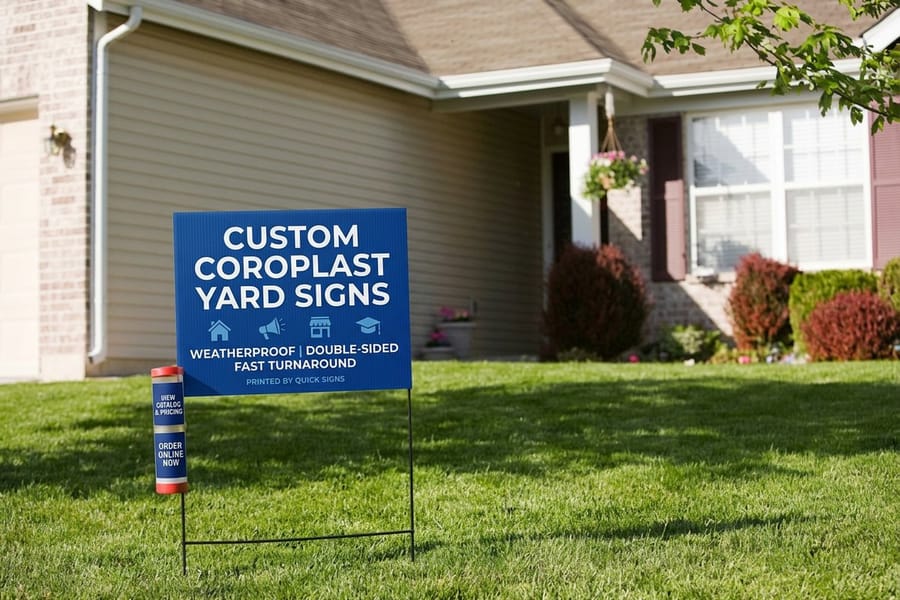
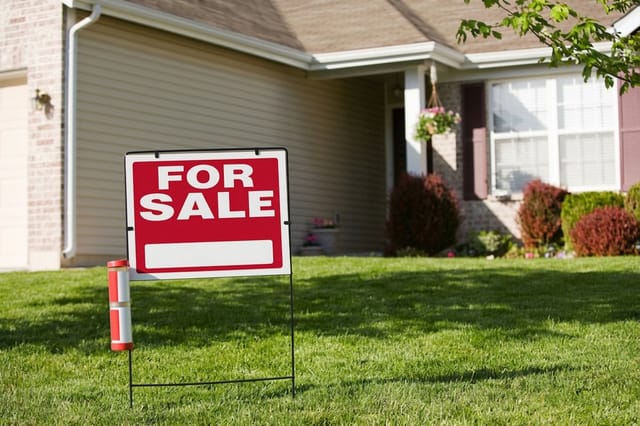
Coroplast for anything outdoors on soil. The 4mm corrugated plastic used for coroplast signs shrugs off rain and costs the least per panel. One detail matters more than the rest: the flutes have to run vertically so a wire H stake slides down two channels and the sign resists twisting in wind. Order it with horizontal flutes and the stake has nothing to grip.
Aluminum when the sign lives outside for weeks. Coroplast starts to fade and flex after a season of sun. Rigid aluminum signs stay flat, hold a straight edge, and are the sensible pick for a recurring market, festival series or campus event where the same panel goes out a dozen times.
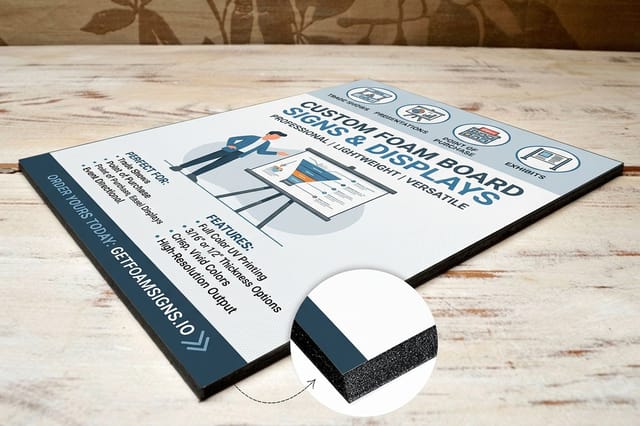
Foam board indoors only. Foam core is light, cheap, cuts to any shape and sits happily on an easel, which is why it dominates lobby and door signage. It is also the material most likely to be ruined by an event: the paper facing lifts in humidity, the corners crush in transit, and a rained on panel is scrap. Our guide to gator board and foam board explains where the heavier boards are worth the upgrade.
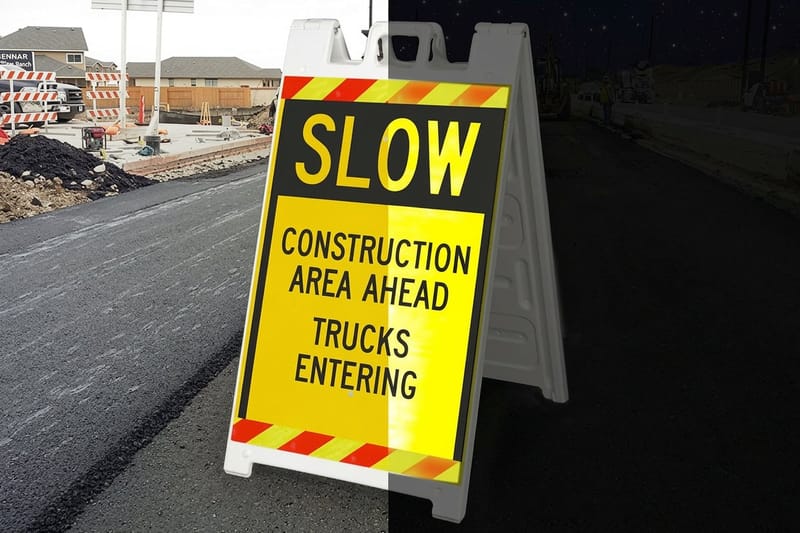
A frames where there is no ground to stake. Hotel forecourts, sidewalks, parking decks and exhibition halls are all hard surfaces. A weighted A frame sign solves that, and the base is meant to be filled with water or sand on site. An unfilled frame in a gust ends up face down, which is the single most common failure at outdoor events.
Fabric and vinyl for the big statements. A vinyl banner spans a doorway or a stage in one piece and rolls up small for transport. Wind is its enemy, so specify grommets on every corner and mid span, tie all of them, and add wind slits or mesh if it hangs outdoors above head height.
Sizing, Arrows, and the Mistakes That Get People Lost

Design an event sign the way you would design a road sign, not the way you would design a flyer. The guest is moving, distracted and possibly late.
Set type by distance first. Roughly one inch of cap height reads at ten feet. Measure the point where a guest first has to choose, size the caps for that distance, then size the panel to fit the type. Doing it the other way round produces a beautiful 24 by 36 board with two inch type that is unreadable from the far side of the lobby.
Pick a contrast pair and never change it. Dark type on a light field, or the reverse, all the way through. Sponsor colors that sit close together in value look fine on a monitor and turn to gray mush in a dim hallway. Reversed white on a mid tone brand color is the usual casualty.
Watch the up arrow. In wayfinding an upward arrow means straight ahead, but a guest standing at the bottom of a staircase reads it as go upstairs. Where stairs, escalators or ramps are anywhere in view, use a forward arrow only if there is no vertical option, and add the word Upstairs when you actually mean it.
Order spares and count both directions. Print ten percent extra on every outdoor run, because stakes bend and a sign gets backed over. Walk the route in reverse before you finalize the count: people leave, look for the restroom, and come back, and half of them will be reading the blank side of your panels.
Build the file properly. Full size artwork, fonts converted to outlines, and a quarter inch of bleed with critical text well inside the trim. Start from a correctly sized layout in the blank template library, and if the panel is double sided remember to supply both faces. For a step by step of the outdoor build, our yard sign guide covers stakes, sizes and file setup end to end, and yard sign sizes and materials compares the substrates side by side.
Wally plans the route
Walk it first, then print
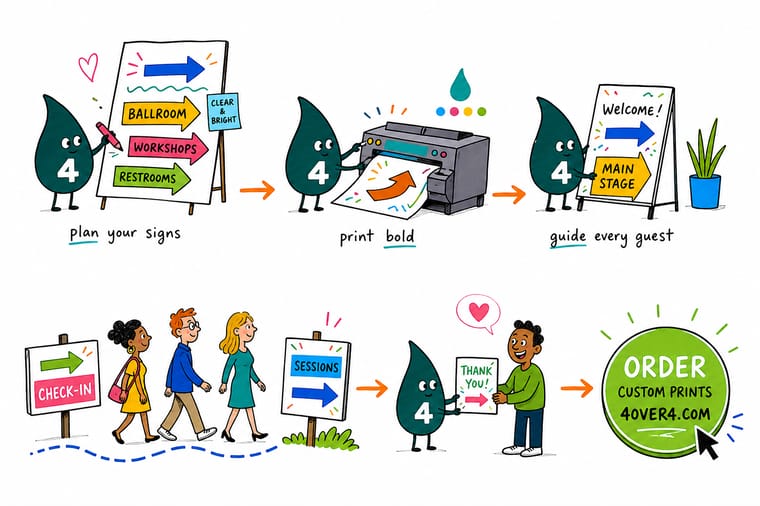
Wally does not start with the signs. He starts with a floor plan and a finger, tracing the walk from the car to the seat and marking every spot where a guest could turn wrong. Each mark gets one sign with one message. Then he checks what the sign is standing on, because a stake needs soil, a sidewalk needs a weighted A frame, and a ballroom needs an easel. Last he walks the route backwards, because everybody leaves too.
Order event yard signs →Specs and pricing
Sign sizes, materials and starting prices
The three products that cover most of an event route, with live configuration choices and starting prices straight from the 4OVER4.COM configurator.

Print it
Print the signs your route actually needs

Explore more
Where to go next


By the numbers
The sign shop behind an event wayfinding set
Common Questions
Your event signage questions, answered
How many directional signs does an event need?
Count decision points, not rooms. Walk the route a guest takes from the street to their seat and mark every place where they could go two ways: the driveway, the parking lot exit on foot, the building entrance, the lobby, each corridor junction, the stairs or elevator, the restrooms, and the room door. That is your minimum. Then double any sign in a corridor that people walk in both directions, because a sign facing one way is invisible to everyone coming the other way. A single ballroom event in a hotel usually lands between 8 and 15 signs. A multi building campus event easily passes 40.
What size should an event directional sign be?
Work backwards from the distance. About one inch of capital letter height is readable at ten feet, so a sign someone reads from 30 feet needs three inch caps and a sign a driver passes needs four or more. In practice that gives you 18 by 24 inch yard signs at the road and parking edge, 22 by 28 or 24 by 36 inch panels in a lobby, and 11 by 17 up to 18 by 24 at a door. If you shrink the sign but keep the type, you have not saved money, you have just bought a sign nobody can read in time to turn.
What material holds up outdoors if it rains?
4mm coroplast is the standard answer and it starts at $25 for yard signs, printed on a corrugated plastic that does not absorb water. Aluminum lasts longer and stays flat in wind, from $36, and makes sense for a sign you will reuse across a season of events. Foam board is the one to keep inside: the paper faces lift and the corners curl once they get damp, and a single overnight dew is enough. Vinyl banners handle rain fine but need grommets and ties at every corner or the wind turns them into a sail.
How do you post signs where there is no grass?
You stop using stakes. Wire H stakes only work in soil, and pushing them into a lawn edge that turns out to be gravel over hardpack bends them on the first sign. On pavement and indoor floors, use an A frame with a base you fill with water or sand, a foam board panel on an easel, or a floor decal that sticks to a hard smooth floor. Feather flags come with a ground spike for soil and a cross base for pavement, so specify which one you need when you order.
How far ahead should event signs be printed?
Print the fixed signs as soon as the floor plan is final and hold the volatile ones. Room names, arrows, parking and registration rarely change. Speaker names, sponsor lists and session titles change up to the last week. A practical split is to print all the wayfinding panels early, then print the name specific signs last, or design the panel with a blank area and slot a printed insert into it. Standard turnaround on signs is a few business days plus transit, so a final print run inside 72 hours of doors opening is a gamble you do not need to take.
Do temporary event signs have to meet ADA rules?
Tactile and braille requirements apply to permanent room identification, not to the temporary signs you set out for a weekend. That said, the accessible route still has to be findable. Mark the accessible entrance, the elevator and the accessible restrooms on your directional signs, keep contrast between text and background strong, and do not park an A frame in the middle of a five foot corridor clearance. Good contrast and clear routing help every guest, not only the ones the rule was written for.
Get Started
A feather flag costs $108.75, foam core signs run 4 business days
Send us the floor plan count and we print the whole set: staked coroplast for the lot, A frames for the sidewalk, foam board panels for the lobby and the doors.
Legal Disclaimer
Gold Standard guarantees apply to all standard orders placed through 4over4.com. Price match requires verifiable proof of a competitor's published price for an equivalent product with matching specifications and turnaround time. Satisfaction guarantee covers manufacturing defects and print quality issues. Contact support with order number and documentation. On-time delivery rate based on tracked orders 1999 to 2026. Individual results may vary based on shipping carrier performance.
