
The Psychology of 5-Star Google Reviews and How to Earn More of Them


Why the star scale fills from both ends, what a shopper checks after the average, and how to put the request in front of a customer at the one moment they will act on it.
People write reviews when a feeling is strong enough to pay for the effort, and only delight and anger are, so an unasked listing collects the extremes and almost nothing from the satisfied middle. Businesses with high ratings are usually the ones asking every customer at the handover rather than the ones with fewer bad days. The rating itself is only a filter: after it, a shopper checks the review count, the dates, the worst review, and how the owner replied.
Quick answer
Strong feelings post, ordinary satisfaction does not
A review costs the customer effort, and only a strong feeling covers it. Delight and anger both qualify, an ordinary good visit does not, so a listing nobody asks about fills from the two ends and stays thin in the middle. The businesses sitting on high ratings are rarely the ones with fewer bad days. They are the ones who ask every customer at the handover, in person, with a code that removes the searching. The rest is what a shopper does after the average: count, dates, the lowest review, and the reply underneath it.
Why Review Pages Are Shaped Like a J
Writing a review costs a few minutes and a small amount of social effort. Only a strong feeling covers that cost. Delight covers it and so does anger, which is why the two ends of the scale fill up first and the middle stays empty.
The customer who got exactly what they paid for feels nothing worth reporting. They walk out, they get on with the day, and your best week of service leaves no trace on the listing. Meanwhile one late delivery produces a paragraph. This is not bad luck. It is the default state of every business that waits for reviews to arrive on their own.
Two things follow from that. First, an unasked listing is not a measurement of your business, it is a measurement of your extremes. Second, the fix is boring: ask everyone, every time, with no filter. Every ordinary satisfied customer you convert into a review moves the average toward the experience most people actually had, and it also thickens the middle of the curve, which is what a reader is unconsciously checking when they scroll.
The habit is what makes it work, not the wording. A restaurant that prints the request on the check presenter collects reviews on quiet Tuesdays as well as busy Saturdays. A contractor who hands over a business card with a review code at the final walk-around collects them from the routine jobs, not just the rescue jobs.
What Shoppers Actually Read Before They Trust a Number

Nobody chooses a business by comparing 4.6 against 4.8. The star average is a filter that gets you into consideration, and after that the reader does four things in a predictable order.
- They check the count. A 5.0 on eleven reviews reads as friends and family. A 4.6 on four hundred reads as a business that has been open a while and survived a few bad days in public.
- They check the dates. A wall of praise that stops eighteen months ago says the owner sold up or stopped caring. Recency carries more weight than the average, and it is the reason a review habit beats a one-off review push.
- They read the worst one. Almost everyone sorts to the low ratings first, looking for the failure mode they personally cannot tolerate. A one-star about slow email will not stop a walk-in customer. A one-star about a missed deadline will stop a client with a launch date.
- They read your reply. This is the only part of the page you control, and it is judged harder than the complaint. A calm, specific reply to a bad review converts the complaint into evidence that you handle problems.
Which is why a small number of negatives is an asset rather than damage. They prove the good ones were not screened, and they answer objections in a voice that is not yours. Perfection triggers suspicion. Somewhere just under it, a rating stops looking managed and starts looking earned.
The same instinct governs the rest of your presence, from the experience you deliver before the review exists to the printed pieces a customer holds. Sloppy print and a glowing listing do not sit comfortably together in the same head.
Where the Ask Lands: The Printed Touchpoints That Carry It
The willingness to write something peaks at the handover and drops fast. That is the whole game. An email sent the next morning arrives after the feeling has cooled, and it competes with everything else in the inbox. Something printed and physically present at the moment of value does not.
Friction is the second half. Count the steps a customer takes from your request to a posted review: remember the business name, search it, find the listing, find the review button, sign in, write. A printed QR code deletes the first four of them. Our guide to making a QR code for Google reviews covers the short link and the code itself, and the QR code business card ideas guide covers making the code big enough and contrasted enough that a phone actually catches it.
| Touchpoint | The moment it works | What to watch | Starts at |
|---|---|---|---|
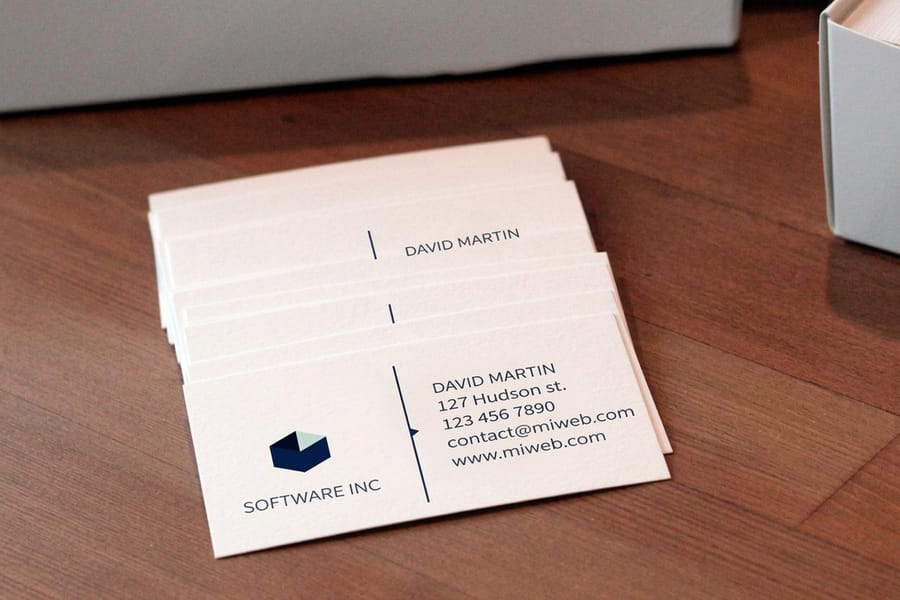
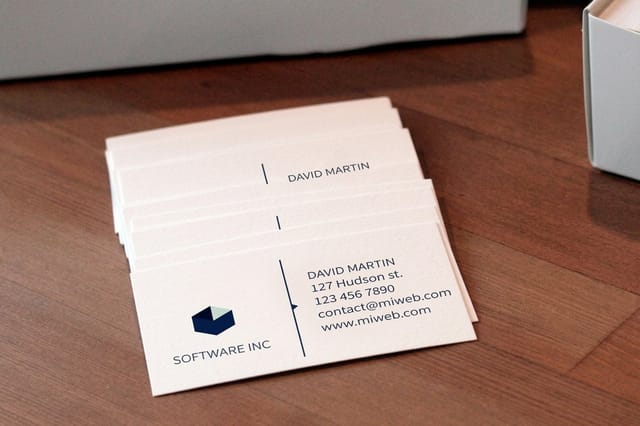
| Business cards | Handed over at the end of a job, an appointment, or a consultation. | Print the code on the back with a one line ask, or it competes with your phone number. | $17.57 |
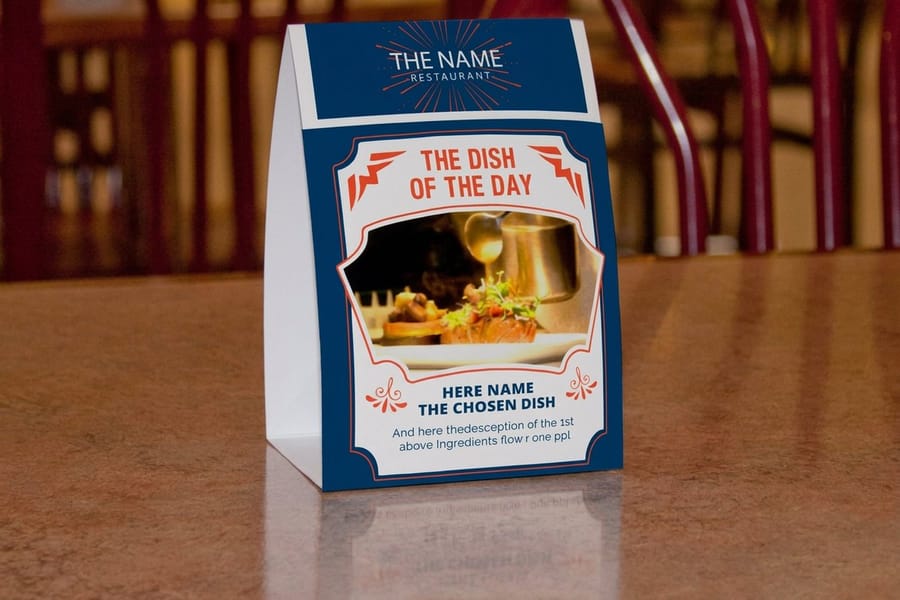
| Table tents | Sitting in front of a seated customer for the whole visit. | They start at a full case, so they earn their cost in a venue with tables, not a two seat counter. | $554.39 |
| Standard postcards | Dropped in the shipping box, or mailed a few days after a large job. | Cheap enough to send with every order, which is what makes the habit affordable. | $16.48 |
| Die-cut stickers | Sealing the tissue paper, so the code is the first thing under the flap. | Small area, so the code needs to be the whole design rather than an addition to it. | $93.37 |
| Greeting cards | A written thank you after a high value job, weeks later. | Costs the most per contact, so reserve it for customers worth a real note. | $56.02 |
Pick by where your handover physically happens rather than by price. A dog groomer and a roofing crew both need the card, because both end the job face to face. An online seller needs the insert, because the only moment they get is the unboxing. A cafe needs the tent, because the customer is sitting still with a phone already in their hand. Browse the full range in marketing materials, or start from the sizes in the business card range and the postcard range.
One line of copy does most of the work. Name the platform, say how long it takes, and make it a request rather than a favour: Two minutes on Google helps the next person find us. Skip anything that hints at the rating you want.
Incentives, Gating, and the Lines Google Draws

Two shortcuts are worth naming, because both are common and both can cost a business the reviews it already earned.
Incentives. Offering anything in return for a review breaks Google policy, and the enforcement is not surgical. A listing caught doing it can lose honest reviews alongside the paid ones and lose the ability to collect more. The softer versions count too: a raffle entry, a free dessert, a staff bonus paid per review. A thank you sent afterward with no condition attached is fine, and a printed thank you card does that job without touching the rule.
Gating. This is the one that catches well meaning owners. You survey the customer first, send the happy ones to Google and route the unhappy ones to a private form. It feels like good service. It is against policy, because the public rating stops describing the real customer base, and it backfires in practice: a customer who works out they were filtered writes something far worse than the honest three stars you were avoiding.
The workable version is unglamorous. Ask everybody the same way, at the same moment, with the same wording. Fix the complaints you get in public, quickly and visibly. If the rating that comes back is lower than you wanted, the printed ask was not the problem and no amount of clever wording will fix it.
Worth knowing too: reviews are attached to the Google Business Profile, not to the website, so they survive a site rebuild but not a duplicate or merged listing. Clean up duplicate profiles before you run a review push, or you will send customers to a listing that is about to disappear.
Putting the Reviews Back to Work in Print

Once the reviews exist they are free copy, written by customers in the words other customers use. That language usually beats anything written in a marketing meeting, because it names the specific worry that stopped the buyer for a moment.
Pull the recurring phrases rather than the flattery. If eleven people mention that you turned up on the day you said you would, that is your headline, and it belongs on the postcard that goes out to the same neighborhood. Short quotes with a first name and an initial read as real. Long polished testimonials read as written by the business, whether or not they were.
Print is a good home for them because the reader cannot immediately check, so credibility rides on how specific the quote sounds. Two sentences about a repaired boiler on a January evening does more than a paragraph of praise. Use them on the back of a card, along the edge of a flyer, on a label on the box, or as a single line under the logo on a die-cut sticker. For where each piece fits in a wider plan, the guide to marketing collateral types maps the whole set, and the sticker range covers shapes and sizes.
Set up the artwork the way you would any print job, with the quote large enough to read at arm's length. Start from a correctly sized layout in the blank template library, and order free paper samples if you want to feel the stock before committing a run.
Wally explains the review curve
The quiet, happy customer is the one you are missing

Wally watches two customers leave. The delighted one posts five stars, the annoyed one posts one, and the twenty people in between post nothing at all, because nothing they felt was strong enough to spend five minutes on. So Wally stops waiting. He hands every single customer a card with a review code on the back, at the moment the job ends and the good feeling is still fresh. Same card, same words, no discount attached, no screening out the grumpy ones. The middle of the curve fills in, and the rating finally matches the work.
Print review request business cards →Specs and pricing
Sizes, stocks, and starting prices for the ask
Configure the three pieces that carry a review request in person, with live options and starting prices from the 4OVER4.COM configurator.


Print it
Put the request where the customer is standing


Explore more
Where to go next




By the numbers
The print behind the ask, from 4OVER4
Common Questions
Your Google review questions, answered
Why do Google reviews cluster at 5 stars and 1 star?
Because writing a review costs effort, and only a strong feeling pays for that effort. Delight and anger both supply it. A visit that went exactly as expected supplies nothing, so the customer closes the door and forgets. The result is a page shaped like a J: a tall column at five stars, a shorter column at one, and almost nothing in between. The businesses that break the pattern are not better than everyone else, they are the ones asking every single customer, which is the only thing that brings the ordinary satisfied visit onto the page.
Is a 5.0 rating better than a 4.7?
Not once shoppers can see the review count. A 5.0 sitting on eleven reviews looks like staff and relatives, and people say so in the comments. A 4.7 sitting on six hundred looks like a business that has served real customers and handled a few bad days in public. The mild negatives also do work you cannot do yourself: they tell a reader the good ones were not screened, and they answer objections in a voice that is not yours.
When should you ask a customer for a Google review?
At the point where the value has just landed and the customer is still standing in front of it. For a restaurant that is when the plates are cleared and nobody has asked for the check yet. For a contractor it is the walk-around at the end of the job, not the invoice email three days later. For an online order it is the moment the box is opened, which is why the ask has to be printed and sitting inside the box rather than sent by email. Waiting until the feeling has cooled turns a yes into an intention that never gets acted on.
Can you offer a discount in exchange for a Google review?
No. Google prohibits incentivised reviews, and the penalty is not limited to the paid ones: the listing can lose reviews it earned honestly and lose the ability to collect more. The same rule catches the softer versions people talk themselves into, including a raffle entry, a free dessert, or a staff bonus tied to review count. You can thank someone after the fact with no condition attached, and you can hand every customer the same request. That is the line.
What is review gating and why is it a problem?
Gating is asking customers privately how their experience went, then sending only the happy ones to Google and routing the unhappy ones into a complaint form. It feels responsible and it is against Google policy, because the public rating stops describing the actual customer base. It also fails on its own terms. An unhappy customer who realises they were filtered writes a much angrier review than the one they would have written unprompted.
How do you respond to a 1-star review?
Short, specific, and addressed to the next reader rather than the reviewer. Name what happened, say what you have changed, and offer one way to continue the conversation off the page. Do not argue the facts line by line and never mention the customer being wrong, because a defensive owner reply frightens off more prospects than the complaint did. A calm reply under a bad review is one of the few things on a listing that a competitor cannot copy.
Get Started
Greeting cards run 50 for $56.02, or $1.12 each
Print the card, the tent, or the box insert that carries your review code, and stop relying on the two customers who felt strongly enough to write on their own.
Legal Disclaimer
Gold Standard guarantees apply to all standard orders placed through 4over4.com. Price match requires verifiable proof of a competitor's published price for an equivalent product with matching specifications and turnaround time. Satisfaction guarantee covers manufacturing defects and print quality issues. Contact support with order number and documentation. On-time delivery rate based on tracked orders 1999 to 2026. Individual results may vary based on shipping carrier performance.
