
Slippery Road Ahead Sign Meaning, MUTCD Sizes and Reflective Specs


What the yellow diamond with the skidding car means, the sizes and sheeting a public road sign has to hit, and what changes when the sign is going up on your own property.
The slippery road ahead sign warns that the pavement in front of you gives less grip than the road you are on, so slow down and avoid hard braking or sharp steering. It is MUTCD sign W8-5, a yellow diamond with a black border showing a car from behind with two wavy skid marks off the rear wheels, and a WHEN WET plaque underneath narrows it to wet conditions. On a public road it is 24, 30, 36 or 48 inches square on the diagonal and it must be retroreflective. On private property none of that binds you, and a reflective rectangular panel usually reads better.
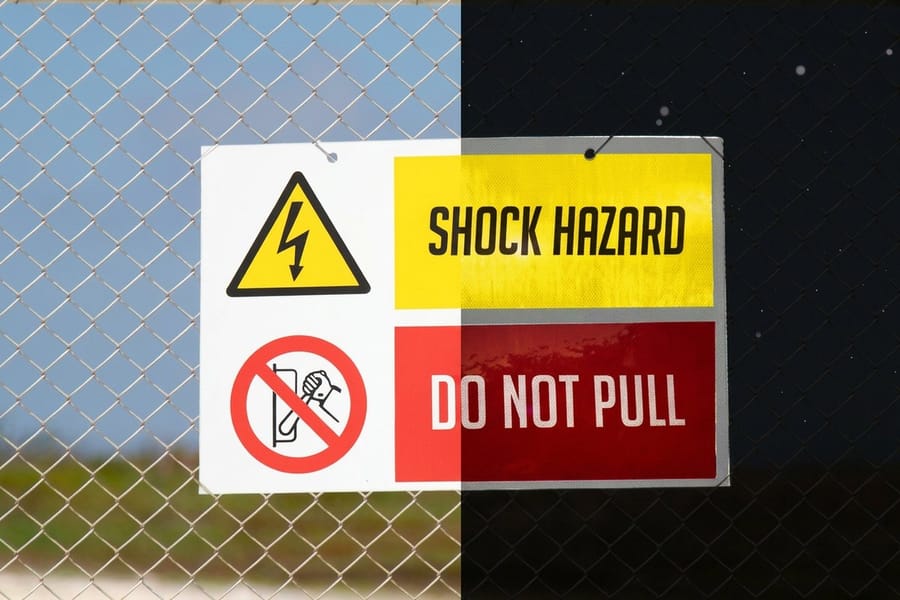
Quick answer
A yellow diamond that says the surface will not hold you
W8-5 tells a driver the pavement ahead loses friction sooner than expected. The symbol is a car seen from behind with two curved skid marks off the rear tires, printed black on a retroreflective yellow diamond that stands on one corner. On a public road the sizes run 24, 30, 36 and 48 inches with width equal to height, the panel has to be retroreflective or illuminated, and it goes up far enough ahead of the hazard for the posted speed. On a lot, a plant yard or a private road, the MUTCD does not apply, so the same warning goes on a rectangular reflective panel sized for the speed drivers actually travel.
What the Sign Actually Warns About
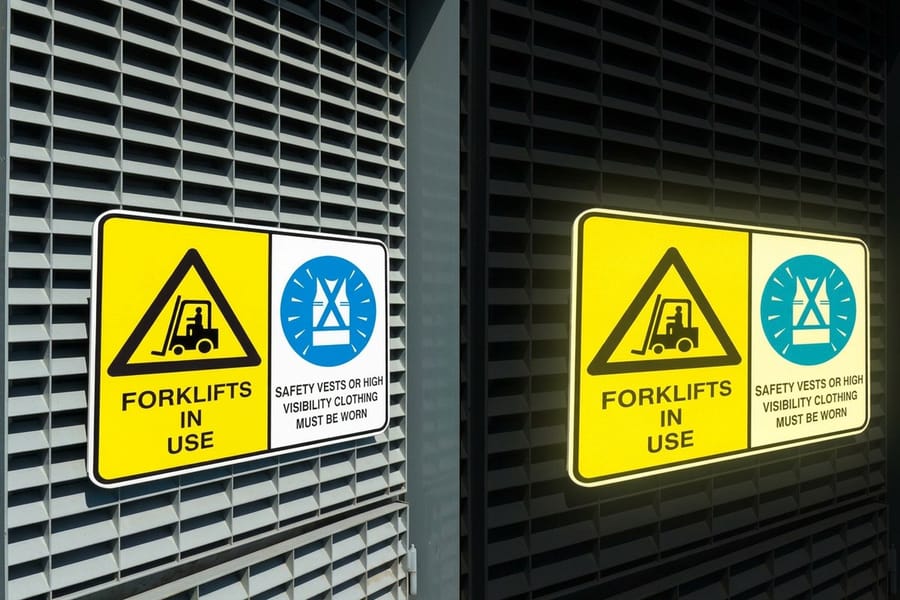
The warning is about friction, not about water. A road engineer posts W8-5 where the coefficient of friction drops below what the approach leads a driver to expect, and rain is simply the most common trigger for that drop.
The usual culprits are specific. Polished aggregate on an old asphalt section, where years of traffic have worn the stone smooth. Bleeding asphalt, where binder rises to the surface in hot weather and turns glossy. Steel bridge decks and expansion joints, which shed grip the moment they are damp. Curves that collect runoff on the inside line. Approaches where trucks pull mud, sand or oil out of a site and lay it across the pavement.
The plaque underneath changes the meaning more than most drivers notice. A bare diamond says the section is slippery in ordinary conditions. Add WHEN WET and the warning is conditional, which is the version you see on bridge decks and freshly sealed pavement. Agencies also use the word message version, SLIPPERY WHEN WET, where the symbol is likely to be misread.
Placement follows speed. The sign has to appear far enough upstream that a driver can register it, decide, and slow before reaching the hazard, so the advance distance in the MUTCD tables grows with the posted speed. The same diamond that sits about a hundred feet ahead of a hazard on a 30 mph street sits several hundred feet ahead on a highway. Get that wrong and the sign is technically present and practically useless.
The Specs That Make a Warning Diamond Legal
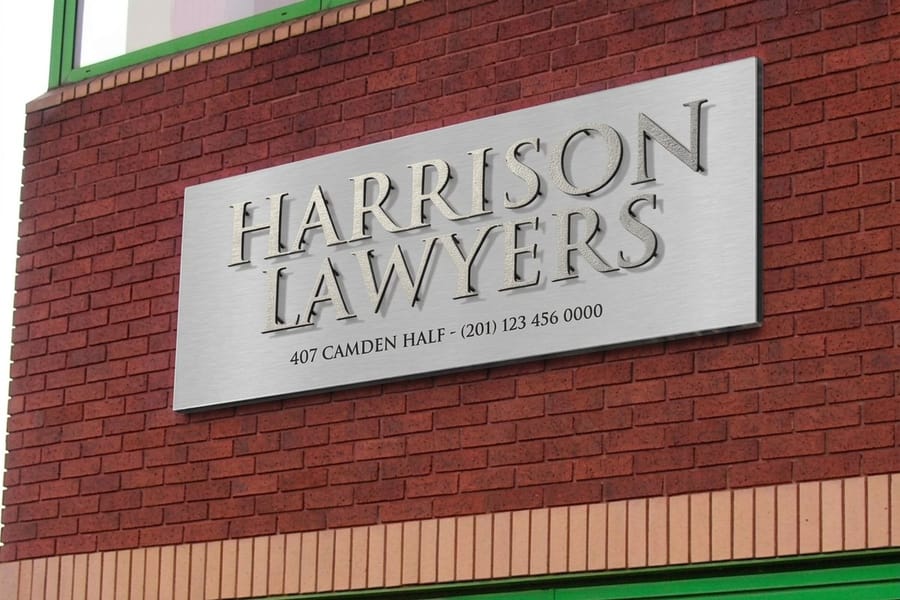
Four numbers do most of the work: the size, the sheeting, the mounting height, and the setback.
Size. Warning diamonds are square turned on a corner, so width equals height. The ladder runs 24, 30, 36 and 48 inches. Thirty by thirty is the conventional road default, the larger sizes cover expressways and freeways where the sign has to be resolved from further out, and 24 is reserved for low speed streets. Oversizing is allowed and undersizing is not, which is the opposite of how most people assume signs are specified.
Sheeting. A traffic sign has to be retroreflective or illuminated, and it has to stay above a minimum maintained retroreflectivity for its whole service life. That second requirement is what quietly killed engineer grade sheeting on warning signs. The aluminum will outlive the reflective layer, so agencies moved to prismatic sheeting, which holds brightness long enough to match the panel.
Height and setback. Five feet from the bottom of the sign to the near edge of the pavement on a rural road, 7 feet where people walk under it, and roughly 6 feet of lateral setback from the shoulder edge. Height is measured to the bottom of the panel, not the middle, and that catches people out on a first install.
The honest part is less comfortable. Those specs describe signs procured to a state DOT standard for roads open to public travel. We print rigid signs for facilities, lots, private roads and job sites, and our sizes are rectangles rather than road diamonds. If a public street needs a W8-5, that comes from the agency that owns the street. If your own property needs the same warning, keep reading, because that is a job we do print.
What Printed Reflective Film Does After Dark
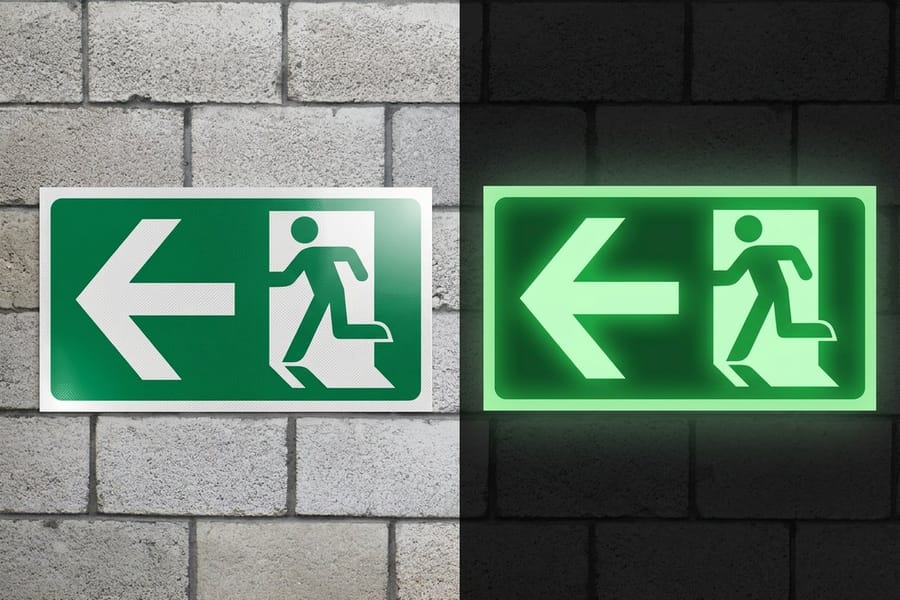
Retroreflection is not the same as being shiny. A reflective film sends light back toward the source rather than bouncing it away, so the sign lights up for the driver whose headlights hit it and stays dim for everyone else. That is why a reflective panel looks ordinary in daylight and blazes at night.
Digitally printed reflective works differently from a road sign built by cutting colored sheeting. On our reflective aluminum signs the artwork is printed onto the reflective film, so every drop of ink sits between the headlight and the reflective layer. Light colors pass most of the return through. Heavy dark coverage absorbs it. The practical rule: design a night sign the way road signs are designed, with a light reflective field and a dark legend on top of it, and it will perform. Flood the whole panel with a solid dark background and you have bought a reflective sign that behaves like a flat one.
Contrast does the rest of the work, and it is worth being deliberate about it. Black on yellow is the fastest warning pair a driver reads, which is exactly why the MUTCD uses it, and our notes on sign colors and visibility rank the rest.
| Option | After dark | Outdoor life | Best use | Starts at |
|---|---|---|---|---|
| Reflective aluminum | Returns headlight beams, reads from a moving vehicle | Years, .040 in aluminum will not rust | Private roads, gates, hazards drivers meet at night | $41.02 |
| Aluminum | Needs ambient or fixed lighting | Years, same rustproof panel | Permanent daytime notices, walls, posts, lots | $36.00 |
| Parking signs | Reflective option available | Years on aluminum | Reserved bays, fire lanes, tow zones, permit rows | $30.00 |
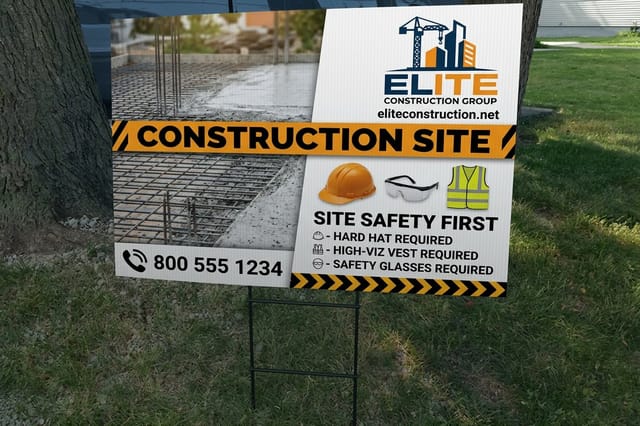
| Construction signs | Daytime unless specified reflective | Site length, then replaced | Active job sites and temporary hazards | $25.00 |
Read the second column before the price. A sign that has to work at 9pm and a sign that only has to work at noon are different purchases, and the gap between them is about eleven dollars on a 12 by 18 panel.
Ordering a Slippery Surface Warning for Your Own Property
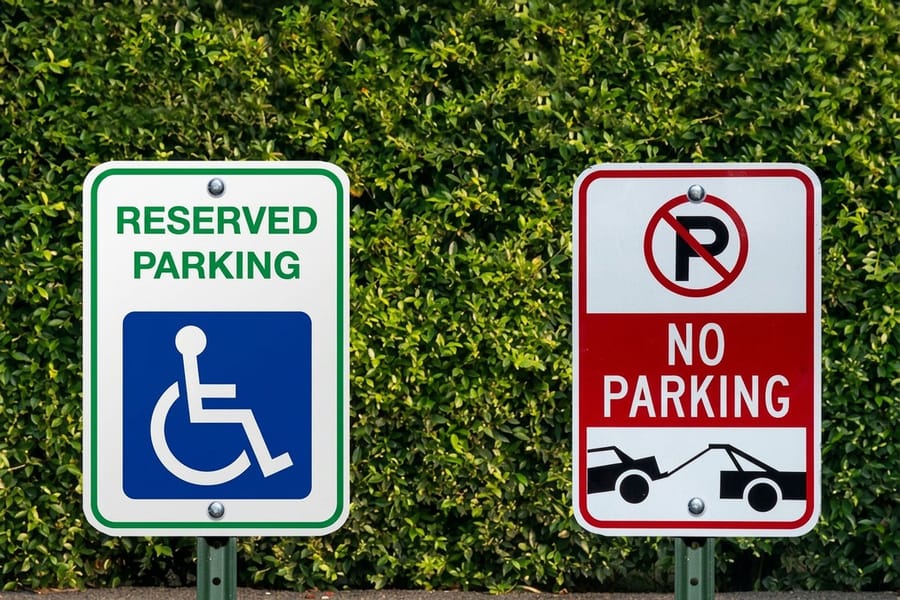
Start with the size a driver will actually be moving at. At lot speed a 12 by 18 panel mounted near windshield height is plenty. On a service road where vehicles reach 25 or 30 mph, go to 18 by 24. Reserve 24 by 36 for a long approach or a gate that has to be read from a distance. All three sizes print on the same rustproof .040 in aluminum, so the choice is about reading distance rather than durability.
Then set the panel up so it mounts without a trip to the hardware store. Order 0.75 in rounded corners, which take the sharp points off a panel at head height, and specify drilled holes in the corners you are actually using. Print the front only if the sign faces one direction, or both sides if traffic passes it going each way. Standard turnaround is 4 business days with faster options, and a free online proof comes back before anything prints, which is the step where a wrong dimension gets caught.
For the wording, copy what drivers already recognize instead of writing something clever. SLIPPERY WHEN WET in black on yellow, with the warning diamond symbol if you want it, reads instantly because every driver has been trained on it since their permit test. If the hazard is permanent rather than weather driven, say so, because a conditional warning that is always up gets ignored.
Most sites need a small family of signs rather than one, and the same panel spec covers them. A lot usually pairs a hazard warning with parking signs for the bays and fire lanes, a job site pairs it with construction signs at the entrance, and larger installations use aluminum sign panels for wayfinding on the same posts. The full range sits on the aluminum signs and rigid signs pages, and you can set your artwork up at the right trim from the blank template library. If the sign needs a permit where it is going, our state by state permit guide covers who issues it.
Wally explains the slippery diamond
Yellow diamond, skidding car, and the grip that is about to run out
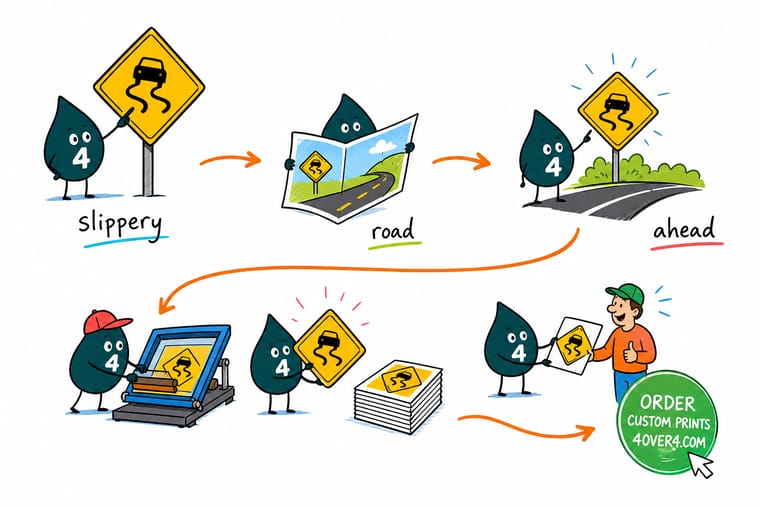
Wally reads the sign the way a driver should. The yellow diamond means warning, the car with two curled skid marks means the surface is about to stop holding, and the small plaque under it tells you whether that happens all the time or only in the rain. On a public road the panel is 24 to 48 inches, square on the diagonal, and reflective so headlights bring it back at night. On Wally's own yard the rules are his, so he prints the same warning on a 12 by 18 reflective aluminum panel, rounds the corners, drills the holes, and screws it to the post before the first storm.
Order reflective aluminum signs →Specs and pricing
Sign sizes, materials and starting prices
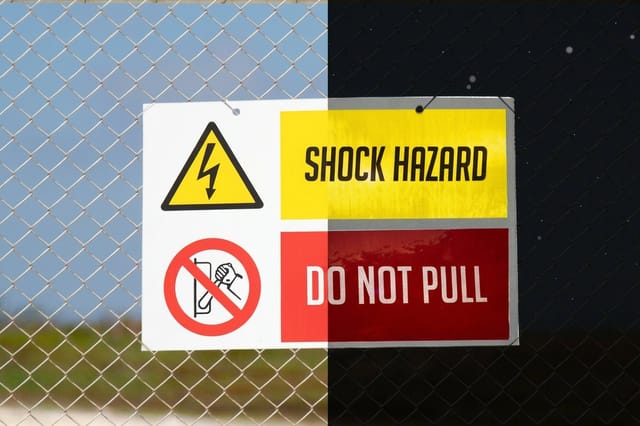
The three panels a warning sign is usually printed on, with live size and finishing choices and starting prices straight from the 4OVER4.COM configurator.

Print it
Order a warning sign that still works at night
Explore more
Where to go next

By the numbers
Reflective sign stock, cut to the size the code calls for
Common Questions
Your slippery road sign questions, answered
What does the slippery road ahead sign mean?
It means the pavement ahead can lose traction, and that a driver should slow down and avoid hard braking or sharp steering. The sign is MUTCD W8-5: a yellow diamond with a black border showing a car from the rear with two wavy skid marks curling off its back wheels. It goes up where the surface gives less grip than the road leading into it, typically a polished or bleeding asphalt section, a steel bridge deck, a curve that collects runoff, or an approach where trucks track mud or oil onto the pavement. A WHEN WET plaque mounted under the diamond narrows the warning to wet conditions.
What size is a slippery when wet sign?
Warning diamonds are square on the diagonal, so width equals height, and the standard ladder is 24, 30, 36 and 48 inches. Thirty by thirty is the conventional road default, 36 and 48 belong on expressways and freeways where approach speeds leave less reading time, and 24 by 24 is the floor used on low speed streets. If you are ordering for a parking lot or a facility yard rather than a public road, none of that binds you, and a rectangular 12 by 18 or 18 by 24 panel mounted at eye level for a driver crawling through a lot usually reads better than a small diamond.
Does the sign have to be reflective?
On a public road, yes. Signs have to be retroreflective or illuminated so they perform at night, and there are minimum maintained retroreflectivity levels an agency has to keep them above. In practice that pushed agencies off engineer grade sheeting for warning signs, because it drops below the maintained minimum years before the aluminum gives up. Prismatic sheeting holds its brightness longer. On private property nobody is checking, but a warning sign that disappears after dark is not doing the job you bought it for, so reflective is still the right call anywhere headlights are involved.
Can I put a slippery road sign on my own property?
Yes. The MUTCD applies to roads open to public travel, not to a private lot, a warehouse apron, a plant yard, or a campus service road. You can print the warning however it reads best, including the standard yellow and black so drivers recognize it instantly. Two practical notes: keep it consistent with what drivers already know rather than inventing a color scheme, and put it far enough ahead of the hazard that someone at lot speed can react, which is usually at the entrance rather than on top of the wet patch.
Is a slippery road sign the same as a wet floor sign?
No, and they follow different rule books. The road sign is a traffic control device under the MUTCD, mounted permanently on a post, and it addresses vehicles. A wet floor sign is a workplace safety sign under OSHA and the ANSI Z535 color code, usually a folding A-frame, temporary by design, and it addresses people on foot. The yellow is doing similar work in both, but the shape, wording, mounting and lifespan are not interchangeable. Our guide to OSHA safety colors and ANSI codes covers the indoor side.
How high should the sign be mounted?
On a rural road, at least 5 feet from the bottom of the sign to the near edge of the pavement. Where people walk under it, in business, commercial and residential areas, that goes up to 7 feet so nobody clips their head on the corner of a panel. Setback matters as much as height: a post sitting 6 feet back from the shoulder edge stays clear of drifting vehicles and mowers. In a parking lot the same logic scales down, and mounting the panel at roughly windshield height on a wall or a bollard beats a tall post.
What material lasts longest outdoors?
Aluminum, by a wide margin. It cannot rust, it does not swell in rain the way corrugated plastic does at the flute ends, and it holds a flat face for years on a post. That is why every permanent warning sign on a road is a metal panel. Corrugated plastic and PVC have their place for temporary work and short campaigns, and the trade-offs are laid out in our comparison of aluminum, coroplast and PVC.
Get Started
Need the warning up before the next storm?
Pick a size, choose reflective film so headlights bring it back at night, add rounded corners and drilled holes, and we print it on rustproof aluminum with a free proof first.
Legal Disclaimer
Gold Standard guarantees apply to all standard orders placed through 4over4.com. Price match requires verifiable proof of a competitor's published price for an equivalent product with matching specifications and turnaround time. Satisfaction guarantee covers manufacturing defects and print quality issues. Contact support with order number and documentation. On-time delivery rate based on tracked orders 1999 to 2026. Individual results may vary based on shipping carrier performance.
