
What No Thru Traffic Signs Mean and How to Post One That Holds Up


What the legend means, who is allowed to install one, the panel size a driver can actually read at speed, and the material that survives the weather where you are posting it.
A no thru traffic sign tells drivers the street is a destination, not a shortcut, and that it is meant for residents, deliveries and visitors with business on it. Who owns the road decides who may post it: on a private road or an HOA street you install it yourself, while on a public street the sign sits in the town right of way and only the municipality can make ignoring it a citation. Size it from speed at roughly 30 feet of reading distance per inch of cap height, then choose rustproof aluminum for permanent posting or 4mm coroplast for anything with an end date.
Quick answer
A shortcut warning, and the two seconds a driver has to read it
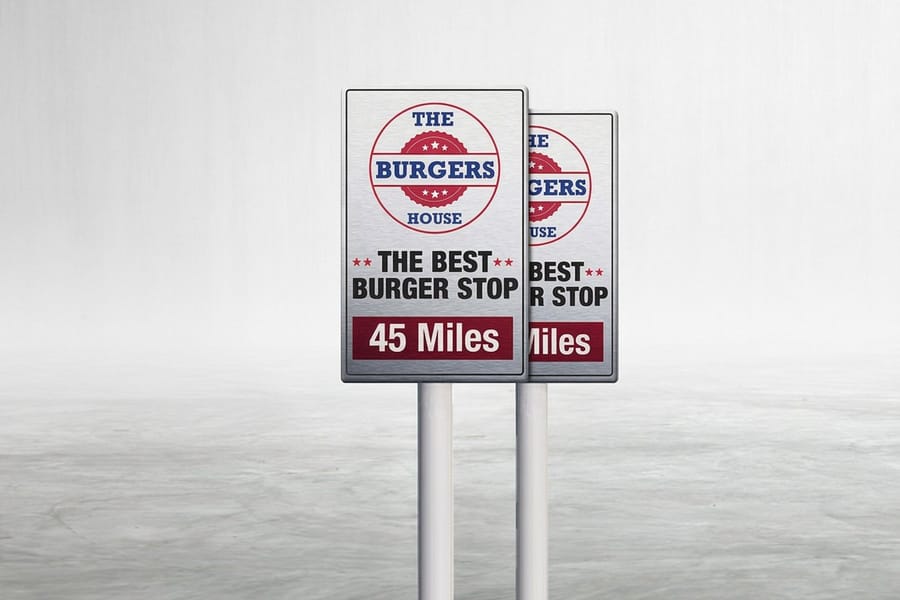
The sign works only if the driver can read it before the turn arrives. Legibility runs about 30 feet per inch of capital letter height, and a car at 25 mph covers roughly 37 feet every second. Three inch caps on an 18 by 24 inch panel read from about 90 feet and hand the driver two and a half seconds. Two inch caps on a 12 by 18 inch panel read from about 60 feet, which is already the corner. Size the panel from the speed of the road first, then decide the material from how long the sign has to stay up.
What the Legend Means and Which One You Actually Want
A no thru traffic sign asks drivers to treat the street as a destination rather than a shortcut. It is almost always a reaction to a specific problem: a navigation app rerouting commuters down a quiet lane, a delivery route cutting a corner, a construction detour that has found a residential loop.
The wording matters more than people expect, because each legend triggers a different response from a driver who is deciding in about two seconds. Pick the one that matches your situation rather than the one that sounds strongest.
| Legend | What the driver hears | Where it belongs |
|---|---|---|
| No Thru Traffic | This road is not a route to anywhere. Turn around unless you have business here. | Private roads, HOA streets, business parks, farm lanes. |
| Local Traffic Only | You may enter if your destination is on this street. | Municipal detours and roadwork, where some drivers legitimately need access. |
| Road Closed To Thru Traffic | The road is genuinely blocked further along. | Public roads only. This is the MUTCD R11-4 legend and it belongs to the road authority. |
| Private Road | The pavement is owned. Entering is a trespass question, not a traffic one. | Deeded private drives and shared access roads. |
| Dead End / No Outlet | There is no way through, as information rather than instruction. | Any street that physically terminates. Yellow warning sign, not a white regulatory one. |
One distinction is worth holding onto. NO THRU TRAFFIC is not a standard federal legend, which is why you see it on private property far more often than on a state route. Public agencies work from the Manual on Uniform Traffic Control Devices and reach for the road closure family or a local ordinance sign instead. That does not make your sign invalid on your own road. It does mean a driver cannot be ticketed for passing it unless a town rule stands behind it, the same relationship covered in our guide to no trespassing sign rules and posting laws.
Size, Letter Height, and the Two Seconds You Get
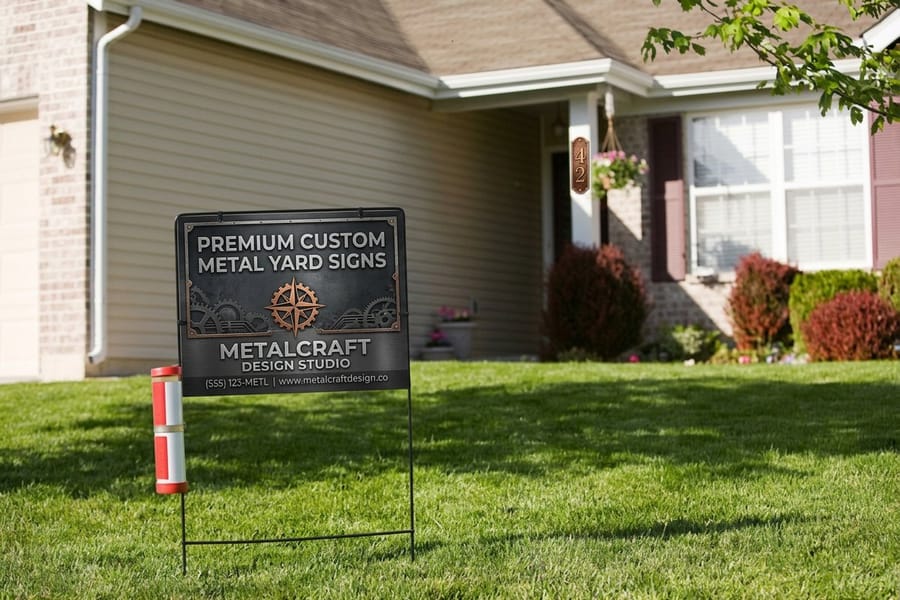
Most signs that get ignored are not ignored. They are unreadable at the distance where reading them would have changed anything. Sign shops work from a rule of thumb of about 30 feet of legible distance for every inch of capital letter height, and that number decides your panel size long before aesthetics do.
Run the arithmetic once and it settles the argument. A car at 25 mph covers roughly 37 feet per second. Two inch letters read at about 60 feet, so the driver gets a second and a half, most of which is spent focusing. Three inch letters read at about 90 feet and buy about two and a half seconds, which is enough to lift off the accelerator and look for a place to turn around. That gap is the whole reason to move up one panel size.
| Panel size | Cap height it supports | Reads from | Use it on |
|---|---|---|---|
| 12 x 18 in | 2 in | ~60 ft | Parking lots, gated driveways, walking speed approaches. |
| 18 x 24 in | 3 in | ~90 ft | Residential streets and HOA entrances at 25 to 30 mph. |
| 24 x 30 in | 4 in | ~120 ft | County roads and business park entries at 40 to 45 mph. |
| 30 x 36 in | 5 to 6 in | ~150 to 180 ft | Highway frontage roads and long open approaches. |
Keep the layout as plain as the legend. Black on white in a heavy sans face, generous margins, no logo competing for the eye, and no second line of explanation that nobody has time to read. If the road is unlit, contrast is only half the job and reflective sheeting does the rest. Our guide to the best colors for advertising signs covers which pairings resolve at distance and which collapse into gray.
Aluminum, Coroplast or PVC for the Road You Have
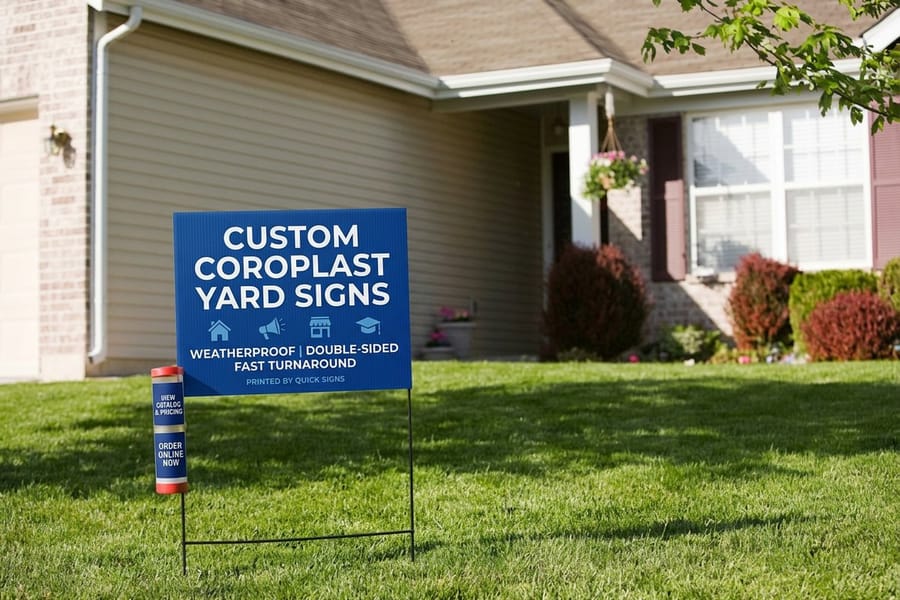
Pick the material from how long the sign needs to stand, not from the price. A permanent sign bought in coroplast gets replaced twice a year and ends up costing more than the aluminum you skipped.
| Material | What it is | Outdoor life | Starts at | Best for |
|---|---|---|---|---|
| Aluminum | .040 or .063 sheet with UV printed graphics. | Several seasons. Aluminum does not rust, it forms a thin oxide layer and stops. | $36 | Permanent posting on a pole or fence. |
| Reflective aluminum | Aluminum faced with reflective sheeting. | Same as aluminum, plus night visibility. | $41.02 | Unlit roads, rural lanes, blind entries. |
| Coroplast | 4mm fluted polypropylene, light and rigid across the flutes. | Months rather than years, and less in constant sun. | $25 | Detours, construction phases, seasonal closures. |
| PVC board | Rigid expanded PVC in 3mm, 6mm and 10mm. | Long indoors, moderate outdoors. It can bow in heat on a wide span. | $25 | Covered entries, gatehouses, interior wayfinding. |
Two practical notes the spec sheet will not tell you. Coroplast has a grain: the flutes run one direction and the panel is stiff across them and floppy along them, so a sign meant for an H stake needs vertical flutes or it folds over in the first storm. And PVC expands more than the other two in direct sun, which is why a 24 inch wide panel screwed tight at four corners can develop a visible wave by August. If you are weighing the boards against each other in detail, the full comparison lives in aluminum signs vs coroplast vs PVC and the thickness question in PVC sign thickness explained.
How to Spec and Post One, Step by Step
The order of these steps matters. Two of them have stopped projects after the signs were already printed.
- Confirm who owns the pavement. Pull the plat or ask the town clerk. If the road is public, the sign is a request to the traffic engineer, not a purchase. If it is private or HOA, you are clear to proceed and only the local sign code applies.
- Count the entrances. One sign faces each way a driver can enter. Signs placed mid street get read by people who are already committed.
- Choose the legend. Blunt prohibition for a private road, LOCAL TRAFFIC ONLY where some drivers genuinely belong there. Do not stack both on one panel.
- Set the size from the speed. Take the posted or observed speed, allow yourself two and a half seconds of reading time, then work back through 30 feet per inch of cap height to the panel size.
- Pick the material and the finish. Aluminum for permanent, coroplast for temporary, reflective if the road is unlit. Ask for rounded corners and pre-drilled holes on aluminum so nobody is putting a drill bit through your graphics in the field.
- Build the file at full size. Set the artwork at final dimensions in CMYK, keep live text at least half an inch inside the trim, and outline the fonts. Start from a correctly sized layout in the design template library if you would rather not set it up from scratch.
- Mount it at driver eye level. Roughly five to seven feet from the ground to the bottom of the panel on a roadside post keeps it above snow banks and parked cars. Band clamps on a round post, carriage bolts with fender washers on a wood post, H stakes with vertical flutes for coroplast.
- Photograph it from the approach. Stand where the driver decides and take a picture. If you cannot read your own sign in the photo, the panel is too small, and that is a cheap thing to learn before you order the second one.
If the sign is one piece of a larger set for the same property, order the whole set at once on the same substrate so the batch matches and the shipping is one line. Our walkthrough on how to make custom signs covers file setup across substrates, and which materials survive outdoors goes deeper on weathering.
Wally explains no thru traffic signs
Say it early, say it big, and own the road you post it on
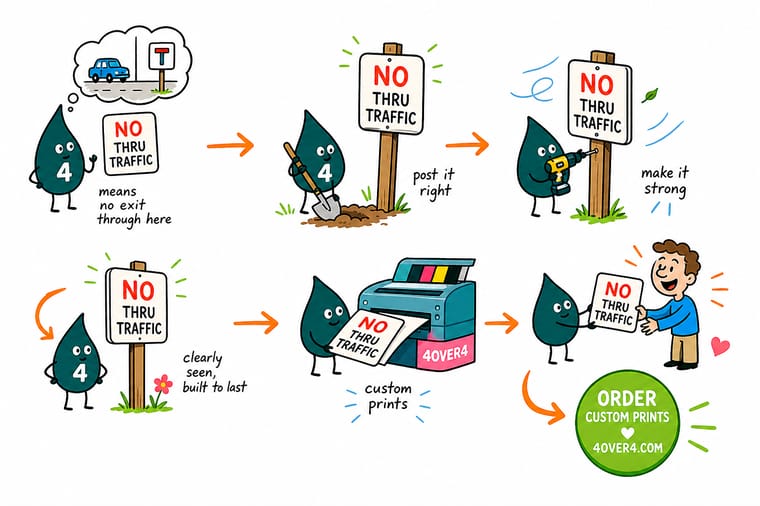
Wally stands where the driver decides, not halfway down the street. He counts the entrances and puts one sign at each. He sizes the letters from the speed limit, because three inch caps read from about ninety feet and two inch caps read from the corner, which is too late. Then he checks the deed. On a private road he posts it himself. On a public street he asks the town, because the sign only bites if a local rule stands behind it.
Order custom aluminum signs →Specs and pricing
Sign substrates, sizes, and starting prices
Compare the three substrates side by side, with live size and quantity choices and starting prices straight from the 4OVER4.COM configurator.



Print it
Order a sign that reads from the corner
Explore more
Where to go next


By the numbers
Roadside signage built at 4OVER4
Common Questions
Your no thru traffic sign questions, answered
Is a no thru traffic sign legally enforceable?
It depends entirely on who owns the road. On a public street the sign only carries weight if the municipality installed it under a local ordinance or traffic order, because a police officer needs a rule to write against. On a private road, an HOA street or a business park, the sign works as posted notice: it removes the argument that a driver did not know the road was private, which is the same legal function a no trespassing sign performs. The sign itself never creates the rule. It communicates a rule that already exists somewhere else, in a town ordinance or in your property rights.
Can I put a no thru traffic sign on my own street?
Not if the street is public, and this is where most people get it wrong. The strip of land where a sign would go is usually the town right of way rather than your lot, so an unauthorized sign there can be pulled by the highway department, and you can be on the hook if it contributes to a crash. The route that works is a petition to your traffic engineer or public works department, who will look at cut-through counts and decide. On a private drive, a shared farm road or an HOA street the road owner posts whatever they like, subject to the local sign code.
What size should a no thru traffic sign be?
For a 25 mph residential street, 18 by 24 inches with three inch capitals is the practical minimum, because that combination reads from roughly 90 feet and gives a driver about two and a half seconds to react. On a 45 mph county road move up to 24 by 30 inches with four inch capitals. If the sign shares a post with a street name blade or a speed limit sign, match the width of the sign above it so the assembly does not look improvised.
What is the difference between no thru traffic and local traffic only?
They point at the same behavior from opposite directions. NO THRU TRAFFIC states what is not wanted, which reads as a prohibition. LOCAL TRAFFIC ONLY states who is welcome, which reads as an instruction and tends to draw less argument from drivers who genuinely have a reason to be there. Municipalities lean on the local traffic wording during detours and roadwork. Private roads and HOA streets more often use the blunter legend.
Should the sign be aluminum or coroplast?
Buy aluminum if the sign is staying up. Aluminum Signs start at $36 at 4OVER4.COM, do not rust, and survive several seasons of sun and freeze on a post. Coroplast Yard Signs start at $25 and are the honest answer for anything with an end date: a detour, a construction phase, a road resurfacing, a seasonal closure. Coroplast in a windy corridor is the one case to think twice about, because the panel behaves like a sail and the flutes eventually split where the H stake grips them.
Does a no thru traffic sign need to be reflective?
On an unlit road, yes. Standard printed aluminum is perfectly readable in daylight and close to invisible in headlights at any real distance, which defeats the point on the exact street where a driver is most likely to take a wrong turn. Reflective Aluminum Signs start at $41.02 and return headlight beams to the driver, so the legend lights up rather than sitting flat. On a lit street inside a business park, plain aluminum is usually enough.
How many signs does one street need?
One at every entrance a driver can use, facing the driver as they make the decision, not after they have committed to the turn. A through street with two ends needs two signs. A loop with three feeder roads needs three. Adding a second sign partway down the street rarely helps: by then the driver is already on the road and the cheapest thing they can do is keep going.
Get Started
Start a reflective aluminum sign in the configurator
Pick your panel size, choose rustproof aluminum, reflective sheeting or 4mm coroplast, and we print it with UV inks, rounded corners and pre-drilled holes ready for the post.
Legal Disclaimer
Gold Standard guarantees apply to all standard orders placed through 4over4.com. Price match requires verifiable proof of a competitor's published price for an equivalent product with matching specifications and turnaround time. Satisfaction guarantee covers manufacturing defects and print quality issues. Contact support with order number and documentation. On-time delivery rate based on tracked orders 1999 to 2026. Individual results may vary based on shipping carrier performance.
