
Workplace Safety Signs That Match the Hazard and Survive the Floor


Five signal words, five colors, and three substrates. A facility manager works spot by spot through the building, and each spot has a material and a price.
A workplace safety sign is built from two decisions: the signal word, which is set by how badly the hazard can hurt someone, and the substrate, which is set by where the sign hangs. DANGER in red is for hazards that will kill or maim, WARNING in orange for hazards that could, CAUTION in yellow for minor and moderate injury, NOTICE in blue for property and policy, green for first aid and egress. Print permanent and outdoor positions on aluminum, indoor walls and doors on PVC, temporary and job site on coroplast, and aisle or wet floor zones as laminated floor graphics.
Quick answer
Severity picks the color, position picks the material
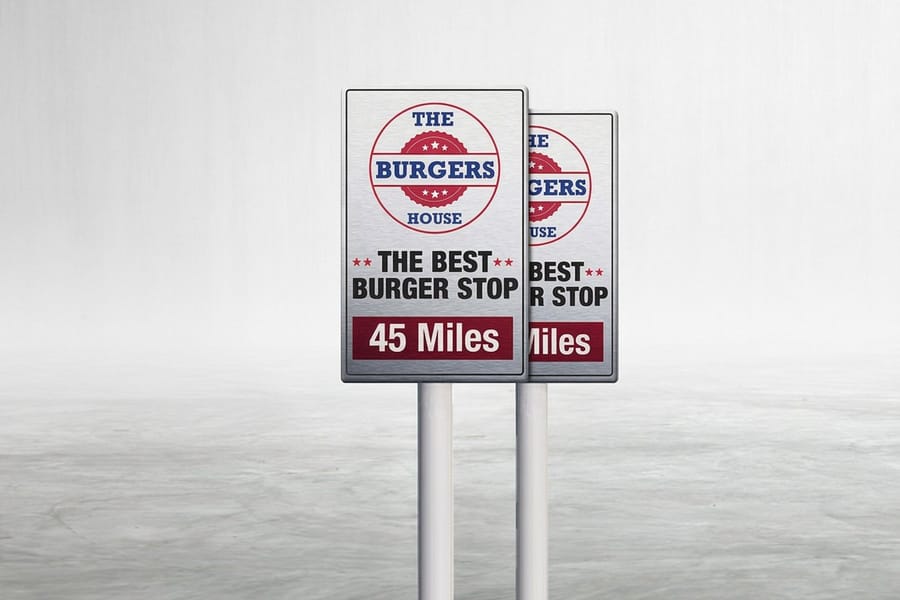
Choose the signal word by consequence, then choose the substrate by where the sign lives. Red DANGER is reserved for hazards that will cause death or serious injury, orange WARNING for hazards that could, yellow CAUTION for minor and moderate injury, blue NOTICE for property and policy, and green for first aid, eyewash and egress. Then match the panel: aluminum for outdoor and permanent, PVC for indoor walls and doors, coroplast for temporary and job site, laminated floor graphics for aisles and wet zones. Size the letters at roughly one inch of capital height per 25 feet of viewing distance.
The Five Sign Categories, and the One Most Facilities Get Wrong
ANSI Z535.2 sorts every accident-prevention sign into five headers, and each one is a claim about how badly the hazard can hurt someone. Get the header right and the rest of the sign almost writes itself.
- DANGER. The hazard will cause death or serious injury if a person is exposed to it. Live conductors, unguarded pinch points, confined spaces with a known atmosphere problem. Red header, white letters, safety alert triangle.
- WARNING. The hazard could cause death or serious injury. Orange header, black letters. This covers most machinery, chemical storage and fall exposure.
- CAUTION. Minor or moderate injury only. Yellow header, black letters. Low ceilings, hot surfaces that burn but do not maim, slip zones.
- NOTICE. Property damage, security or policy. Blue header, white letters. No personal-injury message belongs on a blue sign.
- SAFETY. Green header for first aid, eyewash, egress and PPE rules. It marks the help, not the hazard.
The mistake we see most often in files sent to press is CAUTION on something that can kill. A yellow header on an electrical room door tells a worker the worst case is a bruise. If the worst case is a fatality, that sign is red, and no amount of body copy fixes a wrong header. The reverse error is almost as common: DANGER used on everything, which trains the workforce to ignore red. Reserve it and it keeps working.
Symbols do more than the words. ANSI Z535.3 pictograms read across languages and across the distance at which nobody stops to read a paragraph. If you only have room for one thing on a small panel, make it the symbol. Our guide to OSHA and ANSI safety colors covers the color codes in more depth, including the fire-red and physical-hazard-yellow rules from 1910.144.
Color, Contrast and the Three-Part Message Panel
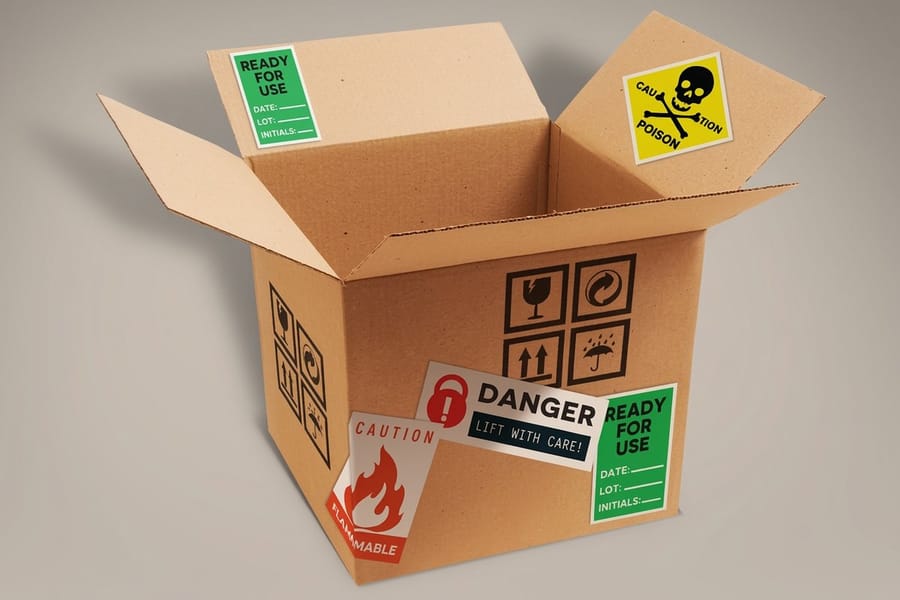
A safety sign is two zones. The header panel carries the signal word in its assigned color. The message panel underneath carries black text on white, and it is where a good sign separates itself from a decorative one.
ANSI Z535.2 asks the message to answer three things in order: what the hazard is, what happens if you ignore it, and what to do instead. "HIGH VOLTAGE. Contact will cause severe burns or death. Authorized personnel only, lockout required before entry." That is a usable sign. "DANGER, KEEP OUT" is a mood.
| Header | Panel color | Letter color | Reserved for |
|---|---|---|---|
| DANGER | Safety red | White | Will cause death or serious injury on exposure. |
| WARNING | Safety orange | Black | Could cause death or serious injury. |
| CAUTION | Safety yellow | Black | Minor or moderate injury only. |
| NOTICE | Safety blue | White | Property damage, security, house policy. |
| SAFETY | Safety green | White | First aid, eyewash, egress, PPE instructions. |
Two production notes that decide whether the printed sign matches the standard. First, safety red and safety orange sit outside a comfortable CMYK gamut, so build them from a named spot reference or ask us to match rather than guessing a screen value; a red that drifts toward pink is the single most visible way a sign looks neglected. Second, keep the header letters heavy and unspaced. Condensed type at a distance turns DANGER into a smear, and the whole point of the header is that it resolves before the body copy does. If the message belongs on the equipment rather than the wall, compliant warning labels follow the same format at label scale.
Matching Substrate to the Spot on the Wall
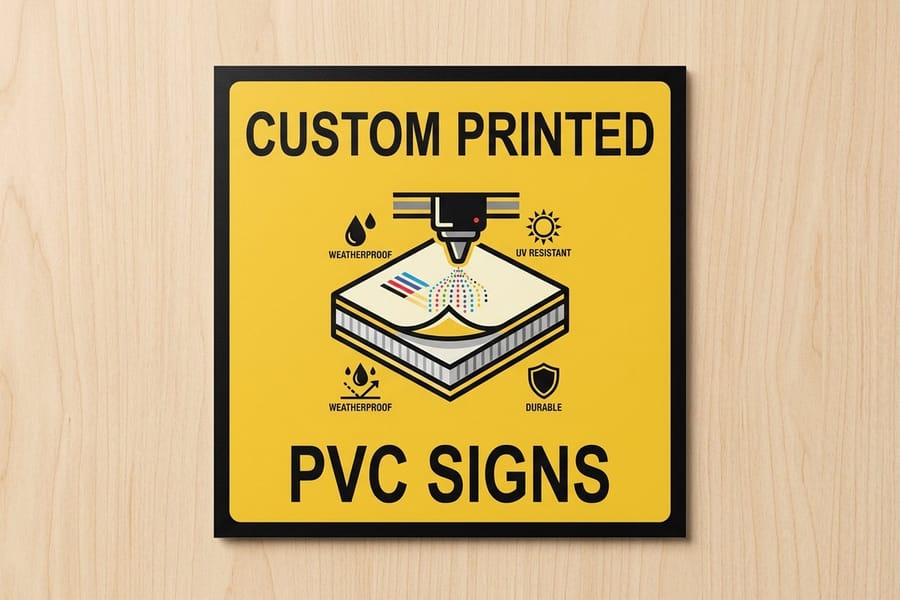
Facility managers usually buy the sign first and worry about the material after, which is backwards. Where the sign hangs decides how long it must last, and that decides everything else including price.
Aluminum for permanent and outdoor. Aluminum signs start at $36 and are the right call for gates, yards, machine guards, tank farms and anything bolted down. It does not rust, it stays rigid at larger sizes, and with UV-stable ink it holds its header color for years in direct sun. Order it with rounded corners and pre-drilled holes so nobody is putting a drill through your artwork on install day. Larger runs of the same panel size are worth quoting as aluminum sign panels.
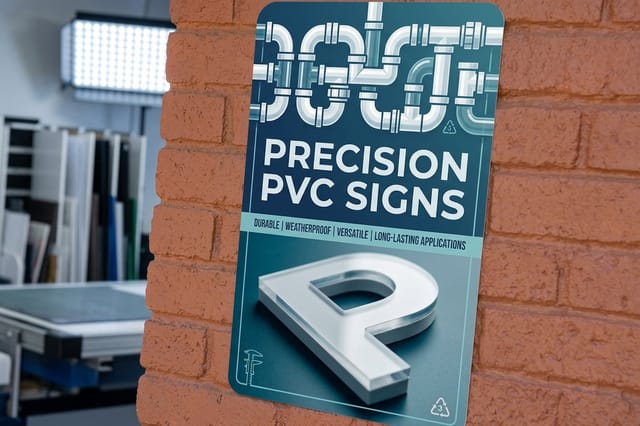
PVC for indoor walls and doors. PVC signs start at $25 and give a smoother print face than aluminum at a lower price. Three millimeter is right for a 7 by 10 or 10 by 14 door sign; six millimeter when the panel is larger or hangs unsupported. Because it is cheap, PVC is also the honest choice for rules that change, such as occupancy limits or PPE requirements that shift with a process. The thickness trade-off is covered in our PVC thickness guide.
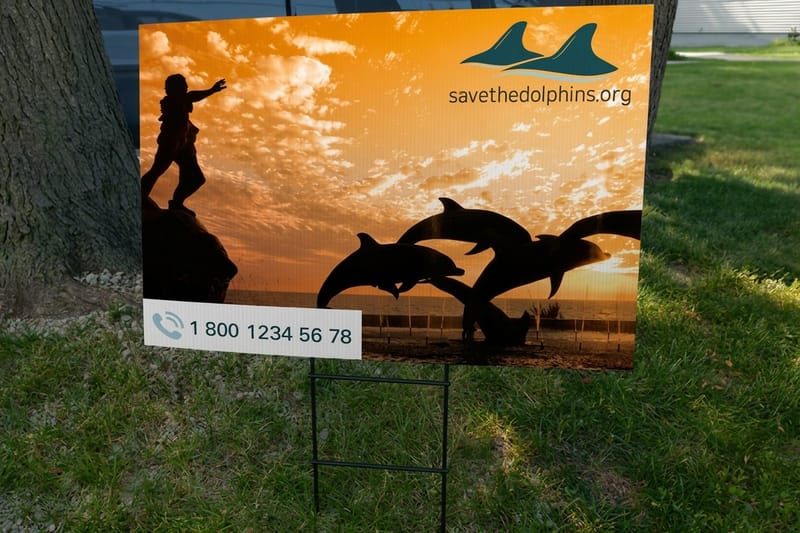
Coroplast for temporary and job site. Coroplast starts at $25, stakes into ground, and zip ties to fencing. It is fluted plastic, so it will crease if someone leans a ladder on it, and it is not a permanent answer. Treat it as consumable and set the flutes vertical so wind cannot fold the face.
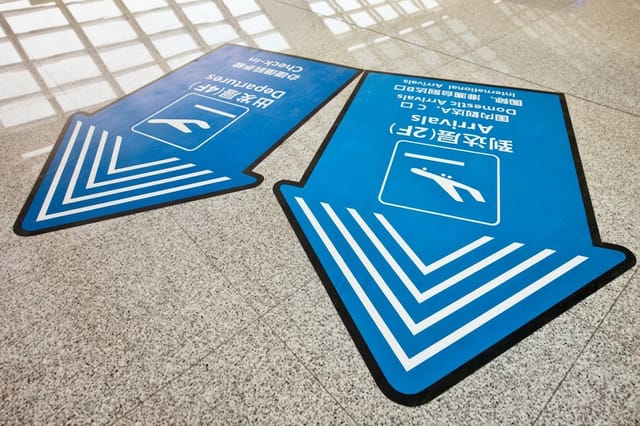
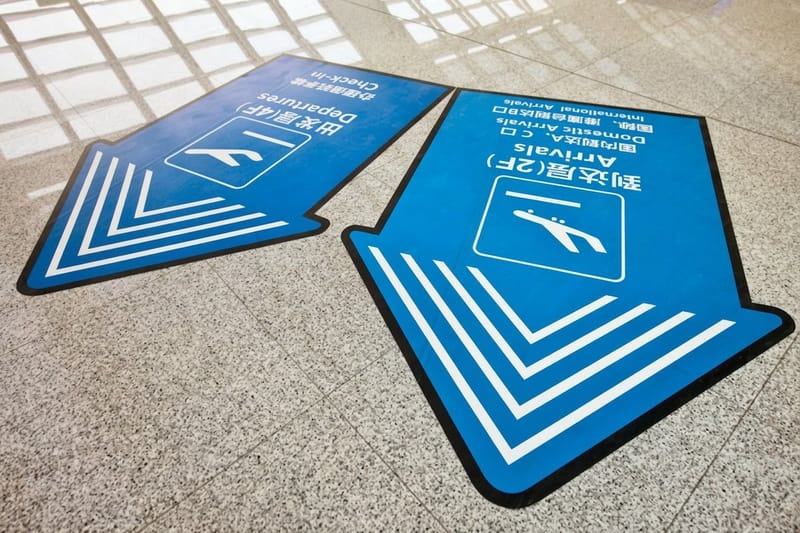
Floor and glass need their own products. A wet floor zone or an aisle boundary belongs in floor graphics from $34, laminated for foot traffic, rather than a rigid panel someone will kick over. Glass doors and machine windows take adhesive decals. Parking and traffic control in the lot is its own family, and parking signs from $30 arrive pre-sized to the mounting posts most lots already have. If you want the three rigid substrates compared head to head, read aluminum vs coroplast vs PVC.
Placement, Sizing and What Actually Fails Inspection
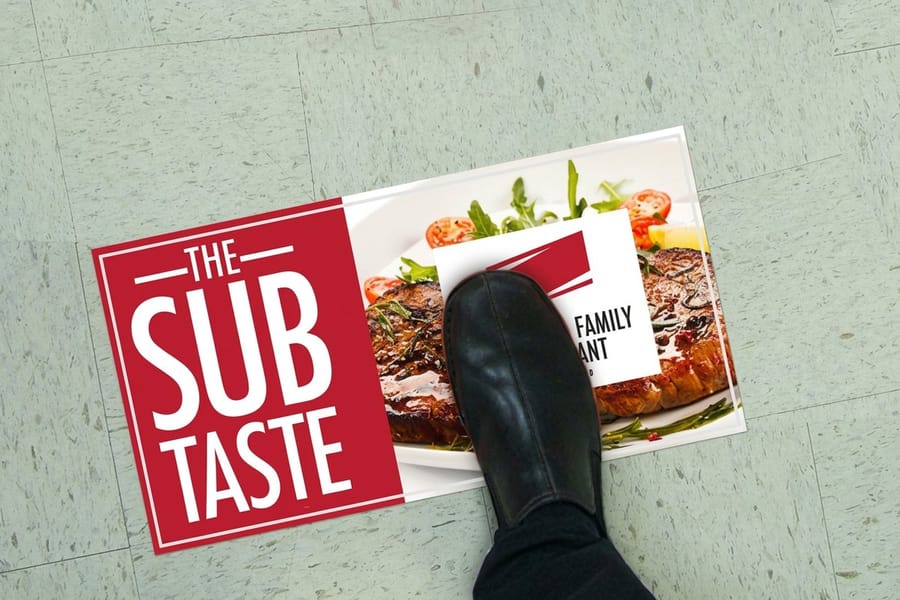
A correctly built sign in the wrong place does nothing. The rule that matters is reaction distance: the sign has to be readable from the point where a person can still change what they are doing.
Size from that distance. About one inch of capital letter height per 25 feet of viewing distance is the working figure, so a header read from 50 feet wants roughly two inch caps, which in turn sets the panel size. Mount at eye level for a standing adult, around 60 inches to the center, and put door signs on the approach side rather than the side that swings away. On machinery, the sign goes where the hand goes, not where there happens to be flat metal.
The failures we hear about after the fact are dull and repeatable. Signs mounted behind a shelf that arrived six months later. A DANGER panel faded to salmon on a south wall. Laminate lifting in a washdown bay because the sign was specified for a dry room. Bilingual copy set at half the size of the English, which reads as an afterthought and often is one. And the quiet one: a sign that still warns about equipment that was removed two years ago, which teaches everyone that the signs are decoration.
Build a walk into the same schedule you already use for extinguisher and eyewash checks. Photograph every sign, note the ones that have drifted, and reorder in a batch so the facility stays visually consistent rather than becoming a museum of five different vendors. For the wider signage plan across a site, including how safety signage sits alongside directional and identification signs, start with the wayfinding signage planning guide and the indoor signage guide. Anything mounted outside a building line may also need a permit, which varies by municipality; our sign permit guide lists the state-level rules. If the sign will be washed or handled, add a laminate, and the laminated signs guide explains which finish suits which environment.
Wally explains the signal word
Ask what the worst case is, then pick the color
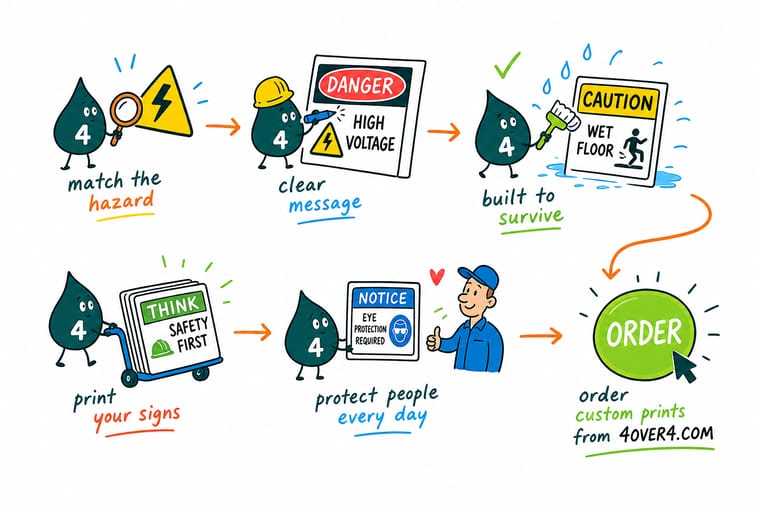
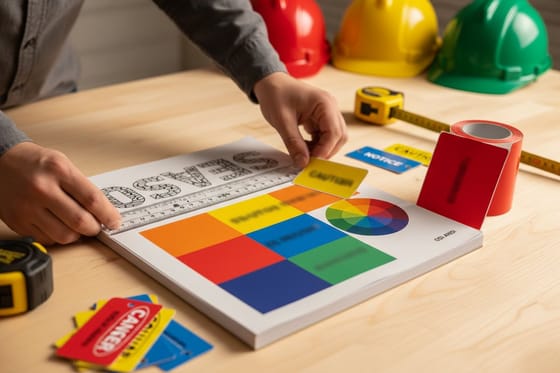
Wally has one question before he prints anything: what happens to the person who ignores this sign. If the answer is that they die or lose a hand, the header is red and it says DANGER. If it could go that way but usually does not, orange and WARNING. If the worst case is a bruise or a burn that heals, yellow and CAUTION. Blue NOTICE is for the forklift, not the operator, and green marks the eyewash station. Then he asks where it hangs. Outside or on a machine, aluminum. Indoor wall, PVC. Job site for six weeks, coroplast.
Order aluminum safety signs →Specs and pricing
Sign substrates, sizes, and starting prices
Set the size and quantity you need and the price updates live, straight from the 4OVER4.COM configurator.


Print it
Print a safety sign set that lasts the year
Explore more
Where to go next


By the numbers
Safety signage printed to spec at 4OVER4
Common Questions
Your workplace safety sign questions, answered
Does OSHA require specific safety signs in the workplace?
OSHA does not hand you a catalog of signs to buy. It requires that hazards which cannot be engineered out are marked, and it sets the format those markings take. The core rule is 29 CFR 1910.145, which defines danger, caution and safety instruction signs and their colors, plus 1910.144 for the color codes on physical hazards and fire equipment. Beyond that, individual standards trigger individual signs: confined space entry, lockout and tagout, exit routes, permissible exposure areas for specific substances. The practical approach is to walk the facility, list the hazards you already control with procedure, and post a sign at each point where a person could get near one without knowing.
What is the difference between OSHA 1910.145 and ANSI Z535.2?
OSHA 1910.145 is the enforceable rule and it is old. It describes danger signs in red, black and white, caution signs in yellow with black lettering, and green safety instruction signs. ANSI Z535.2 is the voluntary consensus standard that modernised the same idea, adding the WARNING and NOTICE headers, the safety alert triangle symbol, and a message panel format that separates hazard, consequence and avoidance. OSHA accepts signs built to the newer ANSI format, so most facilities now print to Z535.2 and satisfy both. If you are producing a new sign set from scratch, build it to ANSI and you will not have to redo it.
What material should workplace safety signs be printed on?
Match the material to where the sign hangs. Aluminum is the answer for anything outdoors, anything bolted to a machine guard, and anything you expect to leave in place for five years or more, because it does not rust, warp or fade quickly in sun. PVC board at 3mm or 6mm handles indoor walls, corridors, doors and electrical rooms at a lower price with a smoother print face. Coroplast is for temporary and job site use, where the sign is staked, zip tied, and thrown away when the work ends. For aisle marking and wet floor zones, a laminated floor graphic beats any rigid panel because nobody trips on it.
How big does a workplace safety sign need to be?
Neither OSHA nor ANSI publishes a single required size for general accident-prevention signs, so the test is legibility from the point where a person still has time to react. The working rule printers use is about one inch of capital letter height for every 25 feet of viewing distance, which puts a two inch header on a sign read from 50 feet. In practice the common sizes are 7 by 10 inches and 10 by 14 inches for door and wall positions, and 12 by 18 inches or larger for yard, gate and outdoor positions. Print one, tape it up, and stand where the worker will stand before you order the batch.
Do workplace safety signs need to be bilingual?
There is no blanket federal requirement for a second language on the sign itself, but OSHA does require that training and hazard communication reach employees in a language they understand, and enforcement has followed that logic to signage. If a meaningful share of your crew works in Spanish, a bilingual sign is the cheaper solution than an incident. The format that works is a single header word, then the message stacked in both languages at the same size, with the symbol doing the heavy lifting. Symbols carry across languages faster than any translation, which is why ANSI Z535.3 exists.
How often should safety signs be replaced?
Replace on condition, not on a calendar. A sign is finished when the header color has drifted, the copy has chalked, the laminate is peeling at a corner, or the message no longer matches the hazard because the equipment changed. Unlaminated indoor prints in a clean office can last a decade. The same print in a washdown area or in direct southern sun can be unreadable inside a year. Build the sign audit into the same walk you already do for extinguishers and eyewash stations, and reorder in batches so the whole facility stays visually consistent.
Can I print safety signs myself instead of ordering them?
You can, and for a temporary paper notice inside a dry office it is fine. It stops being fine the moment the sign is the thing standing between a person and a hazard. Office laser output fades, curls, and tears at the mounting holes, and a faded DANGER header that reads pink is worse than no sign because it signals the facility does not maintain its own warnings. Printed on aluminum or PVC with UV-stable ink, the sign costs a few dollars a year over its life and it still reads correctly when someone needs it.
Get Started
Start a safety sign set in the rigid sign configurator
Pick the substrate for each position, upload your ANSI artwork or start from a standard layout, and we print panels with UV-stable ink, rounded corners and drilled holes.
Legal Disclaimer
Gold Standard guarantees apply to all standard orders placed through 4over4.com. Price match requires verifiable proof of a competitor's published price for an equivalent product with matching specifications and turnaround time. Satisfaction guarantee covers manufacturing defects and print quality issues. Contact support with order number and documentation. On-time delivery rate based on tracked orders 1999 to 2026. Individual results may vary based on shipping carrier performance.
